AI-assisted translation
This version was translated from Portuguese by Complexe Systémique with the help of artificial intelligence. In case of doubt, the original version prevails.
Revista Brasileira de Terapia Familiar · Couples
The third person in extramarital relationships
In the triangle of infidelity, the third person remains largely absent from research and from social discourse alike. The Diálogos Científicos study group of the Associação Paranaense de Terapia Familiar outlines their profile, examines the stigmas they face and, drawing on clinical vignettes, proposes four types of extramarital relationship by gender and marital status. An invitation to therapists to suspend judgement.
Unofficial English translation. This article is a translation of A terceira pessoa nas relações extraconjugais, by Daniela Bertoncello, Analuíza Santos Antunes Cunha, Daniela Zampier Bussmann Fuchs, Dinalva da Cunha and Lilia Catarina Andrade Gabardo, published in the Revista Brasileira de Terapia Familiar (ABRATEF), vol. 12, no. e0124 (2024), doi: 10.60114/rbtf.v12i1.135, under a CC BY 4.0 licence. Translated by Complexe Systémique in November 2026 with the help of artificial intelligence: the original Brazilian Portuguese text has been translated into English and reformatted, which constitutes a modification of the work under the terms of the licence. Paragraphs and headings are those of the journal; the quotation from Toledo is set as a block quote, as in the original; end-of-article statements are grouped in the notes. The abstract is the authors’ own English version. This translation was made neither by the authors nor by the journal, who are not responsible for its content or for any errors. The original version prevails.
The voice of the third person remains less heard and less understood.
Daniela Bertoncello, Analuíza Santos Antunes Cunha, Daniela Zampier Bussmann Fuchs, Dinalva da Cunha, Lilia Catarina Andrade Gabardo
Abstract
The lover or third person in extramarital relationships has become a central figure in this literature review, mainly because they are often clandestine and in the hidden sphere of these relationships – as well as in much of the scientific literature on marital infidelity. This vertex of the unofficial relational triangle meets social and scientific barriers to being encompassed and understood. The second Scientific Dialogues study group of the Association of Family Therapy of Paraná, with an emphasis on the theme of infidelity, looked at the place of the third person, characterizing their profile and perceptions and investigating their associated social stigmas in order to better understand men and women in this position. Clinical vignettes of couple therapy were also studied.
Keywords: Extramarital relationships, Infidelity, Couple therapy, Lover.
Introduction
Marital infidelity can be understood as a relational phenomenon, encompassing a significant range of historical, cultural, social, intergenerational, family and individual factors. The triangular configuration that appears in these cases includes three central figures: the person who betrays, the person who has been betrayed and the third person, who is brought into and/or enters the initial marital pair, thereby forming what is called the relational triangle.
Love relationships can be crossed by episodes of infidelity, whether discovered or disclosed, traumatic or fleeting, regardless of their initial motivations and of the feelings involved in these processes. This social discussion has gradually become commonplace, both through the true accounts of those involved and in the fictional treatments of literature, drama and the arts in general. Social stigmas related to the role occupied by the third person, which stem largely from the systemic social constructions involved in this kind of event, tend to arouse beliefs and judgements.
Women are more commonly associated with the figure of the third person, but men can also occupy this place. To a greater or lesser degree, both suffer the pressures of society’s stigma. In any case, the voice of the third person remains less heard and less understood, largely because of this kind of social manifestation, which ends up blaming, retaliating or concealing in the name of preserving certain values and protecting certain social institutions, such as the family and the Church.
For science, infidelity has become this triangular occurrence with both direct and indirect members. Usually, the pursuit of knowledge focuses on repeating its efforts to understand the roles of the spouses – betrayer and betrayed –, and accordingly concentrates on the predictive and motivating factors for extramarital involvement. Less attention is paid to the profile and characterization of the third person, resulting in scientific investigations that corroborate this treatment and reflect the clandestine and hidden side of this member of the relational triangle. Clinical practice has shown that there are extramarital relationships involving both men and women as third persons, but research still sheds more light on women than on men in this place.
From this perspective, this narrative literature review was designed with the general aim of understanding the third person in extramarital relationships. The article was divided into four parts to pursue this understanding: outlining the phenomenon of marital infidelity, characterizing the profile of the third person and perceptions of them, identifying the relevant social stigmas surrounding this theme, and categorizing extramarital relationships according to some of the typologies described.
Articles, theses and books that address the theme of the third person in a more substantial way were selected, with preference given to articles published between 2018 and 2023, without disregarding scientific material from earlier years that had some relevance. This was because the subject has been little investigated in depth in the literature. Clinical excerpts in the form of vignettes were also selected to illustrate the theme addressed.
The inclusion criterion of this investigation was heterosexual extramarital relationships that included sexual relations and/or emotional involvement maintained at least weekly, which could be of short (one to three months), medium (between three and eleven months) or long duration (more than a year). One-off and casual extramarital relationships were excluded from this study. Because common sense conveys a variety of pejorative terms to designate the third element of the marital triangle, the term third person was adopted for most of the study, the term lover being used in one part of the text – for men and women – where it was found necessary for the detailed explanation of the typologies identified.
At the end of the discussion, therefore, four typologies of heterosexual extramarital relationships were presented and analysed in order to understand the third person in extramarital relationships in more detail, in terms of gender and marital status.
Marital infidelity
Toledo (2020) explains the origin of the term infidelity, which helps in understanding this phenomenon:
The word faithful comes from the Latin fidelis and means one who inspires trust, who is sincere, reliable, constant. Historically, fidelity has been linked to monogamy and sexuality, which have their origins in the notion of property, of the guarantee of paternity and of security in the transmission of inheritance (Toledo, 2020, p. 67).
Infidelity is a subject that runs through love relationships. After all, what is infidelity, and since when has its existence been taken into account? For Perel (2018), infidelity is the clandestine script, forbidden yet practised, which may involve levels of sexual and/or emotional intimacy and represent a breach of the marital agreement.
Building on this idea, Toledo (2020) considers that there is no single definition of this phenomenon, as its meaning may vary. What all forms of being unfaithful have in common is this rupture of the contract made by the dyad, with fractures in the exclusivity established by the pact. This breach of the terms of trust that the couple had idealized can occur explicitly or implicitly, and the infidelity may or may not be discovered, disclosed or denied. Some signs may appear during these events, from distancing and reduced connection to, consequently, the opening of more space for a third person, with the awakening of new sensations and the experiences of an extramarital relationship.
Discussing sexual extramarital relationships, Labrecque and Whisman (2020) explore a range of possibilities regarding the different bonds that can occur within the fabric of infidelity. Whether or not these are long-term relationships, there may be an emotional and affective connection, as well as sex without commitment, which can function as the central element of this clandestine relationship, with the aim of occasional erotic encounters.
For Scheeren (2016), infidelity lies within a broad context in which those who live through this dynamic have their own view and impression of the experience. Socially, many terms are used to refer to the breaking of the contract of marital exclusivity, among them: adultery, casual sex, extramarital affair, infidelity, extradyadic involvement, prevarication. In her studies, the author observed that the period between the second and fifth year of cohabitation is when the highest rates of extramarital affairs most commonly occur. She correlates this with a low capacity for resolving conflicts in the early years, when the lack of adjustment and the consolidation of routine would justify the search for satisfaction in a new bond.
For Mazer (2020), when the betrayal is discovered, there is a very destabilizing period that disorients the marital pair as to its purpose, with ambivalent emotions of repair and insecurity about recovering the lost trust. There is often a strong movement of blame, scaling the pain to the magnitude of the meaning of the bond that was disrespected and wounded in its trust.
In her research, Goldenberg (2014) argues that people who have been betrayed have feelings of abandonment and rejection, described as an agonizing pain. With their self-esteem affected after being betrayed by their partners, some women may go on to betray in turn, to feel desired or even avenged. As for men, some consider themselves polygamous by nature, claiming that it is possible to love their wives and at the same time desire other women without feeling guilty.
It may be said that certain marital factors can predispose to the act of infidelity and to the propensity for this phenomenon. In women’s perception, data point to sexual dissatisfaction or the search for novelty in the sexual repertoire; failures in conflict resolution; poor-quality time, hurt or frustration with the partner; the search for freedom and romantic love; revenge or retaliation for a betrayal suffered; getting close to new people; or environments that favour infidelity. On the basis of these female elements, a distinction was found with regard to the male sphere in terms of expectations and outlooks. Men note that business trips can be a loophole for infidelity, and the third person sometimes becomes a novelty and an opportunity, gaining more space when there is an inclination towards separation (Garcia, 2021; Scheeren, 2016; Shaleha, 2021; Sousa et al., 2009).
According to Balenciaga (2018), infidelity can be classified as a triangular relationship. In other words, there is a conflictual relationship between the official partners, and this expands in the direction of a third person so that the initial conflict remains covered up and diverted. Socially, when an extramarital relationship is discovered or disclosed, the third person is often accused and blamed as the one who triangulated and became responsible for the problems or the failure of the official couple’s relationship. On the other hand, the third person may end up turning all this relational upheaval to their own advantage, as if they were able to occupy the position of saviour of the official couple’s troubled relationship. In this case, the third person might shift the blame onto the betrayed official partner, declaring them incapable of offering the official spouse who is betraying them everything that spouse deserves. In this entanglement, it would be as if the third person could fill the gaps that the unfaithful person complains about.
Much of the scientific literature on cases of marital infidelity tends to focus on the official dyad, despite the existence of a love triangle. Prado (2016), in addressing certain beliefs and their implications for the way we perceive and think about extramarital relationships, questioned one of the beliefs found in love triangles: that the blame is almost always directed at the third person. However, it is a fact that the third person is still little mentioned and little understood in the scientific community. For this reason, this vertex of the extramarital triangle is now being discussed more fully.
Characterization of the third person
General profile of the third person and diverse perceptions
Studies show that the third person is predominantly over 25 years of age, mostly middle or upper class, with secondary or higher education, and single, married, widowed or divorced (Ameno, 1999; Garcia, 2016; Perel, 2018). Considering the range of ages and individual differences, passion is the main argument used for maintaining this extramarital involvement, even when there is apparently no prospect of the official relationship ending, followed by dissatisfaction with one’s own marriage and the avoidance of loneliness (Ameno, 1999; Garcia, 2016).
The third person’s self-perception, their convictions about themselves and their point of view regarding others end up being developed and shaped in the life experiences of this third person. The family institution works to define and regulate the foundations of well-being. In this context, sexual patterns arise from experiences lived as positive and/or frustrating. Desires are also affected by cultural pressures that seek to shape them, regulate them, subjecting them to certain standards that can at times result in repressed feelings, dissatisfaction and frustration in marital relationships (Perel, 2009).
Common sense habitually describes the third person in a pejorative way, treating them as a marginalized being who occupies a social position of subordination and of emotional, social and economic dependence, an unscrupulous and frivolous being. At the opposite extreme, they may also be seen as a naive being seduced by someone with more experience (Moreira Jr. & Maior, 2020).
Despite this social view of the third person, is there a specific identity that defines them? This question was raised by Goldenberg (1997) in her anthropological studies of the third person. Such an identity would have been constructed in pursuit of self-valorization as a means of coping with the discrimination present in the social and family spheres.
The literature commonly associates the third person with the figure of the woman who becomes the affair of a married man; yet this man may also be involved with a married woman, forming a true inverse in which he, too, plays the role of third person for the married woman. This fact, however, does not gain as much prominence in scientific discussions. There is a tendency to confine examples of the third person to women, single or married, but the authors of this article reiterate that when a married man has a third person who is also married, there is a pair of third persons.
Many women in the position of third person, when asked how they see themselves, say they are the authentic companions of the partners with whom they are triangulated in the sexual, emotional and rational spheres, while they see the wife as a passive and submissive being, or a dangerous and exploitative one, a kind of obligatory bond of the married partner who cheats, needed only to meet social and family requirements (Goldenberg, 1997, 2014).
Along the same lines, Utley’s (2017) study stated that women who were third persons, when asked how they understood themselves in the relationship, did not describe themselves with the pejorative or degrading adjectives of common sense. They saw themselves more positively, rejecting the category of the Other Woman and seeking more acceptable social roles. For those with this point of view, suffering appeared as the difficulty of living the relationship openly and fully, owing to delay or frustration over unkept promises or doubts about the ideal length of time to tolerate such a situation; in this case they built a more positive self-concept and shifted the main problem onto the person who was betraying his official partner. However, in a context where society takes a firmly discriminatory stance on this issue, ambiguities and tensions arise. In this scenario, within their social sphere, the third person also perceives themselves as a transgressor (Goldenberg, 1997).
Perel (2018) found that for many women who are third persons, there are moments of doubt about the conditions in which they live and the concessions they have to make in this configuration. They point to the presence of erotic euphoria, romance, long open conversations and freedom, among other advantages that motivate them to stay in this relationship. On the other hand, they may ask themselves whether they are neglecting other inherent difficulties, such as loneliness, jealousy, prejudice, doubts about moral principles and character and about their own dignity. They may also face moral dilemmas concerning their own right to be happy, to experience romantic love, and the social cost of this condition.
In Garcia’s (2021) investigation, accounts were found among third persons that were permeated by sadness, crying, anxiety, lack of energy, difficulty sleeping and irritability, in addition to the fact that the third person remains a target of social criticism, like a stigma in the shadow of a secret. Although the third person is portrayed as someone who is unconcerned about the potential suffering they will cause the betrayed official spouse or the children of the official relationship, when this person seeks professional help, they are usually in great distress.
Balenciaga (2018) found in the statements made by third persons that not being able to make the relationship official is a source of much frustration, anger and anxiety, and a reason to seek psychotherapy or pharmacological treatment. This happened to Yolanda, in one of the testimonies, in which she asked for urgent help, reporting serious suicidal thoughts; she saw no way out and felt very guilty about her involvement with a married work colleague. She had not visited her parents in her home town for almost a year, out of shame, even though they did not know about the affair she was having with her married partner. She also avoided going out with friends, as she was distressed, lonely and felt like the worst person possible.
Thus, one can think of an ambivalent feeling: on the one hand, third persons feel very desired by their unfaithful partner; on the other, there is a distance that generates suffering. Contrary to some aspects of common sense, it can be seen that this is not a matter of naivety or desperation on the part of the third person in accepting love in any form. The question involves dilemmas and a great deal of reflection about this role, so entangled in uncertainty.
Goldenberg (1997) reports that, in general, the third person’s family considers the situation reprehensible and undesirable. This position is confirmed by comments such as “this is not going to go anywhere”, “you deserve better”, “you are wasting your time”, “it is a humiliating situation”. The third person is seen as a complement, as someone who “gets the leftovers” and can easily be replaced. For the author, men and women in the family treat the third person’s situation differently. According to her, men try to keep more distance from the matter, while women become more involved, seeking information about it and also looking for explanations that justify the situation. The third person’s parents, when they know about it, consider it degrading, a real barrier that prevents full emotional fulfilment. There may be a softening factor here when genuine affection is involved rather than involvement out of financial interest.
In Goldenberg’s (1997) research, the account of an unfaithful male partner about his extramarital relationship highlighted the importance for him of seeking clarity with the third person, talking about each one’s possibilities and getting to know each other more deeply in order to gauge their level of identification. After all, for this vertex of the triangle, it is an informal relationship, structured by choice, without any imposition, which goes beyond the realm of pleasure and generates stress because of the demands for attention and dedication coming from all sides.
For the married man used to extramarital relationships, the experience can become gratifying because, according to Ameno (1999), he can live his individuality genuinely, since with the third person he does not feel pressured to form a partnership through marriage – after all, he already sees himself playing that role with his official partner. Ameno (1999, p. 82) reported that “men have more freedom to live their sexuality, but have no interest in putting at risk the monogamous system that preserves, among other things, the assets they have accumulated”. Furthermore, male discourse commonly shows evidence that there is no intention of forming a couple with the third person, that is, of changing spouses, because these men believe that at some point this new couple would become caught up in the same marital dilemmas as the previous official relationship.
Some studies have raised the possibility that financial or professional benefit is a factor in keeping the third person in the relationship (Moreira Jr. & Maior, 2020; Ntali & Christakis, 2021). Would this arise from a need to improve the third person’s living conditions, their stability or social advancement? Would it be a compensatory process for not being able to live the relationship openly? A way of proving love? Questions to be considered case by case.
Goldenberg (1997) says that there are three fundamental values that appear in all the testimonies of the third persons interviewed and that keep them in these roles: the preservation of freedom, a good sexual relationship and companionship. The stigma is social in nature, since for the author what the extramarital relationship offends against is established cultural norms. Could these same values guide any form of relationship, thereby preserving the space for expressing what is legitimate in each individuality within the relationship? An interesting question for reflection.
In our professional experience we have noted women’s tendency to take on helping roles, both at work and in the family, and we agree with Ameno (1999) and Garcia (2016) when they state that in the extramarital relationship the woman is much more at the service of her partner than attentive to her own needs. She turns to his sexual demands and waits for permission to occupy the space she desires. Building on this idea, Balenciaga (2018) says that third persons do not realize that they have little choice, since they must decide between continuing the relationship under rules set by the married person and ending it. When they choose to go on, they carry the hope that the unfaithful person will separate. Third persons adapt almost without noticing to the change this situation brings about in their lives.
Relevant social stigmas related to the third person
It is no simple task to talk about the social place of one of the corners of the love triangle, the one placed in the shadows, especially in a monogamous culture in which marriage as a dyadic relationship has significant social aspects.
Seeking to understand the role of marriage in our current social configuration, Ameno (1999, p. 18) stressed that “to be married means to be in the sphere of the social, to enter public space” and also that “with marriage the subject ceases to be an individuality and becomes a society” (Ameno, 1999, p. 33). We agree that the social pressure on single people to marry is very intense and well known, since society views differently anyone who is slow to marry or chooses not to. According to the same author, a person who does not marry is seen as individualistic and selfish, whereas a single person who lives in celibacy or devotes themselves to philanthropy is better regarded and accepted by society.
Choosing single life always seems to be associated with loneliness in its worst sense. Ameno (1999, p. 27) therefore put forward the idea that “loneliness is death. We fear this social death called loneliness”. To escape this stigma and avoid the feeling of loneliness implicit in being single, many opt for marriage; however, being in this social place defined by married status means losing the particular dimension, since the person who marries is denied the right to experience situations proper to the individual (Ameno, 1999).
It is in this sphere that the third person finds a place in society. Given that the literature more frequently presents the figure of the female third person rather than the male third person, we sought a social explanation for this. According to Ameno (1999), women have generally been encouraged, as early as their upbringing in the family, to serve, help and attend to the needs of others, often living for the sake of those others, that is, oriented towards the social. Men, on the contrary, have been encouraged to pursue their own interests, satisfy their desires and live more for themselves, and therefore more individualistically.
In social terms, there are distinctions in the social role of the woman, whether she is a wife or a third person, although in both situations care for others and social well-being predominate. The wife, as official partner, would experience a romantic and pure, albeit illusory, love leading to marriage. The third person, as unofficial partner, would be established as an erotic-affective bond leading to sexual infidelity. In this situation, the third person would be at the service of her partner’s sexual satisfaction, without necessarily finding emotional satisfaction in this relationship (Balenciaga, 2018; Garcia, 2016).
According to Ameno (1999), women who have extramarital relationships, whether married or single, would simply be living out their sexuality, as the “females” they in fact are. Furthermore, they would be a fundamental element in the maintenance and survival of the official marriage, as through this relationship they would allow the individual dimension, set aside at the time of the official couple’s marriage contract, to be lived. The third person, as an accomplice, would establish clandestine relationships that would promote the balance of these marital relationships through the preservation of patriarchy and machismo (Balenciaga, 2018).
But not everything tends towards balance, as this role of third person also entails a great deal of suffering. This suffering, in Ameno’s (1999) view, is also due to the risk of abandonment experienced by these women should the relationship become known, especially to the wife, the official woman. Third persons “know that their place is in the shadows... and accept living in the shadows” (Ameno, 1999, p. 67). In our society, “living in the shadows is the same as being frowned upon, expelled from social life” (Ameno, 1999, p. 39).
The suffering that comes from being looked down upon and from the lack of a defined role means that the third person finds no comfortable place in which to be, to name themselves or even to behave in front of society. The stigma of the prostitute, combined with the feeling of guilt reported in the interviews by Sousa et al. (2009), seems to affect women more than men in the position of third person. Perhaps the pejorative label whore and the guilt that betrayal instils in women explain why they remain in the shadows, despite the disappointments this brings. This feeling of guilt may be experienced more painfully when women who were third persons come to occupy the place of wife and, years later, suffer infidelity on the part of their husband, which makes them reflect on how their extramarital relationship had affected the previous official couple. In this case, the remorse would be great, leading many women in these circumstances to think of asking forgiveness of their current husband’s ex-wife (Balenciaga, 2018).
The feeling of guilt that afflicts women so intensely as third persons is not felt in a similar way by men involved in a love triangle. For them, according to Garcia (2016), being in a double relationship does not entail guilt or a feeling of transgressing social norms, as they understand that true love is not found exclusively in marriage; on the contrary, the routine and demands of a marital relationship would tend to prevent this love from being lived.
If occupying this place of third person in a love relationship brings so much suffering, in terms of prejudice, discrimination and guilt, for women in general, what would lead them into such stigmatizing relationships?
Women who become involved in an extramarital relationship experience, according to Balenciaga (2018) and Garcia (2016), the expectation of a future married life. At the beginning of the relationship, their intense sexual experiences are understood as a reflection of passion. After a few months, these women begin to wonder where the relationship is heading, and this leads to attempts at negotiation within the couple. If they perceive that there is no possibility of any social role other than that of third person, the tendency ends up being to accept the situation and give up a marital relationship recognized as such, albeit with some adaptations to the initial model.
Unfaithful men’s perception of the third person and of the reasons that keep these women in that place is quite peculiar. Many men refer to them as people who are highly available for sex and with whom they engage in varied sexual practices, unlike what they experience with their wives. Although these men generally provide them with some financial comfort, some avoid meeting in hotels and do not call them lovers. It is a common belief that these women are happy in this position, owing to the freedom they enjoy and to being free of household chores and of the monotony of routine, without a proper understanding that they would like to occupy another place and that this role causes suffering (Garcia, 2016).
Along the same lines, according to Balenciaga (2018), the unfaithful person cannot put themselves in the place of the other, in the shadows, nor do they recognize the social consequences that the third person experiences.
Therefore, the reasons that lead both men and women to become involved with people in extramarital relationships differ with regard to the social role of each gender, since the woman tends to serve the other and the man to satisfy his own individuality, although they converge on one point: living a pleasurable relationship, in the quest to experience love in its purest essence.
Typification of extramarital relationships
In this section of the article the term lover is used exclusively to designate the role occupied by the third person in the intimate and relational bond with their married partner and to facilitate the explanation of the typologies. First, figures of men who are lovers of married women, whether single or married, are discussed, with the aim of breaking with the usual scientific protocols that continually portray the woman as the lover. The material gathered to discuss male participation in this role of lover was not extensive, suggesting that a certain social leeway is granted to men who occupy such a position, compared with the position filled by women, which is much more socially judged on this issue. Next, figures of single or married women who are lovers of married men are presented. Both the scientific literature and art in general portray these female representations more abundantly.
Four general types of heterosexual extramarital relationship were identified; some of their specific features are described below, based on clinical vignettes of real cases seen by the authors and protected by the confidentiality of key details that could identify these patients.
Single men who are lovers of married women
Joel, a single man aged 29, was a sales representative for a company when he met Mariana, aged 31, married and head of the same company’s sales department. Their professional relationship was the starting point for a few lively chats between them, and a few months later they had already exchanged some personal details and their social media accounts. It was in this unpretentious, light way that Joel and Mariana became involved and lived a torrid romance, capable of capturing the fantasies and uncertainties of both and transforming them into burning desire and possibilities of a life beyond secrecy. This story did not unfold in a few months; it took a course of several years before Joel realized that he was waiting for Mariana, even though he did not directly demand any kind of marital renunciation from her. Joel oscillated between presence and absence, alternating between dream and reality; yet the building of sexual and emotional intimacy with Mariana enabled this relationship to emerge from the hidden walls of the hotels where they met after shuttle flights, and to attempt a timid, socially open relationship after Mariana’s marital separation.
For Pittman (1994), it is less common to see single male lovers trying to convince their unfaithful married partners to end their marriages. According to Perel (2018), it is also less likely that these single men will wait for a married woman committed to another relationship to make their love official. Perel believes that when single men remain in this place for years, this is only because they do not build expectations about these partners’ commitment to a life together with them, which sets the commitment of these single men involved with married women at a less serious level. In the testimony of a single male lover gathered by Perel (2018), he said that he never wanted his unfaithful partner to ask for a divorce, and that they even talked about a future together, but he thought it was “just talk”. For him, it was convenient that she should remain married and that they should have only sporadic encounters.
Unlike these positions, the story of Joel, involved with a married woman, took a different course, raising this single man’s expectations of this married woman. The fact that Mariana made her official marital crisis explicit to him may have contributed to Joel’s decision to wait and see what might happen in Mariana’s life. In line with these authors, however, Joel acted without pressure or demands.
According to Balenciaga (2018), it is more unusual to see single men involved with married women, as if fewer men consented to live the role of lover in clandestine relationships. The author further adds that in the long term the proportion of such relationships is smaller, explaining that, in qualitative terms too, these are relationships that single lovers continue even while becoming involved with other women. In Garcia’s (2021) investigation, in which 55 people who had had regular extramarital relationships – for more than two years – were interviewed, only one single man was identified who had been the lover of a married woman for more than ten years. For the author, this was not a less common situation but rather a greater difficulty in reaching single men who are lovers of married women.
The difficulty of locating these men and recording what they think and feel leads one to ask to what extent such men really do not build expectations for the future with their committed women. The clinical practice of couple therapists shows different realities regarding this contract and commitment. It is found that single men can indeed wait for their married women for a few years, waiting for them to resolve their separations, with a view to going on together into a life as a couple without triangulation. The literature confirms that this typification is still little investigated.
Married men who are lovers of married women
In the category of married men who are lovers of married women, it should be made clear that men in this position are as much lovers as their married partners; but, as Goldenberg (1997) tells us, even when a man seduces another man’s wife, he does not lose his reputation and even takes on the airs of a “Ricardão”, a nickname given to a virile, potent man, a designation quite different from the title of “the Other Man”; in this case, much more emphasis is placed on the role of the “cuckold” husband betrayed by the married woman, as if he had not lived up to his role or to his sexual performance at home.
The man who is the married woman’s lover only gained ground because, on the other side, another man failed. The damage falls on the betrayed official spouse, and no negative emphasis is placed on the role of this other, identified here as the man who is also married and the lover of a married woman. We have observed in clinical practice that this type of lover constructs social discourses in front of other men and describes this type of relationship with married women as a kind of double trophy, celebrating his capacity to betray and his importance – after all, someone betrayed in order to be with him –, reinforcing a narcissistic and empowered position. Single male lovers do not make this social display before other men with the same vehemence, and are more careful not to be discovered and exposed as lovers of married women.
If the single man did not put any kind of pressure on the married woman, neither will the married man, since both married people are usually triangulated and involved in a delicate, concealed situation. It is observed clinically that when these protagonists live a clandestinity very close to reality, in which lovers and spouses know each other socially, the levels of pressure may increase for the marriages to end and for the pair of lovers to come out in the open. On the other hand, as reality may be very close, with those involved being relatives, neighbours, acquaintances or friends, this same factor may contribute to the decision being postponed because of the family and social repercussions of the infidelity. Clinically, there is a tendency for the married male lover to postpone the decision to go public with the affair for longer, unlike his married female lover.
The lives of Fernando and Malu were affected by their reunion, decades after their relationship as boyfriend and girlfriend had ended, when they were both still single. One of the reasons for this impact was that they knew they were now both married and were not thinking of a marital separation, despite having some ordinary conflicts within their marriages. Even while feeling this great forbidden desire, Fernando and Malu cut short any further extramarital move in view of the risks of being discovered. For both of them, recovering those feelings from the past was not enough for a resumption, since this would have meant betraying their spouses, their families and their life plans, and this was not the intention of either of them.
According to Garcia (2021), the married man finds it difficult to share with his married lover the romantic commitment that he in principle develops only with his wife, a factor that leads to material compensations for his lover. The author further explains that the married man has less emotional dialogue with his lover, whether she is married or single, as a way of avoiding levels of relational intimacy. Where both are married, silences may arise in order to preserve each one’s marital routines and reduce the risk of messages and communications being intercepted by either of the betrayed married partners. According to the author, the woman tries to build the romantic dialogue more firmly, which the married male lover finds more difficult, because he feels bound by the initial romantic commitment to his official partner.
In this typification of married men involved with women who are also married, unlike when they are involved with single women, they do not perceive the need to commit to their married lovers, since it seems that these women already have a marital commitment alongside their husbands; but in any case they still feel pressed to give them love, which the women commonly say they lack in their official relationships, something repeatedly given as the reason for their extramarital involvement too.
On this basis, the focus below will be on women, married or single, who are lovers of married men.
Married women who are lovers of married men
In general, the literature gives considerable attention to revenge as the route by which a married woman comes to be the lover of a married man, or even of a single one. With the intention of boosting her self-esteem, provoking jealousy or even punishing her spouse for some attitude that made the wife feel deceived, the married woman seeks extramarital relationships and may suddenly also take on the role of lover, if the man is married. Seeking to be cared for and to receive attention and compliments, she may quickly develop levels of intimacy with a married man who may also be going through a marital crisis or be willing to have an extramarital relationship with her (Shaleha, 2021).
It is perceived clinically that married women who are lovers of married men are in some way rebuilding their self-esteem and revitalizing their identity, which seem to have been compromised by the marital crises they have experienced, in addition to other systemic factors such as the birth of children, changes in their professional and financial lives, times of bereavement and earlier processes of breach of trust in their lives.
The interviews conducted by Sousa et al. (2009) with married female lovers also point to dissatisfaction with marital relationships, emotional involvement and the sexual pleasure found in this relationship as the impulse for extramarital involvement.
According to Garcia (2021), married women separate the two matters – marriage and the family formed by marriage – both practically and symbolically. For this reason, they would be more willing to start a family again with their lovers, leaving spouses who are not making them happy. But when they come across lovers who are also married, they realize that, in general, this type of partner avoids creating greater intimacy with his lover, reserving that romantic commitment for his official partner.
This can wear down extramarital relationships between married women and married men, since the women may be seeking commitment where they probably do not find reciprocity, making the search a failed and frustrating one. They often end their marriages for the sake of their married lovers, but these men do not end their marriages for them, something couple therapists commonly encounter in their clinical practice.
The clinical case of Júlia illustrates this situation. Júlia ended her marriage to Edgar, believing that there was no longer any point in maintaining a marriage that was already practically over because of her husband’s initial betrayal. When she became involved with Bruno, a work colleague who was also going through a marital crisis with his wife, Albertina, Júlia believed that Bruno would make the same decision she had, since they were in love with each other, had a fascinating sexual chemistry and were willing to find the conditions to bring together their children from their marriages, who, as it happened, were very close in age. But Júlia was unpleasantly surprised.
Months after her separation from Edgar, Bruno was still making frequent visits to Albertina’s house, for the sake of matters related to their 8-year-old son, failing to keep the agreement they may have had to separate and be together after the extramarital relationship they had lived. Without realizing that something bigger was happening, Júlia witnessed Bruno gradually withdrawing, which she later discovered was due to another extramarital affair of his with another colleague at the very company where they worked, so that Júlia was betrayed again, this time by Bruno. Júlia became depressed, was given medication and stayed in therapy until she managed to get back on her feet after the double crisis she had lived through with Bruno.
Garcia (2021) reported in her investigation some examples of married women who, like Júlia, sought to leave their double lives because they could no longer bear to live their love in secret, but ended up faced with lovers who were also married and who did not give the same priority. The author added that, whether because of the guilt married women feel about being involved with married men or because of their dream of rebuilding their love lives, such women do try to invest in this extramarital relationship. They do so by ending their official marriages, but end up feeling bad, a feeling they believe to be their responsibility alone, and they consider that they were mistaken when their lovers, also married, did not give up their official relationships to be with them, attributing this to the “wrong” desire they felt.
Single women who are lovers of married men
All women who are not currently in a marital relationship were considered single, even if they may have been in such a relationship before, as is the case of separated, divorced and widowed women, as well as those who have never married.
Perel (2018, p. 211) states that these women “are pragmatic about the reasons for choosing not only to live a secret, but to be a secret”, a secret that can cost a whole lifetime, as a way of waiting for the day when a love built only on the edge of someone’s official life – here, the married man’s – will be made official. All these single, divorced, separated and widowed women who are lovers of married men hope to become official in the lives of their committed men. As has been seen, these are men who will usually find it harder to end their official relationships and who may thus end up keeping these lovers as prisoners of their official lives.
For Garcia (2016), these single women emotionally involved with married men are more dissatisfied with the situation and merely resign themselves to it, because they are “free” and, when they meet a person they love, they need to remain in the shadows in order to keep the relationship going. Moreover, they experience more intensely the pejorative stigmas that society attributes to them.
The clinical case of Tânia illustrates the difficult time she went through as the single lover of Raul, who was married to Berenice, with whom he had six adult children. Tânia had been his secretary and, despite the large age difference, she became involved with Raul and, in the following years of extramarital life with him, she became pregnant and had a daughter. Raul divided himself across holidays, weekends, important dates and school events, so that his double, parallel life was protected by the smokescreen his work allowed him, as a successful businessman from a traditional family. Tânia had a fright when Raul had a heart attack and was hospitalized, which created insecurity about various financial matters, related to her daughter’s rights and to access to him during the most delicate period of his hospitalization. She realized that being in that place of lover gave her no official or social position in Raul’s life, as she could not appear, and, should he die, she would have difficulty dealing with matters related to paternity, as well as with the financial situation, which raised many questions for her. Both came to therapy to voice all these anxieties of a relationship that was unofficial, yet official within the framework of a parallel life and love. Raul loved Tânia, but he always made it clear that he would never separate from Berenice.
According to Garcia (2016), this type of single lover reveals something common related to her freedom: the fact that the official marriage of the man she loves is not her responsibility, which may perhaps be one of the advantages in this relational game. The author describes this “absence of marital obligations, as an advantage” (Garcia, 2016, p. 311), adding that sharing only good times, without the pressures of everyday life, could also work as something more interesting.
The study by Ntali and Christakis (2021) confirmed this empirical experience, since it found data showing that single women in relationships with married men often sought to live their sexuality freely, despite the forbidden nature of the relationship. Other accounts in the same study showed the search for support, security, protection, care and a desire for commitment, illustrating the complexity of the phenomenon.
Perhaps this typification can be considered the one on which socially constructed beliefs fall most heavily, beliefs that portray lovers as lonely women who destroy homes and other people’s happiness (Bertoncello, 2020). The social imaginary is permeated by the idea that these are people who go through life with many perks and gifts, which may also be the case, as a way for the married man to compensate permanently for what he cannot provide to the relationship: making it official and bringing it out of hiding. Single women who are lovers may be the ones who bear the most dishonour and infamy, reinforcing their dependent and servile behaviour towards the married man, in conduct that is still guilty in the eyes of their personal network, which often points the finger at them, telling them to “have some self-respect” (Moreira Jr. & Maior, 2020). Often, this lover may be betrayed by other, newer lovers, depending on how the married man experiences the commitment of this extramarital relationship. She may also run the risk of being discovered by the married man’s official partner and of being approached directly or indirectly by his official family and social network.
At times it is observed in this configuration that the single woman who is the lover of a married man grows tired of this triangle in which she occupies the hidden vertex and decides to seek a new official relationship with someone available, exchanging the married partner for someone unattached. When this happens, she may suffer some social retaliation from the systems to which she belongs and from the married ex-partner himself, who resists admitting that he no longer has power over his lover and that the contract of this extramarital relationship has been broken. When this occurs, the paradoxical security of clandestinity, with its financial, amorous and romantic variables, has in some way been renounced.
Conclusion
Examining this theme, which the literature has rarely explored in its own right, through a detailed and attentive lens that seeks to characterize and understand the third person in extramarital relationships in a deep and empathetic way, proved a challenging task. Many social stigmas and pejorative labels compromise the way society refers to this third corner of the relational triangle, formed in the clandestinity of this kind of bond.
Therapists in general encounter third persons in individual, couple and family therapy and face wide-ranging and complex clinical challenges. Their main task is to refrain from judgement, not to be swayed by social stigmas, and to understand in a broader and more detailed way the characteristics that will allow this process to take place with greater knowledge, commitment and respect.
Knowing that there was little material devoted exclusively to this theme, we decided to bring the figure of the third person out of hiding and give them a clear, visible and prominent place in the scientific literature, shedding light on one of the obscure parts of the extramarital triangle.
We suggest further discussion of this theme, as well as empirical research with sizeable samples, to debate the data obtained by this literature review with representative clinical vignettes in the case of the typifications. These categories were created to highlight some of the findings in the literature, based on what appeared as a differentiating aspect of the third person, summarizing four general typifications in heterosexual extramarital relationships.
At the end of this study, we believe that the objectives have been achieved, the main one being an impartial place for the third person in extramarital relationships in the eyes of science and society. Their voice has been heard; their general and social identity could be revealed. After all, there is a space that dignifies their experience in this place as a third person, regardless of its nuances, risks, pitfalls and possibilities.
Complexe Systémique: key points
This narrative review shifts attention to the corner of the triangle that the clinical literature on infidelity usually leaves in the shadows. Its interest lies less in the literature it draws on, mostly Brazilian and Spanish-language, than in a clinical gesture: speaking of the “third person” rather than the “lover” or the “mistress” already suspends moral judgement. The four typologies, crossing gender and marital status, offer landmarks for thinking about asymmetries: guilt and stigma weigh mostly on women, waiting and dependence on single people, while the married man often benefits from secrecy. The reading should remain cautious: these typologies rest on vignettes rather than on empirical research, they are limited to heterosexual relationships, and some formulations tend to fix gender roles. For couple therapy, the article invites us to ask what function the third person serves in the balance of the system – a diverted conflict, a paradoxical stability of the marriage – and to welcome in therapy, without demonizing them, those who occupy this position. Read alongside the relational variations of the ménage à trois in couple psychotherapy, and the decision to stay together, from the injured partner’s perspective.
Notes from the original
Conflict of interest. Nothing to declare.
Authors’ contributions. Substantial scientific and intellectual contributions to the study: Oliveira DB, Cunha ASA, Fuchs DZB, Cunha D, Gabardo LCA. Conception and design: Oliveira DB, Cunha ASA, Fuchs DZB, Cunha D, Gabardo LCA. Data analysis and interpretation: Oliveira DB, Cunha ASA, Fuchs DZB, Cunha D, Gabardo LCA. Writing of the article: Oliveira DB, Cunha ASA, Fuchs DZB, Cunha D, Gabardo LCA. Critical revision: Oliveira DB, Cunha ASA, Fuchs DZB, Cunha D, Gabardo LCA. Final approval: Oliveira DB, Cunha ASA, Fuchs DZB, Cunha D, Gabardo LCA.
Data availability statement. Not applicable.
Funding. Not applicable.
Acknowledgements. To the Associação Paranaense de Terapia Familiar, for hosting and developing the Diálogos Científicos project as a source of regular scientific study on clinical topics in couple therapy. To the clients who shared their triangular stories in the course of therapy, giving therapists opportunities for reflection and for producing knowledge in the field of couple therapy.
References
Ameno, A. (1999). A função social dos amantes: na preservação do casamento monogâmico. Autêntica.
Balenciaga, I. J. (2018). La figura de la persona amante en la infidelidad: la otra cara del narcisismo. Epsys: Revista de psicología y humanidades. Recuperado de https://www.eepsys.com/es/la-figura-de-la-persona-amante-en-la-infidelidad-la-otra-cara-del-narcisismo
Bertoncello, D. (2020). Labirintos reflexivos do terapeuta: valores e crenças diante do tema da infidelidade conjugal. In D. Bertoncello, A. S. A. Cunha & T. Z. Mazer (org.). Infidelidade conjugal & processos de apego (p. 41-60). Artesã.
Garcia, M. C. (2016). La «partición de las mujeres» en las relaciones extraconyugales duraderas. Sociología Histórica, (6), 281-317. Recuperado de https://revistas.um.es/sh/article/view/278731
Garcia, M. C. (2021). Entre la familia y el amor: tensiones de género entre los amantes. Revista Española de Investigaciones Sociológicas, (175), 47-62. https://doi.org/10.5477/cis/reis.175.47
Goldenberg, M. (1997). A outra: estudos antropológicos sobre a identidade da amante do homem casado. Record.
Goldenberg, M. (2014). Por que homens e mulheres traem? (6a ed.). BestBolso.
Labrecque, L. T., & Whisman, M. A. (2020). Extramarital sex and marital dissolution: does identity of the extramarital partner matter? Family Process, 59(3), 1308-1318. https://doi.org/10.1111/famp.12472
Mazer, T. Z. (2020). Infidelidade: impasses e impactos na prática clínica: memórias, reflexões e integrações. In D. Bertoncello, A. S. A. Cunha & T. Z. Mazer (org.). Infidelidade conjugal & processos de apego. Artesã.
Moreira Jr., R. D. S., & Maior, R. D. C. S. (2020). As relações dialógicas e os discursos envolventes sobre a condição histórico-social de uma mulher amante. Bakhtiniana: Revista de Estudos do Discurso, 15(4), 122-148. https://doi.org/10.1590/2176-457349383
Ntali, E., & Christakis, N. (2021). Being the infidelity partner: narratives of lived experiences in an online support group. Interpersona, 15(2), 197-211. https://doi.org/10.5964/ijpr.4423
Perel, E. (2009). Sexo no cativeiro: driblando as armadilhas do casamento. Objetiva.
Perel, E. (2018). Casos e casos: repensando a infidelidade. Objetiva.
Pittman, F. (1994). Mentiras privadas: a infidelidade e a traição da intimidade. Artes Médicas.
Prado, L. C. (2016). As múltiplas faces da infidelidade conjugal (2a ed.). Arte em Livros.
Scheeren, P. (2016). Comportamentos de infidelidade em homens e mulheres [Tese de Doutorado, Universidade Federal do Rio Grande do Sul]. Biblioteca Digital de Teses e Dissertações da UFRGS. Recuperado de https://lume.ufrgs.br/bitstream/handle/10183/157439/001018563.pdf
Shaleha, R. R. A. (2021). The cheating heart: phenomenology of women who decided to have marital infidelity. Jurnal Psikologi, 20(2), 109-122. https://doi.org/10.14710/jp.20.2.109-122
Sousa, D. L., Santos, R. B., & Almeida, T. (2009). Vivências da infidelidade conjugal feminina. Pensando Famílias, 13(2), 197-214. Recuperado de https://www.researchgate.net/publication/309762114_Vivencias_da_Infidelidade_Conjugal_Feminina
Toledo, A. S. C. (2020). A fidelidade e seus desafios. In D. Bertoncello, A. S. A. Cunha & T. Z. Mazer (org.). Infidelidade conjugal & processos de apego (p. 61-72). Artesã.
Utley, E. A. (2017). Infidelity’s coexistence with intimate partner violence: an interpretive description of women who survived a partner’s sexual affair. Western Journal of Communication, 81(4), 426-445. https://doi.org/10.1080/10570314.2017.1279744
Unofficial English translation of A terceira pessoa nas relações extraconjugais, by Daniela Bertoncello, Analuíza Santos Antunes Cunha, Daniela Zampier Bussmann Fuchs, Dinalva da Cunha and Lilia Catarina Andrade Gabardo, Revista Brasileira de Terapia Familiar, vol. 12, no. e0124 (2024), doi: 10.60114/rbtf.v12i1.135, under a CC BY 4.0 licence. Translation (with the help of artificial intelligence) and layout: Complexe Systémique, November 2026 — the work has been modified under the terms of the licence. Neither the authors nor the journal are responsible for this translation; the original version prevails.
Unofficial English translation of “A terceira pessoa nas relações extraconjugais”, published in Revista Brasileira de Terapia Familiar (2024) under a CC BY 4.0 licence. Made by Complexe Systémique with the help of artificial intelligence, it does not come from the authors or the journal, who are not responsible for its content; the original version prevails.
Read the original articleHow to cite this article
Bertoncello, D., Cunha, A. S. A., Fuchs, D. Z. B., Cunha, D. da, et Gabardo, L. C. A. (2024). The third person in extramarital relationships (Complexe Systémique, Trans.). Complexe Systémique. https://app.complexe-systemique.com/en_GB/articles/the-third-person-in-extramarital-relationships (Original work published in 2024 in Revista Brasileira de Terapia Familiar, v. 12, n. e0124 (2024); republished in 2024 by Revista Brasileira de Terapia Familiar, https://revbrasterapiafamiliar.abratef.org.br/revista/article/view/135)
To go further
- Ménage à trois and other relational variations in couple psychotherapyEvery couple is a bit of a ménage à trois.
- Staying Together After Infidelity: An Exploration of the Decision‐Making Process of Recovery From the Perspective of the Injured PartnerChoosing to stay, from the injured partner’s side.
- The third trap to avoid as a coupleNaming infidelity without moral judgement.
Related training courses
 Short course
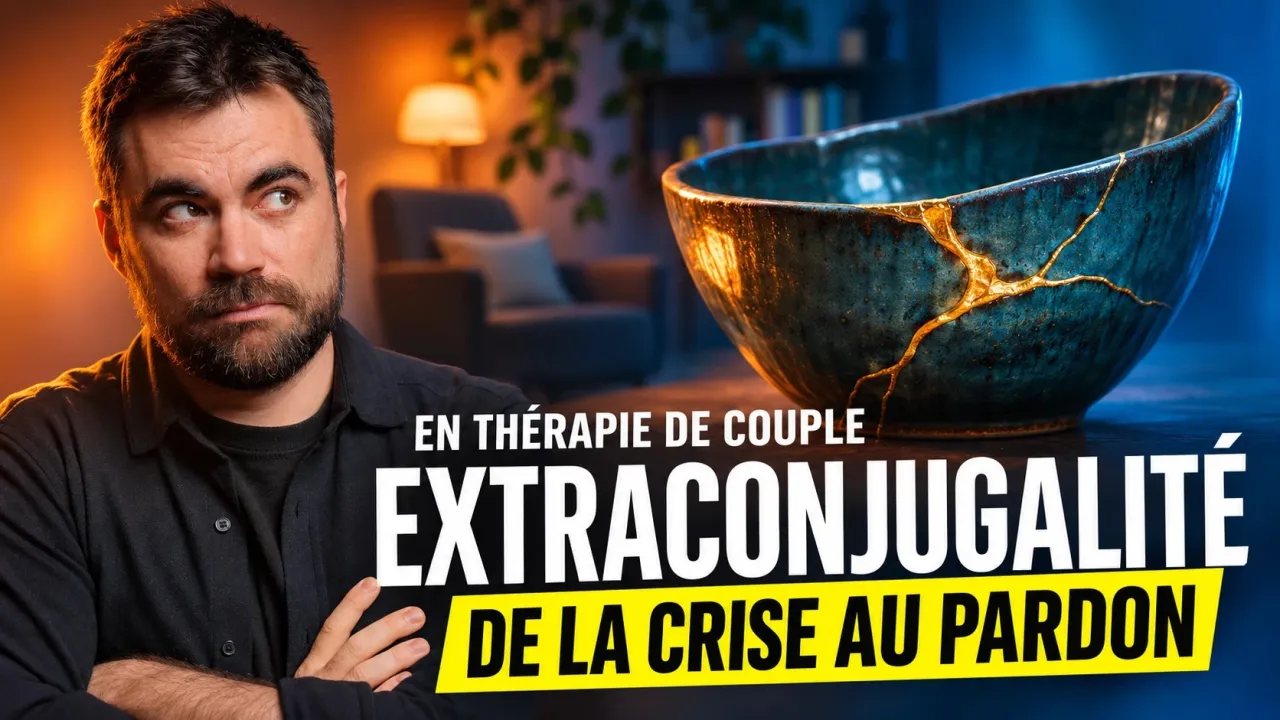
Extramarital affairs in couple therapy: from crisis to forgiveness
One-day online training with Julien Besse: reading the crisis triggered by an extramarital affair, positioning oneself as a couple therapist, rebuilding trust and working on forgiveness up to the repair ritual. Delivered in French.
 Symposium
État des Lieux: a psychological approach to spaces
Replay of the “État des Lieux” conference (Paris, 16 October 2026): Ivy Daure, Maurizio Frisina, Viola Sallay and Gilbert Pregno on places as a clinical resource. In French.
 Webinar
Extramarital affairs: what does the therapist do when the couple explodes?
Replay of the free webinar of 5 November 2026: how to position yourself as a systemic therapist in the crisis of the extramarital affair. Revelation, secrecy, multipartiality.
 Webinar
The three loves
Replay of the free webinar with Dr Robert Neuburger of 1 October 2026: the three loves, attachment and ways of loving. Held in French.
Related articles
 Scientific
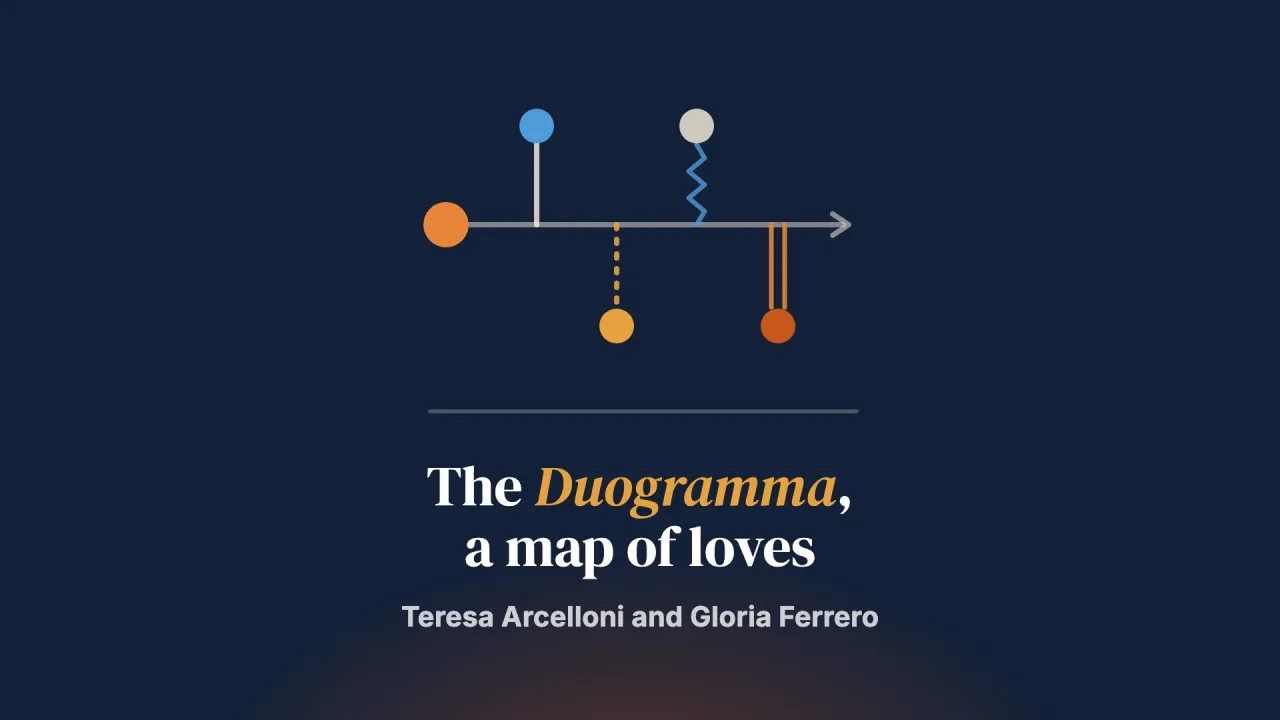
The Duogramma®: An innovative methodology for psychotherapy
A map of the couple relationships lived, desired or rejected since childhood: the Duogramma®, its graphic rules and its use in individual therapy.
 Blog
Challenging in therapy: What a patient taught me
A couples therapy session led me to reflect on confrontation, authenticity and resonance: how to address difficult behaviour without invalidating the person.
 Blog
Adult ADHD: when forgetting turns into a misunderstanding
Forgetting, compensating, tension in the couple: a systemic look at adult ADHD, to understand what is at stake and to look for more fitting forms of support.
 Scientific
Sickle Cell Disease and Young Couples: Understanding the Influence of Shared and Individual Meaning on Couples’ Experience of Illness
Nine young adult couples facing sickle cell disease: how each partner makes sense of the illness, and how the couple moves from caregiving to equality from one crisis to the next.
Comments 0
Log in to join the discussion. Log in