AI-assisted translation
This version was translated from Portuguese by Complexe Systémique with the help of artificial intelligence. In case of doubt, the original version prevails.
Revista Brasileira de Terapia Familiar · Training
The Trainer’s Moment: Revisiting One’s Own Story
In September 2013, in Goiânia, Sandra Fedullo Colombo and Angela Baiocchi led the closing workshop of a meeting devoted to family therapy training. In five movements (a timeline, written narratives, photographs of paths, sculpture, a time capsule), each participant revisited their encounter with family therapy and wrote a legacy for future generations. The authors see in it a way of caring for those who train others.
Unofficial English translation. This article is a translation of Momento do Formador, Revisitando a Própria História, by Sandra Fedullo Colombo and Angela Baiocchi, published in the Revista Brasileira de Terapia Familiar (ABRATEF), vol. 5, no. 1 (2014), doi: 10.60114/rbtf.v5i1.89, under a CC BY 4.0 licence. Translated by Complexe Systémique in November 2026 with the help of artificial intelligence: the original Brazilian Portuguese text has been translated into English and reformatted, which constitutes a modification of the work under the terms of the licence. Paragraphs and headings are those of the journal; the questions of the first movement and the numbered legacies are presented as lists; the thirteen photographs, captioned without numbers in the original, keep their captions only; song lyrics quoted by participants are evoked in indirect speech; the quotations from Moreno and Guimarães Rosa are translated from the article’s Portuguese. The abstract is the authors’ own English version. This translation was made neither by the authors nor by the journal, who are not responsible for its content or for any errors. The original version prevails.
It is not a choice... it is an encounter of stories!
Sandra Fedullo Colombo, Angela Baiocchi
Abstract
This workshop for trainers in family therapy at the ABRATEF’s Meeting of Trainers, held in September 2013, in Goiânia. It recounts the experience of a moment of collective recreation that intended to narrate the trajectory of the Brazilian Family Therapy. The participants, representing the trainers of different regions of the Brazilian Association of Family Therapy - ABRATEF told through their personal stories, a rich narrative that reflects our cultural and scientific diversity. This moment allowed them to translate their intersections and resonances of the encounter with Family Therapy. The proposal was as an invitation to dive into the meanings that each one has built up on your personal and professional path having as background of the path of ABRATEF with their achievements through the systematic construction of a time line. The workshop had five movements, where there were successive moments of introspection, individual written narratives, narratives in sub-groups, sculpture, work with photographed images, metaphors, conversations in sub-groups and reflections in a large assembly. We conclude that this workshop demonstrates the importance and necessity of “caution” from the therapist trainer in the construction of welcoming and respectful spaces that authorize fertile conversations and experiences which may feed the simultaneous path of individuality with belonging. Thinking that this is the relational situation that contributes more to our humanity, our work provides doors for this path.
Keywords: belongin; intersections; resonances; inheritance.
The Birth of This Work
It all began with an invitation to the Encontro de Formadores (Trainers’ Meeting) of ATFAGO, the Family Therapy Association of Goiás. My colleague Angela Baiocchi fired my imagination by suggesting the closing workshop of the event, which was to be held on 28 September in Goiânia. Angela and I share a relationship of friendship and affection, an easy flow of ideas, a feeling of reciprocal cooperation that makes it easy for us to accomplish together whatever is needed.
So it happened once again: we agreed that, since she would also be involved in the organization, I would take on the creation and coordination of the work, with her as my interlocutor and support. Perfect attunement.
We talked about our concerns regarding the training of family therapists, our belief in diversity and multidisciplinarity, our understanding that it is important for Family Therapy to converse with professionals who work with families in non-clinical contexts, and our belief that Family Therapy should not be the exclusive territory of any profession recognized by a university degree. Our wish was that we would come together, with our diversities, and prepare ourselves deeply through our intersections, to make the field of Family Therapy fertile with our different kinds of knowledge.
I felt Angela to be the spokesperson of ATFAGO, co-founder and collaborator of our youngest regional association, born in 2012, bringing a message of union of all forces towards strengthening our belonging to Family Therapy! That we might welcome differences, find a container of respect and understanding, and be creative in the answers that the present historical moment was asking of family therapists!
The spirit of fellowship, cooperation and horizontality guided our reflections and led me to build an encounter founded on an invitation to an individual introspection into one’s own history, with its intersections and resonances in the encounter with Family Therapy.
An invitation to dive into the meanings that each person has built along their personal and professional path in Family Therapy.
Background
For this encounter of stories, the background was the reconstruction of the timeline of the Family Therapy movement in Brazil1.
In 2002, after my term as president of APTF (1998-2000), I wanted to strengthen the perception of our historical path, and I drew what I called the ABRATEF “timeline,” in which, with data provided by Solange Rosset, a dear colleague from APRTF, I reconstructed the beginnings of the Family Therapy movement in Brazil. This work resulted in a presentation that portrayed a linear course showing the emergence of ABRATEF and of the regional associations, with the metaphor of stars being born, as well as the holding of the first five congresses. On that occasion I gave ABRATEF, then based at ARTEF-Bahia, a banner that was placed at the entrance of the Fifth Brazilian Congress so that all of us could locate ourselves in this historical movement.
The conversations with Angela awakened these memories of belonging and filiation and led me to take up this drawing again, renaming the “timeline” a historical path and updating the events after 2006, reflecting what a temporal line should be: a path that moves forward, launches out and multiplies.
My wish was that each of us would go beyond the discussions that pointed to differences and, through our introspection, give ourselves over to the moment in history when we embraced Family Therapy as a difference that adds rather than divides in our personal and professional lives.
How did each person live that moment? Along which passages and trails... did they walk? Along which paths... did they travel? All of us, each in our own way and time, made this movement!
I thought of an experience in which these intersections and resonances would build a locus where all of us could deepen our roots: speaking of the individual paths which, as they crossed, formed the great path of Family Therapy in Brazil. Our attention was on ourselves, family therapists seeking a greater belonging to Family Therapy. The focus of the work was not the Association’s timeline, but the journey of its actors.
A Workshop in Five Movements
First Movement
In the first movement we invited the group to get in touch with the historical facts from 1982, when the First National Meeting of Family Therapy was held in São Paulo at PUC under the coordination of Mathilde Neder and Clea Pilnik, up to the present moment, whose latest event was the ATFAGO Trainers’ Meeting where we were gathered. We asked participants to place themselves at their intersection with the history of Brazilian Family Therapy, which was displayed on the wall as a drawing in the form of a “timeline” extended up to 2013.
Some colleagues tried concretely to find on the drawing the moment of their encounter with Family Therapy; others listened to the events that one of our colleagues read out so that everyone could locate themselves.
Next we asked them, as they revisited the history, to try to answer the following questions:
- When did you come into contact with Family Therapy? Put yourself back in the moment when it happened... remember a scene, a place, the people involved...
- What impact did you feel?
- What changed in your professional life after this encounter?
- What changed in your personal life?
- Thinking about this path... what crises did you go through?
Based on this reflection, we asked them to write briefly about this moment of encounter with Family Therapy.
The first part of the work sought to build a reflective space, a space of silence, so that inner voices could be heard and memories revisited and given new meaning. It was important to us that our questions should foster a welcoming reflective space where all the individual stories would find shelter and be validated and valued.
It did not matter which path each person had taken... all of them were bringing us to this moment.
I particularly like inviting colleagues to introspective experiences. To begin in the most individual experiential spaces, those intimate spaces that require silence, and then to tell the same story through the written word, which leads to new distinctions, since the choice of words and rereading lead us to new reflections. Then, and only then, we will offer these constructions to others, our peers, so that in telling and in being heard, new doors may open and new meanings be fertilized by the dimension of the presence of others who, with their intersections, bring new resonances!
Second Movement
The next movement of the work emphasized sharing these experiences, awakened by introspection, with colleagues. Four groups of roughly 10 to 12 people were formed and, on the basis of this exchange and listening, it was suggested that they write a single story that would encompass the experience of the multiple voices, to be reported to all of us by a colleague chosen by each group.
Finally, we asked them to choose, on the basis of this experience, a name for each group.
Moving! The workshop participants were deeply committed to telling their reflections and listening to everyone’s stories. They reported great discoveries, life changes, marriages, separations, births of children, deaths... and above all new ways of seeing life...
The rapporteurs were remarkably attuned and empathic!
Each story told carried the beauty of the encounter of those individualities with Family Therapy and with one another at that moment.
The rapporteur of the group that wanted to be the first to present its reflections was Sam Cyrous, and the title chosen was I Lived and I Learned.
“At some point between 1979 and 2004, as I was following the movement of my personal and professional path, with some members of my family, I began to question my world and the relationships that existed in it, I came across a different kind of training and saw some signs (sometimes they seemed like books, other times street signs, other times they were people who had always been by my side or who had just arrived) that helped me see life in another way. And then came the welcoming of something magical and enchanted: a new paradigm was born in me. Then… the challenges arose: and I did not know how to be a person and a therapist at the same time. Who am I? What is my role in my family of origin? And in my home? Where would my spouse be in the middle of all this? And how to break the taboos? Release the stigmas inside and outside the institutions and the clinic? And in this learning stance, I am happy to be with others, comfortable and stable, I seek more and more, I create and recreate. I found coherence between what to do and what to be, or better: between what I am and what I idealize and dream. I learned to be true and to accept myself. In short: I grew. In short: I lived and I learned”.
The second group had Claudia Naglis as its rapporteur, and its title was Conquest.
“In this Conquest of the group, over the years we observed various effects of Family Therapy and its influence on our personal and professional lives, some of which we highlight below:
The shift from Psychoanalysis to the systemic approach, made with much suffering, as if merging the approaches in clinical work were not feasible, and seen as disloyalty to Psychoanalysis.
The difficulty of integrating the theoretical foundations into clinical practice, since this can only be achieved through practice.
We professionals go on learning, investing in continuing education”.
Legacy: “All paths lead somewhere; we only need to follow the intuition of the path and take the initiative to do it”.
In the third group the rapporteur was Fernanda Andrade Lima, and the group’s title was Family Therapy: Women Who Love What They Do.
“It all began in the lands of Piracicaba... She was a studious girl, but did not really know what to do; her mother, however, who did not want her to fall off a horse, spoke to her neighbor, who said there was a very good course for women in Campinas: Psychology! So she traded horse riding for not falling off the horse, and went to São Paulo to live with the library mice; at least the risk of a fall was no longer the danger!
Relationships with one’s mother are almost always complicated, and later being a mother to other children becomes a long trail... also complicated. Pregnancy, adoption, family, groups, community and society. Then time passes and the daughter matures, comes back home and is surprised to find that little old lady, her mother, and to discover that she learned to care from the one who will one day also need care!!! And life goes on... Being a daughter, mother, woman and getting married... Then maturity and the relationship with men. Love can work! But sometimes you have to change men to know what a good life is, to find a partnership and leave oppression behind; an oppressed life: NO! There is always a way out!
Being a woman, having children and a family... Starting with the household budget and then working in family therapy. Working with children, adolescents and families was an impact of anxious joy, always wanting more, in a constant search to work with the other, changing and being changed, telling, listening to and retelling everyone’s stories.
Recovering childhood pains at the same time, but with the recovery of hope and vitality. Changing along the way and building a better world in a constant reinvention of life. This relationship with the other has always been with us. The legitimate other... And another... And... many others in this systemic vision, which is much more than the sum of the parts!!!
In family therapy, the systemic vision, quantum physics. There is no absolute truth. The movement of including and not excluding. An enchantment with ourselves, with the movement of going from crisis to overcoming, and then another crisis and more overcoming... Maturity. Coming out of the dark Tunnel and finding the light. The enchantment of seeing and being illuminated!!! The experience, for peace, of the library mice, so that we could become women who have learned to love what they do very much!!!
... On a 92-year journey, on the international committee of the 2014 Family Therapy Congress, to work for a society that we believe can learn to love much more!!!”
In the fourth group the rapporteur was Fernanda Machado, and the group’s title was Germination.
“Just like a woman when she decides to have children, family therapy came to the group accompanied by many anxieties, fears, desires and changes”.
The process of giving ourselves to this new project took place with great determination, dedication and hope. And even with so much desire to conceive new things, this path was not free of doubts, difficulties, losses and mistrust.
The decision to generate new projects, to train, to value ourselves more and more and to learn was magical and surprising in the history of our group. How much change in each person’s life to conceive this virtue.
The group hopes that family therapy will go on fertilizing love and respect in its history. It hopes that this desire will be fertilized and generate new embryos of hope. May love for family therapy result in a beautiful and healthy life capable of enchanting the world with its existence!”
Some Reflections
It was interesting to observe the different journeys that fertilized the expressions and creations of the family therapists present: the experiences of transformation described by the four groups represent Family Therapy as an interweaving of new constructions of living, nourished by intense, sometimes critical or even vulnerable experiences.
No one described learning Family Therapy, but rather the impact on their worldview brought by the relational paradigm. Germinate, fertilize, transform were words repeated and associated with courage and change, with embracing new things and revolutionizing the established order. Our colleagues seem to have emphasized the fact that no one can remain the same during this disturbing encounter with oneself and others, whether in intimate or professional relationships.
My proposal is that therapists place themselves in the position of co-constructors of alternative realities, and for this I think they need to present themselves in their integrity as human beings, with history, prejudices, experiences and awareness of their self-reference, that is, with a relative position regarding their knowledge. In this workshop, when our colleagues revisited their encounter with Family Therapy and the impact it had on their own history, they had the opportunity to revisit their beliefs and desires and to dive into their professional being, describing themselves and hearing others’ distinctions in a reflective and fertilizing dialogical dance.
I remember the beauty of Marisa Japur’s article (2007), which emphasizes that in Social Constructionism the other is not considered an external experience, but a co-author in the construction of ourselves.
I believe, as I wrote in the article O papel do terapeuta em terapia familiar (Colombo, 2009), that we constitute ourselves in interpersonal relationships, mediated by language, always in a process of becoming with the other, within dynamic narratives, constructed and reconstructed as we walk through life in the conversations we take part in.
Perhaps that is why there was so much talk of fertilization, since it seems to me that, to make room for a birth, we first need to make space for the possibility of the new and for the participation of the other, and thus for the deconstruction of the previously established order that breaks and subdivides. I think we can call this path fertility. By analogy with the most elementary process of the transformation of life: the seed detaches from the fruit, binds to the earth, and its elements receive from light, earth, air and water the vital stimuli that make it a new tree for new fruit.
One More Step on Our Path
Third Movement
The next movement of the work was an invitation, once again individual, to open our backpacks full of experiences, hopes, difficulties, desires...
For about twenty years I have worked with images as a poetic possibility of conversing with myself and with others. I love the condensation and the different levels of resonance that this language stimulates.
I think of the image as narrative and believe, like Manguel (2000), that in contemplating it a magical space is created, where the tension between us and the object contemplated opens a channel of immediate intimacy. Stories are awakened and deep memories are welcomed. The artist, the object and the observer write there a story of encounter. The image becomes a mirror that awakens superimposed narratives of our subjectivity (Colombo, 2006).
In creating the metaphor of the path, I thought... of using the images I photographed on two trips, one around Bariloche, the other in the Pantanal of Mato Grosso, where I immersed myself in personal quests. With my self-reference, I wished to offer a stimulus so that empathy for the search for paths might arise in each revisited story. Revisiting and choosing some photos from these series, which I had taken two and four years earlier respectively, warmed me up deeply for this moment of the group work. It was like the concentric circles on a lake... widening, widening...
At this stage of the work we asked that we once again get in touch with our silence and let the projected images extend an invitation, letting them enter us... They would choose us to go on telling our stories.
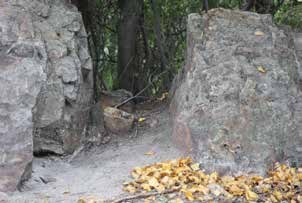
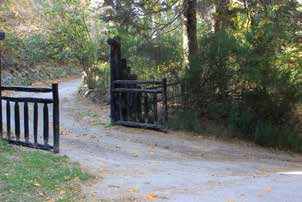
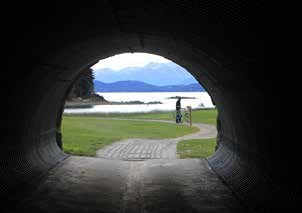
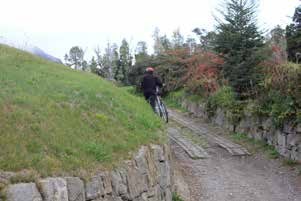
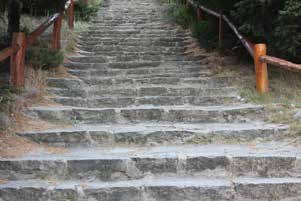
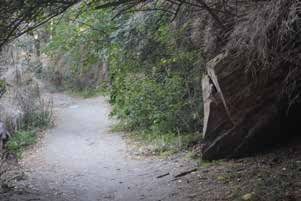
The reflective question proposed was: which of these images reminds you of your personal and professional path through Family Therapy?
I like working with images that can be touched, not only seen. The emotion of looking is one thing; that of touching is, for me, deeper, perhaps more primary! So, while Angela showed the images2, I spread them out on the floor in the center of the group: dozens of beautiful reproductions, so that after seeing them projected we could walk among them and, once again, be chosen through our resonances.
It is not a choice... it is an encounter of stories!
Each of us picked up an image or images, and we looked a bit like happy children, moving about, playing and taking hold of the meaning of our stories.
I asked that we sit down, admire this photo (or these photos) and tell a story beginning with once upon a time... there was no need to write it, only to tell it to oneself.
A deeply stirring moment!
We were opening doors in our lives by awakening memories. It always enchants me to witness that we do not know where these moments will take us! Along which paths will our resonances guide us, when, without our choosing deliberately, stories, testimonies or images cross our horizon and an intersection between paths occurs... It is in the here and now that a story is updated, awakens and opens doors of life!
I, who was offering images I had captured, felt I was offering my stories with several open doors, so that they might meet other experiences and broaden the meaning of my quests at this moment of life. I asked myself: what would stir inside me, how would I come out of this encounter, what broadening would be possible? What new paths would I build from this encounter?
I thought of Elkaïm (1989), who taught me to believe that the therapist’s liberation is the fruit of permission to integrate everything that constitutes them, that belongs to their history, and thus to develop their therapeutic being. The encounter of all the worlds involved, through the intersections that give rise to resonances, will allow each of us to have more contact with our own existence and thus to offer ourselves as an instrument for an expanding encounter.
When therapists are allowed to travel this path and, from these experiences, to expand their resources as human beings, they move forward in their process of individuation, or, as Safra (1999) puts it, in the process of destining oneself, of being the author of one’s own destiny.
The group took part in this moment in a deep and reflective atmosphere. I believe that the stories beginning with “... once upon a time” brought up meaningful memories and experiences, to which we had access only through the expression of faces and bodies, through the expanded time of the experience, and through the presence of a few tears.
A New Step... or: Sculpture
Fourth Movement
Angela and I are trained in psychodrama, and we very much enjoy working with sculptures as a beautiful narrative language. After the images, we wanted to open up the possibility for the group to meet in a joint construction.
Angela was the one chosen to coordinate this movement, which mobilized a new level of encounter among colleagues.
In this proposal we were asked to move from the center of the room and to build, together with the others, our place in Family Therapy, creating a sculpture that could be holographic and in motion. The feeling of encounter and belonging took shape at that moment! Different phrases and words expressed affection and complicity.
Sculpture is a creative technique of symbolic and bodily expression. In this movement it is possible to use the group’s different plastic resources to give meaning to unspoken language, adding feelings, aesthetics and strength to what is said or left unsaid. It is a projective and pulsating activity of collective expression. Moreno (1978), the creator of psychodrama, stated that it was necessary for the health of modern humankind to become a Creator. For him it was necessary “... to develop a philosophy of the creator as an anti-mechanical corrective of our age...” (p. 78); he stated that the practice of the creative act leads the group to raise internal processes to the conscious level.
Systemic Family Therapy and Moreno’s Psychodrama have strong theoretical and practical confluences. The focus on the different forms of intergroup and systemic communication, and the emphasis on action and on creating change as axes of the therapeutic process, bring these two schools strongly and inevitably together. Watzlawick (1993), in the theory of human communication, and Minuchin (1990), in the structural model, also affirm the strength of action mechanisms as methods of rapid mimetic incorporation in human psychological activity.
The words “comfort” and “connection” came up often.
Transmissions to Future Generations: Our Inheritances...
Fifth Movement
At this stage of the work we asked that we return to our places and, with the photographs in our hands, reflect from the position of trainers of new generations of Family Therapy. The question posed: what are the two inheritances that each of us would like to offer to these future generations of family therapists?
The group’s response was incredible: they quickly set about writing with enthusiasm and great inspiration! It seemed they had been waiting for this opportunity to write their legacy. Some had chosen three photos and wrote on all three. Others wanted to write longer legacies and even poems.
Everyone was deeply committed to passing on their values and beliefs to the new generations.
I very much like working with the metaphor of the backpack we carry on our backs, with treasures and difficult stories, and so I thought it would be an interesting image for symbolically holding this legacy and passing it on to the next generations.
The backpack went from one person to the next so that each could place their image-card-legacy in it and thus fulfill the ritual of transmission.
It was a ritual of responsibility and love for the next generations: a profession of faith in the future of Family Therapy.
We closed by inviting our president, Marcos Naime Pontes, to receive this legacy and pass it on symbolically. The group loved it and named the ritual the time capsule. All together we joined forces to build the present with solidarity and fellowship and so reach the future of Brazilian Family Therapy.
The Legacies in the Time Capsule
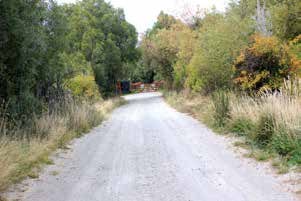
The image that mobilized the most people (nine choices) was the open gate in the middle of a tree-lined path, which for me gave a sense of the possibility of going on, of an open passage to go further. Something that, instead of preventing or forbidding, opened up and was an invitation to continue. When I took this photo, I remember the feeling of being able to continue my walk and make new discoveries!
This would be a legacy I would love to leave: Curiosity to go on!
The voices that were awakened:
- “I want to leave my heirs openness and expansion”
- “I want to leave the courage to take risks.
The confidence to open one’s heart. Courage” - “Freedom to think, reflect and question.
Always challenge your limits in order to create or innovate”. - “Open paths to be trodden by those who will come after us”.
- “Hope and continuity on the path of Family Therapy.
- “Diversity. Spontaneity.
I want to leave my successors the recognition of human diversity as a possibility in building family affection. As well as creative spontaneity in professional practice”. - “Open your doors and let the new come in”
- “Be a walking metamorphosis.
Openness to learning.
Always look at the other.
Change places with your clients (couples or families).
Be humble, families have a great deal of knowledge.
Do not crystallize. Be creative”. - “♥.→ Love with AFFECTION Enjoy your FREEDOM with RESPONSIBILITY
→ In a culture of peace”.
The second image that awakened the most people (eight choices) was the dark tunnel opening onto a landscape with water, mountains and a person carrying a bicycle. For me it was a passage from narrow darkness to a bright, wide and free space; it was because of this reflection that I photographed it, and I would love to leave this legacy to the next generations.
What did our colleagues write?
- “Self-giving and love.
Only those who love give themselves. Only those who are able to give themselves love”. - “I leave the desire to build a better world in which we can share inventive possibilities more collectively”.
- “Passion, determination, not giving up, insistence, inclusion”.
- “The desire to keep helping to win more peace, health and freedom for all family relationships.
A culture of peace, and may Family Therapy manage to embrace the whole of society, contributing to a better world, with love.
Wisdom to manage relationships and seek the encounter with the other”. - Do not go where everyone goes just for the sake of going. Always think “what for? and answer that question. Then, if you wish: go ahead”.
- “Action built together with the family group”.
- “The daring to seek and do things differently.
Always share!
Responsibility, humility, mutual respect” - “I want to leave the Hope of finding a light and a beach at the end of the tunnel.
Belief in the other’s capacity to grow.
Hope”.
The next image (five choices) was taken from the logo we created for the Sixth Brazilian Congress of Family Therapy in São Paulo, and shows a set of overpasses over the Tietê and Pinheiros rivers that we call the Cebolão. When we chose it for the Congress, we wanted to speak of the interweaving of Family Therapy with various fields of knowledge and of the desire to circulate, bring together and interweave the various spheres of society through our reflections and conversations.
I think that, for me, it is a great legacy to leave.
What our colleagues wrote:
- “Self-knowledge and multiple paths to be traveled that LEAD US TO AFFECTIONS... CRISIS... AND OVERCOMING”.
- Interweaving of paths, diversity, plurality, possibilities with effort.
- “I would like to leave as a legacy: space for all who are different, just, free and strong.
A structure organized for peace and creativity.” - “Multiple paths lead to multiple possibilities”.
- “Along the courses of our lives, several paths constantly present themselves, and among them we must decide which way to go. Stop, prepare yourself, think, decide and walk. Do not force yourself to always get it right, face all the consequences of your choice, good or bad, and have the greatness to learn from each movement/step. Live life”.
Several images were chosen four times each.
The photo I took of the closed gate, which barred me from continuing my walk, a limit that did not allow me to go further but stirred my curiosity and my wish to disobey.
Perhaps these too are interesting legacies... accepting limits, but assessing them to find out whether we should not insist and go further...
Let us listen:
- “Accept challenges, fight with responsibility, love and dedication in therapeutic practice”.
- “The creative openness needed to be with the family in its suffering”.
- “Awareness of the importance of knowing the other. The humility to keep learning, for what matters is not arriving, it is the walking”.
- “Once upon a time there was a girl who opened gates... that were apparently closed! Seek to open gates that seem closed!”.
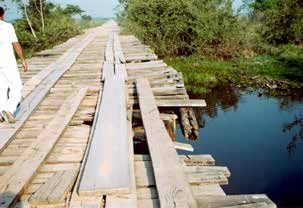
An image particularly touching for me, the wooden bridge full of holes leading onto a straight dirt road... stretching as far as the eye can see, with a man walking... Mato Grosso, my husband and I on a road with no one else, crossing the Pantanal with its challenges, beauties, isolation and the motivation to overcome obstacles.
The goal was not to arrive but to travel. A beautiful legacy for those who will come after us...
What this image awakened:
- “Difficulties exist, always. And big ones. However big they are, solutions exist. Let’s get to work! Love is repaid with love. Love for the other, love for ourselves. With love, difficulties shrink in size and strength and are overcome”.
- “Responsive dedication to the Therapeutic craft”.
- “I leave to future therapists the determination to unite differences, to get past challenges, to reach the other side and not to fear being creative.
Do not be afraid of making mistakes - mistakes are successes – but try to make new mistakes, which shows that you are not mere replicators.
Do not be frightened by the unknown – it is just a space waiting to be known and uncovered.
Learn and then forget all the theories when you are facing the other.
Welcome their stories and exchange the wisdom of your experiences and differences. LIVE”. - “Facing challenges
Courage and persistence
A curious soul full of tenderness
Traveling the paths and crossing the bridges”.
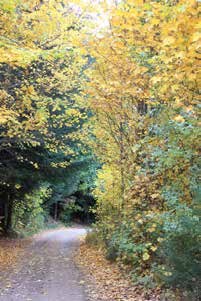
Again with four choices we have a path that enchanted me with the golden light of autumn. Feeling myself to be in the autumn of life, with the golden leaves falling to nourish the soil... I felt moved to photograph it.
The voices of the group:
- “Plant ideas through a BOOK, produce knowledge.
Be an example not to be followed, but to be remembered with pride and fondness”. - “To sail is necessary, to live is not necessary.
Always seek change, do not settle, get moving, fight for what you believe in”. - “I leave to the next therapists my passion for systemic thinking, which allowed me to see life and living in an unexpected way, because possibilities began to be identified, and then a new being emerged, with light and beauty. And the narrative of pain and suffering no longer had any room, only hope for oneself, for the other and for the world”.
- “Make your path an ENCHANTED FOREST COURAGE AND MANY DISCOVERIES! ALWAYS WALK TO FIND YOURSELF”!
Finally, also with four choices, we have a staircase of irregular stones, with low, wide steps and its varnished, light-wood handrail, leading me to think of the safety of climbing it step by step, heading upward with a sure sense of direction:
Let us see the legacies inspired by this image:
- “Seek and love to listen to yourself within your history, and to see the other first of all with the heart, then with knowledge and experience”.
- “Experience and knowledge.
Love for the profession of Family Therapist”. - “Work as a team, support and always seek support. Love what you do, love your colleague, make room, live what you learn in books; nothing will make sense if you do not apply it in your life.
Do not choose competition, choose cooperation; everyone has their place. Be humble, respect and revere those who came before you, but do not lose faith in your abilities, and innovate; seek to add, not to divide.
Stop complaining, see the marvel you have in your hands. The gift you received and chose should change the order of things; do not be afraid of chaos: change makes a mess, but it also brings satisfaction!” - “Climb, always conquer!
Go forward!!
With love!!!”
Next we have the image of a path that forks in the distance, but first gets past an obstacle (or an amputation): an old, enormous cut tree trunk (two choices). Seeing it, I thought of how many cuts we make in order to continue our walk, and it was the trunk, cut and set aside, that led me to photograph this path.
The reflections that arose:
- [An echo of a song by Gonzaguinha inviting us to live without being ashamed of being happy] (Taking risks and listening to the inner voices).
[An echo of the song “Caçador de mim,” about setting out to hunt for oneself, in one’s gentleness as in one’s ferocity] (Working on the family of origin within us). - “Spontaneity
Simplicity”.
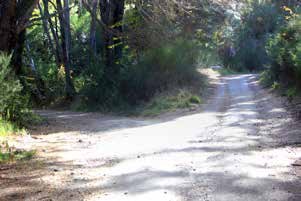
In the next image (two choices) we come upon a new fork; the path on the right looks sunnier and more inviting. At the moment I took the photo I truly felt torn! The one on the left was more hidden, less lit, and began with a bend and a slope that sharpened my desire for discovery. What is offered more readily is not always the most meaningful. I like this legacy!
Let us listen:
- “Do not follow the path of others.
Be different.
Be original.
Take the road less traveled”. - “Tolerating doubts, not needing to have certainties!
Flexibility to dare”.
Let us finish with two images that were not photographed by me, and that received only one choice each.
The first is the image of a pedestrian crossing with countless people crossing it. They were photographed only from the legs down: an urban landscape, men and women in a hurry who seem to know where they are going. I chose it for the strength of their steps, their determination and their anonymity.
Let us listen:
- “Build a better world for Everyone!
Including and especially for those who have no family.
FAMILY IS MORE THAN BLOOD TIES IT IS WHOM I CHOOSE TO LOVE
WE CAN HELP THOSE WHO NEED/SEEK HELP TO REFLECT ON THEIR CHOICES IN LIFE.
OUR feet lead us across a pedestrian crossing”.
To close, the urban image of an avenue congested with buses, vans and old cars alongside a crowd on the move. I chose it for the sense of life bursting out, possibilities happening, everyone trying to improvise to go on living in a great pulsating mass, and for the feeling, for me, of an enormous difficulty in feeling oneself an individual.
The legacy offered by the colleague who chose it:
“Continue your path in search of Differentiation and of encounter in the crowd”.
Two images were chosen by no one: the cyclist, which for me signified effort, freedom and autonomy, and the cut trunk opening up a path, which, when I photographed it, brought me the emotion of the losses imposed in order to keep on walking...
Our Listening
Hearing our colleagues’ voices, we felt enormous joy in realizing that the legacies left spoke of a stance toward life, of values of respect for and legitimation of the human being, of a relational ethics oriented toward horizontality in relationships. The emphasis was on the development of the person of the therapist and on the belief that, without the human encounter, the technical-scientific stance loses its legitimacy to care for what is human!
The importance of learning Family Therapy was not forgotten; it came as a process allied to self-knowledge and to a relational ethics based on the understanding that the other is equal to me in their needs and different from me in their singularity.
We think that the greatest legacy left in the “time capsule” is care for our own humanity.
Final Reflections
We believe that group work like this seeks to build privileged relational spaces in which to develop co-authorship among all those involved, making it possible to live the belief that, in the dialogical dance of telling and listening to our own stories and those of others, all of them legitimized, we affect and are affected by these experiences, developing in our humanity, understood here as an expansion of partnership and reciprocity.
Our proposal for us as therapists (Colombo, 2009) is, first, that we present ourselves more and more to ourselves, through awareness and instrumentalization of self-reference, and that every distinction we make be the fruit of resonances awakened at some point of intersection with the other, thus belonging to all those involved. Second, that we be able to give up power over the other, keeping ourselves in a place of collaboration and respect, believing in the relativity of our knowledge and of our presence. Third, that we have resources to work with our forces of fusion and differentiation in our relational histories, so that we can offer them in a respectful, collaborative and expanding therapeutic encounter.
I think we could live more in deep waters that invite us to dive, and less with the winds that blow in various directions and distract us from ourselves with their movements.
Workshops that care for the caregiver invite this dive and can thus create a protected space where therapists, as human beings, have the opportunity to bear witness to their experiences and to witness those of colleagues, responding to our human need to name experiences and give them meaning, and so to build a historical coherence and a belonging to a network of conversations and reflections.
I am convinced that by creating spaces to welcome the therapist’s humanity, we make an especially important contribution to improving therapeutic practice and to the development of the person of the therapist.
As Guimarães Rosa says
“One can only live close to another and know another person without danger of hatred if one has love. Any love is already a little bit of health, a rest in madness” (1969, p. 53).
Complexe Systémique: key points
This text is not a research study: it is a first-person account of a workshop as it was lived, in the participants’ own words. Its value lies in the format, which can be transferred to any training or supervision team. It moves from silent introspection to writing and to stories shared in small groups, then to non-verbal mediations (photographs, sculpture), before returning to writing with the legacy. This passage from body to word joins the tradition of floating objects and of psychodrama. The article draws on resonance in Elkaïm’s sense: therapists free themselves only by allowing themselves to integrate what their own history has given them. Two limits deserve to be named: the text says nothing about participants whom the exercise may have unsettled, and the instruction to write a legacy steers towards a growth narrative that leaves little room for ambivalence or for criticism of the institution. For those who train, the lesson remains valuable: caring for the person of the therapist is part of training itself, and the collective history of a field is also passed on through individual stories. Read alongside the workshops on the person of the therapist, and the concept of resonance in therapy.
Notes from the original
1 ABRATEF timeline. Graphic representation created by Sandra Fedullo Colombo in 2002 during her term as President of the Association. In this representation, the history of ABRATEF and its regional associations is retold through its events and landmark facts. It was published and circulated by ABRATEF to all members.
2 Photographic images from Sandra Fedullo Colombo’s personal collection. A4 size, printed on color photo paper. These images showed mainly open spaces, public places or not, in nature or in urban settings, always shaped by human intervention.
References
Colombo, S. F. & Vitale, M. A. (2001). Memória familiar: Lembranças e esquecimentos. In M. Grandesso, (org.) Terapia e Justiça Social respostas éticas e questões de dor em terapia (pp. 65-73). São Paulo: APTF.
Colombo, S. F. (2000). Em busca do sagrado. In H. M. Cruz (org.) Papai, mamãe, você e eu? (pp. 169-188). São Paulo: Casa do Psicólogo.
Colombo, S. F. (2006). O papel do terapeuta em terapia familiar: Uma ética relacional. In M. E. Valle & L. C. Osório, (org.). Manual de terapia familiar (pp. 443-461). Porto Alegre: Artmed.
Colombo, S. F. (2009). Ainda em busca do sagrado. In M. N. Pontes (org.) Construção pela vivência em terapia familiar (pp. 455-466). São Paulo: Roca.
Elkaïm, M. (1988). Formações e práticas em terapia familiar. Porto Alegre: Artes Médicas.
Guimarães, R. J. (1969). Grandes sertões: Veredas. In M. Bassiliat, Fim de rumo, terras altas, Urucuia: ensaio fotográfico. São Paulo: Brunner.
Japur, M. (2007). Sobre um eu que também é você. Nova Perspectiva Sistêmica, ano XIV, 27, 9-19 ITF-RJ: NOOS, Familiae.
Manguel, A. (2001). Lendo imagens. São Paulo: Companhia das Letras.
Minuchin, S. & Fishman, H. C. (1990). Técnicas de terapia familiar. Porto Alegre: Artes Médicas.
Moreno, J. L. (1978). Psicodrama. São Paulo: Cultrix.
Safra, G. (1999). A face estética do self: Teoria e clínica. São Paulo: Unimasco.
Watzlawick, P., Beavin, J. H. & Jackson, D. D. (1993). Pragmática da comunicação humana. São Paulo: Cultrix.
Unofficial English translation of Momento do Formador, Revisitando a Própria História, by Sandra Fedullo Colombo and Angela Baiocchi, Revista Brasileira de Terapia Familiar, vol. 5, no. 1 (2014), doi: 10.60114/rbtf.v5i1.89, under a CC BY 4.0 licence. Translation (with the help of artificial intelligence) and layout: Complexe Systémique, November 2026 — the work has been modified under the terms of the licence (song lyrics evoked in indirect speech). Neither the authors nor the journal are responsible for this translation; the original version prevails.
Unofficial English translation of “Momento do Formador, Revisitando a Própria História”, published in Revista Brasileira de Terapia Familiar (2014) under a CC BY 4.0 licence. Made by Complexe Systémique with the help of artificial intelligence, it does not come from the authors or the journal, who are not responsible for its content; the original version prevails.
Read the original articleHow to cite this article
Colombo, S. F., et Baiocchi, A. (2014). The Trainer’s Moment: Revisiting One’s Own Story (Complexe Systémique, Trans.). Complexe Systémique. https://app.complexe-systemique.com/en_GB/articles/the-trainers-moment-revisiting-ones-own-story (Original work published in 2014 in Revista Brasileira de Terapia Familiar, v. 5, n. 1 (2014); republished in 2014 by Revista Brasileira de Terapia Familiar, https://revbrasterapiafamiliar.abratef.org.br/revista/article/view/89)
To go further
- Working with the person of the therapistWorkshops for the person of the therapist.
- The concept of resonance in therapyResonance according to Elkaïm.
- Floating objects in systemic therapySculptures and mediating objects in therapy.
Related training courses
 Certifying course
Training in Systemic Therapy and Interventions – Cycle 1
Certifying training cycle in systemic therapy and interventions – year 1. Courses, supervision and practice, aligned with EFTA/SFTF. In French.
 Certifying course
Training in Systemic Therapy and Interventions – Cycle 2
Certifying training cycle in systemic therapy and interventions – year 2. Clinical complexity, supervision and practice. EFTA/SFTF aligned. In French.
 Certifying course
Training in Systemic Therapy and Interventions – Cycle 3
Certifying training cycle in systemic therapy and interventions – year 3. In-depth intervention, supervision and practice. EFTA/SFTF aligned. In French.
 Certifying course
Training in Systemic Therapy and Interventions – Cycle 4
Certifying training cycle in systemic therapy and interventions – year 4. Clinical integration, supervision and certification. EFTA/SFTF. In French.
Related articles
 Scientific
The Duogramma®: An innovative methodology for psychotherapy
A map of the couple relationships lived, desired or rejected since childhood: the Duogramma®, its graphic rules and its use in individual therapy.
 Blog
Challenging in therapy: What a patient taught me
A couples therapy session led me to reflect on confrontation, authenticity and resonance: how to address difficult behaviour without invalidating the person.
 Scientific
Decolonizing Supervision: A Critical Race and Queer Theory Framework for Marriage and Family Therapy
Supervision is not neutral: a framework drawing on Critical Race Theory and Queer Theory to name and share power in supervision, with a vignette.
 Scientific
Internal Family Systems Therapy as Part of the ‘Family of Systemic Therapies’: A Critical Exploration of Systemic Practice in the Intra-Personal Domain
Does IFS belong to the family of systemic therapies? A critical exploration, grounded in a family court vignette, of systemic work with “parts”.
Comments 0
Log in to join the discussion. Log in