AI-assisted translation
This version was translated from Italian by Complexe Systémique with the help of artificial intelligence. In case of doubt, the original version prevails.
Connessioni · Training
Training in systemic therapy is learning never to be alone
For Massimo Giuliani, training in systemic therapy is not about handing down a model but about getting to know one’s own lenses. From the one-way mirror to the reflecting team, from consultation between colleagues to the professional genogram, he shows how systemic practice turns self-reflection into a shared undertaking, and compares it with the training analysis of psychoanalysts. His conclusion: therapists care for their way of seeing by always relying on a community.
Unofficial English translation. This article is a translation of La formazione alla sistemica è imparare a non essere mai soli, by Massimo Giuliani, published in Connessioni (Centro Milanese di Terapia della Famiglia), new series, no. 6 (2019), under a CC BY 4.0 licence. Translated by Complexe Systémique in November 2026 with the help of artificial intelligence: the original Italian text has been translated into English and reformatted, which constitutes a modification of the work under the terms of the licence. The paragraphs and headings are those of the journal; the quotation from Giulio Mozzi, given by the journal as an ordinary paragraph, is set as a block quotation, and the italics it mentions (“my italics”) do not appear on the journal’s page; quotations are translated from the Italian, including those from Freud and Lacan, which the author cites from their Italian editions, except von Foerster’s, given in his original English wording; titles of works are given as the author cites them; a few typographical errors have been silently corrected. This translation was made neither by the authors nor by the journal, who are not responsible for its content or for any errors. The original version prevails.
All training in systemic therapy is a training in that “thinking by points of view” which is the foundation of clinical practice.
Massimo Giuliani
1. More and more an “art of lenses”
Although the work of the first Milan Group (Selvini Palazzoli et al., 1975 and 1980) was hailed at the time, and not only in Italy, as the novelty that would revolutionize the treatment of psychosis and anorexia, the true paradigm shift we owe to the systemic movement was the one remembered as “second-order cybernetics” (Bertrando and Toffanetti, 2000; Giuliani, 2013a). If at first the observer had widened the field of view to take in a broader reality than the one considered by individual psychology, one fine day, widening the gaze still further, that observer found themselves observing (von Foerster, 1981; Maturana, Varela, 1984; Bocchi, Ceruti, 1985, Telfener, Casadio, 2003, Bianciardi, 2016).
The shift of causal explanations from the intrapsychic to the relational was followed by a radical questioning of the possibility of grounding a clinical practice on anything resembling causal explanations: if the observer stands inside the reality they observe, the claim to be its engineer, who discovers how it works and modifies it, as in the great dream of the early strategic therapy of Palo Alto, is a naive pretension.
With the emphasis on the role of the observer, the metaphors of lenses and of seeing began to circulate in systemic therapy. Lynn Hoffman (1990) calls an “art of lenses” a therapy that aspires to become an interpretive science concerned with meanings, no longer with discovering the ways in which families produce symptoms in identified patients.
In her manifesto article, Hoffman argues for the need not only for new lenses but above all for awareness of their nature – precisely – as lenses, that is, as cultural artefacts. Thinking that what one sees is a shared construction, rather than something with the status of objective reality, is the new position of the systemic therapist.
Luigi Boscolo, drawn to a constructivist sensibility, explains his own position in the same period (Boscolo, Cecchin, 1992) through the metaphor of binocular vision (Bateson, 1979). For Bateson, two points of view are better than one because they make it possible to see an extra dimension: depth. For therapists, this premise is in keeping with the need to use a network of theories to come as close as possible to the complexity of the world “out there”. A network that is also the product of each clinician’s experience and of the theories that have shaped their history: this is the “epigenetic” theory of therapy (Boscolo, Bertrando, 1996).
Two points of view, then, are better than one: so why not three, or four? Boscolo used to tell how, when observing a clinical case, he chose to move between the point of view of first-order cybernetics – to see the observed system as separate from the observer –, that of second-order cybernetics, that of constructivism, the one from which human relationships are seen as patterns, and then again as stories.
Learning a theory well, knowing the relation between premises and technique and the limits of orthodoxy, gives access to the awareness that a theory is only a lens through which we see the world. And each lens sees a certain thing and does not see others: like “a net that catches some fish but not others” (Boscolo, Cecchin, cit.).
What therapists choose for themselves is not a disembodied model, inherited from someone who used it before them: it is a precipitate of their biography and of their personal working-through of their clinical and training experiences. The responsibility taken on by a therapist who works through their own cultural biography to build their epigenetic model is something quite different from that “integration of models”, an instrumental operation that generates two-headed (or many-headed) epistemological monsters (Giuliani, 2017).
A superficial glance at the systemic literature of the last twenty years is enough to see a growing interest in the cultural frames within which clinicians invent the languages that describe them (Barbetta, 2003 and 2014), even though interest in describing relational processes and realities is not diminishing.
The most valuable inventions of recent decades, in the field of family therapy, are not so much theories about how families function as reflections on the practice of the therapist and, sometimes, changes in technique and setting.
And from the earlier period too, the legacy we carry with us today consists not so much of ideas about power struggles in families as of a sensitivity to stories (what can one say about the great family sagas of Paradosso e controparadosso?), to relationships and to the paradox that lies within them – not as a logical accident to be corrected, but as an existential condition from which there is no escape (Cecchin, Apolloni, 2003).
Stripped of any strategic intent, old cornerstones of systemic technique such as “triadic questions” (Giuliani, 2013b) or “positive connotation” (Selvini Palazzoli et al., 1975; Penn, 1985) give substance to a position of openness and curiosity towards families’ stories and towards the multiplicity of ways in which subjectivity manifests itself (Cecchin, 1987; Giuliani, 2013c, 2016): less a strategic positioning from which to surprise families than a relocation of the observer, who tries to look at things from another point of view.
Even where the use of the one-way mirror survives in the therapy setting, it acquires a new status. At the time when it separated two hierarchical levels of observation, it was thought that an observer could enjoy a certain separateness from the observed field: when views differed between the therapist in the therapy room and the one – or ones – in the observation room, the rule was that the authority of the latter prevailed, as they were more distant and therefore more objective. Today, with the abandonment of the metaphors of control and of cybernetics, the mirror draws the space of therapy as a horizontal territory offering different observation points. Less concerned with which reading is “right”, and more with how “useful” the interaction is, systemic therapists prefer to give a say to the colleague who is conversing with the family and who takes responsibility for the conversation: that colleague is in the room, that colleague is interacting with the family, and there is no point of view that could attribute to others greater competence about the “reality” of that conversation.
The mirror is less and less one-way: the team can move to the other side, to interact live with the person conducting the session and with the family; part of the family can join the team in the observing position, to see from a never-before-experienced point of view the other part interacting with the therapist.
In Tom Andersen’s (1979) experiment with the reflecting team, another audio system was switched on in the therapy room: by turning the lights off and switching them on on the supervisors’ side, the family and the patient could witness the team’s exchange of views. Since then it has become fairly common for therapists to decide to give up the mirror in order to share the conduct of the session and let the family listen, without screens, to the comments they exchange. In the past, Adriana Valle and I (Giuliani, Valle, 2007) tried to take stock of all the advantages that co-conduction by a woman therapist and a man therapist could offer: starting with a greater awareness of the influence of gender prejudices in observing family relationships and with the possibility of using them creatively, including by making them explicit.
Families often perceive in this choice of transparency a great recognition of their competence. They sometimes tell us about those polyphonic conversations as a moving moment in the therapy. What we give back to them is not the final product of the process in which the therapists’ different hypotheses are compared, but the whole richness of that process. Perhaps a less finished reading, but in exchange for the awareness that one’s life can be read in a number of different ways. To these, of course, the family will add its own point, or points, of view.
But that is not all: deciding to give up the screen of the mirror is an intervention clinicians make on themselves, requiring themselves to talk to one another in a way the family can understand. This changes the very way therapists think: having no private “backstage” in which to exchange ideas, their thinking will be more respectful and free of judgement and moralism.
2. All the therapist’s eyes
So, beyond the concrete instruments through which this position is expressed – we do not always have a mirror, a wall to break through, separate rooms at our disposal –, self-reflection is the focus of today’s systemic therapist, as yesterday the theories of family games, of the double bind and of power struggles were. The commitment that therapists once put into unveiling the hidden plots of families and into planning strategies to foil them, they now invest in observing themselves in relation to the system and to the therapeutic process. The therapist is no longer the expert, the magician, the one who discovers damage to be repaired: the new metaphors of therapy are sensory metaphors. Until yesterday, listening to stories and to different voices; today, seeing from multiple points of view (and in these digital years, who knows, the next metaphor might have to do with touch and with con-tact).
All training in systemic therapy is a training in that “thinking by points of view” which is the foundation of clinical practice.
Many are the opportunities for self-observation and for multiplying points of view available to a therapist. Live supervision, behind the mirror, and indirect supervision, at a time after the session. Individual supervision, supervision in a group or of a group. Co-conduction of the session in the same room. The reflecting team.
Consultation made up a large part of the experience of Luigi Boscolo and Gianfranco Cecchin on their travels around the world: a clinician or a team “hosts” a colleague in a therapy already under way – family or individual – that they feel to be stuck and unproductive, in order to gain some ideas about how they are unwittingly contributing to the impasse.
Some time ago I asked my colleague at the practice1 to have a session with me and Alessia, a thirty-three-year-old woman who suffered from heavy fears linked to traumatic experiences dating back to her youth; these fears made her terribly anxious in her relationship with her two sons, aged seven and five, who were growing up and starting to escape her control. In that context, and thanks to my colleague’s questions, the woman managed to observe that she sensed I was rather caught up in the expectation that she should make progress and get better: in some sessions she felt my pressure, in others she found me silent and pensive – almost in the manner of a psychoanalyst. Both in my pressure and in my dispirited giving up of it, she felt that my expectations were opposed to her wish, which was simply to talk about how she felt and what was happening to her, without having to worry about being “cured” at all costs. She also welcomed a suggestion from my colleague: to deal better with the intrusion of her traumatic memories, she could ask for help from a professional practising desensitization techniques to overcome the trauma, and keep the therapy as a place where she could talk about her life more freely.
After that consultation she made enquiries about the possibility of undergoing that kind of treatment in her area; I too gave her some addresses. She dropped the idea after a couple of our sessions: our conversations had become as rich again as at the start of the therapy, and perhaps knowing she had other possibilities – with my agreement – had somehow freed her from her therapist’s anxieties about efficiency. I began again to listen to the account of her days, and I thought that for Alessia this could be a more than useful way of using her sessions. She managed to come to terms with her fears, to watch the children leave for the seaside with relatives and to talk about it in session with her heart in her mouth, but glad to be able to take that risk.
Obviously, what happened in that consultation session should normally be made possible by the therapist’s self-reflection and by their willingness to communicate adequately about the relationship: what I want to stress is that in systemic practice that level of reflection is also guaranteed by the constant inclination not to consider oneself alone in the therapy room. Systemic therapy, of course with respect for the privacy and confidentiality of the relationship between therapist and patient – or family –, provides for practices of sharing that are unthinkable in other forms of therapy.
From the start of their training, future systemic therapists learn to work in a context that includes the observation group and video recording, to be used with the utmost protective measures: measures which today, when information travels on dematerialized media and is so easily reproduced, are even stricter. They learn to think of their relationship with the patient not as a private, self-referential territory but as a field of responsibility: in the original sense of the word, that is, one that involves answering for one’s choices. Answering to the patient, to a network of colleagues, to a scientific community. And not only.
3. “Working on oneself”
The debate on the way therapists of the different schools take care, so to speak, of themselves sometimes generates nonsense of the kind: “some schools of psychotherapy do not require personal analysis”. Which is like saying: “some means of transport have no tyres”: perhaps because, for example, they run on rails – in that case they have no tyres, but they have something that, given their structure and organization, guarantees that they move forward and perform the function we expect of them. The point is that each means of locomotion faces the problem of the best way to move in its own particular domain.
There are schools of psychotherapy that require of their followers a demanding personal journey in order to know and “clean up” everything that might pollute or hinder the therapeutic relationship, “as a guarantee for service users and as a substantial refinement of one’s own capacity for intervention” (Jesurum, 2017). Often, in addition to this preliminary work, the practice of supervision with a more experienced colleague is encouraged and prescribed, someone who guides the clinician, from the years of training onwards, in conducting the therapies in their care2.
The position of psychoanalysis is that the aptitude of the future analyst develops in the personal analysis. Freud maintained in “Analysis Terminable and Interminable” (1937) that it can only be brief: following it, the training analyst will judge whether the candidate is suitable for further training. Its purpose is to give the future analyst an experience of the unconscious, and to give them the tools to use subsequent experiences for the restructuring of the ego. There are also different positions within the psychoanalytic tradition. Lacan, for example, in his “Founding Act” (1964), announces a break “with the standards upheld in training practice”: whereas in the Freudian tradition the second analysis is a priori a training analysis, for Lacan it is not a given that the so-called analytic act takes place in it. “A psychoanalyst is a training analyst for having carried out one or more analyses that have proved to be training analyses”, and they will prove to be such, if at all, only after the fact.
But the question goes back a good while before “Analysis Terminable and Interminable”: in the “Recommendations to Physicians Practising Psycho-Analysis”, Freud (in 1912) counts it among the “merits of the Zurich school of analysis”, and indeed Jung is the true originator of the concept of “training analysis”. The metaphor of “clean hands” goes back to Jung (see Trevi, 1993, p. 141): just as the surgeon’s hands must be aseptic, so as not to harm the patient, so the analyst’s instrument (which is not the hands but their very “global psyche”) must be “disinfected”, that is, rendered “harmless” (ibidem).
Outside the psychoanalytic tradition, other schools face the problem of how to take care of future therapists, and they too base their teaching on personal work and supervision, but the scale and duration of this part of training are quite different from psychoanalysis, because the theoretical premises are different.
To give an example, in Gestalt training the meaning of supervision is not so much to teach “right” ways of working as to offer support in co-constructing the unique relationship with the patient. The therapist’s emotions are not read as a countertransference to be protected from, but as an instrument of knowledge and a “foundation of being-there” and of empathy. Rigorous adherence to theory is more a risk to beware of than an ideal to strive for: however important it may be, it is not as central as the “fertile void”, that is, the distance between trainer and trainee that allows empathy and emotional self-experimentation (see Ravenna, 2003, and Simmons, 2003). Continuing training events, the “marathons”, are intensive residential experiences for developing awareness of oneself and of one’s own difficulties, which do not do without the presence of the group and a warm climate of sharing.
Other orientations prescribe more or less lengthy courses of personal therapy (from a few dozen to almost two hundred hours over the four years; some a little after the start of the course, others even as a prerequisite for admission), proportionate not only to the theoretical weight that the therapist’s subjectivity carries in each model, but also to the importance given to the individual and to the group in the figure-ground game that is psychotherapy training.
Still others, in keeping with their own “founding metaphor”, take no interest in the question or do not consider it decisive, being centred more on behaviour modification techniques, which essentially reduce the influence of the therapist’s emotions (see again Jesurum, cit.).
Different again is the position of the systemic therapists of the Milan School.
A therapy is a process in which something new is found – it is to be hoped that something is found. In some therapies it is unveiled by shining the light of consciousness on mental contents that, for the most varied reasons, do not reach the level of awareness. In systemic therapy, if learning takes place, it concerns above all the awareness of oneself as part of a network of mutually causal relationships (see also the research by Bertrando and Defilippi, 2005) and of one’s own point of view as partial and incomplete. Far from both the surgical metaphor and that of exploring the depths, the systemic therapist is sensitive rather to the risk of losing interest in the search for multiple descriptions. The analytic therapist takes care to keep “clean hands”; the systemic therapist is concerned with maintaining a constant training in looking for multiple realities and in thinking that they are not necessarily in contradiction. What can make systemic therapists ineffective, or even harmful, for the patient is the loss of curiosity (Cecchin, 1987); curiosity is necessary to be in a unique and creative relationship with the family or the patient in front of them; to engage non-competitively with their colleague and with the team; to manage to find new points of view in the next session while keeping the memory of the therapeutic relationship.
The commitment of systemic therapists is on two distinct but strongly connected levels: the first self-reflective, that is, keeping attention on the recursive circuit that connects the therapist, their premises and the observed system; the second cooperative, that is, keeping the habit of using all the resources of their community: supervision, teamwork, discussion with colleagues. In other words: training is also learning never to be alone.
Just as there is a relation of reciprocity between thought and action, so reflection on oneself is not separate from practice: it is part of a process in which therapists constantly oscillate between different centres of attention (from the system in their care to themselves as observers), and it is a process that runs through the whole span of their work, rather than a form of preventive hygiene.
“If you desire to see, learn how to act”, says von Foerster (1973): our own blind spots are all the more unknown to us the more we try to see them (and how could we, if they are blind?). There is no way to become aware of them except through movement, through variations in the position of the body and in the distance from the object, which show us not only how we do not see, but also the ways in which we deceive ourselves into believing we see, to the point of not knowing that we are blind (see the experiment also discussed by von Foerster and Pörksen, 2001, p. 113).
Therapists train themselves to question how they see what they see in the course of action from their very first experiences, when they work alongside the teacher in the therapy room. When they return to the training group, during the break and at the end of the session, everyone’s attention will be on their experience: how they felt in the relationship with the family, what strains and obstacles they had to face, what emotions that encounter generated. The group, in turn, will experience itself in a respectful, non-overbearing position of help and listening.
There are also moments when “working on oneself” is directed more specifically at the trainee’s own story. One possibility to which it is to be hoped that everyone has access is group work on one’s own family genogram (Sorrentino, 2008; Ganda, 2010). Here the work of connecting moments in the trainee’s biography – and connecting those with the present moment – is certainly central, but it is supremely important that these connections become a polyphonic narrative, through the participation of the trainer and the training group. An important aspect of that experience lies in experiencing how that story generates different questions and answers depending on the eyes that look at it.
Also of great use in the training of future psychotherapists are the cultural genogram (Hardy, Laszloffy, 1995; Hoffman, 2001) and the professional genogram (Schinco, 2005). Through the graphic representation of a sort of professional genealogy, the latter helps one see one’s choices within a network of affective and identity-related, as well as cultural, belongings and influences, through the account of important encounters and of the bonds formed in the course of training and work, as well as of the personal bonds that influenced those choices.
Genograms, revisited after an interval and observed for the similarities and differences between successive versions, can give a measure of how far trainees have changed their premises or the way they see themselves, and of how flexible or rigid these are.
Nor is it uncommon for the need to care for one’s own lenses to find an answer in personal therapy or analysis as well. It is a choice to be encouraged, because it is often a sought-after and desired opportunity, rather than a constraint to be complied with during training. Such opportunities for self-care certainly also aim to help reflection on one’s own biography and premises and on how these guide the therapist’s gaze. Beyond that, at the level of content they constitute an experience of decentring one’s point of view and an experience in the patient’s position.
By “decentring one’s point of view” I mean those experiences which, along with good explanations of reality, paradoxically provide the awareness that each of those explanations is partial and limited.
During my training, a few years’ work with a psychosocioanalytic therapist was very rewarding for the opportunity it gave me to clarify certain biographical knots that concerned me; in the same period I happened to work on my family genogram with Gianfranco Cecchin and my group of that year. It was illuminating not only for the contents themselves – a plot emerged that I had never thought of and that seemed to me rather explanatory – but also because the story that emerged took a completely different direction from the one that was becoming clear in my analytic treatment. At no point did I feel the need to ask myself which was the “true” version.
As for what I have called “experience in the patient’s position”, I would like to draw a parallel with literature (is it true or not that our work has to do with building stories? So let us listen now and then to those who question stories, that is, writers). There is no doubt that to become a writer one needs to read a lot. To learn from the masters? Certainly, but not only. As Giulio Mozzi (2009) says:
There is no other way of learning to imagine the reader than trying to feel ourselves while we are readers. That is why it is said (…): “If you want to write, you must read”. Because we are first and foremost readers, because we write inasmuch as we have read, we have had the experience of reading. (my italics)
Just as it is important for writers to “put themselves in the shoes” of the reader, in the same way, for therapists, being in a therapeutic process from the patient’s point of view is a formidable experience. “Imagining the patient” means listening to oneself while sitting on the other side, and listening to the effects on oneself of what happens in the therapeutic process: it means gauging the responsibility that those who provide care take on when they accept the task entrusted to them. So caring for one’s own lenses consists in cultivating awareness of the partiality of one’s point of view and in imagining it as one of many possible ones. The way therapists care for their lenses consists above all in doing everything possible never to feel alone. Belonging to a community of colleagues, to a scientific association. Not working in isolation, when the situation allows, and seeking opportunities to discuss one’s work when it is not possible to share it as it unfolds. Reading as much as possible: not only to keep up with the latest theory, but to measure the lifespan of the one that seemed so definitive. And then nourishing one’s imagination with stories and metaphors. Turning to art, to cinema, reading fiction and trying to think that the stories that can be told are infinitely more numerous than those in one’s own head.
Complexe Systémique: key points
Giuliani shifts the question of training: the aim is not to purify the therapist, as in Jung’s metaphor of “clean hands”, but to keep alive their capacity to multiply points of view. Self-reflection becomes a shared practice, carried by the mirror, the team, consultation and the genogram, rather than a preliminary hygiene. For clinical work, the vignette of Alessia is valuable: a single session with a colleague is enough to reveal that the therapist’s expectation of progress was weighing on the patient, and to reopen the conversation. One may regret that the text remains allusive about the limits of this transparency (confidentiality, cost, the weight of the group’s gaze on trainees) and that it sketches the other schools only broadly. But its conclusion holds beyond the Milan school: caring for one’s lenses means belonging to a community of colleagues, reading, talking things through, and accepting that no version of a story is the “true” one. Read alongside the workshops devoted to the person of the therapist, and the qualitative study of live supervision in training.
Notes from the original
1 Elisabetta Mendini, with whom I share family therapy sessions in Brescia.
2 Conversations with my colleagues Costanza Jesurum, Marco Tarantino, Alessandro Busi and Francesca Di Sipio helped me explore the ways in which the different schools approach the question of caring for the therapist, in relation to their own epistemological framework. I warmly thank them for their generosity.
References
Andersen, T. (1989), “Il reflecting team: dialogo e metadialogo nel lavoro clinico”, Connessioni, 23/2009, 107-125.
Barbetta, P. (2003), Le radici culturali della diagnosi, Roma, Meltemi.
Barbetta, P. (2014), La follia rivisitata. Umori, demenze, isterie, Sesto San Giovanni (MI), Mimesis.
Bateson, G. (1979), Mente e Natura, Milano, Adelphi, 1984.
Bertrando, P.; Defilippi, O. M. (2005), “Terapia sistemica individuale. Effetti di una tecnologia del sé”, Terapia Familiare, 78, 29-52.
Bianciardi, M. (2016), L’osservatore cieco. Saggi di cibernetica del soggetto [e-book], Trani, Durango.
Bocchi, G.; Ceruti, M. (a cura di) (1985), La sfida della complessità, Milano, Feltrinelli. Ristampa aggiornata (2007), Milano, Bruno Mondadori.
Boscolo, L.; Bertrando, P. (1996), Terapia sistemica individuale, Milano, Raffaello Cortina.
Boscolo, L.; Cecchin, G. (1992), Storia del Milan Approach, acc. 4 dicembre 2017, https://youtu.be/NQT7L5S6cqI.
Cecchin, G. (1987), “Revisione dei concetti di ipotizzazione, circolarità, neutralità. Un invito alla curiosità”, Ecologia della Mente, 5/1988, 30-41.
Cecchin, G.; Lane, G.; Ray W. A. (1997), Verità e pregiudizi. Un approccio sistemico alla psicoterapia, Milano, Raffaello Cortina.
Cecchin, G.; Apolloni, T. (2003), Idee perfette. Hybris delle prigioni della mente, Milano, Franco Angeli.
von Foerster, H. (1981), Sistemi che osservano, a cura di M. Ceruti e U. Telfener, Roma, Astrolabio, (1987).
von Foerster, H. (1973), Costruire una realtà, in P. Watzlawick (a cura di) (1981), La realtà inventata. Contributi al costruttivismo, Milano, Feltrinelli, 1998.
von Foerster, H.; Porksen, B. (2001), La verità è l’invenzione di un bugiardo, Colloqui per scettici, Roma, Meltemi.
Freud, S. (1912), Tecnica della psicoanalisi, in Opere, Torino, Bollati Boringhieri, 1989, vol. 6.
Freud, S. (1937), Analisi terminabile e interminabile, Torino, Bollati Boringhieri, 1977.
Ganda, G. (2010), “Costruire il genogramma per costruire nuove storie”, Connessioni, 24/2010, 211-240.
Giuliani, M. (2013a), Voce “Scuola di Milano”, in G. Nardone, A. Salvini, Dizionario internazionale di psicoterapia, Milano, Garzanti.
Giuliani, M. (2013b), Voce “Domande triadiche”, in G. Nardone, A. Salvini, Dizionario internazionale di Psicoterapia, Milano, Garzanti.
Giuliani, M. (2013c), Strategie per una terapia non strategica: una conversazione con Pietro Barbetta su anoressia e cura. Acc. 4 dicembre 2017, http://www.psychiatryonline.it/node/4413
Giuliani, M. (2016), Corpi che parlano. Psicoterapia e metafora, Trani, Durango.
Giuliani, M. (2017), Non puoi improvvisare sul niente (devi improvvisare su qualcosa) [E-book], Autopubblicato.
Giuliani, M.; Valle, A. (2007), Uomini e donne oltre lo specchio. Differenza di genere e terapia della famiglia, Chieti, Psiconline.
Hardy, K. V.; Laszloffy, T. A. (1995), “The cultural genogram: key to training culturally competent family therapists”, Journal of Marital and Family Therapy, vol. 21, No. 3, 227-237.
Hoffman, L. (1990), “Costruire realtà. Un’arte di lenti”, Connessioni, 37/2016, 83-99.
Hoffman, L. (2001), Family Therapy: An Intimate History, New York, Norton & Co.
Jesurum, C. (2017), Dentro e fuori la stanza, Roma, Minimum Fax.
Lacan, J. (1964), “Atto di fondazione. La Psicoanalisi”, Studi internazionali del Campo Freudiano, Rivista Italiana della Scuola Europea di Psicoanalisi, 30-31/2002, Roma, Astrolabio. Acc. 4 dicembre 2017, https://www.slp-cf.it/atto-di-fondazione-jacques-lacan/
Maturana, H.; Varela, F. J. (1970), Autopoiesi e cognizione. La realizzazione del vivente, Padova, Marsilio,1984.
Mozzi, G. (2009), (non) Un corso di scrittura e narrazione, Milano, Terre di Mezzo.
Penn, P. (1985), “Feed-forward: Future questions, future maps”, Family Process, vol. 24, 299-310.
Ravenna, A. R. (2003), “Diventare Psicoterapeuti: Formazione Teorico-Pratica o Percorso di Iniziazione?”, Informazione Psicoterapia Counselling Fenomenologia, n. 1/2003, 92-96. Acc. 4 dicembre 2017, http://rivista.igf-gestalt.it/diventare-psicoterapeuti-formazione-teorico-pratica-o-percorso-di-iniziazione/
Schinco, M. (2005), Il genogramma professionale, Inedito.
Selvini Palazzoli, M.; Boscolo, L.; Cecchin, G.; Prata, G. (1975), Paradosso e controparadosso, Milano, Feltrinelli, 1978. Ristampa 2003 a cura di P. Barbetta, Milano, Raffaello Cortina.
Selvini Palazzoli, M.; Boscolo, L.; Cecchin, G.; Prata, G. (1980), “Ipotizzazione, circolarità, neutralità. Tre direttive per la conduzione della seduta”, Terapia Familiare, 7/1980, 5-19.
Simmons, B. (2003), “Intorno al ruolo della teoria nella psicoterapia”, Informazione in psicologia, psicoterapia, psichiatria, 1/1989. Acc. 4 dicembre 2017, https://www.psicoterapiadellagestalt.it/intorno-al-ruolo-della-teoria-nella-psicoterapia-ii/
Sorrentino, A. M. (2008), “Il genogramma come strumento grafico per ipotizzare il funzionamento mentale del paziente”, Terapia Familiare, n. 88/2008, 59-91.
Telfener, U.; Casadio, L. (2003), Sistemica. Voci e percorsi nella complessità, Torino, Bollati Boringhieri.
Unofficial English translation of La formazione alla sistemica è imparare a non essere mai soli, by Massimo Giuliani, Connessioni, new series, no. 6 (2019), under a CC BY 4.0 licence. Translation (with the help of artificial intelligence) and layout: Complexe Systémique, November 2026 — the work has been modified under the terms of the licence (one quotation set as a block quotation). Neither the authors nor the journal are responsible for this translation; the original version prevails.
Unofficial English translation of “La formazione alla sistemica è imparare a non essere mai soli”, published in Connessioni (2019) under a CC BY 4.0 licence. Made by Complexe Systémique with the help of artificial intelligence, it does not come from the authors or the journal, who are not responsible for its content; the original version prevails.
Read the original articleHow to cite this article
Giuliani, M. (2019). Training in systemic therapy is learning never to be alone (Complexe Systémique, Trans.). Complexe Systémique. https://app.complexe-systemique.com/en_GB/articles/training-in-systemic-therapy-is-learning-never-to-be-alone (Original work published in 2019 in Connessioni, nuova serie, n. 6 (2019); republished in 2019 by Connessioni, https://connessioni.cmtf.it/la-formazione-alla-sistemica-e-imparare-a-non-essere-mai-soli/)
To go further
- Working with the person of the therapistWorkshops on the person of the therapist.
- “Being part of a community – that has been the good practice”: A qualitative study of family therapy students’ experiences with live supervisionLive supervision as experienced in training.
- Tribute to the master Gianfranco Cecchin: systemic prejudicesThe therapist’s lenses according to Cecchin.
Related training courses
 Certifying course
Training in Systemic Therapy and Interventions – Cycle 1
Certifying training cycle in systemic therapy and interventions – year 1. Courses, supervision and practice, aligned with EFTA/SFTF. In French.
 Certifying course
Training in Systemic Therapy and Interventions – Cycle 2
Certifying training cycle in systemic therapy and interventions – year 2. Clinical complexity, supervision and practice. EFTA/SFTF aligned. In French.
 Certifying course
Training in Systemic Therapy and Interventions – Cycle 3
Certifying training cycle in systemic therapy and interventions – year 3. In-depth intervention, supervision and practice. EFTA/SFTF aligned. In French.
 Certifying course
Training in Systemic Therapy and Interventions – Cycle 4
Certifying training cycle in systemic therapy and interventions – year 4. Clinical integration, supervision and certification. EFTA/SFTF. In French.
Related articles
 Scientific
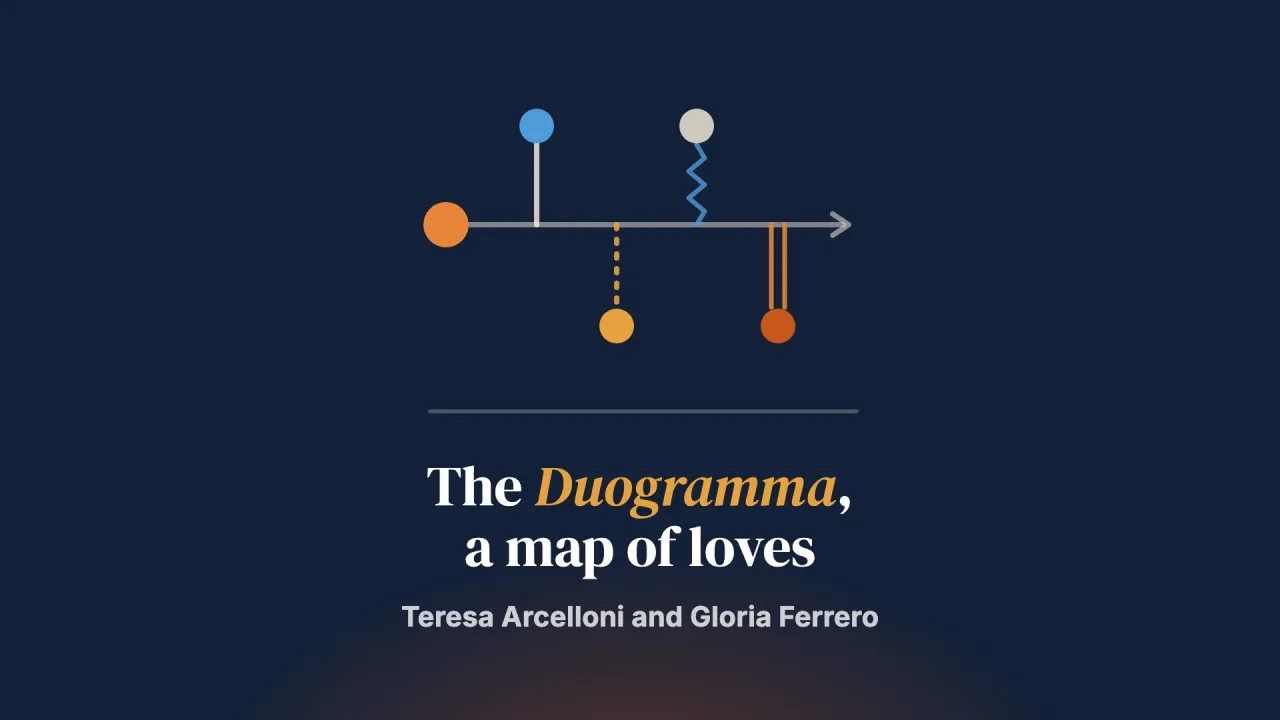
The Duogramma®: An innovative methodology for psychotherapy
A map of the couple relationships lived, desired or rejected since childhood: the Duogramma®, its graphic rules and its use in individual therapy.
 Blog
Challenging in therapy: What a patient taught me
A couples therapy session led me to reflect on confrontation, authenticity and resonance: how to address difficult behaviour without invalidating the person.
 Scientific
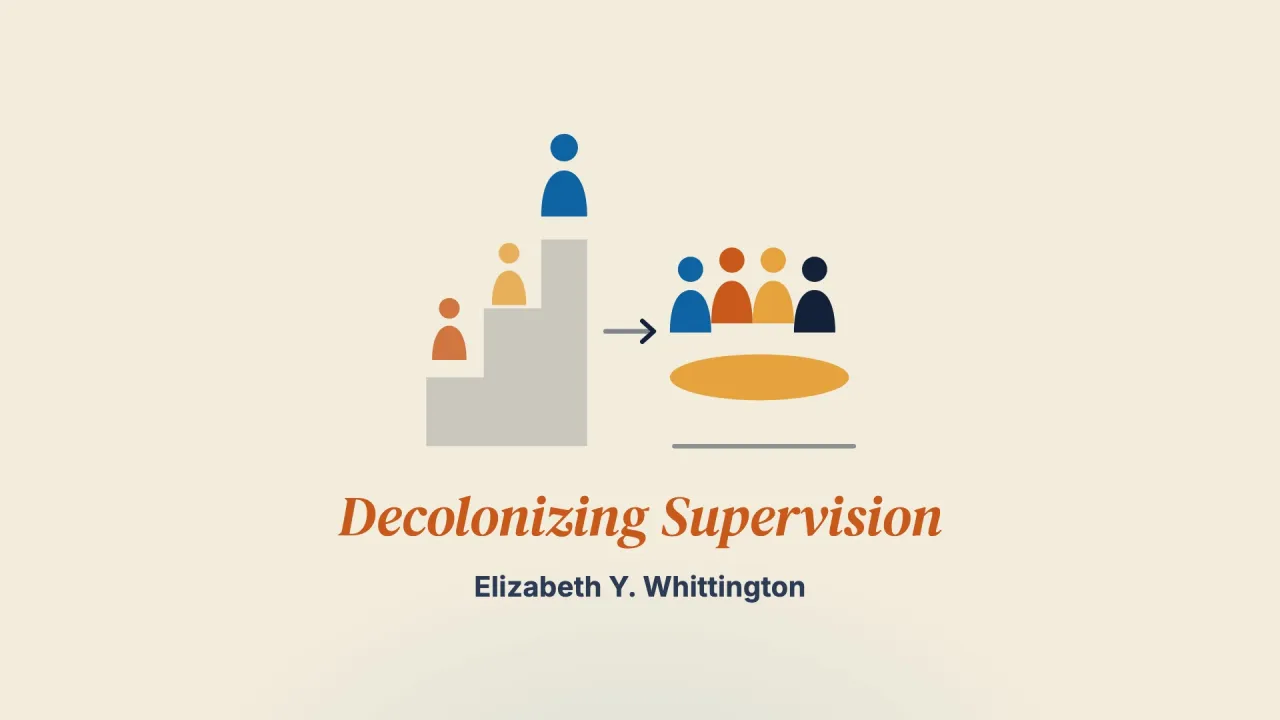
Decolonizing Supervision: A Critical Race and Queer Theory Framework for Marriage and Family Therapy
Supervision is not neutral: a framework drawing on Critical Race Theory and Queer Theory to name and share power in supervision, with a vignette.
 Scientific
Internal Family Systems Therapy as Part of the ‘Family of Systemic Therapies’: A Critical Exploration of Systemic Practice in the Intra-Personal Domain
Does IFS belong to the family of systemic therapies? A critical exploration, grounded in a family court vignette, of systemic work with “parts”.
Comments 0
Log in to join the discussion. Log in