AI-assisted translation
This version was translated from Spanish by Complexe Systémique with the help of artificial intelligence. In case of doubt, the original version prevails.
Red Sistémica · Couple therapy
What a systemic therapist saw in a play
For a little over an hour, two actors showed what goes on in a couple who meet again after twenty-five years of marriage and two years of divorce. Miguel Mihanovich, a family therapist, was in the audience: he sets out here the commentaries he had the pleasure of elaborating that evening in front of the stage – on falling in love and on love, on the mandates of the families of origin, on the vicissitudes of sexuality, on the language of love, that of conflict and that of dialogue – and asks himself, in closing, at what point Alberto and Silvia might have pushed open a therapist’s door.
“One does not enter the future walking backwards.”
Miguel Mihanovich
Editor’s introduction – “These are loves…”
“The heart has its reasons, which reason knows nothing of…” – Pascal
In search of those reasons of the heart, a study led by a researcher of the Conicet (1) concludes that physical attraction and sexual performance are not, for today’s adolescents (aged 13 to 25), reasons for forming a couple, still less for falling in love. What counts for them is mutual attraction in the romantic sense of the term, love, trust, sympathy and emotional maturity.
Beyond the changes brought by time and the questions proper to the life cycle of human beings, it does seem that what not only sustains us, but also gives us energy and allows us to build the hope of a better relational ecology, is our loving bonds with our fellow human beings: bonds that need to take root in trust, in emotional wisdom and, naturally, in the small acts of daily life. Moreover, the richness of a loving relationship, bearing love given and received, constitutes a world of events that no articulate language would suffice to explain. The articles by Miguel Mihanovich (*) and Sergio Sinay (**) bring descriptions, analyses and original proposals to the complex and essential universe of conjugal love, peopled with encounters and disagreements, illusions and disillusions.
The following words of the actors Susana Cart and Arturo Bonin, a couple in real life and performers of two reflective comedies about the couple (Hasta que la Muerte nos Separe and Como ríe la vida), express to my mind the emotional intelligence and the proactive attitude of those who wager on life as a pair:
“… We are defenders of shared life. We often tell each other that we would have at least four or five daily reasons to separate, but we have taken the political decision to fight for our deepest bonds.” (2)
Claudio Des Champs
(1) Dr Martina Casullo.
(2) Perspectivas Sistémicas no. 72, July-August 2002.
In front of the stage
And the actors finally brought the performance to a close (1). For a little over an hour, Arturo Bonin and Susana Cart showed us, impeccably, what was happening to a couple when, after twenty-five years of marriage and two years of divorce, they met again at the wake of a couple of gay friends. The allusions to their past life, between amused reproaches and tender reminiscences, made up a verbal exchange that fascinated this therapist – who now finds himself in the curious situation of sharing the commentaries he had the pleasure of elaborating on the spot with those who, perhaps, did not see Hasta que la vida nos separe, by Martín Diez. We shall inevitably forget a good deal of what we said and, conversely, it is quite possible that ideas we did not have that day will come to us today. For, beyond the games of memory, different contexts engender different developments. Let us see what comes of it.
Love and falling in love
To begin with, Alberto and Silvia once formed a couple. As we have said elsewhere, we no longer think of the couple today as an undifferentiated totality, but as the relation of two human beings engaged in a dance, each in search of confirmation in the gaze of another. That validation must be given in a particular dialogue, one which not only justifies the choice but promises its continuity and its exclusivity. On stage, the couple allude to the moment of their first meeting: a young man who stumbles with his bicycle while gazing at a young woman coming home from the shops. That is where falling in love arises, that privileged instant of the unexpected choice.
The distinction between falling in love and loving is a classic one.
Falling in love
It is a surprise. It strikes us, it makes us strangers to ourselves. The one who falls in love desires. We human beings feel nostalgia for the state of being in love.
Love
It is a discovery. It is an exploration, a colonisation of the other. The one who loves possesses. And yet it is in love that we settle.
Plato said that we seek in the other what we ourselves lack, in a movement towards an illusory completeness. But he also said, once, that what attracts us in the other are the particularities we suppose to be consonant with those we attribute to ourselves. Either we seek from lack, or we choose from specularity.
We suppose, for our part, that falling in love has to do with the finding of differences, and love with the encounter of similarities. Perhaps love is not the point of departure, but the point of arrival of what falling in love had once announced. Perhaps couples should ask themselves once: are we living, or have we lived, in such a way that we can gain access to love?
When we speak of differences, we distinguish the recognition of what is different in the other – an enriching discovery, which must be respected – from the difference that is experienced as the desertion of something one had imagined out of one’s own need.
Alberto and Silvia seem anchored more in the differences than in the similarities that might bring them together. Alberto, if we are to believe Silvia’s description, has always been a sort of beast dressed in silk. And Silvia was something like a delicate, romantic little lady, in Alberto’s memory. And one wonders: why does a romantic woman choose a beast dressed in silk? Perhaps, in this case, in order to be initiated into the secrets of tumultuous love, of ardent passion, of permissive fervour. But the beast, for his part, desires the silk the romantic brings him: the possibility of the illusion he cannot manage to give shape to, the romance his life lacks. And out of that initial desire for what one does not have – a desire neither acknowledged nor even registered –, each chooses the other, more eager to acquire what they do not possess than to give what they have in excess. And the aspiration, neither declared nor satisfied, turns into reproach: why does the other not give what they possess and seemed to promise?
This unsatisfied appetite then freezes into a quarrelsome dissatisfaction: Alberto no longer makes love to Silvia in unexpected places, the living-room carpet, the kitchen or some other makeshift spot. And Silvia reads her novels alone, which open up a world of fantasy to her. These two beings, as often happens, have forged the other, at least in part, out of the illusion to which their emptinesses have driven them. For in the choice of a partner, as we said above, it is our needs, our unconscious appetites, that make us hallucinate the other: they are no longer who they are, but who we invent. This stage is followed by the corresponding dis-illusion, with its disturbing suspicion of betrayal: although they could have been the one they showed themselves to be, the other decides to be that other one, different. If the couple succeeds, this inescapable stage will be followed by another, of dis-covery, of exteriorisation of other aspects that mutual urgencies kept hidden.
The families of origin. The vicissitudes of sexuality
But that is not the case of Alberto and Silvia. At least not entirely, since they stayed together for twenty-five years. Why did they not reach that other phase? Here we think of the mandates of the families of origin. For Alberto’s father, Silvia was a suspect Marxist who was not suitable for his son. And for Silvia’s family, Alberto was the son of a fascist Italian whom she had to flee. And both of them did the same thing: they defied the family mandate and married, but they submitted to those mandates and separated. For in order to unite with the strangeness of the other, he and she must move away from a family bond which, at that moment, enters into crisis.
This new relation will be vicarious of another, earlier one, from which it derives its imbalance and whose alteration it provokes. It may be pertinent, for therapists, to seek to know whether the new bond has called the previous one into question, or whether some limitation has sought its satisfaction in the potential couple.
Partial submission to family prescriptions appears in slightly transgressive conducts, as a stimulating ingredient of the relation. This can be seen very clearly in sexuality. Until the birth of the children, sexuality was impetuous and passionate. With the arrival of the children, that sexuality died down, became less frequent, lost its vigour. Why did that happen? In this couple, sexuality had a transgressive, exciting aspect. When Silvia deduces that their two gay friends died in a car accident while abandoning themselves to sexual pleasure, she is enthralled by that death in the midst of passion. Before, she and Alberto used to make love anywhere, with a mischievous spontaneity. But the birth of the children legitimises sexuality; it gives it an air of social everydayness, of official permissiveness, of announced habit that clouds the imagination. The playful act, tinged with a malicious immodesty, is replaced by a predictable and almost obligatory practice. Neither the beast dressed in silk nor the incurable romantic survives that metamorphosis!
And the two of them, disenchanted, become entangled in an interminable pseudo-dialogue, a repeated duel of parallel monologues, frozen in reproach and demand, where each listens to the other only in order to contradict and reject them. At one moment in this exchange, Silvia reproaches her husband for a trip they took to Europe, during which they visited an incalculable number of cities without lingering in any of them. Might this be an indirect way of speaking of a hurried sexuality, without the slowness necessary to shared pleasure? And Alberto, in his turn, remembers the flat he acquired thanks to the notorious law 1050. They too are subject to a 1050: to a debt impossible to repay, but which keeps them in the obstinate illusion of an unattainable restitution. Never will the other be the one each of them desired out of a barely acknowledged lack; never will one of them be able to make the other yield, to oblige them to acknowledge their error – but the hope of a victory they will never obtain keeps them united in an interminable colloquy.
The language of love, that of conflict and dialogue
We have distinguished, in the past, the language of love, the language of conflict and enlightening dialogue.
The language of love
We said then that, in the conversation of love, old words sound new: “I love you, I desire you, I miss you, I seek you” may be old words, but they sound like inaugurations to the ears of whoever listens to them. Those voices, addressed to the beloved in intimacy, are first times for a singular situation. They are heard with delight and answered with analogous messages, which likewise induce pleasure. Listening is placed at the service of intensifying the propitious emotions, and the answer tends towards maintaining the state of enjoyment. The escalation leads to the tangible answer of the kiss and the caress, up to the dialogue of the bodies that culminates in shared physical pleasure. The repetition of the cycle intensifies the bond.
The language of conflict
In conflict, words, worn out by sterile obstinacy, are renewed in repeated demand, permanent complaint or tenacious resentment. The answer freezes into a recidivist discourse of defence and attack, withered by a selective deafness to what the other says. Listening is placed at the service of argumentation, and the final desire is the defeat of the other. The escalation leads to the appearance of verbal or physical violence, and the repetition of the cycle adds no variety.
True dialogue
In true dialogue, the story proposed by one of the members is listened to with curiosity and receives in return a discourse that involves some unprecedented alternative. And one does not answer with an already deteriorated discourse: one answers the alternative that has just arisen, which permanently inaugurates new paths. This ideal dialogue always opens onto new knowledge, and its escalation leads to a greater knowledge of the other and, complementarily, of each one’s own self.
Love
That feeling which makes old words new, which stimulates the complementary answer and ends by fortifying the bond.
Resentment
That affect which crystallises repeated speech, which stimulates the contradictory reply and which culminates in violence.
Curiosity
That position which encourages the search, which is not satisfied with the negation of what the other has said, and whose amplification enriches understanding and solidifies the bond.
Consequently, the absence of a true dialogue has barred this couple from access to a project, to a shared undertaking in a desired future. For a project does not consist in filling a void – as, in this case, the countless purchases that ended in an absurd telescope. A project consists in advancing on what has been obtained. One does not only seek what is lacking: one anticipates what completes.
Key takeaway
The three registers are distinguished less by their words than by what listening serves in each of them. In love, listening serves to intensify the propitious emotion; in conflict, it serves argumentation and aims at the defeat of the other; in dialogue, it serves curiosity and answers the alternative that has just appeared. All three know an escalation: that of love leads to the dialogue of the bodies, that of conflict to violence, that of dialogue to a greater knowledge of the other and of oneself.
The therapist’s moment?
There are, however, two moments in Alberto and Silvia’s conversation that I should like to save from oblivion.
At one point, the couple draw imperceptibly closer, with a certain tenderness and something of their old love, which makes a physical rapprochement almost predictable. At that instant there appears something like the temptation to restore the former relation, the one that was desired; to go back, towards an amorous emotional situation. That can be dangerous. Nostalgia is not a good argument for reunion. One does not enter the future walking backwards. If one yields to the seductive emotion of “becoming again what we have been”, one will almost inescapably end up returning to “being what we are”. Silvia and Alberto avoid that danger and draw apart out of caution.
And in another sequence, while husband and wife hurl abuse at one another, evoking what time has made of each of them, Alberto abruptly steps out of the script and praises Silvia. She, who had already begun the aggressive discourse, breaks off, astonished, and does not hear the sarcasm with which Alberto continues his commentary – said this time to himself, as though he were protecting her for a moment from his acid words. If the couple had been able to continue along that road, what would the dialogue to come look like?
We do not know, but this scene recalls another, analogous one, in a sister work of the theatre: Dangerous Corner, by J. B. Priestley, where a word, heard or not heard, modifies the whole of the rest of the story.
And one last commentary. Would Alberto and Silvia consult a therapist? At what moment? This question leads us to the final scene.
Silvia and Alberto introduce themselves to one another as two strangers, supposedly freed from their history, accepting and revealing to the other their present ages and the children they have, replacing that old adolescent encounter with this one, turned henceforth towards the future. Will they be able to reach it together? It would please me to be able to embark with them on that possible adventure, as their couple therapist.
Notes from the original
(1) Referring to the theatrical performance of 10 August 2002, within the framework of the day organised by the A.P.R.A. (Asociación de Psicoterapia de la República Argentina: www.apra.org.ar and www.4cmp.org.ar) and sponsored by Perspectivas Sistémicas, during which Dr Mihanovich was part of the panel of couple therapists from different psychological theories and practices, coordinated by Claudio Des Champs, who commented on the play Hasta que la vida nos separe.
This article was published in no. 73 of Perspectivas Sistémicas, September-October 2002.
Who is Miguel Mihanovich
(*) Dr Mihanovich is a family therapist, general coordinator of the couples team of the Fundación Familias y Parejas.
(**) Sergio Sinay is the author of the book Vivir de a dos, published by Nuevo Extremo.
This article is an English translation of “Lo que vio un terapeuta sistémico frente a un hecho teatral”, published by Red Sistémica (first published in Perspectivas Sistémicas, n° 73, septembre-octobre 2002). Translated and republished with the journal’s permission.
Read the original articleHow to cite this article
Mihanovich, M. (2022). What a systemic therapist saw in a play (Complexe Systémique, Trans.). Complexe Systémique. https://app.complexe-systemique.com/en_GB/articles/what-a-systemic-therapist-saw-in-a-play (Original work published in 2002 in Perspectivas Sistémicas, n° 73, septembre-octobre 2002; republished in 2022 by Red Sistémica, https://redsistemica.ar/2022/07/06/lo-que-vio-un-terapeuta-sistemico-frente-a-un-hecho-teatral/)
To go further
- Couple therapy: “urgency for sameness” or “appreciation of difference”Michael White on difference within the couple: precisely what Alberto and Silvia lack.
- The instability of the conjugal bondWhat wears a couple down over time, this time from the clinical side.
- Joker: the perfect portrait of a mental disorder incubated in a story of unloveAnother therapist’s gaze cast on a work of fiction.
Related training courses
 Symposium
État des Lieux: a psychological approach to spaces
Replay of the “État des Lieux” conference (Paris, 16 October 2026): Ivy Daure, Maurizio Frisina, Viola Sallay and Gilbert Pregno on places as a clinical resource. In French.
 Webinar
Extramarital affairs: what does the therapist do when the couple explodes?
Free webinar: how to position yourself as a systemic therapist in the crisis of the extramarital affair. Revelation, secrecy, multipartiality.
 Webinar
The three loves
Free live webinar with Dr Robert Neuburger, 1 October 2026, 6 pm (Paris): the three loves, attachment and ways of loving. Held in French.
 Certifying course
Training in Systemic Therapy and Interventions – Cycle 1
Certifying training cycle in systemic therapy and interventions – year 1. Courses, supervision and practice, aligned with EFTA/SFTF. In French.
Related articles
 Blog
Challenging in therapy: What a patient taught me
A couples therapy session led me to reflect on confrontation, authenticity and resonance: how to address difficult behaviour without invalidating the person.
 Blog
Adult ADHD: when forgetting turns into a misunderstanding
Forgetting, compensating, tension in the couple: a systemic look at adult ADHD, to understand what is at stake and to look for more fitting forms of support.
 Scientific
Sickle Cell Disease and Young Couples: Understanding the Influence of Shared and Individual Meaning on Couples’ Experience of Illness
Nine young adult couples facing sickle cell disease: how each partner makes sense of the illness, and how the couple moves from caregiving to equality from one crisis to the next.
 Scientific
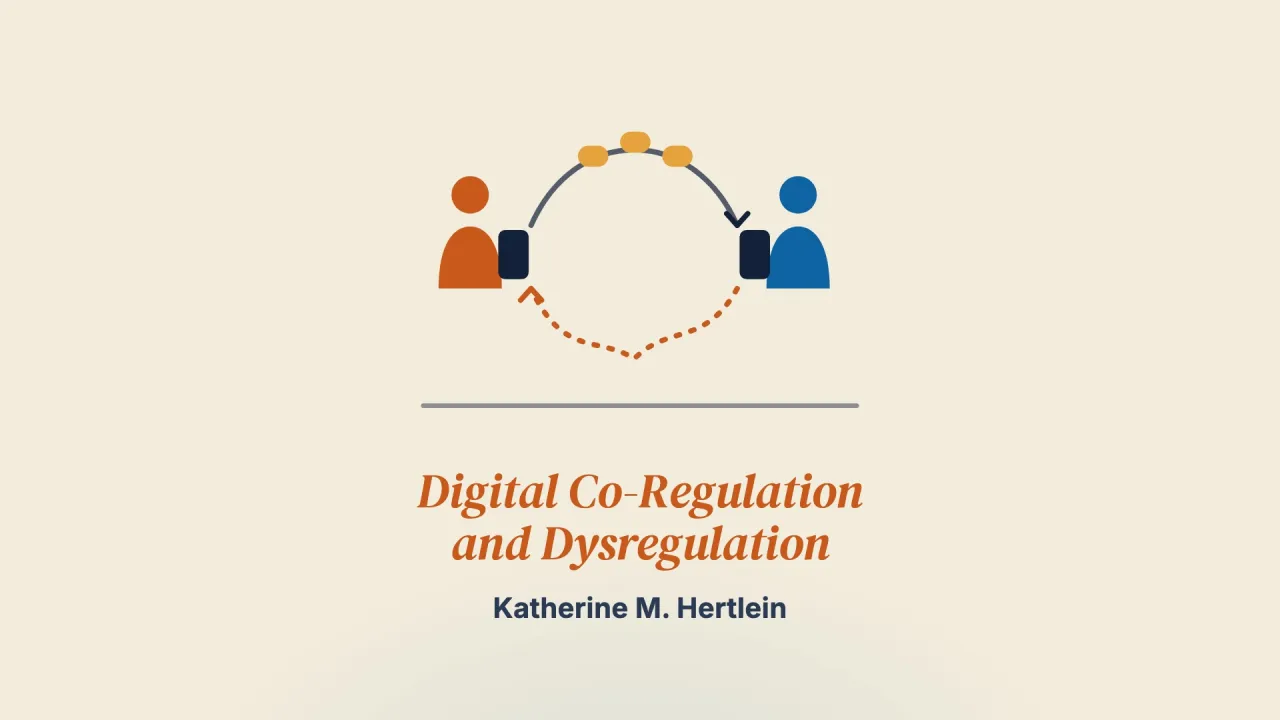
Digital Co-Regulation and Dysregulation in Romantic Relationships: A Systemic Model of Technology-Mediated Emotional Processes
Checking, chasing, blocking: 31 interviews show how the phone regulates or dysregulates a couple’s anxiety, with a systemic model of the loop.
Comments 0
Log in to join the discussion. Log in