AI-assisted translation
This version was translated from French by Complexe Systémique with the help of artificial intelligence. In case of doubt, the original version prevails.
Clinical · Coercive control
You belong to no one: leaving the logics of control, in life as in care
A simple sentence, almost self-evident. And yet, how many relationships — romantic, family, professional, and sometimes even therapeutic — tip over into a logic of possession, of debt, of power?
“You belong to no one.”
This text takes a stand: care is not a power, helping is never dominating, and silence in the face of abuse makes us complicit. It is a call for relational justice: recognising the dignity of the person, clarifying responsibilities, and giving relationships back their supporting function rather than a use as control.
When a relationship becomes domination
Coercive control does not always begin with a shout. It seeps in: ambiguous promises, moral debts, subtle isolation, the disqualification of thought, sustained confusion. In a couple, a team, a family, a training programme or a therapy practice, the frame and the quality of dialogue make the difference between a relationship that lifts and a relationship that holds someone down.
In the systemic field, we know that micro-dynamics — loyalties, debts, secrets, double binds — can turn a helping relationship into a mechanics of domination if no one is tasked with thinking through its effects.
Complicit silences: a systemic phenomenon
Institutional omertà has its own drivers: loyalty to the group, fear of reprisals, the rhetoric of neutrality, moral fatigue. Social psychology has long described the bystander effect: the more witnesses there are, the less each of them feels responsible for acting. Care does not escape this diffusion of responsibility — hence the need for explicit roles and alert procedures.
Relational justice: a compass for the ethics of care
In contextual therapy, Boszormenyi-Nagy speaks of relational justice: balance of contributions, reliability, accountability, loyal transmission across generations. This compass invites professionals to position themselves not “above”, but in the service of the reliability of the bond.
Neutrality in systemic practice, as the Milan school conceives it, is not indifference: it is a position of multidirectional curiosity — hypothesising, circularity, neutrality — that prevents domination; it does not tolerate it. When “neutrality” becomes a pretext for silence in the face of violence, it betrays its function.
Why talk about all this now?
Because transparency is called for. I have witnessed, in some institutions, dynamics of control covered over by a façade of loyalty, the veneer of “neutrality” and sometimes omertà. I refuse from now on to normalise them.
It is high time we had the courage to fight them: naming them plainly, documenting them, protecting those who suffer from them, demanding clear procedures and effective checks and balances, and agreeing to put our own practices into question. Care has nothing to fear from the light; what the light threatens are the arrangements that manufacture impunity.
Let us speak, let us act, and let us hold the line of a relational justice that protects. The full talk — in French — can be watched below.
How to cite this article
Besse, J. (2025, October 12). You belong to no one: leaving the logics of control, in life as in care. Complexe Systémique. https://app.complexe-systemique.com/en_GB/articles/you-belong-to-no-one-leaving-the-logics-of-control-in-life-as-in-care
To go further
- The mechanisms of coercive control: a systemic perspectiveHow mental domination settles in step by step, and what makes it so hard to name from the inside.
- Why do some people cause harm without ever questioning themselves?What allows some people to hurt those around them lastingly without ever questioning their own part in it.
- Sexual violence, a systemic perspective: acting and preventingActing and preventing rather than merely observing: what a systemic reading changes in how institutions handle violence.
Related training courses
 Webinar
Extramarital affairs: what does the therapist do when the couple explodes?
Free webinar: how to position yourself as a systemic therapist in the crisis of the extramarital affair. Revelation, secrecy, multipartiality.
 Certifying course
Training in Systemic Therapy and Interventions – Cycle 1
Certifying training cycle in systemic therapy and interventions – year 1. Courses, supervision and practice, aligned with EFTA/SFTF. In French.
 Certifying course
Training in Systemic Therapy and Interventions – Cycle 2
Certifying training cycle in systemic therapy and interventions – year 2. Clinical complexity, supervision and practice. EFTA/SFTF aligned. In French.
 Certifying course
Training in Systemic Therapy and Interventions – Cycle 3
Certifying training cycle in systemic therapy and interventions – year 3. In-depth intervention, supervision and practice. EFTA/SFTF aligned. In French.
Related articles
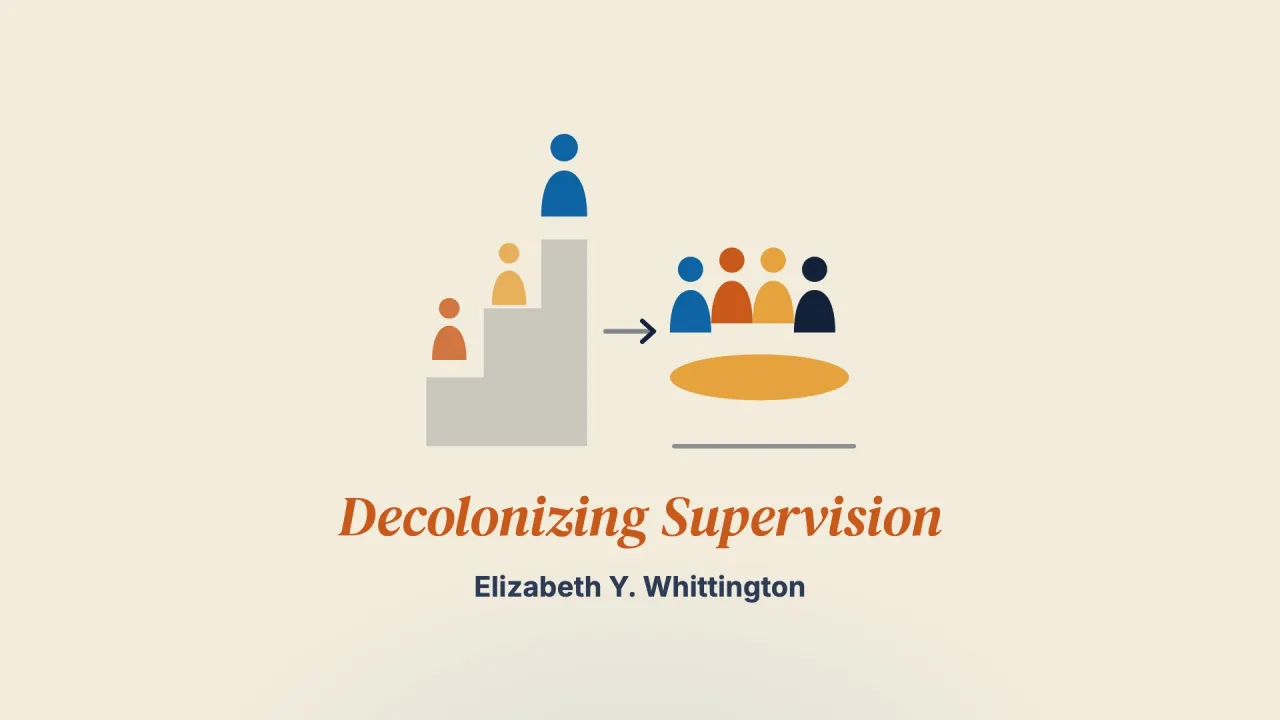 Scientific
 Decolonizing Supervision: A Critical Race and Queer Theory Framework for Marriage and Family Therapy
Supervision is not neutral: a framework drawing on Critical Race Theory and Queer Theory to name and share power in supervision, with a vignette.
 Scientific
 Internal Family Systems Therapy as Part of the ‘Family of Systemic Therapies’: A Critical Exploration of Systemic Practice in the Intra-Personal Domain
Does IFS belong to the family of systemic therapies? A critical exploration, grounded in a family court vignette, of systemic work with “parts”.
 Scientific
 Implementing Family Group Decision-Making within statutory child protection social work in Scotland: Challenges and opportunities
Family group decision-making offered automatically in Scottish child protection: families find a voice, social workers doubt the plans, and everyone wants it offered earlier.
 Blog
Blog Toxic, narcissistic, borderline: what therapy speak does to your relationships
Narcissistic, borderline, toxic: therapy speak has left the consulting room. Julien Besse shows how these labels close the debate and relieve us of our own part.
Comments 0
Log in to join the discussion. Log in