Journal of Family Theory & Review · Family
Becoming adopted: Rebuilding adoptive identity through artifacts
Adopted within a closed system, and later the adoptive mother of a child from Nepal, Ellen Reeve turns her dual position into a field of research. An original birth certificate, an orphanage weight chart, a shoebox, a lock of hair: examined together with others, these pre-adoptive objects loosen fixed narratives and reopen the question of how one becomes adopted.
This is a reformatted republication of Becoming adopted: Rebuilding adoptive identity through artifacts, by Ellen Reeve, published in Journal of Family Theory & Review (Wiley) (2025), doi: 10.1111/jftr.12635, under a CC BY 4.0 licence. Prepared by Complexe Systémique in September 2026: the authors’ text is unchanged; the layout has been adapted for reading online, which constitutes a modification of the work under the terms of the licence. This edition was made neither by the authors nor by the publisher, who are not responsible for its content or for any errors. The original version prevails.
Objects do not speak independently. They are interpreted, reinterpreted, and sometimes resisted.
Ellen Reeve
Abstract
In this article, I share my experiences navigating identity formation as an adult adopted in childhood. I examine my unique and complicated perspective both as an adoptee and as an adoptive parent. By engaging with others, I highlight the inner world of adoptees—an aspect of identity that is often difficult to capture in theory or practice. Their experiences are shaped by complex, fragile emotions that resist easy explanation. This article reflects my exploration with pre-adoptive artifacts, such as photographs, clothing, birth and foster documents, and letters, which helped illuminate facets of my birth-through-adoption history. When shared and critically examined with other adoptees, these objects can serve as valuable tools for addressing sensitive questions about belonging, selfhood, and family. Artifacts associated with adoption also provide emotional depth to identity exploration. Through this reflection, I offer insights into the ever-conflicting ways adoptees become adopted.
Introduction
This paper contributes to Reflexive Voices by offering a personal perspective on my research with adults adopted in childhood. Reflexive practices in research inherently require the ability to reconcile one's beliefs and ideas embedded within personal narratives (Allen, 2000, 2023). In my research, I often found myself confronting the vulnerability of my positionality, particularly as I navigate my role as both an adoptee and an adoptive parent within a field marked by opposing viewpoints. In adoptee-led settings, I quickly learned to read the room for fear of silencing the conversations. These adoptees had strong feelings about their adoptive parents. One adoptee had emancipated from her adoptive parents, discarding all inheritances connected to her. Concealing my role as an adoptive mother, I felt like a mole in a room of marginalized individuals—recognizing and feeling their pain yet wondering if I was also unintentionally contributing to it. It is an agonizing and uncomfortable position to occupy.
Adoption and family scholar Goldberg (2023) suggests reflexive practice should “keep us honest—ideally enabling us to reflect on how our own positionality and personal vantage point function as sources of vulnerability and strength, both of which are assets in our quest for knowledge” (p. 230). In that spirit, I begin by sharing my experiences as a same-race, domestic adoptee from a closed adoption system. With little information about my birth, I analyze the ways I became adopted. Next, I offer stories from other adoptees, including my adopted son.
In this paper, I theorize the value of using artifacts to solidify, clarify, and enrich adoption narratives. As an adoptee, adoptive mother, and adoption researcher, I have learned that deep engagement with evocative objects can loosen and realign the fixed elements of an adoption story. Pre-adoptive artifacts are objects tied to an adoptee's history, culture, and identity formation. Many adoptees unknowingly hold fragile breadcrumbs vicariously carried from their past that can stabilize and strengthen a complex story. These include letters written by birth mothers, sweaters worn in orphanages, shoes worn in foster care, a weight chart marking growth while orphaned, a freckle distinguishing identical twins, and a $12 receipt. These artifacts overlapped, entangled, and dramatically changed what adoptees believed was their adoption story. When adoptees found themselves caught in the middle between their adoptive history and birth history, artifacts helped us find a truth.
By bringing anthropological and material culture perspectives to family science, I illustrate how objects can become teachers if given the opportunity. Having spent over 20 years teaching elementary and middle school students, I advocate for lessons involving collaborative, experiential inquiry. I believe show-and-tell sessions should be a staple in all classrooms, irrespective of age, as objects curated with care possess a magical storytelling quality. By taking an interdisciplinary approach to adoptive identity, I illuminate the adoptee's complex narrative, often stretched in opposing directions. Through sharing my own story and the stories of others, I illustrate how shared engagement with objects can be empowering and can help adoptees reinvent the ways we became adopted.
When I was around five, my parents told me I was adopted. I remember telling my friends about it. Adoption seemed like a word that made me feel special. I never once connected sad fictionalized stories like Bambi, Cinderella, The Ugly Duckling, Anne of Green Gables, or James and the Giant Peach to my real story of orphanhood. However, two of my favorite books as a child were Black Beauty and The Prince and the Pauper. Both stories center around characters like me, who experienced dramatic shifts in identity and social status.
As an adoptee from a closed setting, my biological inheritance was severed at birth, leaving me grafted to a marriage of Scottish and Norwegian trees with new parents, customs, smells, behaviors, and ethnic pride for fjords, the midnight sun, golf, and kilts. When I was younger, I rarely considered my life before adoption. I didn't know where I was before entering my adoptive family home, for how long, with whom, or why. According to what little I know about my history, I must accept a possible reality that my 16-year-old mother performed her defining and finite role as birth mother and then simply returned home. I never considered her to have a history—a life beyond my birth.
As a child, I accepted my adoptive identity as complete and unquestionable. My identity development progressed through the established stages of adoptive identity development, which is the process by which adoptees come to understand and articulate their sense of self within the context of adoption (Grotevant & Von Korff, 2011). However, Grotevant and Von Korff (2011) further argue that adoptive identity formation requires an integration of one's life narrative. Although I understood myself within the context of adoption, I lacked a clear sense of how my pre-adoptive life fit into my overall story. I held an amended birth certificate—one that lists only my adoptive parents and new adoptive name. While this document signifies legal belonging, it can obscure my original narrative, complicating efforts to construct a continuous and authentic sense of self.
As years passed, I came to feel that beneath the official documents and family stories of how I was chosen because my mother wanted what was best for me, there was a layer of amended, incomplete truths claiming authority over who I was. I longed for someone to guide me through the undocumented hours of my birth, the missing days of infancy, and the moment I entered my adoptive home—chapters of a story I never got to read.
Today, my constantly refined personal identity is comprised of countless, often conflicting perceptions of self—both as an adoptee and as a person before my adoption. My sense of self is shaped not only by my interactions with my adoptive family members but also by the absence of my biological family members. Navigating my identity involved managing the tension between the open and closed loops of my adoption story. As I explain, discovering my biological family through DNA test results introduced a timeline that did not align with my sense of self as solely an adopted person. I held these two opposing facets together by reflecting on the moment in time when I was becoming adopted. My adoptive identity reflects this ardent journey. I argue that being part of multiple families, cultures, and backgrounds requires an inclusive, flexible, and contextually grounded approach to identity—one that aligns with the layered and often non-linear experiences of adoptees.
Theorizing adoptive identity
Researchers can explore adoptive identity through many lenses. I highlight a constructivist theory, which emphasizes the role of active participation in locating order and significance in life events that shape one's identity (Mahat-Shamir & Pitcho-Prelorentzos, 2019). From this perspective, adoptees construct their identity through ongoing engagement with their birth history, their adoptive families, and the social environments around them. This identity construction is seen as fluid and evolving, not fixed, and is shaped by the adoptee's experiences and relationships.
While conducting qualitative interviews with adoptees, I asked participants to share any pre-adoptive artifacts like the objects I had collected, such as a birth certificate, DNA results, photos, a quilt made by my paternal grandmother, and a yearbook with a picture of my birth father. I initially learned that information gleaned from artifacts failed to ignite a sense of awe or wonder. Instead, the partial facts I collected added anger, confusion, and frustration. I hoped these artifacts could move my story along, but I felt my collection contained puzzle pieces that all seemed out of place, thrown carelessly in the wrong box. The new puzzle made a distorted, Picasso-like image of a family I can't recall. Other adoptees I met felt the same way. One adoptee, Tasha, who is biracial, recently found her birthmother after piecing together several documents. She discovered they live just miles apart. Although they acknowledged their physical proximity, Tasha's birth mother was unable—or unwilling—to meet with her in person, even after Tasha had disclosed a breast cancer diagnosis. Instead, her birth mother offered Tasha and her husband a free stay at her condo in a Mexican resort. Tasha is left with a deep sense of emotional distance from her birth mother, highlighting the painful gap between physical closeness and relational connection.
Luckily, during my interview sessions, Tasha was willing to re-explore all the physical evidence that connected her birth and adoptive life. The magic of show-and-tell happens when we use the kindling of our past to ignite a new fire. We sat with her documents, photos, birth certificates (original and amended), and foster letters for months. In my interviews with adoptees, I noticed participants, including me, leaned in when people placed their pre-adoptive artifacts on the table or video screen. The artifacts kept us engaged and at the edge of our seats. Facial expressions turned from rather serious to lifted smiles or curious glances. Sentences became exclamatory and inquisitive as artifacts captured a time before we had memory. These objects thoroughly captivated our attention through our collective engagement as we reordered, classified, and calibrated our multi-dimensional world. Through our archeological exploration, we began to realize the events surrounding our birth held succinct reasons why a birthmother such as Tasha's, who is White, could never reveal the birthfather's name, who is Black. Our artifacts helped gain traction, opening a window of understanding that revealed the socio-cultural and economic times that define decisions like maternal relinquishment. Later in this article, I introduce one of Tasha's artifacts that allowed us to have a more open mind, encouraging our yearning to imagine her life before adoption. This artifact made the identity puzzle less distorted and more desirable for learning.
I point to two psychologists who believed in the active involvement and engagement of learning. Psychologist Lev Vygotsky (1978) focused his research on the social and cultural aspects of learning, particularly the role of language and interaction. Vygotsky's ideas suggest that identity construction is a dynamic process influenced by social interactions, language, cultural contexts, and collaborative learning. Through these interactions and shared experiences, individuals develop their sense of who they are, constantly negotiating and re-negotiating their identities with people and the culture around them. Piaget and Carmichael's (1973) theories share similarities with Vygotsky's in several ways. Both psychologists view knowledge as something individuals construct through active engagement with their environment rather than as something that is passively received. In my research with adults who were adopted in childhood, I explored how adoptees can take a more active role in shaping their understanding of adoptive identity. I set out to uncover the hidden or overlooked aspects of their past.
Literature specifically relating to adoptive identity is abundant. The fluidity and ambiguity of identity are particularly evident in populations such as immigrants and adoptees who must swiftly adapt to their new cultural contexts (Grotevant et al., 2017; Yasin, 2021). Identity for all individuals undergoes evolution over time. Researchers in adoption have focused on Erikson's (1959) stage of identity versus role confusion, typically encountered during adolescence and emerging adulthood (Grotevant et al., 2007; Grotevant & Von Korff, 2011). This stage of identity development poses significant challenges for adoptees, often due to limited knowledge about birth relatives and the circumstances surrounding their conception, birth, and relinquishment before adoption (Grotevant & Von Korff, 2011). In the context of my closed adoption, which was shrouded in secrecy, I had lived cautiously, calculating how much love I could offer myself and others, as if it might one day run out, leaving me once again unloved on a lonely stretch of highway. I argue that adoptees with undisclosed pasts deserve more opportunities—and support—to explore their histories. While we may appreciate our adoptive homes, gratitude alone doesn't free us from the sadness of losing our original home.
I gained insight from Erik Erikson (1959), the famed psychologist who developed an eight-stage development theory. Erikson did not know his biological father. He carried his stepfather's last name, Homburger, until, at age 34, he reinvented himself as Erik Erikson. He became the “son of Erik”—or essentially, the son of himself (Maree, 2021). Mezirow (1991) explains the need for reinvention. He states, “It is not so much what happens to people but how they interpret and explain what happens to them that determines their actions, their contentment, and emotional well-being, and their performance” (p. xiii).
Based on my experience speaking with adoptees, aspects of identity formation still lack a solid understanding. Consider the kinds of stories told by adoptive parents to their children adopted internationally. Notice how many of these details, shared in my sessions with adoptees, begin with someone's adoption rather than their birth. “I arrived on a South Korean flight, unaccompanied and in a cardboard box.”
“I was found on the streets of Kathmandu, so malnourished I couldn't walk.”
“I was left on the steps of the police station, so newly born, my umbilical cord was still attached.” Adoption stories, often fear-based, get stored in the subconscious mind, waiting for a stimulus–response behavior—assisting with everyday decisions. The ways adoptive parents describe details with their adopted children matters. Many stories, like the narrations listed above, are limiting and disempowering. Lipton (2015), in his book The Biology of Belief, explains, “Our lives are essentially a printout of our subconscious programs, behaviors that were fundamentally acquired from others (our parents, family, and community) before we were six years old” (p. 122). In the spirit of Erik Erikson, adoptive identity construction requires a reinvention of self through an exploratory journey.
In my sessions with adoptees, the initial excavation of our past resulted in conflicting summaries of life before adoption. Participants weren't sure where they were before they were adopted. Many couldn't answer what they were named at birth. For most people in my study, the absence of these essential facts quietly unraveled a disoriented timeline that constantly challenges and confuses what we know to be true about ourselves. Through a careful engagement with artifacts, we uncovered secret birth relatives, birth names, and more accurate birth dates, all while challenging our adoptive, genetic, cultural, and ethnic identities. By honing our observational skills, clues arose slowly from the recesses of our bodies. Freckles speak volumes if found in the same spot on both a mother and daughter's cheek.
Archaeologists begin to make meaning of their discoveries once artifacts are placed in context—cultural, historical, spatial, and temporal. It is not just the object itself but where it was found, what was around it, how it was used, and by whom. Sometimes, after years and decades, meaning emerges through careful interpretation, comparison, and often storytelling grounded in evidence. I offer an example of my recent reunion with a biological family member to show how subtle and slow the process of meaning-making can be for adoptees who search.
Unearthing identity
After a lifetime of secrets, I searched for, found, and met my only living relative other than my 24-year-old daughter. I recently discovered a biological uncle, Moses, through Ancestry.com. Moses is 100% Jewish. His younger brother, Joe, was my father. When I was born, my father fought a battle with an unknown disease that stopped his breath at age 20. He never knew he had fathered a child. I stayed in an orphanage for six months until my adoption.
Moses took his time to agree to meet me. Joe had died decades earlier. The thought of someone arising from his death seemed peculiar to us both. Consequently, arranging a meeting took time and considerable patience. Once given the go-ahead, I flew from my hometown in Colorado to Connecticut on a stunningly gorgeous autumn day. We first met at his house before lunch at a local inn.
Our initial meeting was awkward. My uncle walked down the steps of his home in a heavily wooded lot in Connecticut and turned his back on me to check out something growing on the opposite side of his waist-high retaining wall. I recognized this turned-back posture. My mother did the same. She gave birth to me, turned her back, and walked away. I didn't want that to happen again, so I walked up to my uncle, looked over the wall, and said, “What are you looking at?”
“Ivy. It's crawling up this wall, taking over.” I believed he was talking about me.
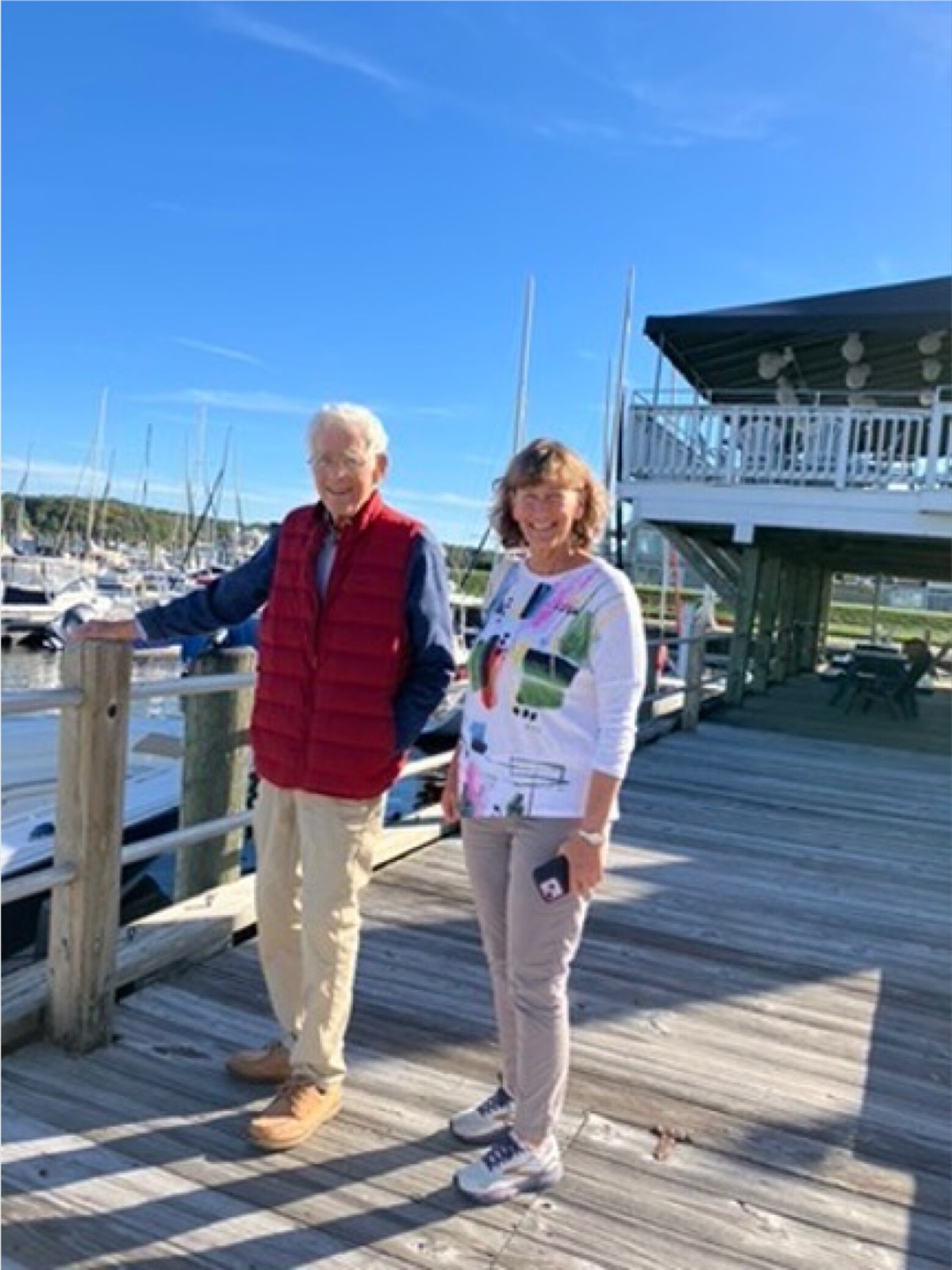
In time, we settled into a conversation that eased our discomfort. We both love swimming. We like quiet, witty jokes. At 89, Moses bought a new sailboat and came in sixth place in last week's regatta. He was a doctor, and now he sails a boat. When he mentioned the high cost of keeping a boat, he said, “Do you know my uncle?” I didn't know anyone in his family, but he said I knew his uncle. “Uncle Sam,” he said. At the close of our time together, I thanked him for having the courage to meet a stranger, invite her to his home, and share a bit of his life with her. He said, “I have met many strangers who have become my friends, and I have met many family members who are strangers to me. You are welcome back anytime.”
I became an adoption researcher because my adoption narrative mirrors many others. Adoptees searching for their birth families need a way to transform the odd, fragmented facts of their story into something more meaningful—a feeling. For many adoptees, unearthing and truly recognizing their past is nearly impossible. The mothers, fathers, uncles, and siblings discovered through searching are often shadow figures, no longer carrying the magical, fulfilling birth story that could frame one's identity. In my mind's eye, my birth relatives were young, vibrant, famous, and fantastic. Moses, at 89, walked with a slow, slight shuffle, his steps marking a lifetime lived without me. On my way home, I wasn't sure how to feel about meeting my uncle. I liked him, both as a relative and as a stranger. But can I truly consider him my uncle? Can strangers, even when they are relatives, ever truly acquire a sense of belonging?
Adoption suspends a person from origin identities situated at birth and transfers this identity to a new time and space. After my reunion, I found myself standing at the crossroads of my birth history and my adoptive history, and it felt liberating to know I could move in either direction.
Artifacts as material evidence
Drawing on Vygotsky's (1978) ideas about the social and cultural influences on identity development, I began to recognize the crucial role of artifacts created and held by various social groups—such as social workers, vital statistics bureaus, attorneys, and birth families—in shaping and challenging our understanding of adoptive identity (Candlin & Guins, 2009). I wanted to use artifacts to explore multiple and conflicting adoption-related voices. According to archeologist Hodder (2012), material culture studies is an interdisciplinary field that examines the physical objects, artifacts, and materials created, used, and valued by human societies. It explores how these objects reflect, shape, and influence cultural practices, social relationships, and identity. Hodder recognized that by studying everyday items such as clothing, tools, architecture, and art, material culture scholars can analyze how objects embody meaning and help construct social, historical, and cultural narratives. The field often intersects with archaeology, anthropology, history, and sociology, emphasizing the relationship between people and the material world around them. Material culture scholars apply an empowering approach to understanding how objects and artifacts reflect cultural values and influence social identity, power dynamics, and collective memory, giving voice to often overlooked or marginalized perspectives. In my study, I allowed people to form a deeper understanding and knowledge of themselves through an unpredictable, unsettling engagement with inanimate material that opened access to a person's narrative history. This transactional knowledge between an object and subject has a not-yet-known outcome (Nordstrom, 2013). In this unrestricted way, an object may inspire a person to act.
Artifacts such as photographs can adjust meaning at each viewing (Nordstrom, 2013). Questions from multiple viewers add a broader perspective of time, setting, character, and plot. When adoptees investigate baby pictures taken before their adoption, they can consider the photographer standing behind the camera. They might notice the angle at which the photo was taken, as well as the time of day or year. They might also ask what is seen or missing from the photo. Each setting takes these pre-adoptive photos, often kept deep in drawers, and establishes a new narrative. Understanding a birth-related artifact aids an adoptee's sense of identity, providing an emancipatory space for research participants (Zuev, 2022). At the end of my sessions with adoptees, the stories shared by participants were more than just adoption stories—they included our time before placement, the imagined lives we might have lived, and the emotional landscapes shaped by absence, searching, and discovery. Pre-adoptive artifacts helped participants achieve this transformation by putting a subtle but important twist on the kaleidoscopic histories of their adoptions. These objects shifted their narratives from abstract loss to tangible connection, allowing adoptees to reimagine their origins not as missing pieces but as meaningful threads woven into a fuller, more coherent identity. Homans (2015) argues that “adoptive origins and origin stories are not discovered in the past so much as they are created in, and for, the present” (p. 114). If guided carefully, adoptees searching for their pre-adoptive history can reconstruct their narrative by recognizing the importance of artifacts acquired and viewed through different chronological horizons (Haug & Hielscher, 2021). I offer my artifact dilemma as an example.
I struggled to make sense of my birth certificate, which had a different, unrecognizable birth name on it. In 2020, New York released original birth certificates for adoptees. Only 15 states allow an adoptee to see their original, not amended, birth certificates. These documents may reveal a real birth name, time and date of birth, a birth mother's name, and maybe even a birth father's name (if he consented). My original birth certificate appears below (Figure 1).
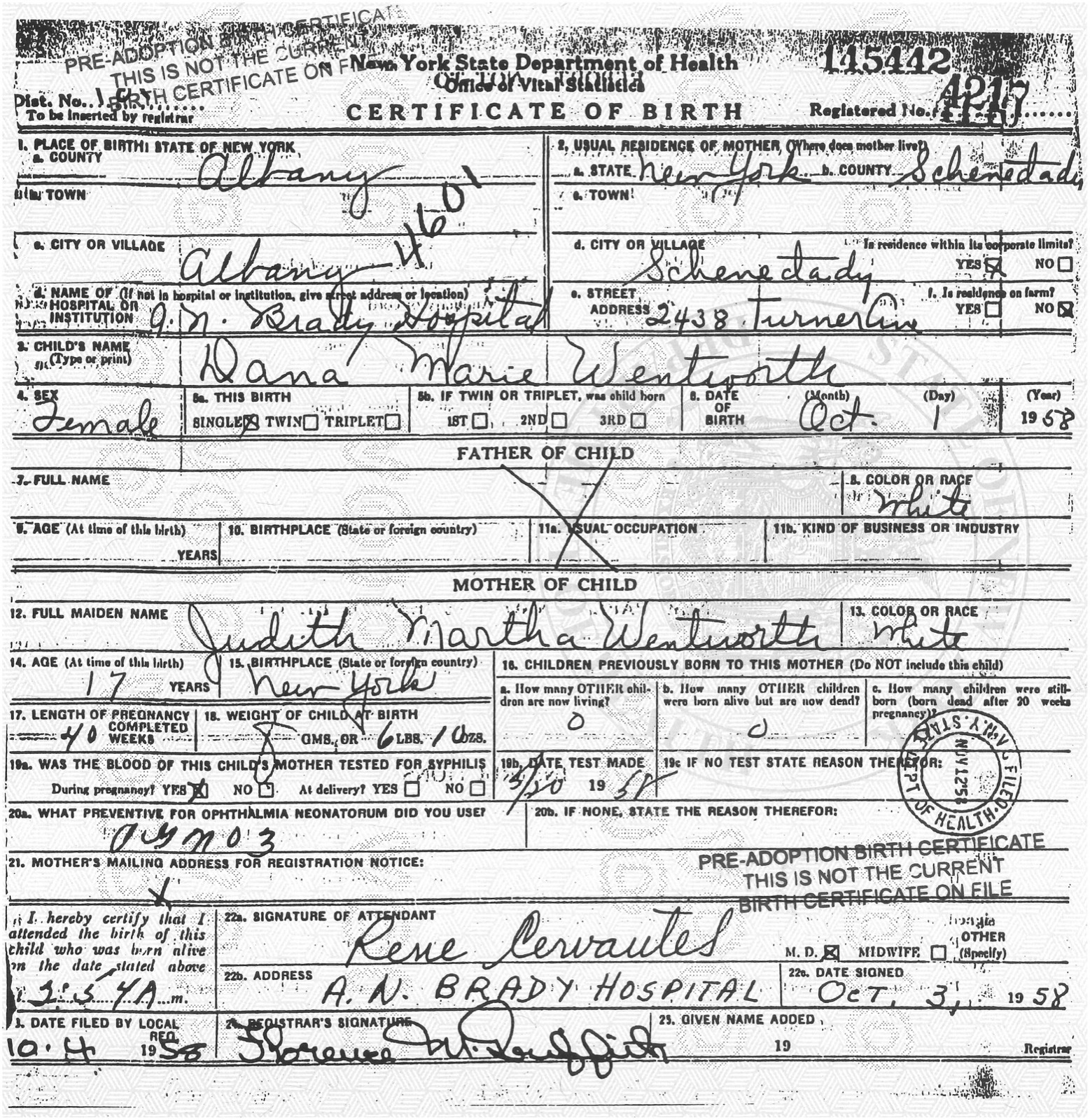
My birth name is not my adopted name. Dana Marie Wentworth is a name I've never heard anyone call me, so it has no meaning. Decades before receiving my original birth certificate, in my late 20s, I discovered my adoption papers located in a file kept in my parent's bedroom. They never shared these papers with me. They firmly believed a closed adoption meant closed forever, including discussions about my adoption. The file contained the name of my birth mother, my birth name, and some non-identifying information about my maternal ethnicity. I never told my parents I found this file. The discovery was alarmingly painful and wonderful all at once—like learning I was an alien, and no one had dared to tell me.
My insatiable curiosity allowed me to discover my half-sister through an adoption database called the International Soundex Reunion Registry, a mutual consent registry supporting individual rights to access family, medical records, and documents about them. Before the internet became easier to find people like birth families, you could enter a post in this registry and hope someone would reply. Over 20 years ago, I posted the following:
“My birth name is Dana Marie Wentworth, born in Albany, NY on October 1. I have a good life and am healthy and happy. Just hoping to find someone related to me.”
Occasionally, I would check the site to see if my post was still up. For years, I hadn't heard back from anyone. The way I would find my post again was by entering my birth name in the search. One day, this appeared: “I was named Dana Marie Wentworth. I was born in Albany, NY, on March 19. Looking for anyone to share that I am healthy with two wonderful kids.”
While this post sounded like I wrote it, I did not have two children then. Additionally, the birthdate was wrong. After several thrilling calls with the other Dana Marie and an extensive search with the New York State Department of Health, Adoption, and Medical Information Registry in Albany, NY, confirming our relationship as half-sisters, we realized that our mother named us the same name.
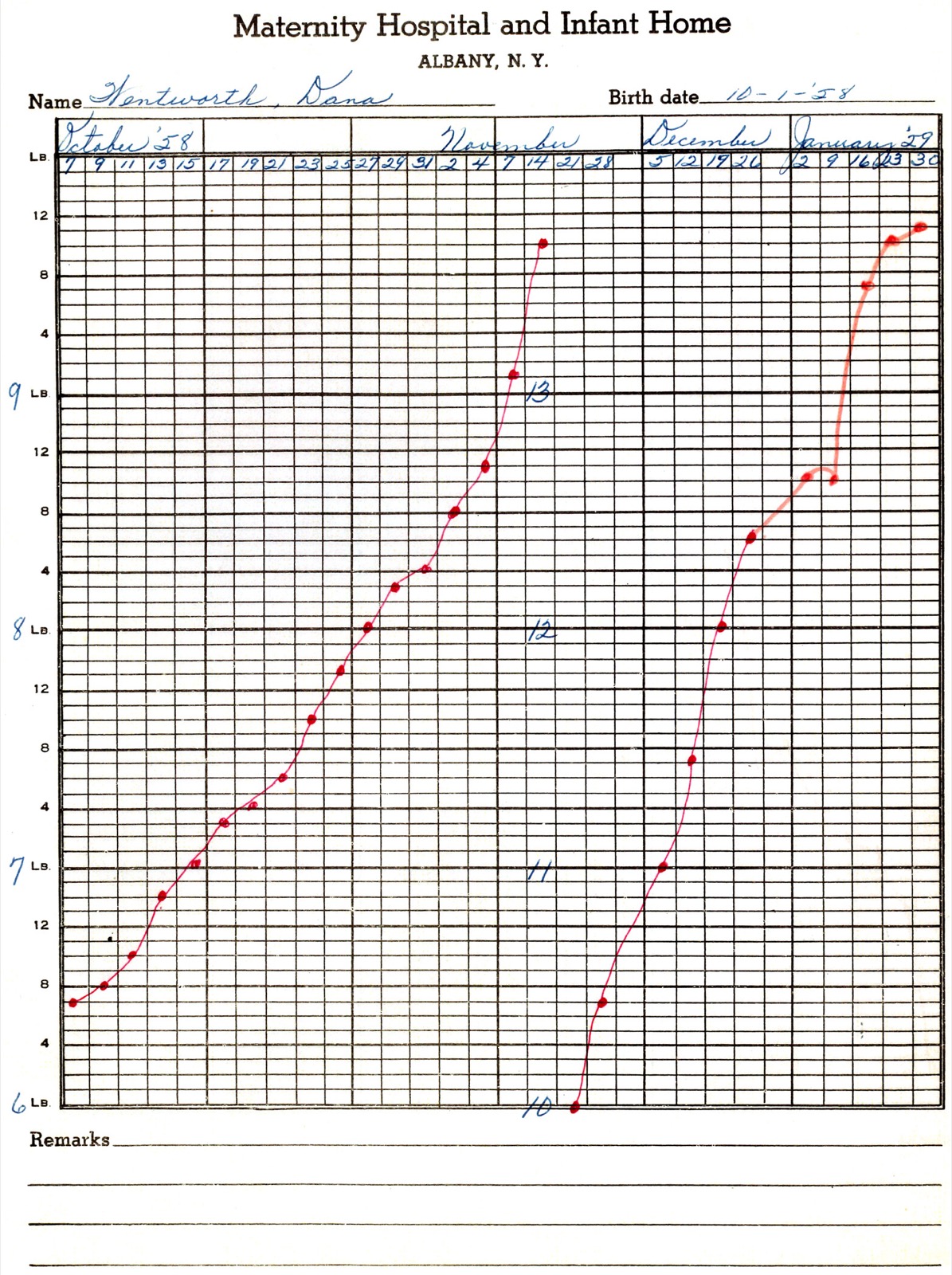
These are the kinds of secrets revealed through artifacts, and once collected, they begin to show the chaos and disorder of adoption. I realized why files are kept from adoptees—never meant for sharing. While our birth name connected me with my half-sister, I still found that most of the artifacts I collected held more mystery than resolve. I had meaningless weight charts and black-and-white photographs conveying confusing facts about me known by others but not explained to me. From my archeological dig, I discovered I didn't go from my birth straight into my adoption. Instead, I was in an orphanage for six months. No one told me that. My DNA report showed that I'm half-Jewish. I never knew. What a blessing to be half of something. But this half was gifted to me by a Jewish man who didn't even know he had fathered a daughter. Honestly, I have struggled with an urgency to shred all these breadcrumbs leading nowhere. The Dana Marie Wentworths have different names now. Why hold on to reminders that our mom was so unoriginal?
While I sought forgiveness for my birthmother's confusing actions, my friend, who is also adopted, noticed the way my birthmother wrote her Ws on my birth certificate. Rather than focusing on what she named my half-sister and me, this adoptee concentrated on how my mother, who was 16 then, used elegant, cursive letters in the name Wentworth. The Ws matched, written with rounded bottoms. In contrast, her Ws changed to sharp, quick points when she wrote the word white for both mother and father. We reasoned that my mother took her time when writing our names. I can surmise that our twin names may have mattered. Once seen, I can't unsee this detail, and it inches my story toward the realm of releasing anger and such confusion.
My small discovery, made through a collaborative effort, opened space for new thinking. To reassess the events leading up to my adoption, I realized that some hidden door needed to open just enough to allow love in. I came to understand that this love could be raw, even angry, visceral love directed toward my birth mother. What I didn't want was a love rooted solely in feeling special that I was adopted. I had spent a lifetime feeling gratitude for my adoptive parents. They provided me with a stable, consistently predictable life. Unfortunately, they believed in a blank state mentality, where my life began upon entering their home. I have since learned, through Angela Tucker, executive director of the Adoptee Mentoring Society and founder of the Adoptee Lounge, that it is possible to love my adoptive parents while also wishing I wasn't adopted (Tucker, 2023). Tucker's work illuminates an adoptee's losses and gains collectively.
Consider Cameron Lee Small's passage of loss and gain described in his book, The Adoptee's Journey (2024). Originally named Hee-Seong, Small tenderly describes his exit from Korea, his home country, at age three.
Without warning, you're being escorted on a plane and flown thirteen hours to Chicago. Hee-Seong means bright star, but you lost it in the sky. You're being carried off into an airport terminal and handed to strangers. You run for your life back onto the airplane, where a flight attendant tries to soothe you. In Korean, she says, ‘It's okay, it's okay, your Omma will be here soon.’ She lifts and carries you back through the aisle. Numb and exhausted, you feel your precious puzzle piece for the last time. It lays to rest in the aisle for the clean-up crew. New name. New family. You're buckled into a red Volvo and driven four hours to a place in the middle of Wisconsin, home to about twenty-five hundred people, and now, you. This is when you become Cameron Lee Small. Your middle name stayed Korean. A family. A plan. Half a child (pp. 88–89).
Adoptees like Small struggle to make sense of their identity as they attempt to honor both their time with their adoptive family and their time before. This next section employs an integrative, collaborative approach that uses artifacts to ease the tension between conflicting birth and adoption narratives. By engaging with a collective culture of materials—such as objects linked to life before adoption—I aimed to reach new insights about myself as an adopted person.
Objects as teachers
The idea of artifacts such as hair, letters, photographs, shoes, a sweater, and jewelry entering a family dynamic offers an opportunity for mutual recognition. Cedeño (2024) defines the concept of mutual recognition as the ways individuals acknowledge and respect each other's identities. In the case of adults adopted in childhood, the dialectical process of recognizing oneself and being recognized by others might be incredibly complex due to the intersections of birth family, adoptive family, and personal identity development. Research suggests that for many adults adopted as children, the lack of complete knowledge about their birth origins and the absence of recognition from their birth families may lead to challenges in developing a coherent sense of self, particularly if they feel caught between two worlds (Godon-Decoteau & Ramsey, 2020; Rizzo, 2022; Seek, 2022).
Pre-adoptive artifacts connect birth and adoptive family dynamics by bridging important philosophical insights about adoption. Engaging with artifacts creates shared meaning-making, fostering empathy and connection. Additionally, artifacts help adoptees recognize the difference between themselves, their adoptive parents, siblings, and their birth family. Artifacts ground us in the story, confirming we were there when big things were happening. This next section shows how an artifact helped set the stage for inquiry.
My 22-year-old son, who was adopted at age four from Nepal, has a small shoebox filled with objects from his life before adoption. Our adoptions are both highly complex and contentious. My son's adoption from Nepal contained corrupt adoption policies and procedures revealed only recently. My private, domestic adoption concealed all information regarding my time before entering my adoptive home. Collectively, our adoption narratives and lack of narratives collided and fairly imploded during my son's teenage years. When the familiar phrase finally landed, you are NOT my mother; I was already equipped with the pre-experience of saying the same to my mother years ago. We were the perfect spit-flying storm of two ugly-toned, angry adoptees trying to wrestle with ambiguous identities that only good therapy could quell.
At age 20, Rajan agreed to participate in my pilot study, reflecting on the artifacts from his pre-adoptive life. I had saved a few items from his early years—clothes from the orphanage, a necklace he once wore, and photographs taken before we met. To keep them safe, I stored them in a small shoebox, the kind made for children's shoes. Rajan used a chair to reach the box tucked high in his closet. I see these artifacts as a quiet metaphor for his confusing, dream-like years in Nepal before coming to the United States. But like all metaphors, they require unpacking—and these items offered only limited clues. I learned that Rajan had never shared the box's contents with anyone. Although he had recently looked inside, the memories it holds remained mostly unspoken. While I hope he'll choose to share more of his story in time, what follows are reflections from the moments we spent together engaging with these deeply personal objects. I have not included any photos of the artifacts for his privacy, and his name is a pseudonym. I recorded our conversations to use in my research with other adults adopted in childhood.
The first item Rajan plucked out of the box to share became somewhat controversial in our conversations. We each had different thoughts and memories about a pair of pants and a shirt. I later realized that this very difference makes engaging with artifacts valuable.
I offer this section in dialogue form, rather than summarizing, to show the cadence of our conversations.
Author: Okay. Look at that. Look at that tiny shirt and those pants. These are the clothes you wore. Oh, and look at that orange jacket in this photo. That was basically the first picture that we saw of you, wearing that huge orange jacket.
Rajan: I don't think these are the clothes I wore. I think they gave me these clothes.
Author: Yes, from the orphanage.
Rajan: I think. Yeah. I think these were the nice clothes they gave—they gave out before you got adopted.
Author: Oh. I thought these were so dingy and dirty, and I had them cleaned. Look, these have been laundered. This little tag means that I sent them to the hotel laundry to have them cleaned.
I often revisit this conversation as I try to justify my decision to adopt. When I first met this little boy, he wore his best clothes as though they were meant for me to admire. Instead, I saw them as a symbol of abject poverty. The clothes, worn like a costume for prospective parents, hinted at the fragility of adoption. Dressed in his finest attire, he stood before me—a polished facade that masked the truth of his birth and time spent in the orphanage.
My son's adoption came at a time when authorities halted all adoptions from Nepal. We were one of a handful of families stuck in between because we had already started the process; a child was chosen for us—someone who had been in the orphanage for a while. We waited eight months for the final approvals, and a friend visited him during that time. Our friend brought gifts for Rajan, and in return, he gave us some photos from his visit. This next section reflects an engagement with these photographs. Rajan and I compared one introductory photo we received from the orphanage director to the photos taken by our friend.
Rajan: I have no eyebrows.
Author: No! And you had very straight hair, but look at your curls now. And here, you can see a shirt, right? How ironic that this one says USA on it. You think that was purposefully picked out for you, maybe? Cause that's where you were headed? I wish you had your hat. Do you remember your hat? And the scarf? We would give you things, and they would disappear. Any gift that we gave you would kind of disappear with all the other gifts.
Rajan: It just got taken from me, probably.
I spent three weeks in Nepal finalizing the adoption. I took Rajan out of the orphanage on field trips around Kathmandu during that time. My daughter, who was seven at the time, joined us. Rajan wore this red scarf to wipe his nose, which constantly dripped. He would forget the scarf from one place to another—acting as most four-year-olds do. So, after every change of setting, we would pantomime (we didn't know Nepali well): Where is your scarf? Then, he'd go back and get it. One time, he flashed a giant smile after our repeated charade of Where is your scarf? He tipped his hat and out popped the scarf.
As we studied pictures together, I wondered what Rajan thought of himself at this age. My questions must have been annoying. I don't think I settled for the simple answers and then moved on. Instead, I pried and poked, and it was just amazing that he didn't end it altogether. Maybe he felt obligated. Looking back, we both learned so much.
Rajan had been struggling with his identity during his first year away at college. As much as we worked on acculturation (returning two times to Nepal, connecting with Nepalis in our community, and working at a Nepali restaurant), he still questioned what he was doing in school (and why) and what he was doing as a Nepali in the U.S. Trying to figure it all out, he reflected, “It affects me somehow, but I don't know how it affects me.” The conversations continued.
Author: I've been reading that the memory of Nepal could be stored somewhere in your body—in your cells—and also hidden within your behaviors as a sort of cultural memory, even if it's not in your brain as concrete memory.
Rajan: Yeah. I bet that's like—this was just how I was shaped.
Author: Yes.
Rajan: Like my time in Nepal.
Author: Yes. And so even if the memory isn't there, I think you've got to take into account that it did shape you perhaps as much as the rest shaped you. It shapes you so that when you're sitting in class—Asian Studies, and you're wondering, you know, wondering who you're gonna be, you're gonna be this person that I see today who is also this person (in this photograph). And you know, it's a good idea, I think, to kind of analyze for yourself the relationship between this life in the photo and your life now.
Rajan: Uh huh (affirmative)
Author: When you look at these pictures, what do they say to you? What do you think this little boy is saying (in the photo taken by the orphanage director)? Or thinking or feeling?
Rajan: Uh, I think it's uncaring. And passive.
Author: Tell me more.
Rajan: Well, it's not like I understand the point of the photo. I'm not smiling. I'm just leaning against the wall.
When looking at Rajan's pre-adoptive photos, my son made remarkable observations about who might have taken the photos and under what circumstances. In one photo, taken a year before his adoption, Rajan didn't look at the person taking the picture. His gaze was distant. He posed with our family friend in the second photo, taken just before we arrived. This time, he looked directly at the camera. My son reflected on the difference: “In the first photo, they probably just said, ‘Stand here.’ It was probably the first time I'd ever had my picture taken. This is probably just like, the orphanage needs pictures, you know?” In the second photo, he added, “This guy probably asked me if I'd have my picture taken with him.”
As a parent, I realized my son grasped the power of choice. In a life where adoption often offers little control, he taught me an important lesson: the significance of being asked. When Rajan left Nepal, he had never flown on a plane. He couldn't communicate with us, so I asked our friend from Nepal to see if Rajan had any questions before boarding. I wanted to know if Rajan understood what was happening, where he was going, and how. Rajan asked one question, “Where do I go to the bathroom?” Over the years, I have learned to let Rajan lead with questions. It made sense. He had enough people telling him where to go and what to do. Now, he wants to be asked first.
My son placed himself in his pre-adoptive story. The task is more memoir than a diary, recognizing reality while relating it to oneself. Erikson (1959) describes the identity development process as one of “simultaneous reflection and observation” (p. 22), in which an individual engages in critical judgments of themselves and society. Mezirow (1991) advances this thought, explaining how the acquisition of new knowledge and feelings surrounding identity must be accompanied by “an enhanced level of awareness of the context of one's beliefs and feelings, a critique of one's assumptions, and particularly premises, and an assessment of alternative perspectives” (p. 161). According to Kegan (1994), transformational changes in identity begin to form when transformative learning happens. Someone changes “not just the way he behaves, not just the way he feels, but the way he knows—not just what he knows but the way he knows” (Kegan, 1994, p. 17).
Through this period of critical reflection, both my son and I gained insight into our identities by actively exploring pre-adoptive photographs, clothing, and documents carried into our adoptive homes. Becoming adopted is a topic not often discussed in adoption research. Our engagement with artifacts lifted the secret veil separating our adoptive worlds from our birth worlds. Essentially, the artifacts became our teachers, allowing us to accept or reject different ways of defining ourselves. These pre-adoptive artifacts are powerful and valuable because they suggest a sense of agency. Rajan's orphanage clothes, for example, offered him an opportunity to revisit the past—to figuratively try them on again.
Anthropologists and archaeologists working with artifacts have long argued that if you study objects deeply enough, the voices of their makers and users begin to emerge (Deetz, 1978; Hodder, 2012; Nordstrom, 2013). In many ways, they are right. By including the photographer in the narrative fold, we could better imagine Rajan's pre-adoptive environment—not just as a backdrop but as a lived, visual world shaped by both presence and absence. Yet, as Olsen (2012) reminds us, “Those who read the text, often in different historical and cultural settings, bring to it other voices, other texts, and create meanings far beyond the author's intention” (p. 87). Rajan, with quiet clarity, questioned the purpose of these photographs. His inquiry points to a broader truth: objects do not speak independently. They are interpreted, reinterpreted, and sometimes resisted. Their meanings are not fixed but negotiated—shaped by the people who engage with them, the contexts in which they are viewed, and the stories we tell around them. Ultimately, my goal in engaging with my son and his artifacts was to hear his voice emerge. In this context, the artifacts helped us explore the unspoken aspects of his adoption. At the end of my session with Rajan, I asked a fairly weighty question for a 20-year-old:
Do you ever consider the sense of who you are as an adopted person? Maybe for you, like many people, you don't even think about it at all. Of course, I'm doing this study. So, I'm thinking about it a lot. But what does adoption mean to you today? Is it still this kind of closed box that you don't really think about? Or do you, as you become an adult, start to think how your life is evolving as an adopted person who had this one life, and now you've got this entirely different life?
Rajan answered honestly, admitting, “I think it's still more of a closed box.”
“More of what?” I pushed.
“A closed box,” he repeated. He continued:
I don't really think about it too much. I feel like, I don't know. It's just like this shoebox here. It's like every few years, I'll come back to it, but there's not like a point in time where I'll be like, oh the box. Yeah. It'll be like, I'll stumble across it, and then I'll take a look. I mean, I don't know. Maybe I'll grow to like these more.
I loved this session with Rajan because, just right there, he was defining the development of identity that slowly evolves for everyone—a kind of stumble-through approach as we grasp onto the old and new simultaneously. I went into the interview with Rajan confident in my teaching skills to guide and prompt, but I realized that a tiny shoe box filled with treasures led the way for both of us. One of my biggest takeaways was to talk less and listen more. To complete the interview, I asked if he would ever consider sharing the contents of his box with others. He answered with both a sense of pragmatism and authority over his adoptive history:
I don't feel the need, I guess, to go to someone and just show them my life. I mean, if someone's really curious enough about it, and they ask, I'm not like secretive. Right? I mean, if they're not going to ask, then they don't care. Then, they don't get to know.
When I began my interviews with other adoptees, I used Rajan's advice—to consider asking first, with curiosity and compassion, about the lived experiences of adults adopted in childhood. I discovered that many adoptees carry a surprising number of artifacts that can unravel and dramatically reshape what they believed to be their adoption story. Some artifacts, such as letters and birth certificates, were touched by our birth mothers. In other artifacts, social workers and caregivers noted when we first smiled. We helped each other make meaning of our pre-adoptive artifacts. The weight chart shown below plotted my development while I was in a children's home. I hated that the remarks of my six-month stay were left blank. However, one adoptee recognized the importance of each dot, for they represented each time I was held (Figure 2).
Collectively, these tiny shards of history offer adoptees significant clues showing that someone had been with us before we had words to describe our lives. I use a captivating story to highlight an artifact's powerful role as a tattletale.
Hair is an artifact
Before I began my interviews with adoptees, I had lunch with Tasha, a longtime friend who was adopted at five months. I complimented her on how perfect her hair looked. Tasha always has an impeccable style that I deeply admire. She smiled and said, “Thanks, I straighten it.” As our conversation shifted to other topics, I became mildly curious about straightening hair. I wondered precisely how hair is straightened, how often, and how long it takes. I was simply admiring her commitment to style. Hair later became our central theme in exploring her adoption.
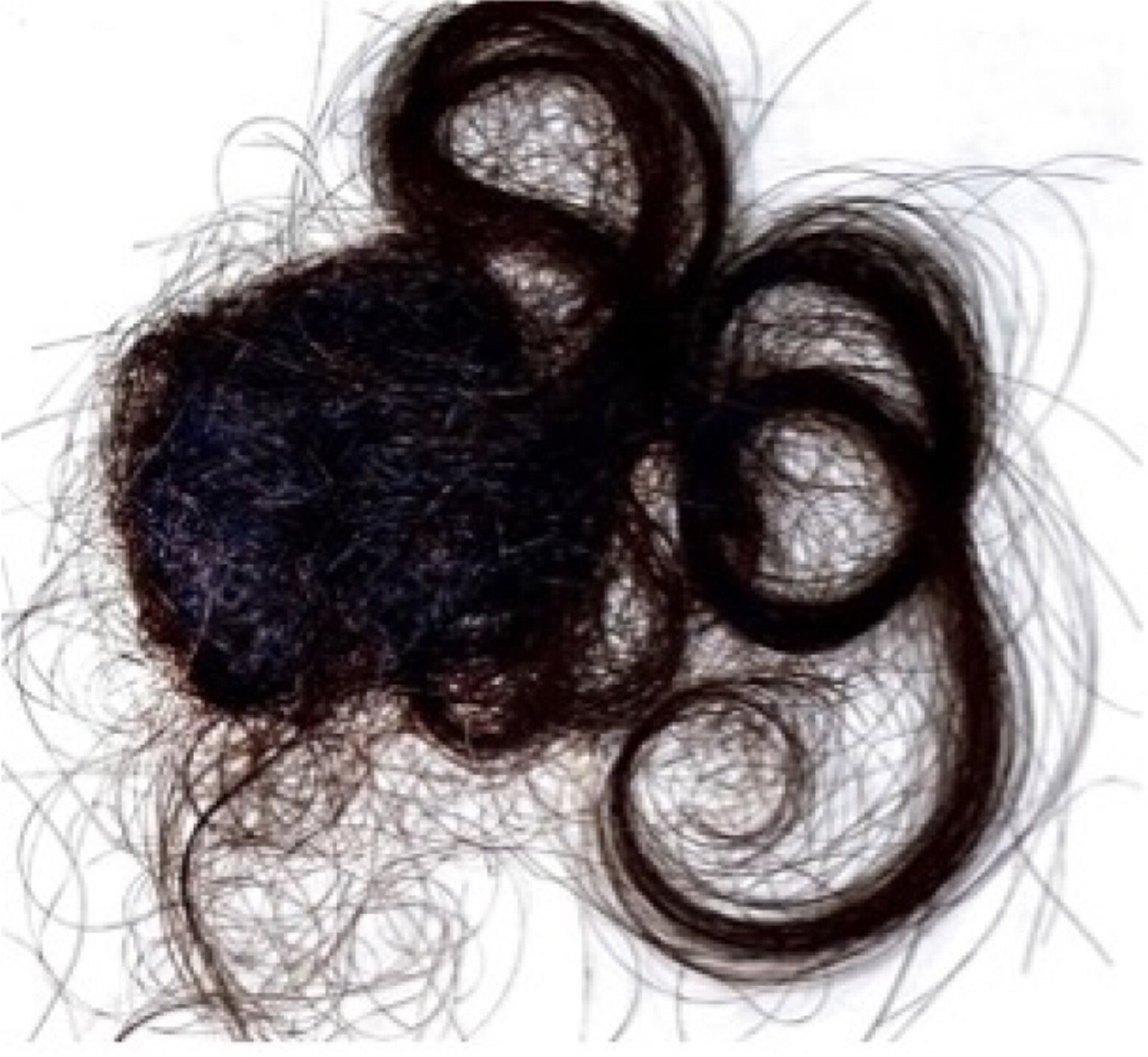
Tasha joined my focus group to explore pre-adoptive artifacts. In her baby book, she had a clipping of her childhood hair—black and curly—attached to the first page. I love this artifact because it represents something alive and growing while Tasha was in foster care before her adoption. Her hair survived the journey, allowing us to reflect on it decades later.
Hair requires hands for caring, and we imagined her foster mother treating her hair with consideration, patience, and ingenuity. Curly hair often has a mind of its own. Tasha's hair, clipped and placed years ago between the pages of a scrapbook, should straighten over time. This hair remained curled. With its complicated plot twists and turns, we wondered what this artifact is telling us (Figure 3).
Tasha was born to a White mother and a Black father and was raised by a White adoptive family. Transracial adoptees like Tasha develop a distinct adoptive identity shaped by the racial differences between themselves and their adoptive parents (Killian & Khanna, 2019). Of her mixed identity, she reflects on her Black heritage: “That's the part of me that I know the least about, primarily because I did not grow up in a Black household. I think that's the missing link to my identity because you have no identity around half of who you are.”
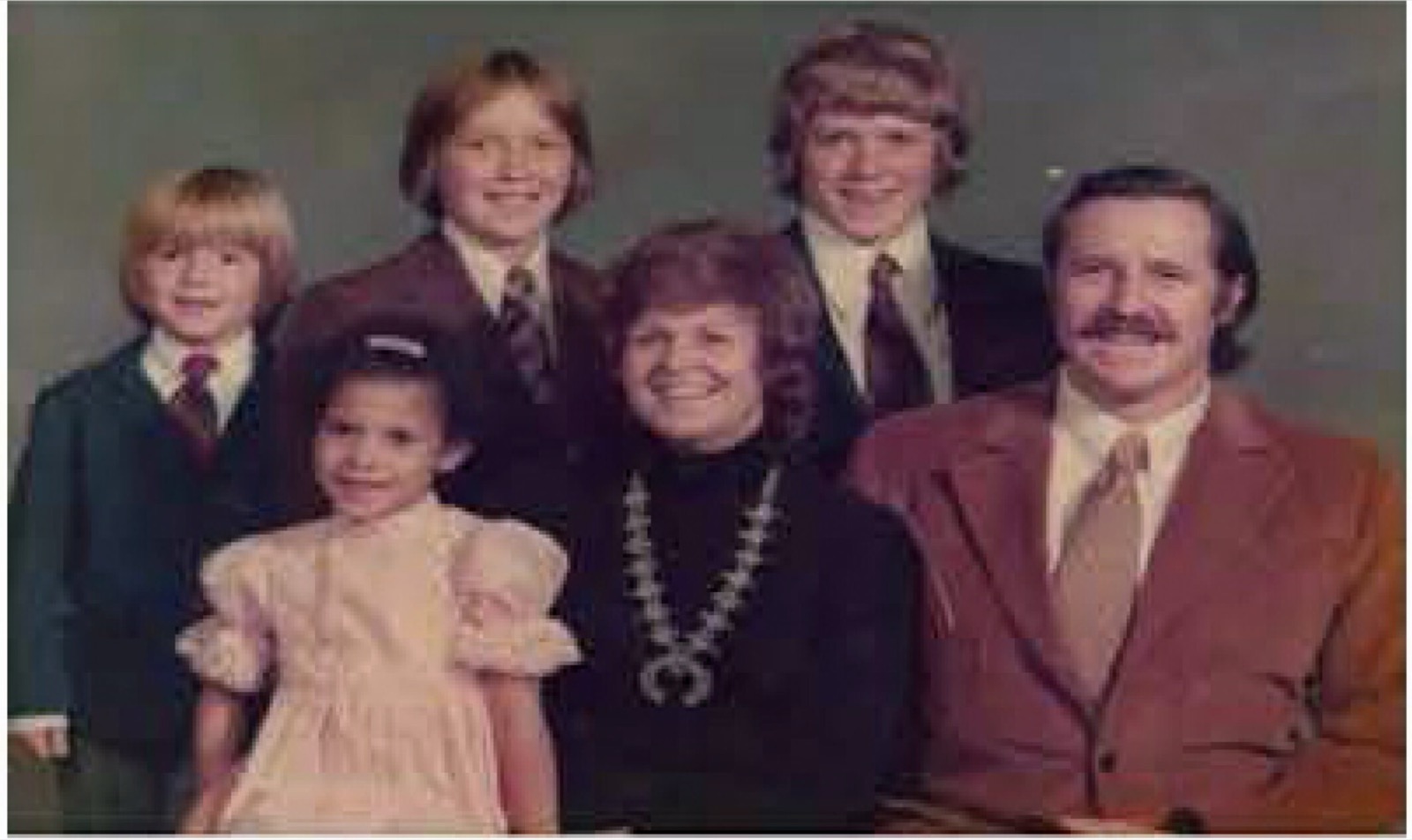
Tasha's hair acts like a tell-tale sign, showing how different she looks from her adoptive family. Tasha agreed, “My hair already gives me an identity when people look at me from the outside. But it's an identity different from what I hold on the inside because I don't even know that side.” In this picture, Tasha is seen with her family (Figure 4).
Looking at the photograph together, Tasha reflected:
Having darker skin than my family but appearing ambiguous in terms of race has challenged me. My mom wanted me to keep that bond of my heritage—to keep my hair curly. But I mean, eventually I wanted to fit in, and that meant straightening my hair. I started straightening it when I was 12.
I wondered what might happen if Tasha allowed her artifact, her hair, to do whatever it was supposed to do. “Maybe,” she said, “I should let it go.” Might she lose her Whiteness, I wondered. How would that look? What might that feel like?
On three separate occasions, Tasha tried to reach out to her paternal family. She wrote her father and his two children. No one replied. Most relinquishments are mired in shame and guilt. Tasha's relinquishment, involving a mixed-race couple, adds an element of silencing against birth fathers. Tasha said, “He was basically pushed out of the decision to put me up for adoption. He was pushed out of the picture by my mom's family. Her dad made her cut all ties with him.”
I asked if she struggled with the decision to either tamper her hair down and keep it quiet or return to her mom's approach, which was to honor her Black heritage. Tasha believes her hair shows her the positive and negative world of the chameleon—constantly trying to fit into the world, sometimes hiding and, at other times, standing out. She said, “People pay attention to hair, and that's how people know that I am mixed. If I had any other hair, they might not know.”
Tasha felt deeply about her unsuccessful attempts to find her birth father. She imagined how her father must have felt. In her mind, he may have reasoned, “Once you're pushed out, it's like, okay, I'm not a part of that. I don't have a daughter, I don't have a girlfriend, I don't have anything. That's not part of my life.”
Using objects as teachers, such as the natural curl in Tasha's hair, powerfully illustrates the balance between what we keep private and what we choose to reveal. A third element emerges between these binary concepts. Tasha's hair, as it grows, mirrors the hair of her mysterious birth father. We both appreciated her hair's tattletale effect, offering a unique perspective on ethics, race, choice, and identity. Her adoptive narrative is shaped by an object—a voice neither of us expected to hear.
Conclusion
Anthropologist Daniel Miller's (2008) methodological and analytical focus on objects addresses the capability of things, having different skills and purposes from humans, to generate novel questions that may re-frame events and perspectives. Adoptees feeling stuck with only their adoption stories as a reference can find movement through their pre-adoptive material. By placing objects at the center of analysis, Pitts and Versluys (2021) suggest a new history arrives based on this human-object entanglement.
After three separate sessions engaging with photos, letters, and birth records, one adoptee in my study came to a powerful realization: her birth mother had never fully recovered from the trauma of surrendering her child to adoption. In The Girls Who Went Away (2008), Fessler shares the words of a birth mother who surrendered during the 1960s: “This was in that period of time when there wasn't much worse that a girl could do. They almost treated you like you had committed murder or something” (p. 9). For Ann, the adoptee in my study, integrating the past with the present became a way to understand herself better—not only by reclaiming lost history but by acknowledging the emotional truths carried by those on both sides of the adoption. Ann discovered her birth mother remained in her family home, never married, had kidney failure, lost a leg, and died young. Her understanding of her mother evolved through a complex entanglement of social and cultural context, the intimate details she uncovered, and the lingering questions sparked by artifacts.
I learned more about my son's needs through our engagement with photographs taken at different times from the same setting. Objects such as clothing worn in an orphanage demonstrate the many trajectories material items can take through various, sometimes unrelated meanings that defy order and direction (Hodder, 2012). Similarly, Tasha's connection with her paternal family began with examining her hair. Archeologist Hodder (2012) encourages people to look more closely and harder at objects with their multiple connections. Rather than objects being used as a probe or prompt for inquiry, the approach produces narratives that can carry past events forward. Indeed, I felt a change after working with others engaged with my birth-related documents that revealed hints of human touch and tenderness. When I review my original birth certificate, I can feel my birth mother step into the fold through her cursive signature. In my interviews, the objects associated with our past had a way of pulling ourselves together, like adding dressing to our bodies. This reassembled identity allowed new thoughts to emerge about how we became adopted.
I love the poet Rainer Maria Rilke, perhaps because he was adopted by his maternal grandparents. Using Rilke's Ninth Duino Elegy (Rilke, 1923, translated in 2017), I highlight his attention to things through themes such as identity, belonging, and existential questions:
Ninth Duino Elegy
And these Things,
Which live by perishing,
know you are praising them;
Transient, they look to us for deliverance:
Us, the most transient of all.
They want us to change them, utterly, in our invisible hearts,
Within–oh endlessly–within us! Whoever we may be at last.
Rilke (2017, 1923)
I believe what Rilke expresses resonates with my own conflicted identity as both an adoptee and an adoptive parent. The invisible heart symbolizes my state of consciousness. I pulled a boy out of an orphanage in Nepal when he was four. My adoptive parents pulled me out of an orphanage when I was 6 months old. Neither Rajan nor I knew what was happening. Today, when I look at the first photograph I received of my son—standing barefoot against a concrete wall, his eyes fixed on something or someone beyond the photo's frame—I sense that a question was being formed. This image will continue to call out to both of us, seeking deliverance and transforming us into something new.
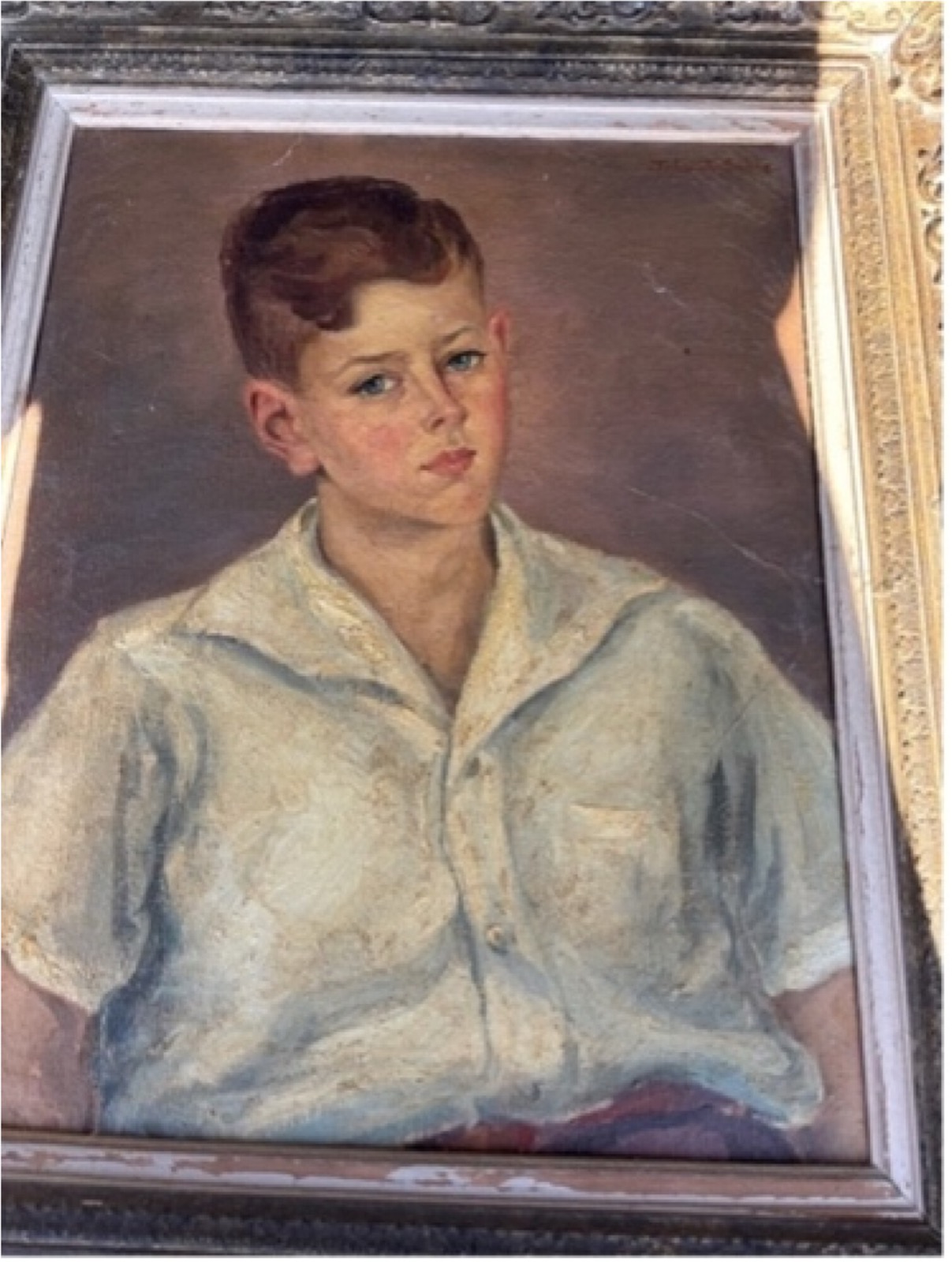
Before leaving my uncle to return home, he gave me a framed portrait of my father. When these brothers were young, their parents hired a painter to capture their beautiful faces. This oil painting is my newest artifact. The power of an object is in its ability to dream up a story. The idea of my biological father appears in human form, looking serenely down at the corner of a room. I feel he has something important to share. His hair is a calculated wave, mirroring the draping of his shirt. As the painter moved from eyes to ears to mouth, he began sculpting the early creation of me – the warm teal blue in my eyes and the contours and angles in my ear.
To research means to search again. It can be a collective activity shared with other like-minded people. I believe we all see ourselves differently through things. Applying this type of learning through objects can potentially revitalize, upend, and reconstitute how researchers examine current adoption culture. Legitimizing an adoptee's life requires an interdisciplinary approach that adds a necessary component to turn static birth, orphan, and adoption records into a dynamic powerplay of options and insight. As more objects take on a magnanimous role, adoptees may discover a wider opening, leading them further away from a once-closed system (Figures 5 and 6).
Complexe Systémique: key points
This autoethnographic text echoes an intuition familiar to systemic practitioners: an object placed in the middle of a group makes it possible to say what cannot be said face to face. A birth certificate, orphanage clothes and a lock of hair become third parties that shift the conversation from secrecy towards shared curiosity. It also shows a double loyalty, to the adoptive family and to the birth family, which adoptive parents weaken when they make the child’s life begin on arrival. Rajan’s lesson is valuable for clinical work: ask first, and let the adopted person lead with their own questions. The limits lie in the very genre of the text: a single voice, interviews that are barely described, and research conducted by a mother with her own son, which raises a question of power that the author touches on without addressing. Read alongside the article on discovering unexpected paternity through DNA testing, and the article on adoptive parents’ experiences of birth parent contact.
Notes from the original
Conflict of interest statement. The author declare no conflicts of interest.
References
Allen, K. R. (2000). A conscious and inclusive family studies. Journal of Marriage and the Family, 62(1), 4–17. https://doi.org/10.1111/j.1741-3737.2000.00004.x
Allen, K. R. (2023). Feminist theory, method, and praxis: Toward a critical consciousness for family and close relationship scholars. Journal of Social and Personal Relationships, 40(3), 899–936. https://doi.org/10.1177/02654075211065
Candlin, F., & Guins, R. (2009). The object reader (in sight: Visual culture). Routledge.
Cedeño, D. (2024). Applying Hegelian theory to contemporary family science. Journal of Family Theory & Review, 16(3), 563–581. https://doi.org/10.1111/jftr.12574
Deetz, J. (1978). In small things forgotten: The archaeology of early American life. American Art Journal, 10(1), 116. https://doi.org/10.2307/1594120
Erikson, E. H. (1959). Identity and the life cycle (Rev. ed.). W. W. Norton.
Fessler, A. (2008). The girls who went away. Penguin Group USA.
Godon-Decoteau, D., & Ramsey, P. (2020). Transracial adoptees: Awards and challenges of searching for their birth families. In G. M. Wrobel, E. Helder, & E. Marr (Eds.), The Routledge handbook of adoption (pp. 238–252). Routledge.
Goldberg, A. E. (2023). From safety in silence to speaking up for LGBTQ+ families: A reflection on the personal, professional, and political through a feminist lens. Journal of Family Theory & Review, 15(2), 219–234. https://doi.org/10.1111/jftr.12500
Grotevant, H. D., & Von Korff, L. (2011). Adoptive identity. In S. J. Schwartz, K. Luyckx, & V. L. Vignoles (Eds.), Handbook of identity theory and research (pp. 585–601). Springer. https://doi.org/10.1007/978-1-4419-7988-9_24
Grotevant, H. D., Lo, A. H., Fiorenzo, L., & Dunbar, N. D. (2017). Adoptive identity and adjustment from adolescence to emerging adulthood: A person-centered approach. Developmental Psychology, 53(11), 2195–2204. https://doi.org/10.1037/dev0000352
Grotevant, H., Dunbar, N., Kohler, J., & Lash Esau, A. (2007). Adoptive identity: How contexts within and beyond the family shape developmental pathways. In R. Javier, A. L. Baden, F. A. Biafora, & A. Camacho-Gingerich (Eds.), Handbook of adoption: Implications for researchers, practitioners, and families (pp. 77–89). Sage. https://doi.org/10.4135/9781412976633.n6
Haug, A., & Hielscher, A. (2021). Materiality as decor: Aesthetics, semantics and function. In Materiality in Roman art and architecture (pp. 1–24). De Gruyter. https://doi.org/10.1515/9783110764734-001
Hodder, I. (2012). The interpretation of documents and material culture. In J. Goodwin (Ed.), SAGE biographical research (pp. 171–188). Sage.
Homans, M. (2015). The imprint of another life: Adoption narratives and human possibility. University of Michigan Press.
Kegan, R. (1994). In over our heads: The mental demands of modern life. Harvard University Press.
Killian, C., & Khanna, N. (2019). Beyond color-blind and color-conscious: Approaches to racial socialization among parents of transracially adopted children. Family Relations, 68(2), 260–274. https://doi.org/10.1111/fare.12349
Lipton, B. H. (2015). The biology of belief: Unleashing the power of consciousness, matter & miracles. Hay House UK.
Mahat-Shamir, M., & Pitcho-Prelorentzos, S. (2019). Grieving from the womb: Meaning construction in response to father loss before birth. Journal of Constructivist Psychology, 33(2), 172–187. https://doi.org/10.1080/10720537.2019.1568939
Maree, J. G. (2021). The psychosocial development theory of Erik Erikson: Critical overview. Early Child Development and Care, 191(7–8), 1107–1121. https://doi.org/10.1080/03004430.2020.1845163
Mezirow, J. (1991). Transformative dimensions of adult learning. Jossey-Bass.
Miller, D. (2008). The comfort of things. Polity Press.
Nordstrom, S. N. (2013). Object-interviews: Folding, unfolding, and refolding perceptions of objects. International Journal of Qualitative Methods, 12(1), 237–257. https://doi.org/10.1177/16094069130120011
Olsen, B. (2012). Scenes from a troubled engagement: Post-structuralism and material culture studies. In C. Tilley, W. Keane, S. Küchler, M. Rowlands, & P. Spyer (Eds.), Handbook of material culture (pp. 85–103). Sage. https://doi.org/10.4135/9781848607972.n7
Piaget, J., & Carmichael, L. (1973). In P. H. Mussen (Ed.), Carmichael's manual of child psychology (Vol. 86, p. 212). Wiley. https://doi.org/10.2307/1421866
Pitts, M., & Versluys, M. (2021). Objectscapes: A manifesto for investigating the impacts of object flows on past societies. Antiquity, 95(380), 367–381. https://doi.org/10.15184/aqy.2020.148
Rilke, R. M. (1923). The ninth elegy. In M. Mitchell, Trans (Ed) Duino elegies. New York Review Books.
Rilke, R. M. (2017). The Duino elegies. Bibliotech Press.
Rizzo, M. (2022). “I want the piece of paper that is my history, and why the hell can't I have it?”: Original birth certificates and adoptive identity. Journal of Family Communication, 22(3), 271–287. https://doi.org/10.1080/15267431.2022.2097234
Seek, A. (2022). The open adoption alternative, a birthmother's perspective. Adoption & Culture, 10, 210–213. https://doi.org/10.1353/ado.0.0009
Small, C. L. (2024). The adoptee's journey: From loss and trauma to healing and empowerment. IVP.
Tucker, A. (2023). “You should be grateful”: Stories of race, identity, and transracial adoption ( 32nd ed.). Beacon Press.
Vygotsky, L. (1978). Mind in society. Harvard University Press.
Yasin, G. (2021). Fluid identity of the Muslim migrants in America: A case study of Hayat Shah in Ayad Akhtar's American dervish. University of Chitral Journal of Linguistics and Literature, 5(1), 27–41. https://doi.org/10.33195/jll.v4iii.263
Zuev, D. (2022). Visual sociology: Practices and politics in contested spaces. Palgrave Pivot.
Reformatted republication of Becoming adopted: Rebuilding adoptive identity through artifacts, by Ellen Reeve, Journal of Family Theory & Review, vol. 17, no 3 (2025), doi: 10.1111/jftr.12635, under a CC BY 4.0 licence. Edition and layout: Complexe Systémique, September 2026 — the work has been modified under the terms of the licence. Neither the authors nor the publisher are responsible for this edition; the original version prevails.
This is the original article “Becoming adopted: Rebuilding adoptive identity through artifacts”, published in Journal of Family Theory & Review (2025) under a CC BY 4.0 licence. Republished by Complexe Systémique: the author’s text is unchanged; only the presentation has been adapted for reading online, as set out at the head of this page.
Read the original articleHow to cite this article
Reeve, E. (2025). Becoming adopted: Rebuilding adoptive identity through artifacts. Complexe Systémique. https://app.complexe-systemique.com/en_GB/articles/becoming-adopted-rebuilding-adoptive-identity-through-artifacts (Original work published in 2025 in Journal of Family Theory & Review, 17(3), 386-404 (2025); republished in 2025 by Journal of Family Theory & Review, https://onlinelibrary.wiley.com/doi/full/10.1111/jftr.12635)
To go further
- Découvrir une paternité inattendue par un test ADN grand public : l’impact sur l’identitéPaternity discovered through DNA.
- Le contact avec les parents de naissance vécu par les parents d’adoption dans les années qui suivent le placementContact with birth parents.
- Floating objects in systemic therapyFloating objects.
Related articles
 Article
 Sickle Cell Disease and Young Couples: Understanding the Influence of Shared and Individual Meaning on Couples’ Experience of Illness
Nine young adult couples facing sickle cell disease: how each partner makes sense of the illness, and how the couple moves from caregiving to equality from one crisis to the next.
 Article
 “One Can Have All Sorts of Good Intentions but Sometimes in Everyday Life, It Turns Out Differently”: Change Agreements in Couples' Everyday Lives
Six Danish couples followed after an online couple program: their change agreements become guilt-inducing contracts, shared understanding or revealers of inequality.
 Article
 How can we BeST? meet the needs of adoptive families? Relevant findings from a major Randomised Controlled Trial of infants in foster care in the UK
The BeST? trial (488 infants in care in the UK) reread for adoption: holistic, ongoing assessment of children and a move to dual registration.
 Article
 The Role of Parental Expressed Emotion and Loss-Specific Parental Responses in Children’s Loss-Related Outcomes Following Traumatic Loss: A Mixed-Methods Observational Study
After a road-traffic bereavement, parental criticism goes with the child's depression, positive appraisals of the loss with better well-being.