AI-assisted translation
This version was translated from Spanish by Complexe Systémique with the help of artificial intelligence. In case of doubt, the original version prevails.
Red Sistémica · Interview
A democratic form of psychotherapy. Interview with Tom Andersen
The Norwegian therapist Tom Andersen is recognised as the inventor of the reflecting team, which removes the barriers separating, in the one-way mirror room, the team from the family and the therapist. Each member of the team presents their point of view in front of the patients, who can thus freely hear the conversations of which they are the subject. In the interview that follows, Tom Andersen talks about his singular way of understanding therapy.
“We do not have a language: we are in language, we are surrounded by language.”
Tom Andersen
Introduction by Claudio Des Champs (2007)
The Norwegian therapist Tom Andersen, who recently passed away, is recognised as the inventor of the technique of the reflecting team, by which the barriers that, in the one-way mirror room, separate the team from the family and the therapist in the room are eliminated. Under this arrangement, each of the members of the team presents their point of view in front of the patients, who thus have free access to the conversations of which they are the subject.
This group of therapists insists on the “conversational” character of therapy, that is, a practice whose object is to produce changes in the language with which the client speaks about their problems. In the note that follows, Tom Andersen talks about his particular way of understanding therapy.
Respect for our voices
In 1986, I discovered your work thanks to one of Dr Carlos Sluzki’s visits. Ever since, I have been struck by the possibility of working in therapy by “breaking” with the one-way mirror. I was so impressed at the time that, I believe, my current clinical work owes a great deal to that break. That is why I have tried to pass on what you do to my students at the university and to the therapists I train. On the other hand, from the very first moment, I thought that this particular use of the mirror and the formation of a reflecting team would allow us to democratise clinical practice, especially in a country that has gone through so many dictatorial governments. In general, we therapists have always told people what they thought, what they felt, what they should do… I would like to know whether you share this idea that this way of working is a more democratic way of doing therapy.
I have not lived in oppressive states. However, I have travelled a great deal recently in Eastern European countries that have known a history of oppression, and I have seen that they very much like this new way of doing therapy. That ties in precisely with what you are saying. I think every human being should have every possible chance of being happy, beyond political or other circumstances. Each of us should have the possibility of having our voice heard and respected.
But it is also important to be the person who listens to others, and that is a responsibility.
How did you conceive this way of working with families?
I have always been inclined to see things in terms of justice and injustice, a theme that has always preoccupied me. Nor can I pass over in silence the influence my father’s experience had on me. He was a schoolteacher in Norway and, during the Second World War, for having refused to teach the Nazi history that was imposed on him, he was deported with eight hundred other teachers to the Russian border, where they were very badly treated. He was never happy again: he fell ill and, after a year of agony, he died. Moreover, it has never seemed natural to me to go and oppress people.
I think my way of working comes from an emotional way of seeing the world. But I also consider that this perspective is the product of my own personal experiences, which led me to feel more comfortable when I began to work in this way.
A relationship rather than a technique
How would you define your therapeutic style?
The word “therapy” is not a term I like. What is defined as therapy is for me, first and foremost, a kind of relationship. It has to do with ethics, and also with aesthetics, with art. For me, it is not a technical question, because techniques run the risk of quickly becoming something mechanical.
What is the focus of your work at the moment?
The current focus of my work is the result of many changes and movements in different directions. Ten years ago, I was looking in families for constellations, relationships, patterns of daily life, in a structural way. We then conversed far too much about how to converse. I was also trying to look for what was inside people, and to find out what the family’s feelings and motivations were. Now, on the other hand, I focus on the conversation itself and on the language used in it. I am much more interested in the role the body plays in the creation of meaning. So I have set about questioning certain Freudian premises according to which there exists an inner core, an inner self or an inner structure, biological or psychological, from which we speak and act. Nobody has been able to prove that this structure really exists. Yet we have been convinced for so long that there must be something in there that we began to speak and act as if that thing existed.
That is why, recently, I have come to the conclusion that this inner structure we had talked about for so long did not exist.
My premise is that the only thing we have is the body, physiology and conversations. Nothing proves the existence of psychological constructs such as the ego, the superego, the unconscious, etc.
These constructs we have talked about so much, as if they really existed, are a product of language, of a much-practised kind of language. If one starts talking too much about something, one ends up believing that it really exists.
How has this kind of conclusion changed your work?
For me, everything now centres on the conversation and on how the people taking part in it are transformed and changed by the conversation itself. The changes happen through being in conversation.
When can you say that people have changed in the conversation? What are the signs?
I think I have not paid much attention to this kind of sign, because what has really preoccupied me enormously is giving people the possibility of talking about the same things in a different way. By talking in a different way, people can also begin to think in a different way, and to act and to live in a different way. All of this means being able to be present in life in a different way.
Ten years ago
Looking in the family for structures, patterns, what is “inside” people: feelings, motivations, inner self.
Today
Focusing on the conversation itself, on language and on the body in the creation of meaning: it is being in conversation that transforms.
Ending a therapy, naming one’s epistemology
How do you approach the question of ending a therapy with patients?
I have travelled so much recently that I actually have only a few rare cases I can follow. But I must say that the end of a therapy is a subject to be discussed with the patient. I ask them how it is for them to keep coming, whether it is still worthwhile, whether it is still an encounter from which they can get something, or whether they feel they can do without these discussions or conversations.
I think everything should be discussed in therapy. I cannot know when the patient no longer needs to come to the consultation. With this approach, I feel more comfortable when I work.
What is your epistemological framework at present?
Well… I am not very sure. It seems to me that we must be very careful when we talk about these questions or these terms such as “constructivism,” “second-order cybernetics,” “social constructionism.” That is why I try not to use this terminology, and I say instead that what I do is try to talk with people, to get to know them, to work with them.
Likewise, instead of using the word “supervision,” I prefer to say – and I like to say – that I talk and work with my colleagues. Of course, I also prefer to say that I talk and discuss with my students rather than saying that I teach or educate them. In the end, what I do and what I prefer is to converse with people about things that both they and I can talk about. And I must also take myself into account. I should not converse about questions I cannot talk about. It happened to me once, in Los Angeles, that I had to talk with a woman while several people were watching. I asked this woman a question about something she had just mentioned, but I then realised that it was a subject that should not be dealt with in such circumstances, with so many people watching. Unfortunately, I asked for a man’s name, and the woman told me that we should not talk about him. So I tried to take up another subject, to talk about something else, but his name came up a second time. I tried again to go on with another question, but the name then came up a third time. I then had to take a decision, and I took the responsibility of saying: “We cannot talk here.” The local therapists felt implicated, guilty; I told them I was very sorry, but that we could not go on talking there, in front of everyone. After apologising, we withdrew and looked for another room in which to continue. It was very important for this woman to be able to talk then about that man.
For me, it is fundamental not to force myself to continue the encounter if a moment comes when I feel I cannot go on or I do not know what to do. The only thing I can do on those occasions is to say that I am very sorry and not to continue the session. Before going in, I always try to remind myself that I must allow myself to say “I cannot do it” when that happens. It would be dangerous for me to adopt the position of “I must, I will be able to do everything, I must be able to manage and show them how good I am.”
Key takeaway
Andersen is as wary of epistemological labels as he is of the words “therapy,” “supervision” or “teaching”: he prefers to say that he talks and works with people. This ethic of conversation applies to himself as well: allowing himself to say “I cannot” and to interrupt a session rather than force an impossible encounter.
Inner conversation and outer conversation: walking inside words
We do not have a language: we are in language, we are surrounded by language. That is why I want to explore language further.
I used to think that movements took place inside us; now, on the contrary, I believe that we are in the movement, in language, and that we do not have language inside us.
We are in relationships, in nature.
When people speak, I can see something on their face that tells me that the word they are using is important. Often, I tell people, while they are speaking, that I have noticed they mentioned a certain word, and I then ask them to examine that word and tell me whether there are other words in that word.
In general, I ask them whether the word they have just mentioned is small or big. Once, a patient told me it was big; I then suggested she walk inside the word and tell me what she could see and hear there. This lady heard music. I then asked her what music she was hearing. She answered me and began to cry. I then asked her whether she preferred to listen to that music alone or in the company of other people. It was very rich work, because words themselves are very rich.
Of course, one has to go very slowly to do this kind of work. That is why I first say: “You have just mentioned this word…”, and I see whether the answer allows me to ask a new question. Then I ask: “Is that the word that usually comes to your mind when you speak or when you think?”
All these questions prepare the way to begin exploring the inside of words.
There is always more to see and to hear in words than what one sees at first. I always prefer to linger for a moment on what seems significant to people, and then to enter it.
After this kind of work, clients come out different, even in the eyes of others. And in this way, people also begin to listen in a different way.
Who is Tom Andersen
Tom Andersen is a psychiatrist and professor at the Institute of Community Medicine, section of social psychiatry, of the University of Tromsø, in Norway. Creator of the reflecting team, an intervention that laid the foundations of reflexive models in family therapy, he is the author of the book The Reflecting Team: Dialogues and Dialogues about Dialogues (Spanish edition: El equipo reflexivo, Gedisa).
This interview is an English translation of “Una forma democrática de psicoterapia. Entrevista a Tom Andersen”, published by Red Sistémica (first published in Perspectivas Sistémicas, 2007). Translated and republished with the journal’s permission.
Read the original articleHow to cite this article
Des Champs, C. (2022). A democratic form of psychotherapy. Interview with Tom Andersen (Complexe Systémique, Trans.). Complexe Systémique. https://app.complexe-systemique.com/en_GB/articles/a-democratic-form-of-psychotherapy-interview-with-tom-andersen (Original work published in 2007 in Perspectivas Sistémicas, 2007; republished in 2022 by Red Sistémica, https://redsistemica.ar/2022/06/27/una-forma-democratica-de-psicoterapia-entrevista-a-tom-andersen/)
To go further
- The movement that revolutionized therapy: social constructionism and narrative therapiesThe current to which Andersen belongs, even though he is wary of labels.
- Neutrality in therapy: deconstructing a myth?Making the team’s voices visible rather than hiding them behind the mirror: another way of thinking about the therapist’s position.
- Never underestimate the role of the body in therapy — Bernard Filleul“The only thing we have is the body, physiology and conversations”: an echo of Andersen’s thesis.
Related training courses
 Webinar
Extramarital affairs: what does the therapist do when the couple explodes?
Free webinar: how to position yourself as a systemic therapist in the crisis of the extramarital affair. Revelation, secrecy, multipartiality.
 Short course
The suicidal crisis in adolescents and young adults
Training: assessing and supporting the suicidal crisis in adolescents and young adults. Clinical landmarks and systemic tools. In French.
 Certifying course
Training in Systemic Therapy and Interventions – Cycle 1
Certifying training cycle in systemic therapy and interventions – year 1. Courses, supervision and practice, aligned with EFTA/SFTF. In French.
 Certifying course
Training in Systemic Therapy and Interventions – Cycle 2
Certifying training cycle in systemic therapy and interventions – year 2. Clinical complexity, supervision and practice. EFTA/SFTF aligned. In French.
Related articles
 Scientific
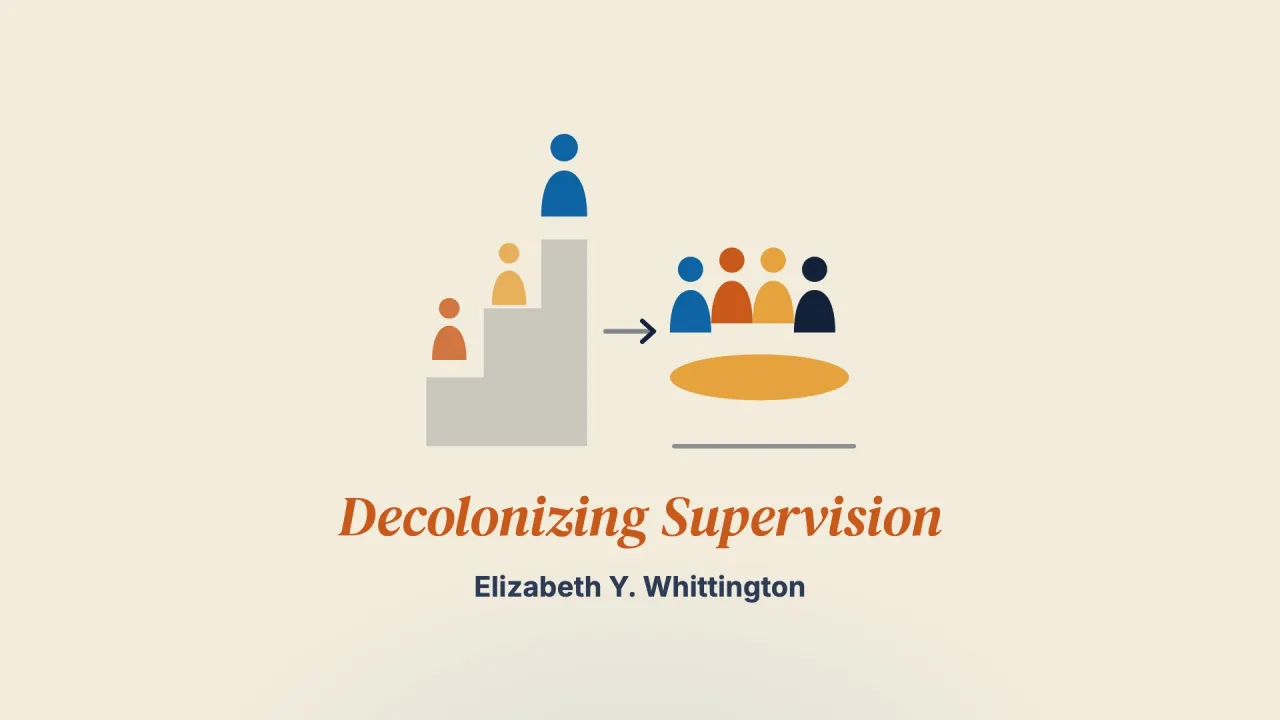
 Decolonizing Supervision: A Critical Race and Queer Theory Framework for Marriage and Family Therapy
Supervision is not neutral: a framework drawing on Critical Race Theory and Queer Theory to name and share power in supervision, with a vignette.
 Scientific
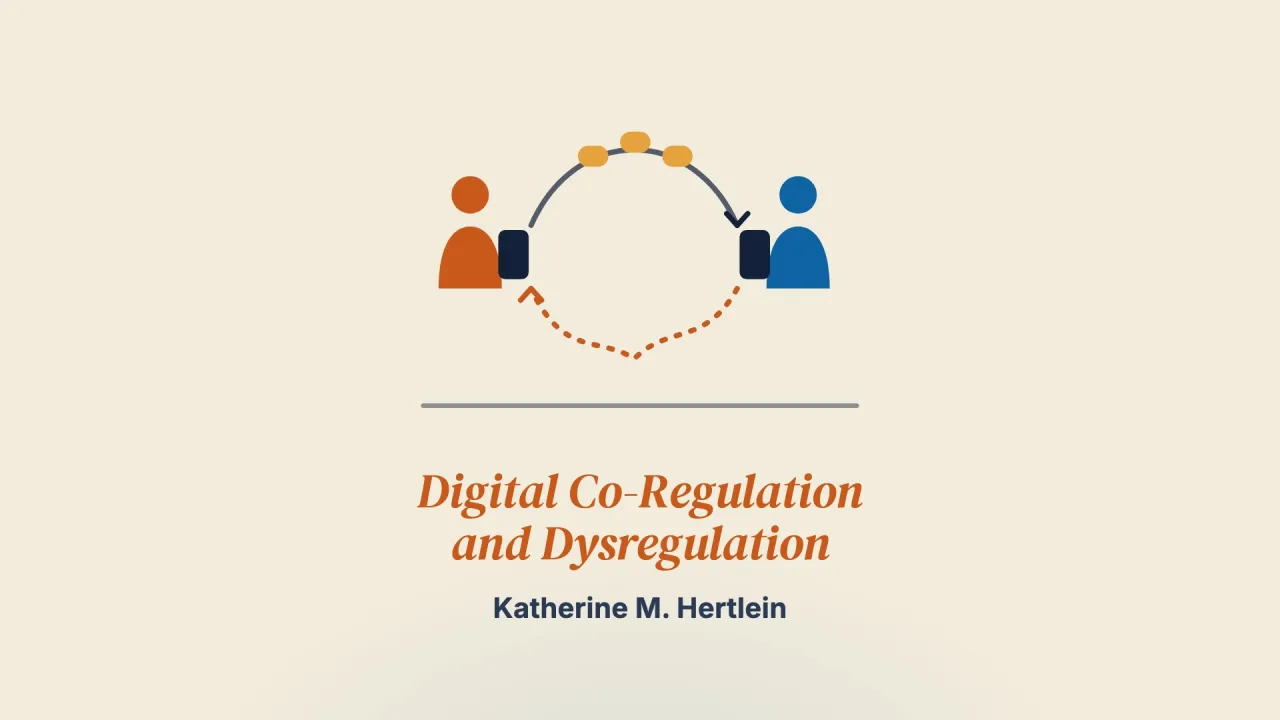
 Digital Co-Regulation and Dysregulation in Romantic Relationships: A Systemic Model of Technology-Mediated Emotional Processes
Checking, chasing, blocking: 31 interviews show how the phone regulates or dysregulates a couple’s anxiety, with a systemic model of the loop.
 Scientific
 Transitioning to the Business of a Session in Collaborative-Dialogic Meetings: A Conversation Analysis
How do Open Dialogue therapists move to the business of a session? The open question creates silences and family negotiation: a conversation analysis of ten sessions.
 Scientific
 Internal Family Systems Therapy as Part of the ‘Family of Systemic Therapies’: A Critical Exploration of Systemic Practice in the Intra-Personal Domain
Does IFS belong to the family of systemic therapies? A critical exploration, grounded in a family court vignette, of systemic work with “parts”.
Comments 0
Log in to join the discussion. Log in