Journal of Solution Focused Practices · Empirical research
A Pilot Study of a Cohort-Based Solution-Focused Wellness Group for Graduate Students Using Solution-Focused Coaching
Graduate students are six times more likely than the general population to experience depression and anxiety, and they seek help less than other students. James Beauchemin and his Boise State team take their solution-focused wellness programme, six one-hour sessions by videoconference, one wellness domain per session, and offer it this time to a whole cohort of the same master’s programme. Nine students who already know each other, compared with eighteen drawn from various programmes. Both groups do better after six weeks; the cohort gains more on well-being and perceived wellness, and the interviews bring out three themes: awareness of one’s needs, peer support, wellness as a multidimensional construct. Happiness and life satisfaction do not move. A study that asks a simple question, does familiarity help or hinder a brief group, and answers: it helps.
This is the original article A Pilot Study of a Cohort-Based Solution-Focused Wellness Group for Graduate Students Using Solution-Focused Coaching, by James D. Beauchemin, Danya K. Krueger, Jennie Newman and Paul Beitelspacher, published in Journal of Solution Focused Practices (2022), doi: 10.59874/001c.74998, under a CC BY 4.0 licence. Republished by Complexe Systémique: the authors’ text is unchanged; only the presentation has been adapted for reading online, the four tables and four appendices being rendered as cards. Boxes and notes labelled “Complexe Systémique” are ours, not the authors’.
Abstract. Graduate students experience heightened levels of stress, compromising their well-being and predisposing them to mental health disorders. Graduate students are over six times more likely to experience depression and anxiety than the general population. Despite the presence of counseling services on college and university campuses, graduate students are less likely to access these services and more prone to utilize alternative institutional supports (i.e., faculty advisors or peer counselors). This pilot study assessed the effectiveness of a six-week solution focused wellness (SFW) group intervention with a graduate program cohort using a pre-post, mixed-methods design. A total of twenty-seven (N = 27) participants were included in the study. Results demonstrated significant differences in well-being, mental health, and perceived wellness between baseline and six-weeks for both the cohort group (n = 9) and the general wellness group (n = 18). ANCOVA revealed significant between-group differences for well-being and perceived wellness indicating that the cohort group improved more across wellness-specific variables. Three primary themes emerged from the qualitative data including: awareness of wellness needs, peer support, and multidimensional wellness. The aggregated results support the effectiveness of a cohort approach to graduate student wellness group implementation.
Keywords: solution-focused coaching, wellness, graduate students, cohort-model
Introduction
According to the October 2020 Council of Graduate Schools/Graduate Records Examinations Survey of Graduate Enrollment and Degrees, more than 1.8 million students enrolled for Fall 2019 graduate programs in colleges and universities across the United States (Okahana et al., 2020). Graduate students encounter unique challenges compared to undergraduates, particularly because “graduate students are more likely to have multiple familial and financial responsibilities entering graduate school than did students in the past” (Hyun et al., 2006, p. 247). Graduate programs can be more competitive and less structured (Hyun et al.; Okahana & Zhou, 2017), requiring students to be self-motivated and able to manage stress successfully (Hyun et al.; Mousavi et al., 2018). In addition to familial and financial burdens, graduate students experience “constant pressure to perform well” because they “must learn a broad range of knowledge and skills, advance research projects, meet deadlines, become independent problem solvers, and develop career opportunities before graduating” (Mousavi et al., p. 1939).
Stress compromises graduate students’ overall well-being and predisposes them to mental health disorders (Evans et al., 2018; Mousavi et al., 2018). According to the 2014 UC Berkeley Graduate Student Happiness & Well-Being Report, 64% of graduate students in Arts & Humanities meet criteria for depression. Between 43-46% of graduate students in Biological Sciences, Physical Sciences, Engineering, and other professional disciplines score as depressed, while 37% of Law, 34% of Social Sciences, and 28% of Business students score as depressed (UC Berkeley Graduate Assembly, 2014). If left untreated, symptoms often become more frequent, severe, and treatment resistant over time (Wang et al., 2005). Consequently, graduate students are a particularly vulnerable population with an increased risk for suicidality, self-injury, other major illness, and death (Evans et al., 2018; Mousavi et al.; Smith et al., 2013).
Research into the mental health initiatives and services offered by colleges and universities has intensified (Lipson et al., 2016). Many campuses have existing programs that advocate for physical and mental wellness and promote stress management, although most of these wellness initiatives focus specifically on undergraduate student needs (Mousavi et al., 2018). However, interventions designed to promote well-being among the graduate student population have demonstrated promising results (e.g., Gold et al., 2020; Mazurek Melnyk et al., 2020). While undergraduate and graduate students have equal access to on-campus direct clinical services (i.e., crisis management, individual and group counseling), many campus-wide wellness and mental health activities often fail to acknowledge and address the unique academic experiences and needs of graduate students (Mousavi et al.). Attempts to address these unique needs through offering programming within specific graduate programs and cohorts have provided inconclusive evidence of effectiveness when compared to general graduate programming (Beauchemin et al., 2018).
Additionally, there is a significant gap between the demand for mental health services and campuses’ ability to supply wellness resources (Watson, 2013). Therefore, graduate students who do seek services likely encounter barriers such as limited appointment availability, lengthy wait lists, or referrals to off-campus services (Gallagher, 2014). Despite the presence of counseling services on campus, graduate students are still more likely to utilize alternative institutional supports like faculty advisors or peer counselors (Hyun et al., 2006). Moreover, as graduate programs become more inclusive and representative of minority and vulnerable populations, there is an immediate need to develop and implement “tailored, culturally sensitive intervention and preventive programs” (Lipson et al., 2016, p. 24).
Wellness
Lifestyle behaviors coupled with chronic, unmanaged stress can adversely impact individuals’ health and well-being, potentially leading to mental health disorders and, ultimately, premature death (Smith et al., 2013). As a result, Western society has embraced a gradual paradigm shift toward a holistic understanding of health and mediating factors. This is supported by the World Health Organization, which defines health as “a state of complete physical, mental, and social well-being, and not merely the absence of disease or infirmity” (World Health Organization [WHO], 2005, p. 1). The conceptualization of health and well-being as multidimensional has generated empirical interest and increased wellness-related research (Beauchemin et al., 2018).
Researchers have emphasized that defining wellness as a measurable construct is complex (Roscoe, 2009). Wellness can be viewed as both an outcome and a process (Myers & Sweeney, 2005) and when combined with its subjective nature, a consensus around an integrated definition becomes difficult to establish (Roscoe). Inconsistency in construct conceptualization has resulted in numerous wellness models being developed and modified over the past few decades (e.g., Hettler 1980; Myers & Sweeney, 2004). However, consistent among these evidence-based models is the understanding that wellness is a multidimensional construct, integrating domains such as physical, social, emotional, spiritual, and intellectual wellness (Beauchemin, et al. 2020). Based on this understanding, interventions that incorporate strategies for enhancing personal wellness across multiple domains may be an effective approach to improving student holistic health and well-being (Beauchemin, et al.) in both in-person and web-based formats (Beauchemin et al., 2018).
Solution-Focused Coaching
Although most evidence-based wellness interventions utilize a psycho-educational approach, findings have shown that clinical counseling and coaching methods can be effective in facilitating wellness-based lifestyle change (Beauchemin et al., 2018). Solution-focused coaching (SFC) is an adaptation of solution-focused brief therapy (SFBT), a strengths-based therapeutic approach defined by its emphasis on constructing solutions rather than resolving problems, and the assumption that clients have the resources and capacity to change (Ginegerich & Eisengart, 2000). SFC is focused on supporting people in identifying preferred outcomes and specific goals, disengaging from problem-focused thinking, as well as developing and utilizing resources and strengths (Grant, 2013). A solution-focused approach enables individual conceptualization of wellness relevant to personal values, culture, lived experiences, and perception of well-being. SFC can be utilized for individuals and groups (Green et al., 2006; Sharry, 2007), and has demonstrated effectiveness in both face-to-face and web-based contexts (Novella et al., 2020). SFC has been successfully applied to health and wellness for teens (McPherson et al., 2019), college students (Pakrosnis & Cepukiene, 2015), and adults (Grant et al., 2009; Tkacova et al., 2020).
Web-Based Intervention
The acceptance of telehealth as an effective service delivery modality has afforded researchers and clinicians in health-related fields to develop and deliver web-based self-care and behavioral-change interventions to a range of consumers (Murray, 2012; Grim et al., 2011). Web-based interventions offer clients and research participants a level of convenience, accessibility, and privacy that cannot be provided in face-to-face interactions (Murray). Leveraging these advantages, web-based interventions have been utilized in three main clinical areas: self-management of long-term conditions (e.g., diabetes and heart disease), health promotion (e.g., sexual health, diet, and exercise), and mental health (e.g., depression and anxiety) (Murray).
Research demonstrates that web-based interventions offer both utility and positive effects on outcomes of interest (Murray, 2012). For example, studies show that web-based interventions can increase physical activity rates among participants, particularly when interventions integrate theory-based interactive components (Steele et al., 2007; Ferney & Marshall, 2006). Specifically related to college students, Grim et al. (2011) emphasized that web-based interventions may be a promising means of facilitating behavior change.
Hypotheses
Given the common experience of compromised wellness among graduate students and lack of conclusive evidence of cohort-specific interventions, there is a need for preventative, evidence-based, accessible interventions designed to establish solution-focused, attainable lifestyle changes and improve wellness with this population. The purpose of this pilot study was to assess the effectiveness of a web-based solution-focused wellness (SFW) intervention with a graduate program cohort using a mixed-methods approach integrating both quantitative measures and qualitative semi-structured interviews. Specific study hypotheses included:
- A six-week web-based SFW intervention will result in improved perceptions of wellness and related constructs among graduate students who are members of a particular academic cohort.
- The graduate cohort SFW intervention group will differ significantly from a general (non-cohort) graduate student intervention group across outcome variables.
Methods
Study Design
This pilot study utilized a pre-post, mixed-methods design to evaluate the effectiveness of a web-based SFW intervention among university students in a particular graduate program cohort. Specifically, measures were included to assess participant happiness, satisfaction with life, and wellbeing, constructs that theoretically should be highly correlated with personal wellness. Research has indicated that satisfaction with life and subjective happiness are used interchangeably and represent components of subjective wellbeing (Lyubomirsky & Lepper, 1999). The rationale for utilizing this mixed-methods design was to link the quantitative and qualitative data in a meaningful way to enrich findings and improve future intervention models (i.e., length, duration, and enhanced student experience) (Teddlie & Tashakkori, 2010). In addition to the primary analysis, outcomes for the cohort intervention group were compared with outcomes from general graduate student (non-cohort) intervention groups to assess differences in wellness-related change and to integrate the lived experiences reported among cohort group participants. To augment quantitative analyses, qualitative interviews were utilized to gain insight into the lived experiences of participants, and to provide a more comprehensive understanding of intervention effectiveness and outcomes. Participants were asked to describe their experiences in the wellness group, identify any changes as a result, describe current wellness practices, specify what was most/least beneficial, and comment on the group’s length and duration (Appendix D).
Participants
After receiving Institutional Review Board (IRB) approval, a total of thirty-six participants were recruited for the study. A pre-intervention screening was conducted by a licensed mental health professional to help clarify expectations and assess appropriateness of inclusion, as well as evaluate the possible need for an alternative level of care. After attrition, a sample of twenty-seven (N = 27) was analyzed (cohort wellness group n = 9; general graduate wellness group n = 18). Of these, the majority were female (78%) and single (85%), and all were domestic students (100%). In addition, 71% identified as Caucasian, 11% Asian/Pacific Islander, 11% Latinx, and 7% other, while most had in-state status (74%) (Table 1). The cohort group include nine individuals from the same master-level program. The eighteen general graduate wellness participants were separated into two groups which represented various master and doctoral programs across the university. No control group was utilized in this pilot study. Therefore, all twenty-seven participants received the intervention with potential change assessed using the measures identified in the Materials section.
A pre-intervention Chi-square analysis was conducted to ensure no significant demographic differences were present at baseline. Results indicated no significant relationships between group membership and any demographic variables. In addition, an Independent Samples T Test was conducted across all baseline measures, indicating that there were no significant between-group differences for life satisfaction (p = .45), well-being (p = .34), perceived wellness (p = .30), happiness (p = .32), or mental health (p = .81). An attrition analysis was conducted to determine if there were any significant differences between participants who completed the six-week intervention (n = 27) and those who dropped out (n = 9). No differences were identified for well-being, perceived wellness, happiness, or mental health. However, a significant difference was detected for satisfaction with life t (2.87), p <.05 indicating that those who dropped out tended to score lower on pretest assessment of life satisfaction.
Intervention
Intervention participants met weekly for 60 minutes for six consecutive weeks via a web-based group meeting platform. The link to access the intervention was provided prior to each session. SFW intervention consisted of sessions that were guided by components of wellness, with a different wellness domain (e.g., social, spiritual, physical, emotional, and intellectual) serving as a theme for each session. Simply stated, SFC was the theoretical approach by which the SFW intervention was delivered, while improvements in multidimensional wellness were the measured outcomes. The SFW intervention can be delivered in an individual or group context. For the purposes of this pilot study, a group setting was used for the intervention implementation. Intervention facilitators were Master’s degree clinicians who attended a formal training led by a licensed clinician with expertise in both holistic wellness and solution-focused coaching. Facilitators were provided with materials including session outlines (Appendix A), fidelity checklists (Appendix B), and worksheets (Appendix C) and were provided supervision and feedback after each session. Each session followed a standardized format with check-in, review, discussion opportunities, and completion of strengths-based goal-setting worksheets. This format acted as a session guide that allowed flexibility and discussion topics based on participant contributions and best hopes.
Specific SFBT techniques (e.g., miracle question, identifying strengths, scaling, finding exceptions, future-oriented questions, and goal setting) were applied consistently throughout the sessions by the intervention facilitators. Likert scale fidelity checklists were completed by facilitators at the end of each session, and the supervising licensed clinician reviewed two recorded sessions. The fidelity checklists were comprised of seven items specific to solution-focused coaching and three items related to wellness. The self-reported mean fidelity score was 6.8 for intervention facilitators, and a slightly lower 6.7 for the two recorded sessions as assessed by a licensed clinician.
Materials
For this study several valid and reliable quantitative measures were utilized to evaluate wellness-related changes in participants between baseline and post-intervention. The Satisfaction with Life Scale (SWLS), World Health Organization Five Well-Being Index (WHO-5), Subjective Happiness Scale (SHS), Perceived Wellness Survey (PWS), and Patient Health Questionnaire-4 (PHQ-4) were chosen based on their collective comprehensive assessment of participant well-being and between-construct relationships (Babayigit & Okray, 2018; Nemati & Maralani, 2016). Using Cronbach’s Alpha, internal consistency reliability was calculated for the cohort sample across all measures, ranging between .70 and .93 indicating strong internal consistency. Similarly, results for the general graduate group revealed strong internal consistency for each measure (a = .73 - .92).
Satisfaction with Life Scale (SWLS). The Satisfaction with Life Scale (SWLS) is a 5-item measure designed to assess individual perceptions of life satisfaction. The SWLS utilizes a 7-point Likert-style response scale resulting in a possible range of scores from 5-35. The scale has good test-retest reliability and high internal consistency (Diener et al., 1985; Useche & Serge, 2016) and scores correlate with measures of mental health (Pavot & Diener, 2008).
World Health Organization Five Well-Being Index (WHO-5). The WHO-5 is a 5-item self-report measure of mental well-being. It uses a 6-point Likert scale in which respondents indicate the frequency of feelings within the past two weeks, ranging from “at no time” to “all of the time”. The WHO-5 uses only positively phrased statements to avoid pathologizing language and has demonstrated adequate construct validity as a unidimensional scale assessing well-being (Topp et al., 2015).
Subjective Happiness Scale (SHS). The Subjective Happiness Scale (SHS) is a 4-item self-report scale of global subjective happiness. The first two items ask respondents to characterize themselves using an absolute rating and a rating relative to peers. The second two items provide descriptions of happy and unhappy individuals and ask the extent to which each characterizes them. The SHS has demonstrated high internal consistency reliability as well as convergent validity (Lyubomirsky & Lepper, 1999; Quezada et al., 2016).
Perceived Wellness Survey (PWS). The Perceived Wellness Survey (PWS) (Adams et al., 1997) is a salutogenically-oriented, multidimensional measure of perceived wellness across physical, spiritual, psychological, social, emotional, and intellectual dimensions. Each dimension is represented by a 6-point Likert Scale ranging from 1 (very strongly disagree) to 6 (very strongly agree) with higher scores indicating greater wellness. The PWS has been shown to possess excellent estimates of factorial and construct validity, as well as internal consistency reliability (a = .91; Adams et al., 1998).
Patient Health Questionnaire-4 (PHQ-4). The Patient Health Questionnaire-4 (PHQ-4) is a 4-item inventory rated on a 4-point Likert-style scale. The items are drawn from the first two items of the Generalized Anxiety Disorder–7 scale (GAD–7) and the Patient Health Questionnaire-8 (PHQ-8), two valid and reliable measures of mental health. Its purpose is to allow for brief measurement specific to depression and anxiety, the most common mental disorders in the general population. The PHQ-4’s utility is supported by its adequate internal reliability, construct validity, and factorial validity (Kroenke et al., 2009).
Results
Quantitative
Nine cohort group participants (n = 9) were included in the primary quantitative analysis, and a total of twenty-seven (n = 27) were included in the comparative analysis. Paired Samples T Tests with an established alpha of .05 were conducted to test the null hypothesis (Ho = u1 = u2) and compare estimated mean differences between all outcome variables across time. Results demonstrated a significant difference between baseline (M = 18.77, SD = 3.77) and six weeks (M = 22.67, SD = 4.00); t (5.75), p <.01 for well-being, mental health (pre M = 8.00, SD = 2.55; post M = 6.56, SD = 1.94); t (2.39), p <.05, and perceived wellness (pre M = 166.22, SD = 24.54; post M = 174.22, SD = 23.43); t (3.05), p <.05 (See Table 2). Similarly, significant differences were found for the general wellness group (n = 18) over time for well-being (pre M = 17.06, SD = 4.52, post M = 18.83, SD = 3.99) t (2.45), p <.05, mental health (pre M = 8.27, SD = 3.01, post M = 6.83, SD = 2.35) t (3.42), p <.05, and perceived wellness (pre M = 155.28, SD = 25.43, post M = 159.28, SD = 25.37) t (3.53), p <.01 (Table 3).
To assess differences in effectiveness across outcome variables between the cohort and general wellness groups a between-groups analysis of covariance (ANCOVA) was utilized. Participants’ scores on the pre-intervention administration of the measures were used as covariates in the analysis to control for pre-existing differences between groups. ANCOVA revealed significant between-group differences for well-being (WHO-5) F (1, 24) = 2.04, p < .01. Based on effect size guidelines for partial eta squared (.01 = small, .06 = moderate, and .14 = large; Bakeman, 2005; Cohen, 1988), a large effect size (np2 = .521) was detected. Similarly, a significant difference was identified for perceived wellness (PWS) F (1, 24) = 2.84), p <.01 with a large effect size (np2 =.105). The aggregated results support the efficacy of a cohort model approach compared to a general graduate student group in improving wellness-related outcomes (Table 4).
Qualitative
To augment the quantitative data and inform changes experienced within the cohort group, follow-up semi-structured interviews were conducted. Although a relatively small sample (n = 7), interview participants accounted for 78% of the cohort group. Interviews were conducted by the Principal Investigator within one week of intervention completion via web-based video call. An Applied Thematic Analysis (ATA) (Braun & Clarke, 2006; Guest et al., 2012) was conducted as a means of identifying relevant themes while incorporating analytic rigor. After transcribing interviews researchers reviewed each repeatedly to increase familiarity with the text, followed by segmentation based on initial interpretation of meaning. A codebook was developed including code labels, short descriptions, and code definitions to facilitate coding procedures (Guest et al.). The coding procedure resulted in three consensus themes that emerged from the qualitative data including: awareness of wellness needs, peer support, and multidimensional wellness.
Participants indicated that one of the benefits gained through participation in the graduate wellness group was the increased awareness of needs related to wellness. This individualized conceptualization supports the subjectivity and fluidity of wellness and is consistent with the solution-focused wellness (SFW) model, which emphasizes a personalized interpretation of what it means to “be well”. By increasing one’s awareness and understanding of wellness as a construct, individuals can address needs specific to given domains by operationalizing related wellness behaviors. Among the seven interview participants this theme was indicated eleven times throughout the semi-structured interviews, and inter-rater reliability was 90% among qualitative reviewers. Examples of participant statements related to increased awareness of needs include: “I definitely, for me, learned a lot about how I view my own, you know, wellness and like how I define it and just how it’s an evolving thing and kind of recognizing where I was, where I am, where I want to go” and “I would just say that wellness is kind of being in tune with yourself and just being aware at any given point in time, you know, what you need personally”.
Peer support emerged as another primary theme, also occurring eleven times across interview transcriptions. Research team members coded this theme with 90% reliability. Participants reported that one of the factors that made the group beneficial and relatable was sharing experiences and hearing about the experiences of others in the group. This is consistent with literature that links social support with mental health and wellness (e.g., Hefner & Eisenberg, 2009) and supports findings related to web-based group health interventions and social connectedness and support (Banbury et al., 2018). Two examples of participant statements related to peer support include: “I felt like I was actively participating, learning, and listening to my peers, which is nice to know that we’re all not struggling alone” and “I feel like I learned a little bit from everyone in the group”.
The final theme that emerged from the data related to the understanding of wellness as a multidimensional construct. This finding reflects the many evidence-based models of wellness that integrate various domains such as social, physical, emotional, intellectual, and spiritual (Roscoe, 2009), including the solution-focused wellness (SFW) model that guided the intervention for this pilot study. The intentional emphasis on the personalized nature of wellness allowed for participants to focus on domains that feel most relevant for them. Among the seven interview participants, wellness as a multidimensional construct was coded by reviewers with 80% accuracy. Examples of related participant statements include: “We learned about the different quadrants and how they’re all interconnected” and “I guess feeling like your needs are being met in all different areas of your life, like socially, intellectually”.
Table 1. Sample Characteristics (N = 27), frequency (percent)
Gender: Male 5 (19); Female 21 (78); Other 1 (3). Race/Ethnicity: Asian 3 (11); Caucasian 19 (71); Latino 3 (11); Other 2 (7). Marital Status: Single 23 (85); Married 4 (15). Domestic Status: Domestic Student 27 (100). In-State Status: In-State 20 (74); Out of State 7 (26).
Table 2. T Tests: Cohort Group (Mean Pre; Mean Post; t; Significance)
Well-Being (WHO): 18.77; 22.67; 5.75; .000. Mental Health (PHQ9): 8.00; 6.56; 2.39; .044. Wellness (PWS): 166.22; 174.22; 3.05; .016. Life Satisfaction (SWL): 26.00; 26.89; 1.10; .303. Happiness (SHS): 22.56; 22.89; .385; .710.
Table 3. T Tests: General Group (Mean Pre; Mean Post; t; Significance)
Well-Being (WHO): 17.66; 18.83; 2.45; .025. Mental Health (PHQ9): 8.27; 6.83; 3.42; .003. Wellness (PWS): 158.93; 162.30; 2.13; .016. Life Satisfaction (SWL): 24.76; 24.23; .759; .459. Happiness (SHS): 20.83; 21.11; .513; .614.
Complexe Systémique: for the general group, the values in Table 3 (well-being pre 17.66; perceived wellness 158.93 then 162.30, t = 2.13) differ from those given in the text (17.06; 155.28 then 159.28, t = 3.53). The tables label the mental health measure “PHQ9” whereas the Materials section describes the PHQ-4. We reproduce both versions as printed.
Table 4. Analysis of Covariance (ANCOVA) (Df; F; Significance; Partial Eta Sq.)
Well-Being (WHO-5): (1, 24); 2.04; .000; .521. Mental Health (PHQ-9): (1, 24); .035; .853; .001. Perceived Wellness (PWS): (1, 24); 2.84; .001; .105. Satisfaction With Life (SWL): (1, 23); .115; .738; .005. Happiness (SHS): (1, 24); .835; .370; .034.
Complexe Systémique: the reported F values (2.04 and 2.84 for 1 and 24 degrees of freedom) do not match the stated significance levels (p = .000 and .001) nor the effect sizes given; readers should retain the direction of the results rather than their exact figures.
Discussion
While support groups for graduate students are common on university campuses (e.g., Gold et al., 2020) there is a paucity of research examining the effectiveness of supports specific to academic cohorts. The SFW intervention has demonstrated effectiveness in improving wellness and decreasing stress with both undergraduate and graduate groups that integrate students from different academic programs (Beauchemin, 2018; Beauchemin et al., 2020). However, given the prevalence of programs in higher education that utilize a cohort model of learning, this study sought to assess the benefits of a web-based, wellness-focused intervention within a particular graduate cohort.
Significant improvements were detected for both the general and cohort groups in well-being, mental health, and perceived wellness. However, significant differences were also found between the two groups for well-being (WHO-5) and perceived wellness (PWS), the two primary variables of interest. This finding, paired with the qualitative data, supports the group’s utility in increasing awareness of multidimensional wellness needs, underscores the benefit of peer supports, and provides initial evidence of the effectiveness of a cohort approach to intervention administration. The lack of directionality related to the expected change in Hypothesis 2 was intentional, as rationale could be provided for either gains or deficits in comparison to the general wellness group. For example, one prominent question potentially informing this hypothesis was “does familiarity within the group promote or inhibit openness and sharing?”, which, in theory, may ultimately play a significant role in individual outcomes. This may be particularly important given the brevity of the intervention, as there is not adequate time for the traditional group development processes and dynamics that typify traditional therapeutic treatment groups. Based on the positive cohort group findings and the qualitative theme “peer support”, it is evident that for most participants the previously established familiarity was positive. To gain more insight into the impact of potential prior relationships among participants, future studies should include cohorts from a variety of disciplines and dynamics.
The lack of significant change for happiness or satisfaction with life for both the cohort and general wellness groups may be attributable to the trait-like properties of the constructs (e.g., Lucas & Donnellan, 2007; Stones et al., 1995). The SFW model was designed to be a brief, wellness-focused group intervention that emphasizes short-term, positive lifestyle change across wellness domains such as emotional, social, etc. with the primary aim of developing “buffers” against the stressors typically experienced by graduate students. It may be that wellness-focused constructs are more susceptible to change based on lifestyle factors, while happiness and satisfaction with life are more trait-oriented constructs that are less flexible. This would be congruent with qualitative findings awareness of wellness needs and peer support which highlight current wellness states and emphasize immediate and accessible supports. Future studies could include a longitudinal examination of these constructs to ascertain whether the wellness-related changes adopted during the intervention influence trait characteristics over time (e.g., 6-month follow-up).
In addition to the primary study findings, there are several potential benefits to implementation of a SFW group intervention. This intervention utilizes a preventative approach to improving wellness, focusing on developing healthy trends across multiple domains of wellness. The subjective and personal nature of wellness coupled with an approach that integrates a social constructivist lens encouraged individuals to construct their wellness in alignment with their values and culture. For example, diversity in traditions and cultural beliefs may inform the ways in which individuals conceptualize spiritual wellness.
Given the barriers that exist for college students in help-seeking, this emphasis may be destigmatizing and increase accessibility to support systems. As the SFW model utilizes a “coaching” approach to facilitation in which the group leaders follow an outline and adhere to specific intervention guidelines and techniques, there is the potential that the intervention could be more easily adopted. In other words, because this is not clinical group therapy, it is feasible that the SFW group could be facilitated by non-clinicians. Still, because of the nature of challenges faced by college students (Downes, 2015), a thorough screening process should be administered by a licensed mental health clinician to ensure that participants’ goals and needs are consistent with the group’s purpose. In addition, it is recommended that any non-clinician facilitators receive training specific to the intervention and approach, as well as work under the supervision of a licensed clinician.
Limitations
There are several study limitations that should be acknowledged. The small sample size for the cohort intervention group (n = 9) limits the generalizability of the data such that findings should be interpreted with caution. Although this was a pilot study, and group size falls within the recommendations for optimum group intervention size (Ezhumalai et al., 2018), future studies should seek to incorporate multiple cohorts and a more generalizable sample. The generalizability could be further enhanced by including participants from multiple institutions, locations, and cohorts of varying sizes. There are also potential limitations that may be specific to a cohort, such as social desirability bias that could be heightened by having peers as fellow participants. Finally, the study design incorporated a pre-post, mixed-methods approach. Future studies should include longitudinal follow-up assessments to gain insight into the lasting impacts of the changes experienced by participants.
Appendix A. Intervention Session Outline
Session Objectives: 1. Establish a safe and healthy environment in which to explore thoughts and feelings related to wellness within group context. 2. Examine wellness as a multi-dimensional construct with specific focus on Physical Wellness domain. 3. Identify and build on participants’ current strengths. 4. Encourage participants to build and explore congruence between values, goals, and lifestyles. 5. Provide opportunities for discussion and feedback regarding personal conceptualizations of wellness.
15 minutes: Welcome and introductions (objective 1). Discussion: overview of group; group norms/rules. 20 minutes: Introduce wellness. What does wellness mean to you? Multidimensional nature of wellness (objectives 2, 3, 5). Discussion: current strategies employed related to wellness; role that self-care activities play in life; how do you know when you are well? Not well? How do you best manage stress? Participants identify times when they were particularly physically well. 15 minutes: Exercise: miracle question, general wellness. Sharing. Discuss “ingredients” (objectives 2, 4, 5). 10 minutes: Closing/check-out, reactions to session (objective 1).
Appendix B. Fidelity Checklist (each item rated 1 to 6)
1. I asked a version of the “miracle question” during today’s session. 2. I summarized participants’ comments during today’s session. 3. I complimented participants’ strengths/resources during today’s session. 4. I asked exception/difference questions during today’s session. 5. I asked amplifying questions during today’s session. 6. I used scaling questions in today’s session. 7. I asked questions to help participants think about how changes will affect important others in their lives. 8. I provided opportunities for discussion and sharing specific to domains of wellness in today’s session. 9. I encouraged participants to explore ways that goals may affect their wellness in today’s session. 10. I asked about current strengths or positive practices related to wellness in today’s session.
Appendix C. Example Wellness Domain Worksheet: Physical Wellness
Current rating (1-10) ____; Desired rating (4 weeks) ____; Desired rating (8 weeks) ____. Questions to consider: How will you know when you are at a 6? Or 8? What will be different about your life? What would your optimal physical wellness look like? Activities you are currently doing or could do in the future to improve Physical Wellness: 1) 2) 3) 4) 5). Short-term goals: 1) 2) 3). The purpose of developing wellness goals is self-care, not to set goals that are unattainable or too challenging. Emphasis should be on accentuating positive effort and progress, in order to develop positive self-efficacy, confidence, and overall wellness.
Appendix D. Semi-Structured Interview Schedule
Describe your experience in the wellness group. What, if any, changes did you experience as a result of participation? Describe your current practices related to personal wellness. Do you feel that the group length and duration were appropriate? Why or why not? What could have improved your experience? What aspects did you find most beneficial? Least beneficial? Is there anything else that you feel would be important to share about your experience?
Complexe Systémique: what to take away
The value of this pilot lies less in its figures, several of which do not agree between text and tables, than in its question: in a brief group, six hours in all, is it better to have strangers or people who already know each other? Here the cohort wins, and the interviews say why, knowing “we’re all not struggling alone”. Note also the authors’ choice to let each participant define their own wellness, with a worksheet per domain and a 1-to-10 scale, a tool directly reusable in supervision or training. The same model, transposed to women living with HIV by Helen Yates, a co-author of the team, can be read in the “Solution Focused Wellness for HIV” pilot study. On online groups, see the fatherhood programme comparing in-person and remote delivery; on another brief group of female students, group counseling after a breakup in Taiwan.
References
Adams, T., Bezner, J., & Steinhardt, M. (1997). The conceptualization and measurement of perceived wellness: Integrating balance across and within dimensions. American Journal of Health Promotion, 11(3), 208-218. https://doi.org/10.4278/0890-1171-11.3.208
Adams, T., Bezner, J., Garner, L., & Woodruff, S. (1998). Construct validation of the perceived wellness survey. American Journal of Health Studies, 14(4), 212.
Babayigit, A., & Okray, Z. (2018). Review of the relationship between depression and life satisfaction among university students. Global Journal of Psychology Research: New Trends and Issues, 8(3), 117-128.
Bakeman, R. (2005). Recommended effect size statistics for repeated measures designs. Behavior Research Methods, 37(3), 379-384. https://doi.org/10.3758/BF03192707
Banbury, A., Nancarrow, S., Dart, J., Gray, L., & Parkinson, L. (2018). Telehealth interventions delivering home-based support group videoconferencing: Systematic review. Journal of Medical Internet Research, 20(2), e25.
Beauchemin, J. D. (2018). Solution-focused wellness: A randomized controlled trial of college students. Health & Social Work, 43(2), 94-100.
Beauchemin, J. D., Facemire, S. D., Pietrantonio, K. R., Yates, H. T., & Krueger, D. (2020). Solution-focused wellness coaching: a mixed methods, longitudinal study with college students. Social Work in Mental Health, 19(1).
Beauchemin, J., Gibbs, T., & Granello, P. (2018). Wellness promotion courses in University Settings: A Review of the Outcome Research. Building Healthy Academic Communities Journal, 2(1).
Braun, V., & Clarke, V. (2006). Using thematic analysis in psychology. Research in Psychology, 3(2), 77–101. https://doi.org/10.1191/1478088706qp063oa
Cohen, J. (1988). Statistical power analysis for the behavioral sciences (2nd ed.). Erlbaum.
Diener, E. D., Emmons, R. A., Larsen, R. J., & Griffin, S. (1985). The satisfaction with life scale. Journal of Personality Assessment, 49(1), 71-75.
Downes, L. (2015). Physical activity and dietary habits of college students. The Journal for Nurse Practitioners, 11(2), 192-198. https://doi.org/10.1016/j.nurpra.2014.11.015
Evans, T. M., Bira, L., Gastelum, J. B., Weiss, L. T., & Vanderford, N. L. (2018). Evidence for a mental health crisis in graduate education. Nature Biotechnology, 36(3), 282-284. https://doi.org/10.1038/nbt.4089
Ezhumalai, S., Muralidhar, D., Dhanasekarapandian, R., & Nikketha, B. S. (2018). Group interventions. Indian Journal of Psychiatry, 60(Suppl 4), S514–S521. https://doi.org/10.4103/psychiatry.IndianJPsychiatry_42_18
Ferney, S. L., & Marshall, A. L. (2006). Website physical activity interventions: Preferences of potential users. Health Education Research, 21(4), 560-566.
Gallagher, R. P. (2014). National survey of counseling center directors. International Association of Counseling Services.
Ginegerich, W.J., & Eisengart, S. (2000). Solution-focused brief therapy: A review of the outcome research. Family Process, 39(4), 477-498. https://doi.org/10.1111/j.1545-5300.2000.39408.x
Gold, J. A., Jia, L., Bentzley, J. P., Bonnet, K. A., Franciscus, A. M., Denduluri, M. S., & Zappert, L. T. (2020). WISE: A support group for graduate and post-graduate women in STEM. International Journal of Group Psychotherapy, 1-35.
Grant, A. M., Curtayne, L., & Burton, G. (2009). Executive coaching enhances goal attainment, resilience and workplace well-being: A randomized controlled study. The Journal of Positive Psychology, 4(5), 396–407. https://doi.org/10.1080/17439760902992456
Grant, A. (2013). Steps to solutions: A process for putting solution-focused coaching principles into practice. The Counseling Psychologist, 9(1), 36-44.
Green, L. S., Oades, L. G., & Grant, A. M. (2006). Cognitive-behavioral, solution-focused life coaching: Enhancing goal striving, well-being, and hope. The Journal of Positive Psychology, 1(3), 142-149. https://doi.org/10.1080/17439760600619849
Grim, M., Hortz, B., & Petosa, R. (2011). Impact evaluation of a pilot web-based intervention to increase physical activity. American Journal of Health Promotion, 25(4), 227–230. https://doi.org/10.4278/ajhp.081216-ARB-307
Guest, G., MacQueen, K. M., & Namey, E. E. (2012). Applied thematic analysis. Sage.
Hefner, J., & Eisenberg, D. (2009). Social support and mental health among college students. American Journal of Orthopsychiatry, 79(4), 491-499. https://doi.org/10.1037/a0016918
Hettler, B. (1980). Wellness promotion on a university campus. Family & Community Health, 3(1), 77-95. http://dx.doi.org/10.1097/00003727-198005000-00008
Hyun, J. K., Quinn, B. C., Madon, T., & Lustig, S. (2006). Graduate student mental health: Needs assessment and utilization of counseling services. Journal of College Student Development, 47(3), 247-266. http://doi.org/10.1353/csd.2006.0030
Kroenke, K., Spitzer, R. L., Williams, J. B., & Löwe, B. (2009). An ultra-brief screening scale for anxiety and depression: The PHQ–4. Psychosomatics, 50(6), 613-621. https://doi.org/10.1016/S0033-3182(09)70864-3
Lipson, S. K., Zhou, S., Wagner III, B., Beck, K., & Eisenberg, D. (2016). Major differences: Variations in undergraduate and graduate student mental health and treatment utilization across academic disciplines. Journal of College Student Psychotherapy, 30(1), 23-41. https://doi.org/10.1080/87568225.2016.1105657
Lucas, R. E., & Donnellan, M. B. (2007). How stable is happiness? Using the STARTS model to estimate the stability of life satisfaction. Journal of Research in Personality, 41(5), 1091-1098.
Lyubomirsky, S., & Lepper, H. S. (1999). A measure of subjective happiness: Preliminary reliability and construct validation. Social Indicators Research, 46, 137-155.
Mazurek Melnyk, B., Hoying, J., & Tan, A. (2020). Effects of the MINDSTRONG© CBT-based program on depression, anxiety and healthy lifestyle behaviors in graduate health sciences students. Journal of American College Health, 1-9.
McPherson, A. C., Biddiss, E., Chen, L., Church, P. T., De Groot, J. F., Keenan, S., … Schwellnus, H. (2019). Children and Teens in Charge of their Health (CATCH): A protocol for a feasibility randomised controlled trial of solution-focused coaching to foster healthy lifestyles in childhood disability. BMJ Open, 9(3), e025119. https://dx.doi.org/10.1136%2Fbmjopen-2018-025119
Mousavi, M. P., Sohrabpour, Z., Anderson, E. L., Stemig-Vindedahl, A., Golden, D., Christenson, G., Lust, K., & Bühlmann, P. (2018). Stress and mental health in graduate school: How student empowerment creates lasting change. Journal of Chemical Education, 95(11), 1939-1946. https://doi.org/10.1021/acs.jchemed.8b00188
Murray, E. (2012). Web-based interventions for behavior change and self-management: potential, pitfalls, and progress. Medicine 2.0, 1(2), e3. https://doi.org/10.2196/med20.1741
Myers, J. E., & Sweeney, T. J. (2004). The indivisible self: An evidence-based model of wellness. Journal of Individual Psychology, 60, 234-244.
Myers, J. E., & Sweeney, T. J. (2005). Counseling for wellness: Theory, research, and practice. American Counseling Association.
Nemati, S., & Maralani, F. M. (2016). The relationship between life satisfaction and happiness: The mediating role of resiliency. International Journal of Psychological Studies, 8(3), 194-201.
Novella, J. K., Ng, K. M., & Samuolis, J. (2020). A comparison of online and in-person counseling outcomes using solution-focused brief therapy for college students with anxiety. Journal of American College Health, 1-8.
Okahana, H., & Zhou, E. (2017). Graduate enrollment and degrees: 2006 to 2016. Council of Graduate Schools.
Okahana, H., Zhou, E., & Gao, J. (2020). Graduate enrollment and degrees: 2009 to 2019. Council of Graduate Schools.
Pakrosnis, R., & Cepukiene, V. (2015). Solution-focused self-help for improving university students’ well-being. Innovations in Education and Teaching International, 52(4), 437-447.
Pavot, W., & Diener, E. (2008). The satisfaction with life scale and the emerging construct of life satisfaction. The Journal of Positive Psychology, 3(2), 137-152.
Quezada, L., Landero, R., & González, M. T. (2016). A validity and reliability study of the subjective happiness scale in Mexico. The Journal of Happiness & Well-Being, 4(1), 90-100.
Roscoe, L. J. (2009). Wellness: A review of theory and measurement for counselors. Journal of Counseling & Development, 87(2), 216-226.
Sharry, J. (2007). Solution-focused groupwork. Sage.
Smith, L. L., Lake, N. H., Simmons, L. A., Perlman, A., Wroth, S., & Wolever, R. Q. (2013). Integrative health coach training: A model for shifting the paradigm toward patient centricity and meeting new national prevention goals. Global Advances in Health and Medicine, 2(3), 66–74. https://doi.org/10.7453%2Fgahmj.2013.034
Steele, R., Mummery, K. W., & Dwyer, T. (2007). Development and process evaluation of an Internet-based physical activity behaviour change program. Patient Education and Counseling, 67(1-2), 127-136.
Stones, M. J., Hadjistavropoulos, T., Tuuko, H., & Kozma, A. (1995). Happiness has traitlike and state like properties: A reply to Veenhoven. Social Indicators Research, 36(2), 129-144.
Teddlie, C., & Tashakkori, A. (2010). Overview of contemporary issues in mixed methods research: Handbook of mixed methods in social and behavioral research. SAGE.
Tkacova, R., Paranicova, I., Timkova, E., Vonkova, D., & Joppa, P. (2020). Erickson solution-focused coaching for weight management in obese patients with obstructive sleep apnoea: ECOHEALTH pilot study. Journal of Health Psychology, 25(13-14), 2141-2150.
Topp, C. W., Østergaard, S. D., Søndergaard, S., & Bech, P. (2015). The WHO-5 Well-Being Index: a systematic review of the literature. Psychotherapy and Psychosomatics, 84(3), 167-176.
UC Berkeley Graduate Assembly. (2014). Graduate Student Happiness and Well-being Report. http://ga.berkeley.edu/wp-content/uploads/2015/04/wellbeingreport_2014.pdf
Useche, S., & Serge, A. (2016). The satisfaction with life scale (SWLS): Psychometric properties and observed scores in university students. Mental Health, 14, 34.
Wang, P. S., Berglund, P., Olfson, M., Pincus, H. A., Wells, K. B., & Kessler, R. C. (2005). Failure and delay in initial treatment contact after first onset of mental disorders in the national comorbidity survey replication. Archives of General Psychiatry, 62(6), 603–613. https://doi.org/10.1001/archpsyc.62.6.603
Watson, J. C. (2013). Rethinking the provision of counseling services: A paradigm shift for college counselors. Journal of College Counseling, 16(1), 3-6. https://doi.org/10.1002/j.2161-1882.2013.00022.x
Constitution of the World Health Organization. (2005) In: World Health Organization: Basic documents. 45th ed. Geneva: World Health Organization.
Contacts
James D. Beauchemin: jamesbeauchemin@boisestate.edu · Danya Krueger: danyakrueger@boisestate.edu · Jennifer Newman: jennifernewman1@boisestate.edu · Paul Beitelspacher: paulbeitelspache@boisestate.edu
Original article A Pilot Study of a Cohort-Based Solution-Focused Wellness Group for Graduate Students Using Solution-Focused Coaching, by James D. Beauchemin, Danya K. Krueger, Jennie Newman and Paul Beitelspacher, published in Journal of Solution Focused Practices, vol. 6, no. 1 (2022), article 2, doi: 10.59874/001c.74998, under a CC BY 4.0 licence. Republished by Complexe Systémique, September 2026, with the presentation adapted for online reading and the tables and appendices rendered as cards; the authors’ text is unchanged.
This is the original article “A Pilot Study of a Cohort-Based Solution-Focused Wellness Group for Graduate Students Using Solution-Focused Coaching”, published in Journal of Solution Focused Practices (2022) under a CC BY 4.0 licence. Republished by Complexe Systémique: the author’s text is unchanged; only the presentation has been adapted for reading online, as set out at the head of this page.
Read the original articleHow to cite this article
Beauchemin, J. D., Krueger, D. K., Newman, J., & Beitelspacher, P. (2022). A Pilot Study of a Cohort-Based Solution-Focused Wellness Group for Graduate Students Using Solution-Focused Coaching. Complexe Systémique. https://app.complexe-systemique.com/en_GB/articles/a-pilot-study-of-a-cohort-based-solution-focused-wellness-group-for-graduate-students-using-solution-focused-coaching (Original work published in 2022 in Journal of Solution Focused Practices, vol. 6, n° 1 (2022), article 2; republished in 2022 by Journal of Solution Focused Practices, https://journalsfp.org/article/74998)
To go further
- Evaluating the Solution Focused Wellness for HIV Intervention for Women: A Pilot StudyThe same wellness model, transposed to women living with HIV.
- Solution-Focused Brief Therapy-Enhanced Fatherhood Curriculum Pilot Study: A Comparison of Delivery Methods in Response to the COVID-19 PandemicAnother online group, compared with in-person delivery.
- The Effectiveness of Solution-Focused Group Counseling for Taiwanese Unmarried Females’ Post-Breakup Loss: A Pilot StudyAnother brief group of female students, in Taiwan.
Related training courses
 Webinar
Extramarital affairs: what does the therapist do when the couple explodes?
Free webinar: how to position yourself as a systemic therapist in the crisis of the extramarital affair. Revelation, secrecy, multipartiality.
 Symposium
Digital technology, AI and mental health
Conference in Lyon, 11 December 2026: digital technology, artificial intelligence and mental health. Six talks, replay for participants. In French.
 Webinar
The three loves
Free live webinar with Dr Robert Neuburger, 1 October 2026, 6 pm (Paris): the three loves, attachment and ways of loving. Held in French.
 Short course
The suicidal crisis in adolescents and young adults
Training: assessing and supporting the suicidal crisis in adolescents and young adults. Clinical landmarks and systemic tools. In French.
Related articles
 Article
 The AFFIRM Model for Navigating Challenges in Continuously-Interfaith and Divergent-Interfaith Marriages
Thirty happy interfaith couples describe how they navigate their religious differences: five processes, from respecting each other’s choices to religious intimacy, gathered in the AFFIRM model.
 Article
 Toxic, narcissistic, borderline: what therapy speak does to your relationships
Narcissistic, borderline, toxic: therapy speak has left the consulting room. Julien Besse shows how these labels close the debate and relieve us of our own part.
 Article
 What if the shortest path to change ran through a joyful detour?
Humour in therapy is not a gimmick but a clinical skill: it loosens the loops, reframes without wounding and reopens the field of possibilities. With its ethical safeguards and a concrete toolbox.
 Article
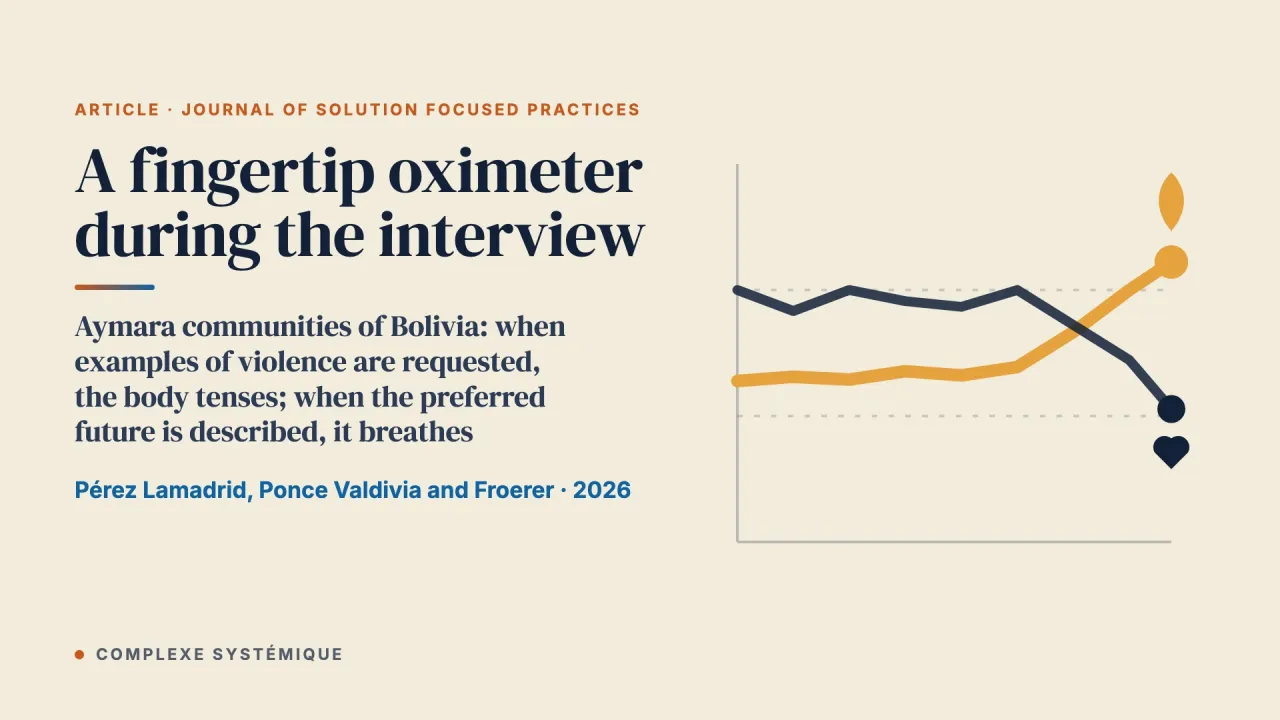
 Oxygenation and Heart Rate in Solution-Focused and Problem-Focused Interviews With Rural and Indigenous Aymara Communities (Viacha and Laja) Regarding Intersectional Violence
A fingertip oximeter on 19 Aymara people of the Altiplano: the problem-focused interview tenses when examples of violence are requested; the solution-focused one oxygenates and slows the heart.