Journal of Marital and Family Therapy · Family therapy
Applying the Rupture Resolution Rating System to emotion‐focused couple therapy
How can one spot, in session, the moment when the alliance breaks down, between partners or with the therapist? Avital Sherlow-Levin, Ben Shahar, Rhonda Goldman and Eran Bar-Kalifa adapt the 3RS, an observational grid for ruptures and repairs designed for individual therapy, to couples. Applied to two couples seen in emotion-focused therapy after an affair, it shows frequent ruptures at every level, more of them with the therapist in the couple that does not improve.
This is a reformatted republication of Applying the Rupture Resolution Rating System to emotion‐focused couple therapy, by Avital Sherlow-Levin, Ben Shahar, Rhonda Goldman and Eran Bar-Kalifa, published in Journal of Marital and Family Therapy (Wiley) (2024), doi: 10.1111/jmft.12723, under a CC BY 4.0 licence. Prepared by Complexe Systémique in September 2026: the authors’ text is unchanged; the layout has been adapted for reading online, which constitutes a modification of the work under the terms of the licence. Tables are presented as lists. This edition was made neither by the authors nor by the publisher, who are not responsible for its content or for any errors. The original version prevails.
The conflict will often continue when ruptures are not repaired, making collaborating on treatment goals more difficult.
Avital Sherlow-Levin, Ben Shahar, Rhonda Goldman and Eran Bar-Kalifa
Abstract
Alliance ruptures and their repair are robustly associated with outcomes in individual therapy. Little is known about these processes in couple therapy, despite the acknowledged challenges of nurturing the alliance when working with two parties in conflict. One factor contributing to this gap in the literature is the lack of an instrument to capture ruptures and repair in couple therapy. We adapted the Rupture Resolution Rating System (3RS) to identify ruptures and repairs in couple therapy at the within-system (between the two partners) and the between-system (between each partner and the therapist) levels. Sessions from one couple with good outcome and one couple with poor outcome were coded. Couples were in therapy to deal with emotional injury. Rupture-repair events in both the within-system and between-system were common. The couple with the poor outcome showed greater levels of rupture with the therapist. The injured partners (vs. injurer partners) demonstrated higher frequencies of ruptures.
INTRODUCTION
The therapeutic alliance is one of the most extensively researched constructs in psychotherapy (Flückiger et al., 2018; Norcross & Lambert, 2018). Across treatment models, a strong therapeutic alliance is associated with positive outcomes (Doran, 2016; Flückiger et al., 2018; Wampold & Imel, 2015). This association has also been found in couple therapy (Friedlander et al., 2018; Knobloch-Fedders et al., 2007; Tilden et al., 2021), although there has been much less research in this area.
Bordin (1994) defined the therapeutic alliance as involving three components: the emotional bond between client and therapist, the agreement on therapy tasks, and the agreement on therapy goals. To take the complexity of couple therapy into account, Pinsof and Catherall (1986) expanded Bordin's conceptualization by characterizing the alliance as a system of relationships. The alliance in couple therapy involves (1) the relationship between one partner and the therapist, (2) the relationship between the other partner and the therapist, and (3) the working relationship between the two partners (the “within-system alliance”). Symonds and Horvath (2004) adapted this systemic framework to couple therapy and found that the association between alliance and posttreatment relationship satisfaction was significantly higher (i.e., more positive) when the partners agreed on the strength of the alliance, when the male partner's alliance was higher than the female's, and when the alliance of both partners increased as therapy progressed.
One of the most important recent developments in alliance research in individual therapy is the focus on alliance rupture and repair. Alliance ruptures reflect a strain in the emotional bond between clients and the therapist or a disagreement on the therapy tasks and goals (Eubanks et al., 2018; Safran et al., 2011). Safran and Muran (2000) identified two main therapeutic alliance rupture categories, which they labeled “withdrawal” and “confrontation.” Withdrawal ruptures occur when the client moves away from the therapist and the work of therapy (e.g., avoidance, minimal responding). By contrast, confrontation ruptures occur when the client moves against the therapist and the work of therapy (e.g., criticizing the therapist, complaining about the therapy).
Safran et al. (2011) suggested that in individual therapy, therapists can attempt to repair a rupture through strategies such as acknowledging their own contribution to the rupture, exploring the rupture with the client, and linking the rupture to a broader pattern in the client's life. In a meta-analysis of 11 studies, Eubanks et al. (2018) found a moderate relationship between rupture resolution and therapy outcome (r = 0.29), which thus underscores the importance of recognizing and addressing these ruptures in therapy.
Unfortunately, there is scant research on alliance ruptures in couple therapy (see Friedlander et al., 2018). Couple therapists face the complex and delicate task of simultaneously forming a strong alliance with two partners who often enter therapy with disparate narratives, coping styles, and fears (Carlson & Dermer, 2016). Thus, ruptures in couple therapy can occur in all the facets of the alliance, that is, between the therapist and each partner, as well as within the couple itself. A rupture can take the form of confrontation or withdrawal. Between-confrontation ruptures occur, for example, when one partner complains to the therapist about the lack of progress in treatment, refuses to cooperate with an intervention suggested by the therapist, or rejects the therapist's formulations. Between-withdrawal ruptures can occur when one of the partners does not respond to the therapist's questions, answers in a detached, abstract way, or expresses despair about the treatment. Similarly, within-confrontation ruptures occur, for example, when one partner complains about the other partner's (lack of) involvement in the therapeutic process or harshly criticizes or argues about their goals in therapy. Examples of within-withdrawal ruptures include when the client does not answer a partner's question, responds defensively or appeases, or expresses hopelessness about the partner's ability to ever change. One type of rupture that is specific to couple therapy is the “split alliance,” which occurs when one partner has a stronger emotional bond with the therapist than the other. The split alliance has been found to contribute significantly to poor treatment outcomes (Friedlander et al., 2018) and dropout (Bartle-Haring et al., 2012).
The absence of dedicated measurement tools to assess alliance rupture in couple therapy is perhaps the prime reason for the scarcity of research in couple therapy. Most studies have used self-reports to assess the alliance. On self-report questionnaires, ruptures can be captured by monitoring changes in the alliance, where a drop in alliance scores indicates a rupture, and returning to pre-rupture scores signifies a repair (Eubanks-Carter et al., 2012). Goldsmith (2012; unpublished dissertation) found that various types of ruptures are frequent in couple therapy, and that rupture-repair events are associated with improved client outcomes. However, self-report assessments of alliance ruptures have several disadvantages. They tend to be administered after a session and hence cannot capture within-session occurrences of rupture and repair events. Relatedly, clients often focus on major therapeutic ruptures and overlook or suppress minor ruptures and strains. In addition, self-report measures only take ruptures that the client is aware of into account (see Colli & Lingiardi, 2009; Johnson & Wright, 2002). Coutinho et al. (2014) found significant discrepancies between self-report and observational methods evaluating ruptures, in particular for withdrawal ruptures.
The Rupture Resolution Rating System (3RS; Eubanks et al., 2015, 2019) is an observational rating system designed to assess ruptures and repairs between therapists and clients in individual therapy. Coders use the 3RS to rate the presence of specific markers (segment level) and overall significance (whole session level) of withdrawal and confrontation ruptures (Eubanks et al., 2015). This instrument has been used extensively to examine ruptures and repairs in individual therapy. The main goal of the current study was to import and adapt this scale to the realm of couple therapy to better understand the alliance in couple therapy. Ultimately, this may help couple therapists better navigate the complexity of nurturing alliances and repairing ruptures while working with partners in conflict.
For this purpose, we expanded the 3RS system to include the three protagonists (i.e., the therapist and the two partners) to capture both the between-system (Therapist - Partner 1, Therapist - Partner 2) and the within-system (Partner 1 - Partner 2, Partner 2 - Partner 1) alliances. We incorporated examples of ruptures extracted from actual couple therapy sessions and added codes that apply specifically to couple therapy (e.g., alliance split). To provide a preliminary test of the applicability of this tool to couple therapy, we applied this adapted system (3RS for couples; 3RS-C) to code sessions of two couples. Specifically, the 3RS-C was used to identify rupture-repair events in sessions of emotion-focused therapy for couples (EFT-C; Greenberg & Goldman, 2008; Greenberg & Johnson, 1988) collected from two couples. One of these couples experienced relational progress after the treatment, whereas the other did not. This design was used to examine the manifestations of these codes throughout sessions with these two couples, based on the general expectation that fewer ruptures would be observed in the couple with the good outcome versus the couple with the poor outcome.
METHOD
Participants and procedures
Two cases were selected from a data set of 33 couples who participated in the Emotion-Focused Therapy Emotional Injury Project (Greenberg et al., 2010). In this project, couples received 10–12 sessions of EFT-C at the York University Psychotherapy Research Clinic to resolve an emotional injury (e.g., affairs, deception related to finances and/or drug use, insisting on an abortion, or failing to provide support at a critical time). The inclusion criteria for the original study included adult partners (age > 18), with at least one partner experiencing unresolved anger or hurt in the current relationship for at least 2 years, where both partners expressed a desire to stay together. Couples were excluded if any of the following criteria were present: evidence of violence in the relationship, suicidal ideation, substance abuse, and/or psychosis. The participants provided their informed consent. All couples in the project self-identified as heterosexual. More details about the procedure and demographics of the original sample can be found in Greenberg et al. (2010).
For the current study, two cases were selected based on the availability of session videos and a shared emotional injury (i.e., the male partner's past affair). In addition, in both couples, the injured female partner reported clinical levels of relational distress (on the Dyadic Adjustment Scale [DAS]; Spanier, 1976) and lingering experiences of unresolved injury (on the Unfinished Business Resolution Scale [UFB-RS]; Singh, 1994). In the couple with the good outcome, the female partner showed a clinically significant improvement pre- to posttreatment in resolving the emotional injury, whereas in the couple with the poor outcome, no such improvement was evident (detailed information is reported below). The couple with the good outcome received 11 sessions, whereas the couple with the poor outcome received 10 sessions. In total, 19 videotaped sessions were available for coding.
The couples in this study were treated by two different female therapists. The therapists received 30 h of specialized training in EFT-C related to resolving emotional injuries. More details on the therapists in the original sample can be found in Greenberg et al. (2010).
Measures
3RS-C
The 3RS (Eubanks et al., 2015, 2019) is an established observer scale used to code therapeutic alliance ruptures and therapists' resolution strategies in individual psychotherapy sessions. Markers of withdrawal ruptures, confrontation ruptures, and therapists' resolution strategies are coded as present or not present every 5 min. After watching and coding the entire session, the significance of withdrawal and confrontation markers is rated on a scale ranging from 1 (no rupture markers, or only very minor ones that did not appear to impact the alliance) to 5 (Rupture markers have a noteworthy impact on the alliance). Overall resolution is rated on a scale from 1 (poor resolution) to 5 (very good resolution), with a midpoint of 3 denoting average resolution or no rupture.
The markers of client withdrawal ruptures include denial, minimal response, abstract communication, avoidant storytelling/shifting topic, deferential and appeasing behavior, content/affect split, and self-criticism/hopelessness. The markers of client confrontation ruptures include complaints and concerns about the therapist, rejecting the therapist's interventions, complaints and concerns about the activities of therapy, complaints and concerns about the parameters (setting) of therapy, complaints or concerns about the progress in therapy, defending self against therapy, and efforts to control or pressure the therapist. The therapist's resolution strategies include clarifying misunderstandings, changing tasks or goals, illustrating tasks or providing a rationale for treatment, inviting thoughts or feelings about the therapist or some aspect of therapy, acknowledging contribution to a rupture, disclosing internal experience of the interaction, linking the rupture to a larger interpersonal pattern, validating defensiveness (here termed validating the client's protective reaction), and redirecting.
Recently, Eubanks et al. (2019) reported good interrater reliability, predictive validity (e.g., association with dropout rates), and incremental validity (e.g., using the Structural Analysis of Social Behavior; Benjamin, 1974) in the context of individual psychotherapy.
In the current study, we adapted this system to measure ruptures and repairs in couple therapy. Specifically, to reflect the systemic nature of couple therapy, each code was assigned to the transactions between (a) Partner 1 toward the therapist (P1-T) and (b) Partner 2 toward the therapist (P2-T). These codes reflected the between-system alliance ruptures. In addition, each code was assigned to the transactions between (c) Partner 1 toward Partner 2 (P1-P2) and (d) Partner 2 toward Partner 1 (P2-P1). These codes reflected the within-system alliance ruptures. Rupture markers were rephrased to reflect the couples' code (e.g., the “minimal response” withdrawal marker was changed to “minimal response toward one's partner” to reflect within-system rupture). We also reviewed the literature on alliance in couple therapy (e.g., Friedlander et al., 2011; Symonds & Horvath, 2004) and other observational systems used to rate alliance in systemic therapy (Friedlander et al., 2006). Based on this review, one additional within-system withdrawal code was added (“Does not attend to partner's overt expressions of vulnerability”) and one within-system confrontation code was added (“Split alliance/Aligns with the therapist against partner”). Finally, we also coded the therapists' resolution strategies toward the couples, using the original 3RS codes. The adapted 3RS-C is presented in Table 1.
Table 1 — Markers of 3RS-C.
- 1. Between- rupture markers — 1.1 Withdrawal. 1.1.1 Denial; 1.1.2 Minimal response; 1.1.3 Abstract communication; 1.1.4 Avoidant storytelling and/or shifting topic; 1.1.5 Deferential and appeasing; 1.1.6 Content/affect split; 1.1.7 Self-criticism and/or hopelessness.
- 1. Between- rupture markers — 1.2 Confrontation. 1.2.1 Complaints/concerns about the therapist; 1.2.2 Client rejects therapist intervention; 1.2.3 Complaints/concerns about the activities of therapy; 1.2.4 Complaints/concerns about the parameters of therapy; 1.2.5 Complaints/concerns about progress in therapy; 1.2.6 Client protects self against therapist; 1.2.7 Efforts to control/pressure therapist.
- 2. Within- rupture markers — 2.1 Withdrawal. 2.1.1 Denial toward/of partner; 2.1.2 Minimal response toward partner; 2.1.3 Abstract communication toward partner; 2.1.4 Avoidant storytelling and/or shifting topic toward partner; 2.1.5 Deferential and appeasing toward partner; 2.1.6 Content/affect split toward partner; 2.1.7 Self-criticism and/or hopelessness toward/about partner; 2.1.8 Does not attend to partner's overt expressions of vulnerability.
- 2. Within- rupture markers — 2.2 Confrontation. 2.2.1 Complaints/concerns about the partner; 2.2.2 Client rejects partner's words; 2.2.3 Complaints/concerns with partner about the activities of therapy; 2.2.4 Complaints/concerns with partner about the parameters of therapy; 2.2.5 Complaints/concerns about partner's involvement/progress in therapy; 2.2.6 Client protects self against partner; 2.2.7 Efforts to control/pressure partner; 2.2.8 Split alliance/Aligns with the therapist against partner.
- 3. Resolution strategies. 3.1 Therapist clarifies a misunderstanding. 3.2 Therapist changes tasks or goals. 3.3 Therapist illustrates tasks or provides a rationale for treatment. 3.4 Therapist invites the client/s to discuss thoughts or feelings with respect to the therapist, the partner, or some aspect of therapy. 3.5 Therapist acknowledges his/her contribution to a rupture. 3.6 Therapist discloses his/her internal experience of the interaction. 3.7 Therapist links the rupture to larger interpersonal patterns between the client/s and the therapist. 3.8 Therapist links the rupture to larger interpersonal patterns in the client's other relationships or in the partners’ relationships. 3.9 Therapist validates the client's defensive posture. 3.10 Therapist responds to a rupture by redirecting or refocusing the client/s.
The markers were coded every 5 min in the session. After coding an entire session, four overall scores were provided for each partner: between-system confrontation, between-system withdrawal, within-system confrontation, and within-system withdrawal. In addition, an overall score was provided for the therapists' resolution. All sessions were coded by two BA psychology students. All coders had approximately 30 h of 3RS-C training by two clinical psychologists who are well-versed in the alliance and the couple therapy literature. Coders had no information on the couples' outcome measures, either before or after treatment. In the initial coding, the reliability was in the moderate range (ICC(2,k) = 0.638). The mean between the two raters' scores was used. To improve reliability and validity, for any score in which the difference between the raters exceeded 1 point (17% of the scores), a consensus was achieved by asking the coders to re-watch the session together and come to an agreement on the coding.
DAS
DAS (Spanier, 1976) is a well-established instrument for assessing the quality of adjustment between married or cohabitating couples. This 32-item self-report measure is completed individually by each partner. All items are rated on either a 5- or 6-point Likert scale. Total scores can range from 0 to 151, with higher scores indicating less distress and better adjustment. Scores below 92 indicate “distress” and scores above 107 indicate “adjustment” (Graham et al., 2006). An increase of 10 points is indicative of clinically significant change (Jacobson & Truax, 1991). The internal reliability in the current study was high (⍺ = 0.89).
UFB-RS
UFB-RS (Singh, 1994) was developed to assess the resolution of unfinished business with significant others. It consists of 11 items such as “I feel troubled by my persisting unresolved feelings in relation to my partner,” “I feel unable to let go of my unresolved feelings in relation to my partner,” “I forgive my partner for what he/she did to me.” Items are rated on a 1 (not at all) to 5 (extremely) Likert scale. Low scores are indicative of lingering unresolved relational distress. In this study, Cronbach's ⍺ for the couple version of the Unfinished Business Scale was 0.80 at pretreatment and 0.88 at posttreatment.
RESULTS
Descriptive clinical illustration
Before reporting the quantitative results, we illustrate how the 3RS-C can be used to rate couples' sessions. Note that the verbatim was modified to ensure anonymity and disguise personal information.
The couple with the good outcome
Rachel and Jacob are in their 40s, and the parents of three young children. They are Caucasian Protestants, with academic degrees and above-average incomes. Both suffered traumatic injuries in their childhood relationships (e.g., violence), which were occasionally discussed in treatment. The background to their request for treatment was Jacob's involvement in a series of online affairs. During treatment, Rachel often complained that her pain was not receiving the attention that it deserved. She insisted that she could not give her partner empathy and trust as long as he did not acknowledge the pain that he had caused her, and express an honest apology. Jacob sought more excitement in the relationship, while Rachel was looking for stability and security in married life. Rachel was more emotionally volatile, while Jacob tended to be more detached and withdrawn. Over the course of treatment, the couple became aware of their “cycle” (Greenberg & Goldman, 2008; Greenberg & Johnson, 1988) and improved their ability to discuss their conflicts in a way that allowed their emotions to be heard and accepted. At the end of therapy, Rachel's Unfinished Business score increased from 1.75 to 4, indicating a significant improvement in resolving the emotional injury that she reported. She also showed an improvement in marital satisfaction (the DAS improved from 52 to 68), but the score still remained in the clinical range (Graham et al., 2006), reflecting low marital satisfaction. Jacob's reports remained almost unchanged (UFB 2.5 to 3, DAS 79 to 76). Below are some examples of ruptures and repairs from the therapy sessions of this couple:
Example #1: Between-system confrontation: In session 3, the therapist tried to discuss ways with Rachel to encourage Jacob to listen to her:
Therapist. So, can you think of something he might be saying or doing differently. What would his tone of voice be like?
Rachel. (…) Gentler
Therapist. Gentler. What kind of words could you use to trigger… his listening so that he would have to keep his, his rockets…is there something that you could say to invite that – the listening time?
Rachel. I would stop hearing because I've tried… (Therapist: okay) either listen or hear me, just…
Therapist. Could you ask him for that?
Rachel. But I've tried that and nothing!
In this segment, the therapist asked Rachel to invite Jacob to listen to her pain, but she refused. According to 3RS-C, doubts about a particular task's effectiveness represent a between-confrontation rupture (i.e., 1.2.3. Complaints/concerns about the activities of therapy; see Table 1). This rupture requires the therapist to pay attention to the between-system alliance. The therapist validated Rachel's refusal (3.9. Therapist validates the client's reaction posture) and tried to negotiate and readjust the tasks (3.2. Therapist changes tasks or goals):
Therapist. Yeah, right. So, I'm really afraid of asking for what I need because – ‘if I don't get it, it's like we're back (sigh) we're stuck, we're back in that place’.
Rachel. I feel it has to be different… because what I've been asking for isn't working.
Therapist. So maybe something different to ask for…
(Rachel continues to explore her needs and what she wants to ask from Jacob).
In this example, the resolution helped restore the alliance, as Rachel returned to work collaboratively with the therapist on the treatment tasks.
Example #2 Between-system withdrawal: At the beginning of session 4, the therapist asked Rachel and Jacob about their childhoods. The therapist explained that this background could help them better understand their sensitivities. Both remained silent for more than 15 s without making eye contact with the therapist.
Therapist. … I don't know who'd like to start but my question would be ‘what was it like for each of you when you were growing up’. Little bit deeper with that. Do either one of you want to, start?
Rachel. mm-hm
(A long silence)
According to the 3RS-C, this minimal response may reflect a between-withdrawal rupture (i.e., 1.1.2. Minimal response toward therapist). The therapist probably understood that the couple had experienced some tension, and thus the task did not fit the current situation. She thus reacted by changing the task (3.2. Therapist changes tasks or goals) and allowed them to talk about what really concerns them.
Therapist. I guess I'm wondering too, is that what you need to talk about … how tough things are right now?
Rachel. I want to clear up something from last week…
Rachel responded and became engaged, and the rupture seemed to be repaired.
Example #3: Within-system confrontation: In session 2, the partners discussed Jacob's betrayals and the atmosphere in the room escalated. Jacob became defensive, and argued over the facts such as what exactly happened and how many times.
Jacob: there's a part of me… that feels… a bit defensive… I went once! (Rachel shakes her head) but it gets laid out, you know, ‘this is habitual’.
Rachel. you went to (a place) and you went there more than once you told me, and…
Jacob. Rachel!
Rachel. it's still! (voice raises) I'm sorry it's still a part of who you are!
Jacob. we can talk? can I… can I answer my…?
Rachel. and what you kept in the shadows!
Jacob. I'm not denying that! I'm trying to answer your question!
In this case, the alliance within the couple deteriorated as they got into blaming and rejecting each other's statements (2.2.2. client rejects partner's word). Relatedly, Rachel shut down Jacob's attempts to explain his viewpoint and criticized his character (2.2.1. Complaints/concerns about the partner).
In an attempt to repair this rupture, the therapist validated Jacob's frustration and invited him to discuss his thoughts and feelings (3.9 Therapist validates the client's protective reaction).
Therapist. You're feeling some frustration now.
Jacob. Right, right, exactly.
The therapist validated again how important it was for Jacob to clarify the facts and continued to work with him to explore his feelings. However, the argument continued to escalate, probably because Rachel's needs in this situation were not addressed (perhaps the need to get recognition and validation for her anger). This segment illustrates the need for resolution interventions to address both partners' concerns.
The couple with the poor outcome
Olivia and David are in their 40s, both have a BA, and reported earning an average income. Olivia is Middle Eastern, and David is Asian. For both of them, this was their second marriage. As a child, David suffered from neglect and deprivation. The background to the therapy was David's involvement in online affairs.
At first, David did not understand the harm that Olivia had experienced. During treatment, he sincerely expressed remorse and pain and even sought individual therapy. However, he remained remote and detached. Olivia often attacked David angrily and sarcastically, rejecting his apologies over and over again. The atmosphere in the room tended to escalate rapidly. At treatment completion, the relationship did not improve, as expressed in the marital satisfaction reported by Olivia (her DAS went from 80 to 79). David rated his satisfaction as high at the beginning of therapy, which remained almost unchanged at the end (a DAS change from 109 to 113). In relation to the resolution of the emotional injury, there was a slight improvement in the UFB scale for either (from 1.25 to 2.25 for Olivia; from 3.33 to 4.33 for David).
David tended to stay silent during the sessions. It was sometimes difficult to tell whether his silence represented ruptures in the alliance with the therapist or partner or whether this was his way of processing and expressing his experiences. On the other hand, Olivia's style of communication was more direct and confrontational.
Below are some examples of ruptures and repairs from the therapy sessions of this couple:
Example #4: Between-system confrontation and withdrawal: At the beginning of session 3, the therapist asked if she could share a phone conversation with David that she had with Olivia.
Therapist. So, Olivia called to amm… I guess just to think with me about whether this program is useful, helpful at this point, or whether it might be more feasible for you two have an individual therapy… (O: right) is that accurate?
Olivia. Yes, whether this thing fits at this point.
Therapist. Ah-ha, ah-ha… and… so… I guess… how much it has to do with David and how much of this has to do with you as a couple?
Olivia. That's right… I want to clarify, I mean… I actually feel our relationship is much worse since we started this therapy (T: mm) and the reason for that is because until we started this process, I had actually shelved all the stuff in the box… it's like going to a doctor that doesn't know over and over again… then the other point is if we're going to talk about communication, our communication style, and actually…I'm only willing to investigate it in the context of, dealing with, the cheating, and this whole sexual thing…
In this segment, Olivia complained that the treatment was not helpful and had aggravated their relationship difficulties. She asked the therapist to focus solely on the betrayal. This segment seems to represent a between-confrontation rupture where Olivia had concerns regarding the treatment setting (“parameters,” who should be involved in the therapy; 1.2.4. Complaints/concerns about the parameters of therapy), tasks (1.2.3 Complaints/concerns about the activities of therapy), and progress (1.2.5. Complaints/concerns about progress in therapy). At this point, the therapist did not attend to these ruptures, but moved on to ask David what he had to say about it.
Therapist. And your response? What's going on for you?
David. I have no response… I mean… it makes sense….
This response may represent a between-withdrawal rupture (1.1.2. minimal response to the therapist), since David did not engage with the therapist, perhaps because he felt attacked and unvoiced by his partner. This illustrates how tension in one system (between Olivia and the therapist) often affects the alliance in the other system (between David and the therapist). In the next few minutes, the therapist tried to talk with the couple about their goals in treatment, and the ways to achieve them while trying to explain the rationale of the treatment (3.3. Therapist illustrates tasks or provides a rationale for treatment), but the atmosphere remained turbulent.
Example #5: Between-system withdrawal and within-system confrontation: In the fourth session, the therapist talked with David about his need to feel respected. Then, Olivia talked about her inclination to take care of people and her tendency to take in “broken people,” while referring to David. The therapist did not attend to this potentially insulting statement but instead asked David:
Therapist. What is it like for you not to be respected by Olivia? [Silence for 7 s]
Therapist. I mean both of you are struggling… to meet your own needs… [Silence for 12 s]
David. I mean [silence for 8 s] It hurts.
Therapist. hmm…
David. [silence for 6 s] Frustrating that… I'm not able to get it…
Therapist. hmm, hmm… [silence for 5 s] Say a little more about.
David's answers continued to be short, accompanied by silences.
In this case, David withdrew from the therapeutic alliance (1.1.2. minimal response to the therapist). In general, it was difficult for him to talk about his feelings, but the previous within-rupture (Olivia's reference to David as one of those “broken people” - 2.2.1. Complaints/concerns about the partner) that the therapist did not address may have led David to withdraw from the therapist.
Example #6: Within-system withdrawal: In session four, the therapist asked David how much he felt in control of his emotions and his reactions to Olivia:
Therapist. … feel like you are in control now?
David. [silence for 10 s] Yeah. (Therapist: yeah) Because I mean, I guess you know… I have… (looks at Olivia:) I don't know if you've noticed, but recently, you know, even at home… I've tried very hard to even… to keep in check, you know all my emotions, in terms of, the family dynamics and all of … what it was before…
(David looks at Olivia, but she does not nod or show that she is listening and avoided eye contact.)
In this segment, Olivia was avoiding her partner (2.1.2. minimal response toward partner), and the therapist tried to draw Olivia's attention to this (3.10. Therapist responds to a rupture by redirecting or refocusing the clients):
Therapist. Have you noticed?
Olivia. I have… (still without looking at him)
The therapist continued to talk with them about their readiness to take responsibility for their reactions without speaking about the rupture between them. David became silent and detached.
Quantitative results
Figures 1-4 show the 3RS-C codes in each session for the two couples. In the couple with the good outcome (Figure 1), the female partner had more confrontation ruptures with the therapist (between-system) and with the partner (within-system). In contrast, the male partner mainly had withdrawal ruptures with the partner (within-system). In most sessions, the overall resolution (Figure 2) was around 3, suggesting that the ruptures were at least partially addressed and resolved or that there were only minor ruptures during the session. In the couple with the poor outcome (Figure 3), both partners had alliance ruptures with the therapist (between-system); the female partner had more confrontation than withdrawal ruptures. In the within-system alliance, they both had confrontation and withdrawal ruptures. The overall resolution (Figure 4) was around 3 at the beginning of the therapy but decreased as the treatment progressed.
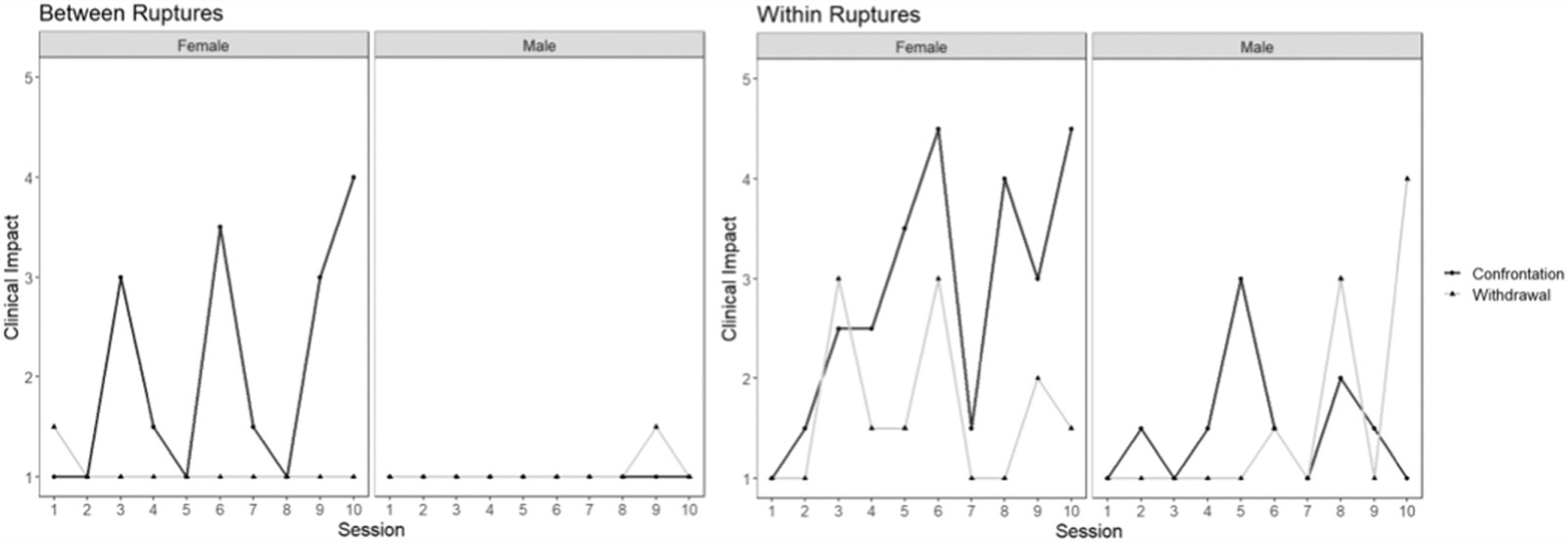
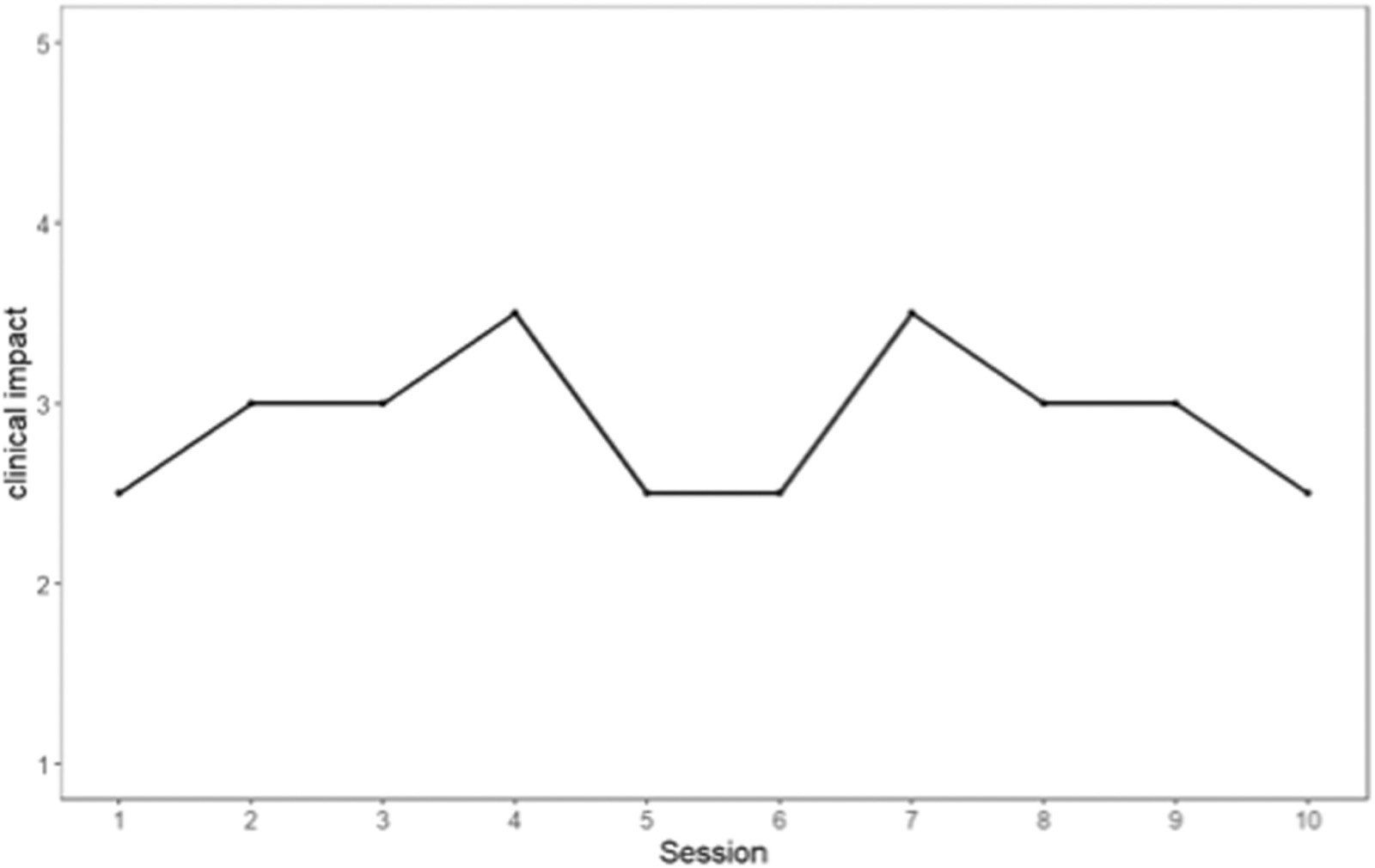
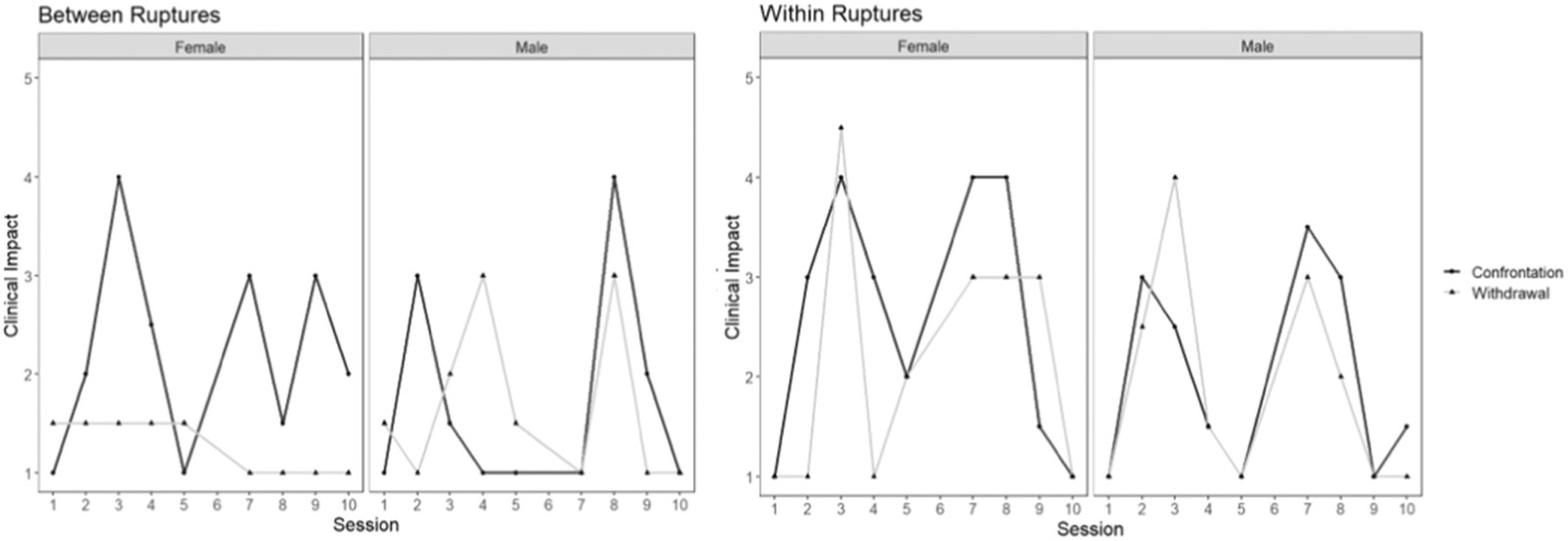
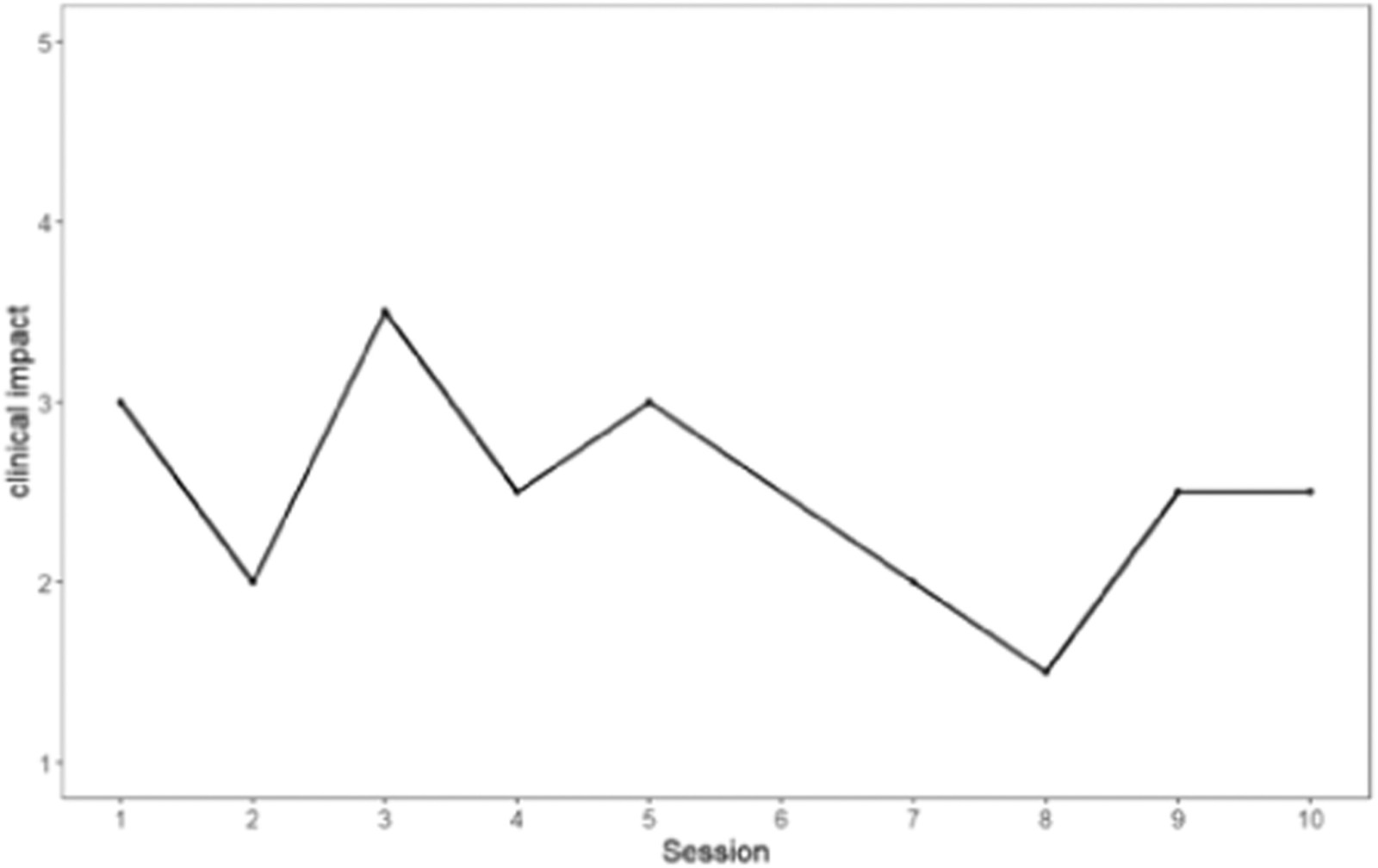
The frequencies of rupture markers and resolution strategies are presented in Table 2. Note that these ratings were rated for each 5-min segment. The overall clinical impact ratings of ruptures and resolutions are shown in Table 3. They were rated globally at the session level. Rupture markers were identified in all sessions (N = 19), whereas resolution strategies were identified in 78% of the sessions (N = 15). As shown in Tables 2 and 3, at the descriptive level, within-system confrontation ruptures were more common and clinically impactful than the between-system ones for both males and females. Confrontation ruptures were more common and clinically impactful for females than for males. Males (or injurers) tended to present more withdrawal than confrontation ruptures in the between-system alliance. Females (or the injured party) tended to present more confrontation than withdrawal ruptures in both between-system and within-system alliances. Resolution strategies were more frequently used in the poor case than in the good case. However, their quality (clinical impact) was lower in the couple with the poor outcome than in the couple with the good outcome.
Table 2 — 3RS-C rupture markers and resolution strategies: Frequencies.
- Between, confrontation. Good outcome: female 0.13 (0.13), male 0.03 (0.06); poor outcome: female 0.16 (0.14), male 0.06 (0.11); total: female 0.14 (0.13), male 0.04 (0.08).
- Between, withdrawal. Good outcome: female 0.04 (0.04), male 0.04 (0.08); poor outcome: female 0.11 (0.13), male 0.11 (0.12); total: female 0.07 (0.08), male 0.07 (0.09).
- Within, confrontation. Good outcome: female 0.27 (0.15), male 0.10 (0.09); poor outcome: female 0.20 (0.16), male 0.18 (0.17); total: female 0.23 (0.15), male 0.13 (0.13).
- Within, withdrawal. Good outcome: female 0.08 (0.08), male 0.11 (0.15); poor outcome: female 0.09 (0.09), male 0.13 (0.15); total: female 0.08 (0.08), male 0.11 (0.15).
- Resolution. Good outcome: 0.12 (0.10); poor outcome: 0.17 (0.15); total: 0.14 (0.13).
Note: Mean (SD) frequencies of withdrawal and confrontation markers and resolution strategies, per 5-min segments in one session.
Table 3 — 3RS-C rupture markers and resolution strategies: Global scores.
- Between, confrontation. Good case: female 2.05 (1.18), male 1.00 (0); poor case: female 2.22 (1), male 1.72 (1.09); total: female 2.13 (1.09), male 1.36 (0.45).
- Between, withdrawal. Good case: female 1.05 (0.15), male 1.05 (0.15); poor case: female 1.28 (0.26), male 1.67 (0.82); total: female 1.16 (0.21), male 1.35 (0.49).
- Within, confrontation. Good case: female 2.85 (1.27), male 1.50 (0.62); poor case: female 2.61 (1.26), male 2.00 (1); total: female 2.73 (1.26), male 1.75 (0.81).
- Within, withdrawal. Good case: female 1.65 (0.78), male 1.55 (1.06); poor case: female 2.17 (1.27), male 1.89 (1.08); total: female 1.9 (1.02), male 1.71 (1.07).
- Resolution. Good case: 2.90 (0.39); poor case: 2.50 (0.61); total: 2.7 (0.5).
Note: The global clinical impact scores were rated on the following scale for ruptures: 1 = no impact; 2 = minor impact; 3 = some impact; 4 = moderate impact; 5 = high impact. For resolution: 1 = Poor resolution; 2 = Below average resolution; 3 = OK/average resolution; 4 = Good, above average resolution; 5 = Very good resolution.
Using the R coin package (Hothorn et al., 2006), we ran a set of nonparametric permutation tests to examine the differences in ruptures between the couples and between females (injured partners) and males. These tests are appropriate when the sample size is small and parametric assumptions are not met. In this test, the group difference in the observed data is compared with a pseudo-difference distribution constructed by randomly assigning observations to pseudo groups. In the current study, we used 10,000 random assignments. We used the global clinically significant scores to test for group differences. Between-system ruptures were significantly higher in the couple with the poor outcome than in the couple with the good outcome (Z = −2.267, p = 0.025). The group differences were not significant for the within-system ruptures (Z = −1.087, p = 0.281) or for resolution (Z = 1.626, p = 0.133). Females (the injured partners) presented more within-system ruptures than males (injurer; Z = 2.308, p = 0.021). The difference was not significant for the between-system ruptures (Z = −1.087, p = 0.281).
DISCUSSION
A strong therapeutic alliance is the most consistent predictor of successful therapy across all therapy modalities (Flückiger et al., 2018; Friedlander et al., 2018; Norcross & Lambert, 2018). Although alliance ruptures are commonplace in psychotherapy and can lead to dropout and poor therapy outcomes (Eubanks et al., 2019), these moments of tension, disagreement, or disengagement can also lead to valuable opportunities for growth and understanding. Studies on individual psychotherapy have found that rupture repairs are associated with better outcomes (Eubanks et al., 2018). In couple therapy, there are often greater levels of complexity in establishing an alliance with the partners since the therapist needs to build an alliance with two people who are in conflict with each other. Thus, an alliance with one partner can lead to a rupture with the other (Friedlander et al., 2018). Furthermore, ruptures can occur not only between therapists and clients (“between-system ruptures”) but also between the partners (“within-system ruptures”). To date, there is scant research on alliance rupture-repair in couple therapy that can shed light on this process. This can primarily be ascribed to the absence of assessment tools designed specifically to capture this process systemically. The current study adapted the 3RS (Eubanks et al., 2015), a widely used scale for coding ruptures and repairs in individual therapy, to the context of couple therapy.
We used session data from two couples who had received EFT couple therapy to deal with a past relational injury (an extramarital affair; Greenberg et al., 2010). In one of the couples, the injured partner reported improvement (“good outcome”), whereas in the other, the injured partner did not show improvement (“poor outcome”). We adapted the 3RS to code the between-system and within-system ruptures. Both withdrawal and confrontation ruptures were observed across systems. The therapists' resolution strategies to address these ruptures were also present in most sessions.
Though preliminary, these results indicate some differences in alliance ruptures between the case with the poor outcome and the case with the good outcome. Specifically, the partners with poor outcomes showed greater levels of ruptures with their therapists (between-system). This finding is consistent with studies in individual psychotherapy reporting a negative association between observed ruptures and treatment outcomes (Eubanks et al., 2018). Although few studies have tested the effects of observed ruptures in couple therapy (e.g., Escudero et al., 2012), the results of the current study are in line with previous studies that have found a robust relationship between therapeutic alliance and treatment outcomes in couple therapy (Friedlander et al., 2018; Tilden et al., 2021).
The Friedlander et al. (2018) meta-analysis showed that the within-system alliance was a stronger predictor of therapy outcome than the between-system alliance (see also Anderson & Johnson, 2010). Contrary to our expectations, however, we did not find significant differences between the cases in terms of the overall percentage of within-system ruptures. These null findings may be due to the insufficient statistical power of the current study, which only involved two cases with a total of 19 sessions. Interestingly, a recent study focusing on alliance early in treatment (i.e., reported after the first session) found that between-system alliance, but not within-system alliance, was associated with better treatment outcomes (Tilden et al., 2021). The authors suggested that these mixed findings concerning the role of the within-system alliance could have been related to the time of measurement. Early in treatment, establishing a strong alliance with the therapist may provide the partners with hope and help them to commit to therapy; later in therapy, the partners' bond and shared goals become the focal point and thus may be more predictive of treatment outcome. Thus, future studies should examine whether timing is also important to consider for within-system versus between-system ruptures.
We observed greater ruptures for women than men, especially for the within-system alliance. In the current study, the women were the injured partners. The injured partner often experiences unresolved anger toward the injurer (Greenberg et al., 2010), which is likely to be reflected behaviorally in the session (e.g., criticism of the injurer, withdrawal from the injurer). Future studies should examine whether a change in these within-system rupture behaviors can differentiate between good and poor cases over the course of treatment. For example, it is possible that helping couples identify their maladaptive relational cycles (pursuer-withdrawal) could decrease their within-session ruptures (e.g., less criticism, less withdrawal), which, in turn, could help them engage in the treatment activity more productively to improve their relationship functioning. Studies should also test whether these differences are related to the role in the relational injury (injured vs. injurer) or to more gender-based differences that are often observed in couple therapy (e.g., Halford et al., 2016). Relatedly, the couple with the poor outcome had multicultural relationships. Studies have found that such relationships are at greater risk of conflict and relational distress (Bustamante et al., 2011). Furthermore, the therapeutic alliance is often weaker if this factor is not adequately addressed (Qureshi & Collazos, 2011). Future studies should examine the role of multiculturalism in alliance rupture and explore specific ways to repair them.
Disconfirming our hypothesis, no significant differences were found between the cases in the frequency of therapist repairs. At the descriptive level, we observed a greater frequency of repair attempts in the poor case (0.17 vs. 0.12). In contrast, the overall session-level scores, which reflect the impact of the repair attempts, were slightly lower (2.5 vs. 2.9). Though caution should be exercised when interpreting these descriptive results, they may suggest that there were greater efforts to repair the ruptures (i.e., greater frequency of attempts) in the poor case, but that these attempts were less effective (i.e., the overall successful score was lower). The excerpts presented above illustrate the critical role of repair interventions in sustaining the therapeutic alliance. The conflict will often continue when ruptures are not repaired, making collaborating on treatment goals more difficult.
Relatedly, the coding system (3RS-C) applied here focuses on client-driven ruptures and therapist-driven repair. More recently, Eubanks and Muran (2022) suggested that more explicit attention should be paid in future studies to the therapists' contribution to ruptures (e.g., the therapist withdraws from or becomes critical of the client) and the client attempts to repair. The new version of the 3RS also explicitly rates the quality of the alliance, regardless of rupture occurrence. This may allow to examine the effect of ruptures that unfold in the context of an established alliance versus cases where ruptures reflect difficulties in the establishment of an alliance (which, in essence, may not be considered an actual “rupture” of the alliance). Furthermore, we did not differentiate between within-system and between-system repairs, which are important factors to consider in future studies. As noted above, the alliance (and therefore, its repair) in one system may be more consequential to the therapy outcome. To better understand the factors contributing to successful repair interventions, future studies should use methods such as task analysis (Greenberg, 1984) to pinpoint specific tasks and identify key interventions (e.g., see Swank & Wittenborn, 2013).
Limitations and future directions
Overall, the findings suggest that the 3RS can be adapted to couple therapy with certain caveats. First, in couple therapy, attention must be paid to the between-system and the within-system, which introduces a greater level of complexity since three separate relationships need to be observed and addressed. Furthermore, a given rupture can sometimes be reflected in more than one system (e.g., when partners criticize each other and do not respond to the therapist's attempts to de-escalate the conflict). There may also be a knock-on process in which a rupture in one system leads to, or exacerbates, a rupture in another system. This may result in compromised reliability, as observed here. Some possible solutions include coding each dyad separately, coding shorter segments, or coding speech turns.
In addition, the current analysis only examined two couples dealing with a past relational injury to assess the EFT-C. Although the 3RS has been found to be appropriate for use across diverse treatment modalities and clinical populations in individual therapy (Eubanks et al., 2019), future studies should examine the applicability of the developed 3RS-C to other clinical conditions (e.g., relational aggression) or therapeutic models for couple therapy. Future studies should also examine the incremental validity of the instrument. For example, it could be compared with other observational tools that are specific to couple therapy (e.g., System for Observing Family Therapy Alliances; Friedlander et al., 2006), clients' self-reports concerning the alliance in general (e.g., CTAS-R; Pinsof et al., 2008), or scales focusing on alliance rupture (e.g., PSQ; Muran et al., 1992). Interestingly, there is often a low correlation between self-reports and observed 3RS (Coutinho et al., 2014). This highlights the importance of utilizing observer ratings along with self-report measures to comprehensively understand the therapeutic alliance in couple therapy. Finally, the association between ruptures and outcomes does not necessarily indicate causality, as there may be a third factor that affects both alliance ruptures and treatment outcomes. For example, clients' insecure attachment is associated with poorer alliance (Bernecker et al., 2014) and more alliance ruptures (Eames & Roth, 2000), as well as with worse therapy outcomes (Levy et al., 2018).
It is important to acknowledge that while our study aimed to adapt the 3RS-C therapy, the conceptualization of the alliance in this context is critical. Specifically, the current adaptation may not fully capture the systemic nature of couple therapy alliances. Systemic thinking suggests that a system is more than just the sum of its parts (see Minuchin & Fishman, 1981). However, our adaptation, which is influenced by Pinsof's conceptualization of the alliance (Pinsof & Catherall, 1986), might be seen as merely examining multiple dyads independently, rather than exploring the complex, interconnected dynamics of the system as a whole. Therefore, although this study contributes to the field, it is crucial to recognize that the adapted 3RS, as it stands, may not adequately measure systemic alliance dynamics in couple therapy. This limitation highlights the need for further research and theoretical thinking as to how to best develop measures that can more comprehensively capture the unique and intricate nature of alliances in couple therapy settings (see Friedlander et al., 2006).
Summary and clinical implications
Alliance rupture has been identified as a critical feature of individual psychotherapy (Norcross & Lambert, 2018). This study adapted the widely used 3RS for coding these ruptures in couple therapy. Our preliminary findings point to the potential usefulness of this instrument in couple therapy, such as in differentiating between couples benefiting from therapy (e.g., experiencing improvement in their relationship functioning) and those who fail to benefit. However, they also highlight the specific challenges of implementing this instrument in couple therapy, where multiple alliances need to be considered simultaneously. This work can thus contribute to bridging the gap between the state of the art in individual psychotherapy concerning alliance ruptures and the unique context of couple therapy. This can lead to clinical insights regarding the nature of ruptures in couple therapy and the identification of possible repair strategies. The 3RS-C could serve as a resource for trainees, providing them the opportunity to code their cases and practice building stronger alliance with both partners, similar to Alliance Focus Training in individual therapy (Eubanks-Carter et al., 2015). Ultimately, this may help equip clinicians with possible interventions to strengthen the therapeutic alliance and lead to better treatment outcomes.
Complexe Systémique: key points
The study’s value lies in equipping an observation familiar to anyone who works with couples: in session, the alliance is played out among three people, and it can break down between partners as much as with the therapist. By adapting to couples an observational grid designed for individual therapy, the team distinguishes “between-system” ruptures (with the therapist) from “within-system” ones (inside the couple), whether withdrawal or confrontation. Two couples marked by an affair are enough to show mechanisms that matter clinically: a rupture left unaddressed in one subsystem spills over into the other, as when David’s silence follows a hurtful remark by Olivia that the therapist did not pick up; and a repair addressed to only one partner can rekindle escalation. The couple with the poor outcome actually received more repair attempts, but less effective ones. The limits are acknowledged: two cases, modest interrater reliability, and above all a reading in terms of juxtaposed dyads, which the team itself admits does not capture the system as a whole. Read alongside the article on somatic cues in emotionally focused couple therapy, and the article on the reciprocity between alliances and marital satisfaction.
References
Anderson, S. R., & Johnson, L. N. (2010). A dyadic analysis of the between- and within-system alliances on distress. Family Process, 49(2), 220–235. https://doi.org/10.1111/J.1545-5300.2010.01319.X
Bartle-Haring, S., Glebova, T., Gangamma, R., Grafsky, E., & Delaney, R. O. (2012). Alliance and termination status in couple therapy: A comparison of methods for assessing discrepancies. Psychotherapy Research, 22(5), 502–514. https://doi.org/10.1080/10503307.2012.676985
Benjamin, L. S. (1974). Structural analysis of social behavior. Psychological Review, 81(5), 392–425. https://doi.org/10.1037/h0037024
Bernecker, S. L., Levy, K. N., & Ellison, W. D. (2014). A meta-analysis of the relation between patient adult attachment style and the working alliance. Psychotherapy Research, 24(1), 12–24. https://doi.org/10.1080/10503307.2013.809561
Bordin, E. S. (1994). Theory and research on the therapeutic working alliance: New directions. In A. O. Horvath, & L. S. Greenberg (Eds.), The working alliance: Theory Research and Practice (pp. 13–37). John Wiley & Sons.
Bustamante, R. M., Nelson, J. A., Henriksen, R. C., & Monakes, S. (2011). Intercultural couples: Coping with culture-related stressors. The Family Journal, 19(2), 154–164. https://doi.org/10.1177/1066480711399723
Carlson, J., & Dermer, S. B. (2016). The SAGE encyclopedia of marriage, family, and couples counseling. In The SAGE Encyclopedia of Marriage, Family, and Couples Counseling. https://doi.org/10.4135/9781483369532
Colli, A., & Lingiardi, V. (2009). The collaborative interactions scale: A new transcript-based method for the assessment of therapeutic alliance ruptures and resolutions in psychotherapy. Psychotherapy Research, 19(6), 718–734. https://doi.org/10.1080/10503300903121098
Coutinho, J., Ribeiro, E., Sousa, I., & Safran, J. D. (2014). Comparing two methods of identifying alliance rupture events. Psychotherapy, 51(3), 434–442. https://doi.org/10.1037/a0032171
Doran, J. M. (2016). The working alliance: Where have we been, where are we going? Psychotherapy Research, 26(2), 146–163. https://doi.org/10.1080/10503307.2014.954153
Eames, V., & Roth, A. (2000). Patient attachment orientation and the early working alliance—A study of patient and therapist reports of alliance quality and ruptures. Psychotherapy Research, 10(4), 421–434. https://doi.org/10.1093/PTR/10.4.421
Escudero, V., Boogmans, E., Loots, G., & Friedlander, M. L. (2012). Alliance rupture and repair in conjoint family therapy: An exploratory study. Psychotherapy, 49(1), 26–37. https://doi.org/10.1037/a0026747
Eubanks, C. F., Lubitz, J., Muran, J. C., & Safran, J. D. (2019). Rupture resolution rating system (3RS): Development and validation. Psychotherapy Research, 29(3), 306–319. https://doi.org/10.13140/2.1.1666.8488
Eubanks, C. F., & Muran, J. C. (2022). Rupture Resolution Rating System (3RS): Manual version 2022 [Unpublished manuscript]. Mount Sinai-Beth Israel Medical Center. https://doi.org/10.13140/RG.2.2.29780.17282
Eubanks, C. F., Muran, J. C., & Safran, J. D. (2015). Rupture resolution rating system (3RS): Manual. [Unpublished manuscript]. Mount Sinai-Beth Israel Medical Center.
Eubanks, C. F., Muran, J. C., & Safran, J. D. (2018). Alliance rupture repair: A meta-analysis. Psychotherapy, 55(4), 508–519. https://doi.org/10.1037/pst0000185
Eubanks-Carter, C., Gorman, B. S., & Muran, J. C. (2012). Quantitative naturalistic methods for detecting change points in psychotherapy research: An illustration with alliance ruptures. Psychotherapy Research, 22(6), 621–637. https://doi.org/10.1080/10503307.2012.693772
Eubanks-Carter, C., Muran, J. C., & Safran, J. D. (2015). Alliance-focused training. Psychotherapy, 52(2), 169–173. https://doi.org/10.1037/A0037596
Flückiger, C., Del Re, A. C., Wampold, B. E., & Horvath, A. O. (2018). The alliance in adult psychotherapy: A meta-analytic synthesis. Psychotherapy, 55(4), 316–340. https://doi.org/10.1037/PST0000172
Friedlander, M. L., Escudero, V., Heatherington, L., & Diamond, G. M. (2011). Alliance in couple and family therapy. Psychotherapy, 48(1), 25–33. https://doi.org/10.1037/a0022060
Friedlander, M. L., Escudero, V., Horvath, A. O., Heatherington, L., Cabero, A., & Martens, M. P. (2006). System for observing family therapy alliances: A tool for research and practice. Journal of Counseling Psychology, 53(2), 214–225. https://doi.org/10.1037/0022-0167.53.2.214
Friedlander, M. L., Escudero, V., Welmers-van de Poll, M. J., & Heatherington, L. (2018). Meta-analysis of the alliance–outcome relation in couple and family therapy. Psychotherapy, 55(4), 356–371. https://doi.org/10.1037/pst0000161
Goldsmith, J. (2012). Rupture-repair events in couple therapy: An exploration of the prevalence of sudden drops in couple therapy alliance, and their impact on therapy progress [Doctoral dissertation]. Miami University.
Graham, J. M., Liu, Y. J., & Jeziorski, J. L. (2006). The dyadic adjustment scale: A reliability generalization meta-analysis. Journal of Marriage and Family, 68(3), 701–717. https://doi.org/10.1111/J.1741-3737.2006.00284.X
Greenberg, L., Warwar, S., & Malcolm, W. (2010). Emotion-focused couples therapy and the facilitation of forgiveness. Journal of Marital and Family Therapy, 36(1), 28–42. https://doi.org/10.1111/J.1752-0606.2009.00185.X
Greenberg, L. S., & Goldman, R. N. (2008). Emotion-focused couples therapy: The dynamics of emotion, love, and power. American Psychological Association. https://doi.org/10.1037/11750-000
Greenberg, L. S., & Johnson, S. M. (1988). Emotionally focused therapy for couples. Guilford Press.
Greenberg, L. S. (1984). Task analysis: The general approach. In L. N. Rice, & L. S. Greenberg (Eds.), Patterns of change: Intensive analysis of psychotherap (pp. 124–148). Guilford Press.
Halford, T. C., Owen, J., Duncan, B. L., Anker, M. G., & Sparks, J. A. (2016). Pre-therapy relationship adjustment, gender and the alliance in couple therapy. Journal of Family Therapy, 38(1), 18–35. https://doi.org/10.1111/1467-6427.12035
Hothorn, T., Hornik, K., Van De Wiel, M. A., & Zeileis, A. (2006). A lego system for conditional inference. The American Statistician, 60(3), 257–263. https://doi.org/10.1198/000313006X118430
Jacobson, N. S., & Truax, P. (1991). Clinical significance: A statistical approach to defining meaningful change in psychotherapy research. Journal of Consulting and Clinical Psychology, 59(1), 12–19. https://doi.org/10.1037/0022-006X.59.1.12
Johnson, L. N., & Wright, D. W. (2002). Revisiting Bordin's theory on the therapeutic alliance: Implications for family therapy. Contemporary Family Therapy, 24(2), 257–269. https://doi.org/10.1023/A:1015395223978
Knobloch-Fedders, L. M., Pinsof, W. M., & Mann, B. J. (2007). Therapeutic alliance and treatment progress in couple psychotherapy. Journal of Marital and Family Therapy, 33(2), 245–257. https://doi.org/10.1111/j.1752-0606.2007.00019.x
Levy, K. N., Kivity, Y., Johnson, B. N., & Gooch, C. V. (2018). Adult attachment as a predictor and moderator of psychotherapy outcome: A meta-analysis. Journal of Clinical Psychology, 74(11), 1996–2013. https://doi.org/10.1002/JCLP.22685
Minuchin, S., & Fishman, H. C. (1981). Family therapy techniques. Harvard University Press.
Muran, J. C., Safran, J. D., Samstag, L. W., & Winston, A. (1992). Patient and therapist postsession questionnaires, Version 1992. Beth Israel Medical Center.
Norcross, J. C., & Lambert, M. J. (2018). Psychotherapy relationships that work III. Psychotherapy, 55(4), 303–315. https://doi.org/10.1037/pst0000193
Pinsof, W. M., & Catherall, D. R. (1986). The integrative psychotherapy alliance: Family, couple and individual therapy scales. Journal of Marital and Family Therapy, 12(2), 137–151. https://doi.org/10.1111/j.1752-0606.1986.tb01631.x
Pinsof, W. M., Zinbarg, R., & Knobloch-Fedders, L. M. (2008). Factorial and construct validity of the revised short form integrative psychotherapy alliance scales for family, couple, and individual therapy. Family Process, 47(3), 281–301. https://doi.org/10.1111/j.1545-5300.2008.00254.x
Qureshi, A., & Collazos, F. (2011). The intercultural and interracial therapeutic relationship: Challenges and recommendations. International Review of Psychiatry, 23(1), 10–19. https://doi.org/10.3109/09540261.2010.544643
Safran, J. D., & Muran, J. C. (2000). Resolving therapeutic alliance ruptures: Diversity and integration. In Journal of Clinical Psychology, 56(Issue 2), 233–243. https://doi.org/10.1002/(SICI)1097-4679(200002)56:2<233::AID-JCLP9>3.0.CO;2-3.
Safran, J. D., Muran, J. C., & Eubanks-Carter, C. (2011). Repairing alliance ruptures. In J. C. Norcross (Ed.), Psychotherapy relationships that work: Evidence-based responsiveness. Oxford University Press. https://doi.org/10.1093/acprof:oso/9780199737208.003.0011
Singh, M. (1994). Validation of a measure of session outcome in the resolution of unfinished business [Unpublished doctoral dissertation]. York University.
Spanier, G. B. (1976). Measuring dyadic adjustment: New scales for assessing the quality of marriage and similar dyads. Journal of Marriage and the Family, 38(1), 15–28. https://doi.org/10.2307/350547
Swank, L. E., & Wittenborn, A. K. (2013). Repairing alliance ruptures in emotionally focused couple therapy: A preliminary task analysis. The American Journal of Family Therapy, 41(5), 389–402. https://doi.org/10.1080/01926187.2012.726595
Symonds, D., & Horvath, A. O. (2004). Optimizing the alliance in couple therapy. Family Process, 43(4), 443–455. https://doi.org/10.1111/j.1545-5300.2004.00033.x
Tilden, T., Johnson, S. U., Hoffart, A., Zahl-Olsen, R., Wampold, B. E., Ulvenes, P., & Håland, Å. T. (2021). Alliance predicting progress in couple therapy. Psychotherapy, 58(3), 391–400. https://doi.org/10.1037/pst0000355
Wampold, B. E., & Imel, Z. E. (2015). The great psychotherapy debate: The evidence for what makes psychotherapy work ( 2nd ed.). Routledge. https://doi.org/10.4324/9780203582015
Reformatted republication of Applying the Rupture Resolution Rating System to emotion‐focused couple therapy, by Avital Sherlow-Levin, Ben Shahar, Rhonda Goldman and Eran Bar-Kalifa, Journal of Marital and Family Therapy, vol. 50, no 4 (2024), doi: 10.1111/jmft.12723, under a CC BY 4.0 licence. Edition and layout: Complexe Systémique, September 2026 — the work has been modified under the terms of the licence (tables presented as lists). Neither the authors nor the publisher are responsible for this edition; the original version prevails.
This is the original article “Applying the Rupture Resolution Rating System to emotion‐focused couple therapy”, published in Journal of Marital and Family Therapy (2024) under a CC BY 4.0 licence. Republished by Complexe Systémique: the author’s text is unchanged; only the presentation has been adapted for reading online, as set out at the head of this page.
Read the original articleHow to cite this article
Sherlow-Levin, A., Shahar, B., Goldman, R., et Bar-Kalifa, E. (2024). Applying the Rupture Resolution Rating System to emotion‐focused couple therapy. Complexe Systémique. https://app.complexe-systemique.com/en_GB/articles/applying-the-rupture-resolution-rating-system-to-emotion-focused-couple-therapy (Original work published in 2024 in Journal of Marital and Family Therapy, 50(4), 801-820 (2024); republished in 2024 by Journal of Marital and Family Therapy, https://onlinelibrary.wiley.com/doi/full/10.1111/jmft.12723)
To go further
- Impact of repeating somatic cues on the depth of experiencing for withdrawers and pursuers in emotionally focused couple therapyThe body in couple EFT.
- Treated together–changed together: The application of dyadic analyses to understand the reciprocal nature of alliances and couple satisfaction over timeAlliances and marital satisfaction.
- Rebuilding trust after infidelity: the 5 behaviours that repairRepairing after an affair.
Related training courses
 Symposium
État des Lieux: a psychological approach to spaces
Replay of the “État des Lieux” conference (Paris, 16 October 2026): Ivy Daure, Maurizio Frisina, Viola Sallay and Gilbert Pregno on places as a clinical resource. In French.
 Webinar
Extramarital affairs: what does the therapist do when the couple explodes?
Free webinar: how to position yourself as a systemic therapist in the crisis of the extramarital affair. Revelation, secrecy, multipartiality.
 Certifying course
Training in Systemic Therapy and Interventions – Cycle 1
Certifying training cycle in systemic therapy and interventions – year 1. Courses, supervision and practice, aligned with EFTA/SFTF. In French.
 Certifying course
Training in Systemic Therapy and Interventions – Cycle 2
Certifying training cycle in systemic therapy and interventions – year 2. Clinical complexity, supervision and practice. EFTA/SFTF aligned. In French.
Related articles
 Blog
Challenging in therapy: What a patient taught me
A couples therapy session led me to reflect on confrontation, authenticity and resonance: how to address difficult behaviour without invalidating the person.
 Scientific
Digital Co-Regulation and Dysregulation in Romantic Relationships: A Systemic Model of Technology-Mediated Emotional Processes
Checking, chasing, blocking: 31 interviews show how the phone regulates or dysregulates a couple’s anxiety, with a systemic model of the loop.
 Scientific
Transitioning to the Business of a Session in Collaborative-Dialogic Meetings: A Conversation Analysis
How do Open Dialogue therapists move to the business of a session? The open question creates silences and family negotiation: a conversation analysis of ten sessions.
 Scientific
“One Can Have All Sorts of Good Intentions but Sometimes in Everyday Life, It Turns Out Differently”: Change Agreements in Couples' Everyday Lives
Six Danish couples followed after an online couple program: their change agreements become guilt-inducing contracts, shared understanding or revealers of inequality.