AI-assisted translation
This version was translated from Italian by Complexe Systémique with the help of artificial intelligence. In case of doubt, the original version prevails.
Connessioni · Interculturality
Between bars and thresholds: cultural premises, mystery and curiosity in the therapeutic relationship
Every therapist looks at the world from within their own gabbie a-dorate, “a-dored” cages: precious cultural and epistemic frames that protect but that, being so familiar, stop being seen. Marialaura Moreni compares her work with two women who have lived through violence, one from northern Albania, the other raised in a setting close to her own, and shows that closeness can narrow listening more than distance does. Drawing on Cecchin and Pearce, she turns curiosity into an openness to mystery that changes prejudices into thresholds.
Unofficial English translation. This article is a translation of Tra sbarre e soglie: premesse culturali, mistero e curiosità nella relazione terapeutica, by Marialaura Moreni, published in Connessioni (Centro Milanese di Terapia della Famiglia), “Contributi” section (2026), under a CC BY 4.0 licence. Translated by Complexe Systémique in November 2026 with the help of artificial intelligence: the original Italian text has been translated into English and reformatted, which constitutes a modification of the work under the terms of the licence. Paragraphs and headings are those of the journal; the Italian coinage a-dorate (at once “adored” and “gilded”, with a privative “a-”) is kept in Italian; the Kundera epigraph and Cecchin’s definition of prejudice are translated from the Italian editions cited (Cecchin, Lane and Ray’s book was first published in English as The Cybernetics of Prejudices in the Practice of Psychotherapy, 1994); a typographical error (a missing full stop) has been silently corrected. This translation was made neither by the authors nor by the journal, who are not responsible for its content or for any errors. The original version prevails.
The clinical risk lies not in having a cage, but in forgetting that we inhabit one, different from that of every person we meet.
Marialaura Moreni
Abstract
This contribution explores the role of the therapist’s cultural and epistemic premises in the clinical relationship, proposing the image of gabbie a-dorate (in Italian, cages that are at once “adored” and “gilded”) to describe implicit frames which, while offering orientation and protection, can become limiting if left unquestioned. Comparing two therapeutic encounters marked by different degrees of cultural distance, it shows how familiarity can sometimes narrow listening more than difference does, making the therapist’s premises less visible. Within this framework, curiosity is to be regarded not as an intrinsic disposition or a personal quality, but as an active process. Understood as openness to mystery, curiosity takes shape as an inexhaustible movement of exploration and inquiry, capable of turning prejudices from rigid bars into thresholds that can be crossed, and of sustaining a living therapeutic relationship, one not saturated by the need for explanation.
Introduction
Olga, in fact, belonged to that kind of modern woman who willingly splits into a person who lives and a person who observes
Kundera M., Il valzer degli addii, p. 3
Every therapist, like Olga, lives and observes the world from a situated position. In clinical work, the experience of being inside the relationship while at the same time watching it happen is not an exception but a structural condition. Culture, training and personal and professional experience form the weave within which this double movement takes shape, generating a set of implicit premises that guide practice.
From a social constructionist perspective, these premises cannot be understood as mere subjective filters, but rather as shared systems of meaning, historically and culturally produced, which take shape and are maintained in discursive and relational practices (cf. McNamee, Gergen, 1992, pp. 1–9; in particular Gergen, 1999, pp. 60–76).
The meeting of systemic thinking, second-order cybernetic epistemology and attention to the narrative dimension underlines that this “splitting” does not place therapists in an external or neutral position. On the contrary, they are always implicated in what they observe and take an active part in the co-construction of the relational reality in which therapeutic work takes shape (Bertrando, 1998, p. 51). Observing does not mean leaving the stage, but inhabiting it with a gaze that reflects on itself.
These premises cannot be eliminated: they are what allows therapists not to feel lost in the encounter with the other, offering continuity and meaning, but at the same time they delimit the horizon of what can be thought and practised. In this sense, living and observing are not two separate positions but intertwined movements, continually exposed to the transformation that may emerge in therapeutic dialogue. Premises do not rigidly determine clinical action; rather, they are its starting point.
Making explicit the theoretical, cultural and epistemic frames that accompany this participation makes it possible to turn the gaze on the observer as well, transforming these frames from tacit – and potentially restrictive – assumptions into flexible and reflexive tools of orientation (Bertrando, 1998, p. 52).
I propose to call the therapist’s cultural and epistemic frames gabbie a-dorate: precious and protective structures that guide clinical work, but which become limiting when they are not recognized as such. The term a-dorate is meant to hold this duality together: adored cages (adorate), built of rare and valuable material, familiar and reassuring; but also a-dorate cages, where the privative “a-” signals the risk that what is precious and protective becomes, precisely because it is familiar, less questioned. The gilding (doratura) does not disappear, but it stops being seen: the frame goes on guiding the gaze, but it does so automatically, reducing its mobility and its capacity to open up to the unknown. Through a comparison between two therapeutic encounters – with Arjela and with Stefania – I explore how the tension between cultural distance and cultural closeness makes these cages visible and, precisely for this reason, opens up transformative possibilities in the therapeutic relationship.
The therapist’s a-dorate cages
From this perspective, cultures – including those the therapist has internalized – work as maps that orient, offering useful but never definitive directions of meaning. They are not explanatory schemes to be applied to reality, but provisional frames that make it possible to move within the complexity of the clinical encounter. This assumption resonates and dialogues with cultural anthropology, which conceives of culture as a web of shared meanings (cf. Geertz, 1987, pp. 5–7), and with ethnoclinical work, which invites us to consider suffering as inscribed in specific symbolic universes, without reducing it to universal categories (cf. Devereux, 1987, pp. 29–36; Moro et al., 1996, pp. 43–52).
Speaking of our cages makes it possible to hold together two dimensions often thought of as opposites. On the one hand, culture protects: it offers continuity, meaning, belonging, familiarity. On the other, it limits: it selects some lines of hypothesis at the expense of others, creates interpretive automatisms, makes blind spots less visible. The clinical risk lies not in having a cage, but in forgetting that we inhabit one, different from that of every person we meet.
Distance and familiarity in the therapeutic relationship
When the other’s cages visibly diverge from our own, difference tends to make itself felt from the very start.
In these cases, a common stance is that of the therapist who adopts an ethnocentric form of communication (Pearce, 1986, p. 89), implicitly taking their own cultural frame as a universal standard. In these cases, the therapist’s “cage” – perceived as normal, obvious, or worse, true – becomes invisible, while continuing to exert the greatest orienting power over the way they observe and understand the other.
Another possible stance is that of the therapist who lets themselves be questioned by mystery. Aware of inhabiting a cage and knowing that many exist, when they encounter one different from their own they approach it with interest. In line with narrative and conversational practices, the therapist gives up a position of knowledge about the meanings of the other’s experience and takes up the position of a co-researcher, letting hypotheses emerge and change in the dialogue (cf. Anderson, Goolishian, 1992, pp. 25–39; in particular Anderson, 1997, pp. 95–112).
The encounter with cages that closely resemble our own is a different matter. In these cases we may seem to know their rules already, to be able to find our way easily. Closeness, however, can turn into a limit: familiarity produces a sense of anticipated understanding that makes hypothesizing rigid.
Keeping to Pearce’s terminology, in these cases we can speak of monocultural communication, as that form of coordination in which the other is treated as a “native”, on the assumption that the same evaluative criteria and the same cultural resources are shared (Pearce, 1986, p. 54). This presumption of familiarity shows itself not so much in major interpretive errors as in conversational micro-movements that narrow the space for listening. In working with patients whom I perceive as culturally close, I notice that the risk is sometimes not so much misunderstanding as anticipating. Anticipating the meaning, the judgement, at times even the “appropriate” emotion. In these cases, curiosity does not consist in adding questions, but in slowing down, in resisting the temptation to fill the spaces of uncertainty with explanations or categories that are supposedly shared.
To make this clearer, let me offer an example. In my exchanges with Stefania – a patient with whom I have a therapeutic relationship marked by cultural closeness – she would often say: “I can’t explain”. Without her ever asking me to, I perceived this statement as an invitation to clarify, a request that I spell out what she herself meant. Each time this carried the risk of substituting my words for hers. “We can stay here for a moment, without explaining,” I replied. In that passage, curiosity took the form not of clarification but of suspension. “Not knowing” was treated not as an obstacle to overcome, but as a relational space to inhabit together. It is in these micro-gestures that my cultural cage – made up, among other things, of the value placed on awareness and on putting emotions into words – became visible and, precisely for this reason, less binding. By becoming perceptible, it lost part of its coercive force and stopped automatically shaping my way of being in the relationship.
Distance that opens, closeness that tightens: two therapeutic encounters
These reflections arise from setting side by side two encounters that took place in the therapy room, in two individual therapies with two women very different from each other, but who had in common the presence of violence in their stories, as well as great transformative strength. Their accounts deeply questioned my a-dorate cages. In my clinical work with Arjela, a woman from northern Albania, cultural difference was immediately perceptible. Her account of migration, of a forced arranged marriage, of fixed family rules and roles from which there seemed to be no escape, was set within a frame that I recognized as other than my own. This otherness activated in me a spontaneously more curious stance: suspension of judgement, attention to her categories of meaning. My cultural cage was present, but visible; I could observe it while I observed her, maintaining a decentring that left room for my maps to change.
My experience with Stefania, whom I have already briefly mentioned, was different. Stefania is an Italian woman, about my age, who grew up in a local and cultural context very close to my own. Her story is studded with acts of abuse of power, with violence first witnessed and then suffered, lasting for years, carried out in the silence of a “model” family – regulars at the parish church, involved in the social life of the town, a point of reference for the people of the place. Listening to her account activated more intense emotions in me – anger, irritation, frustration – which made my observing position less immediately visible. In this case, the cultural cage became less visible precisely because it was familiar. The risk was that of orienting my hypotheses on the basis of shared implicit norms, introducing categories of “right” and “wrong” that narrowed the space for exploration.
Prejudices as bars and as thresholds
In systemic thinking, prejudice is conceived not as an error, but as an inevitable premise of observing. Cecchin defines prejudices as “any pre-existing thought that contributes, in an encounter with other human beings, to the formation of one’s point of view, perceptions and actions” (Cecchin, Lane, Ray, 1997, p. 7).
In this sense, prejudices are the bars of the cage: they make orientation possible, but they select the directions along which the therapist moves. When they remain implicit, they make the clinical process rigid; when they are recognized, they can turn into thresholds. As Pearce stresses, many communicative practices are governed by unconscious constraints that guide action and produce unforeseen consequences; making them visible does not mean eliminating them, but changing the way they operate, turning taken-for-granted rules into resources that can once again be negotiated in the relationship. Pearce calls cosmopolitan the kind of communication that grasps the tension between coherence and mystery: it requires a particular kind of resources that perpetually put themselves at risk and, precisely for this reason, are at the same time exempt from risk (Pearce, 1986, p. 55). Among these kinds of communication, it is no accident that Pearce also refers to the way the family therapists of the Milan group, women and men, conducted themselves in therapy.
From mystery to curiosity, from curiosity to mystery
In the Milan Approach, curiosity is a fundamental epistemological stance (cf. Cecchin, 1987, pp. 30–41). It is neither a technique nor a personal quality, but a way of orienting oneself in the relationship that keeps hypothesizing mobile and open to change.
From this perspective, curiosity, rather than coinciding with the wish to understand or explain, implies an openness to mystery, understood as something that does not need to be clarified and that structurally resists the fixing of meaning, keeping the therapeutic process alive.
In my work with Arjela, cultural distance made my premises easier to observe. On some occasions I felt the need to make my position explicit, as when I told her that reading the Kanun had been important to me because it had helped me better situate what she was telling me. The Kanun is the code of traditional customary rules which, in some regions of northern Albania, has historically governed central aspects of social and family life, from kinship relations to marriage, from honour to mutual obligations.
Arjela gave me a copy translated into Italian, after a session in which she had mentioned it, opening up a conversation about the possibilities of separation and divorce. From that day on, the book was always present with us, becoming a true third in the room. For Arjela, reference to this normative frame provided a relevant cultural background for making sense of marital bonds and of the dynamics of power and belonging in which her experience was inscribed, without this implying a deterministic reading of her story. Making this background visible did not mean explaining or interpreting her experience on the basis of the Kanun, but recognizing the presence of a frame that oriented – without exhausting them – the meanings at play in the therapeutic relationship.
At other moments, curiosity took the form of giving up on translation. Asking her “How would you say it in Albanian?” and listening to words I do not master meant accepting that not everything that matters has to become understandable in order to be therapeutic.
As I reflected on this form of curiosity, I recalled something I had read about the way René Magritte spoke about his art. When asked what his works “meant”, Magritte replied that, just like mystery, they meant nothing. Not because they lacked value, but because their meaning could not be reduced to an explanation. Like mystery, his images did not ask to be understood, but to be kept safe.
Mystery is not a space to be saturated with meanings, nor a puzzle to be solved. It is not what we do not yet understand, but what structurally exceeds any possibility of definitive understanding. If mystery is unknowable, then it is also inexhaustible: a continuous source of questions, movements and possibilities. From this perspective, curiosity is born of renouncing the answer that closes the conversation. When I manage to stay in this position, uncertainty becomes a habitable space: this is deeply therapeutic.
Cultivating curiosity beyond the setting
This curiosity must be cultivated continually, and not only in the therapeutic setting. For me, for example, it means travelling – and yes, also to the places my patients tell me about. This should not be confused with an attempt to take possession of detailed cultural knowledge: it is something different. It is a way of opening up the possibilities of exploration, widening the possible perspectives and, why not, imagining more. It is also a way of experiencing inexperience and of feeling what happens at the moment I take up a new position, in a context I do not know. Places can be far away, but also extremely close: I can visit a country I have never explored before, and I can also walk again down a street I have walked a great many times, looking around me with new eyes. Training curiosity can also mean listening to music, tasting food, letting other practices and languages pass through us, letting ourselves be moved by the stories we listen to, aware of our a-dorate cages. And then reading, talking with others, making different bodies of knowledge and disciplines interact, even distant ones. It is a widening of the field of the thinkable that has nothing to do with a passive stance.
The tension that transforms
The possibility of transformation does not arise from the absence of cages, but from the tension generated by listening to stories that are always different and to what they produce in the therapist. It is an exercise in non-generalization, sustained by the continual reorientation of hypotheses in the passage between familiarity and otherness. As Hoffman suggests, keeping doubt alive allows a plurality of stories and possible directions to emerge (Hoffman, 1992, p. 35).
In the comparison between Arjela and Stefania, the tension between different inner stances forced me to revise my implicit assumptions and to become more aware of my own position. In this sense, a-dorate cages, rather than obstacles to change, become conditions for change if they are recognized and inhabited reflexively.
Curiosity, from this perspective, is a way of remaining within the tension between protection and limit, allowing the therapeutic relationship to stay alive not because it clarifies, but because it keeps generating movement. It is this oscillation between looking “at the bars” and looking “between the bars” of the cage that allows us not to get lost; and, when that happens, to find ourselves again by starting from ourselves, recognizing our own position and our own limits without confusing them with those of the other.
Conclusions
A-dorate cages are an inevitable condition of therapeutic work: cultures, theories and personal histories offer orientation and protection, but they can become constraining when they operate automatically. Distance and familiarity do not produce univocal effects. With Arjela, cultural distance made my premises more visible, fostering decentred stances, but at times it also risked distancing me, making my listening less engaged; with Stefania, closeness sometimes narrowed the space of mystery, but at other moments it was an occasion for understanding, resonance and mirroring.
These experiences convey a complex dance, in which every new point of view opens a gateway of possibilities and, at the same time, inevitably generates new blind spots. This is not a tension that can be resolved, but a condition inherent in meeting and knowing.
Within this framework, curiosity is understood as an active movement of exploration that both precedes and produces new horizons of meaning.
The transformative possibility of the therapeutic relationship lies not in the absence of cages, but in the capacity to consider their limits and to refine, over time, one’s own competence in moving within stories and relationships. It is in this tension – between protection and limit, between gateway and blind spot, between closeness and distance – that the relationship heals, not because it clarifies, but because it keeps opening up, generating breathing room, possibility and freedom.
Complexe Systémique: key points
This short text is valuable for one shift: clinical difficulty does not come only from cultural difference, it also comes from familiarity. With Arjela, distance makes the therapist’s premises visible and prompts an almost spontaneous curiosity; with Stefania, resemblance stirs up anger and implicit norms about “right” and “wrong”. Three gestures are worth keeping for practice: slowing down when we think we understand too quickly; welcoming an “I can’t explain” without translating it on the person’s behalf; sometimes asking how something is said in their language, without requiring that everything become understandable. The article usefully links Cecchin’s curiosity, Anderson and Goolishian’s not-knowing and Pearce’s cosmopolitan communication. Its limits are those of a personal account: two situations, little clinical material, and a notion of “mystery” that is more evocative than operational. It makes good material for supervision, to explore what cultural closeness renders invisible. Read alongside the “systemic prejudices” set out by Cecchin, and the intercultural approach to solution-focused consultation.
References
Anderson, H. (1997). Conversation, language, and possibilities: A postmodern approach to therapy. Basic Books.
Anderson, H., & Goolishian, H. (1998). Il cliente è l’esperto: il “non sapere” come approccio terapeutico. In S. McNamee & K. J. Gergen (a cura di), La terapia come costruzione sociale (pp. 39–52). Franco Angeli. (Opera originale pubblicata nel 1992).
Bertrando, P. (1998). Testo e contesto. Narrativa, postmoderno e cibernetico. Connessioni, (4), 47–69.
Cecchin, G. (1988). Revisione dei concetti di ipotizzazione, circolarità, neutralità. Un invito alla curiosità. Ecologia della Mente, (5), 30–41. (Opera originale pubblicata nel 1987).
Cecchin, G., Lane, G., & Ray, W. A. (1997). Verità e pregiudizi: Un approccio sistemico alla psicoterapia. Raffaello Cortina Editore.
Devereux, G. (2007). Saggi di etnopsichiatria generale. Armando Editore. (Opera originale pubblicata nel 1973).
Geertz, C. (1987). Interpretazione di culture. Il Mulino. (Opera originale pubblicata nel 1973).
Gergen, K. J. (1999). An invitation to social construction. Sage.
Hoffman, L. (1998). Un’ottica riflessiva per la terapia familiare. In S. McNamee & K. J. Gergen (a cura di), La terapia come costruzione sociale (pp. 20–37). Franco Angeli. (Opera originale pubblicata nel 1992).
Kundera, M. (1985). Il valzer degli addii. Einaudi. (Opera originale pubblicata nel 1976).
McNamee, S., & Gergen, K. J. (1998). La terapia come costruzione sociale. Franco Angeli. (Opera originale pubblicata nel 1992).
Moro, M. R., De La Noë, Q., Mouchenik, Y., & Baubet, T. (2009). Manuale di psichiatria transculturale. Dalla clinica alla società. Franco Angeli. (Opera originale pubblicata nel 1996).
Pearce, W. B. (2013). Comunicazione e condizione umana. Franco Angeli. (Opera originale pubblicata nel 1986).
Unofficial English translation of Tra sbarre e soglie: premesse culturali, mistero e curiosità nella relazione terapeutica, by Marialaura Moreni, Connessioni, “Contributi” section (2026), under a CC BY 4.0 licence. Translation (with the help of artificial intelligence) and layout: Complexe Systémique, November 2026 — the work has been modified under the terms of the licence. Neither the authors nor the journal are responsible for this translation; the original version prevails.
Unofficial English translation of “Tra sbarre e soglie: premesse culturali, mistero e curiosità nella relazione terapeutica”, published in Connessioni (2026) under a CC BY 4.0 licence. Made by Complexe Systémique with the help of artificial intelligence, it does not come from the authors or the journal, who are not responsible for its content; the original version prevails.
Read the original articleHow to cite this article
Moreni, M. (2026). Between bars and thresholds: cultural premises, mystery and curiosity in the therapeutic relationship (Complexe Systémique, Trans.). Complexe Systémique. https://app.complexe-systemique.com/en_GB/articles/between-bars-and-thresholds-cultural-premises-mystery-and-curiosity-in-the-therapeutic (Original work published in 2026 in Connessioni, sezione «Contributi» (2026); republished in 2026 by Connessioni, https://connessioni.cmtf.it/tra-sbarre-e-soglie/)
To go further
- Tribute to the master Gianfranco Cecchin: systemic prejudicesHolding one’s prejudices as provisional.
- A qualitative exploration of what works for migrant adolescents in transcultural psychotherapy: perceptions of adolescents, their parents, and their therapistsCulture at the heart of therapy.
- Neutrality in therapy: deconstructing a myth?Can one really remain neutral?
Related training courses
 Certifying course
Training in Systemic Therapy and Interventions – Cycle 1
Certifying training cycle in systemic therapy and interventions – year 1. Courses, supervision and practice, aligned with EFTA/SFTF. In French.
 Certifying course
Training in Systemic Therapy and Interventions – Cycle 2
Certifying training cycle in systemic therapy and interventions – year 2. Clinical complexity, supervision and practice. EFTA/SFTF aligned. In French.
 Certifying course
Training in Systemic Therapy and Interventions – Cycle 3
Certifying training cycle in systemic therapy and interventions – year 3. In-depth intervention, supervision and practice. EFTA/SFTF aligned. In French.
 Certifying course
Training in Systemic Therapy and Interventions – Cycle 4
Certifying training cycle in systemic therapy and interventions – year 4. Clinical integration, supervision and certification. EFTA/SFTF. In French.
Related articles
 Blog
Why do we feel we are behind in our lives?
Checking how old Yalom was when he published his first book reassured me. But in which race? A systemic look at the feeling of being behind, and at what we can change together.
 Scientific
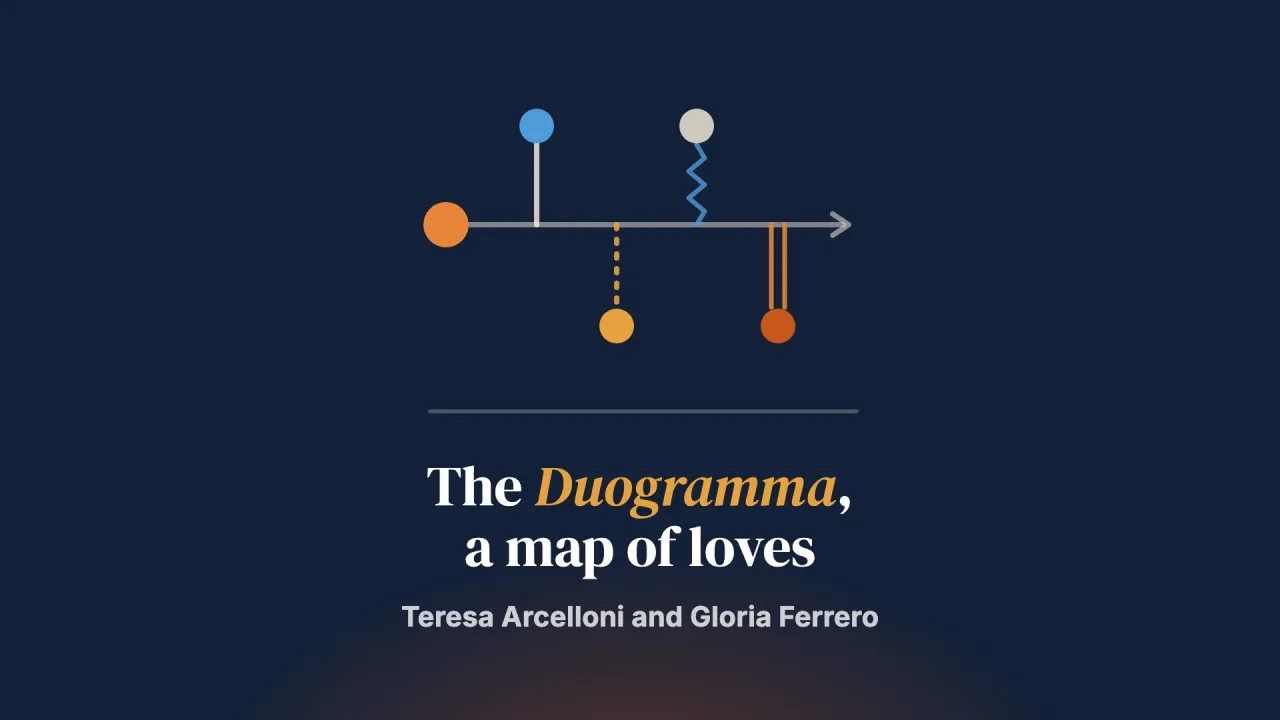
The Duogramma®: An innovative methodology for psychotherapy
A map of the couple relationships lived, desired or rejected since childhood: the Duogramma®, its graphic rules and its use in individual therapy.
 Blog
Challenging in therapy: What a patient taught me
A couples therapy session led me to reflect on confrontation, authenticity and resonance: how to address difficult behaviour without invalidating the person.
 Scientific
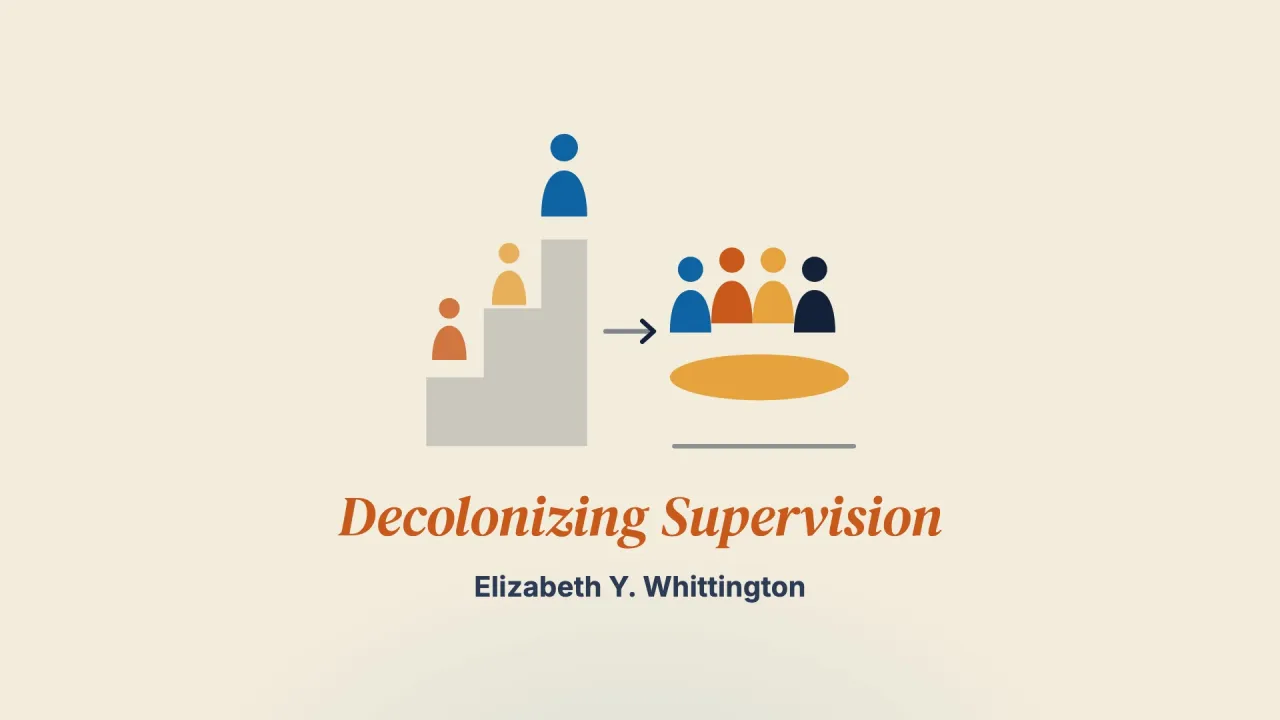
Decolonizing Supervision: A Critical Race and Queer Theory Framework for Marriage and Family Therapy
Supervision is not neutral: a framework drawing on Critical Race Theory and Queer Theory to name and share power in supervision, with a vignette.
Comments 0
Log in to join the discussion. Log in