AI-assisted translation
This version was translated from Italian by Complexe Systémique with the help of artificial intelligence. In case of doubt, the original version prevails.
Connessioni · Epistemology
Interview with Humberto Maturana
Lyon, December 1999: over a cup of tea, the sociologist Italo Musillo questions Humberto Maturana about love, ethics and responsibility. “Believing in order to see” rather than “seeing to believe”: the Chilean biologist defines loving conduct as recognizing the other’s legitimacy to be different, and sets responsibility apart from blame. First published in Connessioni in 2001, the interview was republished by the journal in 2021, after Maturana’s death.
Unofficial English translation. This article is a translation of Intervista a Humberto Maturana, by Italo Musillo and Humberto Maturana, published in Connessioni (Centro Milanese di Terapia della Famiglia), new series, no. 10 (2021), under a CC BY 4.0 licence. Translated by Complexe Systémique in November 2026 with the help of artificial intelligence: the original Italian text has been translated into English and reformatted, which constitutes a modification of the work under the terms of the licence. Paragraphs and the subheading are those of the journal; the editorial introduction (2021), which records the interview’s first publication (Connessioni, no. 8, March 2001), is translated in its place; the faulty punctuation of the exchange between Maturana and his son, and a few typographical errors on the web page, have been silently corrected; the precept “Love your neighbour as yourself” is given in its usual form. This translation was made neither by the authors nor by the journal, who are not responsible for its content or for any errors. The original version prevails.
Loving conduct, and therefore ethical conduct, towards the other means instead being ready to accept the legitimacy of the other to be different from me.
Humberto Maturana
In memory of Humberto Maturana, who died recently, we wish to publish an interview that has already appeared in the pages of Connessioni (Connessioni 8, March 2001). He was interviewed in 1999 by Italo Musillo, an Italian-Swiss sociologist who was then working with the Turin branch of the CMTF. Trained in Milan systemic thinking, Musillo used it in business and management consulting. He wrote about it in Crisi della Famiglia ed Imprese Eccellenti (Franco Angeli, 2008). His interview still seems to us, even today, full of food for thought.
In the 1970s and 1980s, Maturana was one of the authors who did most to shape the new “second-order” cybernetics, that is, a cybernetics founded on the theory of the observer (it is the observer who gives form to the systems he observes and who delimits them), thereby dealing the final blow to the naive realism that still informed so much systemic theory. Maturana later went his own way, which led him to observe human interactions, albeit with a different eye from that of most therapists. Over time his vision, which started from neurobiology, evolved and moved progressively towards ethics, conceived as “being ready to accept the legitimacy of the other to be different from me”. If his often apodictic and sententious style makes Maturana hard at times for the average therapist to accept, his non-conformist outlook certainly helps us to understand better our role as observers, our clients and ourselves: how different is today’s therapist from yesterday’s, and how far does this influence the way therapists position themselves towards clients and families who are different from those of the past? And what can change in this network of relationships? What can that therapist do to help change things?
Musillo draws him out on subjects other than biology and the living, so much so that the Chilean biologist and epistemologist does not offer here a theory of human organizations (families included), but a starting point for thinking about the role of the human being towards others, and about the role of the therapist within this wider frame.
Maturana does not give us answers, nor could he. But he leads us, at the very least, to ask ourselves interesting questions.
Believing in order to see. Tea with Humberto Maturana
Lyon, 4 December 1999.
Humberto Maturana is giving a series of lectures and dividing his time between the university and local associations devoted to humanistic studies and their applications.
The theme he puts forward for the audience to reflect on is the relationship between the human being, science and ethics. During an afternoon lecture, Maturana cites Saint Thomas to say, in essence, that the good man had made an epistemological error. It is wrong to think that one must “see to believe”, Maturana says. The right attitude for the human being is to “believe in order to be able to see”: I can see the other only if I believe in him and if I want to recognize him.
Italo: Is it possible to believe in the other before you even know him? Isn’t what you propose a naive attitude, a bit like saying “Love your neighbour as yourself” before you even know whether this “neighbour” is out for your skin or moved by noble intentions?
Humberto: No, what you are talking about is goodness. I am not proposing a blissful goodness, but a loving conduct, which is in essence an ethical conduct inclined to want to recognize the other even when there is disagreement or discord with the other. The other exists and I have a duty to recognize him as he is. I may, on the other hand, not agree at all with his beliefs or with his actions. And from the moment I decide to recognize him, I cannot fail to see this equal of mine and to observe him: seeing him and observing him are two forms of recognition of his existence. This readiness to “see” is an emotional impulse that contains love.
Italo: But the meaning commonly given to love seems to me to be a different one. Apart from a mother’s love for her newborn child, love is a construction that needs time, unless it is a matter of infatuation, of a coup de foudre.
Humberto: Of course, and indeed I know that I am in disagreement, even in permanent controversy, with the most widespread sociological theories of human relations. It is not a question of terms, but of a deep knowledge of human nature and its dimensions: human nature is much richer than what is said about the range of social relations. Certain definitions of love that concern a particular kind of relationship within a couple, or between parents and children, have nothing to do with the loving conduct I am talking about. A mother who, in the name of the love she has for her child, makes the child do only what she believes in, takes away from the child all the legitimacy that should rightfully be the child’s to try experiences other than those she points out. This mother’s conduct is not ethical and is not loving in the terms I propose. She certainly protects her child, but she shapes the child in her own image and likeness, because she does not want to be in disagreement with the child and is afraid of the consequences of any dissimilarity. Loving conduct, and therefore ethical conduct, towards the other means instead being ready to accept the legitimacy of the other to be different from me. This does not mean, of course, that I must accept the consequences of the other’s behaviour.
Italo: Can one say, then, that this love is a form of love-as-acceptance or love-as-tolerance?
Humberto: Not quite. These attitudes are still protective in kind and have the power to deny the potential existence of conflicts. Loving conduct is visionary: through it, it is possible to discern calmly all the things that distinguish us from the other and those that make us similar to the other. Having a clear view of the differences and similarities between me and the person I am speaking with, I also act more responsibly: if I see similarities I can decide what to do with them, for example use them to develop a fruitful collaboration with the other in everyday relationships or in more engaging projects. Differences too open up a field of many responsible attitudes: if I see differences I can decide not to highlight them, or else to make something stimulating out of them so as to give rise to a dialectical exchange which will in turn open the way to new discoveries. If, on the other hand, I put first my prejudices about what is good and what is bad for the human being, my conduct is not ethical.
Italo: And if I foresee dangerous consequences both in undertaking and in not undertaking something with the other, what is my responsibility?
Humberto: I act responsibly when I do not claim to avoid the consequences inherent in decisions freely taken. The responsible person is the one who thinks about the possible consequences of his or her acts and, before acting, weighs whether it is possible to take them on or not, knowing that, if he or she acts, those consequences will then have to be taken on. In this sense the concept of responsibility is different from that of blame, commonly used in the causal view. In the latter logic, being responsible translates into the accusation “you are responsible for what is happening to me”. In our logic, by contrast, we say “you are a responsible person because you take on the consequences of the acts you perform”. An educator, for example, whether parent or teacher, has the duty to make children responsible by teaching them to foresee the consequences of the acts they perform before acting, and not by forbidding their spontaneity and their desire for discovery.
Italo: Every time spontaneity is mentioned, the question immediately arises of how and where to set limits. When one thinks of a child the question is even more pertinent, whether one thinks of protecting the child from the risks the child would run by going beyond certain limits (the child, in fact, does not know how far curiosity can be pushed), or of protecting the freedoms of those who find themselves in contact with children whose spontaneity might turn into irritating or disrespectful behaviour.
Humberto: Spontaneity can never be dangerous, just as freedom of choice never is. And this is as true for the adult as it is for the child. It is true, though, that where children are concerned a great deal depends on the context in which spontaneity and freedom of choice have been instilled. It is the task of educators (parents, teachers and other figures) to let the young people entrusted to them glimpse the merits of spontaneity and freedom of choice.
On this subject I would like to tell you an anecdote that I witnessed directly. One day, while we were talking about these things at home, one of my sons, then very young, asked me:
“So I’m free to do what I want?”
“Of course,” I answered, “you have this freedom: you are free to do what you want.” “So I could even kill our neighbour?”
“Of course, you have this freedom of choice. If you want to try, go and kill him, knowing, however, that this act is punished by the laws of our country. So you have to choose whether you prefer to go against those laws or whether you prefer to accept them.”
“Then I can’t kill our neighbour.” “Why?”
“Because that freedom doesn’t interest me.”
When one is brought up in the love of freedom, freedom is never dangerous. This is one of the fundamental bases of the theory of human knowledge. That is why the task of educators is the most fundamental of all tasks.
Italo: What link is there between individual responsibility and social responsibility? In other words, is it possible to allow spontaneity, or to legitimize the other in his freedom to undertake an action, when one is aware that the other does not know, or does not want to see, the scope of the reactions or sanctions laid down by organized society?
Humberto: That depends on many factors, and mainly on the quality of the relationship that binds people together. The relationships in which we have engaged with ethical conduct and a loving gaze are social relationships, that is, particular relationships that imply for us the responsibility, where needed, of also helping the other to foresee the consequences of his acts. An educator has a particular relationship with a child, knows that the child does not know; and this is why the law protects children by entrusting their guidance to adults who are conscious and aware of how important it is to help children “see”. In other social relationships too this concern is legitimate and may come into play to varying degrees. It is not, however, our duty to intervene in this way in all relationships that are not social in my sense of the word, such as working relationships.
Italo: This is also something new from the sociological point of view. How do you distinguish social relationships?
Humberto: Social relationships are those that imply the presence of emotions. These emotions vary, and they characterize a very wide range of social relationships. Relationships built on rational premises, such as work, politics, hierarchies, the army and so on, are not social relationships. Some give more power and freedom to one person than to the other, others are built on obligations rather than on spontaneous choices to share a given project, and others again are imposed by a higher order. Of course, all relationships can be transformed, but those I have just mentioned have, at the outset, a non-social origin. Conversely, friendship, couples who love each other, pairs of friends, groups of friends and so on are social relationships. I also make a distinction between the couple who love each other without having married and the couple who marry officially, since the latter are compelled by law to behave in ways that will no longer be spontaneous, for example the obligation of mutual support. On this point, let me tell you an anecdote that fits what I am saying. My mother was a social worker and used to go to the Chilean countryside to do community awareness work with the women of the countryside and of small villages. Sometimes she met women with many children who were not married, and she asked them why they had not married the man by whom they had had the children. The answer was: “If I married my partner, he would then start drinking. This way, though, he still loves me.”
Italo: In the end, what is the current definition of this loving conduct?
Humberto: Loving conduct is an irrational relational behaviour through which I take part in building a climate of convivial coexistence with the other, one that allows both my legitimacy and the other’s to emerge fully. For this conduct to take hold, it is essential to have a disposition to believe in the other, showing this recognition clearly.
Complexe Systémique: key points
This interview condenses into a few pages the ethics that Maturana drew from his biology of knowing: we see the other only if we first accept the other’s legitimacy to be different. For clinical work, the distinction between responsibility and blame is valuable: moving away from causal accusation (“you are responsible for what is happening to me”) towards helping each family member take on the consequences of their own choices. The story of the son who gives up a freedom that does not interest him illustrates education through context rather than prohibition. The text also calls for some caution: the style is sententious, the claim that spontaneity “can never be dangerous” leaves situations of violence aside, and excluding work or marriage from the field of “social relationships” is debatable, not least when thinking about the therapeutic relationship itself, contractual and yet charged with emotion. One useful question remains for the session: how much legitimacy does each family member grant to the others’ difference? Read alongside the interview on the “biology of love”, and the interview with Marcelo Pakman on the ethics of systemic thinking.
Unofficial English translation of Intervista a Humberto Maturana, by Italo Musillo and Humberto Maturana, Connessioni, new series, no. 10 (2021), under a CC BY 4.0 licence. Translation (with the help of artificial intelligence) and layout: Complexe Systémique, November 2026 — the work has been modified under the terms of the licence. Neither the authors nor the journal are responsible for this translation; the original version prevails.
Unofficial English translation of “Intervista a Humberto Maturana”, published in Connessioni (2021) under a CC BY 4.0 licence. Made by Complexe Systémique with the help of artificial intelligence, it does not come from the authors or the journal, who are not responsible for its content; the original version prevails.
Read the original articleHow to cite this article
Musillo, I., et Maturana, H. (2021). Interview with Humberto Maturana (Complexe Systémique, Trans.). Complexe Systémique. https://app.complexe-systemique.com/en_GB/articles/interview-with-humberto-maturana (Original work published in 2001 in Connessioni, n. 8 (marzo 2001); republished in 2021 by Connessioni, https://connessioni.cmtf.it/intervista-a-humberto-maturana/)
To go further
- Conversations on systemic biology. Interview with Humberto MaturanaMaturana’s biology of love.
- Ecology of ideas. The ethics of systemic thinking (part 1). Interview with Humberto MaturanaFrom seeing to knowing, with Pakman.
- Von Foerster and Maturana a capellaMaturana and von Foerster together.
Related training courses
 Short course
The subtle art of humour in therapy: seriously funny
Online training: mobilising humour as a systemic intervention tool — reframing, stance, ethics. A lively day with Caline Fattal. In French.
Related articles
 Scientific
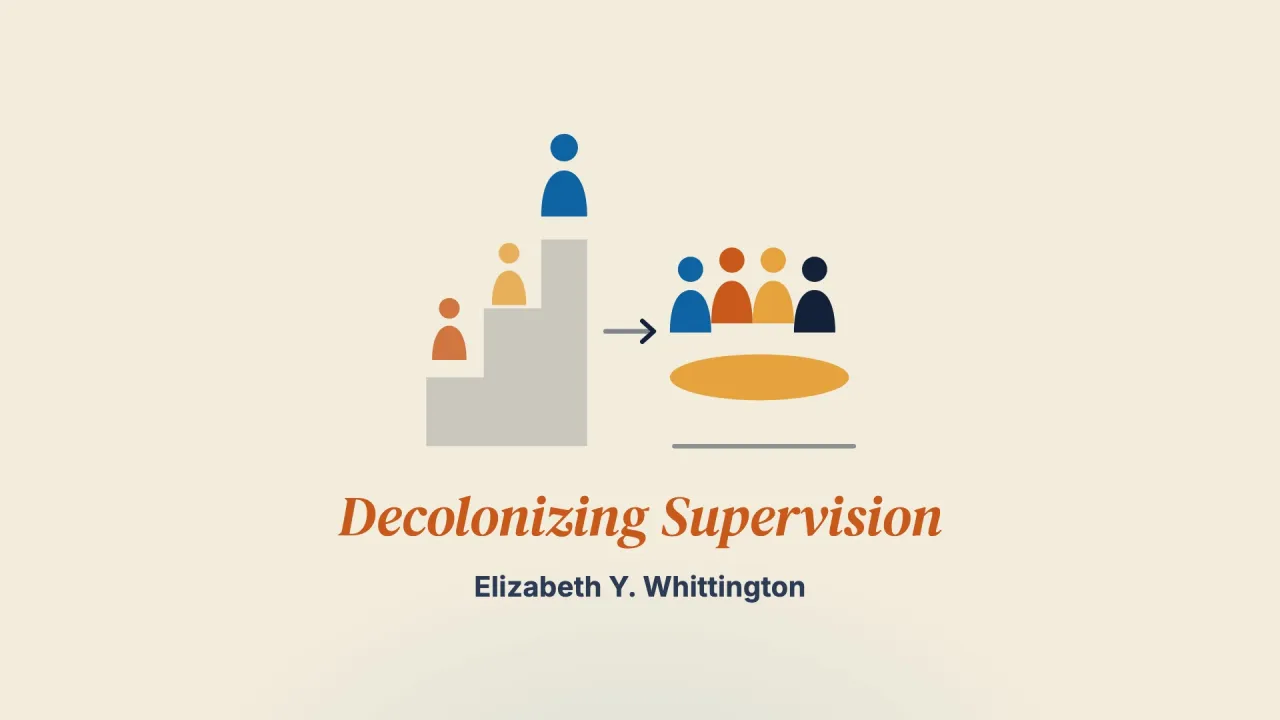
Decolonizing Supervision: A Critical Race and Queer Theory Framework for Marriage and Family Therapy
Supervision is not neutral: a framework drawing on Critical Race Theory and Queer Theory to name and share power in supervision, with a vignette.
 Scientific
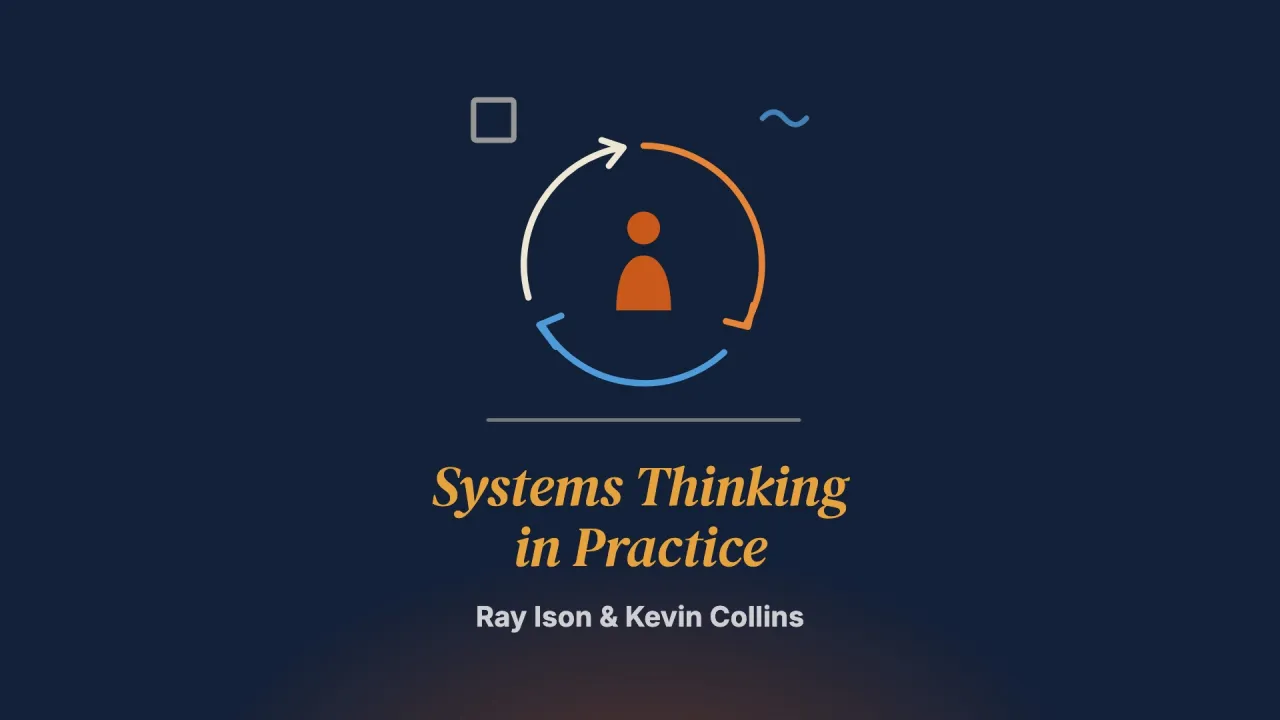
Systems Thinking in Practice (STiP): A Praxeology for Our Times
Checkland moved systemicity from the world to inquiry. Ison and Collins go further: leave the hard/soft dualism behind and put the practitioner back at the centre of praxis.
 Blog
When intuition comes before strategy. The first flash of meaning
From Bergson to von Foerster, intuition is not the enemy of rigour but its immediate side. How it works concretely in the clinical interview, and why it calls for a reflexive stance.
 Scientific
Epistemic Mobility in Complex Intervention: Rethinking Knowledge in Systemic Practice
Why does complex intervention stall despite expertise? A conceptual article proposes moving from epistemic inertia to epistemic mobility: changing one’s way of knowing.
Comments 0
Log in to join the discussion. Log in