AI-assisted translation
This version was translated from Italian by Complexe Systémique with the help of artificial intelligence. In case of doubt, the original version prevails.
Connessioni · Training
Interview with Luigi Boscolo and Gianfranco Cecchin: the Milan School, conversations and testimonies
What remains of the Milan model in the therapists it has shaped? This Connessioni dossier, first published in 1995 and republished in 2019, brings together two conversations between Laura Formenti and Luigi Boscolo and Gianfranco Cecchin on the training of therapists, together with a testimony by Barnett Pearce. Work on oneself, the place of psychoanalysis, a team of peers, prejudices to be brought out in the group: the two founders argue for non-authoritarian training, just as Italian law is regulating psychotherapy schools.
Unofficial English translation. This article is a translation of Intervista a Luigi Boscolo e Gianfranco Cecchin: la Scuola di Milano, conversazioni e testimonianze, by Laura Formenti, Luigi Boscolo, Gianfranco Cecchin, Paolo Bertrando and Barnett Pearce, published in Connessioni (Centro Milanese di Terapia della Famiglia), new series, no. 6 (2019), under a CC BY 4.0 licence. Translated by Complexe Systémique in November 2026 with the help of artificial intelligence: the original Italian text has been translated into English and reformatted, which constitutes a modification of the work under the terms of the licence. Paragraphs and headings are those of the journal, with the headings arranged on two levels; this dossier first appeared in Connessioni no. 10 (September 1995) and was republished by the journal in 2019; the English words on which Barnett Pearce’s argument rests (“history”, “story”) are kept; quoted remarks (von Foerster, Elkaim, Cecchin as reported by Pearce) are translated from the Italian; a few typographical errors, including in proper names (Whitaker, Karl Tomm), have been silently corrected. This translation was made neither by the authors nor by the journal, who are not responsible for its content or for any errors. The original version prevails.
Being in a group serves to become aware that you have an original way of seeing reality.
Gianfranco Cecchin
The clinical importance – and not only the theoretical importance – of a therapeutic model is directly linked to its applicability: that is, to the possibility of adapting and shaping practice so as to make it fit the needs of different contexts of application, without thereby betraying or irreparably altering the basic principles on which the model rests.
Over the years the Milan model has shown a high degree of applicability, moving from the selected and restricted context of a private Centre to an expansion, through the training of practitioners, into the Italian public services; at the same time, it has also proved applicable to other cultural and social contexts, giving rise to a network of exchanges that has involved colleagues from all over the world. This activity has produced not only a ubiquitous dissemination of the model, but also a kind of cross-fertilization: the Centre’s activity has changed, owing both to contact with its Italian trainees and to international influence; on the other hand, various schools have moved from the simple application of the model’s fundamental precepts (positive connotation, hypothesizing, neutrality, circular questions, the importance of the referring person, and so on) to the amplification of one or another of them (the categorization of circular questions, the problem-determined system, the importance of language, the reflecting team, and so on). This phenomenon has become known as the “Post-Milan Approach” or post-Milan. It is legitimate, then, to ask what the many colleagues exposed over the years to the ideas that originated in the Milan Centre have retained from their experience, and how much of Milan still remains in their present practice. These are the questions we put to a number of prominent therapists who, in different years, received training from, or at least an influence from, Luigi Boscolo and Gianfranco Cecchin. Their answers are gathered here, together with two interviews in which Boscolo and Cecchin offer a synthesis of their current ideas on systemic training.
What is most striking in this collection is precisely the variety of our colleagues’ answers, from pure autobiographical reference to clinical report, all the way to the deepest theoretical elaboration. Such variety shows how far the Milan model has managed to be, rather than a series of therapeutic “rules” to be applied more or less diligently, a stimulus to independent reflection and to change for colleagues, just as it has often been for clients. And it also bears witness to the openness, the interest and the innovative capacity of the colleagues who have travelled at least part of their own road together with the Centre and its representatives.
Paolo Bertrando
The training of the therapist: conversations with Boscolo and Cecchin
Boscolo: a journey in search of possible worlds
Formenti – Luigi, I know you have told these things many times, but let us begin by saying something about the School of Family Therapy, about how it came into being.
Boscolo – The decision to start a training in family therapy goes back to 1978. Cecchin and I started with two groups; the idea was to teach the way of working we had developed over the previous eight years. We had already left the strategic approach behind, especially after reading Bateson had led us to abandon the idea of the black box. Even then we were interested in dialogue (today we would say conversation) and in a wider time horizon, which included the past and the future as well as the present. Our question was: how is it that the families we see have found the “pathological solution” among so many possibilities? This made us curious – understanding how the family had organized itself to arrive at the situation in which one or more of its members were suffering.
F – What premises did you give yourselves when you began this adventure?
B – From the very beginning we had the idea of an isomorphism between therapy, training and research. We thought that at the centre of these three contexts there had to be the so-called team, that is, the system of the practitioners. The team was seen as a system – at the time we were “four brains in series” – that kept on processing information. What is interesting is that even at that time, and this set us apart from the other schools, we had left behind the idea of truth and fully embraced the idea of points of view. Each of us could only make punctuations. This allowed us to put ideas before people; if you start from the idea of truth, there is someone who owns it, who has studied it more, who knows it better. The Milan approach was therefore based on a team of peers. Unlike the strategic approaches, which were based on the idea of hierarchy. Also from a practical point of view: there, the supervisor directed the game from behind the mirror, even by telephone; Minuchin, for instance, kept calling the therapist, and sometimes walked into the session ignoring the therapist completely. We took another road, that of the team of peers and of the ecology of ideas.
So, even back then we were constructivists, and perhaps constructionists, without knowing it. We realized it in 1985 during a week-long meeting in Calgary, Canada, with Maturana and von Foerster. They were struck by the fact that our way of working made sense to them, and conversely their ideas made sense to us. That is where we learned that we were working with similar concepts, which came largely from Bateson.
In any case, to go back to the starting point, on the basis of our experience we decided that the central point of training had to be the processing of information, of ideas, the search for the patterns that connect. We were already doing this as therapists, and we had to use this idea in training too: there is the isomorphism. At that time I remember reading a few articles about other schools (in the United States, because in Italy we were the first); even then they spoke of three possible learning contexts: the therapy context, that is, the group learned by doing live therapy, or by watching videotapes and so on. The second context was group reflection on the self of the therapist; depending on the school, one started from a kind of group therapy, using personal stories, stories of one’s own past, and then moved on to group dynamics and to the reactions that emerged in the here and now. Third possibility: even then a couple of centres had introduced attention to the trainee’s family of origin. This could take a verbal form, by telling about it, or even by bringing the family in for a consultation, which sometimes turned into therapy proper. These were three possibilities that we had too. Instead, we chose to deal directly only with the family or the couple, working in such a way that the members of the team expressed their different points of view. We believed this was necessary and sufficient to become a family therapist. What was most important for us then, and revolutionary, was systemic thinking, that is, thinking in circular terms and not only in linear, causal terms. This kind of thinking was new, exciting; today people perhaps expect it, but back then it really was something new. And so, working with these basic premises, trainees could change their individual premises and develop over time a different idea of themselves, of their family and of the world around them. In this sense it had a “therapeutic” effect on the trainees themselves.
Sometimes Cecchin and I would devote an hour or two to asking the trainees whether they felt there had been some change in their way of seeing. Most said that systemic theory and practice had allowed them to see differently, to see things from several points of view. Having received this favourable feedback, we felt satisfied – as one would say today – with the change in the “self” of the therapist-in-training, and so we went on along that road.
F – Why did you set aside the other possibilities, those of acting on the group?
B – Obviously, by acting in a group you influence it indirectly: when you decide to ask a question, you are acting as a teacher. We limited ourselves to acting on group dynamics discreetly and through action, avoiding interpretations. But what led us to set aside the idea of working directly on group dynamics was the fear of creating confusion. Or rather, the right word is “complexity”: the worry of creating a degree of complexity that in the end could become detrimental to learning. With hindsight I say it was a logical decision and I am glad of it. Also because at the beginning it was better to reduce the degree of complexity. Like surgeons when they operate: they keep the field clean, they proceed step by step, layer by layer…
F – Can one say that a real personal training does take place anyway, in the way of working the school proposes?
B – Yes, because during training the trainee comes to occupy different positions in the system. In role-play they can be the client, the patient. They can be the therapist, in role-play and in reality. They can be part of the therapeutic group that discusses with the therapist, and then they can be a member of the outside group, the observing group. By working from different points of view, the trainee has a direct experience of complexity. It is not just an idea, it is the experience that there really is no truth, only points of view connected to the role and the position one holds in the system. In this sense what we do is formation, and not merely information. And I also believe that systemic training must give trainees the chance to get in touch with their creativity. I like the idea of creativity very much. When I began working with systems, in the 1970s, the model smelled a little of behaviourism; then little by little it opened up, and this was precisely thanks to its opening towards meanings and to the more complex structure, that is, the group, in which different points of view develop. This premise cannot be removed from our way of working.
F – Why, in your view, is this new interest in the trainees’ personal training emerging now?
B – There are various reasons. I will try to look at this development from a historical point of view. Over time, one gets used to using a certain format. In Italy, Andolfi and Cancrini, for instance, have long used work on the trainee’s family as one of the cornerstones of training. Sometimes I do it too, if I am asked, in the fourth year. But I do not feel it as an integral part of our programme. In my view it is not only a theoretical problem, it is also a political problem. Now there are so many approaches, so many schools, and whoever “does more” inevitably tends to present themselves as more serious. I find all this rather sad and superficial.
But there are other reasons worth underlining. I want to point out that the brief therapy models – Watzlawick, Haley, Erickson – begin by not making a distinction that all the other models do make: the distinction between health and pathology. It is the patient who decides what the problem is. And this problem is seen as an existential problem within a behavioural circuit, a pattern in which the attempted solution becomes the problem. Breaking this pattern is the aim of therapy. In these models, problem and solution contain everything you need to know as a therapist. As a direct consequence, the length of therapy has been shortened. In these models the question of the therapeutic relationship, of taking a listening position, of exploring together, is secondary. It is a very different matter for analysis and for person-based therapies, in which symptoms are epiphenomena and the problem lies in something else. This distinction is fundamental. As an analyst I had been trained to think that the problem lay in something else; for me Palo Alto was like discovering a new continent. And I did indeed see changes, even rapid ones. Person-based therapies are inevitably longer, whereas problem-based therapies average 4–5 sessions. Moreover, they are applied to all cases. Some concede that psychoses are another matter. Or people with problems of diffuse anxiety, borderline conditions, post-traumatic disorders – these probably need a therapy directed at the person. In this second category of therapies I would also place ours, since it aims at changing premises, ideas, at creating a context of deutero-learning: it is a Batesonian therapy. In person-based therapies the therapist and the client never know where they are; there is no specific goal. At most you can say afterwards: at the beginning it was like this, now it is like this. You can describe changes, but it is difficult to predict them, and also to find the reasons why they happened: it is an open journey. Now, the development that is taking place gives me the impression that the idea is being borrowed from psychoanalysis that, to do this work, trainees must undergo a personal analysis in order to know themselves. The problem is complex: do we have a theory that would work for the individual? Family therapists have long had to admit that, more or less unconsciously, they draw on psychology, on psychoanalysis, even if they say they do not. Systemic theory could be considered a metatheory rather than a theory. Constructivism, in particular Maturana and second-order cybernetics, and also cognitivism, are theories that give meaning to the relationship between the individual and the outside world. The other reference point is the psychodynamic one. It seems to me that some therapists, even systemic ones, take psychoanalytic theory as their reference. At this point, if we were to talk about the therapist’s personality, with what theory would we look at it?
F – Is it necessary to have a theory? With the latest epistemological developments it has been said that theories are so many points of view, and that having a strong theory is limiting. Why choose a psychological theory a priori, when for us psychological theories are instrumental? We do have a model – everything you have said bears witness to it – there are premises built up over time, shared, that are able to give meaning to our practice…
B – One must go beyond theories. An old article by Whitaker was entitled “Against theories”. The path a trainee must follow in training is to learn theories – they serve to find regularities – while avoiding becoming orthodox, having a strong theory. So keeping one’s eyes open to other theories as well. Experienced people tend, over time, to transcend theories. Von Foerster was once asked what Minuchin’s or Whitaker’s theory was, because they seem to do things inconsistent with the theory… and he answered: “The Master is the theory.”
F – Ah, yes. Every Master is a theory implemented in a body, in a practice of life.
B – This position transcends theory. In the book that is about to come out, on systemic individual therapy, I use the idea of epigenesis. I will say, among other things, that – like it or not – you cannot eliminate the theories you held in the past. That is simply naive: they become the unspoken. In the 1970s we were convinced we were working with the systemic approach and had abandoned our previous ideas. Instead we realized that this cannot be done.
F – Perhaps, then, we should shift the question of personal training from the idea of therapy to that of education, or self-knowledge. It has to do with evaluating our learning and integrating it. Are the people who leave here able to “use” this training? External, institutional obstacles are often cited (“in my service, you can’t do this”), but in reality it depends on a lack of integration between learning and life. How does one integrate into one’s own life (professional and otherwise) the theory, the model one has learned? We cannot avoid asking ourselves this question.
B – We must create opportunities for reflection. Two possibilities come to mind that have been a dream of mine for some time. One of the merits of our training is that it is not hierarchical. The very fact that there are two of us and that we have different ideas on many things is in tune with what we say, in the sense that it lets you think, and find your own positions too. But it seems to me that a recursive loop is missing: we ought to create an ongoing internal debate on what is done with families and with groups, on what can be formative, on the reference theories, etc. For example, your idea that certain trainees hide is interesting as a metaphor. It could lead to reflection among the teaching staff, and then to ideas that you implement not so much verbally as analogically. In the sense that new ideas and new practices should arise almost automatically from the discussion. A second initiative that I would consider very useful would be to offer workshops, say every two years, for former trainees, who bring you the feedback gathered while trying to take the approach outside, perhaps five or six years earlier. You listen to them and “update” them on the new ideas that have emerged in the meantime. These are two examples of a “learning system”, one that self-organizes.
F – And if you had to organize a path of personal training for the therapist, how would you do it?
B – It could be done in small groups, that is, always using the team. Instead of the individual, use the small group. In a small group they can talk about their emotions, always with a view to their work. This would be the counterpart of the training analysis…
F – But it would not be framed as therapy. Rather as a way of getting to know oneself, also from a cognitive point of view and not only an emotional one. Bringing out the “cognitive unconscious” is just as important as working on emotions.
B – How would you do it? Would you have a trainee tell their life story in the small group?
F – Yes, for example reconstructing aspects of one’s personal biography that are linked to therapeutic practice. For certain seminars I have used a questionnaire as an initial stimulus to discussion. The aim was to bring certain personal premises into focus. For example, someone says: I have been working for five years in a horrible room, where I feel awful, I feel it is not my home… why is that? How does this connect with a certain way of positioning oneself in the profession, in relation to the Service, with clients? These are not only emotional aspects. And I do not like the idea of “cleansing the soul”: that you can only be a therapist if you first wipe the slate clean. It is an illusory goal.
B – What worries me is rigidity. In classical analysis, the purification of the soul contains a rigidity, because there is only one possible path, based on certain parameters that are always the same. That shuts you off from other worlds. The possible worlds I discovered on my journey – for example the world of strategic therapy, using the problem/solution distinction, no pathology – are different. Now there is the hermeneutic world, where all typologies disappear and you enter narrative. That too is a possible world. And I believe that if you know two or three of them, if you enter different possible worlds, you become a better therapist than if you stay in one world for ten years, or spend ten years in a therapy…
F – Yes, because after a while even the language becomes convoluted…
B – Not only that: you avoid regrettable situations such as classical analysis with children or with anorexic girls and women. Psychoanalyses that last 12 years on average, with no certainty of results. When you do therapy, if you know more than one possible world, theoretical and practical, you can calibrate your ideas and also the length of therapy according to what you observe. If you know the possible world of “brief therapy”, and the person brings you, say, a problem of agoraphobia or insomnia, you can solve this problem in 3–4 sessions and the patient is happy. If they want to continue, they continue. If not, they have finished, because they will come back if they have problems, since you have obtained a result. Some come back, but most go on without coming back. And these are results.
F – In this way you do not create dependence on the figure of the therapist.
B – The problem to avoid is precisely that of dependence: on the analyst, on drugs, and also on theory. If you have only one theory, there is a danger that you become dependent on that theory. We need to get beyond value categories such as “orthodoxy is good, heterodoxy is bad”. Or “psychoanalysis is depth, the rest is surface”. All these ideas build fences, and in the end they are harmful ideas. It took me years to understand this; I was an analyst in the sixties, it was like a religion, the others were “orthopaedic therapies”. In the end I understood something banal: it is Columbus’s egg, but I had to reach sixty to understand it. For years I have read in books that every patient is different from every other, but then theories take possession of you and make you see certain things. Now I really do understand what it means that “people are different from one another”; every theory is a point of view, a net like a fisherman’s, which does not catch all the fish… and I am convinced that in certain cases psychoanalysis is not only not indicated but dangerous, whereas a hypnotic or strategic intervention may be the most appropriate response. In other cases psychoanalysis may be the answer.
F – What you say points to a maturity of the model; the systemic approach has been around for a few years now…
B – No, I think it depends precisely on the systemic model, on its basic ideas. First of all, the fact of never taking what you see at face value, but always extending the context. The client comes with their own view, but by extending the context you allow them to see themselves differently, you widen their space and time, so that they manage to position themselves differently in relation to their story. The second idea is the fact of not having a clear and precise theory fitted to human beings, such as the one Freud developed. The Oedipus complex, for instance, is a theory that leads you to see triadic relationships in a certain way, and already introduces a rigidity into your thinking. Third idea, the circular view. No, it is not only a question of maturity: you can mature and become ever more rigid. I believe instead that the systemic model made it possible to leave behind the idea of truth. All interventions can have an effect, so you leave behind the illusion that there is one theoretical model, one therapeutic practice that is the true one. Basically, it is these three or four ideas that made the revolution, that made it possible to arrive at the acceptance of other possible worlds.
G. Cecchin: for a non-authoritarian model
Formenti – Gianfranco, what is your position on the personal training of the therapist, the famous “work on oneself”?
Cecchin – It is an idea that comes from psychoanalysis… I think that first of all it would be interesting to understand whether the people who come to us change their style; at the beginning they said yes, that it changed not only with patients but also in their relational life. Then, I think trainees can be left free to present their family, if they wish. The family genogram. But this needs a precise question and method. The trainee freely describes their story, the group listens, then discusses without speaking to the person concerned, trying to answer the question: “Why did this colleague choose to do this job?” It has to be targeted in this way, because saying “Let’s see what problems they have” makes no sense. Or “What type of personality do they have” – then we are on the wrong track.
F – But aren’t we on the wrong track also in taking it for granted that the work must be done precisely on the family? It also depends on the kind of story a trainee brings to that context. And then it occurs to me that one can work not only on “why this profession”, but also on “why the systemic model in particular”.
C – Yes. One of the reasons for our school’s success was precisely the fact that you freed people from the obligation of analysis. Psychoanalysis is too demanding, long and also expensive. And then you depend on one person, the training analyst: if they are not satisfied, there is nothing to be done. It is an authoritarian form. Ours is a democratic form, which “comes from below”. But the question is: can one learn while staying within a democratic form? In ’68 they tried to create an assembly-run, democratic university, but it did not work. And does this one work or not? It would be interesting to discuss it. For example, Andolfi, Minuchin and others have clear ideas; they propose an authoritarian style: the teacher knows more, is better than the trainee. It is a more predictable style. We keep saying that it is the family that must find its resources. So the trainee too must find their own resources, their personal style.
F – So, if a trainee came and told you “I have decided to undergo a personal analysis”, that would be fine…
C – Of course, if that is their path… but the idea we should work on is that of encouraging trainees to discover what their handicaps are and turn them into resources.
F – I like that – and how do you put the trainee in a position to raise the problem for themselves? It seems to me that today, the way training is organized now, it is always possible for a trainee to “hide”, to “tell themselves stories” and so avoid dealing with themselves, partly because the group is very strong. Going on without ever asking a self-reflexive question, it is easy to think one is simply reproducing models…
C – Our way in training is to have the trainees go in with the families, who are like “Rorschachs”, aren’t they? And then to ask: “What do you think, what fantasies come to you with this family?” I see that it works, this way. I interrupt the others: “Don’t interfere, let’s hear their fantasies.” And afterwards people look at one another and say: “What strange fantasies, we behind the mirror had different ones.” That is how one realizes one has something of one’s own, isn’t it? In other words, you have to show in the field that what someone says comes from personal experience. The reading you make of the world depends on your history.
F – But perhaps someone still thinks the problem is to establish what the truth is. I have happened to follow some third- or fourth-year groups, and I find that there are differences, even big ones, between groups and between different trainees – I would say precisely at the epistemological level – in how they approach being with the family. I am not saying that the path can or should be standardized, but perhaps it could be made more explicit.
C – We should start from the very beginning with the constructivist idea that it takes years and years to see reality in a certain way; we learn it from birth. After that, we go on with schemas. The ability to organize language with a grammar is biological. But the ways of using a grammar to read the world are not. What you put into the grammar depends on your experience. So, if from the first year we start saying: “Each of you has a different head from everyone else, and if we put you together it is not so that you all start reading the world in the same way.” Being in a group serves to become aware that you have an original way of seeing reality. And you do not even know it. Often it is muddled and you cannot even describe it. Yet each of us is a “rock of prejudices”.
F – So one could say that the aim of training is to bring out this rocky core of prejudice…
C – Yes, indeed, if someone does not have any, it means they have no ideas at all, that they can change their mind every day; it is a strange, dangerous position… Whereas even the mildest, calmest people, if you manage to provoke them enough, you discover an unbeatable core… And you find that the same discourses often recur. For example, there is the one about “doing things for others”. The thought is: “If I do something, it must be for someone.” Hence the inability to say: “I am doing this for me”… “If I think about myself I am thinking about nothing”… “If I do something it is for the children, for humanity, for others.” You do not realize you have this madness; you do not even realize how angry you make other people with this madness.
F – As therapists and as adults it is important to look after oneself, one’s own desires and one’s own limits. For me this is the theme of the moment. Yet, because of an old misunderstanding, working with the group often means excluding reflection on individuals and on oneself. And the context of the systemic group is fascinating: if people work well together, everyone becomes more intelligent. But then, when you go outside, how far can you really spend this intelligence in your usual contexts? That is a problem.
C – The idea of prejudices should be practised from the very beginning. The group serves to bring them out, turn them into language and make them useful.
F – So we don’t have to add anything to what is already there.
C – It is there and you only have to learn to use it in the job you are doing. You could use it in any job, but especially in the therapeutic field unprocessed personal prejudices can do harm. In other jobs the harm you do is less obvious, whereas in our field it is essential to understand what they are, in order to put them at the service of the client. One could also use the neurological idea: if you see badly with one eye, for years you use only the healthy one, so the weak one gets worse and worse; then the cure is to prevent you for a certain time from looking with the healthy eye. The same goes for prejudices: you have an idea, for example the one that says: “I work for others.” So one practises only that activity and does not manage to develop other elements, such as a healthy selfishness, and so on. So, with trainees too, the work you do is to bring out these aspects that have been neglected, describe them and use them.
F – During clinical work, in my view, there is not enough time: the family is waiting, you have too many constraints and you cannot turn it into a moment of self-training. It ought to be possible to do it in more depth.
C – In supervision it is easier. Someone speaks, and then we ask ourselves: “What attitude does our colleague have towards this problem? What came out?” There is a series of styles, fairly predictable ones: they seem too easily moved… they want to protect… they feel guilty… You start from there, because people do not realize they have these attitudes.
F – And when the family is there?
C – With the family too, the trainer needs to pay attention to the group. We often think more about the family, or else the trainer talks too much, and that is no good either, it becomes authoritarian… I enjoy watching how the group behind the mirror reacts. I let them talk and use what they say to end the session. If someone says a word under their breath, I invite them to speak up so that everyone can hear. If someone talks to me on the side, comes to explain a hypothesis to me in a whisper, I do not want to hear it. The hypothesis must come out in the group. Being fascinated by hypotheses about the family and ignoring the group is also a waste of time. We must make people express an idea. It is impossible not to have an idea; but only by expressing it does one discover what one thinks. One hears all the nonsense one is saying… or else interesting things… If you asked an old aunt of mine, now gone: “What do you think about this subject?”, she would answer: “How can I know, if I haven’t talked about it with anyone yet?”
F – And if we were to set aside a separate space for personal training, how would you use it, what would you propose doing?
C – I would follow the same method. I would ask the person what they want to do: “Do you want to talk about your family, about a client you have…?” They talk for a quarter of an hour, then step aside, and the group discusses: “What kind of reading of reality has your colleague made?” “It seems to me that these aspects interest this person.” “It seems to me that they said the same word six times.” As a teacher, you can make suggestions. As you said, it does not have to be the family: someone can present a case, a situation, their relationship with their co-workers…
F – One can also go further and ask what was there before. Reconstruct how this prejudice was formed, where it came from…
C – That is Mony Elkaim’s idea: “What comes to mind in relation to your past, to how you behaved with your father, your mother… What is the resonance, the memory?” After the group has discussed, the trainee can speak: “What struck you in what they said?” One can guide the trainee to build an idea of how they got there, and allow them to tell a story, if they wish.
F – It is the idea of connecting present learning with one’s own history. That way it becomes a much stronger learning. If you limit yourself to asking “How were you in the session?”, even with the comparison with colleagues’ different views, there is always the chance that it remains occasional. That the door that was opened will be closed again once people have left here. If instead these reflections are connected to one’s personal history, to something that happened, to a redundancy, there is learning. Then there is another kind of interesting question: those in which you ask people to reflect on the path they have taken in the group. A meta-reflection on the process carried out together. For example, asking how they took part in this discussion. Creating self-observation, after the fact.
C – You make me think that we are always dealing with talk on two or three levels. The trainer’s job is to keep the levels separate: “Now you speak”, “Now we reflect on what was said”, “What do you think of what the others said”, and at the end “Let’s reflect on the process”. The trainer’s job is to keep order. Because if you let the conversation run free, it becomes mere noise.
F – Not only keeping order, but also making it possible for the various levels to show themselves. If you always stay at one level, you cannot make the connections.
C – There, that is the trainer’s job. Not to give content, to explain, but to enable people to make this move from one level to another. So a trainer should always be very aware: “What are we talking about now?”
F – Yes, as a trainer I realize that the real work often has to be done on myself. If I stay attentive to these premises, everything follows. Otherwise I slip into lecturing, I start explaining things… But tell me, since you and Luigi travel a lot, what are training programmes like abroad, in the “post-Milan” groups?
C – They have invented interesting exercises. Especially in England and Ireland: they have people do lots of things, they are very lively, inventive. In America, on the other hand, Problem Solving prevails at the moment; they prefer approaches like White’s: first you externalize the problem, and then you solve it. It is an old idea; already in psychoanalysis you ally yourself with the healthy part of the ego against the sick part. It is an easier idea to grasp. For many people the systemic idea is still too complicated; it does not offer you a solution. De Shazer and White, on the other hand, are very popular: they have a precise idea of what they want to achieve, partly because there the insurance companies want to see results. With the systemic idea, instead, you cannot make a precise plan of what you want; you cannot know where you will end up.
F – Today one often hears it said – it was reaffirmed at the last SIRTS conference too – that systemic therapy lacks a psychology of the individual. What do you think?
C – It seems to me a contamination. My doubt is that psychoanalysis has been doing the psychology of the individual for eighty years, and does it better than we do. I think that when you work with an individual you always try to place them within a human system. You ask yourself “who this person is working for”. The systemic prejudice is that no one is alone in the world. So when you see an individual you connect them to their significant system, to their history. And you always find a connection. It is very easy.
F – Yes, partly because it is one of your premises…
C – (laughing) Ah, so you are sure to find it! So it is an excellent tool, because that way you have in hand a reading that always works. You start following an idea that at the beginning is a prejudice of yours, but you see that it begins to build itself up over time. It is fun, too.
F – Let us go back to the theme of our conversation. Today, with the law on psychotherapy schools, training courses have become longer and the hours are multiplying. In May and June there were meetings between the various schools to work out how to organize a path of personal training for the therapist. Many schools ask their trainees to do it, in a very precise and structured way. And our school?
C – Ideas are not clear. How can we survive with such a structured model, which is the antithesis of our way of working? We could follow the authoritarian model, but there is the risk of betraying everything that has been said so far. Perhaps the two levels should be separated. A level of control, run by an external commission, by which every trainee who wants a diploma has themselves examined. The road to becoming a therapist, on the other hand, should be left free. We think one can learn without an authoritarian system of control: it is a strong prejudice.
F – Control can be moved outside. For example, in Switzerland a psychotherapist can build their training path on the basis of a personalized menu, even one that cuts across the various schools. Then it is the institution (a cantonal commission) that ratifies, or does not ratify, the path you have taken, according to certain established and known criteria. In the other idea, that of setting up and running a compulsory path as a school, the context is more confused: it mixes authority, formal recognition, with the spontaneous commitment that is indispensable for any process of self-knowledge.
C – Perhaps sooner or later we should get to the point where each school offers something different. And people choose. In Milan we go to learn this. Perhaps something else we learn better in Rome. Or from a private practitioner. It is as if we wanted to offer everything, even control. Once approved as a school, we are forced to do what we have never done. And we are not capable of it, partly because so far we have followed the road of self-determination, as a logical consequence of the democratic model. Psychoanalysis was authoritarian: the more Freudian you were, the better you were. My difficulty is this: I cannot be authoritarian. Even though sometimes it is the trainees who want the authoritarian system. The question now is: how can we defend a democratic system without getting killed?
F – Let’s talk about it!
Views and stories on the Milan model
Congratulations, with gratitude
Barnett Pearce
Karl Tomm (credit where credit is due!) first introduced me to the work of the Milan group in 1982. He had attended a seminar on “CMM” (Coordinated Management of Meaning) and invited Vernon Cronen and me to Calgary. At that time I was very interested in exploring some metatheoretical themes that CMM brought out in the context of our professional conversations, and I was trying to show that what colleagues in my discipline would have called “research” could be conducted from the perspective of CMM. Vern convinced me that the trip to Calgary would be useful: my introduction to family therapy consisted of reading Lynn Hoffman’s book on the journey to Canada. Clumsily prepared as I was, that week ended up giving me one of the most memorable experiences of my professional life.
Anyone who knows Karl will not be surprised that he made us slave away mercilessly. Cecchin and Boscolo saw families in the afternoon; Vern and I took the recordings back to the hotel and worked all night trying to find something interesting to say about the sessions from a communication point of view, and we made a presentation in the morning session. A quick break for lunch and then back to work. Although the regime Karl imposed on us deprived us of some not insignificant things (sleep, for example), it certainly did not leave us short of good company, good food and intriguing opportunities to put our intellect to work.
Anyone who knows Luigi and Gianfranco will easily understand my gratitude for the generosity with which they shared the stage with us and for having led us to believe that we had some interesting contribution to offer. En passant, I would like to recall that at that time they were touring “gurus” and we (in the field of therapists) were nothing but unknown academics from another discipline. We were completely unaware that the welcome we received stemmed from the very strong inclination towards openness and curiosity that we later discovered to be a characteristic of the Milan team: we only knew that we were savouring the opportunity for a non-competitive exploration of ideas and practices.
My first impression was that they were the “best students of Bateson” around. At that time I was deeply immersed in Bateson’s writings, and I had just attended a conference of the Palo Alto School. For that conference we had written a paper highlighting the differences between CMM and the “interactional perspective”. With that memory still in mind, I felt an immediate sense of affinity with Milan ideas and practices. Quite independently, we had reached the same conclusions to which the return to Bateson had led the four founders of the Milan group.
“Another” first impression they gave me was their skill in translating abstract concepts into concrete practices without any trivialization. It is an ability that, unfortunately, I can only admire from a distance, but whose importance deserves to be stressed in the clearest terms. If I had to place myself within the work of the School, I could only try to practise the “reverse” of this ability: translating innovative and effective practices into abstract concepts, in the hope of not trivializing them. Whether this is an important undertaking I really cannot say; I only hope it is a useful component of the larger system.
Since 1982 I have continued to work with various members of the Milan group, and I hope this collaboration has been as productive for them as it has been for me. There has been no shortage of thorny moments along the way. I remember, for example, that at a conference in Bologna in 1989 I was trying to put forward the subtle distinction we refer to today when we speak of “stories told” and “stories lived”. I was very pleased with myself for having managed to bring out the semantic pair formed by “history” (stories told in the present about events in the past) and “story” (the current telling of stories in words and actions), and I had built my whole presentation on these two words. Gianfranco Cecchin, who was acting as my interpreter, stops almost immediately, explaining that Italian has only one word for both concepts, and turning my paper into a sophisticated tautology! Fortunately, we were comfortable enough to discuss the matter publicly and, although the speaker was rather crestfallen, all went well right to the end.
After more than a decade of collaboration with the Milan group, my esteem has only grown. I once asked Gianfranco Cecchin why he worked so hard (I have long been trying to understand what motivates successful people), and he replied: “We are artisans; we do what we do because we like doing it.” If I did not misunderstand, Gianfranco was referring to the pride that expert artisans take in the practice of their craftsmanship.
And yet the Milan group has something different from the traditional image of the artisan, if only because of the speed with which practices are modified and the eagerness with which they hunt out new ideas. The lifespan of an idea or a method at the Milan School is decidedly short: remember the telephone that connected the observers and the therapist in session? And the talk about the power struggle between clients and therapists? And the prescription of rituals? Or the refined counter-paradoxical interventions?
Among the aspects of the Milan approach that I consider essential are its tenacious attention to systems rather than to individual components; the practice of reflexivity, with the recognition that the therapist/consultant is part of the system rather than standing outside it, diagnosing or manipulating; and the courage to play, to exercise curiosity, perhaps to be irreverent, rather than accept the role of expert that the family or the client sometimes desperately offers on a silver platter. The “demon” the Milanese try to avoid is the risk of becoming “Dr. Homeostat”, whose attempts to change the family in fact end up perpetuating the existing situation. For this I want to congratulate my Milan colleagues on their continuing success, also on their (relatively) new venture, the journal Connessioni, and on having obtained legal recognition for training in systemic family therapy. I am sure that through these instruments too the Milan School will continue to develop original and efficient methods for intervening with human systems.
Complexe Systémique: key points
This 1995 dossier catches the Milan school at a turning point: Italian law now regulates psychotherapy schools, and the question of trainees’ “work on themselves”, inherited from psychoanalysis, is pressing. Boscolo and Cecchin answer it without the dogmatism one might fear: personal training happens first through the team, through the successive positions trainees occupy in the system, and through the prejudices the group helps them put into words. The interviews have their limits: the judgements on psychoanalysis and on brief therapies are hasty, and Cecchin’s democratic ideal remains an open question rather than a method. For clinical work and supervision, three leads remain useful: asking, after a session, what reading of reality the person who led it has made; explicitly separating the levels of the conversation (speaking, commenting, reflecting on the process); and linking what happens in session to the trainee’s own history, rather than aiming at a “cleansed soul”. Finally, Barnett Pearce’s testimony recalls what made Milan distinctive: the speed with which it abandoned its own methods. Read alongside the “systemic prejudices” set out by Cecchin, and the article on epistemic authority in post-Milan therapies.
Unofficial English translation of Intervista a Luigi Boscolo e Gianfranco Cecchin: la Scuola di Milano, conversazioni e testimonianze, by Laura Formenti, Luigi Boscolo, Gianfranco Cecchin, Paolo Bertrando and Barnett Pearce, Connessioni, new series, no. 6 (2019), under a CC BY 4.0 licence. Translation (with the help of artificial intelligence) and layout: Complexe Systémique, November 2026 — the work has been modified under the terms of the licence. Neither the authors nor the journal are responsible for this translation; the original version prevails.
Unofficial English translation of “Intervista a Luigi Boscolo e Gianfranco Cecchin: la Scuola di Milano, conversazioni e testimonianze”, published in Connessioni (2019) under a CC BY 4.0 licence. Made by Complexe Systémique with the help of artificial intelligence, it does not come from the authors or the journal, who are not responsible for its content; the original version prevails.
Read the original articleHow to cite this article
Formenti, L., Boscolo, L., Cecchin, G., Bertrando, P., et Pearce, B. (2019). Interview with Luigi Boscolo and Gianfranco Cecchin: the Milan School, conversations and testimonies (Complexe Systémique, Trans.). Complexe Systémique. https://app.complexe-systemique.com/en_GB/articles/interview-with-luigi-boscolo-and-gianfranco-cecchin-the-milan-school-conversations (Original work published in 1995 in Connessioni, n. 10 (settembre 1995) ; ripubblicato in Connessioni, nuova serie, n. 6 (2019); republished in 2019 by Connessioni, https://connessioni.cmtf.it/intervista-a-luigi-boscolo-e-gianfranco-cecchin-la-scuola-di-milano-conversazioni-e-testimonianze/)
To go further
- The Milan school of systemic family therapyThe key concepts of the Milan group.
- Tribute to the master Gianfranco Cecchin: systemic prejudicesHolding one’s prejudices as provisional.
- Poetics of the Milan school. A memory of Gianfranco CecchinBarbetta remembers Cecchin.
Related training courses
 Certifying course
Training in Systemic Therapy and Interventions – Cycle 1
Certifying training cycle in systemic therapy and interventions – year 1. Courses, supervision and practice, aligned with EFTA/SFTF. In French.
 Certifying course
Training in Systemic Therapy and Interventions – Cycle 2
Certifying training cycle in systemic therapy and interventions – year 2. Clinical complexity, supervision and practice. EFTA/SFTF aligned. In French.
 Certifying course
Training in Systemic Therapy and Interventions – Cycle 3
Certifying training cycle in systemic therapy and interventions – year 3. In-depth intervention, supervision and practice. EFTA/SFTF aligned. In French.
 Certifying course
Training in Systemic Therapy and Interventions – Cycle 4
Certifying training cycle in systemic therapy and interventions – year 4. Clinical integration, supervision and certification. EFTA/SFTF. In French.
Related articles
 Scientific
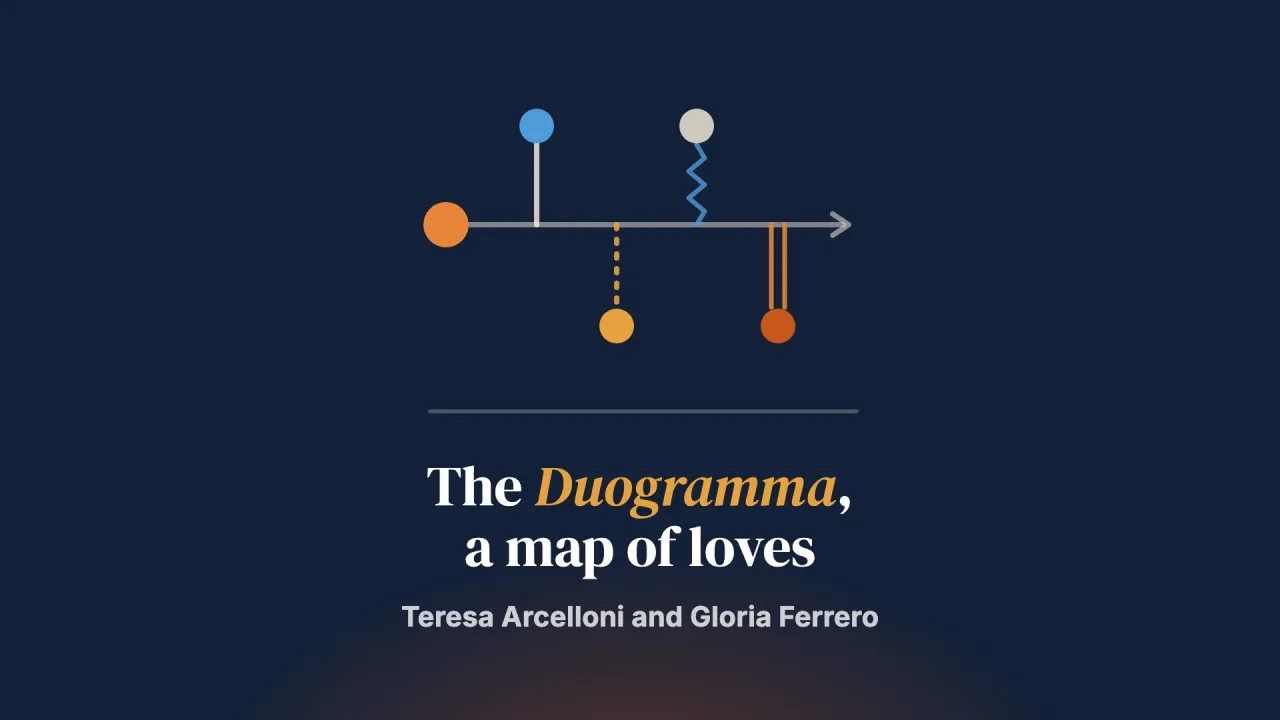
The Duogramma®: An innovative methodology for psychotherapy
A map of the couple relationships lived, desired or rejected since childhood: the Duogramma®, its graphic rules and its use in individual therapy.
 Blog
Challenging in therapy: What a patient taught me
A couples therapy session led me to reflect on confrontation, authenticity and resonance: how to address difficult behaviour without invalidating the person.
 Scientific
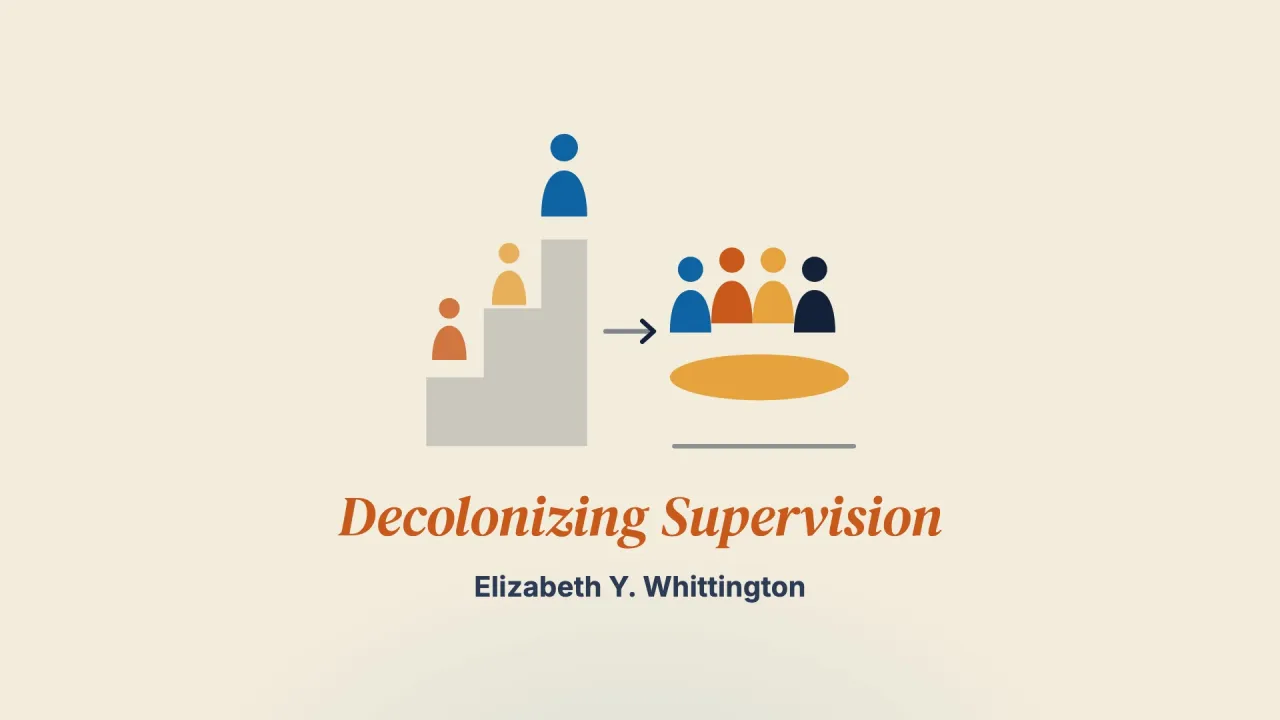
Decolonizing Supervision: A Critical Race and Queer Theory Framework for Marriage and Family Therapy
Supervision is not neutral: a framework drawing on Critical Race Theory and Queer Theory to name and share power in supervision, with a vignette.
 Scientific
Internal Family Systems Therapy as Part of the ‘Family of Systemic Therapies’: A Critical Exploration of Systemic Practice in the Intra-Personal Domain
Does IFS belong to the family of systemic therapies? A critical exploration, grounded in a family court vignette, of systemic work with “parts”.
Comments 0
Log in to join the discussion. Log in