Red Sistémica · Epistemology
Matríztico Institute: liberating conversations in cultural biology
Humberto Maturana Romesín and Ximena Dávila Yáñez, cofounders of the Instituto de Formación Matríztica, set out here the guidance work they call liberating conversations: a practice born of the interweaving of the biology of cognition and the biology of love, which starts from the pain that motivates the request for help and sets in motion, through what Ximena Dávila calls the directed mirror, the reflective dynamic that frees us from the negation of being imposed by the patriarchal-matriarchal culture.
“We human beings are, at the foundation of our biological being, loving beings, and being so is the source of our possibility of recovering joy and well-being in human living.”
Humberto Maturana Romesín and Ximena Dávila Yáñez
The interweaving of the biology of cognition and the biology of love
It is possible to reach the understanding generated by the interweaving of the biology of cognition and the biology of love starting from the pain that motivates a request for help, and to guide from there the conversation with the person who consults along a reflective path, which we call the directed mirror, towards the acceptance of oneself, by means of liberating conversations. For the person who consults, liberating conversations result in a way out of the pain and suffering generated by the continual negation of being produced by living immersed in the patriarchal-matriarchal culture that is ours. These conversations thus have consequences that an observer would distinguish as therapeutic, because they set in motion the reflective dynamic that frees us from pain and suffering in everyday living, through the understanding of the cultural biological dynamic that generates them. This dynamic is the expression of the operating of the biological cultural Matrix of human existence.
This biological cultural matrix of human existence refers at once to the condition of origin of the human in the biology of love (matrix = womb) and to the relational fabric (matrix = web of relations) proper to the interplay of emotion and reason, which makes human living, in its historical becoming, a living capable of taking on different cultural forms arising in the realisation of its being, as a being primarily loving in its ontogenic origin.
What Ximena Dávila does that is new
Ximena Dávila Yáñez, in her guidance work through what she calls the Liberating conversations of the pain and suffering of the person who consults, does two fundamentally new things:
1
Naming the negation of being
She shows that the central theme of the consultations that seek help in the domain of relational living is the negation of being to which our patriarchal-matriarchal culture subjects all of its members.
2
Setting the reflective dynamic in motion
She sets in motion the reflective relational dynamic that is the essence of the interweaving of the biology of cognition and the biology of love, and she does so in a way that proves therapeutic, in the use of what she invents and calls in this work the directed mirror, through liberating conversations.
The notion of the directed mirror was born of something a consultant said to Ximena Dávila: “You are like a mirror for me”, on realising that he was seeing himself in his emotioning (in the flow of his emotions) as he looked at his relational conduct through our conversations, where he was shown indirectly which of the explanatory paths of his living he was on at different moments, according to the account he gave of his history. In this kind of conversation no reference at all is made to the Biology of cognition. It remains revealed as an understanding that operates unconsciously in the flow of the reflective conversing with the person who consults. That is why one of the most important consequences of these conversations, for the person who consults, is that the understanding of their relational behavioural dynamic widens, in a process that can lead them to an emotional change.
And this widened understanding proves to be a tool that the person carries with them in their unconscious and conscious operating, which keeps them in a reflective stance towards their emotioning and which allows them to enter into a transforming process of their psychic space from within themselves, that is to say of their everyday emotional and behavioural space.
The directed mirror is not a technique
The relational dynamic we call the directed mirror looks simple to carry out, but it is not. It is not a technique: it is the carrying out of liberating conversations from the gaze that sees and understands the human in its biological and cultural dimensions, on the basis of the understanding of cultural biology. The value of this understanding, like the value of any tool, lies in the way it is lived. The real difficulty in living this understanding, however, lies in the fact that we live in the patriarchal-matriarchal culture which, like a psychic trap, denies it, because it is centred on relations of domination and submission. That is why the task of liberating conversations is to widen this understanding to the point where the person who consults can free themselves, or step out of that trap, from within themselves.
It follows from the above that this work creates a practice of reflective relational guidance that consists of conversations that liberate from cultural pain and suffering, because they take place within the dynamic of the biology of love. In this practice, the dynamic proper to cultural biology is set in motion in its operating of the biological cultural matrix of human existence. The carrying out of the directed mirror, as part of the operating within the biological cultural matrix of human existence, is not a technique: it is part of the operational dynamic of the matrix, which opens and realises in liberating conversations the reflective gaze that breaks the attachment to the relational existence generating the pain for which help is sought.
We are aware that we live in a present in which love is frequently spoken of, but until now no one had shown the operational dynamic that love entails for conversations that liberate from cultural pain and suffering to be able to occur. Ximena Dávila invents this dynamic and carries it out.
It should nevertheless be stressed that these liberating conversations in cultural biology cannot be conducted responsibly and ethically, and therefore seriously and effectively, without training being acquired in the understanding and the knowledge of their foundations, which in fact opens the gaze that makes these conversations possible. Cultural biology is not one more theory, it is not a new epistemology, even though it implies one: it is a gaze and an understanding that reveal the conditions of constitution of the observer and of observing, and that connote and reveal everything we do as human beings. Cultural biology is the constitutive condition of our being as human beings Homo sapiens amans. We human beings exist in the realisation of cultural biology, and that is why we exist in the operating of the biological cultural matrix of human existence (even if we do not realise that this is so), and why we can create the world we live by reflecting on what we do, letting go of our certainties, in a process that proves to liberate from cultural pain and suffering. In a certain way, this is not new knowledge, but it is without any doubt a new understanding, and the evocation of the action that carries it out.
From matristic to matriztic: matriztic guidance
We human beings are, at the foundation of our biological being, loving beings, and being so is the source of our possibility of recovering joy and well-being in human living. People have already spoken of matristic culture to refer to a culture founded on love, from our loving cultural origin prior to the patriarchal-matriarchal culture, with the intention of making it clear that what is at stake is not the masculine or the feminine, but indeed a cultural relation. But the expression matristic (with an s) does not achieve this, because it keeps the link with the feminine maternal. The expression matriztic (with a z) does achieve it, because it refers to the matrix in its double sense of nurturing container and of relational fabric proper to the dynamic of coexistence that gives us our origin in the emergence of the ancestral family, more than three million years ago. So that, in speaking of Matriztic guidance, Ximena Dávila Yáñez likewise does something fundamentally new: she connotes that the liberating effect of liberating conversations lies in the fact that they give back to the being who asks for help the possibility of founding their emotioning and their understanding on the very foundations of their human being.
A fundamental dimension of doing within this understanding is that, through its dynamic, in a changing present, each and every one of the people who have been part of the life experience of whoever carries it out are recognised. People who have been part both of the history and of that changing present. And this is done from a life experience whose course is carried by the reflection one undertakes oneself from within patriarchal-matriarchal cultural pain, which makes it possible to realise that, in all our living and coexisting, we have moved carried by the biology of love and by respect for ourselves. This loving impulse that moves us, in our living and our coexisting, to look for answers to existential pains allows a way of relating to arise in which the joy of freedom and the pain of solitude are combined, inviting us at the same time not to fall into the endless circle of patriarchal-matriarchal cultural suffering.
It is from love that every human being has the possibility of stepping out of the patriarchal-matriarchal cultural pain they may be living. A love that shows itself from the moment we come into the world (and we come into this world by causing physical pain to another: our mothers). If we are welcomed in love, we arrive in a “nice and warm” world that prolongs our maternal womb. And this arrival surrounded by love dispels in our mothers that physical pain of childbirth, for which every woman is naturally prepared, and it gives us the loving and trusting basis that allows us to move within coexistence, in the midst of this patriarchal-matriarchal culture, from the biology of love.
A loving basis that can open the possibility of growing in the confidence of a love that resists all bargaining and all betrayal. And that is why it is in this psychic space that we will become an adult person, and why it is from this foundation that this liberating doing will arise.
How an adult person is formed
We know that a human being emerges as an adult person when, in their everyday conduct, they arise spontaneously as an autonomous and ethical being, able to collaborate from respect for themselves and for others, because they are not afraid of disappearing in collaboration. And we know that it is coexistence in the acceptance of bodily closeness and intimacy, in full trust and full tenderness, as they take place in the loving mother-child relationship and in play, that constitutes the natural relational domain generating, as children grow, their spontaneous transformation into autonomous, responsible and ethical persons, who do not feel the fear of disappearing when collaborating with others in the co-creation of a world that is valid and welcoming for all human beings in particular, and for all living beings in general.
We also know that the tragedy of addictions, of criminality and of the lack of social sense, which arises with so much pain in our present cultural living, comes from the fact that we have become blind to four fundamental aspects of our living, which are:
1
An unconscious operational ground
Human living emerges, like all living, unconsciously from an unconscious operational ground, even though, in our case, our rational thinking and reflecting take part in its generation and its evocation.
2
Values, abstractions of love
What, in everyday life, we call values is made of abstractions of our operating as loving beings.
3
Denying love makes us ill
As loving beings, we fall ill if we deny the biology of love.
4
Mother-child coexistence
What is central, or most fundamental, in the formation of human living in general, and of adult human living in particular, is constituted in the unconscious relational flow of mother-child coexistence.
When this adult relational living in respect for oneself and for others, from the autonomy and the reflective freedom that self-respect makes possible, does not arise unconsciously from a loving mother-child history, because that living has been denied, it can only arise from a similar loving coexistence with another adult who lives with that person in a reflective coexistence realising, in that coexistence, the domain of self-respect, trust and reflective freedom that love makes.
The liberating power of conversations
Thus, the liberating or healing power of liberating conversations lies in the fact that they operate in the person who consults through the realisation of the understanding of the human (that is to say, of themselves) that cultural biology implies. A cultural biology that guides the course of our living and that allows us, if we enter a patriarchal/matriarchal drift, to step out of it by recovering respect for ourselves and for others as the articulating axis of our everyday doing, keeping the biology of love as the relational dynamic that guides our living. And it is important to see that love takes place in relational living as a spontaneous behavioural flow through which the other, or oneself, arises as a legitimate other in coexistence with oneself, and not in a discourse on what love implies, nor in the description of what should be done for the other to feel loved. It is in this way that these liberating conversations reveal, in the operational domain of the consultation that asks for help, the validity of the assertion that “most human illnesses, if not all, have their origin in unlove, and they heal when love is recovered, both in the love of oneself and in the love of others”. And for this, it is done, as Ximena Dávila shows, by modulating the physiology of well-being that love produces in its operating within the reflective relational domain.
Notes from the original
(*) Editor’s note: we point out to readers that the authors of the article, Dr Maturana and Dr Dávila, wrote this text in a style in which they refer to themselves by their first and last names, that is to say in the third person.
Who is Humberto Maturana Romesín
(1) Cofounder of the Instituto de Formación Matríztica. Doctor of biology from Harvard University, national science prize in 1994 and creator of the notion of autopoiesis. He is the author, among other works, of Neurophysiology of Cognition, Biology of Language, Ontología del conversar, De la Biología a la Psicología, Objetividad un argumento para obligar and Del Ser al Hacer. He currently works with Ximena Dávila on the development of the dynamic of the biological and cultural Matrix of human existence. On the basis of his study of perception, Professor Maturana created the field of the ontological understanding of the phenomenon of knowing as a biological phenomenon, which we call the biology of cognition, and he explored the origins of the human through the biology of love. He currently carries out his work from the understanding of the operational dynamic that interweaves the biology of cognition and the biology of love, born of his collaboration with Ximena Dávila Yáñez as a reflective operational domain, and which they call the biological and cultural Matrix of human existence.
Who is Ximena Dávila Yáñez
(2) Cofounder of the Instituto de Formación Matríztica. Creator of the vision of the dynamic that interweaves the Biology of cognition and the Biology of love, and then, with Humberto Maturana Romesín, of the synthesis of the understanding of the human that together they call the biological and cultural Matrix of human existence, as an expansion of the biology of cognition and of love. This vision is also the foundation of our view of organisations as components of the biosphere we currently inhabit.
Professor Dávila studied Guidance in human relations and family, with a specialisation in labour relations, at the IPCC. From within her professional activity, she created the field of the understanding of relational pain and suffering as human phenomena whose origin is cultural. In the same way she has contributed to deepening the understanding of the biological and cultural foundations of the human through the practice of liberating conversing. She is coauthor, with Dr Humberto Maturana, of El Tao o el Camino del Amar and of El Árbol del Vivir, Fundamentos Biológicos y Culturales de lo Humano, in press. She is furthermore coauthor, with the same Humberto Maturana and with Cristóbal Gaggero, of Entendimiento Matríztico Organizacional EMO. Una mirada Humana a las Organizaciones desde la Matriz Biológica y Cultural de la Existencia Humana, in press.
An extract
Red Sistémica publishes online only an extract of this article: the full text appeared in special issue no. 94/95 of the journal Perspectivas Sistémicas. Our translation covers the whole of the extract put online, and nothing more; the rest of the text is not accessible to us. Read the original extract in Spanish.
This article is an English translation of “INSTITUTO MATRÍZTICO: Las conversaciones liberadoras en la biología cultural”, published by Red Sistémica (first published in Perspectivas Sistémicas, numéro spécial n° 94/95). Translated and republished with the journal’s permission.
Read the original articleHow to cite this article
Maturana Romesín, H., & Dávila Yáñez, X. (2022). Matríztico Institute: liberating conversations in cultural biology (Complexe Systémique, Trans.). Complexe Systémique. https://app.complexe-systemique.com/en_GB/articles/matriztico-institute-liberating-conversations-in-cultural-biology (Original work published in 2022 in Perspectivas Sistémicas, numéro spécial n° 94/95; republished in 2022 by Red Sistémica, https://redsistemica.ar/2022/08/01/instituto-matriztico-las-conversaciones-liberadoras-en-la-biologia-cultural/)
To go further
- Conversations on systemic biology. Interview with Humberto MaturanaMaturana himself sets out the bases of the biology of cognition and their consequences for therapy.
- Ecology of ideas. The ethics of systemic thinking (part 1). Interview with Humberto MaturanaEthics as concern for the other, and not as a norm: the direct extension of the biology of love.
- Ecology of ideas. Constructivism, social constructionism and narratives: at the limits of the systemic approach?Where to situate cultural biology in the landscape of contemporary systemic epistemologies.
Related training courses
 Certifying course
Training in Systemic Therapy and Interventions – Cycle 1
Certifying training cycle in systemic therapy and interventions – year 1. Courses, supervision and practice, aligned with EFTA/SFTF. In French.
 Certifying course
Training in Systemic Therapy and Interventions – Cycle 2
Certifying training cycle in systemic therapy and interventions – year 2. Clinical complexity, supervision and practice. EFTA/SFTF aligned. In French.
 Certifying course
Training in Systemic Therapy and Interventions – Cycle 3
Certifying training cycle in systemic therapy and interventions – year 3. In-depth intervention, supervision and practice. EFTA/SFTF aligned. In French.
 Certifying course
Training in Systemic Therapy and Interventions – Cycle 4
Certifying training cycle in systemic therapy and interventions – year 4. Clinical integration, supervision and certification. EFTA/SFTF. In French.
Related articles
 Article
 Shaping the Therapist, Shaping the Field: A Narrative Review of the Person‐of‐the‐Therapist Training (POTT) Approach
Thirty sources, three periods: the history of Harry J. Aponte’s training, which turns the therapist’s wounds and “signature theme” into a clinical tool.
 Article
 Systems Thinking in Practice (STiP): A Praxeology for Our Times
Checkland moved systemicity from the world to inquiry. Ison and Collins go further: leave the hard/soft dualism behind and put the practitioner back at the centre of praxis.
 Article
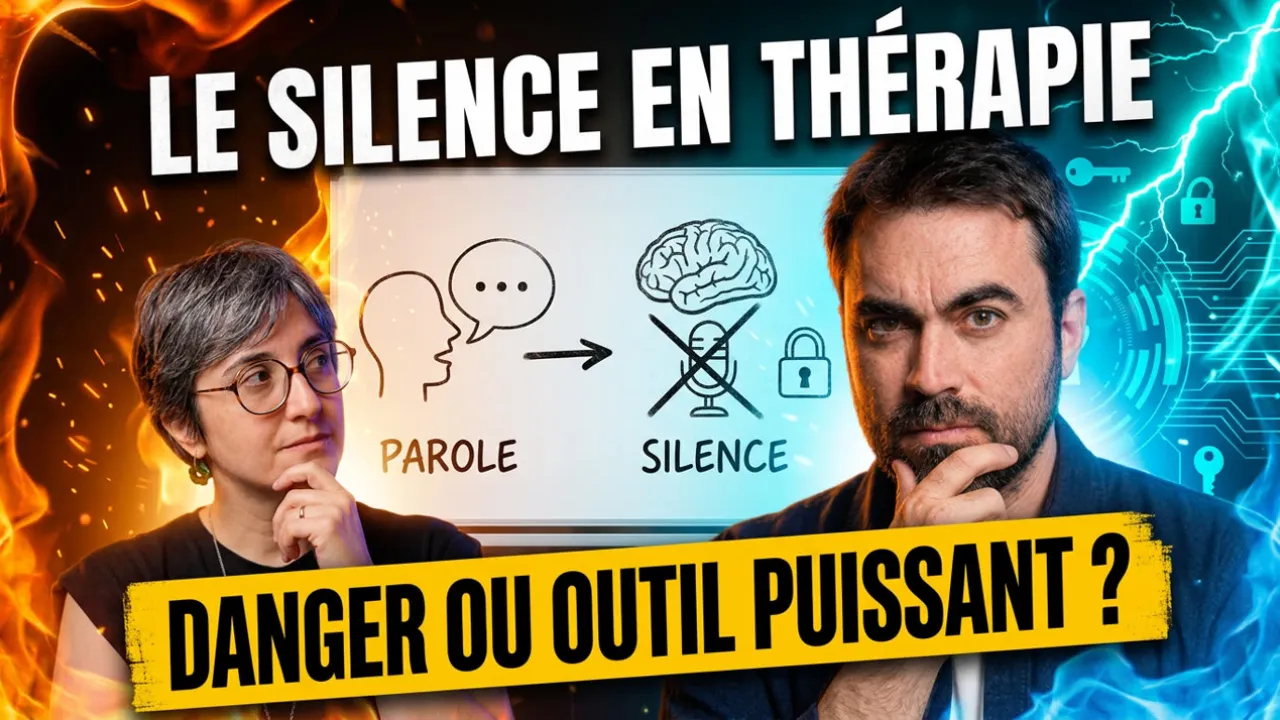
 Silence in therapy: a polysemic presence
From Heidegger to Palo Alto, silence is not an absence but a message. Defensive, strategic, reflective or shared: its forms, its functions and its risks.
 Article
 What if the shortest path to change ran through a joyful detour?
Humour in therapy is not a gimmick but a clinical skill: it loosens the loops, reframes without wounding and reopens the field of possibilities. With its ethical safeguards and a concrete toolbox.
Comments 0
Log in to join the discussion. Log in