Journal of Child and Family Studies · Family therapy
Multisystemic Therapy for Adolescents Through the COVID-19 Pandemic in Norway
When Norway locked down in March 2020, multisystemic therapy, which is delivered in families’ homes, had to reinvent itself: telephone, video, meetings in a park or from car to car. Drawing on the records of 2,021 young people from 2018 to 2021, Katrine Skulberg’s team shows that overall outcomes held, but that fidelity to the model declined, that it weighed more than ever on outcomes, and that some subgroups, notably in the north of the country, benefited less.
This is a reformatted republication of Multisystemic Therapy for Adolescents Through the COVID-19 Pandemic in Norway, by Katrine Skulberg, Tony C. A. Tan, Dagfinn Mørkrid Thøgersen, Knut Taraldsen and Gunnar Bjørnebekk, published in Journal of Child and Family Studies (Springer) (2026), doi: 10.1007/s10826-025-03222-9, under a CC BY 4.0 licence. Prepared by Complexe Systémique in September 2026: the authors’ text is unchanged; the layout has been adapted for reading online, which constitutes a modification of the work under the terms of the licence. Tables are presented as lists; the online supplementary material is not reproduced. This edition was made neither by the authors nor by the publisher, who are not responsible for its content or for any errors. The original version prevails.
Thus, high adherence to the MST procedure seems particularly important during turbulent times.
Katrine Skulberg, Tony C. A. Tan, Dagfinn Mørkrid Thøgersen, Knut Taraldsen and Gunnar Bjørnebekk
Abstract
Multiple studies have demonstrated that Multisystemic Therapy (MST) is an effective treatment for youths with serious conduct problems. This study aims to investigate the extent to which Norway’s MST was affected by the COVID-19 lockdowns and to examine the factors associated with treatment outcomes before and during the pandemic using a natural comparison group design. It included 2,021 adolescents (63.4% boys; Mage = 14.83, SDage = 1.60), and their families were referred to the MST for serious and persistent conduct problems. Treatment outcomes were compared among three temporal groups: A: fully prior to, B: partly prior to and C: during the pandemic. The Youth Level of Service/Case Management Inventory (YLS/CMI) and five behavioral treatment goals were assessed at intake and discharge. In addition, the five behavioral goals were assessed through parent interviews at 6-, 12-, and 18-month post-treatment. A decline in treatment fidelity was evident post-COVID-19 onset, and some subgroups experienced reduced benefits. Treatment fidelity was more strongly associated with treatment outcomes post-pandemic. Latent growth curve models revealed that boys entering MST post-pandemic had advantageous rates of behavioral improvements. Although most of the MST participants demonstrated progress in behavioral outcomes, several youths showed regress in treatment outcomes as the pandemic set in. Further studies are needed to identify factors particularly sensitive of subgroups of adolescents for deriving MST benefits in crisis situations.
Keywords: COVID-19, Adolescents conduct problems, Multisystemic therapy, Treatment fidelity, Treatment effectiveness predictors
Highlights
- This study extends the existing knowledge on youths receiving MST by examining treatment outcomes during the COVID-19 pandemic.
- A significant decline in treatment fidelity was evident post-pandemic onset.
- There was a change in predictors associated with MST effectiveness.
- Treatment fidelity was a stronger predictor for positive treatment outcome post-pandemic.
The Norwegian government announced a national lockdown to limit the spread of the SARS-CoV-2 virus in March 2020, as was the case in many other countries, leading to severe social restrictions and several national lockdowns in the subsequent 17 months. The national lockdown required the general workforce, including Child Welfare Services (CWS) employees and therapists in Multisystemic Therapy (MST; Henggeler et al., 2009), to work from home and limit social contact. In addition, schools, leisure activities, and most businesses were closed, which further constrained social lives. For adolescents and families receiving MST, who already were facing highly challenging circumstances, these restrictions may have posed a serious risk to the quality and outcomes of the treatment.
The lockdown created significant challenges to the maintenance and implementation of therapeutic activities in Norway (Taraldsen, 2020), specifically by restricting MST therapists’ ability to conduct in-person meetings with their clients. This severely disrupted the primary treatment format in MST: in-home sessions up to multiple times a week, at times convenient for family members (Henggeler et al., 2009). To sustain service delivery, telephone sessions and videoconferencing were quickly implemented as vital substitutes, in addition to innovative solutions (e.g., meetings on the family terrace, in a park, or side by side in separate cars with windows rolled down; Taraldsen, 2020), in line with prior research on CWS (e.g., Jentsch & Schnock, 2020; Krane et al., 2021). However, the implementation of videoconferences presented certain challenges, as it took time to set up a secure solution and train the teams in digital solutions, and therapists often had to assist clients with technological difficulties (Taraldsen, 2020), one common limitation with videoconferencing (e.g., Sibley et al., 2017). Consequently, regional variations in meeting formats emerged, influenced both by Norway’s distinctive geography – where its long and narrow shape results in prolonged winters in the northern areas – and by stricter social distancing regulations in southern Norway due to elevated virus spread. These raised concerns about whether MST could maintain effectiveness through the COVID-19 pandemic, including across regions of Norway. Additionally, examining potential deviations in treatment fidelity and their relationship to youths’ behavioral outcomes and changes in their risk level for future conduct problems is warranted, as high adherence to MST principles and procedures - likely more difficult to maintain during lockdown - has been linked to greater treatment success (e.g., Löfholm et al., 2014; Schoenwald et al., 2009).
While remote therapy formats expanded during the pandemic, to our knowledge, the literature remains scarce and reports mixed findings regarding the effectiveness of various interventions for both externalizing and internalizing problems (Hagen et al., 2025). While comparable outcomes between videoconferencing and in-person care have been documented in mental health care (Beurs et al., 2022), art therapy (Le Vu et al., 2022) and in certain eating disorder treatments (Yaffa et al., 2021), decreased efficacy has also been demonstrated for youths with obsessive-compulsive disorder (Storch et al., 2021) and for youths with risk behaviors such as substance use, delinquency, and sexual activity (e.g., early initiation, nonconsensual behavior), and their families (Haggerty et al., 2023). Recent research on Functional Family Therapy (FFT; Lange et al., 2023), has observed that a combination of video and face-to-face therapies was associated with lower drop-out rates and better outcomes than the in-person group. However, the authors observed that telephone sessions may suffer from greater probabilities of cancellation or no-shows compared to in-person or video sessions (Lange et al., 2023). Although therapeutic alliance and engagement are not directly assessed in the present study, previous research on MST (Lange et al., 2022) and FFT (Lange et al., 2023) have shown that the transition to videoconferencing did not compromise therapeutic alliance. Nonetheless, FFT professionals reported that they experienced challenges in creating engagement and therapeutic alliance when videoconferences were used with families (Lange et al., 2023) – two elements considered essential for favorable treatment outcomes (Cunningham & Henggeler, 1999; Flückiger et al., 2020; Jethwa et al., 2021). These findings underscore the need to examine whether treatment outcomes changed for youths with conduct problems receiving MST after the onset of the COVID-19 pandemic.
Adolescents were disproportionately affected by pandemic-related restrictions. Increased mental health problems such as anxiety, depression (Samji et al., 2022; Thorisdottir et al., 2021; von Soest et al., 2022), and externalizing behavior were reported, particularly among girls and younger adolescents (von Soest et al., 2022). This also applied to individuals with pre-existing vulnerabilities, such as adolescents with neurodevelopmental disorders (e.g., attention deficit/hyperactivity disorder [ADHD]), mental illnesses, or behavioral disorders (Bera et al., 2022; Samji et al., 2022). Although most Norwegian youths coped well during the pandemic, a slight reduction in quality of life was observed, and many experienced increased loneliness and symptoms of anxiety and depression (Bakken, 2021). Although a decline in juvenile crime rates in minor offenses (Boman & Gallupe, 2020) and in assault and drug-related crimes (Revital & Haviv, 2022) were reported in studies conducted in other contexts, youths in contact with the juvenile justice system experienced increased psychological distress and antisocial behavior (Reid et al., 2022). A decline in juvenile crime rates were also evident within the Norwegian context (Riaz & Stolt-Nielsen, 2021). These findings suggest that the profile of adolescents who entered MST services after the onset of the COVID-19 pandemic has shifted, which may have implications for treatment outcomes and warrants further investigation.
Multisystemic Therapy
Multisystemic therapy is an intensive family- and community-based treatment program for adolescents between 12 and 18 years of age with serious conduct problems (Henggeler et al., 2009). Social-ecological theory underlies MST (Bronfenbrenner, 1979), and it addresses risk and protective factors in the social systems in which the youth is embedded (e.g., home, school, peers, and neighborhood) (Henggeler et al., 2009). The MST teams, consisting of one supervisor and three to four therapists, who are available for the families 24/7 (Henggeler et al., 2013). Each therapist has a caseload of three to five families. The duration of the treatment is usually between three to five months. In Norway, MST has been implemented since 1999 as a home-based treatment alternative to institutional care located in the CWS (Henggeler et al., 2013), with 24 teams currently active across the country. Norway primarily manages juvenile offenders and antisocial youths under the age of 18 within the CWS rather than through the juvenile justice system (Aase et al., 2020; Olseth et al., 2024). A large collection of studies carried out in different contexts have documented MST as an effective treatment for youths with serious conduct problems. A meta-analysis by Van der Stouwe and colleagues (2014) included 22 studies (off which 15 were randomized controlled trials [RCT], n = 4066 juveniles) and demonstrated small but significant treatment effects for all outcome measures except social competence: delinquency, out-of-home placement (OOHP) - referring to settings such as incarceration, foster care or other non-criminal placements - psychopathology, substance use, and family and peer factors. The meta-analysis reported MST to be most effective for younger and non-minority youths, and comparable across gender. In contrast, a longitudinal cohort study by Keles et al. (2021; N = 1674) highlighted younger age and female gender, but not migrant status, as predictors for more positive growth trajectories. These differing findings may be explained by variations in study design or outcome measures. Still, both studies converge in highlighting younger age as a consistent predictor of positive MST outcomes. In contrast, another meta-analysis reviewing 23 RCTs with a combined n = 3987 youths found that the effects of MST varied across studies, outcomes, or measurement times (Littell et al., 2021). The authors concluded that the evidence base was of mixed quality. The meta-analysis included outcomes from both the original MST model for juvenile delinquency and antisocial adolescents, as well as program adaptations addressing several conditions and target groups. While this broader scope provided a more inclusive overview of the MST effectiveness, it also introduced complexity that may complicate interpretations of overall effectiveness of the standard MST.
Research from the Scandinavian context has shown mixed results. In Norway, MST was significantly more effective than usual CWS (e.g., institutional placement, home-based treatment or follow-up and supervision by a social worker in the family´s home) at reducing conduct problems and preventing OOHP both at post-treatment (Ogden & Halliday-Boykins, 2004; n = 100; RCT) and two years after admission (Ogden & Hagen, 2006; n = 75; RCT). A later study by the same authors but with a pretest-posttest design, presented MST as robust and sufficiently flexible to be effective for both genders, although some gender differences emerged for some treatment outcomes (Ogden & Hagen, 2009; n = 117). In contrast, a Swedish RCT reported MST to be comparable in effectiveness to conventional treatment both seven months (Sundell et al., 2008; n = 156) and two years past referral (Löfholm et al., 2009; n = 156). It is important to note that these Swedish studies reported lower treatment fidelity than previous MST evaluations, undermining their power of detecting treatment effects (Sundell et al., 2008). In order to update the decades old literature, two more recent studies were conducted in Norway with a pretest-posttest design and larger samples. These studies reported significant reductions in risk factors for future antisocial behavior and conduct problems (Hukkelberg et al., 2022, 2023). Hukkelberg et al. (2022; n = 2018) reported that this reduction in conduct problems was persisting over time, whereas Hukkelberg et al. (2023; n = 2123) found that the level of problem behavior had increased slightly from the end of treatment.
Based on the need to better understand how pandemic restrictions may influence outcomes in home-based treatments, this study aims to account for the impact of COVID-19 lockdowns on MST services in Norway and to investigate factors associated with treatment outcomes before and during the pandemic. Findings are expected to provide increased knowledge about the functioning of CWS, and MST specifically, under crisis conditions, which is important to ensure the best possible treatment for youth with severe conduct problems. Findings may also carry practical implications for service adaptability and preparedness in future emergencies.
The Present Study
Using the routine outcome monitoring (ROM) data collected for quality assurance and improvement, this study aimed to investigate the treatment outcomes of MST and the factors predicting outcomes through the COVID-19 pandemic. Anonymized ROM data were released from a clinical database for families starting treatment two years before the initiation of the COVID-19 lockdown in Norway until approximately 17 months after.
This study hence extends previous research that assessed outcomes from MST treatment under physical meeting conditions. To explicitly evaluate the event of the COVID-19 outbreak, the following research questions (RQs) were investigated:
- RQ1: Did clients differ in attributes at admissions during COVID-19?
- RQ2: Did clients differ in therapists’ treatment fidelity?
- RQ3: Did improvements in behavioral outcomes and reduction in reoffending risks from MST change during the pandemic?
- RQ4: Which variables carried predicative power in explaining treatment outcomes at the end of treatment during the pandemic?
- RQ5: Which variables were associated with clients’ long-term behavioral changes during the pandemic?
As the COVID-19 pandemic affected the treatment context, treatment fidelity was expected to decline as adherence to the MST procedure became increasingly challenging. This may in turn have compromised the effectiveness of MST. In order to answer the research questions, this study commenced with five assumptions:
- that there was a change in MST target group,
- that therapists’ treatment fidelity declined,
- that observed behavioral improvements of MST were reduced,
- that the variables predicting behavioral improvements at the end of treatment changed, and.
- that the variables associated with clients’ long-term behavioral changes after the pandemic outbreak changed.
Method
Participants
Anonymized clinical data for 2,067 participants admitted into the MST between 13 March 2018 and 31 August 2021 were made available by the Norwegian Center for Child Behavioral Development (NCCBD). This dataset contained information about Norwegian youths and their families referred to the MST program by the municipal CWS for serious and persistent conduct problems. MST includes youths between age 12 and 17 with serious rule- or norm-breaking behavior, posing a risk for OOHP. In addition, young people under the age of twelve may also be accepted into the program, usually along with an older sibling who starts receiving MST treatment. MST excludes youths (a) living by themselves without any adults acting as primary caregivers, (b) in serious mental health conditions (e.g., suicidal, psychotic, or at imminent danger to themselves or others), (c) being young sexual offenders (without other criminal or antisocial behavior), (d) with moderate to severe autism spectrum disorders affecting social communication and interaction, and (e) with referral behavior directly attributable to their level of intellectual ability. A total number of 46 cases were excluded from subsequent analyses due to complete missing data at admission, representing a loss rate of 2.23%. The final dataset contained N = 2,021 youths between 7 and 18 years of age (M = 14.83, SD = 1.60), with a moderate overrepresentation of boys (63.4%). Most adolescents reported a non-immigrant background (80.2%), with the rest being immigrants (10.8%) or having immigrant parents (9.0%) respectively (immigrant background as defined by Statistics Norway (2025): (a) Immigrants: Persons born abroad of two foreign-born parents and four foreign-born grandparents. (b) Norwegian-born to Immigrant Parents: Persons born in Norway of two parents born abroad and in addition having four grandparents born abroad.)
Procedures
The MST team leaders were responsible for entering client data into MST’s clinical database. Youths’ behavioral problems and risk level for future conduct problems were assessed at admission (T0) and at discharge (T1) for all cases. At T0, clinical data, including demographic information, were collected from the CWS’ referral and were verified and complemented at the MST team’s initial assessment. At T1, participants’ conditions were assessed based on family questionnaires and the MST team’s interaction with the family. The MST team continued monitoring behavioral maintenance at 6-, 12- and 18- months post-treatment (T2 to T4) for clients who completed the treatment, using parental interviews by phone. All team leaders followed rigorous guidelines at all time points for measurement consistency.
Ethics Approval and Consent
This study’s data material was collected for quality assurance purposes as part of NUBU’s assignment by The Norwegian Directorate for Children, Youth and Family Affairs (Bufdir). Data were de-identified locally by the MST teams at data registration, and automatically fully anonymized after data collection was completed. For data collected before 20 July 2018, the processing was approved by the Norwegian Data Protection Authority (DPA). After this date, the European Union´s General Data Protection Regulation (GDPR) came into force, and processing was based on families’ voluntary, informed consent. The Norwegian Regional Committees for Medical and Health Research Ethics (REK) found the project to be outside the domain of the Norwegian law on research ethics and medical research (ref. 2017/478/REK South-East). This study makes part of a project registered with The Norwegian Agency for Shared Services in Education and Research (SIKT ref. no. 747969).
Measures
Behavioral Measures
The MST treatment in Norway has five overarching behavioral goals: the youth (1) lives at home (i.e., not in detention or placed out of home by the CWS), (2) attends school or work (at least 50% workload), (3) are law-abiding (i.e., not receiving any formal societal consequences as a result of offenses or misdemeanors), (4) are drug-free (i.e., no drug use in a way that affects daily functioning or led to other serious consequences), and (5) abstains from violence/threats of violence. Each behavioral goal received a binary coding of 1 for goal attainment, and 0 for a goal not reached. For analysis purposes, these five behavioral goals were aggregated into a continuous measure ranging from 0 to 5, with a higher score indicating more desirable behavior, applicable at admission, discharge, and at each follow-up point.
Risk Measures
Youth’s risk of future conduct problem was measured by the Youth Level of Service/Case Management Inventory – Part I (YLS/CMI; Hoge & Andrews, 2011). YLS/CMI consists of 42 dichotomous items (present = 1/ not present = 0) factoring into eight subscales. The first subscale (prior/current offenses/dispositions) measures static risk, whereas the remaining seven subscales (family circumstances/parenting, education/employment, peer relations, substance abuse, leisure/recreation, personality/behavior and attitudes/orientation) reflect malleable or dynamic risk factors (Andrews & Bonta, 2010). Some item examples are “inadequate supervision”, “some delinquent friends”, and “antisocial/pro-criminal attitudes”. This study used the sum score of these eight subscales as the measure of re-offending risk, where the risk level increased with a higher score on YLS/CMI. Local language version of the YLS/CMI was translated by Norwegian researchers and back translated for approval by the Multi Health Systems Inc. (Jakobsen & Kornør, 2017). Hukkelberg et al. (2022) reported internal consistencies of α = 0.55 at admission and α = 0.71 at discharge, while Hukkelberg et al. (2023) reported consistencies of α = 0.56 and 0.71 respectively.
Covariates
Norway experienced regional variations during the COVID-19 pandemic. Social distancing requirements differed by regions. In addition, remedial strategies for COVID-19 that were suitable for southern Norway did not readily translate into clinical practice for the rest of the country, due to factors such as different climatic zones and training requirements. We therefore partition Norway into three regions: NORTH, MID and the rest of Norway, with the latter serving as the reference region.
In addition to age (in years) and sex (0 if male; 1 if female), this study included participants’ immigration background (as defined above) into their demographic profile. Two binary variables were introduced to indicate immigrants (IMMI1 = 1; IMMI2 = 0) and children of immigrant parents (IMMI1 = 0; IMMI2 = 1) respectively, with native Norwegians (IMMI1 = 0; IMMI2 = 0) serving as the reference group.
Information was also recorded on whether the youths lived in foster care, had received/was receiving mental health care, or had been transferred from institutional care to receive MST (yes = 1; no = 0). Whether the youths had previously received evidence-based treatments for conduct problems (e.g., MST, FFT, Parent Management Training – Oregon [PMTO]) was also rated with yes (1) or no (0).
Continuous evaluation promotes detection of and solutions to problems with program fidelity and treatment outcomes (Henggeler et al., 2009). Therapists received monthly audits on their procedural compliance using the Therapist Adherence Measure - Revised (TAM-R; Henggeler et al., 2006), a questionnaire of 28 items in 5-point Likert scales from not at all (1) to very much (5). A total TAM-R score was calculated by dividing the number of items rated with very much by the total number of items answered, resulting in a score ranging from 0 to 1. Therapists are considered in compliance with a TAM-R score of 0.61 or higher (Henggeler et al., 2006).
Treatment Outcome
Two scores were calculated as corroborating measures for treatment outcomes. Behavioral improvement was derived by subtracting client’s behavioral problem indicator before treatment from that after treatment. A risk reduction score, on the other hand, was obtained by subtracting participants risk level after treatment from the level before treatment. Detailed description of all variables used in this study is documented in online supplemental Table S1.
Grouping Design
To create relevant comparison groups participants were divided into three groups based on Norway’s national lockdown on March 12, 2020:
- Group A: began MST treatment between March 13, 2018, and March 12, 2019; COVID-19 had no impact on members of this group during either the treatment or maintenance phases.
- Group B: started MST between March 13, 2019, and March 12, 2020; although COVID-19 did not affect this group’s treatment, it did interfere with their maintenance period.
- Group C: youths who entered MST between March 13, 2020, and August 31, 2021. Members of this group experienced disruptions in MST delivery during both the treatment and maintenance phases.
Statistical Analyses
We conducted one-way ANOVA using R (Version 4.2.3) to address the first and second research questions regarding differences in intake characteristics and therapists’ treatment fidelity across the three treatment groups. Next, we studied the frequency distributions in behavioral improvement and risk reduction as MST outcomes proposed in Research Question 3. For the final two research questions, we employed Mplus 8.10’s restricted maximum likelihood (MLR) estimator for its robustness against non-normality and non-independence of observations (Muthén & Muthén, 2017).
Regression Analysis
We examined Research Question 4’s prediction of treatment outcomes using clients’ changes in behavioral goals (ΔBHV) as the outcome variable. We further separated the marginal predictive power of each covariate using the following regression model:
ΔBHV = β0 + β1MID + β2NORTH + β3AGE + β4FEMALE + β5IMMI1 + β6IMMI2 + β7TAMR + β8PRIOR + β9INSTI + β10FOSTER + β11PSYC + ε (1)
The second regression model examined the relationship between participants’ risk reduction (ΔRSK) and covariates similar to Eq. (1):
ΔRSK = γ0 + γ1MID + γ2NORTH + γ3AGE + γ4FEMALE + γ5IMMI1 + γ6IMMI2 + γ7TAMR + γ8PRIOR + γ9INSTI + γ10FOSTER + γ11PSYC + ε (2)
Growth Curve Modeling
For Research Question 5, we applied latent growth curve models (LGM; Bollen & Curran, 2006) to study variables associated with clients’ long-term behavioral changes, an approach widely used for analysing changes over time (Geiser et al., 2013). In addition to the covariates common in Eqs. (1) and (2), changes in risk level (ΔRSK) were also added as an explanatory variable to the LGM. All intercepts of LGM received factor loadings of 1, while the slope carried factor loadings of time points T0 to T4. Covariates factor loadings were freely estimated using Mplus’s restricted maximum likelihood estimator.
Missing Data
Although all cases contained full information at admission, missing data started to emerge at discharge, as all families did not complete treatment - either due to a lack of treatment alliance, placed in OOHP, or to other external causes (e.g., disease, family moving outside of the team’s service area). The rate of missing data grew to 50.22% at the 18-month follow-up, as follow-up data were only collected for completers due to ethical considerations. In addition, TAM-R scores were unavailable for 22.96% (464 cases) due to the European Union’s general data protection regulation (GDPR) restriction. In total, 1,276 out of 2,021 cases (63.14%) contained various degrees of missing data. Mplus’s inbuilt multiple imputation (MI) procedure was employed to create ten imputed datasets. MI is regarded as the best practice for handling missing data because it improves statistical power and accuracy relative to other techniques (van Buuren, 2018). Model parameters were estimated separately using each imputed dataset, then pooled together following Rubin’s rules (Rubin, 1987).
Results
Clients’ Attributes at Treatment Admissions
Table 1 — Descriptive statistics by group
Outcome Variables
- BHV0. Group A: N = 569, missing 0.00%, M = 2.72, SD = 1.04; Group B: N = 620, missing 0.00%, M = 2.45, SD = 1.10; Group C: N = 832, missing 0.00%, M = 2.27, SD = 1.10; One-way ANOVA: F(2, 2018) = 29.14, p < 0.001***, η2 = 0.030.
- BHV1. Group A: N = 567, missing 0.35%, M = 4.49, SD = 1.06; Group B: N = 616, missing 0.65%, M = 4.32, SD = 1.17; Group C: N = 825, missing 0.84%, M = 4.23, SD = 1.25.
- BHV6. Group A: N = 393, missing 30.93%, M = 4.45, SD = 1.02; Group B: N = 400, missing 35.48%, M = 4.46, SD = 0.91; Group C: N = 501, missing 39.78%, M = 4.48, SD = 0.92.
- BHV12. Group A: N = 362, missing 36.38%, M = 4.53, SD = 0.90; Group B: N = 355, missing 42.74%, M = 4.50, SD = 0.95; Group C: N = 467, missing 43.87%, M = 4.49, SD = 0.99.
- BHV18. Group A: N = 309, missing 45.69%, M = 4.58, SD = 0.96; Group B: N = 316, missing 49.03%, M = 4.56, SD = 0.96; Group C: N = 381, missing 54.21%, M = 4.55, SD = 0.84.
- RSK0. Group A: N = 569, missing 0.00%, M = 18.57, SD = 4.37; Group B: N = 620, missing 0.00%, M = 18.49, SD = 4.84; Group C: N = 832, missing 0.00%, M = 18.75, SD = 5.21; One-way ANOVA: F(2, 2018) = 0.56, p = 0.573, η2 = 0.001.
- RSK1. Group A: N = 567, missing 0.35%, M = 8.83, SD = 6.04; Group B: N = 607, missing 2.10%, M = 9.01, SD = 6.31; Group C: N = 822, missing 1.20%, M = 8.86, SD = 6.92.
Covariates
- MID. Group A: N = 569, missing 0.00%, M = 0.20, SD = 0.40; Group B: N = 620, missing 0.00%, M = 0.16, SD = 0.37; Group C: N = 832, missing 0.00%, M = 0.14, SD = 0.35; One-way ANOVA: F(2, 2018) = 4.04, p = 0.018*, η2 = 0.004.
- NORTH. Group A: N = 569, missing 0.00%, M = 0.10, SD = 0.30; Group B: N = 620, missing 0.00%, M = 0.09, SD = 0.28; Group C: N = 832, missing 0.00%, M = 0.07, SD = 0.26; One-way ANOVA: F(2, 2018) = 1.25, p = 0.288, η2 = 0.001.
- AGE. Group A: N = 569, missing 0.00%, M = 12.85, SD = 0.97; Group B: N = 620, missing 0.00%, M = 14.23, SD = 0.88; Group C: N = 832, missing 0.00%, M = 15.42, SD = 1.52; One-way ANOVA: F(2, 2018) = 774.46, p < 0.001***, η2 = 0.430.
- FEMALE. Group A: N = 569, missing 0.00%, M = 0.33, SD = 0.47; Group B: N = 620, missing 0.00%, M = 0.41, SD = 0.49; Group C: N = 832, missing 0.00%, M = 0.36, SD = 0.48; One-way ANOVA: F(2, 2018) = 4.14, p = 0.016*, η2 = 0.004.
- IMMI1. Group A: N = 569, missing 0.00%, M = 0.07, SD = 0.26; Group B: N = 620, missing 0.00%, M = 0.11, SD = 0.31; Group C: N = 832, missing 0.00%, M = 0.13, SD = 0.34; One-way ANOVA: F(2, 2018) = 6.78, p = 0.001**, η2 = 0.007.
- IMMI2. Group A: N = 569, missing 0.00%, M = 0.10, SD = 0.31; Group B: N = 620, missing 0.00%, M = 0.09, SD = 0.28; Group C: N = 832, missing 0.00%, M = 0.08, SD = 0.28; One-way ANOVA: F(2, 2018) = 0.90, p = 0.406, η2 = 0.000.
- TAMR. Group A: N = 469, missing 17.57%, M = 0.78, SD = 0.22; Group B: N = 483, missing 22.10%, M = 0.77, SD = 0.22; Group C: N = 605, missing 27.28%, M = 0.75, SD = 0.24; One-way ANOVA: F(2, 1554) = 3.05, p = 0.048*, η2 = 0.004.
- PRIOR. Group A: N = 569, missing 0.00%, M = 0.19, SD = 0.40; Group B: N = 620, missing 0.00%, M = 0.18, SD = 0.39; Group C: N = 832, missing 0.00%, M = 0.21, SD = 0.41; One-way ANOVA: F(2, 2018) = 0.75, p = 0.473, η2 = 0.001.
- INSTI. Group A: N = 569, missing 0.00%, M = 0.10, SD = 0.30; Group B: N = 620, missing 0.00%, M = 0.14, SD = 0.35; Group C: N = 832, missing 0.00%, M = 0.20, SD = 0.40; One-way ANOVA: F(2, 2018) = 13.45, p < 0.001***, η2 = 0.010.
- FOSTER. Group A: N = 569, missing 0.00%, M = 0.06, SD = 0.24; Group B: N = 620, missing 0.00%, M = 0.08, SD = 0.28; Group C: N = 832, missing 0.00%, M = 0.10, SD = 0.30; One-way ANOVA: F(2, 2018) = 2.86, p = 0.058, η2 = 0.003.
- PSYC. Group A: N = 569, missing 0.00%, M = 0.64, SD = 0.48; Group B: N = 620, missing 0.00%, M = 0.65, SD = 0.48; Group C: N = 832, missing 0.00%, M = 0.63, SD = 0.48; One-way ANOVA: F(2, 2018) = 0.32, p = 0.729, η2 = 0.000.
MST Outcomes Measures
- ΔBHV. Group A: N = 567, missing 0.35%, M = 1.77, SD = 1.29; Group B: N = 616, missing 0.65%, M = 1.87, SD = 1.33; Group C: N = 825, missing 0.84%, M = 1.98, SD = 1.39.
- ΔRSK. Group A: N = 567, missing 0.35%, M = 9.73, SD = 5.50; Group B: N = 607, missing 2.10%, M = 9.53, SD = 5.62; Group C: N = 822, missing 1.20%, M = 9.90, SD = 6.12.
Note. This table summarizes the descriptive statistics for all variables used in this study. Total sample size: 569 + 620 + 832 = 2021. Missingness is measured in percentages relative to each group’s sample size. Group differences at intake T0 for selected variables are compared using one-way ANOVA, with effect sizes measured in η2
Outcome variables refer to MST’s behavioral and risk measures. Behavioral variables are measured at intake (BHV0), discharge (BHV1), and at 6-, 12-, and 18-month follow-up points (BHV6, BHV12, and BHV18). Clients’ risks are measured at intake (RSK0) and discharge (RSK1), respectively
Covariates contains information about clients’ geographic location (indicative variables MID and NORTH refer to mid- and northern-Norway, respectively) and demographic (clients’ age, gender, and immigration background) information. Therapists’ fidelity to treatment protocols (TAMR), whether clients have received treatment before MST (PRIOR), are from foster, psychological, or institutional care facilities (FOSTER, PSYCH, and INSTI, respectively)
MST outcome measures are defined as behavioral improvement (ΔBHV = BHV1 – BHV0), and risk reduction (ΔRSK = RSK0 – RSK1) between intake and discharge
*p < .05. **p < .01. ***p < .001
Table 1 presents the descriptive statistics for the three subgroups. Correlations between each variable pair are available from online supplemental Table S2. Group differences for variables at admissions T0 were studied through one-way ANOVA. Youths’ behavioral problems differed in severity among the three groups (F2,2018 = 29.14, p < .001, η2 = 0.030), with higher problem burden at intake during COVID (Group C). Furthermore, the during-pandemic group reported higher mean age (F2,2018 = 774.46, p < .001, η2 = 0.430), higher proportion of first-generation migrants (F2,2018 = 6.78, p = .001, η2 = 0.007), and more youths transferred from institutional cares (F2,2018 = 13.45, p < .001, η2 = 0.010). Although ANOVA reported significant differences in the percentage of girls across the three groups (F2,2018 = 4.14, p = .016, η2 = 0.004), such difference seemed sporadic and unrelated to COVID, with the smallest proportions appearing before and during the COVID-19 (Group A and Group C, respectively). With respect to geographical variations, fewer adolescents were admitted to treatment after the COVID-19 outbreak in middle Norway relative to other parts of the country (F2,2018 = 4.04, p = .018, η2 = 0.004).
Therapists’ Treatment Fidelity
We observed a significant decline in treatment fidelity in the during-pandemic group (F2,1554 = 3.05, p = .048, η2 = 0.004).
MST Treatment Outcomes after the Pandemic Outbreak

The change in treatment outcomes of MST was studied through the distribution of youths’ behavioral improvement and risk reduction. Figure 1 shows that approximately 83% and 90% of adolescents across the three groups experienced improvements in behavior and reductions in risk levels, respectively. Despite a small decline in improvement on risk level for youths starting treatment after the COVID-19 outbreak, these findings suggest that observed outcomes in MST were for the most part similar before and during the pandemic. Table 1 also suggests an upward trend in amount of missing data among treatment outcome variables across the three groups. For instance, before the pandemic (Group A) 0.35% of the sample had missing values in behavioral measures at discharge (BHV1). This percentage increased to 0.65 and 0.84 for Group B and C, respectively. Regarding the follow-up period, Group A’s missing percentages in 6-, 12- and 18-month behavior follow-up were 30.93, 36.38, and 45.69%, respectively. A similar trend was observed for Group B and C, but it seems that fewer participants are taking part in the telephone interviews after the conclusion of treatment following the outbreak of COVID.
Predictors of End-of-Treatment Outcomes
Multicollinearity among predictor variables in Models 1 and 2 did not appear to be a major concern due to weak correlation between covariates (see Table S2). Correlations for the behavioral outcomes remained stable at moderate to high levels, indicating that the between-person differences in the outcome variables were stable across time.
Table 2 — Regression analyses by group
Panel A: Behavioral Improvement (ΔBHV)
- (Intercept), β0. Group A: 0.759 (SE 0.622; 95% CI [−0.460, 1.978]); Group B: 0.385 (SE 0.544; 95% CI [−0.681, 1.451]); Group C: 0.904** (SE 0.300; 95% CI [0.316, 1.492]).
- MID, β1. Group A: 0.092* (SE 0.041; 95% CI [0.012, 0.172]); Group B: 0.069 (SE 0.042; 95% CI [−0.013, 0.151]); Group C: 0.046 (SE 0.034; 95% CI [−0.021, 0.113]).
- NORTH, β2. Group A: 0.047 (SE 0.046; 95% CI [−0.043, 0.137]); Group B: −0.004 (SE 0.042; 95% CI [−0.086, 0.078]); Group C: −0.087* (SE 0.034; 95% CI [−0.154, −0.020]).
- AGE, β3. Group A: 0.039 (SE 0.044; 95% CI [−0.047, 0.124]); Group B: 0.063* (SE 0.031; 95% CI [0.002, 0.124]); Group C: 0.003 (SE 0.026; 95% CI [−0.048, 0.054]).
- FEMALE, β4. Group A: 0.010 (SE 0.044; 95% CI [−0.076, 0.096]); Group B: 0.074 (SE 0.042; 95% CI [−0.008, 0.156]); Group C: −0.081* (SE 0.034; 95% CI [−0.148, −0.014]).
- IMMI1, β5. Group A: −0.087 (SE 0.051; 95% CI [−0.187, 0.013]); Group B: 0.017 (SE 0.042; 95% CI [−0.065, 0.099]); Group C: −0.022 (SE 0.037; 95% CI [−0.095, 0.051]).
- IMMI2, β6. Group A: −0.005 (SE 0.043; 95% CI [−0.089, 0.079]); Group B: −0.027 (SE 0.044; 95% CI [−0.113, 0.059]); Group C: 0.030 (SE 0.035; 95% CI [−0.039, 0.099]).
- TAMR, β7. Group A: 0.030 (SE 0.049; 95% CI [−0.066, 0.126]); Group B: 0.040 (SE 0.048; 95% CI [−0.054, 0.134]); Group C: 0.156*** (SE 0.045; 95% CI [0.068, 0.244]).
- PRIOR, β8. Group A: −0.039 (SE 0.040; 95% CI [−0.117, 0.039]); Group B: −0.061 (SE 0.040; 95% CI [−0.139, 0.017]); Group C: −0.053 (SE 0.035; 95% CI [−0.122, 0.016]).
- INSTI, β9. Group A: 0.047 (SE 0.053; 95% CI [−0.057, 0.151]); Group B: 0.032 (SE 0.042; 95% CI [−0.050, 0.114]); Group C: 0.105** (SE 0.038; 95% CI [0.031, 0.179]).
- FOSTER, β10. Group A: −0.007 (SE 0.048; 95% CI [−0.101, 0.087]); Group B: −0.119* (SE 0.044; 95% CI [−0.205, −0.033]); Group C: −0.002 (SE 0.035; 95% CI [−0.071, 0.067]).
- PSYC, β11. Group A: −0.030 (SE 0.043; 95% CI [−0.114, 0.054]); Group B: −0.036* (SE 0.045; 95% CI [−0.124, 0.052]); Group C: −0.029 (SE 0.035; 95% CI [−0.098, 0.040]).
- Model Significance. Group A: R2 = 0.025, f2 = 0.026; Group B: R2 = 0.036, f2 = 0.037; Group C: R2 = 0.057, f2 = 0.060.
Panel B: Risk Reduction (ΔRSK)
- (Intercept), γ0. Group A: 2.007** (SE 0.597; 95% CI [0.837, 3.177]); Group B: 1.733** (SE 0.595; 95% CI [0.567, 2.899]); Group C: 1.918*** (SE 0.338; 95% CI [1.256, 2.580]).
- MID, γ1. Group A: −0.098** (SE 0.036; 95% CI [−0.169, −0.027]); Group B: −0.091** (SE 0.035; 95% CI [−0.160, −0.022]); Group C: −0.081** (SE 0.030; 95% CI [−0.140, −0.022]).
- NORTH, γ2. Group A: −0.042 (SE 0.038; 95% CI [−0.116, 0.032]); Group B: −0.091* (SE 0.038; 95% CI [−0.165, −0.017]); Group C: −0.082* (SE 0.033; 95% CI [−0.147, −0.017]).
- AGE, γ3. Group A: −0.053 (SE 0.041; 95% CI [−0.133, 0.027]); Group B: −0.017* (SE 0.035; 95% CI [−0.086, 0.052]); Group C: −0.064* (SE 0.032; 95% CI [−0.127, −0.001]).
- FEMALE, γ4. Group A: −0.039 (SE 0.044; 95% CI [−0.125, 0.047]); Group B: −0.010 (SE 0.041; 95% CI [−0.090, 0.070]); Group C: −0.058 (SE 0.035; 95% CI [−0.127, 0.011]).
- IMMI1, γ5. Group A: 0.084 (SE 0.054; 95% CI [−0.022, 0.190]); Group B: 0.029 (SE 0.042; 95% CI [−0.053, 0.111]); Group C: −0.075* (SE 0.035; 95% CI [−0.144, −0.006]).
- IMMI2, γ6. Group A: −0.033 (SE 0.044; 95% CI [−0.119, 0.053]); Group B: −0.040 (SE 0.045; 95% CI [−0.128, 0.048]); Group C: −0.038 (SE 0.033; 95% CI [−0.103, 0.027]).
- TAMR, γ7. Group A: 0.191*** (SE 0.045; 95% CI [0.103, 0.279]); Group B: 0.126** (SE 0.048; 95% CI [0.032, 0.220]); Group C: 0.210*** (SE 0.039; 95% CI [0.134, 0.286]).
- PRIOR, γ8. Group A: 0.002 (SE 0.040; 95% CI [−0.076, 0.080]); Group B: −0.011 (SE 0.039; 95% CI [−0.087, 0.065]); Group C: −0.053 (SE 0.034; 95% CI [−0.120, 0.014]).
- INSTI, γ9. Group A: −0.021 (SE 0.054; 95% CI [−0.127, 0.085]); Group B: −0.072 (SE 0.039; 95% CI [−0.148, 0.004]); Group C: −0.062 (SE 0.038; 95% CI [−0.136, 0.012]).
- FOSTER, γ10. Group A: −0.015 (SE 0.038; 95% CI [−0.089, 0.059]); Group B: −0.062 (SE 0.038; 95% CI [−0.136, 0.012]); Group C: −0.031 (SE 0.033; 95% CI [−0.096, 0.034]).
- PSYC, γ11. Group A: −0.055 (SE 0.042; 95% CI [−0.137, 0.027]); Group B: −0.055 (SE 0.043; 95% CI [−0.139, 0.029]); Group C: −0.072* (SE 0.035; 95% CI [−0.141, −0.003]).
- Model Significance. Group A: R2 = 0.056, f2 = 0.059; Group B: R2 = 0.045, f2 = 0.047; Group C: R2 = 0.078, f2 = 0.085.
Note. These tables summarize the standardized coefficients of the regression models. Parameters associated with behavioral improvement (ΔBHV, Eq. 1) are presented in Panel A whereas those associated with risk reduction (ΔRSK, Eq. 2) are in B. Each result is presented in the order: point estimate, significance star, standard error, and 95% confidence interval. All estimates are pooled over ten multiple imputed datasets using Rubin’s rules. Model significances are measured using coefficient of determination R2 and regression effect size Cohen’s f2. Intercepts measure the behavioral improvement and risk reduction when all other variables are set to zero, i.e., clients from southern Norway, male, native-born, first-time receiving MST, and have not experienced foster, psychological, or institutional care
*p < .05. **p < .01. ***p < .001
Table 2 summarizes the standardized regression results linking MST outcome measures (behavioral improvement ΔBHV and risk reduction ΔRSK) with predictors. The regressors explained a higher proportions of variations in the during-COVID group than in the pre-group (from R2 = 0.025 to R2 = 0.057 for Group A to Group C on behavioral improvement; from R2 = 0.056 to R2 = 0.078 on risk reduction). Post-hoc analyses with Tukey adjustments for multiple comparisons can be found in online supplemental Table S3.
MST treatment outcomes in terms of risk reduction and behavioral improvement differed by regions. Clients starting treatment in northern Norway post-pandemic onset tended to have a smaller change in both behavioral outcome (β2C = − 0.087, p = .011) and risk level (γ2C = − 0.082, p = .012) relative to those residing in southern Norway. In middle Norway, youths experienced comparable behavioral improvement during COVID (Group C), but a more favorable behavioral change in the before-COVID group (β1A = 0.092, p = .023) than their peers in southern Norway. Middle Norway’s risk reduction before (γ1A = − 0.098, p = .006) and\textd\textu\textr\texti\textn\textg (γ1C = − 0.081, p = .007) the pandemic, however, was smaller than those in southern Norway.
MST treatment outcomes also differed by clients’ demographic profiles post-pandemic onset. Girls appeared to have a smaller behavioral improvement in this group (β4C= − 0.081, p = .017), otherwise gender appeared not to predict changes in outcome or risk level. Older participants (γ3C = −0.064, p = .043) and immigrants (γ5C = − 0.075, p = .031) commencing MST post-pandemic onset seemed to have experienced less favourable treatment outcomes in terms of changes in risk level. Based on both models’ treatment fidelity after the COVID-19 outbreak was the strongest predictor for explaining \textb\texte\texth\texta\textv\texti\texto\textr\texta\textlimprovement (β7 = 0.156,Cp < .001), and risk reduction (γ7C = 0.210, p < .001), respectively. Treatment fidelity also significantly predicted clients risk measure before the pandemic, although the coefficient was of smaller magnitudes (γ7 = 0.191/0.126, p = < 0.001/0.009 for Group A and Group B, respectively). Finally, adolescents who had previously received mental health care experienced a more favourable risk reduction if they began treatment during pandemic (γ11C = − 0.072, p = .038).
Variables Associated with Long-Term Behavioral Changes
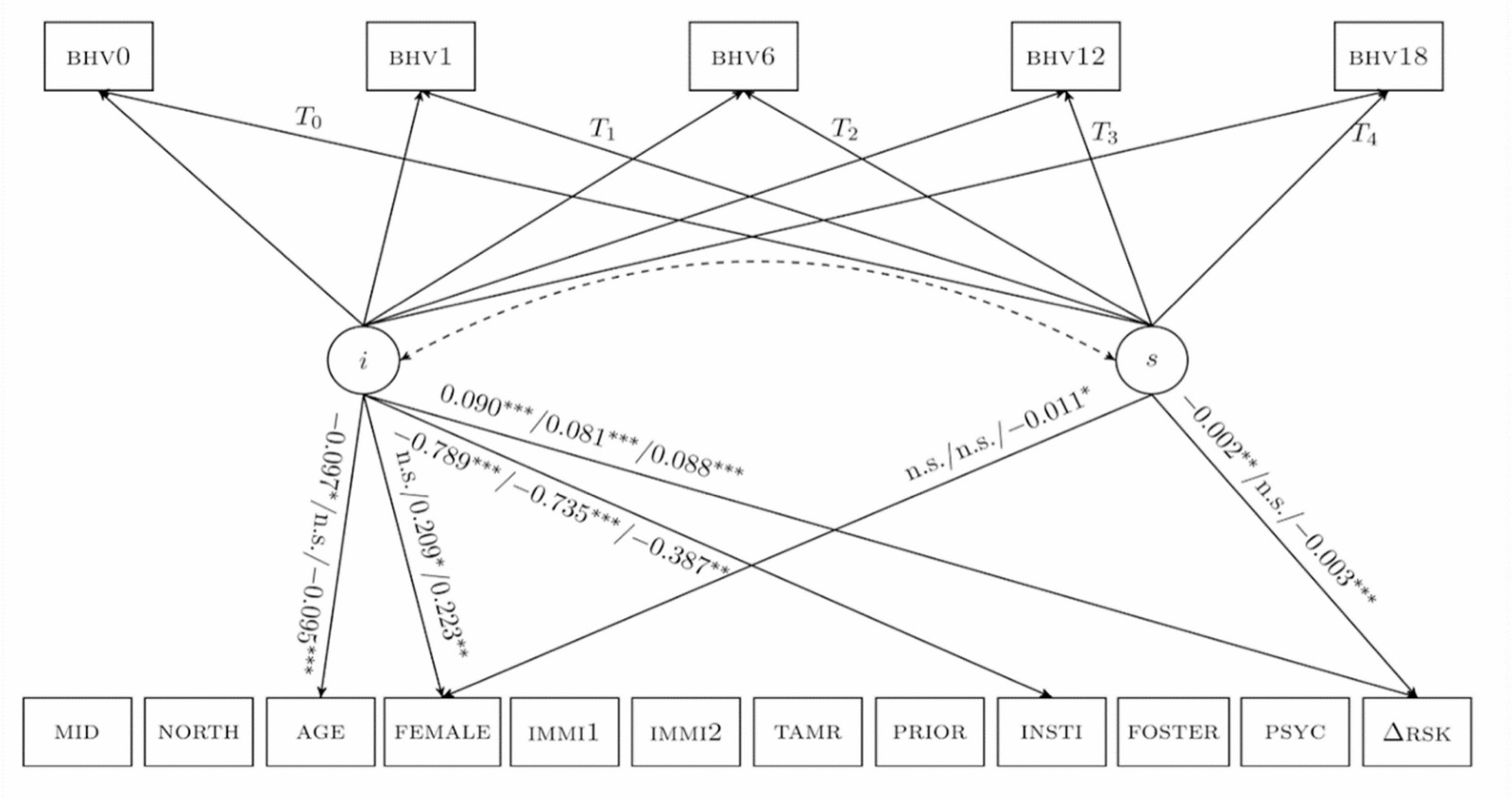
Figure 2 summarizes the model results for the latent growth curves in behavioral outcomes for Group A, B, and C respectively. The intercept (i) in the LGM reported the starting points of one’s behavioral growth trajectory. Older youths appeared to have a greater behavioral problem level at admission with a tendency to start their recoveries from lower points than their younger peers. This was applicable for both the pre-pandemic (λ3iA = − 0.097, p = .020) and during-pandemic (λ3iC = − 0.095, p < .001) groups. In addition, significant differences were observed for institutional care and changes in risk levels across the three groups. Specifically, adolescents who came from institutional care seemed to have commenced treatment from a lower level, although this difference was reduced post the COVID outbreak (λ9i = − 0.789/–0.735/–0.387, p = < 0.001/< 0.001/0.002 for Group A/Group B/Group C, respectively). On the other hand, youths with greater risk reduction profiles experienced a higher starting point for their growth trajectory (λ12i = 0.090/0.081/0.088, p < .001/0.001/0.001 for Group A/Group B/Group C, respectively).
The slopes (s) in LGMs represented the speed of recovery. Only two of twelve covariates were associated with clients’ recovery speed. Firstly, boys had an advantage in recovery speed post-COVID (λ4sC = − 0.011, p = .018). Secondly, participants with favorable risk reduction profiles had comparable behavioral growth in Group B, but slower speeds in the before-COVID group (λ12sA = − 0.002, p = .007) and during (λ12sC = − 0.003, p < .001) the pandemic. Lastly, non-linear growth patterns for the LGM were considered, but the quadratic term was omitted due to nonsignificant results in every covariate.
Discussion
In the present study, the changes in youth characteristics, treatment fidelity, treatment outcomes, and outcome predictors of MS through the COVID-19 pandemic in Norway was examined for adolescents with severe conduct problems. The results provide indications of the robustness of the MST treatment during a crisis situation that obstructs the ordinary modes of treatment delivery, and insights to factors that change treatment outcomes in such contexts.
RQ1: Did Clients Differ in Attributes at Treatment Admissions during COVID-19?
With respect to research question one, our findings show that the composition of the target group admitted to MST changed following the pandemic onset. The pandemic appears to have altered MST clients’ characteristics, with the most pronounced changes observed in behavioral problem level, age, and the proportion of youths receiving MST in middle Norway. Furthermore, we observed variations in the number of clients transferred from institutional care and in the prevalence of immigrants. The adolescents assigned to MST treatment displayed higher mean levels of problem burden than those before the pandemic onset. They had higher average age, and there was an increase in the proportion of immigrants and youths transferred from institutional care. Lastly, fewer adolescents received MST treatment in middle Norway than before the pandemic outbreak.
Those alterations, however, occurred gradually from the first reference group two years before the pandemic and until after the pandemic onset. It is therefore difficult to determine whether these differences in clients’ attributes were a direct or indirect consequence of the social restrictions to contain the virus, how the CWS and MST teams handled the crisis, or if it was due to a gradual change in MST recipients’ profiles, for example based on the target group’s needs, or other concurrent events. The increased burden experienced by adolescents due to COVID-19-related social restrictions (e.g., Reid et al., 2022; Samji et al., 2022; von Soest et al., 2022) may support the hypothesis that these changes were, at least in part, a consequence of the pandemic. More research on the post-COVID situation is thus needed to shed light on the causes for these changes in attributes at admission.
One possible explanation for the increase in the level of behavioral problems before treatment is the simultaneous increase in mean age. In this study, older youths tended to have a greater problem load at admission, which may be due to a prolonged history of serious conduct problems which increases the risk for severe marginalization processes (e.g., increased affiliation to antisocial peers, and loss of positive developmental experiences across contexts) (Keles et al., 2021). Despite this increase in the level of behavioral problems before treatment for the post-covid group, no significant difference in risk level for future conduct problems before and after the pandemic onset was reported. These findings suggest that although there was an increase in average problem load for youths after the pandemic onset, they did not show an average change in risk level.
RQ2: Did Clients Differ in Therapists’ Treatment Fidelity?
With respect to research question two, the findings show that there was a decline in treatment fidelity, although a mean score of 0.75 (SDTAMR = 0.24) still is adequate compared to the cut-off at 0.61. The increased standard deviations (see Table 2) during COVID may support larger between-therapist and/or between-family variations. Thus, the pandemic may appear to have affected therapists’ capacity to adhere to the MST procedure, which is significant for positive treatment outcomes (e.g., Löfholm et al., 2014; Schoenwald et al., 2009).
RQ3: Did Improvements in Behavioral Outcomes and Reductions in Reoffending Risks from MST Change During the Pandemic?
Despite a reduction in treatment fidelity, the results of this study showed no evidence that COVID-19 significantly changed behavioral improvement and risk reduction following MST in Norway. This observation is consistent with research on the outcomes of other interventions during the pandemic (e.g., Beurs et al., 2022; Lange et al., 2023; Le Vu et al., 2022; Hagen et al., 2025; Yaffa et al., 2021). Observed changes in treatment outcomes from MST thus appear to be similar pre- and post-pandemic outbreak. This contrasts with the assumption of a reduction in behavioral improvements and risk reductions of MST after the pandemic outbreak. Therapists’ capacity to do “whatever it takes” to help families reach treatment goals (Henggeler et al., 2009), including their creativity and perseverance to adapt to challenges, may help explain this finding.
MST’s potential for bringing about behavioral improvement and risk reductions for most youths is in line with earlier findings (see, for example, Keles et al., 2021). However, some variations in connection to improvement and deterioration trajectories for various behavioral outcomes were also reported. Further research is thus needed to better understand MST’s immediate impact on various behavioral outcomes (e.g., lives at home, law-abiding) and subscale risk levels for re-offending risks (e.g., family/parenting, peer relations) during, and potentially post, the-pandemic. Lastly, future research may explore clients’ profile who experienced a deterioration after being in contact with MST (approximately 4.1% and 2.5% adolescents on behavioral outcome and risk level, respectively).
RQ4: Which Variables Carried Predicative Power in Explaining Treatment Outcomes at the End of Treatment During the Pandemic Outbreak?
Even though treatment outcomes in MST were not poorer for adolescents starting treatment during the COVID-19 pandemic, there appears to be a change in the ability of various variables to predict outcomes at the end of treatment. This could be related to the decline in treatment fidelity post-pandemic onset. At the same time, treatment fidelity seems to be of greater significance for treatment outcome for adolescents entering treatment after the pandemic onset. Thus, high adherence to the MST procedure seems particularly important during turbulent times.
There also seems to be some geographical differences where MST participants in northern Norway is more affected by the COVID-19 pandemic, showing less behavioral improvement and diminished risk reduction. One possible explanation for these less favourable outcomes is the longer lasting winters which might have led to difficulties implementing alternatives to physical meetings during the first national lockdown. In addition, a skewed distribution of vaccines in favour of southern Norway (Eriksen & Bendixen, 2021) led to stricter restrictions “at the end of the pandemic” in the north, which may have affected how MST sessions were conducted. Data limitation (e.g., meeting format, therapists’ descriptions of the situation) prevents further investigation on the conditions related to variations in MST’s immediate outcomes regions in detail.
Contrary to previous findings (Barth et al., 2007a; Keles et al., 2021; van der Stouwe et al., 2014), this study detects no evidence for an older age being associated with less favorable treatment outcomes, except for a smaller reduction in re-offending risk for youths commencing MST post-COVID onset. A possible explanation for this poorer risk reduction for older youths is that it may be more difficult to intervene against central factors for older youths during the social distancing requirements such as school and peer related factors (van der Stouwe et al., 2014), which are more predictive of re-offending as youths get older (Van der Put et al., 2011). In addition, it may be easier to engage adolescents in their treatment and implement more individual work through in-person sessions, a factor of particular importance for the treatment of older adolescents (Keles et al., 2021). The evidence indicating that the pandemic period was the toughest for older youths (in addition to girls; Bakken, 2021), which may have aggravated their problem load, provides another important line of enquiry for future research. However, due to a lack of data on internalizing behavior it is not possible in the current study to further delineate the potential impact of internalizing problems on the treatment outcomes of MST by age and gender.
Immigrants went from having no observable difference in treatment outcomes pre pandemic compared to other youths (contrary to one previous finding; van der Stouwe et al., 2014) to having a lower risk reduction post the pandemic onset. Greater challenges in achieving engagement (and alliance) during the social distancing requirement might explain this trend, as language barriers could represent an increased obstacle for some of these participants when in-person meetings were limited. Non-verbal communication is of significance for a meaningful interaction between therapist and client (Pfender & Caplan, 2022), and the transition to more two-dimensional tools such as telephone and video sessions, where a lot of body language is lost (e.g., Lange et al., 2023), may exacerbate comprehension challenges. This in turn may make it more challenging for therapists to create engagement and alliance. Furthermore, lack of appropriate technical equipment and skill might also have hampered the quality of digital sessions for this subgroup. Financial insecurity might also influence their receptiveness for treatment, indicative as immigrants were overrepresented in the occupations that were laid off during the pandemic (Olsen, 2021). In addition, the pandemic in Norway hit some immigrant groups harder than the rest of the population in terms of infections and hospitalizations (Indseth et al., 2020). Thus, it is also possible that other factors had an impact on the outcomes of MST treatment. Due to this study’s lack of data (e.g., on socioeconomic level), future studies may explore this.
It also appears that adolescents commencing treatment after the onset of the COVID-19 pandemic and who had received mental health care experienced a less favourable reduction in re-offending risk. Barth et al. (2007b), using a different outcome measure, similarly reported more favourable outcomes among youth who did not receive mental health care. This finding may indicate that some of these youths had additional vulnerabilities associated with diminished treatment outcomes. As these adolescents were comparable to youths not in contact with the mental health care in terms of behavioral problem level at admission, more research is needed to examine the cause of this finding.
RQ5: Which Variables Were Associated with Clients’ Behavioral Changes during the Pandemic?
Gender difference was not observed until the pandemic onset, after which boys exhibited more favorable behavioral recovery. The lack of gender differences pre-pandemic in predicting behavioral outcome aligns with prior research (Hukkelberg et al., 2023; Ogden & Hagen, 2009; van der Stouwe et al., 2014). COVID-19, subsequently, may have altered this balance through youths’ antisocial behaviour. Boys tend to engage more frequently in violent crimes and other kinds of criminal offenses (Moffitt et al., 2001; Ogden & Hagen, 2009), such as theft (Moffitt et al., 2001; Storvoll et al., 2003), whereas girls most often engage in status offences such as running away from home (Ogden & Hagen, 2009), and drug- and alcohol-abuse (Moffitt et al., 2001; Ogden & Hagen, 2009). Since most such juvenile delinquency occurs in antisocial peer groups (for both genders; Dishion & Patterson, 2006), it could be that the social restriction measures and the closure of several businesses resulted in fewer opportunities, especially for boys, to commit crimes and engage in substance abuse, while at the same time being less exposed to antisocial peer influence. This assumption is further supported by a decline in juvenile crime rates, both within the Norwegian context (Riaz & Stolt-Nielsen, 2021), and in other contexts having juvenile justice systems that differ markedly from that of Norway (Boman & Gallupe, 2020; Revital & Haviv, 2022). In turn this might have made it easier to intervene with this youth group, although the therapist got to work less with the youths’ peer context.
Furthermore, the arguments may also serve as a possible explanation for why boys after the pandemic onset had more advantageous long-term treatment outcomes at an earlier stage, but not before. According to the LGM, initial levels of conduct problems vary across individuals, and consistent with previous research (e.g., Moffitt & Caspi, 2001; Ogden & Hagen, 2009), girls tend to have lower levels of conduct problems than boys when starting treatment. In addition, older youths appear to start their behavioral growth trajectory with greater problem load at admission.
In contrast to those more general patterns, there seems to be a decline in problem load after the COVID-19 onset for adolescents transferred from institutional care. This change in starting point of the behavioral growth trajectory compared to before the pandemic may be the result of this group (who initially tends to have more conduct problems, e.g., Barth et al., 2007b; Drange et al., 2022) experiencing fewer opportunities to engage in antisocial behavior and commit crimes due to the lockdowns. However, there are some uncertainties with this interpretation, such as the significant increase in the number of youths in this group from before the pandemic onset. More systemic reasons may have caused this change. Despite this difference at admission, both youths transferred from institutional care and youths without this history had the same growth rate, implying that the treatment outcomes in MST were similar for both groups before and after pandemic outbreak.
In addition, there was a comparable recovery speed for participants with greater risk reduction profiles starting treatment before the pandemic onset but receiving follow-up assessments during the pandemic (Group B). Nor did there appear to be significant alterations in longitudinal treatment outcomes after the onset, although some subgroups experienced changes in behavioral improvement and risk reduction at the end of treatment. This may point to a delayed improvement in behavior for most of the participants, which is in line with one of the MST treatment principles: MST is designed to promote treatment generalization by empowering the caregivers to maintain and possibly improve outcomes when treatment has ended.
Limitations and Future Research
There are several limitations with the present study. The inclusion of the entire population of Norwegian youths receiving MST represents a significant contribution to generalize the results to all youths and families going through MST treatment during the period in question. However, it should be noted that we had a higher than ideal proportion of missing data and that some treatments that were discontinued due to a lack of alliance with the family, the youths being placed in OOHP, or to other external causes (e.g., disease, family moving outside of the team’s service area). This may potentially affect the generalizability to all youth and families going through MST treatment. Despite this limitation, this study extends previous literature on MST that assessed Norwegian samples of MST completers only (e.g., Keles et al., 2021; Ogden & Halliday-Boykins, 2004), and the use of ROM data enhances the external validity of this study, as the data reflects regular clinical practice in MST treatment (Hodgson et al., 2007).
Second, differences between the groups may contribute to some of the observed changes after the COVID-19 pandemic onset, such as group size, and duration of the admission time. This study did not investigate how the first lockdown affected only those commencing MST during this period, or controlled for seasonal variation (e.g., fewer referrals during summer months) by analyzing each group in quarters/tertiary, which could have increased this study’s internal validity. The grouping design is nevertheless considered relevant as it captures how MST functions over time during a national crisis. Third, since only the number of achieved behavioral outcomes and the sum score of reoffending-risk were used for analysis purposes, the current study does not capture which specific behavioral goals youths fulfilled at the various time points, nor their risk level profile across subscales. As some research points to differences in treatment effect based on outcomes, for example regarding gender (e.g., Keles et al., 2021; Ogden & Hagen, 2009), future research may specifically investigate changes in MST outcomes post-COVID-19 onset by considering YLS/CMI subscale scores and the five behavioral outcomes individually.
Fourth, this explorative study does not include information regarding the adolescents’ internalizing behaviour, which may contribute to explaining some of this study’s findings, as there was a documented increase in internalizing problems post-COVID-19 onset (Bakken, 2021; Samji et al., 2022). Fifth, due to GDPR restrictions, TAM-R data were not consistently collected and registered. This may have influenced the validity and representativity of TAM-R-scores. Next, due to a lack of capacity for Mplus 8.9 to give standardization for intervals which are not fixed, the quantity across the unstandardized parameters in the LGM could not be interpreted. However, future studies should use standardized coefficients so that the quantity of the coefficients may also be considered. Finally, the potential interaction among the covariates in the regression models was not examined, such as the interaction between gender and age, or age and treatment fidelity.
Conclusion
This study examined how Norway’s MST was affected by COVID-19 lockdowns and investigated factors influencing treatment outcomes before and after the pandemic onset. A change in the characteristics of the target group admitted to MST following the pandemic onset is observed, alongside a decline in treatment fidelity. Despite the reduction in fidelity during the crisis, findings indicate that MST continues to foster behavioral improvements and reduce risk among adolescents. The results suggest that treatment fidelity is particularly important for positive treatment outcomes under adverse conditions. Even though MST overall provides positive changes in youth behavior and risk levels after the onset of the pandemic, both immediately after treatment and in long-term outcomes, several youth subgroups seem to experience a temporary reduction in behavioral improvement from treatment compared to before the pandemic. Future research is thus needed on factors that might contribute to ensuring that these subgroups of adolescents can also get the same beneficial outcomes from MST in similar future crisis situations. Despite the limitations of this study, it adds valuable insights into the functioning of CWS, and MST specifically, during a national crisis.
Complexe Systémique: key points
The value of this study is that it shows what becomes of a highly protocolised model when its material setting collapses. MST relies on home sessions several times a week: lockdown forced it onto the telephone, video or improvised meetings. Across 2,021 young people, overall outcomes held, but fidelity to the model declined and became, during the crisis, the best predictor of progress. For systemic practice, the lesson is twofold: in turbulent times, a coherent framework and supervision protect families more reliably than scattered improvisation; and losses concentrate in the situations that depend most on physical presence: first-generation immigrant youths, older youths, northern regions with long winters. One may regret that the study measures neither the actual format of sessions nor the alliance, and that the share of the pandemic and that of a changing population remain hard to disentangle. Read alongside the article on minority ethnic young people in multisystemic therapy, and the article on relational teletherapy in the COVID-19 era.
Notes from the original
Funding. Open access funding provided by University of Oslo (incl Oslo University Hospital)
Conflict of Interest. The authors have no relevant financial or non-financial interests to disclose. The third and fourth authors were part of the National implementation team for MST in Norway at the Norwegian Center for Child Behavioral Development (NCCBD). However, they were not involved in the data analyses or the interpretation of the findings.
References
Aase, H., Lønnum, K., Sørlie, M. A., Hagen, K. A., Gustavson, K., & Utgarden, I. H. (2020). Barn, unge og kriminalitet. Hvordan forhindre at barn og unge kommer inn i eller fortsetter med en kriminell løpebane? Oppsummering og vurdering av virksomme tiltak, behandling og organisering [Children, young people and crime. How to prevent children and young people from entering or continuing with a criminal career path? Summary and assessment of effective measures, treatment and organization] (Report 2020). The Institute of Public Health. https://www.fhi.no/publ/2020/barn-unge-og-kriminalitet/
Andrews, D. A., & Bonta, J. (2010). Rehabilitating criminal justice policy and practice. Psychology. Public Policy and Law, 16(1), 39–55. https://doi.org/10.1037/a0018362
Bakken, A. (2021). Ungdata 2021. Nasjonale resultater [Ungdata 2021. National results] (Nova Report 8/21). Norwegian Social Research (NOVA), OsloMet. https://oda.oslomet.no/oda-xmlui/handle/11250/2767874
Barth, R. P., Greeson, J. K. P., Guo, S., Green, R. L., Hurley, S., & Sisson, J. (2007a). Changes in family functioning and child behavior following intensive in-home therapy. Children and Youth Services Review, 29(8), 988–1009. https://doi.org/10.1016/j.childyouth.2007.04.001
Barth, R. P., Greeson, J. K. P., Guo, S., Green, R. L., Hurley, S., & Sisson, J. (2007b). Outcomes for youth receiving intensive In-Home therapy or residential care: A comparison using propensity scores. American Journal of Orthopsychiatry, 77(4), 497–505. https://doi.org/10.1037/0002-9432.77.4.497
Bera, L., Souchon, M., Ladsous, A., Colin, V., & Lopez-Castroman, J. (2022). Emotional and behavioral impact of the COVID-19 epidemic in adolescents. Current Psychiatry Reports, 24(1), 37–46. https://doi.org/10.1007/s11920-022-01313-8
Beurs, E., Blankers, M., Peen, J., Rademacher, C., Podgorski, A., & Dekker, J. (2022). Impact of COVID-19 social distancing measures on routine mental health care provision and treatment outcome for common mental disorders in the Netherlands. Clinical Psychology and Psychotherapy, 29(4), 1342–1354. https://doi.org/10.1002/cpp.2713
Bollen, K. A., & Curran, P. J. (2006). Latent curve models: A structural equation perspective. Wiley-Interscience.
Boman, J. H., & Gallupe, O. (2020). Has COVID-19 changed crime? crime rates in the united States during the pandemic. American Journal of Criminal Justice, 45(4), 537–545. https://doi.org/10.1007/s12103-020-09551-3
Bronfenbrenner, U. (1979). The ecology of human development. Experiments by nature and design. Harvard University Press.
Cunningham, P. B., & Henggeler, S. W. (1999). Engaging multiproblem families in treatment: Lessons learned throughout the development of multisystemic therapy. Family Process, 38(3), 265–281. https://doi.org/10.1111/j.1545-5300.1999.00265.x. https://doi-org.ezproxy.uio.no/
Dishion, T. J., & Patterson, G. R. (2006). The development and ecology of antisocial behavior in children and adolescents. In D. Cicchetti, & D. J. Cohen (Eds.), Developmental psychopathology: Risk, disorder, and adaptation (pp. 503–541). John Wiley & Sons, Inc.
Drange, N., Hernæs, Ø. M., Markussen, S., Oterholm, I., Raaum, O., & Slettebø, T. (2022). Barn, unge og familier i barnevernet - En longitudinell registerstudie. Delprosjekt 2: Hvordan går det med barna? [Children, young people and families in child protection - A longitudinal register study. Project part 2: How are the children doing?] (Report 2/2022). Frischsenteret. https://www.frisch.uio.no/publikasjoner/pdf/rapp22_02.pdf
Eriksen, I., & Bendixen, A. (2021). Ordførere mener Nord-Norge betaler en høy pris for skjevfordeling av vaksiner. [Mayors believe that Northern Norway is paying a high price for the skewed distribution of vaccines.]. Norwegian Broadcasting Corporation (NRK). https://www.nrk.no/tromsogfinnmark/ordforere-i-alta-og-tromso-ut-mot-geografisk-skjevfordeling-av-vaksiner-etter-flere-smitteutbrudd-1.15563210
Flückiger, C., Del Re, A. C., Wlodasch, D., Horvath, A. O., Solomonov, N., & Wampold, B. E. (2020). Assessing the alliance–outcome association adjusted for patient characteristics and treatment processes: A meta-analytic summary of direct comparisons. Journal of Counseling Psychology, 67(6), 706–711. https://doi.org/10.1037/cou0000424
Geiser, C., Keller, B. T., & Lockhart, G. (2013). First- versus Second-Order latent growth curve models: Some insights from latent State-Trait theory. Structural Equation Modeling: A Multidisciplinary Journal, 20(3), 479–503. https://doi.org/10.1080/10705511.2013.797832.
Government (n.d.). Timeline: News from Norwegian Ministries about the Coronavirus disease Covid-19. https://www.regjeringen.no/en/topics/koronavirus-covid-19/timeline-for-news-from-norwegian-ministries-about-the-coronavirus-disease-covid-19/id2692402/
Hagen, T. L., Tan, T. C., Thøgersen, D. M., & Bjørnebekk, G. (2025). Functional family therapy across the COVID-19 pandemic. Frontiers in Psychology, 16, 1531738.
Haggerty, K. P., Barkan, S. E., Caouette, J. D., Skinner, M. L., & Hanson, K. G. (2023). Two-Year risk behavior outcomes from Connecting, a prevention program for caregivers and youth in foster care. Prevention Science, 24(1), 15–26. https://doi.org/10.1007/s11121-022-01390-4
Henggeler, S. W., Borduin, C. M., Schoenwald, S. K., Huey, S. J., & Chapman, J. E. (2006). Multisystemic therapy adherence scale-revised (TAM-R). Unpublished instrument. Department of Psychiatry & Behavioral Sciences, Medical University of South Carolina.
Henggeler, S. W., Schoenwald, S. K., Borduin, C. M., Rowland, M. D., & Cunningham, P. B. (2009). Multisystemic therapy for antisocial behavior in children and adolescents (2nd ed.). Guilford.
Henggeler, S. W., Schoenwald, S. K., Borduin, C. M., Rowland, M. D., & Cunningham, P. B. (2013). Multisystemisk Terapi for barn og unge med alvorlige atferdsvansker [Multisystemic Therapy for Antisocial Behavior in Children and Adolescents] (A. Sjøbu, Trans.). Gyldendal akademisk. (Original work published 2009).
Hodgson, R., Bushe, C., & Hunter, R. (2007). Measurement of long-term outcomes in observational and randomised controlled trials. The British Journal of Psychiatry, 191(50), 78–84. https://doi.org/10.1192/bjp.191.50.s78
Hoge, R. D., & Andrews, D. A. (2011). Youth level of service/Case management inventory 2.0: User’s manual. Multi-Health Systems.
Hukkelberg, S., Ogden, T., & Thøgersen, D. M. (2022). Youth level of Service/ case management inventory assessments as predictors of behavioral change in multisystemic therapy and functional family therapy in Norway. Research on Social Work Practice, 32(7), 784–792. https://doi.org/10.1177/10497315221086641
Hukkelberg, S. S., Ogden, T., & Taraldsen, K. (2023). Changes in the YLS/CMI risk inventory scores as predictors of MST behavioral treatment goals. Journal of Children’s Services, 18. https://doi.org/10.1108/JCS-05-2022-0016
Indseth, T., Godøy, A., Kjøllesdal, M., Arnesen, T., Jacobsen, C., Grøsland, M., & Telle, K. Covid-19 etter fødeland: Personer testet, bekreftet smittet og relaterte innleggelser og dødsfall [Covid-19 by country of birth: Persons tested, confirmed infected and associated hospitalizations and deaths] (Report 2020). The Institute of Public Health. https://www.fhi.no/publ/2020/covid-19-etter-fodeland-personer-testet-bekreftet-smittet-og-relaterte-innl/
Jakobsen, R., & Kornør, H. (2017). Måleegenskaper Ved Den Norske versjonen av youth level of Service/Case management inventory (YLS/CMI) [Psychometric properties of the Norwegian version of youth level of Service/Case management inventory (YLS/CMI)]. PsykTestBarn, 1(6). https://doi.org/10.21337/0053
Jentsch, B., & Schnock, B. (2020). Child welfare in the midst of the coronavirus pandemic—Emerging evidence from Germany. Child Abuse & Neglect, 110(2). https://doi.org/10.1016/j.chiabu.2020.104716
Jethwa, J., Glorney, E., Adhyaru, J., & Lawson, A. (2021). A grounded theory of multisystemic therapist roles in achieving positive outcomes for young people and families. Journal of Family Therapy, 43(1), 124–142. https://doi.org/10.1111/1467-6427.12287
Keles, S., Taraldsen, K., & Olseth, A. R. (2021). Identification of multisystemic therapy (MST) subgroups with distinct trajectories on ultimate outcomes in Norway. Research on Child and Adolescent Psychopathology, 49(4), 429–442. https://doi.org/10.1007/s10802-020-00735-3. https://doi-org.ezproxy.uio
Krane, V., Ausland, L. H., Andvig, E., & Klevan, T. (2021). Business as usual in unusual times: An explorative study of Norwegian child welfare workers’ experiences during the COVID-19 pandemic. Journal of Comparative Social Work, 16(2), 62–87. https://doi.org/10.31265/jcsw.v16i2.393
Lange, A. M. C., Delsing, M. J. M. H., van Geffen, M., & Scholte, R. H. J. (2022). Alliance between therapist and Multi-stressed families during the COVID-19 pandemic: The effect of Family-Based videoconferencing. Child & Youth Care Forum, 51, 593–611. https://doi.org/10.1007/s10566-021-09644-y
Lange, A. M. C., Humayun, S., & Jefford, T. (2023). The feasibility of providing remote functional family therapy with adolescents during the COVID-19 pandemic: A Mixed-Method study. Child & Youth Care Forum, 52, 441–466. https://doi.org/10.1007/s10566-022-09692-y
Le Vu, M. N., Do, A. L., Boyer, L., Tran, Q. C., Kohler, S., Ahmed, S. I., Molnar, A., Vu, T. S., Vo, N. T. H., Nguyen, L. M. V., Vu, L. G., Dam, V. A. T., Duong, T., Do, D. L. N., Do, N. M., Mclntyre, R. S., Latkin, C., Ho, R. C. M., & Ho, C. S. H. (2022). A review of the Effectiveness, Feasibility, and acceptability of Art therapy for children and adolescents during the COVID-19 pandemic. International Journal of Environmental Research and Public Health, 19(18). https://doi.org/10.3390/ijerph191811612
Löfholm, C. A., Eichas, K., & Sundell, K. (2014). The Swedish implementation of multisystemic therapy for adolescents: Does treatment experience predict treatment adherence? Journal of Clinical Child & Adolescent Psychology, 43(4), 643–655. https://doi.org/10.1080/15374416.2014.883926
Löfholm, C. A., Olsson, T., Sundell, K., & Hansson, K. (2009). Multisystemic therapy with conduct disordered young people: Stability of treatment outcomes two years after intake. Evidence and Policy, 5(4), 373–397. https://doi.org/10.1332/174426409X478752
Littell, J. H., Pigott, T. D., Nilsen, K. H., Green, S. J., & Montgomery, O. L. K. (2021). Multisystemic Therapy® for social, emotional, and behavioural problems in youth age 10 to 17: An updated systematic review and meta-analysis. Campbell Systematic Reviews, 17(4), 1–192. https://doi.org/10.1002/cl2.1158. https://doi-org.ezproxy.uio
Moffitt, T. E., & Caspi, A. (2001). Childhood predictors differentiate life-course persistent and adolescence-limited antisocial pathways among males and females. Development and Psychopathology, 13(2), 355–375. https://doi.org/10.1017/S0954579401002097
Moffitt, T. E., Caspi, A., Rutter, M., & Silva, P. A. (2001). Sex differences in antisocial behaviour: Conduct Disorder, Delinquency, and violence in the Dunedin longitudinal study. Cambridge University Press. https://doi-org.ezproxy.uiohttps://doi.org/10.1017/CBO9780511490057
Muthén, L. K., & Muthén, B. O. (2017). Mplus user’s guide (8th ed.). Muthén & Muthén. https://www.statmodel.com/download/usersguide/MplusUserGuideVer_8.pdf
Ogden, T., & Hagen, K. A. (2006). Multisystemic treatment of serious behaviour problems in youth: Sustainability of effectiveness two years after intake. Child and Adolescent Mental Health, 11(3), 142–149. https://doi.org/10.1111/j.1475-3588.2006.00396.x. https://doi-org.ezproxy.uio.no/
Ogden, T., & Hagen, K. A. (2009). What works for whom? Gender differences in intake characteristics and treatment outcomes following multisystemic therapy. Journal of Adolescence, 32(6), 1425–1435. https://doi.org/10.1016/j.adolescence.2009.06.006. https://doi-org.ezproxy.uio.no/
Ogden, T., & Halliday-Boykins, C. A. (2004). Multisystemic treatment of antisocial adolescents in norway: Replication of clinical outcomes outside of the US. Child and Adolescent Mental Health, 9(2), 77–83. https://doi.org/10.1111/j.1475-3588.2004.00085.x. https://doi-org.ezproxy.uio.no/
Olsen, B. (2021). Innvandrere mest rammet av koronatiltakene [Immigrants most affected by the corona measures.]. Statistics Norway (SSB). https://www.ssb.no/arbeid-og-lonn/artikler-og-publikasjoner/innvandrere-mest-rammet-av-koronatiltakene
Olseth, A. R., Hagen, K. A., Keles, S., & Bjørnebekk, G. (2024). Functional family therapy for adolescent disruptive behavior in norway: Results from a randomized controlled trial. Journal of Family Psychology, 38(4), 548.
Pfender, E., & Caplan, S. (2022). Nonverbal immediacy cues and impression formation in video therapy. Counselling Psychology Quarterly. https://doi.org/10.1080/09515070.2022.2105816
Reid, J. A., Chenneville, T., Gardy, S. M., & Baglivio, M. T. (2022). An exploratory study of COVID-19’s impact on psychological distress and antisocial behavior among Justice-Involved youth. Crime & Delinquency, 68(8), 1271–1291. https://doi.org/10.1177/00111287211054729
Revital, S. S., & Haviv, N. (2022). Juvenile delinquency and COVID-19: The effect of social distancing restrictions on juvenile crime rates in Israel. Journal of Experimental Criminology. https://doi.org/10.1007/s11292-022-09509-x
Riaz, W., & Stolt-Nielsen, H. (2021). Da koronaen kom, stupte kriminaliteten blant ungdom [When the corona arrived, crime among young people plummeted]. Aftenposten. https://www.aftenposten.no/oslo/i/X8dpdb/da-koronaen-kom-stupte-kriminaliteten-blant-ungdommene
Rubin, D. B. (1987). Multiple imputation for nonresponse in surveys. Wiley.
Samji, H., Wu, J., Ladak, A., Vossen, C., Stewart, E., Dove, N., Long, D., & Snell, G. (2022). Review: Mental health impacts of the COVID-19 pandemic on children and youth – a systematic review. Child and Adolescent Mental Health, 27(2), 173–189. https://doi.org/10.1111/camh.12501
Schoenwald, S. K., Chapman, J. E., Sheidow, A. J., & Carter, R. E. (2009). Long-Term youth criminal outcomes in MST transport: The impact of therapist adherence and organizational climate and structure. Journal of Clinical Child & Adolescent Psychology, 38(1), 91–105. https://doi.org/10.1080/15374410802575388
Sibley, M. H., Comer, J. S., & Gonzalez, J. (2017). Delivering Parent-Teen therapy for ADHD through videoconferencing: A preliminary investigation. Journal of Psychopathology and Behavioral Assessment, 39(), 467–485. https://doi.org/10.1007/s10862-017-9598-6.
Statistics Norway (2025). Immigrants and Norwegian-born to immigrant parents. https://www.ssb.no/en/befolkning/innvandrere/statistikk/innvandrere-og-norskfodte-med-innvandrerforeldre
Storch, E. A., Sheu, J. C., Guzick, A. G., Schneider, S. C., Cepeda, S. L., Rombado, B. R., Gupta, R., Hoch, C. T., & Goodman, W. K. (2021). Impact of the COVID-19 pandemic on exposure and response prevention outcomes in adults and youth with obsessive-compulsive disorder. Psychiatry Research, 295. https://doi.org/10.1016/j.psychres.2020.113597
Storvoll, E. E., Wichstrøm, L., & Pape, H. (2003). Gender differences in the association between conduct problems and other problems among adolescents. Journal of Scandinavian Studies in Criminology and Crime Prevention, 3(2), 194–209. https://doi.org/10.1080/14043850310010794
Sundell, K., Hansson, K., Löfholm, C. A., Olsson, T., Gustle, L. H., & Kadesjö, C. (2008). The transportability of multisystemic therapy to sweden: Short-term results from a randomized trial of conduct-disordered youths. Journal of Family Psychology, 22(4), 550–560. https://doi.org/10.1037/a0012790. https://doi-org.ezproxy.uio
Taraldsen, K. (2020). Behandlingsmøter i korona-tiltakenes tid [Treatment meetings in the time of the corona measures.]. KONTEKSTonline, 6. https://m.nubu.no/utgave-6/behandlingsmoter-i-korona-tiltakenes-tid-article31972581.html?fbclid=IwAR1gogm8_ay5prHqCbEtDP58wvy_UegCgNCgoDH5V_D4oGUowQM_zcx0YKY
Thorisdottir, I. E., Asgeirsdottir, B. B., Kristjansson, A. L., Valdimarsdottir, H. B., Jonsdottir Tolgyes, E. M., Sigfusson, J., Allegrante, J. P., Sigfusdottir, I. D., & Halldorsdottir, T. (2021). Depressive symptoms, mental wellbeing, and substance use among adolescents before and during the COVID-19 pandemic in iceland: A longitudinal, population-based study. The Lancet Psychiatry, 8(8), 663–672. https://doi.org/10.1016/S2215-0366(21)00156-5. https://doi-org.ezproxy.uio
Van Buuren, S. (2018). Flexible Imputation of Missing Data, Second Edition. Chapman & Hall/CRC.
Van der Put, C. E., Deković, M., Stams, G. J. J. M., Van der Laan, P. H., Hoeve, M., & van Amelsfort, L. (2011). Changes in risk factors during adolescence: Implications for risk assessment. Criminal Justice and Behavior, 38(3), 248–262. https://doi.org/10.1177/0093854810391757. https://doi-org.ezproxy.uio
van der Stouwe, T., Asscher, J. J., Stams, G. J. J., Deković, M., & van der Laan, P. H. (2014). The effectiveness of multisystemic therapy (MST): A meta-analysis. Clinical Psychology Review, 34(6), 468–481. https://doi.org/10.1016/j.cpr.2014.06.006
Von Soest, T., Kozàk, M., Rodríguez-Cano, R., Fluit, D. H., Cortés-García, L., Ulset, V. S., Haghish, E. F., & Bakken, A. (2022). Adolescents’ psychosocial well-being one year after the outbreak of the COVID-19 pandemic in Norway. Nature Human Behaviour, 6, 217–228. https://doi.org/10.1038/s41562-021-01255-w
Yaffa, S., Adi, E. L., Itai, P., Marit, J. M., Doron, G., & Daniel, S. (2021). Treatment of eating disorders in adolescents during the COVID-19 pandemic: A case series. Journal of Eating Disorders, 9(17). https://doi.org/10.1186/s40337-021-0037
Reformatted republication of Multisystemic Therapy for Adolescents Through the COVID-19 Pandemic in Norway, by Katrine Skulberg, Tony C. A. Tan, Dagfinn Mørkrid Thøgersen, Knut Taraldsen and Gunnar Bjørnebekk, Journal of Child and Family Studies, vol. 35, no 1 (2026), doi: 10.1007/s10826-025-03222-9, under a CC BY 4.0 licence. Edition and layout: Complexe Systémique, September 2026 — the work has been modified under the terms of the licence (tables presented as lists). Neither the authors nor the publisher are responsible for this edition; the original version prevails.
This is the original article “Multisystemic Therapy for Adolescents Through the COVID-19 Pandemic in Norway”, published in Journal of Child and Family Studies (2026) under a CC BY 4.0 licence. Republished by Complexe Systémique: the author’s text is unchanged; only the presentation has been adapted for reading online, as set out at the head of this page.
Read the original articleHow to cite this article
Skulberg, K., Tan, T. C. A., Thøgersen, D. M., Taraldsen, K., et Bjørnebekk, G. (2026). Multisystemic Therapy for Adolescents Through the COVID-19 Pandemic in Norway. Complexe Systémique. https://app.complexe-systemique.com/en_GB/articles/multisystemic-therapy-for-adolescents-through-the-covid-19-pandemic-in-norway (Original work published in 2025 in Journal of Child and Family Studies, 35(1), 124-140 (2026); republished in 2026 by Journal of Child and Family Studies, https://link.springer.com/article/10.1007/s10826-025-03222-9)
To go further
- Considerations for minority ethnic young people in multisystemic therapyMinority ethnic young people.
- « C’est formidable, une fois qu’on s’y fait » : la téléthérapie relationnelle vécue par les personnes suivies à l’ère de la COVID-19Relational teletherapy.
- L’expérience des équipes de thérapie multisystémique auprès de familles racisées en AngleterreMST teams.
Related training courses
 Symposium
État des Lieux: a psychological approach to spaces
Replay of the “État des Lieux” conference (Paris, 16 October 2026): Ivy Daure, Maurizio Frisina, Viola Sallay and Gilbert Pregno on places as a clinical resource. In French.
 Webinar
Extramarital affairs: what does the therapist do when the couple explodes?
Free webinar: how to position yourself as a systemic therapist in the crisis of the extramarital affair. Revelation, secrecy, multipartiality.
 Webinar
The three loves
Free live webinar with Dr Robert Neuburger, 1 October 2026, 6 pm (Paris): the three loves, attachment and ways of loving. Held in French.
 Short course
The suicidal crisis in adolescents and young adults
Training: assessing and supporting the suicidal crisis in adolescents and young adults. Clinical landmarks and systemic tools. In French.
Related articles
 Blog
Adult parentification: when being useful becomes a condition for being loved
Why is it sometimes so hard to hand over? Julien Besse explores parentification and parentalisation, acknowledgement and the place we take in our adult relationships.
 Scientific
Family group conference provision across the lifespan of child welfare intervention: A mixed-method realist-informed evaluation comparing three stages of welfare concern
Early help, child protection or children in care: among 155 UK families, experiences and outcomes of family group conferences vary very little by stage.
 Scientific
Transitioning to the Business of a Session in Collaborative-Dialogic Meetings: A Conversation Analysis
How do Open Dialogue therapists move to the business of a session? The open question creates silences and family negotiation: a conversation analysis of ten sessions.
 Scientific
“One Can Have All Sorts of Good Intentions but Sometimes in Everyday Life, It Turns Out Differently”: Change Agreements in Couples' Everyday Lives
Six Danish couples followed after an online couple program: their change agreements become guilt-inducing contracts, shared understanding or revealers of inequality.