AI-assisted translation
This version was translated from Portuguese by Complexe Systémique with the help of artificial intelligence. In case of doubt, the original version prevails.
Revista Brasileira de Terapia Familiar · Forensic psychology
Reflections and Constructions on Current Forensic Psychology – A Study of Forensic Expert Opinions
At the Court of Justice of Brazil’s Federal District, psychologists see families in dispute over child custody, then write an expert opinion for the judge. Joana d’Arc Cardoso dos Santos interviews two of these professionals: how does their subjectivity (beliefs, gender, their emotions as mothers and women) bear on work that is supposed to be objective? Drawing on González Rey’s theory of subjectivity, the study brings to light a reluctance to decide and turns emotion, processed within the team, into a tool for picking up clues.
Unofficial English translation. This article is a translation of Reflexões e Construções sobre Psicologia Jurídica na Atualidade – Um Estudo Sobre Pareceres, by Joana d’Arc Cardoso dos Santos, published in the Revista Brasileira de Terapia Familiar (ABRATEF), vol. 3, no. 1 (2011), doi: 10.60114/rbtf.v3i1.80, under a CC BY 4.0 licence. Translated by Complexe Systémique in November 2026 with the help of artificial intelligence: the original Brazilian Portuguese text has been translated into English and reformatted, which constitutes a modification of the work under the terms of the licence. Paragraphs and headings are those of the journal; González Rey’s definition is set as a block quote; the five points listed in the conclusion, marked by dashes in the original, are presented as a list; the author’s biographical footnote is included in the presentation. The abstract is the author’s own English version. This translation was made neither by the authors nor by the journal, who are not responsible for its content or for any errors. The original version prevails.
Even without providing an expert opinion, it is impossible for professionals not to take a position, since their very way of analysing the case already shows the subjectivity of the person constructing the expert opinion.
Joana d’Arc Cardoso dos Santos
Abstract
This study is the result of a research carried out at Tribunal de Justiça do Distrito Federal e Territórios – TJDFT with two psychologists who provide services to families in child custody cases. The aim of the study was to investigate the influence of subjectivity in the production of expert opinions requested by judges. The study investigated the beliefs, social representations, gender issues and the emotional impact of the cases. A qualitative research methodology was employed, and interviews and sentence completion instruments were used in carrying out case study. As a result of the research we have the difficulty to be conclusive when pointing the decision for the case in respect to the singularity of the other person; the emotion, undoubtedly based on their own experiences related to gender issues, when the mother and woman’s role resurges during the services provided. From another perspective, the incessant reflection about their difficulties and the frequent search for the work team’s help minimize the influences on the case solutions. The subjectivity also makes the psychosocial study easier when it leads to an immediate recognition of the indicators brought by the families through the study.
Keywords: subjectivity; justice; psychosocial expert opinion; qualitative research.
The dominance of objectivity over psychology has been historical, and positivism in particular steered scientific thinking in this field for many years. That paradigm opposed the question of subjectivity, claiming it lacked scientific standing. In postmodernity, however, the study of subjectivity gained strength and proved to be a landmark in the construction of meaning, giving considerable weight to the singularity of each subject and to their social and individual space. From this perspective, the subject is considered within their setting, and communication becomes fundamental to the construction of information (González Rey, 2003). In this procedure, the interaction between researcher and research participant is paramount and, likewise, in professional practice, psychologists, in their sessions, will enter this process of constructing information with the subjects they see (González Rey, 2002).
In the sphere of the justice system, where the law and legal science prevail, objectivity comes first: one must follow what the law says and honour it. Dealing with emotion and feelings may therefore seem out of place, at odds with the austerity of a court. Yet at the same time it represents the opening of a distinctive space for listening to the suffering of those who, on some occasions, find in the judiciary the only place to obtain justice (Lima & Fonseca, 2008; Rodrigues & Lima, 2003; Suannes, 2008). Although psychologists are expected to take responsibility for these aspects, they are also required to be objective and able to reach conclusions, providing certainty on particular questions. In a world permeated by subjectivity, one might say that this task is practically impossible.
On this question, Minayo (2001) states that the myth of neutrality and objectivity was created by the version of a science devoid of humanity. Thus one often perceives a belief that professionals are exempt from displaying their perceptions, emotions and feelings, in short, their subjectivities, at the moment when they perform their role of producing expert opinions. However, there are many cases in which professionals may draw on personal representations and even on issues that echo individual difficulties. What, then, of the emotions and suffering involved in dealing with such material? These are dilemmas that the professional who sees families in the judicial context may face in everyday work, finding herself in an impasse that is hard to overcome. It is believed, above all, that this may be stronger and more conflictual when the professional takes a position, or sees herself clearly, within the setting to which she belongs – the justice system.
Several authors writing on the expert opinion (Cezar-Ferreira, 2004, 2011; Nascimento; Bernardi & Brito, 2010; Santos & Costa, 2007; Silva, 2003; Suannes, 2008) have produced studies showing an interface between psychology and law, in the field of forensic psychology. It is clear, then, that these fields go hand in hand when psychosocial issues are concerned; one could certainly call it a perfect marriage between disciplines. Accordingly, Silva (2003) emphasises that, in the joint evolution of law and psychology, forensic psychology emerged as the appropriate field for dealing with the questions that arise in these areas. Psychologists work there as court experts and aim to find solutions to the emotional and behavioural conflicts brought to the judiciary and, ultimately, to produce reports and expert opinions that will become instruments for judges’ decisions. In recent years, theoretical output on psychosocial work in the justice system has grown, sharing the knowledge built in this field, especially through daily practice. Some authors discuss the professionals who produce reports and expert opinions (Lima & Campos, 2003; Ribeiro, 2003), pointing, among other things, to the subjectivity of those who write such documents. This is considered one of the current questions that deserve reflection, since it is directly related to the final aim of work in this field, namely, the production of psychosocial expert opinions.
In their work in the justice system, the professionals who assist judges by producing expert opinions will bring their own subjective issues and will constantly deal with the subjectivities of the people they see. They will need a setting of their own and this interaction with the subjects involved in the proceedings in order to reach, at the end of their psychosocial studies, their goal: to issue an expert opinion to the judge who requested it. In this task, the emotions and feelings of both sides are involved, that is, those of the subjects being seen and those of the subjects who see them (Lima & Campos, 2003; Ribeiro, 2003). But the latter have a target to meet – the production of an expert opinion. They will therefore have to deal with these issues, seeking to help the people they see build the best agreement, bring about changes in attitude and make possible a more fruitful outcome at the forthcoming hearing (Lima & Campos, 2003).
One of the most prominent aims for psychologists in the judiciary may well be to relieve the judge of the role of magical solver of family problems, giving families back their competence to reflect, with the help of the technical team, and to find solutions to their conflicts (Juras, 2009; Ribeiro, 2003; Silva, 2003). Thus, psychologists in the judiciary, when carrying out the psychosocial study, do not remain solely in the role of expert or confined to the immediate aim of issuing an expert opinion to the judge. In the course of this work, they inevitably intervene in conflictual relationships, mediate, and lead individuals to glimpse new alternatives, rather than merely waiting for solutions to come from third parties, whether the psychosocial team or the judge, as Lima & Campos (2003) stress. The judge, for their part, in referring the case to the technical team, is expressing a vote of confidence in the family’s capacity and competence. Otherwise, the judge would not take the aspects of relational dynamics into account and would decide on the basis of the law alone. However, judges also recognise the importance of the knowledge of various disciplines, such as social work and psychology, in addition to law (Costa, Penso, Legnani & Sudbrack, 2009; Granjeiro & Costa, 2008). This recognition is fundamental and often stems from the idea that affective and emotional issues cannot be resolved by applying the law. Very often a legal decision is reached, yet the legal dispute goes on, as Lima & Campos (2003) point out.
Dealing with the conflict between litigating parties and keeping the focus, for example, on the children’s future, on the parental relationship, without slipping into other issues is, in fact, what dominates the technical team’s work and is the routine task of the forensic psychologist. How can one keep this focus without hearing the resonances so often present in this type of work? How can one avoid being carried away by the urge to protect the child who is lost in the middle of the couple’s conflict, if maternal characteristics resonate more strongly? How can one avoid the temptation to search for the truth, so valued in the positivist paradigm and even by those engaged in a dispute in court? The questions and reflections that may arise when considering professional work in cases of parents fighting in court for custody of their children are countless. The subject who works in this context brings their limitations, given their personal configuration, which involves individual and social subjectivity, laden with all their personal and professional experience, which are inseparable and are not erased, according to González Rey’s (2003) definition; on the contrary, they add up. But there are also the difficulties of the subjects being seen, which, in most situations, exceed what can be done within the justice system or steer action towards aspects that are not psychological or social (Ribeiro, 2003).
One possible difficulty may be the fact that people often turn to the justice system concerned with establishing the truth, and not with reaching an understanding and building or qualifying several truths that might be useful to them and to their children (Costa et al., 2009, Juras, 2009). This is certainly not what will be sought, for just as therapy does not aim to discover a piece of information or a truth that would confirm the therapist’s knowledge, as Neubern (2004) notes, each person has their own view of the history they have lived and will tell it according to their perceptions, that is, according to their subjective record. In this sense, González Rey (2003) highlights “the definition of a man constituted subjectively in his own history, in which meaning appears as an emotional record committed to the significations and needs that develop over the course of his history (...)” (p. 235).
In the case of the justice system, one may find oneself glimpsing the confirmation of third parties’ hypotheses, such as those of the other party, of one side’s lawyer or the other’s, and so on. All this may prevent productive work and the very achievement of an expert opinion that benefits everyone. Investing in questions that go beyond knowledge, and even beyond capacity, interest and a focus on resolving relational conflicts, may end up causing more strain for all the subjects involved and fewer constructions directed towards the purpose of professional practice within the justice system.
On this theme, Silva (2003) stresses the importance of psychology’s contribution to law in humanising the judiciary on the way towards building the ideal of justice which, in her view, is one of the most impossible demands that individuals make. Adding to this discussion, the author refers to the idea of Miranda Jr. (1998, in Silva, 2003), noting that “the ideal of justice means that justice must remain an ethical goal always to be pursued by our incomplete subjectivity” (p. 10). Subjects are always changing, and it is in this processuality that one needs to believe there are possibilities for investing in change and seeing beyond the conflict.
As Ribeiro (2003) says, professionals need to (...) “go beyond the logic of the adversarial, embracing the logic of conciliation” (p. 54). This means seeking a stance that values the potential of each party, highlighting the most valuable things that both father and mother bring in what they say during the sessions, so that neither of them is disqualified in their capacity to care for the child or children. Instead of looking for faults and difficulties with the aim of eliminating the parent less equipped for the task, the professionals seek, in a dialectical attitude based on the systemic approach of family therapy, to highlight the extent to which differences, even differences in personal characteristics between the genders, may stand out in protecting the child(ren) or adolescent(s) at the centre of the proceedings. Accordingly, what is done is nothing more than valuing the subjectivity of each individual, seeing each one as a subject, seeking to perceive their singularity, searching for a meaning for that specific moment of theirs.
The theoretical framework adopted to achieve the aim of this work is González Rey’s (2003, 2005) theory of subjectivity. Starting from the perspective that subjectivity is constructed in each historical and cultural context, as González Rey (2003) emphasises, it is understood that the subjects who find themselves there, in the justice system, bring a configuration that needs to be qualified and, often, recognised even by themselves. Along this path, it is possible to reach reflections and progress in constructions and decisions, not only regarding demands in the field of justice but even in personal matters. This holds all the more true insofar as these experiences, too, painful as they may be, add to the construction of each individual’s subjectivity, according to this definition:
(...) a complex system produced simultaneously at the social and individual level, regardless of the fact that, in both moments of its production, we recognise its historical and social genesis, that is, not associated only with the current experiences of a subject or social instance, but with the way in which a current experience acquires sense and meaning within the subjective constitution of the history of the agent of signification, which may be either social or individual (González Rey, 2003, p. 202).
The professional is also a subject who brings to their practice not only the scientific knowledge of their field of training, but also their singularity. Their experiences, their way of seeing the world, will be present in every question or intervention, in every analysis of the cases in which they work. The professional subject is also constituted not only by life experiences, but by each case they work on, in professional practice, in the interrelation with the subjects they see. Social subjectivity is present here, as González Rey (2003) emphasises. For this author, there is no universality in the constitution of the individual within social subjectivity; a differentiated process takes place, depending largely on the various ways in which relationships between individuals and the social occur. This makes it possible to glimpse the differences that will arise in this process for each professional. When the same family or individual is seen by different professionals, the relationship that develops is unique, and therefore follows a different trajectory with each professional. Thus, each professional will follow a particular, indeed singular, trajectory in this process of constituting social subjectivity. One can therefore imagine that the construction of each expert opinion will also be different, even in cases where the theoretical basis, the approach, is the same.
It is also essential to stress that, as González Rey (2003) points out, being a complex system, social subjectivity also has complex forms of organisation, “(...) linked to the different processes of institutionalisation and action of subjects in the different spaces of social life, within which elements of meaning originating in other social spaces are articulated” (p. 203). Thus, when working with families in the justice system, professionals will draw on experiences in the family, at school and in circles of friends, among others, integrating elements of meaning from these into their subjective constitution in this professional space. These elements may, as the author notes, concern gender, socioeconomic position, race, customs and family. The result of this integration of the set of subjective meanings of different social origins will be, according to the author, a unique and differentiated configuration of the person’s social subjectivity (in this case, the professional who produces expert opinions).
Configuration is, moreover, the category used by González Rey (2003) to define personality as a way of organising individual subjectivity. In the author’s line of thought, this configuration is not defined by universal contents, nor by single processes of a universal character. On the contrary, he argues: “(...) it constitutes a dynamic core of organisation fed by very diverse subjective meanings, coming from different zones of social and individual experience” (p. 204). Configurations are, according to the author, an element of meaning in the current behaviour of a subjective system; being flexible, however, they can change their form of organisation when meanings and configurations emerge that become dominant at that moment of the system’s action (social or individual). Consequently, the dynamic nature of configuration allows professionals to make singular changes based on their practice.
This reaffirms the dynamic character of subjectivity and its intimate relationship with the production of senses and meanings, as well as the importance of the social phenomenon, that is, of the social processes that constitute the individual and are, at the same time, constituted by the individual. It is believed that the notions presented here will make it possible to pursue this study, supporting analysis and the construction of knowledge.
The aim of this study is to build knowledge about subjectivity in the production of psychosocial expert opinions in the justice system, a field that calls for objectivity. It will be a joint construction with subjects who are carrying out the work of producing such expert opinions. Perhaps, then, what is obtained will be new questions and reflections that may contribute to further reflection and discussion; in short, the unfinished, no truth or diagnosis of the reality of the professionals who do this work. This is all the more so because there is no intention of reaching any truth, since that would be inconsistent with qualitative epistemology.
A further aim is to learn about psychologists’ beliefs and social representations concerning expert opinions; how gender issues influence the work of the psychologists and social workers who see families in the justice system; to look for links between the professionals’ subjective elements and the suggestions put forward in the expert opinions; and to learn about the emotional impact of court cases on the professionals.
Method
In the methodological development of qualitative research, a special place is given to communication, which actually represents the setting in which elements will emerge for producing ideas that will be compared with theory, giving rise to new levels of theoretical production (González Rey, 2002). The choice of this type of research is therefore consistent with the subject studied.
Moreover, regarding the case study, González Rey (2002) argues that it is a privileged tool for gaining access to a singular source capable of presenting, at the same time, the subjective constitution of a person’s own history (individual subjectivity) and a never-repeated form of subjectivation of the social reality experienced by the subject.
Subjects
The subjects were chosen on the basis of the key characteristic they shared, namely, being professionals who work in the justice system preparing expert opinions in custody and parental responsibility proceedings. Turato (2003) calls this type of selection sampling by variety of types. The two participating subjects are psychology professionals who came forward spontaneously because of their interest in the subject.
Instruments
Open instruments were chosen, as advocated by González Rey (2002), as a way of facilitating the expression of the subject in all their complexity. One of the instruments used was a semi-structured interview guide, following the presentation of a fictitious case. Another was the sentence completion instrument, proposed by the author in the same work. Regarding the first, Turato (2003) states that interviews allow us to obtain data of two kinds: objective data, relating to facts that the researcher could obtain from other sources, and subjective data, relating to the person interviewed, such as opinions, values and attitudes. As for the second, González Rey & Mitjáns Martínez (1989) note: “Like any diagnostic instrument, sentence completion reveals to us a series of both functional and content-related particularities of the personality studied, and allows us to configure, through interpretation, the different dynamics that occur within it” (p. 88). [Our translation.] For the purposes of this study, a sentence completion instrument with 69 sentences was prepared. This instrument was administered immediately after the semi-open interview in the case of the first subject, who proved available and interested. In the case of the second subject, it was administered at a later time.
González Rey (2002) stresses the importance of researchers being discerning in their choice of research instruments and points out that, since these are interactive tools, researchers should build their instruments according to their research problem and aim, and should not be bound by them, but use them fluidly, adapting them to the moments of the research and, if necessary, even discarding them.
Procedures
To begin the empirical phase, an interview was carried out with each of the subjects. In the first part, each subject was first asked to read a fictitious case, prepared by the researcher with elements likely to provoke conflict. Having read it, the subject was to take a position on the conflictual situation presented, while trying to imagine how another professional would position themselves. There was an opportunity for the subject to speak freely about other issues, in a semi-structured interview, which led to the expression of emotions and to reflection on the case and on elements considered important for preparing the expert opinion. The next stage of the interview dealt with the difficulties and facilitating factors in preparing expert opinions; with the process of preparing them; and with the professional’s personal characteristics that might hinder or facilitate this process. In the final stage, the subject completed the sentence completion instrument.
At a later stage, all this material was read and each item was interpreted separately, looking for indicators of subjectivity in the light of the hypotheses that emerged during the reading and even during the interview. In a second stage, the similarities and differences between the two subjects’ accounts on the subject were analysed. The information was then analysed on the basis of the theory of subjectivity.
To analyse the sentence completion, the sentences were read in blocks of ten, with notes taken on hypotheses that emerged or that were reinforced by subsequent ones. In the course of the interpretation process and in confrontation with theory, these were confirmed or refuted. In this way, ideas were gradually built up in dialogue with theory.
Results and Discussion – The process of constructing information
One of the first aspects to highlight in this process of constructing information is that, at the very moment when professionals are confronted with the subjects of their daily work, such as the study of a case, their emotions surface. They therefore need not be in a consulting room; simply familiarising themselves with the case, which may even happen through reading the court file, is enough. It is interesting to note, then, that unlike a case that presents itself in the clinic, a case in the justice system, or its story, reaches the professional even before the subject (the separating family) enters the space where the sessions take place. This alone makes a significant difference to how the case is approached. The prior hypotheses about it will be more numerous than for someone who has simply phoned to request an appointment at a clinic.
In this study, it was possible to observe the anguish of one of the interviewees from the moment she read the proposed case and reflected on it. It was also noted that the professionals begin, in advance, to assess the profile of the professional who might take on one case or another. There is an emotion that anticipates seeing the case, closely linked to each professional’s subjective configuration. Thus, in response to the prompt “What emotions come to you when you read this case?”, anguish emerges, associated with a difficulty in naming the emotion, which may stem from the very space in which the research takes place – the justice system. The very nature of the work in this sphere poses an extra difficulty, represented by the paradigm of simplification that reigns in this space, in which linear causality and the search for the discovery of truth and of order prevail (Lima & Ribeiro, 2008; Ribeiro, 2003; Santos & Costa, 2007).
On the other hand, it should be remembered, as Pagès (1987, in Neubern, 2004) points out, that it is important to understand emotion as a process that is not exhausted in language, mainly because of the notion of subjectivity, which does not simply dissolve into cultural and biological determinisms. This comment brings us back to the question raised by one of the subjects when she voices her difficulty in writing about her emotion, thus showing that the emotion is not exhausted in written language and possibly was not exhausted in what she put into words during the interview either. It is essential to reflect on this question, mainly because the subject acknowledged, at one point in the interview, that it was complicated to talk about difficulties.
Emotions, as González Rey (1997) stresses, constitute a fundamental process of human subjectivity and are therefore qualified as a primordial moment in the construction of knowledge. Moreover, emotion “(...) defines the availability of the subject’s subjective resources for acting” (González Rey, 2003, p. 245). It will therefore be essential to take emotions into account in this process of producing knowledge carried out by subject and researcher. To illustrate this, one of the statements made by one of the subjects may serve as an example: “Emotion? I think it started to stir me from here on, because it struck a chord with me, with my feelings as a mother.” On the other hand, she expresses concern about the need to issue an expert opinion favourable to the other party: “However much we say things like: ‘no, here it’s the judge who will decide and it’s the judge who will look at the evidence’, they know that here they are being analysed. So we have to look for techniques, resources so we can give these people more room to show themselves more.” And this seems to be one of the greatest dilemmas for professionals: managing to grasp the family’s history, the relational dynamics, and to have more elements to offer an expert opinion with greater confidence, while at the same time leading to a re-signification of the parties’ rights (Costa & Santos, 2004).
Offering an expert opinion on the case often generates internal conflicts within the team that performs this role, raising questions about the scope of its action and its competence. This would, then, be a second aspect to highlight. In this regard, one of the subjects expresses herself as follows:
“– I sometimes see a certain unease in the team about this issue of having to take a position. Taking a position, for example, for the father or for the mother. Having to suggest a reversal of custody, a change of custody. This is a discussion that keeps coming up: oh, but do we really have to make a suggestion, is it really our role to make a suggestion, shouldn’t we write an expert opinion without suggesting anything? It’s somewhat in line with what the Councils are also pointing out, that we shouldn’t go into the merits of the action, of the question. But sometimes it’s important to take a position for the sake of protecting the child.” This difficulty certainly arises in those cases in which the family has not succeeded in reaching an agreement.
Agreement is one of the possibilities in the case of separation and, when it does not happen, custody must be determined by the court. To this end, it is known that judges request the specialised help of psychologists and social workers, among other professionals, to support their decision. On the obligation whether or not to provide a suggestion or expert opinion to the judge, Silva (2003) states that the expert may present suggestions about attitudes both to the judge and to the family, with a view to contributing to emotional balance. Costa & Santos (2004) highlight the suffering caused to professionals when they are asked to state clearly in their expert opinions what they have understood about the needs and feelings of the people they have seen, after facing the dilemma of offering a listening space to the former couple while at the same time seeking to guarantee the best interests of the children. As a rule, professionals come up against the weight of this requirement in cases where the family does not succeed in deconstructing the idea that it is the justice system that will bring the solution to the conflict, thereby perpetuating the dispute.
It is interesting to note that, when one analyses the meaning of the term parecer (expert opinion) – a reasoned opinion on a given matter issued by a specialist, as defined by Ferreira (1999) in the Aurélio dictionary – there is no way to avoid making a suggestion. It would therefore be important to analyse why professionals feel uneasy about having to issue an expert opinion. However, according to the definition of the CFP (Federal Council of Psychology, Resolution 007-2003): “An expert opinion is a reasoned and summarised document on a focal question in the psychological field, the result of which may be indicative or conclusive.” Professionals could therefore either make a final suggestion or not. The second interviewee goes so far as to say that the professionals’ role is to advise, not to decide, and that the decision lies with the judge. This is certainly the case, as Cezar-Ferreira (2004) points out after conducting research with judges on the work of court experts: the judges made it clear that the final decision is theirs and that, consequently, people’s lives may be profoundly changed depending on the statements of whoever carries out an expert assessment. For this reason, the judges point out that the professionals who carry it out should confine themselves to the expert assessment, without seeking to occupy the place of the one who decides, the judge.
But what would advising mean? One might ask: is there a link here with a way of working that is not limited to issuing a report, but also involves intervening with families? Would advice, then, lie in the interventions, in the elements and perceptions gathered in the course of this work? This may well be a trend, a position the second interviewee lets show when she says: “(...) an analysis that can also be useful to the judge, because our work is also to produce an expert opinion for the judge.” Another statement confirms this: “(...) so we always try to work a great deal on the idea that, regardless of where the child is going to live – and I think that makes our work easier, because it leaves the decision with the judge, whatever decision the judge makes – what each of them (father and mother) can contribute for the benefit of this child, so that the child can be healthy, can enjoy everything the child is entitled to, everything the two of them can offer.” These excerpts therefore show that work is done with the family towards protecting the child, through interventions and not only in an investigative sense.
In the research mentioned, Cezar-Ferreira (2004) quoted the statement of a judge interviewed who had referred a couple for preventive work and, at the end, received a report. For him, however, the expected result had not been achieved, since what was needed was work with the couple. Thus, since work at the TJDFT today is not limited to issuing an expert opinion or a suggestion, there may be a tendency to see the issuing of an expert opinion as one of the tasks during the case study, as one of the participants stressed above, or only as the ultimate aim. The idea thus emerges that intervention is increasingly appearing as the primary action.
In addition, it is thought that the difficulty in providing an expert opinion may also be linked to contradictory demands and guidance: the very definition of a report or expert assessment creates, if not a requirement, at least an expectation that an opinion, a suggestion, will be offered, as has been said. However, the guidance of the Councils, and even of judges, that professionals should limit themselves to offering elements that support the adjudication of the case adds, at the very least, another complicating element to the task. A sentence from the second interviewee illustrates this perception among the professionals: “(...) shouldn’t we write an expert opinion without suggesting anything, and it’s somewhat in line with what the Councils are also pointing out, that we shouldn’t go into the merits of the action, of the question.” Thus, professionals often appear to feel pressured to give an opinion on the course to be taken; at other times, because of their very unease with this task, they seek to avoid this role. But there are also expectations on the part of judges that more therapeutic work be done, aimed at change or even preventive, which was well illustrated by Cezar-Ferreira’s (2004) example. Consequently, whoever is going to take on the case must bear all these demands in mind and seek to adapt to what is asked of them and, beyond that, to what is expected, while also dealing with the differences between those making the requests.
It is also believed that the very type of case ends up, so to speak, splitting professionals in two, leaving them torn between two possibilities, in an impasse as if induced by the very nomenclature of the justice system, in which subjects become parties (petitioner and respondent). An example of this situation with the first subject was: “Although this is a context of dispute, sometimes we find it hard to understand exactly what is going on. This mother is going to want to show her best side as a mother, and he too is going to want to show his better side as a father, the concern he has for his daughter.” As Silva (2003) asserts, the function of the psychologist in the justice system oscillates between “resolving the couple’s conflict and that of transcending the mere right/wrong, winner/loser, innocent/guilty Manichaeism expected by the judiciary” (p. 28). In a systemic view (the approach adopted by the professionals studied), there would be no room for this: both father and mother would have difficulties and strengths, qualities and flaws. There is a complementarity of these aspects or configurations of each subject insofar as they establish a relationship.
On the systemic view, Martins (1999, in Cezar-Ferreira, 2004) carried out research on psychological expert assessments, identifying in this theory a theoretical basis that can underpin this type of work, since it makes possible “(...) the broadening of the level of analysis from the individual to the relational and also does not admit a view of ontological truth, but rather a relative one” (p. 117). Such a view proves essential, because the dynamics of life do not allow the permanence of the facts observed to be guaranteed. This is because the subject is constituted subjectively throughout their history, being “(...) a permanent process of integration, organisation and change that must be captured in its processual character” (González Rey, 2004, p. 127).
Professionals working in the justice system, like families, are also in a permanent process of constitution, and with each case they see they add more representations to their configuration. Their self-image changes continually, as they are a spectrum that influences and is influenced. Certainly, not least because of their training, they do not wish to be the holders of knowledge, and they expect the family to be the subject of its own change and decisions; they are therefore uneasy about the possibility of offering a suggestion in an expert opinion.
It is possibly for this reason that one of the interviewees stressed that there are professionals who “(...) showed much greater unease in cases where they had to be the one who tips the scales, who leans to one side or the other.” However, it must be borne in mind that, even without providing an expert opinion, it is impossible for professionals not to take a position, since their very way of analysing the case already shows the subjectivity of the person constructing the expert opinion. In this sense, Magalhães (2001) states that evaluation is present in all our social interactions and that, in evaluating, people make value judgements, which relate to their socialisation process, to the particularities of their social context and to their singularity. There will therefore always be a personal expression from each person, regardless of the specific difficulty of suggesting something.
Conclusion
This work made it possible to carry out reflections and constructions concerning the perceptions of the subjects studied and of the researcher about the subjective issues present in work with families in child custody proceedings in the justice system. Today, such issues frequently arise in the field of forensic psychology. It was possible to analyse how present subjectivity is in a sphere that calls for objectivity, the world of law, where the law speaks loudest. But the usefulness of the emotions and feelings experienced by the professionals in contact with families also became evident, as they reflect the family’s dynamics and thus serve as an intervention resource (Lima & Ribeiro, 2008).
The interface between psychology and law, much debated within forensic psychology, is proving increasingly present and necessary in the face of demands related to the changes in today’s society, which generate a growing number of court cases (Costa et al., 2009). As a result, professionals working in this field find themselves obliged to change their stance and rethink their practice, often facing dilemmas about their role, their attitude and even their feelings.
Among the aspects highlighted by the subjects in this study are the following:
- The difficulty of indicating a decision for the case, that is, of suggesting the best way to resolve the dispute in court. This is certainly a coherent stance that favours respect for the singularity of the other, believing in the possibility of restoring each individual’s competence to find ways forward rather than letting a third party point out the best way out. This attitude is consistent with what Santos & Costa (2007) set out about the work of professionals who see families, seeking to intervene in the relational dynamics in order to lead the family to regain its decision-making power, reaching a consensus that prioritises the well-being of the family group.
- The systemic approach adopted by the subjects in their professional practice appears to contribute to this way of thinking about the issues. Thus, the professional’s experiences and knowledge work towards not appropriating knowledge, in the sense of feeling superior and all-knowing and imposing one’s own direction on the situation without considering the subject being seen. As Lima & Ribeiro (2008) note, families become active participants throughout the process, and the professional’s subjectivity also contributes to the construction of new meanings.
- Emotion, for its part, is undoubtedly represented by the subjects’ personal experiences related to gender, when dealing with cases in which their experiences as mothers and women resurface. However, what can be seen, despite these subjective issues, is that the subjects begin to reflect on these difficulties and seek help and reflection in the work team, in order to minimise negative influences on the outcome of cases. But, as already said, influences are always present. With a reflective attitude, the professional’s subjectivity, with its configurations, becomes one more resource that professionals can draw on in their work, as it offers clues and brings out indicators to be investigated further, as Lima & Ribeiro (2008) stress.
- The indicators that emerge during the psychosocial study are what really guides the expert opinion, which is in keeping with Lima and Ribeiro’s (2008) idea when they speak of the construction of new meanings in the course of the psychosocial study. And the elements arising from the professional’s personal experience, or even maturity, will make up a highly singular configuration in the psychologist who has the task of carrying out this study. Such elements will make it easier to identify these indicators more readily. The indicators are conveyed in the content of what the family says, and the subject who sees them will be able to recognise them and direct their study accordingly. They often arise in connection with the emotions of both subjects involved in the study (therapist and family).
- Understanding the family being seen and reaching agreements make it easier to offer an expert opinion with greater confidence. These are outcomes understood as progress, because they make changes of stance possible. Moving out of litigation and achieving dialogue and understanding for the benefit of the child at the centre of the dispute is a desired outcome and seems to be a goal in this type of work, as the participants stated. This therefore becomes a constant aim, since it means the family regaining its decision-making power (Santos & Costa, 2007). Often, the difficulties of handling cases, and even of pointing to decisions that do not come directly from the families, result in a search for personal and professional growth, since the subject is always in transformation, both personally and professionally.
Just as the subject never has a finished configuration, studies are never exhausted either. According to Marques (2003), conclusions are never definitive and should point to new research horizons. This idea is very much in keeping with qualitative epistemology. This was only a first study, or a first reflection, on some questions relating to forensic psychology, more specifically on the subjectivity present in psychosocial expert opinions in custody cases; many others may be carried out to explore the subject in greater depth. A possible continuation of the present study would be the discussion of themes present in the results of this research and of other related ones, such as: gender and motherhood, social representations of family, marriage and separation, and conflicts related to the work of producing expert opinions.
Notwithstanding whatever contribution this research may have made, it is believed that this study can still be taken further, since it is a highly complex subject on which new questions can be raised and scientific knowledge can continue to be built in this field, not least because knowledge of reality is never exhausted.
Complexe Systémique: key points
The study is modest (two psychologists, a fictitious case, a sentence completion test), and its empirical part comes down to a few interview excerpts. Yet it raises a question that any court-mandated clinical work runs into. When the court asks for an expert opinion, whoever sees the family is caught between two expectations: to reach a conclusion, as expert assessment presupposes, or to give the family back its decision-making power, as the systemic approach invites. The teams’ unease is not a lack of professionalism: it signals this institutional double bind, which the article describes without theorising it. Another useful contribution: the professional’s emotion, here tied to her experience as a mother, is not something to neutralise but to work through with the team, where it becomes an indicator of family dynamics, very close to resonance in Elkaïm’s sense, which the author does not cite. It is a pity that the findings are hard to tell apart from the theoretical positions and that the method of interpretation is barely described. Read alongside the article on resonance and the therapist’s emotions as allies, and the review of parental mental illness in the family courts.
References
Cezar-Ferreira, V. A. da M. (2004). Família, separação e mediação: uma visão psicojurídica. São Paulo: Método.
Cezar-Ferreira, V. A. da M. (2011). Mediação familiar. In L. C. Osório; M. E. P. do Valle & Cols. Manual de Terapia Familiar, Vol. II, pp.191-201. Porto Alegre: Artmed.
Conselho Federal de Psicologia - CFP – Resolução 0007/2003. Manual de Elaboração de Documentos Escritos, Brasília, DF.
Costa, L. F. & Santos, V. A. (2004). Família e violência sexual contra crianças: o papel da justiça na construção e reconstrução de significados. Psicologia: teoria, investigação e prática, 9(1), 47-63.
Costa, L. F.; Penso, M. A.; Legnani, V. N. & Sudbrack, M. F. O. (2009). As competências da psicologia jurídica na avaliação psicossocial de famílias em conflito. Psicologia & Sociedade, 21(2), 233-241.
Ferreira, A. B. H. (1999). Aurélio século XXI: o dicionário da língua portuguesa. (3ª ed. Rev. e ampl.). Rio de Janeiro: Nova Fronteira.
González Rey, F. L. (1997). Epistemología cualitativa y subjetividad. São Paulo: EDUC.
González Rey, F. L. (2002). Pesquisa qualitativa em psicologia: caminhos e desafios. (M. A. F. Silva, Trad.). São Paulo: Pioneira Thomson Learning. (original publicado em 1999).
González Rey, F. L. (2003). Sujeito e subjetividade: uma aproximação histórico-cultural. (R. S. L. Guzzo, Trad.). São Paulo: Pioneira Thomson Learning.
González Rey, F. L. (2004). O social na psicologia e a psicologia social: a emergência do sujeito. (V. L. Mello Joscelyne, Trad.). Petrópolis, RJ: Vozes.
González Rey, F. L. (2005). O valor heurístico da subjetividade na investigação psicológica. In Fernando González Rey (org.). Subjetividade, complexidade e pesquisa em psicologia. (pp. 27-51). São Paulo: Pioneira Thomson Learning.
González Rey, F. L. & Mitjáns Martínez, A. (1989). La personalidad: su educación y desarrollo. Habana: Pueblo y Educación.
Granjeiro, I. A. C. L. & Costa, L. F. (2008). O estudo psicossocial forense como subsídio para a decisão judicial na situação de abuso sexual. Psicologia: Teoria e Pesquisa, 24(2), 161-169.
Juras, M. M. (2009). Papéis conjugais e parentais na situação de divórcio destrutivo com filhos pequenos. Dissertação de Mestrado não publicado. Mestrado em Psicologia Clínica e Cultura. Universidade de Brasília, Brasília, DF. Brasil.
Lima, H. G. D. & Campos, N. M. V. (2003). A importância da subjetividade nos processos de família: a desconstrução da disputa. In H. G. D. Lima (Coord.), Construindo caminhos para a intervenção psicossocial no contexto da justiça (pp.181-189). Brasília: Tribunal de Justiça do Distrito Federal e Territórios.
Lima, H. G. D. & Fonseca, M. A. M. (2008). O estudo psicossocial e a “Nova Justiça”. In L. F. Costa & H. G. D. Lima (Orgs.), Abuso sexual: a justiça interrompe a violência. (pp. 19-32). Brasília: Líber Livro.
Lima, H. G. D. & Ribeiro, R. (2008). Contribuições da psicologia jurídica na prática psicossocial na justiça. In E. F. Bastos & A. F. da Luz (Coords.). Família e Jurisdição II (143-161). Belo Horizonte: Del Rey.
Magalhães, S. M. (2001, outubro). Atendimento X Elaboração do laudo social: o contraditório da justiça, ao vivo e a cores, nas formas de comunicação forense. In ANAIS eletrônicos de comunicações científicas, 10º Congresso Brasileiro de Assistentes Sociais, Conselho Federal de Serviço Social (Org.). Rio de Janeiro, RJ, CFESS -CRESS 7ª Região – ABEPSS e ENESSO. Disponível em CD Rom. Produzido por Comunica - Agência de Comunicação.
Marques, M. O. (2003). Escrever é preciso: o princípio da pesquisa. (4ª ed.). Ijuí, RS: Unijuí.
Minayo, M. C. S. (2001). Editorial. Ciência & Saúde Coletiva, 6 (2), 04-05.
Nascimento, D. M.; Bernardi, D. C. F. & Brito, L. T. (2010). Referências técnicas para a atuação do psicólogo em Varas de Família. Brasília: Conselho Federal de Psicologia – CFP.
Neubern, M. S. (2004). Complexidade e psicologia clínica. Brasília: Plano.
Ribeiro, R. (2003). Reflexões pós-modernas acerca do psicólogo no contexto da justiça. In H. G. D. Lima (Coord.), Construindo caminhos para a intervenção psicossocial no contexto da justiça (pp.46-60). Brasília: Tribunal de Justiça do Distrito Federal e Territórios.
Rodrigues, D. M. & Lima, H. G. D. (2003). Intervenções sistêmicas em um contexto de decisão. In H. G. D. Lima (Coord.), Construindo caminhos para a intervenção psicossocial no contexto da justiça (pp.21-44). Brasília: Tribunal de Justiça do Distrito Federal e Territórios.
Santos, M. R. R. dos & Costa, L. F. (2007). O tempo na trajetória das famílias que buscam a justiça. Rev. Dep. Psicol. UFF, 19(1), 111-126.
Silva, D. M. P. (2003). Psicologia jurídica no processo civil brasileiro: a interface da psicologia com direitos nas questões de família e infância. São Paulo: Casa do Psicólogo.
Suannes, C. A. M. (2008). A sombra da mãe: um estudo psicanalítico sobre identificação feminina a partir de casos de Vara de Família. Dissertação de Mestrado. Mestrado em Psicologia Clínica. Pontifícia Universidade Católica de São Paulo, São Paulo, SP. Brasil.
Turato, E. R. (2003). Tratado da metodologia da pesquisa clínico-qualitativa: construção teórico-epistemológica, discussão comparada e aplicação nas áreas da saúde e humanas. Petrópolis, RJ: Vozes.
Unofficial English translation of Reflexões e Construções sobre Psicologia Jurídica na Atualidade – Um Estudo Sobre Pareceres, by Joana d’Arc Cardoso dos Santos, Revista Brasileira de Terapia Familiar, vol. 3, no. 1 (2011), doi: 10.60114/rbtf.v3i1.80, under a CC BY 4.0 licence. Translation (with the help of artificial intelligence) and layout: Complexe Systémique, November 2026 — the work has been modified under the terms of the licence. Neither the authors nor the journal are responsible for this translation; the original version prevails.
Unofficial English translation of “Reflexões e Construções sobre Psicologia Jurídica na Atualidade – Um Estudo Sobre Pareceres”, published in Revista Brasileira de Terapia Familiar (2011) under a CC BY 4.0 licence. Made by Complexe Systémique with the help of artificial intelligence, it does not come from the authors or the journal, who are not responsible for its content; the original version prevails.
Read the original articleHow to cite this article
Santos, J. d’A. C. dos (2011). Reflections and Constructions on Current Forensic Psychology – A Study of Forensic Expert Opinions (Complexe Systémique, Trans.). Complexe Systémique. https://app.complexe-systemique.com/en_GB/articles/reflections-and-constructions-on-current-forensic-psychology-a-study-of-expert-opinions (Original work published in 2011 in Revista Brasileira de Terapia Familiar, v. 3, n. 1 (2011); republished in 2011 by Revista Brasileira de Terapia Familiar, https://revbrasterapiafamiliar.abratef.org.br/revista/article/view/80)
To go further
- Resonance in systemic therapy: the therapist's emotions as alliesTurning one’s emotions into a resource.
- Parental Mental Illness in the Family Courts: A Scoping ReviewWhen family courts assess parents who are struggling.
- Whose Life is it Anyway? Exploring the Social Relations of High-Conflict Divorce Cases in Southern NorwayInstitutions facing high-conflict divorces.
Related training courses
 Certifying course
Training in Systemic Therapy and Interventions – Cycle 1
Certifying training cycle in systemic therapy and interventions – year 1. Courses, supervision and practice, aligned with EFTA/SFTF. In French.
 Certifying course
Training in Systemic Therapy and Interventions – Cycle 2
Certifying training cycle in systemic therapy and interventions – year 2. Clinical complexity, supervision and practice. EFTA/SFTF aligned. In French.
 Certifying course
Training in Systemic Therapy and Interventions – Cycle 3
Certifying training cycle in systemic therapy and interventions – year 3. In-depth intervention, supervision and practice. EFTA/SFTF aligned. In French.
 Certifying course
Training in Systemic Therapy and Interventions – Cycle 4
Certifying training cycle in systemic therapy and interventions – year 4. Clinical integration, supervision and certification. EFTA/SFTF. In French.
Related articles
 Scientific
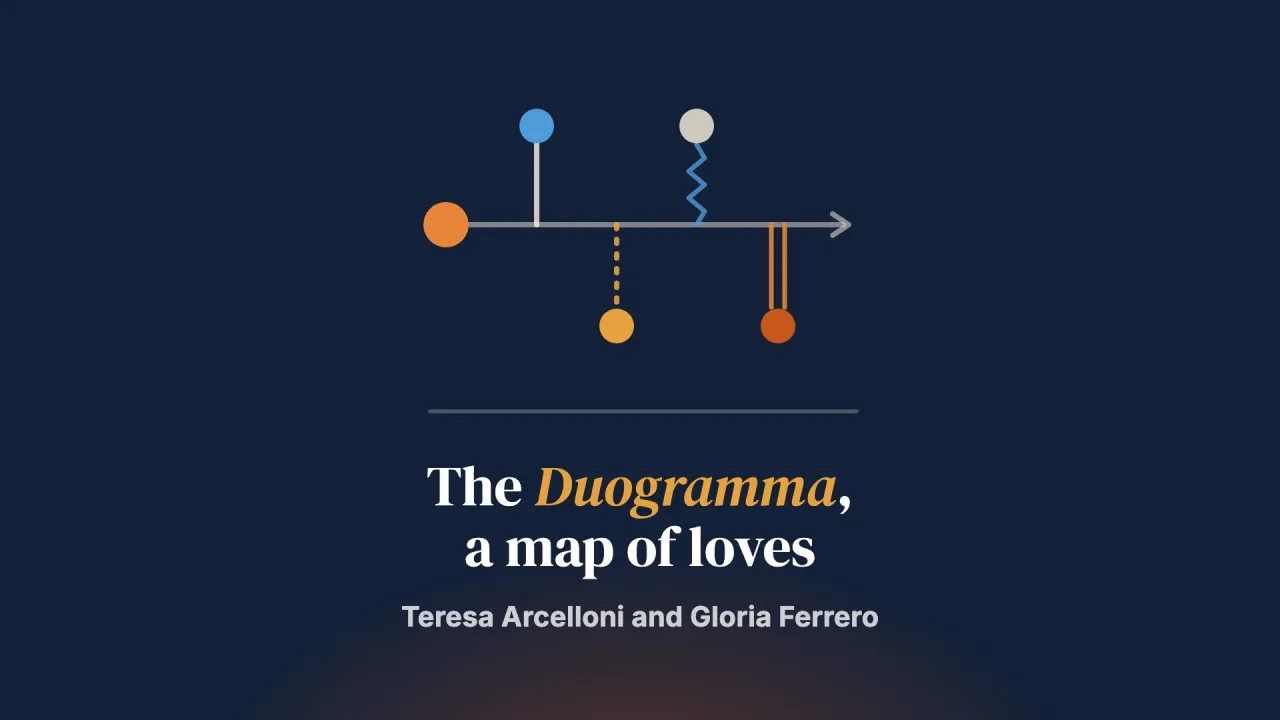
The Duogramma®: An innovative methodology for psychotherapy
A map of the couple relationships lived, desired or rejected since childhood: the Duogramma®, its graphic rules and its use in individual therapy.
 Blog
Capp® groups give parents a place to think together
How does a reflective parenting group work? Jalila Kormachi and Yara Doumit describe how parents revisit a difficult moment and choose what to try next.
 Blog
Challenging in therapy: What a patient taught me
A couples therapy session led me to reflect on confrontation, authenticity and resonance: how to address difficult behaviour without invalidating the person.
 Scientific
Family group conference provision across the lifespan of child welfare intervention: A mixed-method realist-informed evaluation comparing three stages of welfare concern
Early help, child protection or children in care: among 155 UK families, experiences and outcomes of family group conferences vary very little by stage.
Comments 0
Log in to join the discussion. Log in