AI-assisted translation
This version was translated from Italian by Complexe Systémique with the help of artificial intelligence. In case of doubt, the original version prevails.
Connessioni · Clinical practice
Remembering the past, imagining the future: interaction as the cornerstone of therapeutic practice
Umberta Telfener opens a series of clinical articles by the teaching faculty of the Milan school. She looks back at what she owes to Boscolo and Cecchin – epistemology, recursiveness, trust, irreverence – and at what she has added: the adaptive value of the symptom, acknowledged ignorance, futurizing, vigilance about collusion. The thread running through it is the case of Renata, 26, “given” as a child to her aunt and uncle and confined at home by panic attacks.
Unofficial English translation. This article is a translation of Ricordando il passato, immaginando il futuro: l’interazione come cardine della prassi terapeutica, by Umberta Telfener, published in Connessioni (Centro Milanese di Terapia della Famiglia), new series, no. 1 (2017), under a CC BY 4.0 licence. Translated by Complexe Systémique in November 2026 with the help of artificial intelligence: the original Italian text has been translated into English and reformatted, which constitutes a modification of the work under the terms of the licence. Paragraphs and headings are those of the journal; the author’s biographical note, placed at the head of the article in the journal, is included in the presentation; words underlined in the journal are rendered in bold; an Italian term on which the text plays is kept in italics with its translation; a few typographical errors have been corrected silently. This translation was made neither by the authors nor by the journal, who are not responsible for its content or for any errors. The original version prevails.
The interventions we make are not objective procedures but emerge from the dance we engage in with others.
Umberta Telfener
I am very honoured to open a series of clinical articles by the teaching faculty of the Milan school, which we hope will make it possible to take stock of our school and of the paths each of us has taken. We started from a common matrix, very strong both cognitively and emotionally, the one given to us by Gianfranco Cecchin and Luigi Boscolo, our teachers. It would be anachronistic to think that we have remained anchored solely to hypothesizing, circularity and curiosity without taking our theorizing further: people’s needs change very quickly over time, and so do the narrative techniques for meeting them. We have had to adapt to what our clients ask of us; our lives have moved on too, we have become autonomous and the differences among the faculty have widened, even as we continue to identify very strongly with the Milan school. All of us have maintained an unquestionable epistemological rigour. Circularity, neutrality and curiosity remain the cornerstones of our clinical practice, concepts we would never give up, together with the attitudes of transparency and irreverence, the importance given to time, and the idea of the risk of falling into perfect ideas. To these cornerstones we have added some areas of personal interest and an individual attention to certain themes and certain processes.
Personally, I have the feeling that there is increasingly a kind of habituation to psychological discourse, and that people come to us having already been given hypotheses about their problems, sometimes by people who are too involved or too peripheral (the neighbour, the old aunt, the brother, a whole range of different services, who have often listened without any overall plan and often without anyone actually taking charge of the case). Clients arrive with hypotheses that are sometimes triadic, multiple, and that make it difficult to redefine their narratives. We are witnessing an excessive contamination, which obliges us to make the fullest use of the relationship and to highlight aspects that are still silent and that we bring to the foreground, attentive to the processes and to the morphic field that is created with them (Sheldrake, 1995).
Constructivism changes the very relationship with the processes of knowing: clinicians will no longer go looking for specific games or try to discover the “reality” of their patients; clinical work will no longer be a process of solving problems so much as of defining and redefining them. As Bianciardi argues (Bianciardi, Telfener 2016), from a constructivist perspective the therapist does not know more or better than the patient: the therapist’s theories, hypotheses and narratives are neither true nor false; they are exactly as plausible as the patient’s. What distinguishes them, rather, is that the clinician’s hypotheses must be placed and kept at a different logical order from those of the patient: not at the level of the contents of knowledge, but at the level of the processes that construct knowledge; not at the first-order level of knowing, but at the second-order level of knowing about knowing. While patients bring a narrative they believe to be an objective description of their own reality, the therapist proposes alternative hypotheses in order to test their usefulness. The therapist, then, is (and must be) the one who knows that they know (knows that knowledge is constructed and self-referential) and knows that they do not know (knows that all knowledge is subjective, partial, reductive, contaminated, provisional). Moreover, the therapist must also be aware of not knowing that they do not know, that is, of the inescapable presence of blind spots.
What I learned from the Milan school
I owe many processes, positions and lines of reasoning to the Milan school, to the teachings of Boscolo and Cecchin. I would like to highlight a few of them.
Epistemology as the frame that gives meaning to events and organizes therapeutic action. It is systemic epistemology and respect for complexity that organize every reading and every intervention in therapy and that frame understanding and action. Faithful to systemic thinking – and recognized as such by all the other Italian schools, and not only schools of psychotherapy – we have always given importance to the shift from a simple reading to a polyphonic one, to the ability not to “marry” one’s own hypotheses, considering them valid over time only if they are consistent with the ongoing conversation. We have learned to work on our conjectures, open to doubt.
Recursiveness: therapy is a self-organizing process, and unpredictability is an intrinsic aspect of it. The recursiveness between what we see and how we organize what we see cannot do without a reflexive and participatory position: what are our clients bringing us? What meaning does their narrative have? What is the relationship with us, and how has it been built? The questions clinicians must ask themselves are many. It therefore becomes fundamental to reflect on the patterns that connect the individual or family and the clinician, and on the levels of observation, which become more complex: it is not only a matter of what the system brings – its organization – but also of reflecting on how this connects with what emerges in the encounter, taking into account the dominant culture in which everyone is involved. Only if clinicians are able to reflect on their own way of diagnosing and, more specifically, of diagnosing the diagnosis they have made, can we speak of full responsibility, understood as the capacity to respond with awareness of one’s own actions.
Trust: people are not their symptoms; individuals are in constant movement, and so are situations. Trust in the context, and therefore in individuals, in the process; trust also in the unconscious, which comes to be shared and is a friend. Expertise lies within people; every individual organizes themselves in the best way possible; our task is to create contexts in which this excellence can emerge. Attention goes to resources rather than to problems, and every therapeutic path seems aimed at developing a contextual and relational sensitivity. To reach processual excellence in the shared setting, every practitioner must agree to be influenced by desire, fantasy, creativity and improvisation, and learn to stay with the provisional, the unsayable, doubt. In practice… an invitation to irreverence (Cecchin et al., 1992).
The attitude of active inquiry has replaced curing: first-person particip-action, interventive interviewing, strategizing, futurizing, the ever-present risk of becoming Dr. Homeostat (Hoffman, 2002), become aspects to pay attention to. The shift from power to respect leads to curiosity, irreverence and transparency; it leads to respect for the problem presented, through the co-construction of a new narrative coherence. It is also necessary not to ignore our ignorance, that is, not to forget that it is inevitable: the presence of blind spots, the existence of information we do not grasp, and of collusions and resonances into which we fall and of which we remain unaware (von Foerster, 1987).
The pleasure of the dance implies considering oneself an integral part of the system and of the premises in play. The analysis of the request for help (among others, Ugazio, 1991; Telfener, 2011) becomes the pattern that connects in forming the observing system, of which the therapist increasingly considers themselves a “perturber”. The therapist therefore takes part in a shared mind and keeps the dialogue open to foster an activity of meaning-making; the therapist engages with the participants in building a new shared narrative. Each session is built so as to use the information to give back a new and coherent version of a story that unfolds endlessly. Knowing becomes an action whose meaning emerges through the coordination of the coordination of the narratives of everyone involved.
In Milan we have learned over time that: 1. we operate on undecidables and indeterminables; 2. we know that we do not know and that there are blind spots; 3. at least a double position is always necessary. It is not a matter of acquiring new techniques or inventing new theories for reading systems and contexts; it is a matter of reflecting ever more on one’s own way of working and on the moves we already know or put into practice, in order to build an evolving, responsible and participatory practice. Because the interventions we make are not objective procedures but emerge from the dance we engage in with others. Because the object of observation lies in the very act of observing the object.
The personal path I have integrated into the Milan work
Let us begin with a case, and then identify some operations that I consider important in the therapeutic process, which I have written about before and whose usefulness other members of the faculty agree on:
Renata is a young woman of 26 who comes to the first session with her aunt and uncle, to whom she was “given” when she was four (the aunt is her mother’s sister). She came to Rome with them to attend nursery school, from a remote village in Calabria where her parents are farmers. She is the youngest of three children. In Rome her aunt and uncle are both civil servants and “have been successful”. Renata is angry, sad, oppositional; since the age of 17 she has suffered from panic attacks that keep her confined to the house, terrified of organizing an independent life. She has never gone out with a boy and attends university irregularly, being far behind with her medical exams.
The adaptive value of the symptom
Every symptom has its own particular meaning: it serves to declare something; it is the best way a person has of taking a position in the context, albeit unconsciously, and of functioning in the present moment; and also of facing certain developmental knots and moving on to another level of life. Symptoms may also arise by chance, but they are repeated in the relational game of a system because they satisfy unconscious needs; they become established habits and often practices that are hard to interrupt. Looking for the adaptive value of the symptom means identifying one of the possible reasons why it emerged and why it persists over time.
R.’s symptom is important in her life and plays a role in keeping her within the household of her aunt, whom R. says she “hates”. The symptom allows her to stay shut up at home, to obey, in spite of herself, the iron rules of the house she lives in, and to be there not by free choice but because she is forced to. The fear of fear makes her a puppet in the hands of her aunt and uncle, obedient also to her parents’ rules, despite her wishes and intentions to rebel. R. does not obey her aunt and uncle but the symptom. It is no coincidence that the problems began when she reached the age of leaving home. R. seems frozen, has no wishes of her own, says she is alone in the world, feels everyone is against her, describes herself as weak and frightened, even though her family actually describes her as overbearing, angry, dissatisfied and always disappointed. She is overwhelmed by anger and fear.
Attention to redundancies: searching for the repetitive plot
There is no “cause” of distress that can be discovered; from a systemic standpoint, no aetiopathogenic theory stands out as a strong theory. Attention returns to the clinical process, and as practitioners we find ourselves with a fundamental function: managing the explanations of the current situation – pathology included. This is our specific responsibility. To do so, we must stay within a relationship of trust and authority, characterized by an empathic language and a shared narrative, in order to trace the patterns that repeat among the people involved in the problem-determined system (Anderson, Goolishian, 1988), in the relationship between practitioners and clients, in the specific relationship with us. The aim is to reach the heart of each situation through a “weak” force that makes it possible to find intuitively the point of resistance in the narrative; the search for repetitive patterns, beyond the words spoken, emerges from the enacted relationship and includes a comment, a sentence able to introduce an alternative point of view, something that creates noise and makes it possible to lighten a situation.
More than one pattern repeats in R.’s story; I will highlight one: her not allowing herself to feel positive emotions. It is almost as if she had made a pact with herself: I am coming to Rome, but without enthusiasm, without loving anyone any more. Indeed, she is icy when she meets her parents, by whom she feels constantly betrayed; she is cold with her siblings, from whom she feels a thousand miles away and towards whom she feels guilty for having more opportunities and privileges. She is cold, critical and detached with her aunt and uncle, who adore her but by whom she feels held prisoner. She also keeps away from boys; she has never had a crush, let alone been curious about anyone. “Boys always have an ulterior motive,” she tells me suspiciously, repeating her aunt and uncle’s prejudices and her parents’ fears as if they were absolute truths. Her symptom allows her to let some negative emotions out on the sly: they are not hers; they come from the symptoms. The time I acknowledge her right to anger and to fear about the future, she will say to me: “Even as a little girl I felt I was wrong to say I didn’t want to stay with my aunt and uncle. I didn’t want to love them, I didn’t want to be charmed by them.” Her symptom allows her aunt and uncle to give meaning to their lives, and through her immobility it “punishes” her parents.
Knowledge that goes hand in hand with ignorance and opens up to intuition
Our position within the context of the session includes not only our knowledge (what we are experts in, the process and the theories of change) but also our ignorance (what we know we do not know and what we do not know we do not know). We are not only sapiens but also demens. Our knowing is always incomplete, provisional, self-referential, and involves a constitutive, ineradicable blindness that is not under our jurisdiction: we are always dealing with “unknowables” and “indeterminables” (von Foerster, 1987). Knowledge – a process in the relationship between part and whole that serves to decode the world – is something to reflect on constantly: it is always necessary to think about the grids one uses to decode events and about the categories that emerge in the narrative, so as to step back from them and listen to what is left unsaid. Indeed, we often set in motion a process of “deconstruction” of the usual explanations, which opens a gap for seeing and behaving in alternative ways, for exploring other paths without defining a goal in advance.
It is clear to me from the outset that R. has spent twenty-two years in a non-place. Yet there are many things I do not know about her, and that is fine. What I do not know allows me to step out of the rational “delirium” of controlling her story and to gain access instead to intuitions, fantasies, unexplored paths. It occurs to me to give her, as homework, the opportunity to write a letter to her aunt and uncle, to acknowledge at least in part what they have done for her and to thank them for their care, since so far – caught between two loyalties – she has only opposed them. I ask her to write the letter as an exercise, without having to hand it over in any way. Immediately afterwards, R. will suggest also writing a letter to her parents, to announce that she will follow her aunt and uncle’s values and come out of the paralysis she has been in until now, the purpose of which was to betray no one.
The need for clinicians to reflect on their own positioning
A psychotherapy is like an adventure at sea: it depends on many factors, the weather, the sea, the company, the type of boat, the currents, the wind… Each element is a small component of the equation. The therapeutic process involves making things happen, making hypotheses, questioning the actions undertaken, letting oneself go to hypotheses and intuitions, and accepting the limit of the system and its capacity for self-organization. Extraordinary and entirely unexpected things may happen, which will change us too. Proposing lightness is certainly useful, since it makes it possible to change the level of attention, to slide within the discourse, to step out of an overly narrow logic. Therapy, like life, requires the ability to improvise, not to follow paths already laid out, not to switch on the autopilot, to experiment, to trust one’s intuition, to set off in search of a secret like a truffle dog until it is found. There is no right answer so much as a process, a collective and collaborative creation that takes place in an emergent group of relationships and patterns, in continuous change. The shared relational process includes seeing the invisible, working on what is left unsaid, being able not to saturate.
Do I trust R.? Does she trust me? What emotional position do I hold towards her aunt and uncle? It is important that, as her psychotherapist, I do not become the third pole among the alliances that already paralyse her. The panic attacks are the symbol of her lack of freedom; they make her call herself “poor thing” and disparage her psychological situation, they make her weep over her fate. With the idea of being a “poor thing” she cannot take off at all; she stays stuck in the game. Respect for boundaries in her relationships with both her aunt and uncle and her parents becomes a leitmotiv of the sessions: what does she want for herself, which ideas keep her prisoner, which convictions keep her from taking off? R. must learn to say “I belong to myself” instead of playing on the back foot and almost never defining herself. I call them the “Invischini” family, given their enmeshment (invischiamento, literally “getting stuck in birdlime”), I am ironic about some of the interactions described to me, and I try not to fall into the trap of detesting her aunt and uncle, exactly as she does. For this reason I too define myself in relation to her, listing her resources whenever I can. In this way I mirror the possibility of taking responsibility for one’s own life, while also trying to stay on her side, without disparaging the other participants in her game or her angry past.
The need to futurize
Seeking local coherence and bringing out stories about how the current reality was constructed means imagining a processual future for the system we have come to be part of. The ability to imagine the future allows the therapeutic process to remain evolving and prevents the clinician from becoming “Dr. Homeostat” and the situation from becoming chronic. Futurizing means imagining a plausible future for that specific system, projecting oneself into a reality that is different but possible, more varied than the current one. It implies that the conversation remains open, that the story we are told continues to hold elements of mystery, and that we remain open to the possibility that the micro-transformations we produce are not under our direct control. It is important to leave enough room for life to emerge without our having to define it.
I help R. imagine herself with a boyfriend in the flat her aunt and uncle have fitted out for her, which for now is connected to their home by two doors that are always open. What might it mean to enter into a love relationship, and how will the alliances change? How will she have to put herself on the line, which parts of herself will she have to engage? Together with her I make the future present: a curiosity of her own, someone courting her, an attraction, a courtship, the desire to say Yes. Until all this becomes present and R. closes the two doors between the flats and allows herself a relationship. Of course only fairy tales end well; her life goes on with ups and downs, satisfactions and difficulties, moments of hope and bitter disappointments.
Attention to unwanted outcomes
The risk is that of falling into the worldview of the systems involved, of adapting to the most popular plot, of colluding with the most pathologizing views, the most conformist and homeostatic ones, in some way reassuring in explaining what is happening. Collusion always involves an interpersonal process, and I would like to frame it here as indispensable and positive for connecting with the system, and at the same time very dangerous when it is unaware and too responsive to social expectations and mainstream thinking. In the latter case an individual gaze is lost in favour of a pre-established, a priori one, usually medical, organized by pathology and homeostasis. When one colludes, one makes room for unwanted outcomes and sees only some aspects of a complex reality; one photographs and reifies the symptomatic reality, decontextualizes it, freezes it in time and space, sets in motion thoughts and actions that reproduce the status quo, and loses strategic drive. Conversely, one can become so completely allied with the forces of the process that one loses one’s balance and pushes the system to defend itself against us practitioners.
R. improves and at the same time tries to stay the same; she defines herself with her relatives and then manages not to take a position on some important matters. Change proceeds in leaps, and moments of stasis are followed by others of evolution and others again of return to the initial patterns. Change is not linear and is not organized by rationality. When R. lets herself be caught by her aunt and uncle smoking a joint with her boyfriend, all the privileges she had managed to obtain will be taken away from her; this is the moment to ask her to pause in her process of becoming autonomous. Personally, I ask myself how much I am invested in her process of separation, and I work on myself to divest and willingly accept her dependence on her family, and now also on her boyfriend. I do not enter into symmetry with her; I understand her need to go slowly, to remain deferential towards those who love her, not to be too successful (she would betray her siblings) and not to break away (she would betray her aunt and uncle). She needs to be defended from her boyfriend, who wants to decide for her (she would betray herself), and her aunt and uncle – once again – provide a support that gives her time to grow up and decide for herself.
Conclusions
Opening up possibilities for action is one of our therapeutic aims. Meaning is a biological necessity for every human being and involves questioning life and one’s own personal path. The human vocation is to become oneself, in a search that is a continuous process. It is a path on which we psychotherapists can offer some psychological “help”, in a movement towards wholeness. It is not a question of enacting a benevolent, well-meaning ethical process, but of proposing an acknowledgement, which comes about through self-narrative, the deconstruction of some habitual patterns and the rediscovery of the relationship of trust.
The psychotherapist’s responsibility cannot be to know in a predictable way and to behave according to predefined intervention protocols; rather, it will be to take responsibility for one’s own ways of putting oneself forward and for one’s choices, within a process of constant becoming. When we reach the point at which our actions are spontaneous, acting is no longer a decision about what to do in order to achieve a certain result; acting becomes the expression not of what we want but rather of who we are: the possibility of feeling connected with others, with the world outside and inside us, and the capacity to follow, in action, the point of least resistance, like flowing water.
Complexe Systémique: key points
This is a testimony from within a school rather than a demonstration: concepts follow one another quickly, and Renata’s case illustrates more than it is analysed in detail. Its value lies in showing the Milan legacy at work in present-day clinical practice. The symptom is read as a solution: the panic attacks hold Renata between two loyalties, to the parents who “gave” her away and to the aunt and uncle who raised her. The interventions described are simple and transferable: a letter of thanks written but never delivered, an ironic nickname that lightens the enmeshment, a staging of the future to break out of repetition. Above all, Telfener insists on the therapist’s position: questioning one’s own investment in the patient’s emancipation, accepting setbacks, and being wary both of collusion with the most pathologizing readings and of an over-complete alliance with change. Some references are imprecise, with dates that do not always match the bibliography. Read alongside the conversation with Umberta Telfener on systems thinking, and Gianfranco Cecchin’s systemic prejudices.
References
Anderson H., Goolishian H.A. (1988), “Human Systems as Linguistic Systems”, in Family Process, 27, pp.371-394.
Bianciardi M., Telfener U. (2014), Ricorsività in psicoterapia, Bollati Boringhieri, Torino.
Boscolo L., Cecchin G., Hoffman L., Penn P. (1987), La clinica sistemica, dialogo a quattro sull’evoluzione del modello di Milano, Bollati Boringhieri, Torino, 2004.
Cecchin G., Lane G., Ray W.A. (1992), Irriverenza, una strategia di sopravvivenza per gli psicoterapeuti, Franco Angeli, Milano, 1994.
Hoffman L. (2002), Family Therapy, an Intimate History, Norton & Co, New York.
Sheldrake R. (1995), Seven Experiments that Could Change the World, Park Street Press, Rochester VT.
Telfener U. (2011), Apprendere i contesti, strategie per inserirsi in nuovi ambiti di lavoro, Raffaello Cortina, Milano.
Ugazio V. (1991), Le aspettative verso la terapia come strumento diagnostico, in Ugazio V. (a cura di), Emozioni, soggetto, sintomi, Vita e Pensiero, Milano.
Von Foerster H. (1981), Sistemi che osservano, Trad.it. Astrolabio, Roma, 1984.
Unofficial English translation of Ricordando il passato, immaginando il futuro: l’interazione come cardine della prassi terapeutica, by Umberta Telfener, Connessioni, new series, no. 1 (2017), under a CC BY 4.0 licence. Translation (with the help of artificial intelligence) and layout: Complexe Systémique, November 2026 — the work has been modified under the terms of the licence. Neither the authors nor the journal are responsible for this translation; the original version prevails.
Unofficial English translation of “Ricordando il passato, immaginando il futuro: l’interazione come cardine della prassi terapeutica”, published in Connessioni (2017) under a CC BY 4.0 licence. Made by Complexe Systémique with the help of artificial intelligence, it does not come from the authors or the journal, who are not responsible for its content; the original version prevails.
Read the original articleHow to cite this article
Telfener, U. (2017). Remembering the past, imagining the future: interaction as the cornerstone of therapeutic practice (Complexe Systémique, Trans.). Complexe Systémique. https://app.complexe-systemique.com/en_GB/articles/remembering-the-past-imagining-the-future-interaction-as-the-cornerstone-of-therapeutic (Original work published in 2017 in Connessioni, nuova serie, n. 1 (2017); republished in 2017 by Connessioni, https://connessioni.cmtf.it/ricordando-il-passato-immaginando-il-futuro-linterazione-come-cardine-della-prassi-terapeutica/)
To go further
- Systems thinking: fostering collaboration and connections to strengthen the field. A conversation with Umberta TelfenerUmberta Telfener on the systemic field.
- Tribute to the master Gianfranco Cecchin: systemic prejudicesHolding one’s hypotheses as provisional.
- Poetics of the Milan school. A memory of Gianfranco CecchinBarbetta remembers Cecchin.
Related training courses
 Certifying course
Training in Systemic Therapy and Interventions – Cycle 1
Certifying training cycle in systemic therapy and interventions – year 1. Courses, supervision and practice, aligned with EFTA/SFTF. In French.
 Certifying course
Training in Systemic Therapy and Interventions – Cycle 2
Certifying training cycle in systemic therapy and interventions – year 2. Clinical complexity, supervision and practice. EFTA/SFTF aligned. In French.
 Certifying course
Training in Systemic Therapy and Interventions – Cycle 3
Certifying training cycle in systemic therapy and interventions – year 3. In-depth intervention, supervision and practice. EFTA/SFTF aligned. In French.
 Certifying course
Training in Systemic Therapy and Interventions – Cycle 4
Certifying training cycle in systemic therapy and interventions – year 4. Clinical integration, supervision and certification. EFTA/SFTF. In French.
Related articles
 Scientific
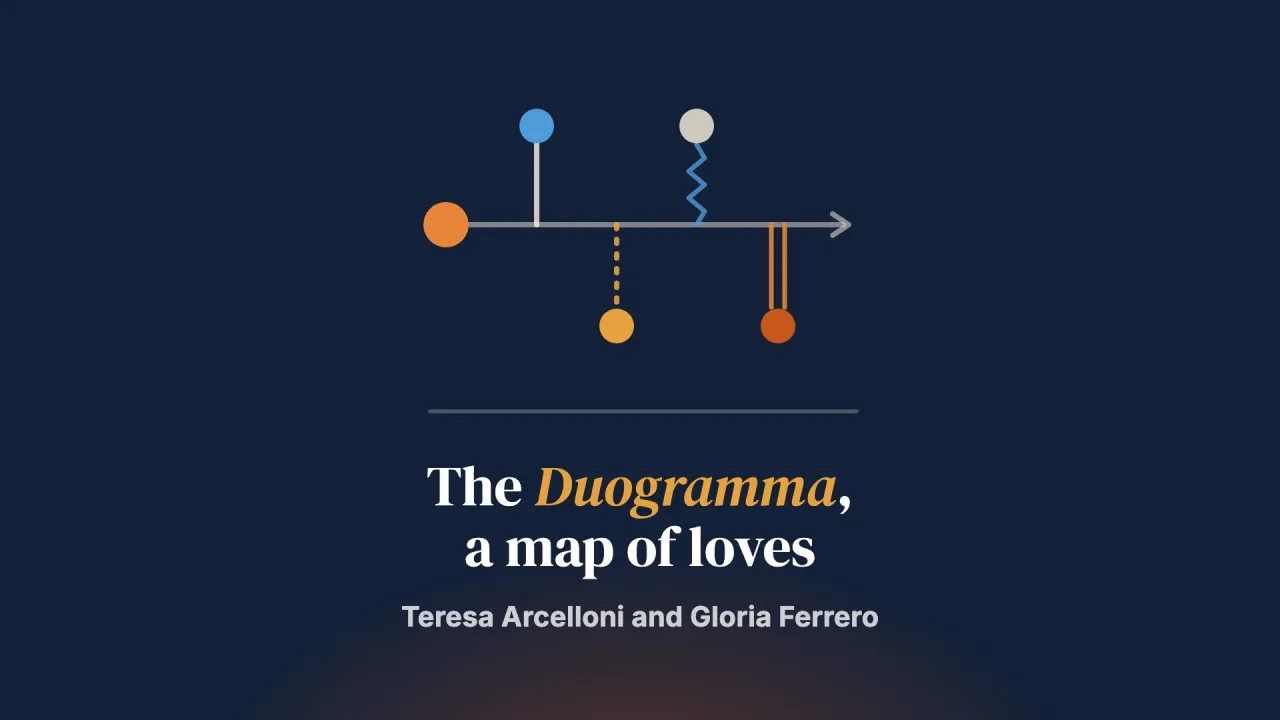
The Duogramma®: An innovative methodology for psychotherapy
A map of the couple relationships lived, desired or rejected since childhood: the Duogramma®, its graphic rules and its use in individual therapy.
 Blog
Challenging in therapy: What a patient taught me
A couples therapy session led me to reflect on confrontation, authenticity and resonance: how to address difficult behaviour without invalidating the person.
 Scientific
Internal Family Systems Therapy as Part of the ‘Family of Systemic Therapies’: A Critical Exploration of Systemic Practice in the Intra-Personal Domain
Does IFS belong to the family of systemic therapies? A critical exploration, grounded in a family court vignette, of systemic work with “parts”.
 Scientific
Collaborative Polyphonic Writing as Therapeutic Practice: A Longitudinal Case Study
A patient and her therapist co-write her autobiography: the psychiatric diagnosis becomes one voice among others, coordinated by an “I as a writer”.
Comments 0
Log in to join the discussion. Log in