British Journal of Clinical Psychology · Family therapy
Exploring service user and family perspectives of a Culturally adapted Family Intervention (CaFI) for African-Caribbean people with psychosis: A qualitative study
In the UK, African-Caribbean people are the most likely to be diagnosed with psychosis and the most poorly served by psychiatry. Dawn Edge’s Manchester team adapted a family intervention, CaFI, together with the community, then interviewed 22 service users and 12 relatives. The therapy is judged acceptable, time given to trust matters a great deal, and cultural adaptation itself divides: some families see it as recognition, others as a new stigma.
This is a reformatted republication of Exploring service user and family perspectives of a Culturally adapted Family Intervention (CaFI) for African-Caribbean people with psychosis: A qualitative study, by Eve Jensen, Rosie Carr, Amy Degnan, Katherine Berry and Dawn Edge, published in British Journal of Clinical Psychology (Wiley) (2021), doi: 10.1111/bjc.12273, under a CC BY 4.0 licence. Prepared by Complexe Systémique in September 2026: the authors’ text is unchanged; the layout has been adapted for reading online, which constitutes a modification of the work under the terms of the licence. The table is presented as a list; in the source version used, the “Age (mean)” row is empty and the values of the FSM rows are misaligned: they are given as found. The figures are reproduced in their original version. This edition was made neither by the authors nor by the publisher, who are not responsible for its content or for any errors. The original version prevails.
This research has been effective at giving voice to a seldom-heard population.
Eve Jensen, Rosie Carr, Amy Degnan, Katherine Berry and Dawn Edge
Abstract
Objectives. In the UK, people of African-Caribbean background have the highest rates of psychosis and greatest inequity in mental health services of all ethnicities. National policies have highlighted the lack of evidence-based psychological interventions for this group. The aim of this study was to examine the acceptability of a novel Culturally adapted Family Intervention (CaFI) for African-Caribbean individuals diagnosed with non-affective psychosis and their relatives.
Design. A qualitative design.
Methods. Semi-structured interviews conducted with 22 service users and 12 family members following participation in CaFI. The interview topic guide included perceptions of the needs and benefits of CaFI; usefulness, cultural specificity and accessibility of CaFI therapy and supporting materials; content and delivering of CaFI sessions; views and experiences of working with CaFI therapists; and perceived barriers and facilitators to implementation.
Results. Deductive framework analysis identified three main themes for service users: perceived benefits, barriers and limitations, and delivery of the therapy. Four themes were identified for family members: perceived benefits, perceptions of therapists, delivery of therapy, and accessibility of therapy content, supporting materials, and cultural appropriateness.
Conclusions. CaFI was found to be an acceptable intervention for African-Caribbean service users with psychosis and their relatives. Family interventions considering the needs of ethnic and cultural groups have the potential to improve the mental health care and experiences of service users and their families.
Practitioner points
- The Culturally adapted Family Intervention (CaFI) was viewed as acceptable to African-Caribbean service users with psychosis and their families.
- Through adapting interventions to be more culturally sensitive, it is possible to enhance the care of those who typically have poor engagement with mental health services.
- In-keeping with their ethos of individualized care delivery, mental health services should place more emphasis on being able to offer appropriate, culturally adapted interventions to their service users.
Background
Compared to the White British population, diagnosed rates of psychosis are 2.7 times higher in Black and minority ethnic groups (Qaseem et al., 2015). Those from a Black ethnic group are more likely to have longer hospitalizations, more readmissions, and poorer engagement, to be involuntarily detained and to receive more coercive treatments (Barnett et al., 2019). These experiences are partly thought to result from delayed help-seeking, meaning that symptoms are more severe when people enter services, and they are more likely to access services at crisis point. Delayed help-seeking is fuelled by mistrust of mental health services and expectations of discrimination (Morgan, Mallett, Hutchinson, & Leff, 2004). Negative experiences within services reinforce fear of mental health services within these communities, subsequently increase disengagement, and result in a vicious ‘cycle of fear’ (Keating & Robertson, 2004).
Families have been found to play an important role in the care of individuals with psychosis and pathways into services (Del Vecchio et al., 2015). Although families are best placed to encourage early help-seeking behaviour, the negative attitudes towards health services held by Black and minority communities may hinder this process (Kovandžić et al., 2011). Families may instead choose to care for individuals themselves, placing strains on family relationships (Del Vecchio et al., 2015) and causing feelings of distress and guilt when things reach crisis point and services become involved (Jankovic et al., 2011).
The National Institute for Health and Care Excellence (NICE) recommends ten sessions of family intervention (FI; NICE, 2014) to develop individual’s and their relatives’ understanding of psychosis and to improve relationships and resilience within the family (Okpokoro, Adams, & Sampson, 2014). A Cochrane systematic review (Pharoah, Mari, Rathbone, & Wong, 2010) of 53 randomized controlled trials (RCTs) showed that FI was effective at reducing hospital admissions, relapse rates, and levels of expressed emotion, and for improving social functioning and compliance with medication. The core principles of FI include a holistic approach to care and treatment, establishing therapeutic alliance, addressing family tension, and setting reasonable and achievable goals and expectations.
Despite FI being recommended for psychosis, uptake levels are poor across all groups and exceptionally low for African-Caribbeans (Berry & Haddock, 2008). This may be due to the ethos of services being incompatible with the culture of this community as psychological interventions are mainly developed in Western countries (Bernal & Saez-Santiago, 2006). Culture has been shown to influence coping mechanisms and willingness to accept help (Bernal & Saez-Santiago, 2006), and individuals have been found to engage more with psychological treatment when their cultural beliefs are considered (Rathod, Kingdon, Phiri, & Gobbi, 2010). NICE (2014) recommends taking into consideration culture and ethnicity in interventions for individuals diagnosed with psychosis.
There is increasing evidence for the effectiveness of culturally adapted interventions in different ethnic and cultural groups, including minority and majority populations. Previous research have developed culturally sensitive FIs for Latino (Barrio & Yamada, 2010) and Korean-American (Shin, 2004) individuals with schizophrenia and their families. In the US, a version of family therapy was adapted for Mexican-American individuals with schizophrenia and their relatives (Kopelowicz et al., 2012), and a psychoeducation programme was developed for caregivers of Chinese-American people with schizophrenia (Kung, Tseng, Wang, Hsu, & Chen, 2012). In the UK, a culturally adapted version of Cognitive Behavioural Therapy (CBT) for those with psychosis has been trialled with people of South Asian, African, and Caribbean backgrounds (Rathod et al., 2010). Degnan et al. (2017) conducted a systematic review on 46 psychosocial interventions in psychosis that had been adapted for a specific ethnic or cultural group. Culturally adapted interventions were more effective at improving total symptom severity (Hege’s g: −0.23, 95% CI: −0.36 to −0.09), than those that were not adapted. Furthermore, a higher degree of adaption was associated with more efficacious results. In a review of meta-analyses, culturally adapted interventions produced moderate to large effect sizes across different mental health problems (Rathod et al., 2018).
Edge et al. (2018) developed a Culturally adapted FI (CaFI) for African-Caribbean people with psychosis. In this paper, we report qualitative research undertaken as part of this feasibility study evaluating the intervention. Before this trial, there were limited culturally sensitive group interventions for psychosis African-Caribbean populations in the UK. The few that have been conducted have focused on adapting CBT for psychosis (Rathod et al., 2010) or psychosocial interventions for common mental health problems (Afuwape et al., 2010). Therefore, the aim of this study was to determine the acceptability of CaFI as an appropriate and beneficial intervention for African-Caribbean service users with psychosis and their families. Research has found that individuals diagnosed with psychosis are likely to have fewer friends and significantly fewer people to turn to in crises compared with healthy controls (MacDonald, Hayes, & Baglioni, 2000). Accordingly, it is possible therefore that individuals may not have biological family members with whom to take part in the intervention. Edge et al. (2018) introduced the novel concept of Family Support Members (FSM), who were ‘proxy family members’ either nominated by the service user or community volunteers. Service users selected the volunteer FSMs they would like to work after reading a short biography and an introductory meeting. The benefits of peer support roles in psychological interventions have been highlighted in a systematic review showing improvements in empowerment and self-efficacy (Burke, Plye, Machin, Varses, & Morrison, 2019).
The present study is the first to examine the acceptability of CaFI to the service users and family members who received the talking therapy as part of the National Institute for Health Research (NIHR) funded feasibility study (Edge et al., 2018). It is important to understand from the perspectives of those who took part in CaFI, which aspects of the therapy worked well and where modifications were needed to inform future development and implementation. The findings may also inform further culturally adapted work with families and individuals with psychosis.
Method
Design
A qualitative design with semi-structured interviews was used to explore participants’ views of CaFI on completion of therapy.
Intervention
CaFI is based on Barrowclough and Tarrier’s (1992) cognitive behavioural model of FI and adapted with people from African-Caribbean backgrounds. Using a Community Participatory Partnered Research (CPPR; Jones & Wells, 2007), the extant intervention was modified by working with service users, their families, community members, and health care professionals. Participants’ views indicated that the intervention should incorporate aspects of cognitive (Barrowclough & Tarrier, 1992) and behavioural FI (Falloon, 1981). In practice, this meant dedicating more time to building trust in the initial sessions, adopting a ‘shared learning’ approach to psychoeducation where the therapist, service user, and family member all learnt from each other’s experiences, and ‘staying well’ sessions focused on recovery and emphasizing strengths. The communication component of CaFI was incorporated based on preliminary work involving focus groups and a consensus conference (Edge et al., 2018), which suggested time should be dedicated to developing advocacy skills and establishing good communication within families and between families and services. We did not consider the level of acculturation of participants, but this could prove an interesting area for future research.
The therapy was delivered in one-hour weekly or bi-weekly sessions by one therapist trained in cognitive behavioural therapy, plus a co-therapist with previous experience in working within mental health services but no previous training in psychological therapy. Therapists and co-therapists received training in the therapy manual together with different approaches to family work and sessions designed to increase cultural awareness and confidence in working cross-culturally. CaFI therapy comprises ten sessions based on: (1) Engagement and Assessment (focused around building trust with mental health professionals), (2) Shared Learning (addressed illness beliefs and explanatory models), (3) Communication (aided family members and service users in speaking with each other and to health professionals), (4) Problem-Solving and Stress Management (geared at helping families to better manage stressors to reduce tension), and (5) Maintaining Gains and Staying Well (developed a crisis plan to attempt to reduce pathways into care involving police). Case study examples found the therapists were able to include all these components and successfully engage the African-Caribbean service users in FI (Berry et al., 2018). Furthermore, therapists were able to do this in the absence of biological family members and the FSM were viewed as an effective alternative (Berry et al., 2018).
Participants and recruitment
Participants were service users with psychosis who had been offered the CaFI intervention described above (for further detail about the recruitment and consent process see protocol: Edge et al., 2016). FSMs were not included in this study as their experiences are likely to differ from biological family members and therefore will be the focus of another paper (see Edge et al., 2018).
Inclusion and exclusion criteria
Service users
Service users inclusion criteria were aged 18 years or older, of African-Caribbean descent (including those who self-identify as ‘Black British’, ‘African-Caribbean’, or ‘mixed’ African-Caribbean but who have at least one African-Caribbean parent or grandparent), a primary diagnosis of non-affective psychosis or related diagnosis according to ICD-10 (F20-29; World Health Organization, 1992) or DSM-IV (American Psychiatric Association, 1994), receiving care at NHS inpatient or community services, and sufficient English language to give written informed consent. Service users who did not meet ethnicity or diagnostic eligibility criteria had significant cognitive impairment or were assessed by clinical teams as presenting high risk to themselves or others were excluded.
Biological family members
The ethnic group of biological family members was not an inclusion criterion, but they were required to be at least 18 years old and comprehend English language.
Materials
Interview topic guides were organized around the following key areas: perceptions of the need and benefits of CaFI; usefulness, cultural specificity and accessibility of CaFI and supporting materials; content and delivery of CaFI sessions; views and experiences of working with therapists; and perceived barriers and facilitators to implementation.
Procedures
Participants were recruited for a larger feasibility trial (Edge et al., 2018). Consent to take part in the qualitative interviews was obtained during the trial baseline assessments. Service user participants were either recruited via their care teams or self-referral through advertisements in community, rehab, and acute inpatient mental health services provided by a National Health Service (NHS) organization that served a large, predominantly urban conurbation in the Northwest of England, UK. Subsequent to registering their interest in study, participants received recruitment packs via the post which was then follow-up by a telephone call from a member of the research team. Service users and family members were asked for additional consent to participate in this qualitative study and interviewed within three months post-intervention. Interviews were carried out by trained researchers in participants’ location of choice, which was usually in their homes, University or NHS rooms. Participants received an incentive of £10 for taking part. Interviews were digitally recorded and transcribed with identifying information removed. Interview data were stored and managed in line with data protection policies. The study was approved by a National Research Ethics Service Ethics Committee (Ref: 13/NW/0571).
Data analysis
Data were analysed using framework analysis (Ritchie & Lewis, 2003). This involved analysing data according to a priori topics, identified from the literature and qualitative work that informed the study’s topic guide, while enabling emergence of new issues. In contrast to thematic analysis, framework analysis adopts a more deductive approach (Burnard, 1991) that sanctions the management and examination of qualitative data into a concise and well-defined framework (Gale, Heath, Cameron, Rashid, & Redwood, 2013). This analytical approach transforms individual descriptive accounts into a clear conceptual explanation of the trends and themes in the data set (Furber, 2013). Strengths of this approach include its systemic structure that facilitates identification of a clear path through the analysis process, thereby increasing credibility and trustworthiness of findings and conclusions (Tobin & Begley, 2004). Furthermore, the framework allows the researchers to go back and forth through the data (Smith & Firth, 2011), leading to a more in-depth analysis (Gale et al., 2013). However, as with other qualitative methods, framework analysis is very time-consuming (Gale et al., 2013). The analysis also requires a high level of experience in qualitative methods as interpreting findings and constructing the framework can be complicated (Gale et al., 2013).
Analysis was conducted by the lead authors (EJ, RC) and was then reviewed with the senior authors (AD, DE). Analysis began with the researchers becoming familiarized with the data set and making notes of any initial impressions. A number of transcripts were coded to identify key issues or points, and similar codes were grouped together into categories as part of a working analytical framework. This framework was then applied to the data set by indexing the remaining transcripts using the codes and categories identified. These were subsequently charted into a framework matrix to summarize the data by category. The final stage of the process was mapping and interpretation, which involved analysing the key characteristics identified in the charts. The final analysis was reviewed by the full research team, and any discrepancies were resolved via discussion. To preserve participants’ anonymity, illustrative quotes are presented using participant identification numbers. Methodological triangulation was utilized in the wider study as the qualitative data collected allowed for the development of quantitative acceptability ratings. Furthermore, researcher triangulation was also used as analysis was conducted by a number of researchers from different backgrounds individually and then compared.
Results
Participant characteristics
Of those approached, 84.62% (N = 22) of service users and 100% of family members who were approached completed qualitative interviews (see Table 1). Among the service users who started therapy (N = 26), four did not complete the qualitative study: two refused recording, one relapsed, and one could not be contacted. This resulted in qualitative data from 22 service users; 12 family members and 14 FSMs (seven recruited and seven nominated). Only data from service users and family members are reported here, though servicer users’ perspectives on FSMs are included.
Table 1 — Participant sociodemographic information
For each row: service user, N (%); family, N (%).
- Total sample. 22 (100); 12 (100).
- Age (mean). Values missing from the source version of the table.
- Gender—Female. 6 (27.3); 10 (83.3).
- Diagnosis. Paranoid schizophrenia: 11 (50.0); schizophrenia: 6 (27.2); schizoaffective: 2 (9.1); non-affective psychosis: 2 (9.1); delusional disorder: 1 (4.5). Family: –.
- Relationship in CaFI — biological relative. 13 (59.1); 12 (100). Mother: 7 (31.8); 6 (50.0). Father: 1 (4.5); 3 (25.0). Partner/husband: 3 (13.6); 1 (8.3). Sister: 1 (4.5); 1 (8.3). Daughter: 1 (4.5); 1 (8.3).
- Relationship in CaFI — nominated FSM (key worker, friend) and recruited FSM. Service users: 7 (31.8), 6 (27.2), 1 (4.5) and 2 (9.1), values whose distribution across these rows cannot be read in the source version; family: –.
- Ethnicity. Black African-Caribbean: 14 (63.6); 4 (33.3). Black British: 3 (13.6); 1 (8.3). White British and Black Caribbean: 3 (13.6); –. White Irish and Black Caribbean: 1 (4.5); –. Black Caribbean and South Asian: 1 (4.5); 2 (16.6). White British: –; 5 (41.7).
- Employment status. Long term disability: 12 (54.5); 3 (25.0). Unemployed: 6 (27.2); 2 (16.7). Volunteer: 2 (9.1); –. Student: 1 (4.5); –. Retired: 1 (4.5); 2 (16.7). Employed: –; 5 (41.6).
- Marital status. Single: 16 (72.7); 3 (25.0). Married/partner: 3 (13.6); 6 (50.0). Divorced/separated: 2 (9.1); 3 (25.0).
- Children—yes. 12 (54.5); 12 (100.0).
- Service. CMHT: 15 (68.2). Acute inpatient: 4 (18.2). Community service: 1 (4.5). Rehab inpatient: 1 (4.5). EIS: 1 (4.5). Family: –.
CMHT = community mental health team; EIS = early intervention service.
Thematic structure: service users
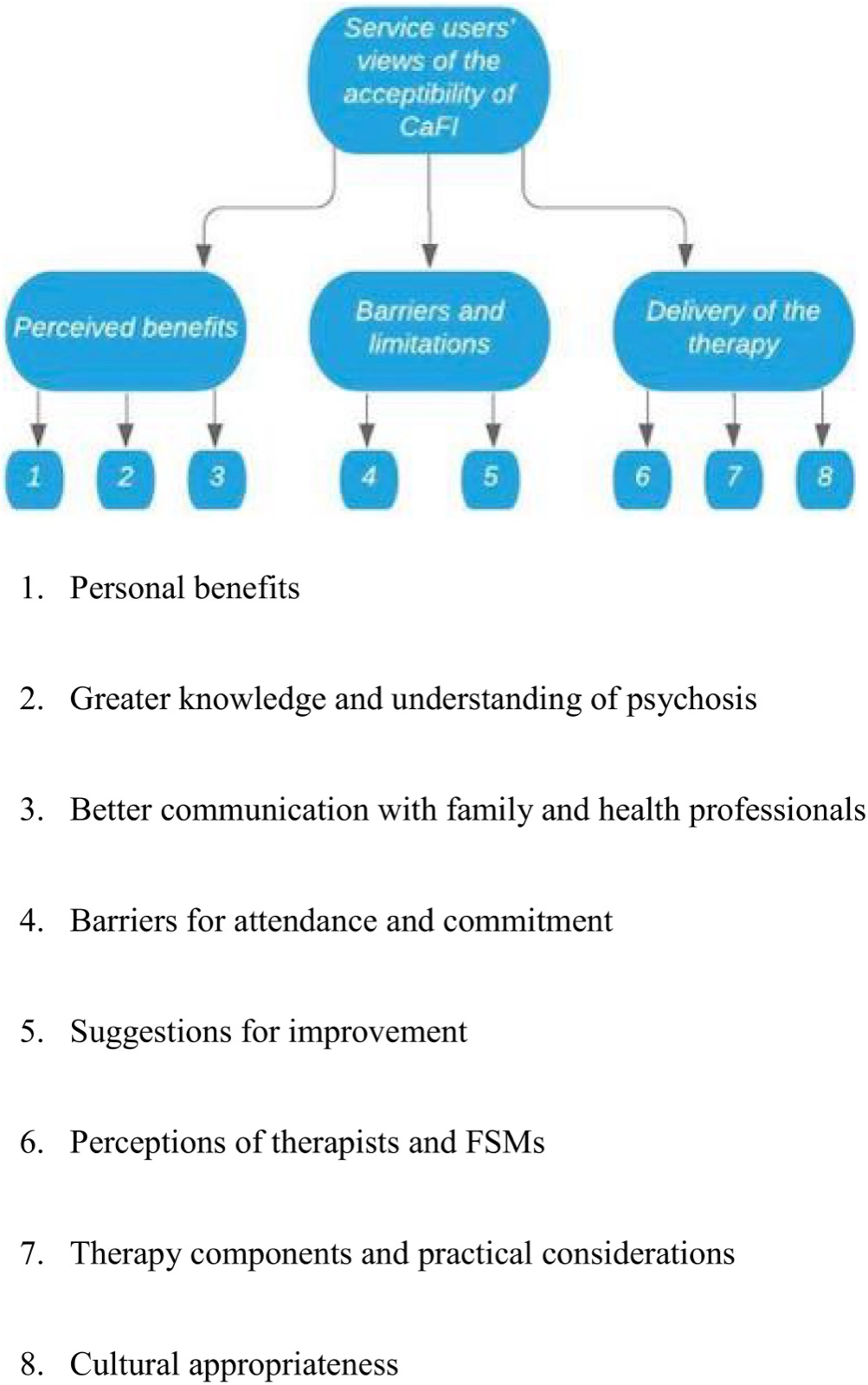
Analysis of service users’ interview transcripts resulted in three overarching themes: (1) Perceived benefits; (2) Barriers and limitations to CaFI; and (3) Delivery of therapy. The service user thematic map is presented in Figure 1.
Perceived benefits
Personal benefits
Service users reported experiencing personal and interpersonal benefits, such as increase in confidence in social settings and learning adaptive coping mechanisms, ‘when I get anxious I do the breathing exercises’ (P502).
I feel more confident and I feel more at peace and better in myself from taking part in the therapy. (P504)
Greater knowledge and understanding
Service users recalled how they previously had a limited understanding of their diagnosis, but the ‘Shared Learning’ sessions enabled them to learn ‘what can cause it and what triggers it’ (P504). CaFI was viewed as informative, educational, and effective at normalizing symptoms.
They [therapists] helped me to understand myself, because I am not the only person who is hearing voices [……] I just thought it was me, only me. (P526)
Better communication with family and health professionals
The communication sessions aided service users in feeling more comfortable in sharing their feelings with family members. The sessions also encouraged service users to ‘rely on people more for support’ (P510) and provided them with skills to engage in positive social interaction and build relationships with others.
I wasn’t talking to people enough, that I wasn’t making use of the people around me. (P510)
Furthermore, service users were more confident in initiating conversations about their needs with health professionals. One service user described how the therapy enabled him to ‘tell him [doctor] things I haven’t told him before’ (P523).
Barriers and limitations
Barriers for attendance and commitment
Factors which hindered service users’ commitment to CaFI included a lack of motivation, tasks being too easy and experiencing symptoms while accessing therapy, ‘it was a bit difficult because I was hallucinating’ (P515).
Suggestions for improvement
One service user commented on how shorter therapy sessions would have worked better and others felt ‘some games would have been good […] I think ice breaking would be good’ (P509). Another suggested having some sessions without the presence of a family member.
Delivery of the therapy
Perceptions of therapists and FSMs
Service users recalled how they felt safe talking to the therapists and how it was ‘therapeutical to speak with people who were trained in mental health’ (P509). Service users (N = 19) felt having two therapists was beneficial as it allowed them to ‘get more information’ (P504) and provide ‘general support for each other’ (P510). However, one service user felt the session would be ‘more private’ (P509) with one therapist.
All seven of the service users agreed they had positive relationships with their nominated FSMs and that they were knowledgeable. Relationship with FSMs was described as having taken a while to develop, ‘as time went along we began to share and open up to each other’, but eventually became ‘open and honest’ (P510). The role of the FSM was received less favourably by one participant who was ‘not totally comfortable with it’ (P509) and two who would have preferred to completed CaFI alone.
Therapy components and practical considerations
Service users valued the flexibility and choice that they were given in time and location of the sessions alongside having a clear structure for each week.
Having the time frame set to suit me was a good thing because I wanted Fridays at 2 o’clock and I got Fridays as 2 o’clock. (P504)
The majority of service users (N = 15) felt an hour for each individual session was adequate, others argued that shorter sessions (N = 2) would have prevented them from becoming ‘tired and frustrated’ (P510), or longer sessions (N = 4) would have allowed for more content to be covered. The number of 10 therapy sessions was viewed favourably by the majority.
All but one service user preferred therapy in their home as it helped them feel ‘relaxed’ (P502) and was ‘private and confidential’ (P504). One service user suggested meeting in a café instead.
People with illness can’t go certain places or they get paranoid, I tend to get quite paranoid and anxious when I’m going places that I don’t know so coming here [café] is a lot better. (P504)
Cultural appropriateness
The use of African-Caribbean individuals on the advert for the study was praised by many service users as they related to it, ‘if the people on it were White then I don’t think I’d associate myself with it’ (P504). Six service users reported that the leaflet influenced their decision to take part. However, one service user felt that the leaflet lacked detail and more information was needed.
All service users reported that CaFI was successful in meeting their needs, ‘CaFI is dedicated to people like me, Afro-Caribbean’ (P518). The majority (N = 13) also believed that CaFI would also meet the needs of other African-Caribbean individuals. The remaining service users’ responses were split between viewing CaFI as unable to meet the needs of other African-Caribbean people (N = 2) and being unsure (N = 5). This difference in responses was largely due to those who were unsure reporting that they felt CaFI ‘can meet the needs of everybody’ (P523), regardless of culture, and that the content was not specific to just the needs of those from an African-Caribbean background. Nevertheless, all service users said they would recommend the therapy.
I would do yeah, I really would, I really would. I think it should get spread all over the United Kingdom. I think it really should, ‘cause I think it’s really helpful. It’s helped me a lot. (P521)
Thematic structure: family members
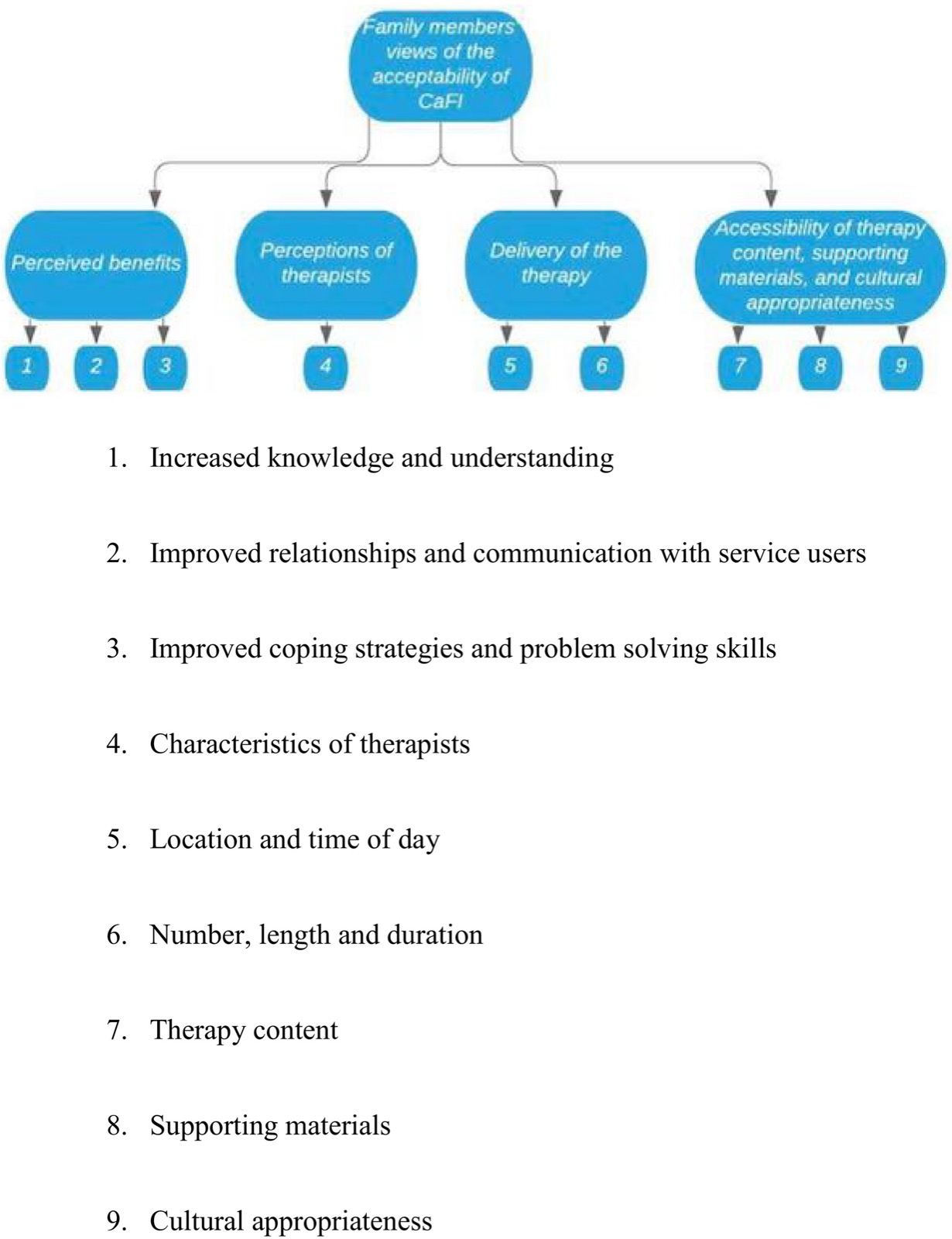
The results of the qualitative analysis yielded four key themes for family members: (1) Perceived benefits; (2) Perceptions of therapists; (3) Delivery of therapy; (4) Accessibility of session content, supporting materials, and cultural appropriateness. The family member thematic map can be found in Figure 2.
Perceived benefits
Increased knowledge and understanding
Family members reported that CaFI met or exceeded their needs and expectations. The most frequently cited personal benefit was increased knowledge and understanding of the service user’s diagnosis.
I found it useful to get information about schizophrenia and […] about my [relative’s] experience of his own schizophrenia. (R5291)
Improved relationships and communication with service users
Family members reported benefits in their relationships with service users, for example, feeling more comfortable expressing their feelings to one another and increasing quality time together.
One of the sessions was where we needed to do more things with each other, because we were just going day-by-day plodding along and we’ve started spending more time together. (R5051)
Three relatives reported less conflict in the family following the intervention.
We have arguments, but not as many. (R5171)
Improved coping strategies and problem-solving skills
Family members also reported that they have learnt ways to react more adaptively to service users’ stress and respond to difficult interpersonal dynamics.
I didn’t have patience, and I would scream and shout which would make my relative worse and after I did this [CaFI], it opened my eyes and made me more tolerant. (R5111)
However, some relatives felt that they thought the stress management sessions were redundant, as they had already evolved their own techniques for handling stress.
I’ve always learnt to just cope so it didn’t really help to that [extent] because I could always already sort of cope. (R5221)
Perceptions of therapists
Characteristics of therapists
Therapists were perceived as competent, professional, easy to work with, supportive, and knowledgeable. Aspects of the therapeutic approach which were described as important included the therapists’ patience, ability to listen to the service user, and tailoring information to suit the abilities of the service user.
She was always friendly and she was really knowledgeable […] I think she was just friendly and she approached it in a good way. […] she encouraged [service user] to talk and she didn’t pressure him or pressure me. (R5191)
Family members appreciated it when the therapists were collaborative and directly included them in the therapy sessions. Most family members (N = 14) preferred two therapists over one due to the different perspectives available and the co-therapists’ supportive role in delivery, which enabled the lead therapist to focus on the delivery of the therapy sessions. The remaining family members (N = 3) said they would be happy with either one or two therapists.
People have different ideas and you know might be she’s telling me something and the other person come up with another scenario and it just fits right in like another piece to the puzzle and it did work. (R5111)
Delivery of therapy
Location and time of day
All family members had a preference for sessions to be carried out in their homes as they felt safe, and it ensured privacy and reduced potential interruptions.
Yea, I think for [service user] it was more comfortable and relaxed for him to be on his own where he was familiar with his surroundings. (R5191)
The flexibility of the time and location of sessions was perceived positively by all family members, as they needed to fit the sessions around other commitments.
Number, length, and duration
Most participants (N = 10) agreed that one hour was an acceptable session, but others favoured longer sessions (N = 5), with 90 min being the most frequently recommended. Although some thought ten sessions were acceptable (N = 9), others (N = 8) would have preferred between 12 and 20.
Sometimes you might have only just got to topic that you might have to finish quickly or say at the beginning if you just briefly mention it. (R5171)
Accessibility of therapy content, supporting materials, and cultural appropriateness
Therapy content
Session content was mostly viewed positively, and all family members said they would recommend CaFI to someone they knew. However, some improvements were suggested such as information on anger management, more time spent on relapse prevention and involving more family members.
I needed to get to grips with the relapse plan with her and I feel like I have to carry on with her with that now. (R525)
Supporting materials
A booklet on understanding psychosis, developed in collaboration with a research advisory group comprising former and current services users, community members and carers as part of CaFI, was deemed an acceptable and useful resource, as it helped them to understand their experiences.
Sometimes I can refer back to it [booklet], you know, like if something’s concerning me. (R5031)
Cultural appropriateness
All but one family member said they felt CaFI met their needs. Most family members (N = 13) thought that CaFI would meet the needs of other African-Caribbean people, and it was viewed as an effective approach to resolve interpersonal difficulties within the family.
If they are not getting along well, I think this is a good medium for, I don’t know the right word to say, but this is a good way of solving the issues. (P5071)
Eight relatives claimed they could not identify the parts of CaFI that had been culturally adapted and that the therapy would be appropriate for all cultures.
I don’t know whether there was anything specific about it that erm it would have been, it didn’t feel culturally-adapted, it felt appropriate, but it didn’t feel that there were any sort of special considerations made due to [name] having a Afro-Caribbean background. (R5201)
Two participants even felt that the idea of incorporating culture creates further divisions in mental health services and creates stigma.
We [are] normal people like everybody else. That’s all, there’s no…it pisses me off a bit when ‘there’s a cultural need’…we want to be treated like everybody else and they are not because [we are] a different colour and that in itself is unfair. (R5041)
I think that [cultural-adaption] stigmatises a certain group of people to be honest with you. (R5161)
One family member (who worked with White British therapists) suggested that CaFI’s focus on culture could be improved by ethnic matching with at least one member of the therapy dyad.
Yes, erm in as much as I think maybe when you do therapy sessions it would be good if you had somebody African-Caribbean within the session with experience and that lets them know that there’s somebody there like them. (R5312)
Another questioned how appropriate the intervention would be if it was rolled out to other Black populations as they noted the differences between these groups.
People are different you know, all people different … I’m West Indian, I have an African Somali friend and we are different, you know, in many ways. I could tell you how Jamaicans think and work but I couldn’t tell you if other Caribbean or African countries do things the same because in Africa they do things different from us. (R5261)
Discussion
Summary of main findings
This was the first evaluation of a novel, culturally adapted FI (CaFI) for African-Caribbean people diagnosed with psychosis from the perspective of service users and their families. Overall, the responses from the groups were similar, with both citing benefits such as an improved understanding of the diagnosis and enhanced communication within the family. In addition, the practical considerations of delivering CaFI, such as location and number of sessions, were viewed the same by both groups. A difference was observed with respect to cultural adaptation, some service users felt that CaFI would be applicable for all cultures, while other family members highlighted how incorporating culture could create further divisions in mental health and identified distinctions in thinking within Black groups.
Service users reported that CaFI gave them a better understanding of their diagnosis. This is an important finding as previous research has shown that mental illnesses are defined differently by each ethnic group (McLean, Campbell, & Cornish, 2003) and that attempting to apply a Western understanding of psychosis to all can have negative treatment outcomes (McCabe & Priede, 2004). The benefits of providing information on psychosis are consistent with previous findings demonstrating that psychoeducation improved psychopathology, disability, and caregiver-support for all cultural groups, including those from India (Kulhara, Chakrabarti, Avasthi, Sharma, & Sharma, 2008), Latin America (Guitierrez-Maldonado & Caqueo-Urizar, 2007), and rural China (Ran et al., 2003).
The reported benefits of taking part in CaFI are comparable to other FIs in the area. Research from Allen, Burbach, and Reibstein (2013) conducted an acceptability study with White British participants with psychosis who accessed a FI. They reported that the sessions improved their ability to manage emotions and positively changed family dynamics through developing an understanding others’ perspectives. In Norway, Caucasian (75%) and Asian (25%) patients and their relatives reported improved communication and problem-solving skills and a better understanding of the psychosis diagnosis and early warning signs (Nilsen, Frich, Friis, & Rossberg, 2014). Furthermore, in Campbell’s (2004) study family members of a predominantly White British (89%) or Asian (11%) relative with a severe mental health disorder, including schizophrenia, had reduced stress levels and carer burden and an improved sense of empowerment after taking part in the FI.
The finding that the therapeutic relationship took a few sessions to build is perhaps not surprising given reported fear and mistrust of mental health services among African-Caribbeans more generally (Keating & Robertson, 2004) which can lead to a reluctance to personal disclosure (Edge & Rogers, 2005). Furthermore, in the context of a history of adversarial relationships and power imbalances between predominantly White-led services and Black service users (Bhui et al., 2013), achieving any degree of rapprochement is an immense achievement.
Service users’ perception that relationships took time to develop was mirrored in family members’ responses, highlighting the importance of explicitly incorporating time dedicated to trust-building in the initial sessions. This aspect of cultural adaptation helped to develop positive therapeutic relationships as evidenced by family members’ views of CaFI therapists as friendly, patient and supportive. There was support for the role of the second therapist as participants recognized that each member of the dyad brought their own set of strengths to the therapy which aligns with previous findings (Hendrix, Fournier, & Briggs, 2001) that this approach enriches service users’ and families’ experiences.
Service users and family members described CaFI as successfully meeting their needs. Improvements in family dynamics, coping skills, and knowledge of the relative’s diagnosis were all reported, and the positive impact of the intervention is in line with other culturally adapted FI (Barrio & Yamada, 2010; Shin, 2004). Consistent with prior qualitative research into cultural adaptations (Bernal, Jiménez-Chafey, & Domenech-Rodríguez, 2009; Chowdhary et al., 2014), no substantial modifications to the core components of the intervention were suggested. Participants instead highlighted adjustments to improve the cultural specificity of the therapy content and delivery. For example, some suggested including more creative ‘ice breakers’, which may have served to further develop the therapeutic relationship in the early sessions by reducing uncertainty or mistrust this group may hold towards health care professionals.
Many participants felt CaFI would be appropriate for any individuals experiencing psychosis and their relatives, regardless of culture, and that it should be implemented across the NHS. Participants also suggested that, as it was not feasible to develop and implement different culturally adapted versions of FI for each ethnic or cultural group in the UK, a culturally adaptable form should be developed. This presents an interesting and vital advancement from the increasing number of culturally adapted psychological therapies developed for psychosis and other mental health difficulties for separate majority and minority populations internationally (Degnan et al., 2017), including for minority ethnic groups in the UK (Chowdhary et al., 2014; Rathod et al., 2010).
Strengths, limitations, and future research
African-Caribbean individuals are often regarded one of the hardest groups to engage in mental health services with reported limited access to psychological therapy, especially evident in relation to psychosis and group therapy, including FI (NHS, 2016). However, from the standpoint of members of the community, they are often over-looked and marginalized. This research has been effective at giving voice to a seldom-heard population who have important views and suggestions on improving psychological therapy to both its accessibility and acceptability, such as dedicating more time to developing the therapeutic relationship in the initial sessions and improving therapists’ competence and confidence to work cross-culturally.
An important limitation of this study relates to the generalizability of the findings, as the study was limited to a small number of participants recruited from two NHS trusts in one geographical region. The service user sample was predominantly male and the family sample mostly female (mothers), which is perhaps an accurate representation of family units of the sample of interest. However, this is a small sample and a larger, more representative sample is required to identify patterns related to wider sociodemographic characteristics. We also acknowledge the potential bias created by the Hawthorne effect. It is possible participants based their responses to questions on what they thought interviewers wanted to hear; however, this is difficult to eliminate in qualitative research. A future study recruiting service users who chose to discontinue therapy could provide particularly useful insights into the factors which make therapy challenging or unacceptable to some users. Selection bias may be a risk as the sample only included service users who were willing to engage in mental health services, subsequently meaning that the views of those who are the least like to participate in therapy and research may have been excluded. Finally, the findings were based on retrospective reports, which may introduce recall bias resulting in failure to capture some participants’ views and experiences. Future trials and related qualitative work would benefit from examining the acceptability of culturally adapted work in larger and more representative samples of service users and family members in diverse settings and at different stages of the therapeutic process.
Conclusions
These findings suggest that Culturally adapted FI (CaFI) proved acceptable to African-Caribbean service users diagnosed with psychosis and their families. CaFI has the potential to enhance care and individual experiences for service users with psychosis and their families who are open to engaging in talking therapies as part of treatment. Thus, CaFI is an intervention worth prescribing and would address a gap in current services. Despite acknowledging the need to improve access to therapy for African-Caribbean people in the context of inferior care and adverse relationships with mental health services, some participants suggested that the benefits of CaFI should be available to all, regardless of ethnicity or cultural background. Furthermore, all participants recommended CaFI and its implementation across NHS services. Further research may consider the benefits of a culturally adaptable model of therapy to meet the needs of families from diverse ethnic and socio-cultural backgrounds.
Complexe Systémique: key points
The study is first of interest for how the intervention was built: with the community, and by redefining family by its function rather than by blood. Where a biological relative is missing, a “family support member”, a chosen friend, key worker or volunteer, can take on the role, which is a thoroughly systemic idea. A second contribution: for families who have learned to fear psychiatry, the first task is trust, and time must be set aside for it explicitly rather than treating it as a preliminary. Yet the most fertile finding is the final disagreement: many people cannot see what was adapted, and two relatives feel that talk of “cultural need” stigmatises. For clinical practice, this argues for cultural competence tuned to each family rather than protocols by group. The limits are clear: acceptability is not efficacy, the sample brings together people already engaged with services, and the interviews are retrospective. Read alongside the article on working with the families of people with schizophrenia, and the article on multisystemic therapy with racially marginalised families in England.
Notes from the original
Acknowledgements. We would like to acknowledge and thank all the individuals and their families who took part in the study and shared their thoughts on the acceptability and feasibility of CaFI to inform future improvements to the intervention. This project was funded by the National Institute for Health Research (NIHR) Health Service and Delivery Research (HS&DR) Programme (project number 12/5001/62).
Conflicts of interest. All authors declare no conflict of interest.
Author contributions. Eve Jensen: formal analysis, methodology, writing (original draft), writing (review and editing). Rosie Carr: formal analysis, methodology, writing (original draft), writing (review and editing). Amy Degnan: conceptualization, data curation, investigation, methodology, project administration, supervision, validation, visualization, writing (review and editing). Katherine Berry: conceptualization, data curation, investigation, methodology, supervision, validation, visualization, writing (review and editing). Dawn Edge: conceptualization, data curation, funding acquisition, investigation, methodology, project administration, supervision, validation, visualization, writing (review and editing).
References
Afuwape, S. A., Craig, T. K., Harris, T., Clarke, M., Flood, A., Olajide, D., … Thornicroft, G. (2010). The Cares of Life Project (CoLP): An exploratory randomised controlled trial of a community-based intervention for black people with common mental disorder. Journal of Affective Disorders, 127, 370–374. https://doi.org/10.1016/j.jad.2010.05.017
Allen, J., Burbach, F. R., & Reibstein, J. (2013). ‘A different world’: Individuals’ experience of an integrated family intervention for psychosis and its contribution to recovery. Psychology and Psychotherapy: Theory, Research and Pratice, 86(2), 212–228. https://doi.org/10.1111/j.2044-8341.2011.02057.x
American Psychiatric Association (1994). Diagnostic criteria from the DSM-IV. Washington, DC: American Psychiatric Association.
Barnett, P., Mackay, E., Matthews, H., Gate, R., Greenwood, H., Ariyo, K., … Smith, S. (2019). Ethnic variations in compulsory detention under the Mental Health Act: A systematic review and meta-analysis of international data. The Lancet, 6, 305–317. https://doi.org/10.1016/S2215-0366(19)30027-6
Barrio, C., & Yamada, A. M. (2010). Culturally based intervention development: The case of Latino families dealing with schizophrenia. Research on Social Work Practice, 20, 483–492. https://doi.org/10.1177/1049731510361613
Barrowclough, C., & Tarrier, N. (1992). Families of schizophrenic patients: Cognitive behavioural interventions. London, UK: Chapman & Hall.
Bernal, B., & Saez-Santiago, E. (2006). Culturally centered psychosocial interventions. Journal of Community Psychology, 34, 121–132. https://doi.org/10.1002/jcop.20096
Bernal, G., Jiménez-Chafey, M. I., & Domenech-Rodríguez, M. M. (2009). Cultural adaptation of treatments: A resource for considering culture in evidence-based practice. Professional Psychology: Research and Practice, 40, 361–368. https://doi.org/10.1037/a0016401
Berry, K., Day, C., Muligan, L. D., Seed, T., Degnan, A., & Edge, D. (2018). Culturally adapted Family Intervention (CaFI): Case examples from therapists’ perspectives. The Cognitive Behaviour Therapist, 11(13), 1–18. https://doi.org/10.1017/S1754470X18000156
Berry, K., & Haddock, G. (2008). The implementation of the NICE guidelines for schizophrenia: Barriers to the implementation of psychological interventions and recommendations for the future. Psychological Psychotherapy, 81, 419–436. https://doi.org/10.1348/147608308X329540
Bhui, K., Mccabe, R., Weich, S., Singh, S., Johnson, M., & Szczepura, A. (2013). THERACOM: A systematic review of the evidence base for interventions to improve therapeutic communications between black and minority ethnic populations and staff in specialist mental health services. Systematic Reviews, 2(1), 1–11. https://doi.org/10.1186/2046-4053-2-15
Burke, E., Plye, M., Machin, K., Varses, F., & Morrison, A. P. (2019). The effects of peer support on empowerment, self-efficacy, and internalized stigma: A narrative synthesis and meta-analysis. Stigma and Health, 4, 337–356. https://doi.org/10.1037/sah0000148
Burnard, P. (1991). A method of analysing interview transcripts in qualitative research. Nurse Education Today, 11, 461–466. https://doi.org/10.1016/0260-6917(91)90009-Y
Campbell, A. S. (2004). How was it for you? Families’ experiences of receiving behavioural therapy. Journal of Psychiatric and Mental Health Nursing, 11, 261–267. https://doi.org/10.1111/j.1365-2850.2003.00696.x
Chowdhary, N., Jotheeswaran, A. T., Nadkami, A., Hollon, S. D., King, M., Jordans, M. J. D., … Patel, V. (2014). The methods and outcomes of cultural adaptations of psychological treatments for depressive disorders: A systematic review. Psychological Medicine, 44, 1131–1146. https://doi.org/10.1017/S0033291713001785
Degnan, A., Baker, S., Edge, D., Nottidge, W., Noke, M., Press, C. J., … Drake, R. J. (2017). The nature and efficacy of culturally-adapted psychosocial interventions for schizophrenia: A systematic review and meta-analysis. Psychological Medicine, 48, 714–727. https://doi.org/10.1017/S0033291717002264
Del Vecchio, V., Luciano, M., Sampogna, G., De Rosa, C., Giacco, D., Tarricone, I., … Fiorillo, A. (2015). The role of relatives in pathways to care of patients with a first episode of psychosis. International Journal of Social Psychiatry, 61, 631–637. https://doi.org/10.1177/0020764014568129
Edge, D., Degnan, A., Cotterill, S., Berry, K., Baker, J., Drake, R., & Abel, K. (2018). Culturally-adapted Family Intervention (CaFI) for African-Caribbean people diagnosed with schizophrenia and their families: A mixed methods feasibility study of development, implementation and acceptability. Health Services and Delivery Research, 6(32), 1–316. https://doi.org/10.3310/hsdr06320
Edge, D., Degnan, A., Cotterill, S., Berry, K., Drake, R., Baker, J., … Abel, K. (2016). Culturally-adapted Family Intervention (CaFI) for African-Caribbeans diagnosed with schizophrenia and their families: A feasibility study protocol of implementation and acceptability. Pilot and Feasibility Studies, 2(1), 39. https://doi.org/10.1186/s40814-016-0070-2
Edge, D., & Rogers, A. (2005). Dealing with it: Black Caribbean women’s response to adversity and psychological distress associated with pregnancy, childbirth, and early motherhood. Social Science & Medicine, 61(1), 15–25. https://doi.org/10.1016/j.socscimed.2004.11.047
Falloon, I. R. H. (1981). Communication and problem solving skills training with relapsing schizophrenics and their families. In M. R. Lansky (Ed.), Family therapy and majorpsy-chopathology (pp. 35–56). New York, NY: Grune and Stratton.
Furber, C. (2013). Framework analysis: A method for analysing qualitative data. African Journal of Midwifery and Women's Health, 4(2), 97–100. https://doi.org/10.12968/ajmw.2010.4.2.47612
Gale, N. K., Heath, G., Cameron, E., Rashid, S., & Redwood, S. (2013). Using the framework method for the analysis of qualitative data in multi-disciplinary health research. BM Medical Research Methodology, 13. https://doi.org/10.1186/1471-2288-13
Guitierrez-Maldonado, J., & Caqueo-Urizar, A. (2007). Effectiveness of a psycho-educational intervention for reducing burden in Latin American families of patient with schizophrenia. Quality of Life Research, 16, 739–747. https://doi.org/10.1007/s11136-007-9173-9
Hendrix, C. C., Fournier, D. G., & Briggs, K. (2001). Impact of co-therapy teams on client outcomes and therapist training in marriage and family therapy. Contemporary Family Therapy, 23(1), 63–82. https://doi.org/10.1023/A:1007824216363
Jankovic, J., Yeeles, K., Katsakou, C., Amos, T., Morriss, R., Rose, D., … Priebe, S. (2011). Family caregivers’ experiences of involuntary psychiatric hospital admissions of their relatives- a qualitative study. PLoS One, 6, e25425. https://doi.org/10.1371/journal.pone.0025425
Jones, L., & Wells, K. (2007). Strategies for academic and clinician engagement in community-participatory partnered research. JAMA, 297, 407. https://doi.org/10.1001/jama.297.4.407
Keating, F., & Robertson, D. (2004). Fear, black people and mental illness: A vicious circle? [comparative study]. Health Social Care Community, 12, 439–447. https://doi.org/10.1111/j.1365-2524.2004.00506.x
Kopelowicz, A., Zarate, R., Wallace, C. J., Liberman, R. P., Lopez, S. R., & Mintz, J. (2012). The ability of multifamily groups to improve treatment adherence in Mexican Americans with schizophrenia. Archives of General Psychiatry, 69(3), 265–273.
Kovandžić, M., Chew-Graham, C., Reeve, J., Edwards, S., Peters, S., Edge, D., … Dowrick, C. (2011). Access to primary mental health care for hard-to-reach groups: From ‘silent suffering’ to ‘making it work’. Social Science & Medicine, 72, 763–772. https://doi.org/10.1016/j.socscimed.2010.11.027
Kulhara, P., Chakrabarti, S., Avasthi, A., Sharma, A., & Sharma, A. (2008). Psychoeducational intervention for caregivers of Indian patients with schizophrenia: A randomised controlled trial. Acta Psychiatrica Scandinavica, 119, 472–483. https://doi.org/10.1111/j.1600-0447.2008.01304.x
Kung, W. W., Tseng, Y., Wang, Y., Hsu, P. C., & Chen, D. (2012). Pilot study of ethically sensitive family psychoeducation for Chinese-American patients with schizophrenia. Social Work in Mental Health, 10, 384–408.
Macdonald, E. M., Hayes, R. L., & Baglioni, A. J. (2000). The quantity and quality of the social networks of young people with early psychosis compared with closely matched controls. Schizophrenia Research, 46(1), 25–30. https://doi.org/10.1016/S0920-9964(00)00024-4
McCabe, R., & Priede, S. (2004). Explanatory models of illness in schizophrenia: Comparison of four ethnic groups. British Journal of Psychiatry, 185, 25–30. https://doi.org/10.1192/bjp.185.1.25
McLean, C., Campbell, C., & Cornish, F. (2003). African-Caribbean interactions with mental health services: Experiences and expectations of exclusion as (re)productive of health inequalities. Social Science & Medicine, 56, 657–669. https://doi.org/10.1016/S0277-9536(02)00063-1
Morgan, C., Mallett, R., Hutchinson, G., & Leff, J. (2004). Negative pathways to psychiatric care and ethnicity: The bridge between social science and psychiatry. Social Science & Medicine, 58, 739–752. https://doi.org/10.1016/S0277-9536(03)00233-8
National Institute for Health and Care Excellence (2014). Schizophrenia: The NICE Guideline on core interventions in the treatment and management of schizophrenia in adults in primary and secondary care. London, UK: The British Psychological Society and the Royal College of Psychiatrists.
NHS (2016). The Five Year Forward View for Mental Health. Retrieved from https://www.england.nhs.uk/wp-content/uploads/2016/02/Mental-Health-Taskforce-FYFV-final.pdf
Nilsen, L., Frich, J. C., Friis, S., & Rossberg, J. I. (2014). Patients’ and family members’ experiences of a Psychoeducational Family Intervention after a first episode psychosis: A qualitative study. Issues in Mental Health Nursing, 35, 58–68. https://doi.org/10.3109/01612840.2013.837992
Okpokoro, U., Adams, C. E., & Sampson, S. (2014). Family intervention (brief) for schizophrenia. Cochrane Database of Systematic Reviews, 3. https://doi.org/10.1002/14651858.CD009802.pub2
Pharoah, F., Mari, J. J., Rathbone, J., & Wong, W. (2010). Family intervention for schizophrenia. Cochrane Database of Systematic Reviews. https://doi.org/10.1002/14651858.CD000088.pub3
Qaseem, T., Bebbington, P., Spiers, N., McManus, S., Jenkins, R., & Dein, S. (2015). Prevalence of psychosis in black ethnic minorities in Britain: Analysis based on three national surveys. Social Psychiatry and Psychiatric Epidemiology, 50, 1057–1064. https://doi.org/10.1007/s00127-014-0960-7
Ran, M. S., Xiang, M. Z., Chan, C. L., Leff, J., Simpson, P., Huang, M. S., … Li, S. G. (2003). Effectiveness of psychoeducational intervention for rural Chinese families experiencing schizophrenia. A randomised controlled trial. Social Psychiatry and Psychiatric Epidemiology, 38, 69–75. https://doi.org/10.1007/s00127-003-0601-z
Rathod, S., Gega, L., Degnan, A., Pikard, J., Khan, T., Husain, N., … Naeem, F. (2018). The current status of culturally adapted mental health interventions: A practice focused review of meta-analyses. Neuropsychiatric Disease and Treatment, 14, 165–178. https://doi.org/10.2147/NDT.S138430
Rathod, S., Kingdon, D., Phiri, P., & Gobbi, M. (2010). Developing culturally sensitive cognitive behaviour therapy for psychosis for ethnic minority patients by exploration and incorporation of service users’ and health professionals’ views and opinions. Behavioural and Cognitive Psychotherapy, 38, 511–533. https://doi.org/10.1017/S1352465810000378
Ritchie, J., & Lewis, J. (2003). Qualitative research practice: A guide for social science students and researchers. London, UK: Sage.
Shin, S. K. (2004). Effects of culturally relevant psychoeducation for Korean American families of persons with chronic mental illness. Research on Social Work Practice, 14(4), 231–239. https://doi.org/10.1177/1049731503262130
Smith, J., & Firth, J. (2011). Qualitative data analysis: Application of the framework approach. Nurse Researcher, 18(2), 52–62. https://doi.org/10.7748/nr2011.01.18.2.52.c8284
Tobin, G. A., & Begley, C. M. (2004). Methodological rigour within a qualitative framework. Journal of Advanced Nursing, 48, 377–396. https://doi.org/10.1111/j.1365-2648.2004.03207.x
World Health Organisation (1992). The ICD-20 classification and behavioural disorders: Clinical descriptions and diagnostic guidelines. Geneva, Switzerland: World Health Organisation.
Reformatted republication of Exploring service user and family perspectives of a Culturally adapted Family Intervention (CaFI) for African-Caribbean people with psychosis: A qualitative study, by Eve Jensen, Rosie Carr, Amy Degnan, Katherine Berry and Dawn Edge, British Journal of Clinical Psychology, vol. 60, no 2 (2021), doi: 10.1111/bjc.12273, under a CC BY 4.0 licence. Edition and layout: Complexe Systémique, September 2026 — the work has been modified under the terms of the licence (table presented as a list). Neither the authors nor the publisher are responsible for this edition; the original version prevails.
This is the original article “Exploring service user and family perspectives of a Culturally adapted Family Intervention (CaFI) for African-Caribbean people with psychosis: A qualitative study”, published in British Journal of Clinical Psychology (2021) under a CC BY 4.0 licence. Republished by Complexe Systémique: the author’s text is unchanged; only the presentation has been adapted for reading online, as set out at the head of this page.
Read the original articleHow to cite this article
Jensen, E., Carr, R., Degnan, A., Berry, K., et Edge, D. (2021). Exploring service user and family perspectives of a Culturally adapted Family Intervention (CaFI) for African-Caribbean people with psychosis: A qualitative study. Complexe Systémique. https://app.complexe-systemique.com/en_GB/articles/service-user-and-family-perspectives-of-a-culturally-adapted-family-intervention-cafi (Original work published in 2021 in British Journal of Clinical Psychology, 60(2), 270-289 (2021); republished in 2021 by British Journal of Clinical Psychology, https://bpspsychub.onlinelibrary.wiley.com/doi/full/10.1111/bjc.12273)
To go further
- Working with the families of schizophrenic patientsFamilies facing schizophrenia.
- L’expérience des équipes de thérapie multisystémique auprès de familles racisées en AngleterreRacially marginalised families and MST.
- Systèmes familiaux et adaptation culturelle dans les interventions psychosociales en cancérologie auprès des familles latinx : une revue critiqueCultural adaptation in question.
Related training courses
 Symposium
État des Lieux: a psychological approach to spaces
Replay of the “État des Lieux” conference (Paris, 16 October 2026): Ivy Daure, Maurizio Frisina, Viola Sallay and Gilbert Pregno on places as a clinical resource. In French.
 Symposium
Digital technology, AI and mental health
Conference in Lyon, 11 December 2026: digital technology, artificial intelligence and mental health. Six talks, replay for participants. In French.
 Short course
The suicidal crisis in adolescents and young adults
Training: assessing and supporting the suicidal crisis in adolescents and young adults. Clinical landmarks and systemic tools. In French.
 Certifying course
Training in Systemic Therapy and Interventions – Cycle 1
Certifying training cycle in systemic therapy and interventions – year 1. Courses, supervision and practice, aligned with EFTA/SFTF. In French.
Related articles
 Blog
Adult parentification: when being useful becomes a condition for being loved
Why is it sometimes so hard to hand over? Julien Besse explores parentification and parentalisation, acknowledgement and the place we take in our adult relationships.
 Scientific
Family group conference provision across the lifespan of child welfare intervention: A mixed-method realist-informed evaluation comparing three stages of welfare concern
Early help, child protection or children in care: among 155 UK families, experiences and outcomes of family group conferences vary very little by stage.
 Scientific
Decolonizing Supervision: A Critical Race and Queer Theory Framework for Marriage and Family Therapy
Supervision is not neutral: a framework drawing on Critical Race Theory and Queer Theory to name and share power in supervision, with a vignette.
 Scientific
Transitioning to the Business of a Session in Collaborative-Dialogic Meetings: A Conversation Analysis
How do Open Dialogue therapists move to the business of a session? The open question creates silences and family negotiation: a conversation analysis of ten sessions.