AI-assisted translation
This version was translated from Italian by Complexe Systémique with the help of artificial intelligence. In case of doubt, the original version prevails.
Connessioni · Training
Symbolic legacies, mandates, family reverberations. Meeting the trainees’ families
One April morning at the Centro Milanese di Terapia della Famiglia, Beppe Pasini invited third-year trainees to come to the seminar with a family member. The article tells, in several voices, those of the trainer, the trainees and the families, what this invitation stirred up: the fear of refusal, the choice of whom to invite, the emotion of the meeting observed from behind the mirror. From it the authors draw a reflection on self-reflexivity and on the isomorphism between training and therapy.
Unofficial English translation. This article is a translation of Eredità simboliche, mandati, familiari riverberi. Incontrare le famiglie degli allievi, by Beppe Pasini, Erika Roncoroni, Valentina Bandirali, Francesca Nardi and Renata Pugliese, published in Connessioni (Centro Milanese di Terapia della Famiglia), new series, no. 12 (2023), under a CC BY 4.0 licence. Translated by Complexe Systémique in November 2026 with the help of artificial intelligence: the original Italian text has been translated into English and reformatted, which constitutes a modification of the work under the terms of the licence. The paragraphs and headings are those of the journal; the excerpts from the family members’ answers, given on the journal’s page as italic paragraphs, are set as a block quotation, and the commentary that follows them in roman type; quotations are translated from the Italian, including those from Bateson and Keeney, whose original English wording could not be checked, and the one from Cecchin et al., quoted from the Italian edition the authors cite; titles of works are given as the article cites them; a few typographical errors have been silently corrected. This translation was made neither by the authors nor by the journal, who are not responsible for its content or for any errors. The original version prevails.
It is in the family that we learn to make a family.
Beppe Pasini, Erika Roncoroni, Valentina Bandirali, Francesca Nardi, Renata Pugliese
Introduction: the trainer’s voice
What role do the expectations, dreams and prophecies present in the family system play with regard to the future therapist? How do family members experience one of their own choosing to become a psychotherapist? As a future family therapist, is it useful to explore these symbolic and relational dimensions during one’s training?
In the course of family therapy training, trainees’ emotions, as well as the prejudices, convictions and ideas involved in the clinical interview, are the object of constant reflective attention and reworking. The aims of this training process are many. I would single out a few of those I consider the most important: drawing on one’s own experience as a member of a family system to make explicit the silent theories and related beliefs one holds about the family as a system; recognizing the partiality and relativity of one’s own views and opinions by reconstructing their genesis; becoming more aware of the influences of the family system of origin on one’s own development and identity, turning constraints and critical points into operational and creative possibilities; refining and developing an original therapeutic style of one’s own in the therapeutic relationship. During an experiential seminar quite some time ago now, I remember the words of Alfredo Canevaro, the trainer of Argentine origin who led it, words that, as seductive as a tango step, wrapped that meeting in passion and turmoil. “The family therapist”, he declared, “is the failed therapist of their own family!”. I recall that a shared silence fell over the room, mixed with a thoughtful emotion. Was what had been proclaimed in such an apodictic way true? It certainly struck a chord with many of us, inviting us to ask ourselves many uncomfortable but necessary questions: about the meaning of our professional choice, about the story to which we felt it was connected, about the origin of that strange and eccentric desire to help others that we hoped would become our trade. Of course, that was only one possible version of a story linking the therapist’s identity in training with the family system they came from. Many other versions, perhaps less cumbersome and frankly liberating, could be set alongside it. One can just as well speak of the therapist “designated”, “elected”, “enlisted”, “entrusted”, “consecrated”, “celebrated”, “courted”, “freed”, “emancipated”, and so on, by the family. Nevertheless, the fascination exerted by that existential connection with the family of origin remained unchanged, and over time, as a trainer in my turn, it has prompted me to explore its many possibilities, inviting young colleagues in training to access their own biographical resonances and turn them into professional skills. In this fertile interweaving between the therapist’s world of experience and the clinical relationship there is an evident isomorphism. Practising how to make one’s inner, relational and symbolic world accessible and tellable provides excellent reflective stimuli and practical ideas for refining the therapeutic relationship. The therapist’s family, with its myths, beliefs, models, languages, metaphors, symbols, bodies, stories, emotions, and so on, is undoubtedly an inexhaustible field of learning. This exploration in turn involves at least two fascinating systemic questions. The first is represented by what Andolfi and Cigoli call: “…The relationship with origins. Made up of intergenerational stories, transmissions, invisible and visible loyalties, scapegoats, saviour figures, exchanges of gifts between generations, etc.” (Cigoli, Andolfi, 2008). The other, more strictly epistemological, lies in recognizing the social, interactive, ecological and participatory character of all knowledge. Interacting creatively with the complexity of human systems requires the therapist to keep these variables alive and mobile through the guidelines that the masters, women and men, of the Milan Approach taught us: curiosity, beauty, reflexivity. It was from these brief premises that the idea took shape of involving the trainees’ family members in a seminar day, sending them an explicit invitation to take part:
Dear trainees, the seminar I shall have the pleasure of leading will be devoted to STORIES THAT CONNECT (ME). SYMBOLIC LEGACIES, MANDATES, FAMILY BONDS. I am writing to ask whether you would be willing to involve one of your relatives (father, mother, brother, son/daughter, sister, partner, husband, wife, etc.), inviting them to take an active part in a conversation during the first part of the seminar day, from 10 to 12, at the CMTF premises. It will be a moving and, I hope, useful opportunity to explore (in)visible yet very concrete relational dimensions, learning from our family biography and then connecting it to clinical work. Hoping that you will accept my invitation, I look forward to seeing you at the seminar. Ciao!
A small but enthusiastic group of brothers and sisters, husbands, children and friends answered the call of that pioneering proposal, and was welcomed on a bright April morning in the austere rooms of Via Leopardi. In that place so dense with family epics, those of the school’s trainees too were appearing, in flesh and blood and for the first time. And so we prepared to celebrate a memorable meeting in an atmosphere of palpable excitement. This article tells, in several voices, what happened there and, above all, what we learned.
Between fear and curiosity. The trainees’ voice
When, a few days earlier, we received Pasini’s proposal together with the invitation to involve our family members in the seminar, there was no small dismay among us. We talked it over, exchanging doubts and puzzlement about what to do: “What were Pasini’s intentions? What would the family members have to do that day? Whom should we invite?”. The premises were not very clear and, together with the unsettling effect of the unexpected invitation, many expectations arose, to which we responded in many ways.
Even before it began, this new and irreverent training proposal stirred up reflections, conscious and otherwise, on family bonds, reminding us, as trainees and future family psychotherapists, of our origins. Over these years of training it has emerged, sometimes more covertly, sometimes more explicitly, that there is a common thread linking all of us trainees (and our trainers too), which springs from the need to understand and sometimes to change the systems we come from. A shared and passionate movement that led us to encounter and choose this particular path in life. There is no doubt, in fact, that our history and our way of observing and living it have in some way contributed to the choice of our training path. During training, but also in the therapy room, we are constantly dealing with this double role we hold: being family therapists and being members of a family. We practise picking up the resonances of our own narratives through the voices of others (our patients and our colleagues), with the ultimate aim of opening ourselves to a broader and more complex view of reality. Even so, reflecting on the possibility of opening the doors of the CMTF to our family members was an embodied contact of strong impact, which brought us back to our vulnerabilities and our most intimate narratives.
We thus found ourselves going back over our relationship with our origins, reflecting on our family history and on the personal narrative that derived from it, which revealed a stimulating analogy with the training. Just as a patient with a personal difficulty who undertakes therapy regards it as private and freed from their everyday sphere, for most trainees the training course represents a vital space of personal release. An immersive experience that allows one to move away mentally from the bustle of a tiring daily life and to venture into the precious exploration of the self. Lingering and questioning ourselves deeply on the basis of themes and stimuli shared during the class, sometimes creating new connections and learnings, living through a generative confusion in which to dwell even in the days after the training session.
Over the three years of training there are several occasions on which trainees are offered work on their own family dynamics, for example through the genogram, which fosters introspective processes and the reworking of relational dynamics by grasping specific characteristics of the system, stimulated also by group work, which multiplies points of observation and readings. In this constant reflective process, personal impulses of emancipation from the system of origin have sometimes emerged, as well as centripetal “movements” following which the system tends instead to call the family member back to itself.
The step proposed on this occasion involved a further movement: bringing a family member, in flesh and blood, into a setting in which until then they had been only a narrated presence, made present by the story, symbolized. And it was no small step!
Pasini proposed to us trainees, just as the family therapist does with patients, a conversion of our own epistemology, opening not only our gaze but also the door to bodies, to the concrete physicality of flesh, bones and stories.
On the morning of the seminar, the third-year classroom thus filled with new faces, among them those of our family members. The air was new, a little tense, a little embarrassed and also amused. Some of us involved brothers and sisters, others the whole family. Others, many of us, preferred not to extend the invitation to any family member. An absence that was nonetheless participatory in its own way, “making itself present” in everyone’s thoughts, reflections and feelings. A multitude of emotions ran among us: the regret of those who (perhaps frightened by the proposal) had decided not to involve any family member (“I didn’t know what they would have to do”); the “jealousy” of those of us who were convinced they had no bond with any relative strong enough to allow them to invite them. Still others admitted straight away that they feared a refusal from their relatives: “What does it mean if I invite them and they don’t come? That they don’t love me enough? That they don’t care enough? That our bond isn’t strong enough?”
The seminar took shape following the logic of acting systemically in order to think systemically. We were therefore invited by the trainer to experience first-hand the effects of systemic epistemology, expanding connections and widening the context, honouring Bateson’s words: “Mind is immanent within the larger system: man plus environment” (Bateson, 1972).
Within this orientation one takes a position that invites consideration of behavioural and experiential patterns, in which individuals and their significant system become observers and observed, co-constructing the relational context in which they are immersed (Boscolo, Bertrando, 1996). This implicitly prompted reflection on the roles and boundaries of the family system with regard to the questions the trainer put to us: what role can the exploration of one’s own family dynamics, stories and relationships play in the training of a future family therapist? What does it mean to bring them together and have them meet concretely in training? For what opportunities and aims?
The effect of that pragmatic widening of perspectives thus became a training and self-reflective opportunity for us trainees. Direct experience of this kind of (per)turbation can become a tool for reading clues, understood as “information that makes a difference”, in the story that individuals and future patients carry.
The seminar also brought to light a prejudice widespread in training settings: aspects concerning one’s personal history and biography are relegated to a corner, often unseen, as if they were not an integral and indeed vital part of one’s existence. But is it not precisely flesh-and-blood families that we deal with? The challenge, if anything, is to transform our own existential biography, as future therapists, into a precious opportunity for learning and for reconnecting practice and theory, emotion and reason, imagination and experience. Indeed, despite the effort to “leave out” the familial, it “is inside”: it takes an active part in professional maturation. Much of our caregiving competence, for example, is learned in the family (cf. Formenti, 2000). For the first time in our training, we were in our patients’ position and, like them, we began to ask ourselves quite a few questions following Pasini’s invitation: Whom shall I bring? Will they come? Shall I tell the rest of the family? What will happen after the meeting? How do I ask them?
In this way the seminar gave us a double function, both training and experiential, since, as we know, the observer is part of the observed system (von Foerster, 1982). From this position of self-reflective centrality it is therefore possible to observe the structure of one’s own family system (e.g. the rigidity of boundaries, alliances, subsystems) and one’s own interactive role within that structure (Minuchin, 1974). Just as in the therapeutic process from a dialogical and narrative perspective, this prompts a vital awareness: our ideas, convictions, values and prejudices about the family cannot be separated from the fact that we are part of one and have experienced it as sons, daughters, fathers, mothers, brothers and so on. It is in the family that we learn to make a family. Making these interdependencies and implications explicit by concretely involving the trainees’ family members fosters a virtuous hybridization between the biography of the therapist in training and the training path itself (Pasini, 2017). The questions and reflections prompted by the proposal paved the way for the very choice of which family member to involve.
Once the consequences had been accepted and the potential of “opening” the family’s boundaries grasped, by actually bringing one’s relatives into a place that for many of us holds a multiplicity of personal and objective functions and meanings, the question that emerged was: “Whom should we invite to the seminar?”
Depending on certain kinds of awareness, the choice of family member may also have put some of us in difficulty, inviting us to confront experiences, emotions and past events. The skeleton (narrative, symbolic, imagined) of our biographical narratives influences interactive and relational patterns. Most of us did not pass the invitation on to our families, colluding with our own prejudices, thinking that they would not agree to take part or even admitting that we did not consider them suited to such a context. Exactly like patients asking for treatment, we found ourselves involved in, and bound by, a larger and more complex premise.
The choice to begin a therapeutic or training path implies adherence to a process of epistemological change. Whatever consent is given, the request to involve a family member or the whole family in therapy involves a set of variables and circumstances that are emotional, relational, situational and affective, involving alliances and conflicts. It is difficult, if not impossible, to remain super partes. What does it mean, then, as the mantra of so many clinical approaches has it, to welcome patients’ choices without judgement, valuing any answer? Is it really possible, or is it a convenient cultural myth? As Keeney argues: “It is cybernetic epistemology itself that searches for patterns or models connecting the various components of a feedback structure” (Keeney, 1983). Patient and therapist, like the trainees in this training seminar, are builders of an interactive pattern that connects them to each other. A pattern that moves by rising above distinctions and causal punctuations. The family convened in therapy is the practical expression of Batesonian “double description”, in which, thanks to the art of systemic conversation, the multiplicity of punctuations given by the members of the family-plus-therapist system can potentially be valued and help transform symptomatic stories into more complex and healthier versions.
Many of the reflections prompted by the proposal concerned issues such as the trust and reliability placed both in the significant person to be invited to the seminar and in the new context welcoming them.
As well as ethical dimensions related to the appropriateness of involving one’s own family during training, inevitably connected to the exploration of delicate balances, affections and histories. And others related to the setting: it is not enough, in fact, to declare a priori the value or usefulness of this widening, obeying the orthodoxy to which we adhere as systemic practitioners. It often happens that therapists face patients who oppose such a widening, or at least have doubts about it. Patients who tenaciously protect the boundaries of their therapy space, considering it exclusive and special. How far is it legitimate and appropriate to prescribe the involvement of other family members? As the masters of the Milan Approach taught us, an individual session can perfectly well be conducted within the same epistemological and pragmatic frame as a crowded one, by making significant third parties present in the session, belonging to the external world or to the internal one (“voices”), “creating a ‘community’ that contributes to the development of different points of view. Among other effects, this mode can challenge the client’s egocentrism, since the client is placed in a position to reflect on or make hypotheses about other people’s thoughts and emotions towards them, and not only their own” (Boscolo, Bertrando, 1996, p. 106). Despite the therapist’s commitment to building a protected and welcoming context, patients’ difficulties in opening the doors of the therapy room to other members of their clan can be many.
Sometimes the therapeutic encounter is experienced as a moment of personal protagonism, a reserved place in which to lay down secrets, silences and intimate suffering. At other times the choice of individual therapy may be a sign of a particular dynamic, rich in clues about the problem. Thus, isomorphically with what happened at the seminar, patients’ movements, whether they go along with the request to involve family members or resist it, become a window for reflection and for enriching the therapeutic hypothesis. As with the pig, nothing goes to waste! Thinking, and above all acting, systemically is by no means a given. Did the same thing happen to many of us when, to safeguard the exclusiveness of the school space, experienced as separate from our family selves, we declined that provocative invitation? This “interactive game” proposed by the systemic therapist can indeed be experienced as invasive, colliding with the arbitrarily defended boundaries of the intimate sphere of people who do not always (indeed rarely) share systemic prejudices about the relational meaning of the symptom or problem, and consequently about the importance of exploring family relationships in order to perturb and bring about change. The therapist’s action therefore necessarily starts from premises of respect for, and safeguarding of, everyone’s emotions and feelings, taking into account patients’ individual responses, which swing between desire for change and resistance to it.
This dimension also has to do with the “therapeutic time” specific to each situation and theme. The so-called “therapeutic dance” (Boscolo, Bertrando, 1993). For trust and collaboration to develop, it is essential that therapists welcome and seize, with sensitivity and in synchrony with the patient’s timing, the opportunity to address certain themes. Being circular therefore means paying attention to the feedback of the relationship.
This is what happens when self-reflective and therapeutic tools such as the genogram are proposed during training. In these cases there is an awareness that one is not limited to narrating one’s family past but also represents family relationships “in vivo”. “In vivo” because the very act of narration in these cases takes on particular emotional and affective ingredients, the outcome of the relationship and of the empathic involvement of the therapist or trainer, further amplified by the presence of an “audience”. What personal and contextual variables prepare one to be willing to share one’s own story with someone other than oneself? What is learned, and what is the purpose, of this self-reflective process set in motion by such a request? The training path then turns out to be a gym in which to practise getting in touch with multiple points of view and prejudices, rewriting other versions of them. Or at least recognizing them.
Among those of us who involved family members in the seminar, there was a marked tendency to choose according to a criterion of closeness and similarity inherent in the bond with the significant person. It could be hypothesized that the complicity and trust involved in such a request come more easily within a family subsystem such as the sibling one. The fear that one’s invitation would not be accepted by the family member was pleasantly interwoven with surprise at how many of them did accept it. Stepping into the patient’s shoes allowed us to experience with empathy what the fears and difficulties in the face of such a request can be. At the same time, we got a taste of the point of view of the therapist who, as the promoter of change, can act in a perturbing way. This reciprocity of points of view was a formative interlude that led us to reflect on the specificity of people and relationships. The delicate relationship between patient and therapist therefore develops in a collaborative and dynamic dance, in which the harmonious and reciprocal movement of the parties cannot always be taken for granted. Within the therapeutic process there may be moments of waiting, of silence, and at the same time encouraging and irreverent pushes, in which it is not always possible to foresee the right step to take. It is rather a matter, then, of listening to the reverberation of one’s own intuition of trust, renewing and practising a reciprocal pact of collaboration with the patient.
A dance between emotions, memory and self-reflexivity: the family members’ voice
The idea of gathering in an article the voice and the version of our family members who took part that day certainly aroused strong curiosity in us. In particular, the curiosity to hear the account of the group of siblings, their experience, the emotions they felt. We let several days pass before getting back to them with a few questions and collecting their feedback. Perhaps because we felt we had already asked (and received) a great deal from them during the seminar. Many of us, on the other hand, had an immediate, “on the spot” exchange with their family members. Several of them commented positively on the meeting. In some, a strong interest in the world of the CMTF was even kindled, to the point of wanting another opportunity. Still others revealed that after that experience they began to look differently at their relationship with their relative, discovering and valuing aspects previously taken for granted. The same thing happened in our case: the emotions and thoughts that emerged resonated among us and in our relationships with our family members for several days.
For a long time we wondered what the most suitable means would be to gather their testimonies in greater depth. Some felt that a face-to-face conversation would have filled the exchange with embarrassment and silences, and so they sent a WhatsApp message with a few questions, sensing in advance that their relatives would need both time and space to reflect on the questions and on the experience. In this last act of participation, too, we were pleasantly surprised by their answers. Here are some excerpts:
None of us had any idea how the class would be organized. Our group of family members consisted of the younger siblings of three trainees, and the two children and the husband of another. After a short presentation of how the day would be organized, held in plenary, we were invited into the therapy room, aware that we would be seen and heard.
In turn, we were asked to describe our relative. We were then invited to reflect on which characteristics, inclinations and interests might have led our relative to undertake training as a psychotherapist.
I felt contrasting emotions: enthusiasm at the chance to enter a reserved space of my sister’s life, to bring there aspects of her that I consider intimate and personal, and to be able to share them with people who know her in a different way from me.
At the same time, shyness and embarrassment, aroused precisely by this intimate sharing in a space that was not “familiar”.
I think the meeting put me more in touch with the affection I feel for her, with memories I had set aside, and it rekindled in me a pleasant wish to be together and share, which unfortunately we often neglect in everyday life.
We entered the room as two reserved and (unfortunately) often rather cold adults, and we left it with the serenity and the love we felt for each other when we were little.
I appreciated having a moment to reflect on who my sister is, on what I appreciate about her, and I think it was useful for her too, making her aware of qualities she sometimes forgets she has.
I would have liked to have more time, or a few more meetings, to be able to go a little deeper and also get to know a bit more about her other colleagues.
I felt curiosity and embarrassment. Curiosity about the feelings the other people in the room were communicating, embarrassment when it was my turn because I had to open up in front of people I had never seen before.
I discovered that people grasp the positive sides of relationships by focusing on different aspects.
Why would the analysis of my words be useful for my sister’s training?
I felt such a sense of calm and security that I could talk about whatever the flow of my thoughts brought, without worrying about being in front of so many people. I discovered how much listening to people talk can take you into their world and make you understand what kind of character they have, what they consider important and how they react to everyday events. This is possible by paying attention to the tone used, the choice of words, the gestures.
How is it possible that people can close up and find it difficult or strange to talk to a psychologist? This was my first experience, but the atmosphere that was created made everything so natural that I ended up forgetting the very reason why I was in that room.
Finally the therapist thanked us and, as he took leave of us, suggested we close with a symbolic, auspicious sculpture. Each of us was invited to think of ourselves as part of a great (family) tree, to compose it with our bodies, writing a short wish addressed to our relative as a future therapist.
Our relatives speak of curiosity, without ever having been inside the Centro Milanese, perhaps without ever having heard of systemic therapy or of Boscolo and Cecchin (!). One of them in particular said they had felt “curiosity about the feelings the other people were feeling”, the same feeling and “engine”, after all, that helps therapists take care of their patients. A brother was struck by the fact “that people grasp the positive sides of relationships by focusing on different aspects”, making evident that competence, proper to every family member, described above.
Behind the mirror: emotions, discoveries, questions
This experience was a practical and concrete opportunity for us trainees, as both observers and protagonists, to take part in a process of co-construction of multiple punctuations and to explore personal premises. A new voice was given to the family members who took part. It is interesting to reflect on the power that ideas, personal constructs, emotions and memories can exert on an individual’s behavioural choices and, at the same time, on how these perceptual and experiential constructs can open up to new readings and narratives when the individual opens up to systemic complexity.
Surprising was the family members’ capacity for analysis and their contribution to the conversation: regardless of their age, they appeared to be attentive and competent observers of the systems in which they live. To all of us, each of them seemed able to reflect on the alliances, similarities and differences among the members of their family unit, making tangible the systemic idea of the expert patient, holder of information indispensable for promoting change.
After the family members had been thanked and had left, the debriefing continued behind the mirror. The trainer encouraged this reflection by proposing to the group a reflective writing exercise aimed at giving voice to the emotions, discoveries and questions raised by observing the meeting with the family members.
Emotions took shape in the discussion, often taking the place of words and giving rise to a moment of unprecedented closeness among the trainees.
Family time on the training path: the voice of theories
This training day made it possible to exercise one of the tools available to the systemic therapist: self-reflexivity, understood as the practice of observing oneself in relation to one’s premises, to the system and to the therapeutic process. Self-reflection is the focus of today’s systemic therapist, as yesterday the theories of family games, of the double bind and of power struggles were. The commitment that therapists once put into unveiling the hidden plots of families and into planning strategies to foil them, they now invest in observing themselves in relation to the system and to the therapeutic process (Giuliani, 2019).
From this perspective, knowledge is no longer objective and based only on the organization of the system, but comes about through self-reflexivity, and therefore through how what the system brings connects with the clinician, their history and their narratives. From a constructivist standpoint, therapists are no longer led only to ask what actions have contributed to creating a given situation in the system, but how their own way of thinking and observing can help trigger a possible change. By implicating themselves in it. The heart of therapy lies not in the content of the prejudice but in the relationship between the client’s prejudices and the therapist’s (Cecchin et al., 1997). This attention to self-reflexivity and to the inner world has led, as emerged in the seminar, to the rediscovery of emotions and of their connections with the meanings and narratives of therapists and their families. It thus appeared as an opportunity to practise polyphonic self-observation, thanks to the interweaving of multiple points of view such as those expressed by family members and colleagues. At the same time, the group made possible an experience of exchange aimed at deconstructing ideas taken for granted in order to produce new narratives, training us in “thinking by points of view”. A fundamental exercise in systemic clinical practice.
During the third academic year, trainees take possession, as a group and individually, of a new space at Via Leopardi: the therapy room, where, with the right measure of apprehension, respect and eagerness, they begin to take their first steps.
The first two years are rich in learning the theories underlying the Milan Approach. Learning is strengthened by exchanges with fellow trainees, members of the team, as well as by knowledge of the theories and experience of the masters, so as to build a valuable plurality of points of view. All this contributes strongly to building a professional identity.
In the course of training, family members occupy a physical, psychic and phantasmatic space. We meet families, couples and individuals, recognizing and feeling parts of our own system being activated, possible isomorphisms, differences and resonances with our biographies.
This seems to be the moment, with different rhythms and timings, when one can question oneself: recognizing one’s own premises, welcoming and challenging them, reflecting on one’s personal and family history from a systemic perspective.
Concretely involving our family members in a meeting at the school of psychotherapy is something unprecedented in the training path, because it allows an entirely new form of engagement that lets the whole group explore connections with their own family history as told from the other’s point of view, deeply activating the curiosity to hear the family member’s punctuation, which perturbs “perfect ideas” (Cecchin, Apolloni, 2003) and thus generates new learning.
An experience of this kind also makes it possible to experience further and intimate connections: among the members of the training group, with whom one reveals previously unknown parts of oneself; and with the family member, towards whom one feels gratitude for the time invested and the emotional intensity of that moment.
One thus experiences first-hand what it means to physically open the doors of that intimate dimension, the therapy room, to a person who matters to oneself. As future family therapists, this connects and stimulates awareness of possible isomorphisms between the trainee’s experience and the patient’s experience in the course of therapy, making it possible to refine reflective capacities and sensitivity to timing, to build other meanings, to discover the limits of one’s own point of view by accessing that of the other, to explore the extraordinary relational complexity (and beauty) of interacting systems “by checkmating the world of meanings in which the client is immersed” (Cecchin, 2003).
This proposal within the training course allows trainees to reconnect with their own personal experience as expert members of a family system, in search of theories, myths and legends, not only for the sake of knowledge but also in order to make their inner, relational and symbolic worlds accessible and tellable.
Having lived and shared this experience with the training group also makes personal limits and fears more acceptable, speeds up and sets in motion the learning process, allowing each member to see themselves reflected in the experience of others, to draw nourishment from it, and to give back to the therapeutic system a complex vision useful in the process of care. Attention is thus paid to the whole relational ecology, to the patterns that connect the different premises, ways and styles of observation (Keeney, 1983).
At this point it seems useful to consider the possibility, and the training effects, of introducing this moment as a training rite of passage within the specialization course for subsequent trainees as well, so that the proposal does not catch them completely off guard.
The emotions and learning experienced and described in this article may in some way offer a mirror to future trainees, helping them feel more legitimate in involving their family members, while perceiving at the same time, in keeping with the style of the Milan school, a free and full possibility of choice.
The anticipation effect might also encourage trainees to consider their system of origin as characterized by boundaries, structure, openness, roles, myths and beliefs, which can become an early object of inquiry, thus stimulating constant self-reflexivity.
Another possible effect concerns the group: the experience lived that day, the sharing and the great mutual emotional and intimate openness, bring into play similarities and differences among the trainees, connecting them in a precious dance, a great harmonious polyphony able to circulate new ideas.
The hope is that this moment may be lived with openness to the training possibilities it brings, appreciating the precious offer of work on the personal and professional self, and above all that it may be accompanied and welcomed by the curiosity to explore new narratives.
Complexe Systémique: key points
This many-voiced account is valuable above all for the reversal it performs: for once, it is the trainees who receive the request that family therapy so often addresses to patients, “come with a member of your family”. Most of them did not pass the invitation on, and the article is honest enough to treat this as information rather than failure: refusals, hesitations and the preference for siblings say something about the boundaries each person protects, and invite less orthodoxy when convening a family. The family members’ testimonies also recall their competence as observers: the idea of the expert patient is taken seriously here. One would have liked to know more about the ethical frame of the experiment (consent, confidentiality of what is said in front of the group, the place of trainees who have no one to invite or do not wish to), and the proposal to make it a rite of passage for future cohorts will need to preserve the freedom of choice the text claims: an announced rite quickly becomes an expectation. For training, the idea remains fruitful: working on the isomorphism between the trainee’s position and the patient’s by living it rather than theorizing it. Read alongside the article on the family novel as a training tool, and the workshops devoted to the person of the therapist.
References
Bateson G. (1972), Steps to an Ecology of Mind, Chandler Publishing Co., San Francisco.
Boscolo L.; Bertrando P. (1993), I tempi del tempo. Una prospettiva per la consulenza e la terapia sistemica, Torino, Bollati e Boringhieri.
Boscolo L., Bertrando P., Fiocco P. M., Palvarini R. M. e Pereira J., (1991) “Linguaggio e cambiamento. L’uso di parole chiave in terapia”, Terapia Familiare, 1991/37.
Boscolo, L.; Bertrando, P. (1996), Terapia sistemica individuale, Milano, Raffaello Cortina.
Cecchin, G., Lane, G., Ray, W.A. (1992), Irriverenza: Una strategia di sopravvivenza per i terapeuti, Milano, FrancoAngeli.
Cecchin, G.; Lane, G.; Ray W. A. (1997), Verità e pregiudizi. Un approccio sistemico alla psicoterapia, Milano, Raffaello Cortina.
Cecchin, G.; Apolloni, T. (2003), Idee perfette. Hybris delle prigioni della mente, Milano, FrancoAngeli.
Foerster H. von (1981), Observing Systems, Intersystems Publications, Seaside.
Formenti, L. (2000), Pedagogia della famiglia, Milano, Guerini.
Giuliani, M. (2019), “La formazione alla sistemica è imparare a non essere mai soli”, Connessioni, 6/2019.
Hoffman, L. (1990), “Costruire realtà. Un’arte di lenti”, Connessioni, 37/2016, 83-99.
Keeney, B. P. (1983), L’estetica del cambiamento, Roma, Astrolabio.
Minuchin, S. (1974), Families and Family Therapy, Harvard University Press, Cambrige, Mass.
Pasini, B. (2017), “Lo specchio impertinente. Esplorare l’immaginario della famiglia”, Connessioni, 2/2017.
Unofficial English translation of Eredità simboliche, mandati, familiari riverberi. Incontrare le famiglie degli allievi, by Beppe Pasini, Erika Roncoroni, Valentina Bandirali, Francesca Nardi and Renata Pugliese, Connessioni, new series, no. 12 (2023), under a CC BY 4.0 licence. Translation (with the help of artificial intelligence) and layout: Complexe Systémique, November 2026 — the work has been modified under the terms of the licence (testimony excerpts set as a block quotation). Neither the authors nor the journal are responsible for this translation; the original version prevails.
Unofficial English translation of “Eredità simboliche, mandati, familiari riverberi. Incontrare le famiglie degli allievi”, published in Connessioni (2023) under a CC BY 4.0 licence. Made by Complexe Systémique with the help of artificial intelligence, it does not come from the authors or the journal, who are not responsible for its content; the original version prevails.
Read the original articleHow to cite this article
Pasini, B., Roncoroni, E., Bandirali, V., Nardi, F., et Pugliese, R. (2023). Symbolic legacies, mandates, family reverberations. Meeting the trainees’ families (Complexe Systémique, Trans.). Complexe Systémique. https://app.complexe-systemique.com/en_GB/articles/symbolic-legacies-mandates-family-reverberations-meeting-the-trainees-families (Original work published in 2023 in Connessioni, nuova serie, n. 12 (2023); republished in 2023 by Connessioni, https://connessioni.cmtf.it/eredita-simboliche-mandati-familiari-riverberi-incontrare-le-famiglie-degli-allievi/)
To go further
- The family novel: when writing becomes a training tool for therapistsWriting one’s family story in training.
- Working with the person of the therapistWorkshops on the person of the therapist.
- The ‘four selves’ framework for facilitating personal and professional development (PPD) in qualifying-level systemic psychotherapy trainingPersonal development in systemic training.
Related training courses
 Certifying course
Training in Systemic Therapy and Interventions – Cycle 1
Certifying training cycle in systemic therapy and interventions – year 1. Courses, supervision and practice, aligned with EFTA/SFTF. In French.
 Certifying course
Training in Systemic Therapy and Interventions – Cycle 2
Certifying training cycle in systemic therapy and interventions – year 2. Clinical complexity, supervision and practice. EFTA/SFTF aligned. In French.
 Certifying course
Training in Systemic Therapy and Interventions – Cycle 3
Certifying training cycle in systemic therapy and interventions – year 3. In-depth intervention, supervision and practice. EFTA/SFTF aligned. In French.
 Certifying course
Training in Systemic Therapy and Interventions – Cycle 4
Certifying training cycle in systemic therapy and interventions – year 4. Clinical integration, supervision and certification. EFTA/SFTF. In French.
Related articles
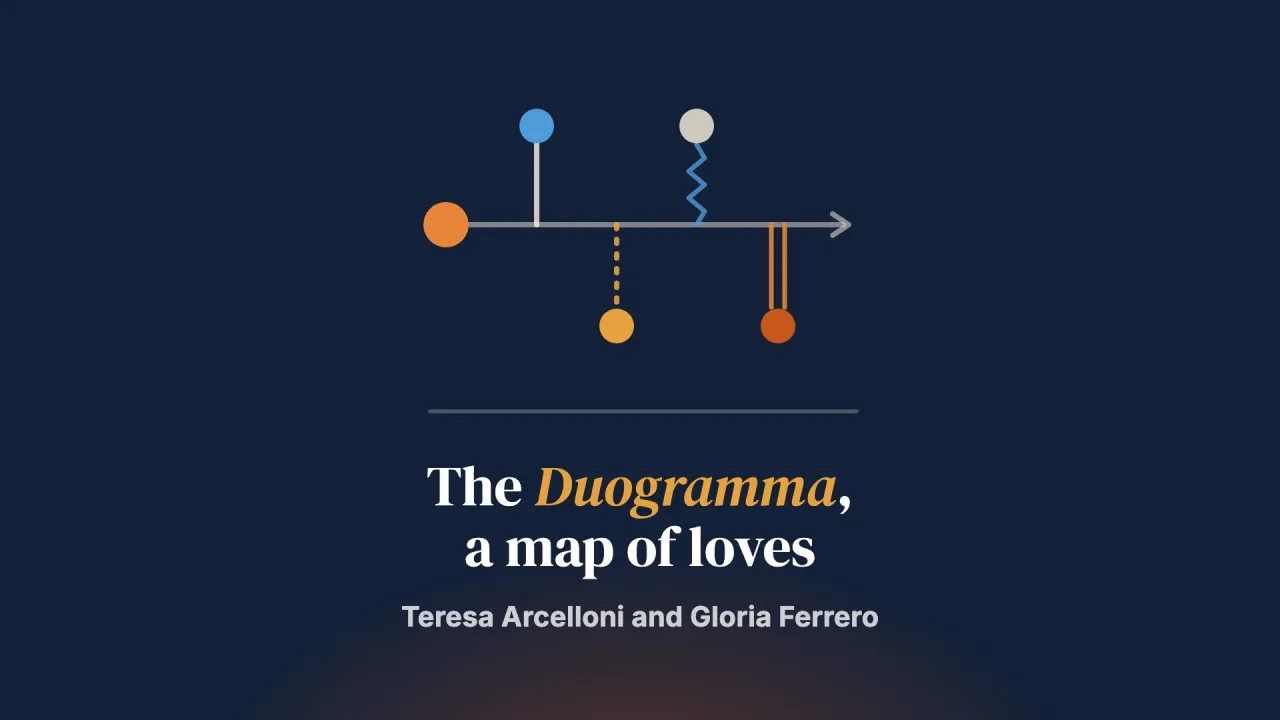 Scientific
The Duogramma®: An innovative methodology for psychotherapy
A map of the couple relationships lived, desired or rejected since childhood: the Duogramma®, its graphic rules and its use in individual therapy.
 Blog
Challenging in therapy: What a patient taught me
A couples therapy session led me to reflect on confrontation, authenticity and resonance: how to address difficult behaviour without invalidating the person.
 Scientific
Decolonizing Supervision: A Critical Race and Queer Theory Framework for Marriage and Family Therapy
Supervision is not neutral: a framework drawing on Critical Race Theory and Queer Theory to name and share power in supervision, with a vignette.
 Scientific
Internal Family Systems Therapy as Part of the ‘Family of Systemic Therapies’: A Critical Exploration of Systemic Practice in the Intra-Personal Domain
Does IFS belong to the family of systemic therapies? A critical exploration, grounded in a family court vignette, of systemic work with “parts”.
Comments 0
Log in to join the discussion. Log in