AI-assisted translation
This version was translated from Italian by Complexe Systémique with the help of artificial intelligence. In case of doubt, the original version prevails.
Connessioni · Milan School
Symptoms, patterns and prescriptions: from strategic interventions to practices of respect
What becomes of the prescription of the symptom, an emblematic intervention of the Milan School in the 1970s, once therapy turns constructivist and dialogical? Gianluca Ganda rereads the notion of structure with Bateson, Maturana and Varela, and sees the symptom as an emergent property of the place assigned to each member of the system. Two clinical situations show a prescription that has become an invitation to self-observation, in the service of a therapy of respect, kindness and not-knowing, in the line of Boscolo and Cecchin.
Unofficial English translation. This article is a translation of Sintomi, pattern e prescrizioni: dagli interventi strategici alle pratiche di rispetto, by Gianluca Ganda, published in Connessioni (Centro Milanese di Terapia della Famiglia), new series, no. 4 (2018), under a CC BY 4.0 licence. Translated by Complexe Systémique in November 2026 with the help of artificial intelligence: the original Italian text has been translated into English and reformatted, which constitutes a modification of the work under the terms of the licence. The paragraphs and subheadings are those of the journal; the long quotation from Bateson, which the journal sets as an ordinary paragraph, is presented as a block quotation; quotations are translated from the Italian, except Bateson’s question about the crab and the lobster, given in his English wording; titles of works are given as the article cites them, in their Italian editions; a few typos have been silently corrected. This translation was made neither by the authors nor by the journal, who are not responsible for its content or for any errors. The original version prevails.
Now the message is no longer “do not change” but “get to know yourselves, explore yourselves”.
Gianluca Ganda
The history of Milanese systemic thinking is approaching half a century. Since the early 1970s, influences and perturbations have followed one another from many directions: a first turn, from psychoanalysis to the Pragmatica della comunicazione (1967), a second, more substantial one towards Bateson’s thought, before meeting the thought of other epistemologists such as von Foerster, Maturana and Varela; finally, various philosophers have enriched what can increasingly be called a metamodel with a clear identity. As happens in the history of science and of thought, the Milan Approach has been both influenced and influential: it would not be honest to call it the progenitor – better the stimulus, the suggestion or the co-author – of the transformations of systemic and family therapy towards the use of emotionality, the reflecting team, dialogical interventions and narrative visions.
The “Milan Approach” differs from other approaches thanks to the cohesion – the outcome of interactions and debates – shown over the years by the thinking of Boscolo and Cecchin, such as to make it a set of distinctive actions and ways of looking. The legacy of Gianfranco and Luigi presents itself as a rich complex of practices, as elastic as they are fertile, still open to evolution. It therefore stands as a central model in the systemic and family therapy movement. We could certainly identify among the bases of systemic DNA such elements as context, relationship, epistemology – premises and the forms they take, from which recursiveness derives – as well as narrative multiplicity, the pluriverse of possible stories. These concepts find a primary reference in the work of Bateson, von Foerster, Maturana and Varela, and see via Leopardi as one – if not the most determined – of the places where they have been applied in psychotherapy. This genetic code, the premises of systemic work, is the basis of the work of Boscolo and Cecchin, fully in line with the thinking of complexity, which takes its direction from its premises (Bocchi, Ceruti, 1985, Ceruti, 2018).
Their therapies were made of questions and listening, and no interpretation. There were few comments and few rereadings of each person’s experience, even though emotionality appeared in the exchanges, in the field of therapy: it was not explored in depth or described, but recognized and welcomed. What emerged were experiences and prejudices, that is, the premises a system invoked to claim its own identity and hence its sense of originality, of particularity, of family. Dialogue first built the contexts in which particular relationships came into existence, then deconstructed them and recreated them with other words; it gave different accents to each person’s accounts, in a play of light and shade that brought out other contexts, other possible relational forms.
The pattern that connects is a hypothesis
Today, as yesterday, there is a continuity marked by attention to relationships and contexts. Sessions go in search of the ways in which people come together, maintain a bond or a space of interaction and preserve the cohesion of the system. The therapist encounters the original and personal ways in which each member approaches existence and inhabits their own world, each with their own prejudices and emotionality: these premises are the epistemologies we are talking about. They are the way in which each person becomes used to making sense of situations and responding to them, to knowing and acting in life, according to a personal model of constant construction and reconstruction of the personal universe in which they move. Epistemologies that each person compares with those of the people around them. This process does not always take place clearly: the discourse of a family or a couple is not a philosophical discussion, aseptic or made of thought, ideas and cognitions, even though there is debate about the methods or premises with which life is faced. It is a confrontation that involves emotionality and action, choices steeped in pathos, in joy and pain, in moves, behaviours and events. Dramatic scenarios, saturated with suffering, intersect with dense plots and blocked landscapes, in which the repetition of tortuous roads is more weariness than pain, because complicated paths keep people away from more fruitful routes.
The systemic gaze tries to shed light on the dynamics of confrontation between the ideas, the premises – often implicit and unstated – the emotions and the actions of a system. The result of this process is an implicit negotiation on several levels that we call the “pattern that connects”, an emergent property of the interaction. We look at these elements to build a hypothesis about the network of relationships within the system and about the way in which the system and its members interface with the outside: we try to identify the structure of the system and the functions its members perform within it.
Theoretical digressions on structure
In Mente e Natura (1984), Bateson gives us a great inquiry into the “pattern that connects”, the structure present in the world of the living. The reflection on the sacred unity of the world of “Creatura” is a look at the world of Mind, the ecology in which ideas and the differences between them stand in “a metaphoric relationship to life” (Bateson, Bateson, 1989, 294, Ingrosso, 2007, 138), giving rise not to something to believe in, like a religion, but to a structure of ideas whose pragmatic effect is to dispose us to action. A question resurfaces from memory: “What pattern connects the crab to the lobster and the orchid to the primrose and all the four of them to me?” (Bateson, 1984, 21). For Bateson, structure is the set of “characteristics of a system that define its responses to environmental events and regulate its internal balances. They correspond to the thresholds and limits of functioning, just as in a drawing the outlines define the solids depicted” (Bateson, Bateson, 1989, 318). Peculiar properties of a system that create a domain of possibilities: in the therapy room, this translates into the set of discourses that state “this is how our family works”. Maturana and Varela (1987) also speak of structure, identifying it as “the set of components and relations that concretely constitute a particular unity in the realization of its organization” (my italics, ibid., 62). The italics are necessary: for Maturana and Varela, the concept of structure must be seen in relation to that of organization, which is “the set of relations that must exist among the components of something for it to be considered as belonging to a particular class” (my italics, ibid., 62).
The system we meet is therefore unique of its kind: it keeps its own characteristics and defines itself autonomously as a “family” or a “couple”, while taking a form different from that of other systems that define themselves in the same way. To paraphrase the opening of Anna Karenina, we could say that all families resemble one another in some features, but each family is made in its own way, whether happy or unhappy.
The structure that imprisons: from premises to dialogue
Among systemic premises are the search for recursiveness and the search for a structure; the pattern that connects is the end point of this inquiry. Among the premises of relational therapists is the tendency to see the couple or the family as a unit, a system that makes sense as a whole, with the structure standing out more than the possibilities of the single elements. Each family keeps its own identity and differs from others through the particular structure it takes on. Like every human system, it is a particular organization and feels that it exists as long as certain properties it has itself established, properties of identity, are respected, allowing it to distinguish itself from other human systems.
When we look at these rules, formed over the long time of interactions, we seek the pattern in order to understand and reflect on the essence and logic of the group, however illogical it may sometimes seem to an outside observer. We accept it with curiosity, granting it the status of normality, according to the ethics of respect for originality. The therapist tries to narrate this pattern through the description of the recursions they grasp in the interactions, and seeks, in the conversation with the system, a consensus on the narrative that emerges. They thus produce a descriptive hypothesis. As such, it must not be espoused; it is important to keep it open, subject to changes made both by the system and by us, so that it becomes more and more a tailor-made garment, all the more effective the more it can bring together all the members of the group and the many levels at which they experience life.
The second-order therapist practises irreverence and reduces their own presumption of truth by remembering that they know only through themselves, with their own sensitivity. They therefore know that the structure described to the system is nothing other than a narrative.
“The tendency to imagine a dualistic universe – [structure and the universe in which it is immanent] – is easily corrected by remembering that it is often we alone who create the notion of structure when we build synthetic descriptions from the data that reach us through the filter of the sense organs. In these cases it is not too difficult to remember that the structure we project onto the ‘external’ world is only a derivative of our perceptions and our thought” (Bateson, 1989, 242).
The therapist is a being who enters into relationship with other beings, within the domain of feeling, insofar as each of us may experience sensations and feelings, may imagine what happens to others and allow ourselves to express what arises in our own intimacy. The therapist might see a structure that does not exist, a creation of their own. The pattern we are talking about is the narrative produced – sometimes imagined – by the therapist on the basis of what they live in the interaction with other beings. With a feeling closer to that of a spectator at a theatrical performance than to the knowledge of a technician.
To remain within the sacred unity of Mind, the narrative of the pattern needs to be offered as a draft on which the therapeutic system takes on the commitment and the joy of working, to modify it and make it evolve. A pattern that, besides involving the members of the family, is able to meet them in their experiences and in their intimate experience has the possibility of making them present in the dialogue of therapy and fosters the renegotiation of roles and positions. This means recognizing in each person – within a constructivist framework – their own lenses and systems of meaning, enriching them with the logic of respect (Canova, 2005): respect for the originality of the other – the form taken by the system – as respect for the different ways of feeling, each with its own richness. The therapist creates a field in which the schemas of each person and the experiences that permeate them can find space; in this way they foster a dynamic of confrontation able to generate an exchange, with the creation of agreements and disharmonies – in a social constructionist process, of construction in dialogue – that translate into new forms of relationship and new schemas for interpreting the world: a change in the constructs of the members of the system. Here we find a coincidentia oppositorum between constructivism and constructionism, between internal and social process: the individual’s lenses shape their world and construct ideas about the mental state of whoever interacts with them; only when these representations are discussed is a new relational space generated. A synthesis of opposites that brings growth, an added value. Discussions that become possible when therapist and system work together, recognizing each other, creating a relational field of respect that can contain feeling – like the tenderness of the maternal (Barbetta, 2014) – and the uncanny and painful eccentricity (Cecchin, Lane, Ray, 2005). It is a field in which opposites can coexist, whose emergent property is that each person becomes a bearer of value.
Structure and positioning: symptoms as emergent properties
Looking at structure means bringing into focus the form taken by the system, in order to understand where its members are positioned and what role they find themselves playing in it. What function does the person perform in the group? What behaviours and actions allow them to embody it? The role of each member is the result of the process of interaction and ongoing dialogue to which everyone contributes, co-constructing the context and identities, since everyone accepts, rejects or at least feeds back on the behaviour of others. It is important to note, however, that not everyone has the same strength in limiting others or asserting themselves, which is why it is important to understand how and where interactions position the members of the system (Harré, Van Langenhove, 1999, Harré, 2012).
Each member has their own role, assigned by the interactions: an emergent property of self-organization, it is the part the person finds themselves playing to keep the family script going, a part that can be uncomfortable and a source of distress. Let us see what the individual finds themselves doing on the basis of the structure in which they are embedded. Negotiating it is not possible, and so the symptom arises. Structure is an emergent property; by definition it is not “the most the system can do” nor “everything it can do” but what, in that context, in that space and at that time, is permitted or manifests itself. This process ends up connoting the behaviour of individuals as symptomatic. The individual does not have full control over the behaviours permitted to them, allowed by the context and by the pattern of the system; the symptom is an expression of the structure and of the system, and a person finds themselves embodying it, expressing it without wanting to. Symptoms not as an expression of illness but of distress, emergent properties negotiated with and in interaction, advantageous for someone, not for everyone.
Positioning involves both the clients and the therapist: the therapist too is placed in a particular position by the system. Its members do not clearly see that they act and display a symptom as an effect of the interaction. They ask therapy for answers and actions, and the therapist has the responsibility of being aware of the position in which the system places them. Defender of the rights of women, of husbands, of children, expert, dispenser of affection, moralizer: these are only some of the roles that clients habitually ask the therapist to play. The therapist has the responsibility of understanding what the family wants, and to bring out the epistemology and the structure that connects them to the system, they will have to be non-expert and curious. These two therapeutic attitudes, which can be attributed to both Boscolo and Cecchin, imply a process of inquiry with the system aimed at deconstructing the reason why the therapist has been enlisted, so allowing them to return to a position of freedom, free from the oppressions of a rigid and binding structure, of a discourse in which one can say only what others have established.
Dramatic patterns and evolutionary tragedies
In the narrative hypothesis of the pattern, symptoms can then be proposed as communications, information that the individual gives to the system: expressions through which the individual claims a different co-construction, the possibility of having a new position. I understand them as messages of contestation, criticism, dissent, disturbance, polemic, protest, rebellion, sabotage, submission, rather than of acceptance, subjection, alliance, obedience.
This process recalls The Tree of Life, Malick’s film (2011), which tells of the relational distress of an American family dragging on across generations. Built on the dynamic between welcoming grace and overwhelming nature, it shows how far the rigidity of the system crushes these different characteristics, until they become conflicting opposites. By contrast, we find a fruitful coincidentia oppositorum, a source of harmony, in Nietzsche’s work on tragedy. For in therapy we often meet tragedies: traumatic and dramatic events that mark people’s lives but allow them to get back on their feet, as well as situations that drag on motionless in the frozen time of repetition, monotonous melodramas that deny themselves any way out.
The Nietzschean hypothesis holds that tragedy is born from the fruitful intersection of two drives, different and complementary. The Apollonian, an outer form with well-distributed volumes, a harmony that is static rigidity, as in sculpture, meets the Dionysian, the perturbation of excess, the power of life that bursts out and leads to the creative movement of dance. Two opposites that we find again in systems, where someone stands outside the schemas, the structure, and others want to bring them back, to force them into it. Apollo and Dionysus, symbols of grace and impetus, the force that defines the individual in their appearing and the uncontainable, wild power of nature. To bring the family out of the drama in which it finds itself, the therapist tries to give mobility back to the script of the system and to move whoever carries the symptoms out of their uncomfortable positions. They try to restore harmony and mobility to the script, to give a perfect and blocked structure the mobility and unpredictability of music and movement.
The symptom in motion
We observe how the individual acts under the influence of the structure, the Apollonian. We then compare their behaviour with that of the other members of the system, to grasp whether someone enjoys a privileged position in the relational dynamic and can establish dominion over the discourse, over what is admitted to and what is excluded from the system.
The working practice of Boscolo and Cecchin showed differences of style and many similarities of aim, among them the tendency to free people from alienations. To reorient individual and system, they made more complex the narratives with which people arrived, and invented multitudes of alternative meanings. I recognize in them the optimism of those who know they can find the healthy normality intrinsic to the person, going on to say that healthy and sick are qualities that depend on the observer. Both always intended to reduce pathologizing descriptions, combining this with the search for the resources lying beneath appearances: as if in a photograph one could grasp the movements that preceded the instant of the shot, the relationships between lights and darks, between solids and voids, discussing how far these influence the result, the image that appears, compared with what another might be, with other colours and different lights. The behaviour of the individual has a particular meaning for the system, and the therapist sets out to increase the descriptions and the messages it conveys, thus allowing both the individual’s behaviour and the context to change; the context is an emergent property of the interaction and, as such, has its own conditioned origin, spatial and temporal. We see one manifestation of it, knowing that there may be many others, and what appears is bound to the context and to the network of relationships. “To make a diagnosis and say that the system is like this means taking a photograph and thus co-creating, freezing, stabilizing a system, a given organization, without taking into account that it is only one of many possible ones” (Boscolo, Cecchin, 1988).
The symptom is an expression of the system; a single member may take on the responsibility of embodying it, although they often do not seem to have chosen to act it out, to behave this way to the very end, to show the distress they declare to the world. In the economy of the system they perform a function, they have a task that allows the other members to maintain their own apparent effectiveness. In some situations, such as the following one, this dynamic takes on a quality that is at once paradoxical and tragic.
Michela, aged 32, expresses her distress through anxiety and worries, waking at night, weariness in planning her life; she seems to refuse to live her age. She presents symptoms close to depression and anxiety attacks. The story of her last year is tragic, to say the least. Fifteen months earlier, after being subjected to mobbing (inequality in exercising the right to influence the system), she decides to resign, her only option. Three months later, just as she had found a new job, the court sends a foreclosure order on the house where she lives with her parents and a brother eight years younger than her, because of the debts of her father’s business; he is a craftsman. She takes on a mortgage, keeps her father’s accounts and worries again because his work brings nothing but losses. Her mother starts working, her brother carries on at university. She seems essential to the family but also the slave of the household. She lives in a situation of profound lack of respect, because the system crushes her, recognizes no possibilities for her, rigidly assigns her the role of the “breadwinner”, of the good father of the family, without her being able to draw any fulfilment from her efforts. The narrative of the pattern aims to underline how far the rigidity of the structure is a source of profound lack of respect towards Michela. She can thus compare this description with the previous one, which she had accepted for a long time and which seemed to be: “I am the only support of the family”. From this difference arises the space of distress: our task is to transform it into desire. The wish to feel like an adult seems to peep out: she would like a relationship, she daydreams of leaving the nest, but she is told that she is selfish because she does not see the difficult time the family is going through. She decides to take some time for herself without telling anyone what she is doing.
The distress of the best of all possible worlds
Individuals and systems often come to find, as the only possible way, one that then turns out to be in some respects dysfunctional. A system can be made up of the most varied human types, as long as they find meaning in being together, an idea that justifies the existence of that group and the need to belong to it. Following Leibniz, we state that this family lives in the best of all possible worlds; Michela’s malaise, however, manifests the imbalance of the system and its rigid positioning. A liberating action seems necessary, aimed at reducing the sense of oppression suffered by this young woman, an intervention of respect. When the structure of the system places someone in a rigid position and prevents their change – often to be seen as an opportunity for evolution – a deficit of respect is created: the system stops noticing one of its members and gives up grasping their depth, the richness of their being. Whoever experiences the lack of respect finds themselves in a disadvantaged position, lived with effects so negative that they limit the perception of their own resources and of the possibilities of responding to events. My client carries a blocked life, in a blocked system, as opposed to a life that thrives and develops: it is a situation that brings out signs of distress, behaviours deemed symptomatic.
The prescription of the symptom
The Milan Approach still shows itself to be dynamic and evolving. It adapts to today’s cultural context tools and processes developed more than thirty years ago. The model as a Creatura: the genetic heritage reconfigures itself, the bases of systemic DNA remain the same, the chromosomes change, adapt, taking different forms in order to remain suited to the new environment. The prescription of the symptom, a typical intervention of the early 1970s, seems to have entered this process of temporal contextualization and shows that it has found a new space of action in the process of therapy. Considered a typical mode of intervention of the Milan Approach of the strategic-paradoxical era, it can be reread in constructivist and constructionist terms. Going further, its plasticity lends it to conforming to the more dialogical and collaborative needs of therapy. It proves useful in fostering the self-observation and reflexivity of the system and of the individual.
The prescription of the symptom, together with rituals and other paradoxical prescriptions, is related to the teaching of Milton Erickson, readapted to the family group (Selvini Palazzoli et al., 1975). With a paradox, the therapist tackles the symptom-behaviour in order to bring the system out of the trance into which it has slipped. The prescription aims to challenge the family’s premises and break its reference schemas (patterns). A process that, if conducted according to strategic practice, has limits: it takes place without understanding what these schemas are for and what meaning they take on; it is carried out from above, almost magically, in a directive way. People’s creativity is thus not encouraged; indeed it is hindered if, as we do today, we read the symptom as an invention, a move to stay in balance within the furrow traced by the system and not “delirare” (to go off the furrow, to rave).
Pietro Barbetta (2003) suggests that Boscolo and Cecchin developed a change of premises at the end of the 1970s. Both were interested in finding clinical modes that were more inclusive and less strategic, more respectful of the history, richness and exceptional nature of each existence (see also Giuliani, 2018). A paradigm shift found in Bateson’s invitation to “examine the bases and nature of the system” (Bateson, 1976, 439) rather than doing as “the doctor who concentrates on symptoms [and] risks protecting or encouraging the pathology of which the symptoms are part” (Bateson, 1976, 441).
Today’s prescription starts from a different position of the therapist, more geared to an attitude of welcome, hospitality and benevolent acceptance. With these dispositions the therapist dilates time (Boscolo et al., 1993) and provides the family with a protected space for self-inquiry: now the message is no longer “do not change” but “get to know yourselves, explore yourselves”. The aim: to support the system in its observation and, if it succeeds, its awareness. A system that acquires new visions and greater clarity about itself can identify alternatives to symptomatic acting, which may now turn out to be inconvenient and uncomfortable. The repetition of the behaviour is an occasion for inquiry: the person is asked to observe themselves while acting – how they feel, how they experience themselves, how much they enact their behaviours – and to observe the system that responds to their behaviour – what the others do, whether they welcome or reject it more or less.
“Acting to increase the possibility of choice” – a principle of von Foerster’s ethics – implies allowing the client to move freely, guaranteeing them the breadth of field of action that confers the faculty of choosing. Possibilities, alternatives of action and of choice as space, a wider domain of the possible.
An accident at work prompts Edoardo to call me: he is 29, he studied to be a designer, but the only job he has found is in a carpentry workshop. Besides making and installing furniture he was supposed to design it, but he never gets the chance. Now he has cut his finger and it seems he will not even be granted compensation. He wants to do a master’s degree but would have to stop working. His discontent is strong, and his relationship with Nicoletta, his partner, suffers too. Edoardo complains about his situation, he does not feel fulfilled, he becomes passive, he struggles to express his emotions, he feels stuck. His recriminations make Nicoletta distant.
I offer him a prescription: “You can’t manage on your own right now; allow yourself to ask for financial support, from Nicoletta, from your parents, explaining to them what you are aiming for.” The aim will be to observe himself: he will have to note how it went and how he felt. It is easier with his partner, less so with his family: it emerges how much harder it is for him to talk to them about his plans. We explore this theme further; he manages to explain himself better and obtains his parents’ support. He starts the master’s in design and soon finds a job, although he is still being supported by his parents: he still lives with his malaise, he thinks he is not worth much, that his abilities are not recognized. He wants to give up the master’s, he feels he is exploiting his parents and his girlfriend. Self-observation now allows him to give shape to his distress: he is not only looking for personal satisfaction, he wants a positive response from his own audience, to whom he owes an old debt. His story shows how much he feared being judged negatively and therefore pushed away by his father. Now he fears not repaying anyone.
Prescriptions lead to making the tragic dynamics of the past present. It is necessary to see them in order to let them go and allow oneself to change them. Here the prescription of the symptom meets the repetition compulsion and puts it on the stage of action, so as to make visible to the whole system what lies behind the label of symptom: from a negative expression of illness, an element to be removed, the complex reading turns it into a behaviour, a communication. The prescription becomes a way of getting to know these systems of meaning better and a positive message towards them, of acceptance, of non-judgement. Every system settles into the best possible condition; if we want to produce change we must start from the acceptance of that state: allow the distress to be there and create the conditions for evolution, first adaptation, then change.
Repeating the symptom or postponing its change makes it possible to embrace the distress, observe it and get to know it. The therapist has the responsibility of creating a welcoming and safe space of relational interaction, respectful of everyone: neither tender nor harsh, neither pitying nor belittling. Compassionate, welcoming suffering, without the therapist taking the place of the people or directing their choices. In short, the therapist offers themselves as a support for the clients and allows a time and space for the system’s reflection on itself to be created. By introducing time and the invitation to circumnavigate the interactions, the prescription works so that the number of possibilities grows. Vision joins with action – if you desire to see, learn how to act – and creates awareness, that is, it gives actions the ethical character that makes each person the protagonist of their own existence. There are more possibilities, and the symptom is one of them: instead of judging it, the prescription places it within an ethical frame, in which each person can ask whether it is the most effective behaviour and take responsibility for carrying it out.
Kind and non-expert: for a therapy of respect
As time and space unfold, the interactions take place that generate patterns, in a way that is codependent on the variables in the field. Through time and space emerge the structures that harden positions, functions and scripts, and consolidate habits and schemas. Reconstructing and observing these processes makes it possible to grasp how far the outcomes are conjuring tricks, while it is therapeutic to come out of the “trance” and then become aware, if possible, of what the filters of our mind make us see. Therapeutic encounters as a space for action, for experimentation, as a time to observe ourselves and suspend definitive narratives, as well as a place to be present to our own emotional states and our own schemas, with the therapist letting their own being be touched by experiences, willing to feel rather than to codify with mental schemas.
Kindness supports whoever takes the non-expert position, clear that they do not know enough about others and their suffering: a kindness that allows the client to look out and observe suffering in their own time and their own way. The kind therapist does much more than devote time and space to the system: they offer their own presence to host it. Welcoming the life of clients, what they tell and what they communicate without saying it. The absence of conditions for taking care of a person creates the condition for making them feel recognized as a being who exists. Kindness and respect give rise to openness and welcome. The therapist amplifies their own presence in the relationship, as acceptance and inclusion, the bases of ethical change that respects the other.
The kind therapist is required to have technical and human competence. They meet the system from a perspective of not-knowing, with the aim of stimulating in it some new form of knowledge, intended to make it flourish. A possibility of new ways of seeing, where time and space, from pure intuitions, become plastic dimensions: filters of knowledge acting in a wider, more complex universe, pushing both the therapist and the clients to understand, as Moltoni says (2018, 124), that “we are not our densities and our transient emotional states but we are the Presence that observes, vast and spacious. And it is truly moving and liberating to discover it!”
Luigi Boscolo is an expert – in technique, in experiences and in life stories – who positions himself as a non-expert in other people’s choices, all equally plausible and sustainable. He seeks harmony between the internal times of the individual and of the system, and between these and the broad social context of life.
Pursuing a new harmony between relationships, a structure that does not crush and oppress but supports and encourages life: Cecchin’s therapist seeks to set people free, with a non-oppressive therapeutic method that makes the Other capable, valuing them.
The complexity of respect is all this, and it leads to the construction of opportunities that eliminate domination and abuse of power in relationships, with the possibility of breaking the most rigid forms and systems.
From the height of his competence, Luigi Boscolo showed us the style of the kind therapist, who “does not know”, does not hide behind their own knowledge, but fosters a democratic and liberating encounter by attuning to the Other: “A therapeutic context in which listening, empathy and respect are maximal” (Boscolo, Bertrando, 1996, 84). The ability to draw close to clients and make them feel seen and considered allowed Gianfranco Cecchin to embody the attitude of “not knowing” through non-oppressive and respectful dialogues. The kind therapist is called upon to be highly competent, acts in the service of those who carry distress within them, enters this world without becoming trapped in it. Rather than curing the system by removing a presumed illness, the therapist takes care of it, invites it to describe itself in order to look at itself. In this way the therapist enables the client to observe themselves and to contemplate their own life with the same kindness, a discontinuous cycle of joy and unease, the fruit of the impossibility of living in constant satisfaction in a world that is imperfect but to be accepted as it is. That’s life! The human condition has its own peculiar tragic dimension, in which joys and sorrows coexist, in the inextricable turmoil and distress inherent in existence.
Complexe Systémique: key points
The article is more a manifesto than a demonstration: it brings together Bateson, Maturana and Varela, Harré’s positioning theory, Nietzsche and Leibniz to argue for a respectful rereading of the prescription of the symptom. Its clinical interest lies in a simple shift. In the strategic version, the prescription acted from above, as a tactical move against the symptom; here it becomes an invitation to observe oneself while repeating, to see what the symptom says about the place a person occupies in the family structure, and what the others do with it. The symptom is read as a protest against rigid positioning, a “deficit of respect” of the system towards one of its members, so the intervention aims at renegotiating roles rather than removing the behaviour. The two vignettes are brief, and the line between a prescription and a simple self-observation task is barely discussed; kindness, a recurring theme, would also gain from being set against Milanese neutrality. Read alongside the article on the paradoxical prescription of the symptom, and the case report that brings Milanese paradox into a collaborative frame.
References
Barbetta P. (2003), “Paradosso e controparadosso” oggi: il senso di una riedizione, in Selvini Palazzoli M., Boscolo L., Cecchin G., Prata G. (2003), Paradosso e controparadosso. Un nuovo modello nella terapia della famiglia a transazione schizofrenica, Milano, Raffaello Cortina.
Barbetta P., (2014), “La compassione tra tenerezza e crudeltà”, www.doppiozero.com/materiali/compassione/la-compassione-tra-tenerezza-e-crudeltà
Bateson G. (1972), Steps to an ecology of mind, San Francisco, Chandler Publishing Company, trad. it., Verso un’ecologia della mente,Milano, Adelphi, 1976.
Bateson G. (1979), Mind and Nature, a necessary unity, New York, Bantam Books, trad. it. Mente e Natura, Milano, Adelphi, 1984.
Bateson G., Bateson M. C. (1987), Angels Fear. Toward an Epistemology of Sacred, New York, Macmillan, trad it. Dove gli angeli esitano, Milano, Adelphi, 1989.
Bocchi G., Ceruti M. (a cura di) (1985), La sfida della complessità, Milano, Feltrinelli.
Boscolo L., Bertrando P. (1993), I tempi del tempo. Una nuova prospettiva per la consulenza e la terapia sistemica, Torino, Bollati Boringhieri.
Boscolo L., Bertrando P. (1996), Terapia sistemica individuale, Milano, Raffaello Cortina.
Boscolo L., Cecchin G. (1988), “Il problema della diagnosi da un punto di vista sistemico”,Psicobiettivo, 8, 3, pp. 19-30.
Canova R. (2005), “Il mistero del rispetto”, Connessioni, 16.
Cecchin G., Lane G., Ray A. W. (2005), “Eccentricità e intolleranza: una critica sistemica”, Connessioni, 16, pp. 9-22
Ceruti M. (2018), Il tempo della complessità, Milano, Raffaello Cortina.
Giuliani M. (2018), “La tecnica, cioè l’arte”, Connessioni nuova serie n. 3.
Harré R., Van Langenhove L. (1999), Positioning Theory: Moral contexts of intentional action, Oxford, Blackwell.
Harré R. (2012), Positioning theory: moral dimensions of social-cultural psychology, in Valsiner J., (a cura di) The Oxford Handbook of Culture and Psychology, New York, Oxford University Press, pp. 191-206.
Ingrosso M. (1998), Verso un’estetica delle relazioni, in Manghi S. (a cura di), Attraverso Bateson, Milano, Raffaello Cortina.
Maturana H., Varela F. (1984), El árbol del conocimiento, trad. it., L’albero della conoscenza, Milano, Garzanti, 1987.
Moltoni S., in Melendez M., (a cura di) (2018), Essere Cura. Una rivoluzione gentile,Unilibro.
Selvini Palazzoli M., Boscolo L., Cecchin G., Prata G. (1975), Paradosso e controparadosso. Un nuovo modello nella terapia della famiglia a transazione schizofrenica, Milano, Feltrinelli.
Watzlawick P., Beavin J. H., Jackson D. (1967), Pragmatics of Human Communication, Norton, New York, trad. it., Pragmatica della comunicazione umana, Roma, Astrolabio, 1971.
Unofficial English translation of Sintomi, pattern e prescrizioni: dagli interventi strategici alle pratiche di rispetto, by Gianluca Ganda, Connessioni, new series, no. 4 (2018), under a CC BY 4.0 licence. Translation (with the help of artificial intelligence) and layout: Complexe Systémique, November 2026 — the work has been modified under the terms of the licence (long quotation presented as a block quotation). Neither the authors nor the journal are responsible for this translation; the original version prevails.
Unofficial English translation of “Sintomi, pattern e prescrizioni: dagli interventi strategici alle pratiche di rispetto”, published in Connessioni (2018) under a CC BY 4.0 licence. Made by Complexe Systémique with the help of artificial intelligence, it does not come from the authors or the journal, who are not responsible for its content; the original version prevails.
Read the original articleHow to cite this article
Ganda, G. (2018). Symptoms, patterns and prescriptions: from strategic interventions to practices of respect (Complexe Systémique, Trans.). Complexe Systémique. https://app.complexe-systemique.com/en_GB/articles/symptoms-patterns-and-prescriptions-from-strategic-interventions-to-practices-of-respect (Original work published in 2018 in Connessioni, nuova serie, n. 4 (2018); republished in 2018 by Connessioni, https://connessioni.cmtf.it/sintomi-pattern-e-prescrizioni-dagli-interventi-strategici-alle-pratiche-di-rispetto/)
To go further
- The paradoxical prescription of the symptom: a counter-intuitive strategy for changeThe paradoxical prescription: mechanisms and limits.
- Case Report: Keeping the Milan approach legacy alive? Paradox and counterparadox working therapeutically with non-suicidal self-injuryMilanese counterparadox made collaborative.
- Tribute to the master Gianfranco Cecchin: systemic prejudicesSystemic prejudices according to Cecchin.
Related training courses
 Certifying course
Training in Systemic Therapy and Interventions – Cycle 1
Certifying training cycle in systemic therapy and interventions – year 1. Courses, supervision and practice, aligned with EFTA/SFTF. In French.
 Certifying course
Training in Systemic Therapy and Interventions – Cycle 2
Certifying training cycle in systemic therapy and interventions – year 2. Clinical complexity, supervision and practice. EFTA/SFTF aligned. In French.
 Certifying course
Training in Systemic Therapy and Interventions – Cycle 3
Certifying training cycle in systemic therapy and interventions – year 3. In-depth intervention, supervision and practice. EFTA/SFTF aligned. In French.
 Certifying course
Training in Systemic Therapy and Interventions – Cycle 4
Certifying training cycle in systemic therapy and interventions – year 4. Clinical integration, supervision and certification. EFTA/SFTF. In French.
Related articles
 Scientific
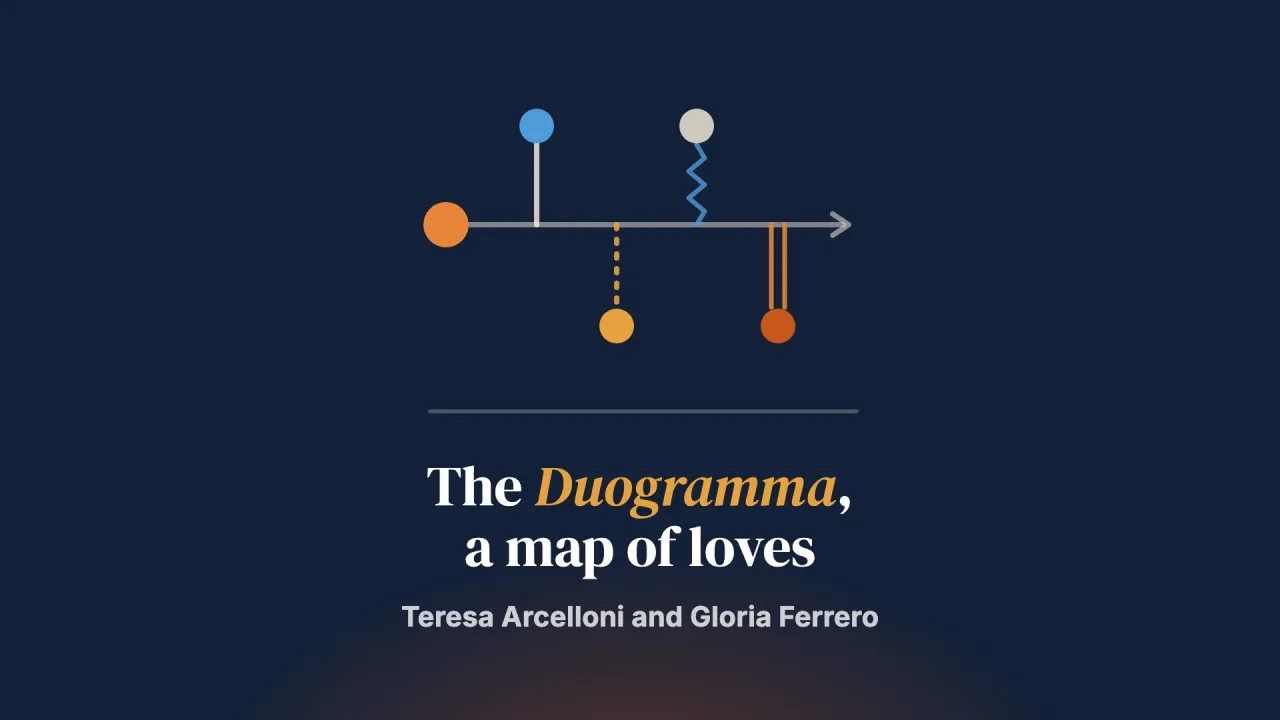
The Duogramma®: An innovative methodology for psychotherapy
A map of the couple relationships lived, desired or rejected since childhood: the Duogramma®, its graphic rules and its use in individual therapy.
 Blog
Challenging in therapy: What a patient taught me
A couples therapy session led me to reflect on confrontation, authenticity and resonance: how to address difficult behaviour without invalidating the person.
 Scientific
Internal Family Systems Therapy as Part of the ‘Family of Systemic Therapies’: A Critical Exploration of Systemic Practice in the Intra-Personal Domain
Does IFS belong to the family of systemic therapies? A critical exploration, grounded in a family court vignette, of systemic work with “parts”.
 Scientific
Collaborative Polyphonic Writing as Therapeutic Practice: A Longitudinal Case Study
A patient and her therapist co-write her autobiography: the psychiatric diagnosis becomes one voice among others, coordinated by an “I as a writer”.
Comments 0
Log in to join the discussion. Log in