AI-assisted translation
This version was translated from Portuguese by Complexe Systémique with the help of artificial intelligence. In case of doubt, the original version prevails.
Revista Brasileira de Terapia Familiar · Family courts
Systemic Action of the Psychologist with Families in Judicial Conflict: Serving People and Transforming Lives
A psychologist and family therapist in Goiânia, Eliane Pelles Machado Amorim draws one conviction from her doctoral thesis: in the family courts, whether one works as an expert, a mediator or a therapist, the task is to receive people who are suffering rather than to assess profiles. Drawing on Bateson, von Foerster, Bertalanffy and Karl Tomm’s interventive questions, she proposes twenty-two guidelines for a systemic practice in the service of justice.
Unofficial English translation. This article is a translation of Atuação Sistêmica do Psicólogo com Famílias em Conflito Judicial: Atendendo Pessoas e Transformando Vidas, by Eliane Pelles Machado Amorim, published in the Revista Brasileira de Terapia Familiar (ABRATEF), vol. 9, no. 1 (2020), doi: 10.60114/rbtf.v9i1.28, under a CC BY 4.0 licence. Translated by Complexe Systémique in November 2026 with the help of artificial intelligence: the original Brazilian Portuguese text has been translated into English and reformatted, which constitutes a modification of the work under the terms of the licence. Paragraphs and headings are those of the journal; the author’s biographical note, printed as a footnote on the first page, is included in the presentation, and the following notes are renumbered accordingly; the Portuguese names of the court roles are given in brackets; the passages from the Brazilian Civil Code, the psychologists’ Code of Ethics and Teixeira and Belém are translated from the article’s Portuguese; a typographical error in Heinz von Foerster’s first name has been corrected silently. The abstract is the author’s own English version. This translation was made neither by the authors nor by the journal, who are not responsible for its content or for any errors. The original version prevails.
A humanized perspective means recognizing the other as a genuine other who needs help but is often caught in a tangle of feelings and behaviours brought before the courts, which call for new meaning rather than diagnosis.
Eliane Pelles Machado Amorim
Abstract
This article is part of the doctoral thesis The systemic action of the psychologist in family courts, defended in march 2020. The purpose here is to present one of the strands of the research, the systemic view, whose focus started from the premise that it is through this view that the psychologist (expert, technical assistant, mediator and therapist) can broadly understand the demands brought to the Family Courts and effectively contribute to the Justice System. Considering the researcher’s family and professional experiences (intersubjectivity), as well as statements of law-makers (judges, prosecutors and lawyers), experienced in this area of activity, the study demonstrated that the systemic view can, in fact, contribute to a complex, non-dichotomized, reading of the families in dispute and provide a joint and transformative construction for other possibilities, allowing an inter and transdisciplinary dialogue between psychology and justice.
Keywords: systemic action; psychologist; family; Family Courts.
Introductory Remarks
This study, which grew out of my doctoral research, offers an understanding of the systemic action of the psychologist with families in judicial conflict. My interest in the subject stems from my family experiences (losses, bereavements, relational conflicts, lawsuits), from my professional experience as a court-appointed expert, technical assistant, mediator and family therapist, and from my teaching practice, all of which have enabled me to understand that family relationships, when they pass through difficult life circumstances, can be faced and retold from a new perspective.
In the literature I reviewed, I found a space still vacant, waiting for this new perspective from psychologists, especially in the family courts (Varas de Família): a careful and broadened perspective that fosters a move away from Manichean, disjunctive, reductionist and partial practices, grounded in traditional science, towards integrated, collaborative, psychoeducational and transformative practices, grounded in postmodern science, which approaches the psychologist’s work with families in a judicial context as a committed practice, able to see people in suffering who need intervention, and not profiles to be assessed.
In addition, the Federal Council of Psychology (Conselho Federal de Psicologia, 2019) has made observations regarding psychological follow-up at this interface, which calls for practices more oriented towards care and psychoeducation.
In this sense, Silva (2013) states that the issues surrounding psychological follow-up in the family courts cannot be treated simply as a search for results through the application of the scientific knowledge of psychology. It involves designing specific methodologies and treating the subject in its complexity, from a perspective on the elements shared at the interface of psychology and justice that sees the psychologist as a co-constructor of contexts that make growth and the transformation of lives possible.
I therefore understand that this broadened professional perspective on families in litigation opens up meanings beyond the demand brought to the courts, through practices that allow techniques to move towards an active way of working, and that the psychologist, as a participant observer (one more in the system), can be a facilitator of communication, which, grounded in shared responsibility and mutual gains among those involved, is attuned to the key of systemic thinking.
According to Bauman (2001), the fluidity of affective bonds has influenced people’s relationships over time, at times bringing them closer, at times pushing them apart, and giving way to other forms of relationship. In the face of adversity, while some families are reborn stronger and with more resources to survive and thrive, others are shaken by conflict, which paralyses their lives and drags them along paths that are not always healthy.
Situations involving conflict between people who remain in an ongoing relationship are sometimes experienced destructively, charged with negative feelings and permeated by violent communication. Family members thus become divided and, “as parties”, turn to the judiciary and seek, through the judge, recognition of their own right at the expense of the other’s right.
The court, with the necessary intervention of the public prosecutor and the participation of the lawyers, all experienced in this area, then receives the families in litigation and refers them to psychological follow-up so that issues specific to human behaviour that the law cannot explain may be understood and worked through, helping the conflict experienced negatively, which leads to destructiveness, to be transformed into something positive, which leads to growth.
When seeing the families, the psychologist shares their understandings with them and, later, with the court (CFP Resolution no. 06/2019), so that the conflicts may cease and the people involved may open themselves to working out viable, forward-looking and, above all, healthier solutions in their lives.
Traditionally, judges, prosecutors and lawyers are known as “operators of the law”; however, when they request the work of psychologists, they invest in interdisciplinarity, because they expect effective action with the families. Hence, from a systemic perspective, they take on the role of “builders of the law” (construtores do Direito), since they take an active part on behalf of families in conflict. Thus I define the builders of the law, psychologists and families as co-constructors of the justice system, on the understanding that, in a relationship, all those involved hold ideas, conceptions, values and beliefs about the world and the realities they encompass, and therefore subjectivities and multiple truths.
The work of Brazilian psychologists in the family courts was regulated by Law no. 4.119 of 27 August 1962, which established and regulated the profession of psychologist in Brazil, and by Decree no. 53.464 of 1964, which, in its fourth article, entrusted psychologists with conducting expert assessments and issuing opinions on matters of psychology. The New Code of Civil Procedure (Law no. 13.105/2015) also legitimizes the psychologist’s role as an officer assisting the court, with the possible functions of expert (perito), when appointed by the court, to carry out a psychological assessment in cases that depend on specific technical or scientific knowledge; of technical assistant (assistente técnico), when retained by one of the litigating parties, to issue an opinion on the expert assessment carried out; and of mediator (mediador), who acts as a facilitator of communication in ongoing relationships from a forward-looking perspective.
In the state of Goiás, judges in the family courts have also been referring families in litigation to family therapy, especially for issues related to ex-conjugality, which interfere with a parenthood that lasts forever. Although the Psychologist’s Code of Ethics (Código de Ética do Psicólogo, 2005) presents psychotherapeutic follow-up as a voluntary process, that is, psychotherapy cannot be imposed, I understand that when judges refer families to therapy, usually setting a minimum period of four months of sessions until the next hearing, their intention is that the therapist can work on the conflictual relationships so that the participants may work through the situation they have experienced and give it new meaning (Annunziata & Jacobson-Kram, 1996).
Moreover, although they are not provided for in the Code of Civil Procedure (Law no. 13.105/2015) as an activity assisting the court (as are the roles of expert, technical assistant and mediator), family therapy and individual psychotherapies are implicit in the Civil Code, Special Part, Book IV, Family Law, Article 1.584, Paragraph Three, in the wording given by the Shared Custody Law (Law no. 13.058/2014): “To establish the duties of the father and the mother and the periods of contact under shared custody, the judge, of their own motion or at the request of the Public Prosecutor’s Office, may rely on technical-professional guidance or on that of an interdisciplinary team, which shall aim at a balanced division of time with the father and with the mother.”.
Consequently, it falls to the psychologist to pay attention to which role is being requested by the judiciary and to accept it within the limits that apply, declining it when the positions are irreconcilable, while explaining that limit. After all, Article One, b, of the Professional Code of Ethics for Psychologists (2005, p. 8) lists among the psychologist’s fundamental duties that of “assuming professional responsibility only for activities for which one is personally, theoretically and technically qualified”.
The purpose of this article is to present one of the focuses of the doctoral research, O olhar sistêmico na atuação do psicólogo (the systemic perspective in the psychologist’s work), which, although it belongs to scientific knowledge, is still uncommon in the legal world; its relevance to psychological follow-up was legitimized by the testimonies gathered from builders of the law, whose interpretation and understanding were carried out through categories constructed on the basis of theoretical concepts and epistemological assumptions of systemic thinking, as well as of the experiences lived, relived and co-constructed before and during the development of the study (Amorim, 2020).
How to Act Systemically?
Systemic thinking entered Brazil in the 1980s and is recognized by Esteves de Vasconcellos (2002) as the new paradigm of contemporary science, one constituted on the basis of diversity, which integrates differences without reducing or eliminating them, and which moves beyond traditional science while recovering and incorporating earlier discoveries, events and solutions from another perspective: a broadened one, which includes the observer as a co-constructor of realities.
As it developed, traditional science came to perceive the limits of the concepts and methods it used and had to revise its epistemological assumptions of simplicity, stability and objectivity.
At the beginning of the 20th century, through studies by physicists such as the German Werner Karl Heisenberg, by biologists such as the Chilean Humberto Maturana, and by cyberneticians such as the Austrian Heinz von Foerster and the American Norbert Wiener, laboratory experiments produced results that led to these assumptions of traditional science being questioned, and the inadequacy of fragmenting the phenomenon was recognized, of separating it into parts in order to analyse them one by one without considering the whole, since its complexity needed to be seen, a complexity that encompasses the context far beyond the parts taken separately (Esteves de Vasconcellos, 2002).
Furthermore, scientists came to understand that the world is unstable, in a process of becoming, and that the prediction or control of behaviour is therefore impossible. Science began to deal with the unpredictability and uncontrollability of systems; in other words, the belief in a stable world, a world that already is, had to be replaced by the belief in a world of instability, in a process of transformation, recognizing the indeterminacy present in processes of becoming.
As for the third assumption, the author states that philosophers have long discussed the impossibility of knowing the world objectively (Esteves de Vasconcellos, 2002). However, ever since Descartes separated science from philosophy, what philosophers said could not resonate in the world of scientists, until scientists themselves began to question this objectivity, since, owing to the biological constitution of our nervous system, we cannot speak objectively about the world. Accordingly, there is no scientific basis for considering that one individual can validate their truth as greater or better than another’s; rather, the task is to address the multiple truths about the reality that presents itself, that is, a reality that exists only through the observer’s eye. And this means that all knowledge is socially constructed by different people, who are at the same time subjects and observers (intersubjectivity).
To think systemically, then, is to think the complexity of the world by seeing the relationships that exist at every level of nature and to seek to understand events in relation to the contexts in which they occur. And to see the world systemically is to recognize that objective realities do not exist. They are constructed as we become part of the world, with other people, through conversations.
At the same time as they take hold, these realities also act recursively upon interactions with situations and with people, fostering co-constructions. Thus every observer, in observing a system, perceives it in a particular way, that is, constructs it and forms with it another system in which the observer is an active participant (Esteves de Vasconcellos, 2002).
From the second half of the 20th century onwards, systemic thinking came to influence proposals for intervention in multiple contexts, among them the family in a judicial context, where the professional alternates between thinking about the system from outside and immersing themselves in dialogue in order to accompany the family in the collaborative construction of descriptions, assessments, stories and their meanings (Dessen, 2010).
Thus, through the systemic approach, interpersonal conflict can be understood in its complexity in the presence of people who hold different views of the same situation, without one being more valid than another, abandoning the stance of choosing the most correct or truest version and replacing it with a multi-view of the problem, in which all truths are legitimized.
In this context, when the court turns to the psychology service through a request for assistance, interdisciplinarity is legitimized in a matter that the law, on its own, cannot explore in depth. The psychologist appointed to work in the family courts then performs a function of means (neither of beginning nor of end) and, with the professional responsibility conferred on them, will have the opportunity to carry out work that fosters reflection and possibilities of growth for families, although families do not always show willingness to take part and cooperate in the sessions.
Hence, whether in the role of court-appointed expert, technical assistant, therapist or family mediator, the systemic psychologist’s primary task is to provide an environment conducive to conversation with (and, if possible, among) all the participants in the family system, in order to seek new resources/possibilities in the interaction between its members.
In my professional experience with families referred by the family courts of Goiânia since 2006, I have been able to see the transformation of families who opened themselves to healthier ways of going on with their lives and, in a way, released the other participants in the situation they had lived through to seek other resources as well.
However, I have also encountered the difficulty and refusal of some people to take part in psychological follow-up, which does not simply mean regarding the families as resistant and giving up on the sessions, but rather understanding that each system creates itself in the face of the challenges of its environment (capacity for self-organization) and conveying this understanding back to the families and to the court.
Systemic thinking has its epistemological foundations in two major theories: cybernetics and general systems theory.
According to the studies of cybernetics, the science that studies communication and control systems in living organisms and machines, what makes the capacity for self-organization1 of systems possible is the feedback mechanism: by receiving information about the results of its past performance, the system becomes able to adjust its future conduct to maintain an already existing pattern (negative feedback) or, alternatively, to direct action towards reaching another goal (positive feedback) (Wiener, 1950, in Esteves de Vasconcellos, 2002).
Thus, for some families, while psychological follow-up represents a search for improvement in the situation they are living through, which makes change in the functioning of the system possible, for others it represents a threat, since it may produce a deviation in the stability of certain patterns that the system believes it needs to preserve. The interaction then generates feedback loops that may be positive or negative, creating a regenerative self-regulation which, in turn, creates new properties, which may be beneficial or harmful to the whole independently of the parts.
However, it is precisely the existence of positive and negative feedback throughout existence that gives rise to the notion of circularity, since it concerns the possibility of interaction with other systems, so as to foster at times the maintenance, at times the evolution of the situations experienced (Foerster, 1991, in Esteves de Vasconcellos, 2002). After all, in situations of crisis, understood as the breakdown of equilibrium, which can be observed in any human activity and in any person, regardless of age, ethnicity, sexual orientation, socioeconomic class, religious belief, cultural level or life-cycle stage, people are expected to dis-equilibrate2 so that they can seek a re-equilibrium.
To explain how the construction of new knowledge occurs, I turn to Piaget (1973) through the theory of equilibration, which holds that the source of progress in development lies in dis-equilibria, since these impel the subject to go beyond their current state and to seek advances and new directions, sustaining life through continuous exchange with the environment and through self-regulation. When they cause subsequent assimilations to differ from previous ones, these new elements lead to optimizing equilibrations (or re-equilibrations), in which the new equilibrium is superior to the previous one. Thus, from the standpoint of equilibration, dis-equilibria constitute a source of development, because they drive new equilibrations.
I understand that, in the encounter between psychologist and family, it is essential for the professional to legitimize the conflicts experienced (dis-equilibria), understanding them as a possibility for growth, and to invite the participating members to seek new paths together (re-equilibria), while respecting themselves and the family when the family chooses not to take part or to make the psychological follow-up difficult.
For the new-paradigm systemic psychologist, conflicts are the very relationships between people, that is, the way they deal with the situation that brought them before the judiciary, defined as the problem situation (Problem-Determined System). Thus the professional, as an expert in contexts of transformative conversation, will invite the social actors involved in the problem situation at hand to take an active and joint part in constructing alternative solutions. What the professional aims for, then, is the passage from a change within the system (first-order change) to a change of the system (second- and third-order changes) (Aun, Esteves de Vasconcellos, & Coelho, 2010).
Hence this invitation to change cannot be imposed, since change takes place internally in each individual, at three levels proposed by Bateson (1979), namely: first-order change – simple changes (ideas and instructions) that lead the system to reorganize itself differently on the basis of RECOGNITION OF THE SELF in the context; second-order change – more complex changes that bring about transformations (accommodations) in the elements that make up the system, through PLANNING, when viable proposals arise that include recognition of the other and the capacity to be flexible; third-order change – changes lived by the system, which make a “new order” possible for life situations through ACTION and the resulting TRANSFORMATION, from a forward-looking perspective.
With the development of Si-Cybernetics3, the physicist Heinz von Foerster (1996) presents the notion of observing systems, according to which the observer, by including themselves in the system they observe, observes themselves observing. It thus presupposes the observer as a participant in the observed system, becoming one more in the process.
On the basis of this concept, the three epistemological assumptions of new-paradigm science (complexity, instability and intersubjectivity) were set out.
General systems theory emerged with the work of the Austrian biologist Ludwig von Bertalanffy (1976), who conceptualizes a system as a complex of elements in a state of interaction. The interaction, or relationship between the components, makes the elements mutually interdependent and characterizes the system, distinguishing it from an aggregate of independent parts; it presupposes that phenomena cannot be considered in isolation, but rather as part of a whole, which emerges beyond the existence of the parts. In this sense, relationships give the system cohesion and, by conferring on it a character of totality or globality, ensure that changes in one of the parts bring about changes in the whole.
The author also addresses the concepts of non-summativity, emphasizing that the system is not the sum of its parts, so that the whole must be considered in its complexity and organization, and the individual in their individuality, even while being part of the system; and of equifinality, which indicates that the outcome of a system’s functioning rests on circular causal chains (non-unilaterality) and regulatory mechanisms, regardless of the initial conditions and of the paths leading to change; in other words, equilibrium is determined by the dynamic order of organic processes, and different initial conditions can produce both similar and different final results (Bertalanffy, 1976).
In view of this, it is through interactions that systems establish both healthy and conflictual relationships, and the psychologist, on entering family systems, must take into account all the stories told by each family member (multiple truths), placing them in the context of a larger whole.
As a builder of conversational contexts, the systemic psychologist should be curious and creative in asking questions of the participants during interviews. In this regard, Tomm (1988) holds that the professional needs to develop “the art of asking questions”, because questions function as an invitation that stimulates people to think about their own problems, fostering greater autonomy and a sense of personal accomplishment. The author thus proposes four types of interventive questions and their aims:
- LINEAR: these are investigative (who?, where?, when?, what?, how?). They are used at an early stage to explain and define the problem, with the intention of clarifying the request for the professional.
- CIRCULAR: these are exploratory (who else?, and you?, what do you do when?). Looking for patterns of communication, they orient the psychologist towards the situation. These questions are used to understand differences, and they open up space for people to become participants.
- STRATEGIC: these have a “corrective” and psychopedagogical intent and are used when a provocative stance on the part of the professional is needed to mobilize the parties. Questions of the “if… then…” type and the use of metaphors are part of this kind of intervention.
- REFLEXIVE: these have a facilitative intent. They start from the assumption that the psychologist, by facilitating the interaction between the parties, triggers reflective activity within an already existing belief system. The psychologist opens up space for the new and for the possibility of decision-making by asking questions such as “let’s imagine that…?”, “would it be a surprise if…?”, “suppose that…?”, which encourages the autonomy of those in conflict.
In order to practise the kind of listening these interventive questions make possible and to come to know the stories told from the perspective of each participant (parents, children and significant others), the psychologist will draw on their sensitivity, integrating people’s suffering with the possibility of a re-equilibration of their lives.
Moreover, in systemic work, various instruments (interviews, tests, institutional visits and others) are borrowed from other psychological approaches and used by the psychologist to broaden their understanding of the “way systems function” in their contexts (Minuchin, 1990). Especially when children are involved, play therapy practices are used, addressing the child’s own request and the articulation of the child’s interpersonal relationships.
Esteves de Vasconcellos (2002) underlines this understanding when she considers that the new-paradigm psychologist/scientist carries techniques and resources developed by other sciences, but feels free to apply them when useful. However, they will be used in a contextualized way, because the aim is to broaden the understandings presented, not to arrive at rigid diagnoses.
Accordingly, by adopting systemic thinking, people/professionals will have a new epistemology to live by, for their way of being and acting in the world, assuming a new ethical stance whose responsibility need not necessarily be written in codes, resolutions or manuals, but internalized in each person.
So, as I understand it, acting systemically in the family courts means that the psychologist should:
- be connected to existential, intellectual and interpersonal experiences, because our professional practice depends on what we are, beyond what we know and are familiar with;
- understand that the dialogue between psychology and justice runs through inter- and transdisciplinarity;
- build their practice on the integration of new and old models, as well as of old certainties and new premises, adopting the epigenetic perspective (Boscolo & Bertrando, 2013);
- see themselves as one more collaborator, together with legal professionals and families, in the construction of the justice system (co-construction);
- be willing to deal with the unpredictable, believing in the dynamic nature of relationships and venturing into the unknown, into not-knowing, so that the “coming to be known” can be constructed (instability);
- receive the court’s request as a request to end the emotional conflicts, not only the lawsuits;
- be sensitive in active and attentive listening and propose interventions that can reach the different aspects of the conflict in order to transform it;
- be curious about each participant’s stories, about their feelings and about the development of the psychological process as each person perceives it;
- be creative, spontaneous, empathic and ethical, and use “doses” of good humour; bearing in mind that being empathic means having the ability to understand accurately the feelings and perspective of another person, whether or not one has experienced the same feelings, and to convey this understanding in the best possible way;
- look at conflicts as something complex and inherent to the human condition and, aiming at mutual gains, open up space for negotiating differences (conversations);
- focus on the family context, seeking an overall understanding of the situation presented, which gives rise to the “problem-determined system” (complexity);
- be a builder of contexts who interacts with families and welcomes them, sharing with them their perceptions, understandings and guidance, and prompting reflection with family members (intersubjectivity);
- recognize the “echoes” between their own stories and those of the families (resonances) and use this experience as a resource in the sessions;
- know that their interventions may have therapeutic effects, without confusing the different legal arrangements, since they know the specificity of each;
- respect the parties’ wish not to take part in the psychological follow-up ordered by the court, while seeking, where possible, to turn this unwillingness into an opportunity for vital growth;
- understand that changing is a complex and often painful task, because it means reorganizing the context and/or one’s very laws of knowing and apprehending the world. It is therefore a meta-concept: that of learning to learn;
- focus on moving families from a paradigm of blame to a paradigm of accountability;
- welcome the difference between reaction (impulse/outpouring of words) and response (reflection) expressed in this context;
- give children and adolescents involved in litigation a voice and a turn, fully respecting them as persons (non-summativity);
- face the adversities that arise during and after the follow-up;
- care for the carer, investing in their own follow-up, both therapeutic and in supervision, intervision and altervision;
- finally, carry out psychological follow-up with zelo, whether as court-appointed expert, technical assistant, mediator or family therapist. By zelo (zeal) I mean a strong disposition, diligence, commitment, care, affection and concern devoted to someone or to accomplishing something.
Final Remarks
This study prompts reflection on the considerable resources that systemic thinking offers to psychologists working with families whose demands are brought to the courts, since it allows a broadened perspective that begins with oneself and moves towards the stories told, in order to understand the suffering of these people and to perceive the existing interrelational game without taking sides, while co-constructing forward-looking paths whenever possible.
And this happens when the professional enters the family system with sensitivity, curiosity, creativity and empathy.
Through this perspective, the psychologist’s work in the family courts as expert, technical assistant, mediator or therapist will involve a redefinition of the problem presented, since the problem does not lie in one element of the system but is a relational problem. Thus, by interacting with families through conversation, the professional will facilitate the construction of different truths, of intersubjective agreements, which will enable the experience of authorship of, and involvement in, the changes planned together, for which everyone shares responsibility.
In this way, when the professional internalizes systemic thinking, their practice is built on the integration (not the disjunction) of situations, and they recognize that objective realities do not exist, since realities are constructed as people interact with the world and with one another, making new realities possible.
From more than two hundred cases handled in the family courts of Goiânia since 2006, working systemically as a court-appointed expert, technical assistant, mediator and independent therapist, in private practice and as an internship supervisor, I have come to understand that the psychologist does effective work only when they know themselves and, drawing on their spontaneity, give back to the family the way they see it and invite it to walk together in a process of co-construction.
My family experiences, my inner voices, have influenced my professional practice and contributed to this more humanized perspective on the phenomena that arise at the interface of psychology and justice.
In my view, a humanized perspective means recognizing the other as a genuine other who needs help but is often caught in a tangle of feelings and behaviours brought before the courts, which call for new meaning rather than diagnosis. We therefore need to reflect on what moves us to work in the family courts, because it is work that makes it possible to serve people and transform lives.
And, throughout the path I have travelled in the family courts, I have also come to understand that this is what the builders of the law expect when they refer families to psychological follow-up.
To conclude, to the question asked by Teixeira and Belém (1999, p. 62), in a study on the psychologist’s stance towards judicial demands, “what is the new perspective that psychology can bring to judicial practice?”, I answer, with a heart full of emotion: SURELY THE SYSTEMIC PERSPECTIVE!!!
Complexe Systémique: key points
This text is less a piece of research than a plea, informed by nearly fifteen years of practice in the family courts of Goiânia. Its strength is to shift the question: a court’s request is not only to assess profiles but to bring emotional conflicts to an end, and the psychologist can hold a “function of means” within it. The twenty-two guidelines offer a useful grid for expert assessment as well as for mediation or court-ordered therapy. Yet they leave open tensions that clinicians know well: how can one stay with a multi-view when an opinion must be given to the court? What becomes of the voluntary nature of therapy when the next hearing is set four months ahead? The distinction between assessing and caring, which the author asks us not to confuse, is worth working through openly with families. The epistemological references are mostly presented second hand, through Esteves de Vasconcellos; what stays with the reader is the stance: refusing to decide between versions, and treating families’ refusal as information to be fed back rather than as failure. Read alongside the review on parental mental illness in the family courts, and the article on family mediation as a way out of conflict through the front door.
Notes from the original
1 Self-organization, self-regulation and autopoiesis are terms created by the Chilean biologists Humberto Maturana and Francisco Varela to designate the capacity of living beings to produce themselves.
2 Silva and Mioto (2009), in a study on prefixation, move beyond a rigid understanding of the prefix des-, which denotes negation, considering that with certain verbs, nouns and adjectives it can also be understood in the productive sense of reversing a process of change. And it is precisely in this productive sense that the word des-equilíbrio (dis-equilibrium) is used within a systemic understanding: it is not a lack of equilibrium but another form of equilibrium found by the system, in a spiral movement, until it can reach a new goal (re-equilíbrio, re-equilibrium).
3 Second-order cybernetics is also called Si-Cybernetics because the French sociologist Edgar Morin proposed a movement that would go beyond cybernetics: the cybernetics of cybernetics. The prefix si derives from the Greek preposition sun, meaning “being together”, which marks the reciprocal obligation between the parts.
References
Amorim, E. P. M. (2020). A Atuação Sistêmica do Psicólogo junto às Varas de Família. Tese de doutorado em Psicologia, Pontifícia Universidade Católica de Goiás, Goiânia.
Annunziata, J., & Jacobson-Kram, P. (1996). Terapia Familiar: resolvendo juntos os problemas. Porto Alegre: Artes Médicas.
Aun, J. G., Esteves de Vasconcellos, M. J., & Coelho, S. V. (2010). Atendimento sistêmico de famílias e redes sociais: desenvolvendo práticas com a metodologia de atendimento sistêmico (Vol. III). Belo Horizonte: Ophicina de Arte e Prosa.
Bateson, G. (1979). Mind and Nature: A Necessary Unity. Nova York: Dutton.
Bauman, Z. (2001). Modernidade líquida. Rio de Janeiro: Jorge Zahar Editor.
Bertalanffy, L. von (1976). Teoria dos sistemas. Rio de janeiro: Fundação Getúlio Vargas.
Boscolo, L., & Bertrando, P. (2013) Terapia Sistêmica Individual: manual prático na clínica. Belo Horizonte: Artesã.
Lei n. 10.406, de 10 de janeiro de 2002 (2002). Código Civil Brasileiro. Brasília, DF.
Brasil (2018). Novo Código de Processo Civil (21a ed). São Paulo: Saraiva.
Conselho Federal de Psicologia (2005). Código de Ética Profissional do Psicólogo. Brasília: CFP.
Conselho Federal de Psicologia (2019). Resolução n. 6, de 29 de março de 2019. Brasília: CFP.
Conselho Federal de Psicologia, Conselhos Regionais de Psicologia e Centro de Referência Técnica em Psicologia e Políticas Públicas (2019). Referências Técnicas para Atuação de Psicólogas(os) em Varas de Família (2a ed). Brasília: CFP.
Dessen, M. A. (2010). Estudando a família em desenvolvimento: desafios conceituais e teóricos. Psicologia, Ciência e Profissão, 30.
Esteves de Vasconcellos, M. J. (2002). Pensamento Sistêmico, o Novo Paradigma da Ciência. Campinas: Papirus.
Foerster, H. von (1996). Visão e conhecimento: disfunções de segunda ordem. In D. F. Schnitman (Org.). Novos Paradigmas, cultura e subjetividade (pp. 59-74). Porto Alegre: Artes Médicas.
Maturana, H., & Varela, F. (1997). De máquinas e seres vivos: autopoiese – a organização do vivo (3a ed). Porto Alegre: Artes Médicas.
Minuchin, S. (1990). Famílias, funcionamento e tratamento. Porto Alegre: Artes Médicas.
Morin, E. (1996). Epistemologia da Complexidade. In D. F. Schnitman (Org.) Novos Paradigmas, Cultura e Subjetividade (pp. 274-289). Porto Alegre: Artes Médicas.
Piaget, J. (1973). Biologia e conhecimento. Petrópolis: Vozes.
Silva, D. M. P. da (2016). Psicologia jurídica no processo civil brasileiro: a interface da Psicologia com o Direito nas questões de família e infância (3a ed). Rio de Janeiro: Forense.
Silva, E. Z. M. da (2013). Psicologia jurídica: um percurso nas varas de família do tribunal de justiça do estado de São Paulo. Psicologia, Ciência e Profissão, 33(4).
Silva, M. C. F., & Mioto, C. (2009). Considerações sobre a prefixação. Revel, 7(12), 1-22.
Teixeira, M. de F. da S., & Belém, R. C. da C. (1999). Breve relato sobre a implantação de um serviço de Psicologia Jurídica. In L. M. T. de Brito (Org.). Temas de Psicologia Jurídica. Rio de Janeiro: Relume Dumará.
Tomm, K. (1988). Entrevistamento Interventivo: Parte III. Pretendendo fazer questões lineares, circulares, estratégicas ou reflexivas? Family Process, 27, 1-15.
Unofficial English translation of Atuação Sistêmica do Psicólogo com Famílias em Conflito Judicial: Atendendo Pessoas e Transformando Vidas, by Eliane Pelles Machado Amorim, Revista Brasileira de Terapia Familiar, vol. 9, no. 1 (2020), doi: 10.60114/rbtf.v9i1.28, under a CC BY 4.0 licence. Translation (with the help of artificial intelligence) and layout: Complexe Systémique, November 2026 — the work has been modified under the terms of the licence. Neither the authors nor the journal are responsible for this translation; the original version prevails.
Unofficial English translation of “Atuação Sistêmica do Psicólogo com Famílias em Conflito Judicial: Atendendo Pessoas e Transformando Vidas”, published in Revista Brasileira de Terapia Familiar (2020) under a CC BY 4.0 licence. Made by Complexe Systémique with the help of artificial intelligence, it does not come from the authors or the journal, who are not responsible for its content; the original version prevails.
Read the original articleHow to cite this article
Amorim, E. P. M. (2020). Systemic Action of the Psychologist with Families in Judicial Conflict: Serving People and Transforming Lives (Complexe Systémique, Trans.). Complexe Systémique. https://app.complexe-systemique.com/en_GB/articles/systemic-action-of-the-psychologist-with-families-in-judicial-conflict-serving-people (Original work published in 2020 in Revista Brasileira de Terapia Familiar, v. 9, n. 1 (2020); republished in 2020 by Revista Brasileira de Terapia Familiar, https://revbrasterapiafamiliar.abratef.org.br/revista/article/view/28)
To go further
- Parental Mental Illness in the Family Courts: A Scoping ReviewParents’ mental health before the court.
- Whose Life is it Anyway? Exploring the Social Relations of High-Conflict Divorce Cases in Southern NorwayThe network around high-conflict divorce.
- Children's Agency in Contact Disputes: Navigating Protection, Participation and AlienationChildren’s voices in litigation.
Related training courses
 Webinar
Extramarital affairs: what does the therapist do when the couple explodes?
Replay of the free webinar of 5 November 2026: how to position yourself as a systemic therapist in the crisis of the extramarital affair. Revelation, secrecy, multipartiality.
 Short course
The suicidal crisis in adolescents and young adults
Training: assessing and supporting the suicidal crisis in adolescents and young adults. Clinical landmarks and systemic tools. In French.
 Certifying course
Training in Systemic Therapy and Interventions – Cycle 1
Certifying training cycle in systemic therapy and interventions – year 1. Courses, supervision and practice, aligned with EFTA/SFTF. In French.
 Certifying course
Training in Systemic Therapy and Interventions – Cycle 2
Certifying training cycle in systemic therapy and interventions – year 2. Clinical complexity, supervision and practice. EFTA/SFTF aligned. In French.
Related articles
 Scientific
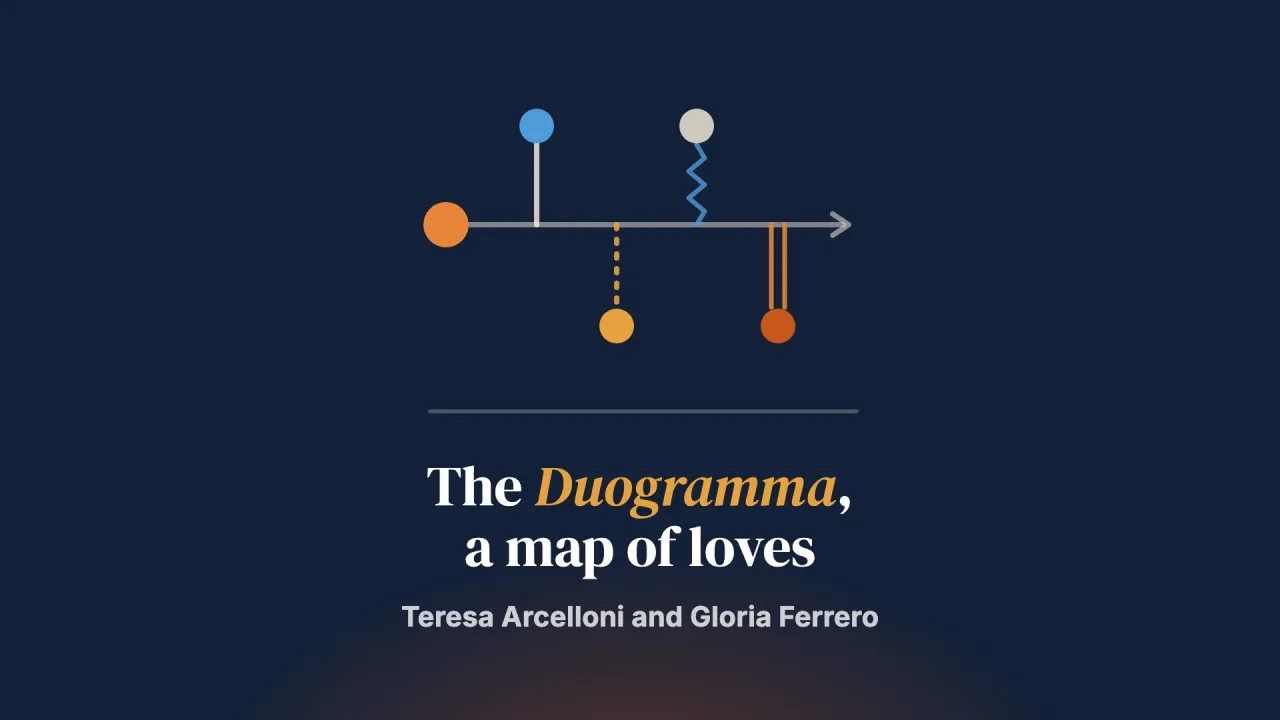
The Duogramma®: An innovative methodology for psychotherapy
A map of the couple relationships lived, desired or rejected since childhood: the Duogramma®, its graphic rules and its use in individual therapy.
 Blog
Challenging in therapy: What a patient taught me
A couples therapy session led me to reflect on confrontation, authenticity and resonance: how to address difficult behaviour without invalidating the person.
 Scientific
Transitioning to the Business of a Session in Collaborative-Dialogic Meetings: A Conversation Analysis
How do Open Dialogue therapists move to the business of a session? The open question creates silences and family negotiation: a conversation analysis of ten sessions.
 Scientific
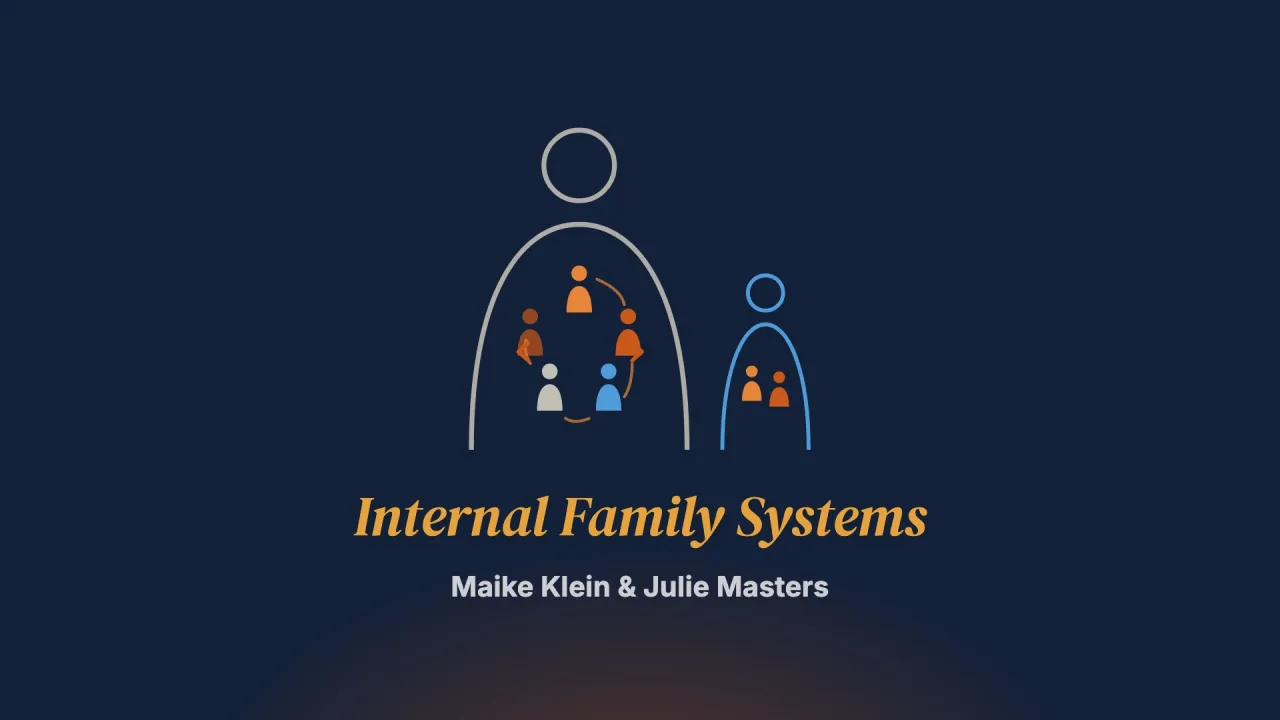
Internal Family Systems Therapy as Part of the ‘Family of Systemic Therapies’: A Critical Exploration of Systemic Practice in the Intra-Personal Domain
Does IFS belong to the family of systemic therapies? A critical exploration, grounded in a family court vignette, of systemic work with “parts”.
Comments 0
Log in to join the discussion. Log in