AI-assisted translation
This version was translated from Portuguese by Complexe Systémique with the help of artificial intelligence. In case of doubt, the original version prevails.
Revista Brasileira de Terapia Familiar · Training
Teaching and practice of systemic family therapy in psychology programs
Of 697 Brazilian psychology programs examined, 422 do not teach systemic family therapy, and those that cover it often do so indirectly. Eloise Ribeiro’s team sets this finding against the collectivism of Brazilian society and a public health system, the SUS, built around the family, and makes the case for curricular reform.
Unofficial English translation. This article is a translation of Ensino e prática da terapia sistêmica familiar nos cursos de psicologia, by Eloise Ribeiro, Lohany Silva Corrêa Neves, João Victor Arend Nunes, Eduarda Menezes, Anna Caroline Viana Machado and Renan Correia Viana de Melo, published in the Revista Brasileira de Terapia Familiar (ABRATEF), vol. 14, no. e0626 (2026), doi: 10.60114/rbtf.v14i1.161, under a CC BY 4.0 licence. Translated by Complexe Systémique in November 2026 with the help of artificial intelligence: the original Brazilian Portuguese text has been translated into English and reformatted, which constitutes a modification of the work under the terms of the licence. The paragraphs and headings are those of the journal; the three charts remain in Portuguese, with translated captions; the names of Brazilian institutions and programs are given in Portuguese, followed by a translation at first mention; the text has been checked against the facsimile, as the automatic extraction was faulty. The abstract is the authors’ own English version. This translation was made neither by the authors nor by the journal, who are not responsible for its content or for any errors. The original version prevails.
SFT offers an approach in tune with the collectivism that prevails in Brazilian society, in which the family often comes before the individual.
Eloise Ribeiro, Lohany Silva Corrêa Neves, João Victor Arend Nunes, Eduarda Menezes, Anna Caroline Viana Machado, Renan Correia Viana de Melo
Abstract
This study analyzes the presence of systemic family therapy (SFT) in psychology curricula in Brazil, considering its relevance for the cultural and public health context. The research was conducted through a systematic literature review and analysis of curricula from 895 institutions registered with the Ministry of Education until October 2024. The results show that most programs do not consistently include SFT, often addressing it indirectly or superficially. Statistical analysis revealed a weak negative correlation between the founding year of programs and the Exame Nacional de Desempenho dos Estudantes scores, as well as a significant association between the presence of SFT and course quality. The study highlights the need for greater integration of SFT in training, in alignment with the Sistema Único de Saúde guidelines and the collectivist characteristics of Brazilian society. It concludes that curricular revisions are essential to strengthen systemic-based psychological practice, promoting a more contextualized and effective professional approach.
Keywords: Systemic family therapy, Psychology curriculum, Psychology training, Sistema Único de Saúde.
Introduction
Systemic family therapy (SFT) has become established as a fundamental approach in contemporary psychology, offering a holistic perspective for understanding and resolving family conflicts (Picon, 2012; Ribeiro & Lindsay, 2025). This therapeutic modality views the family as an interconnected system in which changes in one member affect the whole, allowing for interventions that are more effective than those focused solely on the individual (Gehart, 2010; Nichols, 2012). In the Brazilian context, the growing demand for psychological care, especially since the pandemic, has highlighted the importance of training professionals skilled in this approach (Meneghelli & Parada, 2024).
This article aims to analyze the presence of SFT in the curricula of psychology programs in Brazil, in order to understand how higher education institutions (HEIs) are preparing future psychologists to deal with the complexities of family dynamics. The method used to collect and analyze the data was based on a systematic literature review, as well as on a documentary analysis of the undergraduate psychology curricula of all Brazilian universities listed on the Ministry of Education website up to October 2024. This study seeks to contribute to the improvement of academic training in psychology, highlighting the importance of SFT as an essential tool in the therapeutic repertoire of psychology professionals.
Psychology programs in Brazil: the context
The consolidation of psychology in Brazil began with Law No. 4,119 of 1962 (Lisboa & Barbosa, 2009), which formalized the profession of psychologist and set guidelines for professional training. This milestone marked a significant step forward in the recognition of psychological science in the country, establishing a new field of practice and new possibilities for health care. Psychological assumptions, however, were already in use before this regulation, as ancillary knowledge in other undergraduate programs and specializations (Lisboa & Barbosa, 2009).
Regulation was called for because of various factors in the Brazilian socio-historical context prior to its enactment. The first legislative discussions arose from a demand related to problems of maladjustment and to social pressures (Santos & Miranda, 2022). Organizations and schools were requesting psychological techniques for selection, correction and adjustment. In addition, practice without legal backing prompted the search for legislative regulation (Lisboa & Barbosa, 2009). As psychological services grew, there was a need for greater oversight and quality control. This movement led to the formal teaching of psychology, resulting in the opening of undergraduate programs and in an increase in the number of psychologists trained in the 1970s (Lisboa & Barbosa, 2009).
Since its beginnings, undergraduate training in psychology in Brazil has had some features that have remained and others that have evolved. Training follows the National Curriculum Guidelines (Diretrizes Curriculares Nacionais), which define how curricula are built in HEIs. These guidelines ensure a generalist character, focused on developing basic skills and competencies, and provide broad contact with various areas and approaches of psychology [Conselho Federal de Psicologia (CFP), 2022]. This model, however, is criticized for its lack of specificity and depth in fields of professional practice, which leaves gaps in teaching (Santana et al., 2022). Internships, extension projects and academic research can make up for these shortcomings, but they are complementary, non-mandatory activities that students undertake independently.
The profiles of psychology students in Brazil have changed over the years, reflecting the diversity of the population. State measures have made it easier for students from low-income backgrounds, with diverse ethnic and racial profiles, from inland municipalities and with parents of varied educational levels to enroll (Macedo et al., 2022). This change breaks the hegemony of white, upper-class people that prevailed before these policies. Even so, women still predominate in the profession (CFP, 2022). Most enrollments take place in private HEIs, thanks to programs such as the Programa Universidade para Todos (University for All Program) and the Fundo de Financiamento Estudantil (Student Financing Fund) (Borges-Andrade et al., 2015). Important as it is, this inclusion highlights the commodification of education and the absence of students from minority groups in public HEIs.
Brazilian psychology developed gradually, always in keeping with the broader contexts in which it was embedded. Initially regulated to boost productivity, aimed at specific social classes and influenced by American and European models (Jacó-Vilela, 2024), it now seeks to deconstruct these foundational factors. Ethical, socially committed professionals work to bring about lasting and powerful changes, contributing to new perspectives that are more sensitive to, and more consistent with, the reality of the country (Amendola, 2014). Undergraduate programs are crucial spaces for these transformations, with education being a vital tool for disseminating new knowledge. The academic environment fosters debate, exchange and transformative experiences, capable of setting in motion an entire, solidified historical chain that can, and must, nonetheless be rebalanced.
Characteristics of the Brazilian people and health system
The composition of Brazilian households is diverse and has changed significantly in recent decades. Earlier Brazilian constitutions (1934, 1946, 1967 and 1969) emphasized the “legitimate” family, based on marriage, reflecting the influence of Catholicism. The 1988 Constitution of the Federative Republic of Brazil, however, realigned itself with collective values by broadening the definition of family to recognize diverse family structures, promote equality within the family unit, emphasize children’s responsibility to care for older people and establish family planning as a right of the couple (Torres & Dessen, 2008; Genofre, 2000). Brazilian family relationships changed dramatically over the last century as a result of population developments. The country saw a decline in mortality and fertility rates, growing urbanization and an aging population [Instituto Brasileiro de Geografia e Estatística (IBGE), 2021]. Brazilian historiography began to acknowledge the multiplicity of family structures in the 1970s, moving away from the rigid patriarchal system associated with the country’s colonial past (Genofre, 2000; Samara, 2002; Torres & Dessen, 2008).
Collectivism, characterized by strong commitment and interdependence among family members, remains a distinctive feature of Brazilian families (Cyborlink, n.d.; Greenfield, 1994; Hofstede, 2011). In collectivist cultures, individuals see themselves as part of a larger group, prioritizing group harmony, shared goals and collective well-being over personal ambitions (Oyserman et al., 2002). Individualism, by contrast, emphasizes personal independence, self-sufficiency and the pursuit of individual goals (Cohen et al., 2016). This fundamental difference in cultural orientation affects how people see themselves, their priorities, their decision-making processes and their relationships with others.
Despite industrialization, the collectivist dimension remains present in multifamily and intergenerational arrangements, especially among older generations (IBGE, 2021; Victor et al., 2009). For example, research on older people attending units of the Programa de Saúde da Família (PSF, Family Health Program) indicates that almost 90% of them live in multigenerational households (Victor et al., 2009). Although these arrangements are sometimes driven by economic necessity, they reinforce the deep-rooted importance of family care and support.
Through these changing structures and the continuity of collectivist beliefs, Brazilian families continue to play an important role in providing security, support and stability (Samara, 2002; Victor et al., 2009). This resilience is especially visible in a society dealing with political, economic and social inequality, in which families often take on functions generally attributed to the State (Ribeiro, 2015). Even as family structures evolve, research highlights the centrality of the family in socialization, providing critical support and stability in the face of challenges such as unemployment, poverty and social injustice (Azevedo et al., 2019; Biasoli-Alves, 2000; Dessen & Braz, 2000; Ribeiro, 2015; Simionato-Tozo & Biasoli-Alves, 1998; Souza & Baptista, 2008).
The Sistema Único de Saúde (SUS, Unified Health System) is the largest public health system in the world (Frasão & Ribeiro, 2022). Structured to provide care through a community-based model, the SUS makes the family the basis of health interventions (Brasil, 1997; Macinko & Mendonça, 2018; Noronha & Pereira, 2013). Unlike fragmented or hospital-centered approaches, the SUS organizes primary care through neighborhood health units, ensuring that services are accessible and adapted to the specific needs of each community (Castro et al., 2019; Paim, 2018). This systemic model is reflected in its outreach programs, which begin by addressing health concerns at the family level and then expand to consider broader social determinants in the local context (Costa, 2010; Silva, 2011). This is especially relevant in socioeconomically vulnerable settings, where cultural and structural variables shape family health (Costa, 2010; Stein et al., 2019).
The core values of the SUS reflect the needs and cultural values of the Brazilian population, including its focus on family and community health. Levels of care are organized according to technological density, ranging from the lowest density (primary health care) to intermediate technological density (secondary health care) and, finally, to the highest technological density (tertiary health care).
Primary care was organized through the PSF, which began as a ministerial program in 1994 before expanding into a plan to reorient the health care model. Incorporating the principles of the SUS, the PSF sought to replace conventional practices and establish a new health paradigm. It transformed the traditional, individual-centered medical model into a collective, multiprofessional approach centered on families and communities (Gomes et al., 2009; Silva, 2011). The PSF stands out for fostering long-term relationships between health professionals and families, allowing a deeper understanding of contextual needs and family dynamics, which results in improved diagnoses and greater adherence to treatment (Brasil, 1997; Facchini et al., 2018; Macinko & Mendonça, 2018; Noronha & Pereira, 2013). Longitudinally, one of the fundamental aspects of primary care is its link with fewer hospitalizations, lower overall costs and greater user satisfaction (Macinko & Mendonça, 2018).
The potential of the systemic approach in the SUS
Under the parameters of the SUS, mental health professionals, including psychologists, should work in close collaboration with families at various levels of care through a multidisciplinary, community-based approach. In primary care, psychologists are part of the Núcleos de Apoio à Saúde da Família (Family Health Support Centers) and the Unidades Básicas de Saúde (Basic Health Units) (Frasão & Ribeiro, 2022). At this level of care, collaboration with physicians, social workers and community health workers should prioritize early intervention, psychoeducation and support for common mental health concerns in the family context. This close connection with the community allows psychologists to build meaningful relationships with families, identify psychosocial risk factors and offer preventive care. In secondary care, psychologists work in Centros de Atenção Psicossocial (CAPS, Psychosocial Care Centers) II, CAPS Alcohol and Drugs and specialized outpatient clinics, where they provide structured interventions for moderate to severe mental health conditions (Frasão & Ribeiro, 2022). At this level, they work alongside psychiatrists and other specialists to develop personalized treatment plans that address complex family dynamics and systemic challenges. In tertiary care, psychologists are present in CAPS III units and hospital settings, offering crisis intervention, intensive therapy and support for severe psychiatric disorders (Frasão & Ribeiro, 2022). At all levels, psychologists must work in multidisciplinary teams to ensure a holistic approach that takes into account the interconnection between mental health, family relationships and the social determinants of well-being.
This systemic, family-centered approach highlights the need for a similar evolution in the field of psychology in Brazil. Systemic therapies, in particular, align with the SUS’s emphasis on relational health by recognizing that psychological distress often arises within family and community contexts rather than in isolation (Gehart, 2010; Nichols, 2012).
Definition and importance of SFT
According to family systems theory, people cannot be fully understood in isolation, but only as parts of an interconnected whole. Unlike a linear, individual-centered approach, this theory emphasizes reciprocal relationships and patterns in the family system; that is, family members affect, and are influenced by, one another, resulting in individual actions that cannot be understood outside the family context (Jiménez et al., 2019; Simpson & Hoare, 1987; Wagner & Dalallana, 2019).
Therapies with a systemic family focus (SFT) take a psychotherapeutic approach that seeks to analyze family members and to understand the systems and relationships among the individuals of the nuclear family. The origins of SFT are linked to various fields of knowledge, such as cybernetics, communication theory and biology, which were later integrated into psychology (Gehart, 2010). One of the main forerunners of this approach was the anthropologist Gregory Bateson, who brought general systems theory and cybernetics closer to the field of psychology (Nichols, 2012).
SFT rose to prominence in the 1950s in the United States, during a period of profound postwar cultural and social transformation. Changes such as the technological revolution, urbanization and the entry of women into the labor market shook the old family arrangement, creating the need to understand this new dynamic. In this context, SFT found fertile ground for applying its techniques and theories, helping families adapt to new realities (Ponciano, 1999). From the United States, the approach spread to other countries, adapting to different cultural and social contexts.
In Europe, for example, SFT gained significant ground, with the development of different schools and approaches, such as the Milan School, which emphasizes the importance of communication and relational patterns in the family (Palazzoli et al., 1978). In the United Kingdom, SFT also became established as an important approach, used in mental health and social care services (Carr, 2019). Moreover, in countries such as Italy and Spain, SFT has been widely used in family and community therapy settings (Andolfi, 2017).
SFT offers an approach in tune with the collectivism that prevails in Brazilian society, in which the family often comes before the individual (Jiménez et al., 2019; Wagner & Dalallana, 2019). Unlike the traditional individualistic paradigm in psychology (Gomes et al., 2009; Silva, 2011), SFT recognizes psychological distress as something that emerges in family and community contexts, not in isolation. By integrating systemic therapies into multidisciplinary teams, especially within the SUS, it is possible to strengthen family dynamics, improve communication and mitigate psychosocial stressors, promoting collective well-being (Brasil, 1990).
Methods
This study aimed to analyze the curricula of Brazilian universities that offer a psychology program, checking for the teaching of therapies with a systemic family focus. The research sought to understand how SFT fits into the training of future psychologists in Brazil.
Data collection
To carry out the study, information on psychology programs was gathered from the website of the Cadastro Nacional de Cursos e Instituições de Educação Superior (National Register of Higher Education Programs and Institutions) between January and October 2024. A total of 899 universities were identified, of which 895 had an active psychology program during the research. In addition to the number of active programs, other relevant data found on the website included the year each program was founded, the geographical distribution and the score on the Exame Nacional de Desempenho dos Estudantes (Enade, National Student Performance Examination).
It was decided to include the Enade score as a variable because it is an important metric for assessing the quality of higher education in Brazil, reflecting student performance and the quality of the programs offered (Castro et al., 2016; Oliveira et al., 2022). The Enade score has been used as an indicator of the quality of HEIs. Studies show that the Enade assesses not only student performance but also infrastructure, teaching resources and faculty qualifications (Broch et al., 2020; Castro et al., 2016).
Collection procedures
The curricula of the 895 HEIs offering a psychology program were analyzed by accessing their institutional websites, where the available curriculum structure was examined. When the information needed to verify the presence or absence of SFT was not available online, an attempt was made to contact the institution by email or to reach the program coordinator directly, requesting the course syllabus. When no reply was received, a further attempt was made via WhatsApp, using the number provided for prospective students.
Data analysis
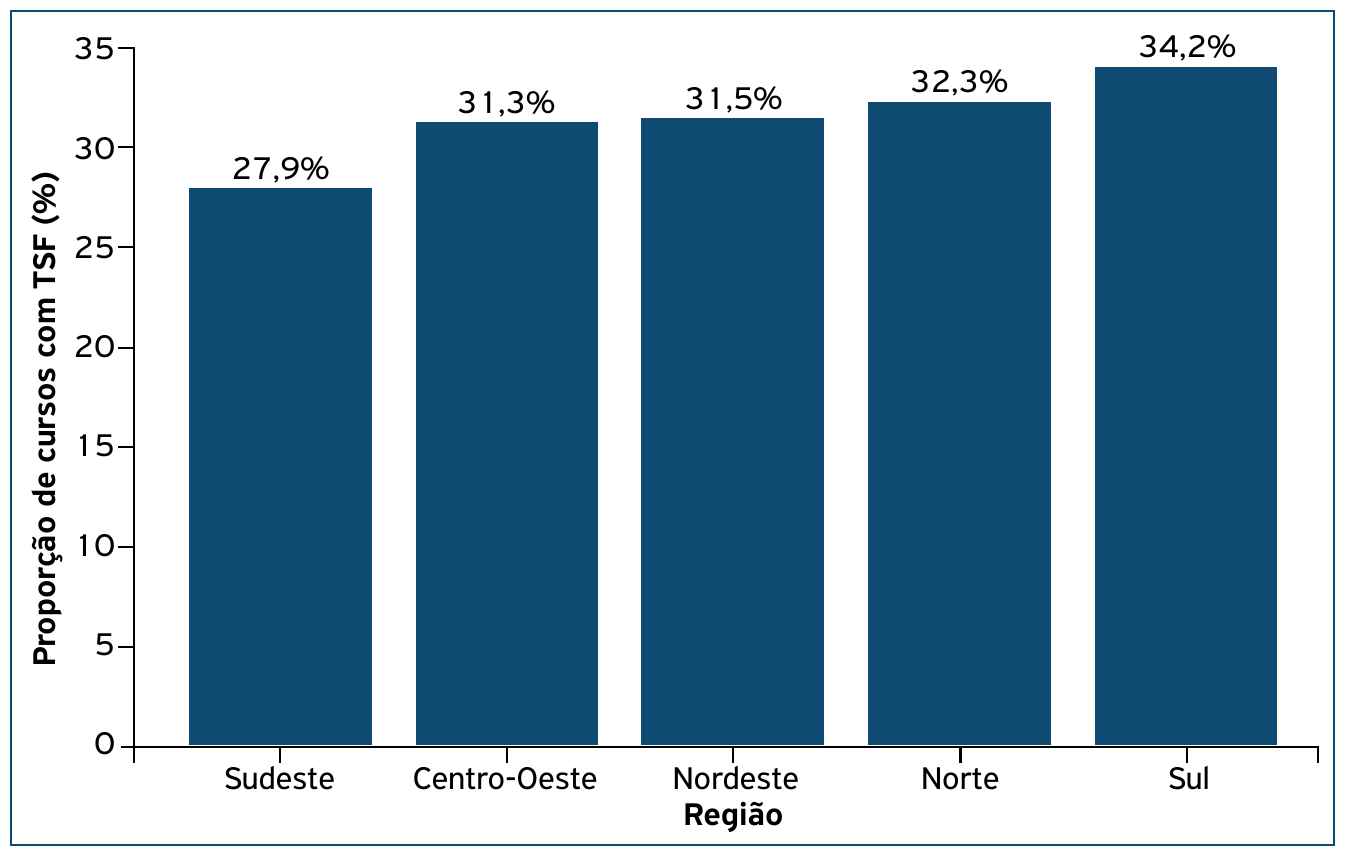
Of all the institutions surveyed (895), 198 did not respond to any form of contact, making it impossible to collect data on their curricula. Among the remaining 697 universities, 422 did not include SFT in their curriculum structure. In 275 programs, the systemic family approach appeared, even if indirectly, in courses such as Psychology of Family Relationships, which covers multiple theories without emphasizing SFT. Furthermore, 496 programs did not directly mention clinical approaches found in SFT, presenting the content in a generalist or superficial way. For the purposes of analysis, universities were grouped by region: North, Northeast, Center-West, Southeast and South. The psychology program was active in 65 universities in the North region, 235 in the Northeast, 115 in the Center-West, 319 in the Southeast and 161 in the South.
Among the institutions for which it was possible to verify in which semester the course covering SFT is offered, 109 programs were found to offer SFT as a mandatory course, while 39 offer it as an elective. As for the number of programs offering SFT in their curriculum or in the clinic, as an elective or a mandatory course, the data by region were as follows: 21 institutions in the North region, 74 in the Northeast, 36 in the Center-West, 89 in the Southeast and 55 in the South. Despite the differences in the absolute number of institutions, the provision of SFT is distributed relatively evenly across the regions, with a slight proportional lead for the South region (Fig. 1).
Statistical analysis
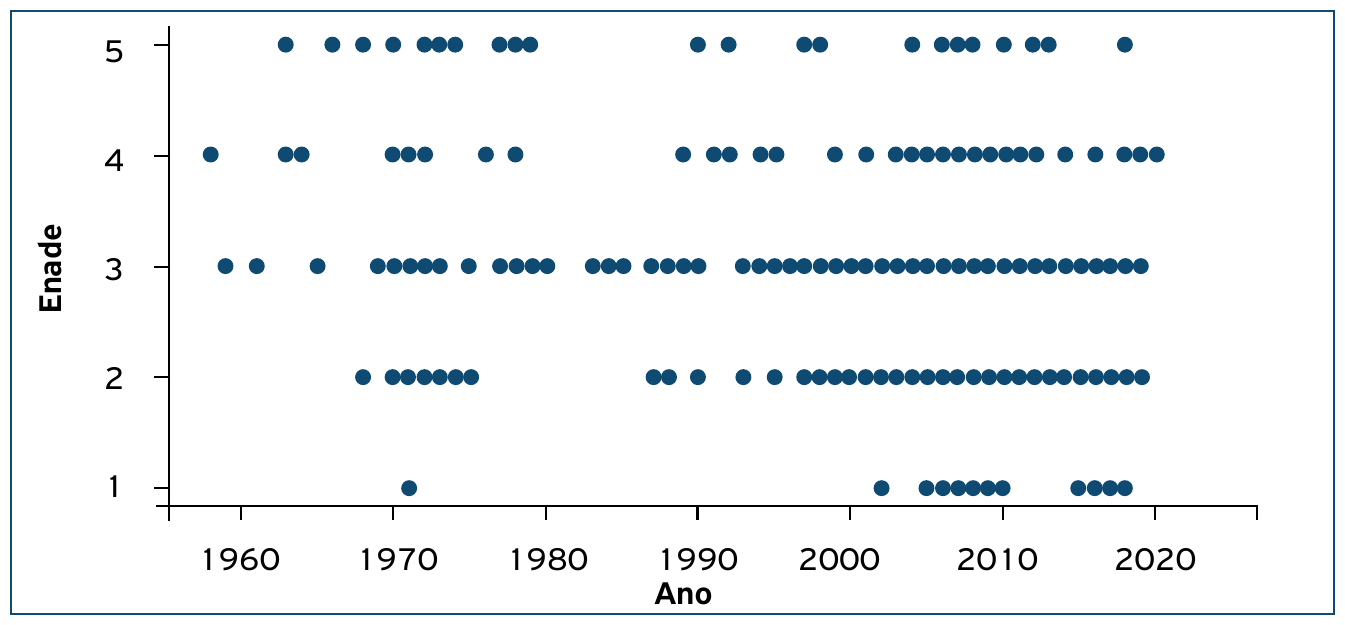
To analyze the correlation between the institutions’ founding year and the Enade score, a Pearson correlation was performed, yielding r = −0.2934, which indicates a weak negative correlation between founding year and program quality (Enade score), suggesting that more recently founded institutions may have slightly lower scores (Fig. 2).
A chi-square test was performed to analyze the relationship between the presence of SFT in the curriculum and the region of Brazil. The results were: χ2(8, n = 697) = 9.5865, p = 0.2953. The results indicate that the Enade score has a significant influence on the presence of SFT in the curriculum (p = 0.042), whereas founding year and region showed no statistical significance.
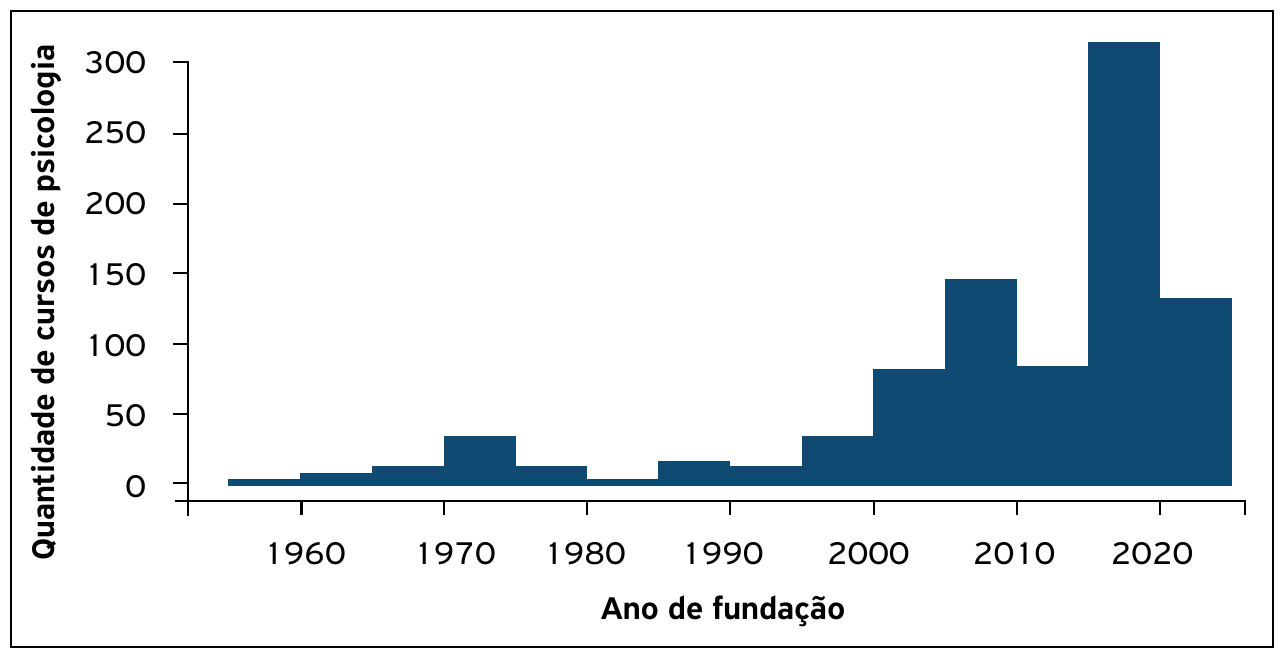
To explore the distribution of psychology programs over time, a histogram was built using the R language. The chart was generated from the variable founding year of each program, by count. This procedure made it possible to visualize the frequency of program openings over the years, revealing a significant concentration of new programs in the last decade (Fig. 3). The choice of a histogram as a graphical tool is justified by its ability to represent the distribution of continuous data clearly and intuitively (Wickham & Grolemund, 2025).
Discussion
The data collected reveal a significant gap in the training of psychologists in Brazil with regard to SFT (Ribeiro & Lindsay, 2025). The analysis of Brazilian university curricula showed that most institutions do not give SFT a prominent place in their curriculum structure. Among the 697 universities that provided information, 422 did not include SFT in their curricula, while 275 programs included it indirectly. Moreover, the placement of SFT as a course across the semesters varies, with a tendency to introduce it late, in the final semesters of the program, which may limit students’ theoretical and practical grounding.
The Pearson correlation suggests that older institutions may have slightly higher Enade scores, but the relationship is not very strong. In the context of this study, it was also observed that the lower the Enade score, the greater the likelihood of SFT being in the curriculum. This may indicate that institutions with lower scores are seeking to diversify their pedagogical approaches in order to improve the quality of teaching and/or are turning to more recent therapeutic approaches.
The analysis of the chart on the founding year of psychology programs shows a significant growth trend over the last 10 years, particularly in the period after 2010. This pattern suggests that a large share of the programs currently active were created recently, which may reflect both the expansion of educational provision and the growing demand for professionals in the field. This expansion is in line with the growing recognition of the importance of mental health in contemporary society (Vidal et al., 2025). In addition, studies indicate that this movement is driven by changes in public policy and by the value placed on psychological care as an essential part of social well-being (dos Santos et al., 2024). Thus, the profile of psychology programs in Brazil appears to follow the cultural and social transformations that call for greater attention to mental health.
Conclusion
Training in psychology in Brazil is still predominantly centered on individualistic approaches, such as cognitive behavioral therapy and psychoanalysis (Ogihara & Uchida, 2014). The limited inclusion of SFT in university curricula suggests a need to revise curricular guidelines to incorporate more systemic, family-oriented approaches. SFT is particularly relevant in collectivist contexts such as Brazil, where the family plays a central role in people’s lives and the health system follows the same direction. The results of this study point to the need for curricular revision in Brazilian universities so as to include SFT more robustly. This could improve the preparation of future psychologists to work with family and community dynamics (Ribeiro & Lindsay, 2025; Seixas, 2024), bringing training more closely into line with Brazilian cultural values and the principles of the SUS.
Moreover, although the presence of SFT in curricula is still limited, the data suggest that the approach has a certain reach across all regions of the country, with a proportionally similar distribution. This pattern indicates that, despite regional inequalities in the absolute number of institutions, the inclusion of SFT is not concentrated in a single geographical hub, which may reflect the gradual spread of this approach in psychology training in Brazil. This picture raises hypotheses about the factors shaping this distribution, such as regional academic traditions, specific institutional guidelines and possible differences in how contemporary approaches are incorporated into curricula. Future research could therefore investigate in greater depth the regional and institutional determinants that favor the inclusion of SFT in professional training.
Limitations
This study faced limitations, such as the lack of response from 198 institutions, which may have affected the representativeness of the data. In addition, the analysis was based on information available online and on the institutions’ responses, which may not fully reflect the reality of the curricula and of what is actually taught to students.
Complexe Systémique: key points
This study asks a question that is rarely documented: how much room do psychology curricula give to systemic thinking in a country whose public health system is organized around the family? The finding is clear: of 697 programs that provided information, 422 do not teach SFT, and where it does appear, it is often indirect and late in the program. Its value for clinicians lies in linking training, culture and health policy: a psychology designed for the individual sits poorly with multigenerational families and with primary care conceived as work with families. The study should nonetheless be read with caution. The method remains basic (presence or absence in curriculum documents, 198 institutions with no response, a systematic review announced but not described), and the text draws from a chi-square test on regions a conclusion about the Enade whose test is not reported; the abstract, moreover, presents as an association with quality what the discussion reads as a link between low scores and the presence of SFT. What remains is a useful plea to think about training from its context. Read alongside the account of how family therapy arrived in Brazil, and potential decolonial pathways in family therapy.
Notes from the original
CONFLICT OF INTEREST. Nothing to declare.
AUTHORS’ CONTRIBUTIONS. Substantial scientific and intellectual contributions to the study: E. Ribeiro, L.S.C. Neves, J.V.A. Nunes, E. Menezes, A.C.V. Machado and R.C.V. De Melo; Conception and design: E. Ribeiro; Data analysis and interpretation: E. Ribeiro; Writing of the article: E. Ribeiro, L.S.C. Neves, J.V.A. Nunes, E. Menezes, A.C.V. Machado and R.C.V. De Melo; Critical revision: E. Ribeiro, L.S.C. Neves, J.V.A. Nunes, E. Menezes, A.C.V. Machado and R.C.V. De Melo; Final approval: E. Ribeiro.
DATA AVAILABILITY STATEMENT. Data will be provided upon request.
FUNDING. No funding was received for this study.
STATEMENT ON THE USE OF ARTIFICIAL INTELLIGENCE TOOLS. Artificial intelligence tools were used to a limited extent to assist with grammatical revision of the text and with the initial identification of relevant bibliographic references. All suggested sources were checked and critically analyzed by the authors. The final content, including the interpretation of the data and the writing of the manuscript, is the sole responsibility of the authors.
ACKNOWLEDGMENTS. The authors thank the educational institutions that kindly provided information for this research; their collaboration was essential to the collection and organization of the data presented in this study.
References
Amendola, M. F. (2014). Formação em psicologia, demandas sociais contemporâneas e ética: Uma perspectiva. Psicologia: Ciência e Profissão, 34(4), 971–983. https://doi.org/10.1590/1982-370001762013
Andolfi, M. (2017). A terapia familiar: Um enfoque intergeracional. Imago.
Azevedo, T. L., Cia, F., & Spinazola, C. (2019). Correlação entre o relacionamento conjugal, rotina familiar, suporte social, necessidades e qualidade de vida de pais e mães de crianças com deficiência. Revista Brasileira de Educação Especial, 25(2), 205–218. https://doi.org/10.1590/S1413-65382519000200002
Biasoli-Alves, Z. M. M. (2000). Continuidades e rupturas no papel da mulher brasileira no século XX. Psicologia: Teoria e Pesquisa, 16(3), 233–239. https://doi.org/10.1590/S0102-37722000000300006
Borges-Andrade, J. E., Bastos, A. V. B., Andery, M. A. P. A., Guzzo, R. S. L., & Trindade, Z. A. (2015). Psicologia brasileira: Uma análise de seu desenvolvimento. Universitas Psychologica, 14(3), 865–880. https://doi.org/10.11144/Javeriana.upsy14-3.pbua
Brasil. (1988). Constituição da República Federativa do Brasil. Senado Federal. https://www.planalto.gov.br/ccivil_03/constituicao/constituicao.htm
Brasil. (1990, setembro 19). Lei nº 8.080, de 19 de setembro de 1990: Dispõe sobre as condições para a promoção, proteção e recuperação da saúde, a organização e o funcionamento dos serviços correspondentes e dá outras providências. Diário Oficial da União. https://www.planalto.gov.br/ccivil_03/leis/l8080.htm
Brasil. Ministério da Saúde. (1997). Saúde da família: uma estratégia para a reorientação do modelo assistencial. Ministério da Saúde.
Broch, C., Breschiliare, F. C., & Barbosa-Rinaldi, I. P. (2020). A expansão da educação superior no Brasil: Notas sobre os desafios do trabalho docente. Avaliação: Revista da Avaliação da Educação Superior (Campinas), 25(2), 257–274. https://doi.org/10.1590/S1414-4077/S1414-40772020000200002
Carr, A. (2019). Family therapy: Concepts, process and practice. John Wiley & Sons. https://www.wiley.com/en-us/shop/psychology-general/family-therapy-concepts-process-and-practice-3rd-edition-p-9781119954644
Castro, M. C., Massuda, A., Almeida, G., Menezes-Filho, N. A., Andrade, M. V., de Souza Noronha, K. V., Rocha, R., Macinko, J., Hone, T., Tasca, R., Giovanella, L., Malik, A. M., Werneck, H., Facchini, L. A., & Atun, R. (2019). Brazil’s Unified Health System: The first 30 years and prospects for the future. The Lancet, 394(10195), 345–356. https://doi.org/10.1016/S0140-6736(19)31243-7
Castro, S. O., Souza, L. H., Gava, R., Silva, E. A., & Pereira, R. M. (2016). A influência do Enade no âmbito das Instituições de Ensino Superior. Educação, Ciência e Cultura, 21(1). https://doi.org/10.18316/2236-6377.16.22
Cohen, A. B., Wu, M. S., & Miller, J. (2016). Religion and culture: Individualism and collectivism in the East and West. Journal of Cross-Cultural Psychology, 47(9), 1236–1249. https://doi.org/10.1177/0022022116667895
Conselho Federal de Psicologia (CFP). (2023). Nota Técnica CFP nº 1/2023: Orientações sobre a prática da Constelação Familiar. https://site.cfp.org.br/wp-content/uploads/2023/03/Nota-Tecnica_Constelacao-familiar-03-03-23.pdf
Conselho Federal de Psicologia. (2022). Censo da Psicologia Brasileira - Volume 1: Formação e inserção no mundo do trabalho. https://site.cfp.org.br/wp-content/uploads/2022/12/Censo_psicologia_Vol1-1.pdf
Costa, L. F. (2010). A perspectiva sistêmica para a clínica da família. Psicologia: Teoria e Pesquisa, 26(spe), 95–104. https://doi.org/10.1590/S0102-37722010000500008
Cyborlink. (n.d.). Brazil – Business etiquette, culture & manners. https://www.cyborlink.com/besite/brazil.htm#:~:text=we%20have%20
Dessen, M. A., & Braz, M. P. (2000). Rede social de apoio durante transições familiares decorrentes de nascimento de filhos. Psicologia: Teoria e Pesquisa, 16(3), 221–231. https://doi.org/10.1590/S0102-37722000000300005
Dos Santos, M., Almeida dos Santos, L., & Da Silva, E. M. (2024). Saúde mental no século XXI: Desafios, impactos e caminhos para o cuidado. In Saúde mental: Os desafios da atualidade (pp. 10–16). https://doi.org/10.70430/978-65-983302-6-2.10-16
Facchini, L. A., Tomasi, E., & Dilélio, A. S. (2018). Qualidade da atenção primária à saúde no Brasil: avanços, desafios e perspectivas. Saúde em Debate, 42(supl. 1), 208–223. https://doi.org/10.1590/0103-11042018S114
Frasão, G., & Ribeiro, K. (2022, novembro 3). Atenção primária e atenção especializada: Conheça os níveis de assistência do maior sistema público de saúde do mundo. Ministério da Saúde. https://www.gov.br/saude/pt-br/assuntos/noticias/2022/marco/atencao-primaria-e-atencao-especializada-conheca-os-niveis-de-assistencia-do-maior-sistema-publico-de-saude-do-mundo
Gehart, D. R. (2010). Mastering competencies in family therapy: A practical approach to theories and clinical case documentation. Cengage Learning.
Genofre, R. M. (2000). Família: Uma leitura jurídica. In M. do C. B. Carvalho (Org.), A família contemporânea em debate (pp. 97–104). EDUC/Cortez.
Gomes, K. O., Cotta, R. M. M., Araújo, R. M. A., Cherchiglia, M. L., & Martins, T. C. P. (2009). Atenção primária à saúde – a “menina dos olhos” do SUS: sobre as representações sociais dos protagonistas do Sistema Único de Saúde. Ciência & Saúde Coletiva, 16(1), 881–892. https://doi.org/10.1590/S1413-81232011000700020
Hofstede, G. (2011). Dimensionalizing cultures: The Hofstede model in context. Online Readings in Psychology and Culture, 2(1). https://doi.org/10.9707/2307-0919.1014
Instituto Brasileiro de Geografia e Estatística. (2021). Estatísticas do Registro Civil 2021. https://static.poder360.com.br/2023/02/levantamento-ibge-nascimento-2021.pdf
Jacó-Vilela, A. M. (2024). A psicologia no Brasil: Formação e institucionalização. Psicologia: Ciência e Profissão, 44(spe1), e287307. https://doi.org/10.1590/1982-3703003287307
Jiménez, L., Hidalgo, V., Baena, S., León, A., & Lorence, B. (2019). Effectiveness of structural-strategic family therapy in the treatment of adolescents with mental health problems and their families. International Journal of Environmental Research and Public Health, 16(7), 1255. https://doi.org/10.3390/ijerph16071255
Lisboa, F. S., & Barbosa, A. J. G. (2009). Formação em psicologia no Brasil: Um perfil dos cursos de graduação. Psicologia: Ciência e Profissão, 29(4), 718–737. https://doi.org/10.1590/S1414-98932009000400006
Macedo, J. P., Reis, S. T., Bezerra, L. L., & Abreu, M. M. (2022). Impacto dos programas de expansão das universidades federais no perfil de estudantes de psicologia. Psicologia: Ciência e Profissão, 42. https://doi.org/10.1590/1982-3703003230895
Macinko, J., & Mendonça, C. S. (2018). Estratégia Saúde da Família: Um forte modelo de atenção primária à saúde que traz resultados. Saúde em Debate, 42(supl. 1), 18–37. https://doi.org/10.1590/0103-11042018S102
Meneghelli, S. B., & Parada, A. P. (2024). Caracterización de la demanda de atención psicológica en la pandemia. Prometeica - Revista de Filosofía y Ciencias, 29, 244–261. https://doi.org/10.34024/prometeica.2024.29.16247
Nichols, M. P. (2012). Family therapy: Concepts and methods. Pearson.
Noronha, J. C., & Pereira, T. R. (2013). Princípios do sistema de saúde brasileiro. In Fundação Oswaldo Cruz, A saúde no Brasil em 2030 - Prospecção estratégica do sistema de saúde brasileiro: Organização e gestão do sistema de saúde (Vol. 3, pp. 19–32). Fiocruz/Ipea/Ministério da Saúde/Secretaria de Assuntos Estratégicos da Presidência da República. https://doi.org/10.7476/9788581100173.0003
Ogihara, Y., & Uchida, Y. (2014). Does individualism bring happiness? Negative effects of individualism on interpersonal relationships and happiness. Frontiers in Psychology, 5, 135. https://doi.org/10.3389/fpsyg.2014.00135
Oliveira, B. L., Soares, F. A., Silva, A. P., Cunha, C. L., Menegaz, J., & Silva, K. L. (2022). Exame Nacional de Desempenho dos Estudantes e a qualidade do ensino superior em saúde brasileiro. Revista Latino-Americana de Enfermagem, 30. https://doi.org/10.1590/1518-8345.5714.3585
Oyserman, D., Coon, H. M., & Kemmelmeier, M. (2002). Rethinking individualism and collectivism: Evaluation of theoretical assumptions and meta-analyses. Psychological Bulletin, 128(1), 3–72. https://doi.org/10.1037/0033-2909.128.1.3
Paim, J. S. (2018). Sistema Único de Saúde (SUS) aos 30 anos. Ciência & Saúde Coletiva, 23(6), 1723–1728. https://doi.org/10.1590/1413-81232018236.09172018
Palazzoli, M. S., Boscolo, L., Cecchin, G., & Prata, G. (1978). Paradox and counterparadox: A new model in the therapy of the family in schizophrenic transaction. Jason Aronson. https://archive.org/details/paradoxcounterpa00selvrich/page/n5/mode/2up
Picon, F. (2012). Family therapy in Brazil: Current status. International Review of Psychiatry, 24(2), 81–85. https://doi.org/10.3109/09540261.2012.655714
Ponciano, E. L. T. (1999). História da terapia de família: de Palo Alto ao Rio de Janeiro [Dissertação de mestrado, Pontifícia Universidade Católica do Rio de Janeiro]. https://ppg.psi.puc-rio.br/uploads/uploads/1969-12-31/1999_58525264566f24dce108db991f28a2f7.pdf
Ribeiro, D. (2015). O povo brasileiro: A formação e o sentido do Brasil. Global.
Ribeiro, E., & Lindsay, T. R. (2025). Reflections on colonized psychology in Brazil: an emancipatory narrative through systemic family therapy. International Journal of Systemic Therapy, 1–29. https://doi.org/10.1080/2692398X.2025.2575548
Samara, E. M. (2002). O que mudou na família brasileira?: Da colônia à atualidade. Psicologia USP, 13(2), 27–48. https://doi.org/10.1590/S0103-65642002000200004
Santana, F. M., Sousa, G. A., & Ribeiro, M. S. S. (2022). Formação generalista: A percepção de egressos de psicologia. Fractal: Revista de Psicologia, 34, e5887. https://doi.org/10.22409/1984-0292/2022/v34/5887
Santos, L. R. S., & Miranda, R. L. (2022). História e memória da profissão de psicólogo no Brasil: Legislações e contexto sócio-histórico (1940–1950). Memorandum, 1–27. https://pesquisa.bvsalud.org/portal/resource/pt/psi-72302
Seixas, M. R. (2024). Terapia familiar e o psicodrama na rede pública: Projeto pioneiro. Revista Brasileira de Terapia Familiar, 12(1). https://doi.org/10.60114/rbtf.v12i1.106
Silva, S. F. da. (2011). Organização de redes regionalizadas e integradas de atenção à saúde: Desafios do Sistema Único de Saúde (Brasil). Ciência & Saúde Coletiva, 16(6), 2753–2762. https://doi.org/10.1590/S1413-81232011000600014
Simionato-Tozo, S. M. P., & Biasoli-Alves, Z. M. M. (1998). O cotidiano e as relações familiares em duas gerações. Cadernos de Psicologia e Educação Paidéia, 8(1), 137–150. https://doi.org/10.1590/S0103-863X1998000100011
Simpson, L., & Hoare, P. (1987). Evaluation of family therapy for disturbed children. Journal of the Royal Society of Medicine, 80(6), 334–335. https://doi.org/10.1177/014107688708000603
Souza, M. S. de, & Baptista, M. N. (2008). Associações entre suporte familiar e saúde mental. Psicologia Argumento, 26(54), 207–215. https://doi.org/10.7213/rpa.v26i54.19753
Stein, D. J., Bass, J. K., & Hofmann, S. G. (2019). Global mental health and psychotherapy: Adapting psychotherapy for low- and middle-income countries. Academic Press. https://doi.org/10.1016/C2017-0-01830-X
Torres, C. V., & Dessen, M. A. (2008). Brazilian culture, family, and its ethnic-cultural variety. Arizona Journal of Hispanic Cultural Studies, 12(1), 189–202. https://doi.org/10.1353/hcs.0.0038
Victor, J. F., Ximenes, L. B., Almeida, P. C., & Vasconcelos, F. de. (2009). Perfil sociodemográfico e clínico de idosos atendidos em Unidade Básica de Saúde da Família. Acta Paulista de Enfermagem, 22(1), 49–54. https://doi.org/10.1590/S0103-21002009000100008
Vidal, G., Flores, N. M., de Melo, J. K. V. A., Brito, D. O., Lopez, A. S. Q., de França, A. T. S., Cananosque Neto, H., & de Oliveira, W. A. M. (2025). Saúde mental na sociedade contemporânea: Impactos das relações sociais, tecnológicas e econômicas. Lumen et Virtus, 16(50), 8834–8846. https://doi.org/10.56238/levv16n50-056
Wagner, H. L., & Dalallana, T. (2019). Family therapy: New intervention programs and researches: Systemic family approach in health care. In Family therapy - New intervention programs and researches. IntechOpen. https://doi.org/10.5772/intechopen.84582
Wickham, H., & Grolemund, G. (2025). R for data science. O’Reilly Media.
Unofficial English translation of Ensino e prática da terapia sistêmica familiar nos cursos de psicologia, by Eloise Ribeiro, Lohany Silva Corrêa Neves, João Victor Arend Nunes, Eduarda Menezes, Anna Caroline Viana Machado and Renan Correia Viana de Melo, Revista Brasileira de Terapia Familiar, vol. 14, no. e0626 (2026), doi: 10.60114/rbtf.v14i1.161, under a CC BY 4.0 licence. Translation (with the help of artificial intelligence) and layout: Complexe Systémique, November 2026 — the work has been modified under the terms of the licence (chart captions translated). Neither the authors nor the journal are responsible for this translation; the original version prevails.
Unofficial English translation of “Ensino e prática da terapia sistêmica familiar nos cursos de psicologia”, published in Revista Brasileira de Terapia Familiar (2026) under a CC BY 4.0 licence. Made by Complexe Systémique with the help of artificial intelligence, it does not come from the authors or the journal, who are not responsible for its content; the original version prevails.
Read the original articleHow to cite this article
Ribeiro, E., Neves, L. S. C., Nunes, J. V. A., Menezes, E., Machado, A. C. V., et Melo, R. C. V. de (2026). Teaching and practice of systemic family therapy in psychology programs (Complexe Systémique, Trans.). Complexe Systémique. https://app.complexe-systemique.com/en_GB/articles/teaching-and-practice-of-systemic-family-therapy-in-psychology-programs (Original work published in 2026 in Revista Brasileira de Terapia Familiar, v. 14, n. e0626 (2026); republished in 2026 by Revista Brasileira de Terapia Familiar, https://revbrasterapiafamiliar.abratef.org.br/revista/article/view/161)
To go further
- The identity of difference. To the rhythm of family therapy in BrazilHow systemic thinking reached Brazil.
- Empire to Emancipation: Potential Decolonial Pathways in Family TherapyDecolonizing family therapy.
- Exploring Local Aspects for a Culturally and Contextually Adapted Family Therapy Training in CambodiaAdapting training to culture.
Related training courses
 Symposium
État des Lieux: a psychological approach to spaces
Replay of the “État des Lieux” conference (Paris, 16 October 2026): Ivy Daure, Maurizio Frisina, Viola Sallay and Gilbert Pregno on places as a clinical resource. In French.
 Symposium
Digital technology, AI and mental health
Conference in Lyon, 11 December 2026: digital technology, artificial intelligence and mental health. Six talks, replay for participants. In French.
 Short course
The suicidal crisis in adolescents and young adults
Training: assessing and supporting the suicidal crisis in adolescents and young adults. Clinical landmarks and systemic tools. In French.
 Certifying course
Training in Systemic Therapy and Interventions – Cycle 1
Certifying training cycle in systemic therapy and interventions – year 1. Courses, supervision and practice, aligned with EFTA/SFTF. In French.
Related articles
 Blog
Adult parentification: when being useful becomes a condition for being loved
Why is it sometimes so hard to hand over? Julien Besse explores parentification and parentalisation, acknowledgement and the place we take in our adult relationships.
 Scientific
Decolonizing Supervision: A Critical Race and Queer Theory Framework for Marriage and Family Therapy
Supervision is not neutral: a framework drawing on Critical Race Theory and Queer Theory to name and share power in supervision, with a vignette.
 Scientific
Digital Co-Regulation and Dysregulation in Romantic Relationships: A Systemic Model of Technology-Mediated Emotional Processes
Checking, chasing, blocking: 31 interviews show how the phone regulates or dysregulates a couple’s anxiety, with a systemic model of the loop.
 Scientific
Transitioning to the Business of a Session in Collaborative-Dialogic Meetings: A Conversation Analysis
How do Open Dialogue therapists move to the business of a session? The open question creates silences and family negotiation: a conversation analysis of ten sessions.
Comments 0
Log in to join the discussion. Log in