The British Journal of Social Work · Social work
‘There’s Never Just One Type’: A Mixed Methods Realist Evaluation of Adolescent-Focused Low-Intensity Life Story Work
Keeping the date of arrival, the first meal, a photo taken next to a ‘Beware of the seagulls’ sign: in foster homes and residential care, adults are already keeping an everyday life story for adolescents in care, without naming it. Simon P. Hammond’s team (University of East Anglia), working with five care-experienced young people, draws seven principles from it. The most delicate: keeping what the adolescent refuses today, so that they can say ‘No’ a second time later.
This is a reformatted republication of ‘There’s Never Just One Type’: A Mixed Methods Realist Evaluation of Adolescent-Focused Low-Intensity Life Story Work, by Simon P. Hammond, Carys Seeley, Paige Skevington, Emma Speer, Kayley Baker, Rachel M. Hiller, Ella Mickleburgh, Nick Midgley, Rosie Blackett, Wendy Hardeman, Sarah Thomas, Lee Shepstone, Jonathon Wilson, Elsbeth Neil, Jeanette Cossar, Peter Jordan, Erika Sims and Geoff Wong, published in The British Journal of Social Work (Oxford University Press) (2026), doi: 10.1093/bjsw/bcaf313, under a CC BY 4.0 licence. Prepared by Complexe Systémique in September 2026: the authors’ text is unchanged; the layout has been adapted for reading online, which constitutes a modification of the work under the terms of the licence. Tables are presented as lists; end-of-article statements are grouped in the notes; supplementary files are not reproduced. This edition was made neither by the authors nor by the publisher, who are not responsible for its content or for any errors. The original version prevails.
Working sensitively to enable adolescents to say ‘No’ twice, our data suggest, represents the golden mean.
Simon P. Hammond, Carys Seeley, Paige Skevington, Emma Speer, Kayley Baker, Rachel M. Hiller, Ella Mickleburgh, Nick Midgley, Rosie Blackett, Wendy Hardeman, Sarah Thomas, Lee Shepstone, Jonathon Wilson, Elsbeth Neil, Jeanette Cossar, Peter Jordan, Erika Sims and Geoff Wong
Abstract
Life story work is a way of supporting children who spend time in out-of-home care to make sense of their experiences. It is highly valued yet poorly evidenced and inconsistently implemented with adolescents aged 12–18 years old. We sought to improve our understandings of the ways in which carers are already supporting what we describe as adolescent-focused low-intensity life story work (AF-LI-LSW) to improve the quality, consistency and availability of this support. We collected data from seventy-eight participants (adolescents, carers and social care professionals) from eight English Local Authorities. Using a participatory realist evaluation, we analysed qualitative and quantitative data to develop and test our understandings of AF-LI-LSW. We developed seven principles indicating that AF-LI-LSW is likely to be optimal when: it is flexible and person-centred; starts early; begins in the present; provides future storytelling prompts; adolescents are encouraged to participate; focusses on everyday life and when training and support is available. Participants’ experiences were characterized by several dilemmas. The need to offer (and desire for care-experienced adolescents to enact) participation choices whilst acting in the best interest of adolescents in current and possible future contexts. Our findings provide guidance for carers, adolescents and children’s out-of-home care more broadly.
Introduction
Improving the mental health and well-being support available to children and adolescents in out-of-home care (henceforth ‘care-experienced’) is a global challenge for children’s social services (Evans et al. 2017; Gypen et al. 2017; Dubois-Comtois et al. 2021). In England adolescents aged 12–18-years-old, are the largest group living in, and the fastest-growing age group entering, out-of-home care (GOV.UK 2022). Evidence indicates that better supporting carers can be a key mechanism to improving the mental health outcomes of care-experienced children and adolescents (NICE 2021). However, care-experienced adolescents have differing life histories, mental health and well-being needs and educational experiences (MacDonald et al. 2024). Differing combinations of a range of risk factors shape adolescent vulnerability and influence care-experienced adolescents’ journeys to adulthood. This presents challenges for developers, implementors, evaluators and commissioners of interventions aiming to improve the mental health and well-being support available to care-experienced adolescents.
Interventions to improve mental health and well-being support for care-experienced children and adolescents
A range of interventions have been designed to improve the mental health and well-being of care-experienced adolescents (Evans et al. 2023; MacDonald et al. 2024). Despite this, evidence reviews illustrate that much of the intervention literature is unable to answer what is more likely to work, for whom, when, in what circumstances and why (Bergström et al. 2020; Greeson et al. 2020). A consistent theme within evidence reviews is that poor intervention description, evaluation and theorizing hamper transferability to new contexts and acceptability within and across contexts (Hammond, Young, and Duddy 2020; Hammond et al. 2023; MacDonald et al. 2024), all of which impact effectiveness (Taylor et al. 2024).
Why adolescent-focused low-intensity life story work?
Life story work (LSW) is an existing intervention used to help care-experienced children and adolescents understand their past experiences, including how and why they entered out-of-home care. By helping care-experienced children and adolescents to reframe past experiences, LSW aims to foster a more coherent sense of identity, reduce feelings of guilt, address gaps in self-knowledge and increase access to positive relationships. All of these are believed to increase self-esteem, positive emotions about the present, accomplishment and the accessibility of positive future expectations (Baynes 2008; Seligman 2011; Rose 2012; Prince et al. 2019; Hammond et al. 2023; Kontomichalos-Eyre, Lake, and McGillivray 2023; Hammond et al. 2025).
LSW is widespread and highly valued in children’s out-of-home care (Baynes 2008; Hooley, Stokes, and Combes 2016; Taylor et al. 2022; Hammond et al. 2023). However, LSW suffers from a low-quality evidence-base, characterized by poor intervention description and theorization, as well as a lack of effectiveness studies and process evaluations (Hammond, Young, and Duddy 2020; Hammond et al. 2023). Evaluations of LSW do not have a core set of standardized outcome measures, which hinders comparisons (Taylor et al. 2022). Whilst LSW is implemented in a wide variety of ways, it has almost primarily focused on younger children (0–11 years old). It is often implemented as a ‘high-intensity’ intervention involving specialist professional input over a specified number of sessions and months. LSW is also often not started until certain parameters are achieved (e.g. the child is considered ‘stable’ in their placement and/or relationships), meaning many care-experienced adolescents frequently remain unsupported (Hammond et al. 2023). An alternative approach is to provide more timely access to high-quality adolescent-focused ‘Low-intensity’ LSW (LI-LSW).
Promisingly, carers are already delivering what we describe here as LI-LSW using different terms (including identity work and everyday LSW) (Baynes 2008; Hooley, Stokes, and Combes 2016). Such approaches, though variable in quality, consistency, and accessibility, involve a caring adult recording a child’s memories or personally significant memorabilia, such as diary entries, pictures, or artefacts (Hammond et al. 2023). The carer uses these as prompts to discuss relevant aspects of the child’s life, with conversations aiming to help the child understand, process/reframe and pull together their experiences.
Currently there is no standard approach, only minimal guidance for LI-LSW and little evidence on its effectiveness. Practice is highly variable in terms of frequency, delivery and emphasis (Hammond, Young, and Duddy 2020). What little guidance exists is focused on younger children (Hammond et al. 2023). There is a lack of evidence-based, high-quality ‘Adolescent-focused’ LI-LSW (AF-LI-LSW) guidance, leaving adolescents (aged 12–18 years) and their carers chronically unsupported (Hammond et al. 2023).
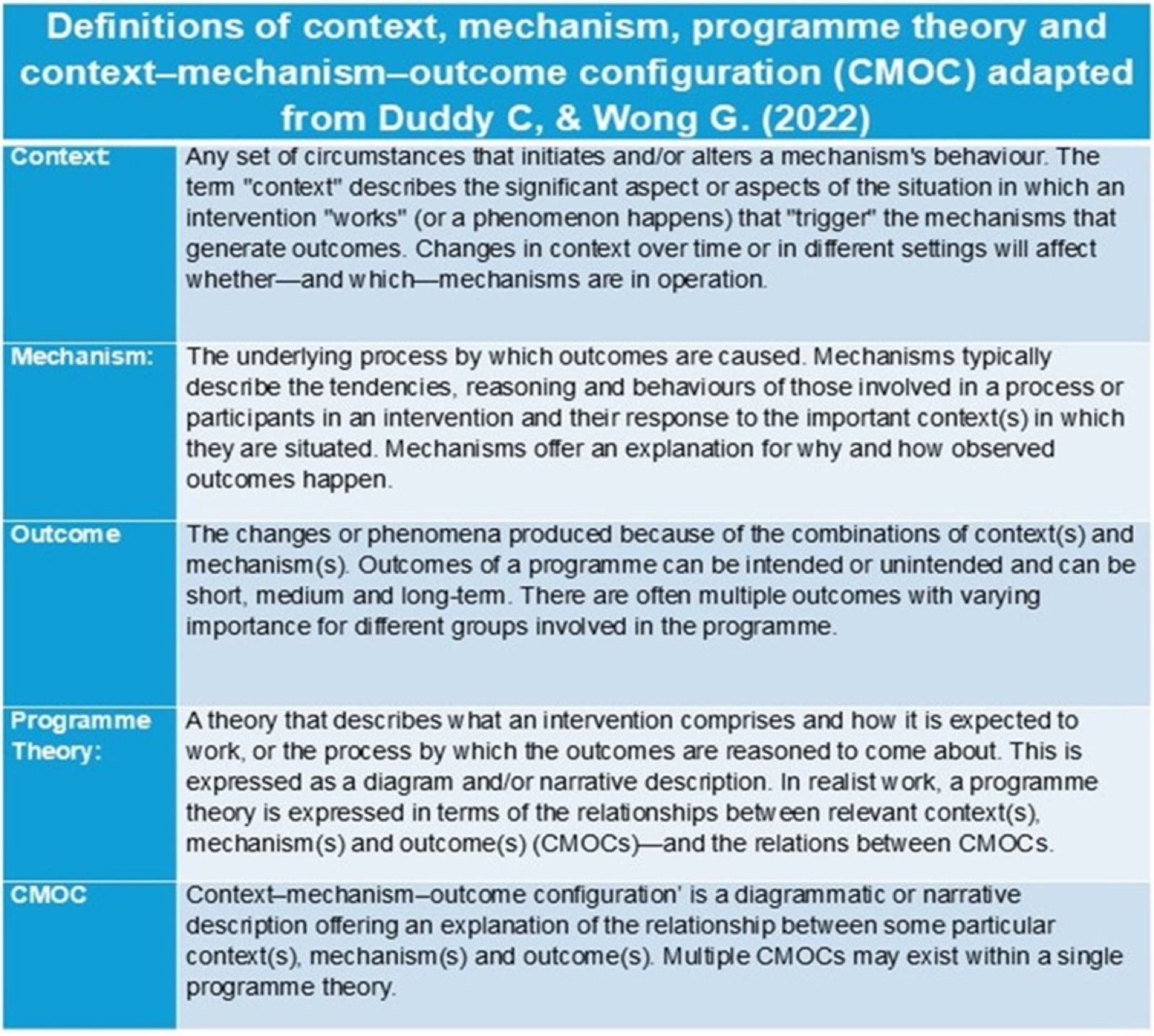
Beginning to address this knowledge gap, Hammond et al. (2023) developed and refined a Programme Theory (PrT), derived from fifty-one Context-Mechanism-Outcome-Configurations (CMOCs) identified from a realist literature review and used this improved understanding to co-develop initial practice guidelines for AF-LI-LSW. Realist reviews like those of Hammond et al. (2023) and realist evaluations like those of Hammond et al. (2025), and the one we report in this paper, have common terminologies. To aid those unfamiliar with realist approaches, we provide key definitions in Fig. 1.
Importantly, AF-LI-LSW is still being undertaken in a variety of guises. Yet we do not know how, why, to what extent, for whom and in what circumstances it can best be delivered. Nor do we know if current practices using trauma and/or attachment-based frameworks are harmful.
Whilst not a panacea (Toros and Falch-Eriksen 2021; van Zyl and Rothmann 2022), positive psychological mechanisms including strengthening relationships, reminiscence and savouring aim to enhance wellbeing by focusing and emphasizing positive emotions and experiences (Seligman 2011) and featured heavily in the PrT of Hammond et al. (2023). However, as Hammond et al. (2023) concluded, how AF-LI-LSW operates in different contexts is poorly understood. Hence, authors were unable to fully test (confirm, refute or refine) their PrT (Hammond et al. 2023).
Taking this as its starting point, the current paper aims to address the knowledge gaps identified by Hammond et al. (2023) through the collection of primary data from adolescents aged 12–18 years, carers and social care professionals with experience of what we describe here as AF-LI-LSW. This will enable a better understanding of how different contexts can hinder or help the effectiveness of AF-LI-LSW, informing future intervention development and testing. Generating this knowledge is an important step towards promoting the mental health and well-being support available to care-experienced adolescents.
Methodology
The study reported in this paper adopted a realist evaluation approach (Pawson and Tilley 1997). Realist evaluation is a theory-driven approach to evaluation. It aims to unpack the complexities of interventions by addressing the question: ‘What works for whom, under what conditions, and why?’. This approach is suitable for evaluating complex interventions such as AF-LI-LSW, as it seeks to explain underlying processes that can lead to different outcomes across varying contexts (Pawson 2006). Realist evaluations focus on understanding why interventions work, for whom and in what circumstances and why. They do not determine if an intervention is effective or not, instead, realist evaluation seeks to explain the causal processes involved.
The objective of realist evaluations is to develop and test (confirm, refute or refine) a PrT—which is a detailed explanation of how an intervention is expected to lead to its impacts and in what conditions this should occur (Pawson and Tilley 1997). Importantly, realist programme theories explicitly state which causal processes (referred to as mechanisms in realist evaluations) will produce outcomes and which contextual characteristics will influence the likelihood that these mechanisms will take place (Pawson 2006). These are expressed as CMOCs, with many CMOCs comprising a PrT. To test, refine and refute CMOCs we collected a mixed method data set.
Study sites
Ethical and governance clearances were secured within eight English local authorities. All local authorities had diverse urban populations with mixed levels of deprivation. To maintain anonymity, additional information on participating local authorities is kept to a minimum.
Data collection
Sampling and sample
Guidance for realist evaluation recommends theory-based sampling (Pawson 2006). Therefore, we purposively sampled and collected the views of seventy-eight participants along dimensions of diversity including ethnicity, placement type and length and AF-LI-LSW experiences from three participant groups: adolescents (aged 12–18 years old with experience of living in foster care and/or residential care and/or kinship-foster care); carers of these groups; and social care professionals. See Table 1 for more detail.
Table 1 — Participant demographics and outcomes.
- Age; Social care professional (n = 11): 32.7 (8.4); Carers (n = 35): 53.6 (11.0); Young people (n = 32): 15.1 (1.6)
- Gender
- Male; Social care professional (n = 11): 1 (9.1%); Carers (n = 35): 4 (11.4%); Young people (n = 32): 12 (37.5%)
- Female; Social care professional (n = 11): 10 (90.9%); Carers (n = 35): 31 (88.6%); Young people (n = 32): 20 (62.5%)
- Ethnicity
- White British; Social care professional (n = 11): 8 (72.7%); Carers (n = 35): 33 (94.3%); Young people (n = 32): 25 (78.1%)
- White other; Social care professional (n = 11): 0; Carers (n = 35): 1 (2.9%); Young people (n = 32): 3 (9.4%)
- Mixed ethnicity; Social care professional (n = 11): 1 (9.1%); Carers (n = 35): 1 (2.9%); Young people (n = 32): 3 (9.4%)
- Black; Social care professional (n = 11): 1 (9.1%); Carers (n = 35): 0; Young people (n = 32): 0
- Other; Social care professional (n = 11): 1 (9.1%); Carers (n = 35): 0; Young people (n = 32): 1 (3.1%)
- Placement type
- Fostering—local authority; Carers (n = 35): 26 (74.3%); Young people (n = 32): 21 (65.6%)
- Fostering—Independent agency; Carers (n = 35): 0; Young people (n = 32): 3 (9.4%)
- Residential care; Carers (n = 35): 9 (25.7%); Young people (n = 32): 4 (12.5%)
- Kinship care; Carers (n = 35): 0; Young people (n = 32): 3 (9.4%)
- Other; Carers (n = 35): 0; Young people (n = 32): 1 (3.1%)
- Years of experience; Social care professional (n = 11): 3.3 (1.35); Carers (n = 35): 12.3 (9.4); Young people (n = 32): –
- Placement length; Social care professional (n = 11): –; Carers (n = 35): –; Young people (n = 32): 4.2 (3.38)
- Inclusion of other in the Self Scale; Social care professional (n = 11): 3.3 (1.35); Carers (n = 35): 4.3 (1.78); Young people (n = 32): 4.4 (1.85)
- Rosenberg Self Esteem Scale; Carers (n = 35): –; Young people (n = 32): 19.7 (5.01)
- Me as a parent (n = 32)
- Self-efficacy; Social care professional (n = 11): –; Carers (n = 35): 7.5 (1.81); Young people (n = 32): –
- Personal agency; Carers (n = 35): 7.4 (2.40)
- Self-sufficiency; Carers (n = 35): 8.5 (1.78)
- Self-management; Carers (n = 35): 7.9 (1.89)
Quantitative data collection
We recruited a survey to collect participant demographics (age, gender ethnicity) and relevant service and outcome measures per participant group. For adolescents we collected: placement length, closeness to carer (via the Inclusion of Other in the Self Scale) and self-esteem (via the Rosenberg Self Esteem Scale). For carers we collected: years of experience, closeness to young person (via the Inclusion of Other in the Self Scale) and carer confidence (via Me as a Parent). For social care professionals we collected years of experience. See Table 1 for more detail.
Qualitative data collection
Participants selected the mode (online via MS Teams or face-to-face at a location of their choice), the method (semi-structured interview or focus group) and composition (research team member or research team member with co-researcher) of qualitative data collection. Interview/focus group schedules were piloted and refined in partnership with co-researchers. Core topics were asked of all groups, with wording altered as appropriate (see Supplementary File 1: Indicative topic guides). On average, data collection episodes were 25–65 minutes long. All qualitative data were audio-recorded and transcribed verbatim. Across qualitative data collection and analysis, we were assisted by five lived experience experts aged 18–25 years (expanded below). Once data had been transcribed, transcripts were imported into NVivo 14 for analysis (see Table 2 for more details).
Table 2 — Qualitative data collection.
- Interviews
- Online; Adolescents: 2 (1a); Carer: 27(10a); Social care professionals (SCP): 11
- Face-to-face; Adolescents: 2 (0a); Carer: 1 (0a); Social care professionals (SCP): 0
- Focus groups
- Online; Adolescents: 3 (2a); Carer: 2 (1a); Social care professionals (SCP): NAb
- Face to face; Adolescents: 6 (4); Carer: 0; Social care professionals (SCP): NAb
a Numbers in bracket denote number of data collection occurrences of this type involving care-experienced co-researchers. Please note, SCPs were not offered the opportunity to have care-experienced co-researchers involved in their data collection for ethical reasons. b SCPs were not offered opportunity to participate in focus groups for pragmatic reasons.
Working with lived experience experts
We recruited, trained and worked alongside five care-experienced co-researchers (aged 18–25 years) from the Care Leavers National Movement. Co-researchers and researchers attended a two-day, face-to-face training workshop. To foster ways to redistribute power, this training was co-developed with co-researchers and delivered in partnership with participation workers from the Care Leavers National Movement. Training entailed discussions of researchers’ and co-researchers’ understandings of questioning techniques, analysis and confidentiality. In keeping with best practice (Dembele et al. 2024), these discussions sought to problematize the privileging of scholarly ways of knowing about these concepts at the expense of co-researchers’ lived experiences. Co-researchers contributed across the entirety of the research process contributing to question setting, data collection, analysis and dissemination (see Table 2 for more details).
Analytical procedure
Realist evaluations start with the development of an initial PrT (Wong et al. 2017). Using our team’s prior understandings of LI-LSW (Hammond 2012, 2016; Hammond and Cooper 2013; Hammond, Young, and Duddy 2020), PrT and CMOCs derived from our previous studies (Hammond, Young, and Duddy 2020; Hammond et al. 2023; Hammond et al. 2025) and working with our co-researchers, we deployed our initial PrT, as shown in Fig. 2. Iteration, discussion and deliberation were all part of the nonlinear data analysis process. The CMOCs from our previous studies were further developed and tested to ensure that they captured the data from the present study. Throughout the analysis, new CMOCs were created where needed, tested and existing CMOCs confirmed, refuted and removed or refined through a discursive and iterative process. This enabled us to ensure the CMOCs accounted for as much of the primary data as possible, as well as the objectives of the present research.
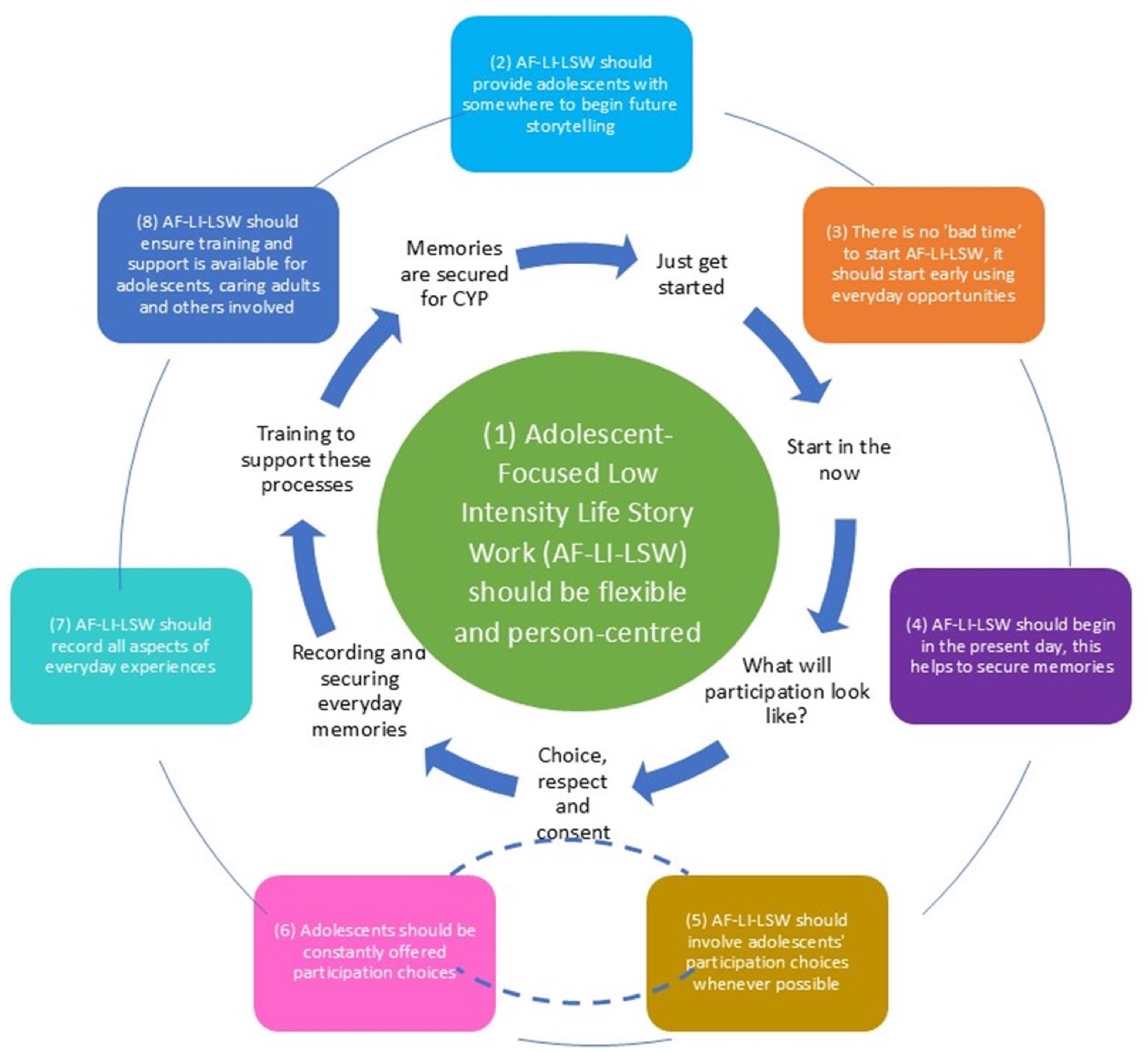
Coding entailed deliberately mining for information relating to the CMOCs in our initial PrT. We identified relationships between Contexts, Mechanisms and Outcomes from within and across the different primary data sources, from different local authorities and participants. The CMOCs were then challenged through the data reductive process. Data that was interpreted to be relevant for each CMOC was coded against it. Based on the coded data, we then made judgements as to whether the CMOCs were confirmed, refuted or needed refinement. Where a CMOC was refuted, we sought further data to judge if it needed to be removed. When data were not appropriately accounted for by an existing CMOC, we developed and then tested a new CMOC.
Our quantitative data used descriptive (e.g. frequencies) and inferential statistics to look for patterns (e.g. adolescent’s placement length as related to self-esteem and closeness to carer). We also used our interpretations of any changes in the relevant quantitative data to confirm, refute or refine our CMOCs. We met with our co-researchers to aid these discussions. These conversations helped address any knowledge gaps and allowed us to refocus data collection and synthesis as needed. We outline how each set of data informed decisions to retain/refute CMOC in Supplementary File 2: Project stages leading to final PrT.
Ethical considerations
Ethical approval was provided by the School of Education and Lifelong Learning Research Ethics Committee at the University of East Anglia. We stayed mindful of topic-related factors throughout the study, such as supporting and involving co-researchers with different AF-LI-LSW experiences, conducting online interviews with adolescents aged 12–18, and the potentially emotive nature of LSW. We also focused on method-related factors, such as developing rapport with adolescents during online interviews and balancing respectful listening with guiding participants away from potentially sensitive topics outside the study context. Participants were informed that pseudonymization would occur at the point of transcription. Consent from those under 16 years old was gained from adolescents’ carers or social workers as appropriate.
Results and analysis
Our initial PrT for this evaluation (see Fig. 2) was derived from a realist review (Hammond et al. 2023) and evaluation of a Digital LSW platform (Hammond et al. 2025). As per Fig. 3, our consolidated PrT features three organizing layers. The outer layer features six of the seven principles, the middle layer illustrates implementation features related to each principle in the outer layer. In the centre, the core principle of AF-LI-LSW is represented.
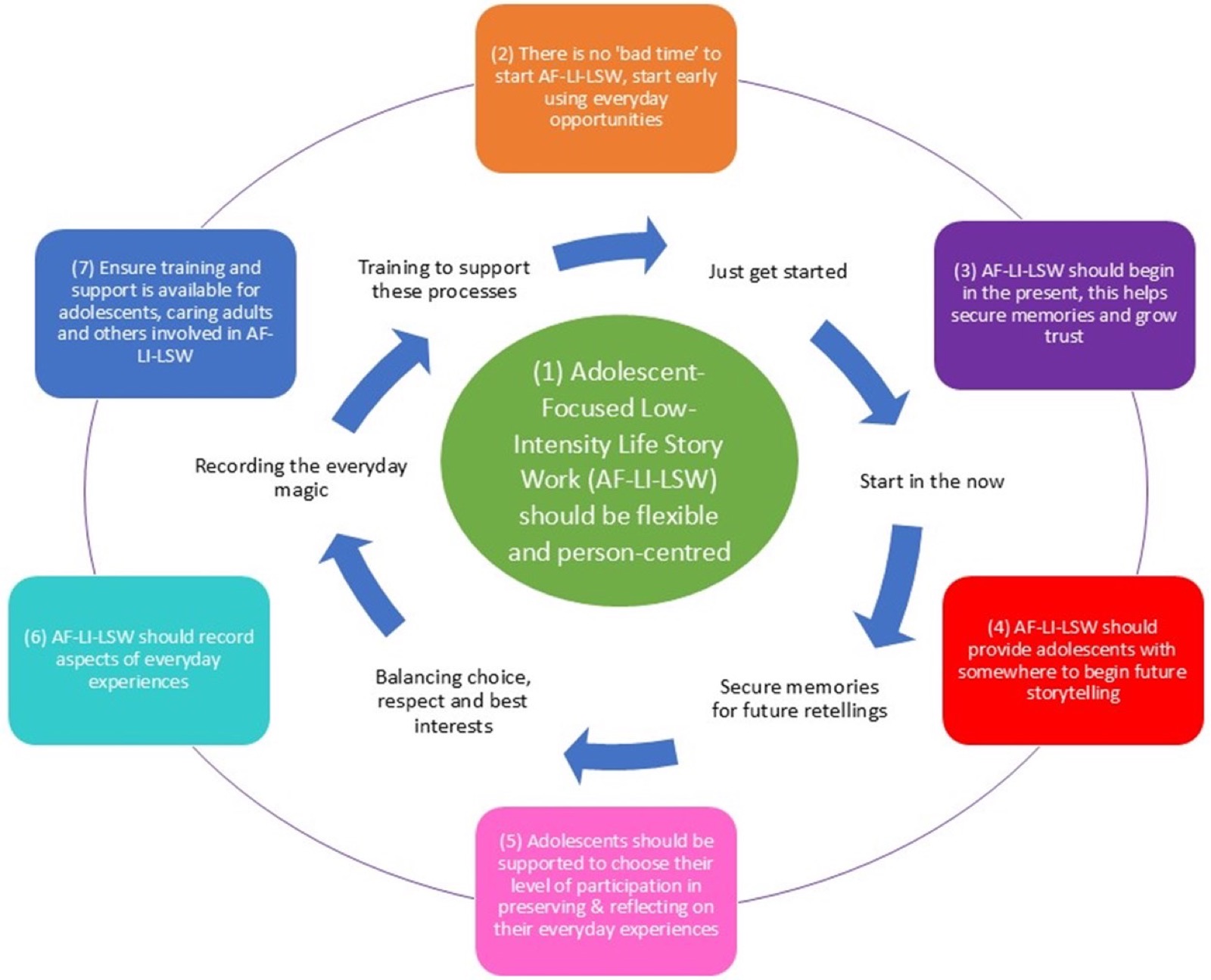
What follows is a narrative summary of our findings. Findings included in the following summary are informed by 109 CMOCs. To aid transparency, we provide a detailed summary of the evidence informing each CMOC in Supplementary File 3. Supplementary File 3 contains primary evidence from the current study and evidence from previous studies (Hammond et al. 2023; Hammond et al. 2025) that provided the foundation from which the development and testing of each CMOC took place. To support practitioners, we have provided a concise summary of our findings in Supplementary File 4.
Principle 1: AF-LI-LSW should be flexible and person-centred
…so there’s never that just one type [of AF-LI-LSW]…there’s never something that will suit everybody’s needs and wants… I think flexibility is one of the biggest points for it…. [07_FG2_YP3_R]
In agreement with prior studies (Hammond et al. 2023; Hammond et al. 2025), the outstanding message from participants was that AF-LI-LSW must be flexible and person-centred (CMOC 1). However, participants noted several individual and contextual factors would impact how this could happen in practice. This illustrates that practices may need to have core components (i.e. elements that should not be changed—for example, caring adults acting with and/or on behalf of the care-experienced adolescents’ best interests) and an adaptable periphery (i.e. elements that can be tailored to contextual factors, such as how participation is offered and how frequently this is revisited).
In agreement with prior research (Hammond et al. 2023; Hammond et al. 2025), person-centred adaptations involved a number of elements that impact on how participants reported AF-LI-LSW should be implemented with and/or on behalf of adolescents. These included but were not limited to adolescents; level of rapport with caring adult(s) (linked to, but not always correlated, to time in current home), age, developmental stage, point in care journey (i.e. recentness of care entry and/or of transitions within and beyond care), Special Educational Needs and Disabilities, cultural background (of adolescent and/or of caring adult(s)), country of origin (i.e. the role narration plays on the culture of Unaccompanied asylum-seeking children can differ greatly), legal status (i.e. Unaccompanied asylum-seeking children are called upon by the legal process to share their journeys to a host country, impacting willingness and/or suitability to engage) (CMOCs 1.3, 5, 26.1, 29.1, 34, 34.1 47).
Principle 2: There is no bad time to start AF-LI-LSW, start early using everyday opportunities
There is no wrong time to begin collecting and collating everyday memories, the sooner it can begin the better (CMOC 5.1, 26.1). The collection and preservation of everyday memories must begin when adolescents enter an out-of-home setting (CMOC 26.1). Early moments within a new home (e.g. the date and time of arrival, who brought them, the weather, where they had come from, what they were wearing, their first meal in the new home, where they ate it and who else was present) should be recorded by the carer, with the adolescent as the intended future audience (CMOC 54). This is unlikely to involve the adolescent directly at this point (CMOCs 1.3, 5.1).
Quantitative analysis indicated no evidence of a relationship between current placement length and self-esteem (r = 0.036, P = .894), or closeness to carer (r = 0.284, P = .115) for adolescents, weakening any rationale against this principle (CMOC 5, 5.1, 6, 6.1). The collection of everyday memories as soon as there is contact with social care services is useful (e.g. talking to birth family members and other supportive adults, such as teachers, youth workers and adolescents themselves, about their hobbies and interests) (CMOC 3).
Gaps in auto-biographical memory can make it difficult to construct a coherent sense of identity (CMOC 6). When AF-LI-LSW is initiated sensitively by caring adult(s), before rapport has developed [as opposed to higher-intensity LSW approaches, which are typically implemented when the young person is in a stable placement (Rose 2012)], the likelihood of adolescents experiencing information gaps is reduced (CMOC 5, 5.1, 6, 6.1, 32.1). Similarly, when considering higher-intensity LSW approaches, for many adolescents there is often never a ‘right time’ as an adolescent is unlikely to be in a ‘stable placement’ and ‘holding trusting relationships’ because of the very challenges they are experiencing indicating the need for high-intensity LSW. Not starting AF-LI-LSW is likely to maintain a recursive cycle of unmet needs. Whereas implementing AF-LI-LSW reduces the chances of an adolescent leaving care with no information and helps high-intensity LSW if started later.
Principle 3: AF-LI-LSW should begin in the present, this helps secure memories and grow trust
For many care-experienced adolescents, the ‘past’ may not be a point in time they want to revisit. The mundaneness of everyday life can offer a sanctuary and a place to begin to build positive relationships. This point is important for three reasons. Firstly, as noted elsewhere (Hammond 2012), the mundane becomes meaningful when relationships cease and/or when the physical and/or emotionality of such spaces cannot be revisited (CMOC 66).
…that was something that she [teen] always said to me, was, ‘Oh, remember those drives and that we would like belt out Whitney Houston, singing in our loudest voices!?’, you know, those … [03_SCP_02]
Secondly, engaging with the past can be understandably undesirable for many adolescents. The sharing of everyday experiences increases a sense of connectedness between the adolescent and their caring adult(s) (CMOC 12). The adolescent experiences a sense of themselves as being worthwhile because the caring adult wants to spend time with them (CMOC 9). When preserved through recording, everyday life events can serve as a bank of narrative starting points, allowing adolescents to share stories about themselves with future audiences (CMOCs 11, 41, 60). These preserved memories also provide narrative starting points for adolescents and adults within their caring network to revisit together, increasing feelings of connectedness and understanding of each other (CMOC 43). Throughout our data, participants shared with us moments of ‘everyday magic’ (Hammond and Cooper 2013; Hammond 2016). With these events becoming joint sites for reminiscence (CMOC 66):
We were walking up to the house where we were staying in and [caring adult] was like, oh, reading this sign…but as [caring adult] was letting himself into the house…a seagull pooed on his head and me and [teen] went, ‘That should have been us! The next day we got a picture of him next to a seagull sign, like,’ Beware of the seagulls [07_YP_FG_01]
Thirdly, having the comfort to confide personal thoughts and feelings is important to allow adolescents to explore their inner world; however, adolescents should never be forced to confide with caring adult(s). Comfort to confide increases when there is trust within the relationship with a caring adult, and this can be achieved through the mutual sharing of information about hobbies and interests (CMOC 13). When adolescents feel trusted with information about caring adult(s), they feel more comfortable discussing their experiences, thoughts and feelings (CMOC 10, 15). This is important, as quantitative data indicated no evidence of a relationship between current placement length and self-esteem (r = 0.036, P = .894) or carer closeness (r = 0.284, P = .115) for adolescents. This is likely to indicate that placement length does not automatically impact self-esteem or how close adolescents feel to carers. More active engagement with adolescents by carers is likely to be required to cultivate these impacts.
Principle 4: AF-LI-LSW should provide adolescents with somewhere to begin future storytelling
Applying a positive psychological lens enabled our analysis to identify potential intervention activities to foster well-being and connection. These include reminiscing on early shared memories (CMOC 26.1), promoting positive self-narratives and future expectations (CMOC 28, 44). A positive psychological lens also illustrated caring adult-related benefits of AF-LI-LSW which hitherto have been absent from the literature. For example, carers frequently expressed feelings of pride and savouring (past, present, future) when sharing why they undertook AF-LI-LSW with and/or on behalf of care-experienced adolescents (CMOC 63, 64):
…I suppose it makes us feel good to be able to look back and go, ‘We’re doing a good job’…everybody wants to feel like they’re doing a good job… [04_C_F_03]
Adolescents’ decisions to save and use artefacts from everyday life to begin future storytelling is often contingent on several interconnected and fluid contextual factors. These can include the artefacts preserved [i.e. how were they saved, by whom and did the adolescent agree (CMOCs 4, 5, 10, 32, 33)], the volume of artefacts preserved [i.e. too much, too little (CMOC 4)], curation [i.e. how are they ordered and by whom (CMOCs 1.2, 1.3, 1.4, 4)], annotation of artefacts [i.e. are important dates, people present, context and/or anecdotes included (CMOCs 4, 11)], point in time represented [i.e. culturally relevant milestones (CMOCs 3, 34.1, 47)], relationships at the point in time artefacts represent [i.e. previously experienced relationships with caring adults (CMOCs 2, 29.1, 59)] and adolescents’ current feelings toward these interconnected factors at the point in time artefacts are viewed.
This creates a dilemma for caring adults trying to build rapport, establish trust, empower, engage and respect adolescents. What happens when an adolescent does not want something saved that a caring adult feels they may regret not saving?
…if a young person isn’t interested in that [AF-LI-LSW], we’re going to do that anyway and we’re going to find good bits for them to maybe look back on later… [05_C_R_04]
Principle 5: Adolescents should be supported to choose their level of participation in preserving & reflecting on their everyday experiences
Participants believed that AF-LI-LSW is most beneficial when adolescents are actively engaged in recording and collating memories (CMOC 1.2, 1.3, 1.4, 8, 23). Yet, if the recording of life experiences is left until if and/or when adolescents are ready to engage, important everyday memories or information may be lost (CMOC 5, 6, 6.1, 32.1, 37, 38, 38.2, 38.3) (as per Principle 2). This creates a ‘record or not record’ dilemma for carers, illustrated by 06_YP_01 below:
This has always been the dilemma until the end of time, let me tell you, <laughs> it’s always been a problem….because it’s happened to me…that one act of kindness, that one sentence….or memory, in a way, it does represent something…it’s almost like having your humanity be pulled out to the forefront because, such an action, that takes care, that takes love, that takes passion, has been put into something, and given no, expectations, no hassle, done for you, it then may temporarily bring that out of a young person, it doesn’t mean you will see it, because people are very good at masking how they feel, but… if somebody does something like that to you, you do have a moment where things sort of snap into place, even if they do dismantle again after, there is that moment of humanity there…. [06_YP_01]
This is an important dilemma, as quantitative analysis showed no evidence that experience as a carer was related to either carer self-efficacy (MAPS-SE: r = −0.149, P = .414) or carer closeness (r = 0.071, P = .686) to adolescents. Accordingly, this is not something that will be resolved simply as a carer becomes more experienced.
In seeking to enable practice to hold yet move beyond this tension, we draw on Aristotle’s metaphor of the ‘Golden Mean’. For Aristotle, the virtuous decision usually lies between two unsuitable extremes (Kraut 2022); hence, the task of caring adults is to constantly seek the golden mean. At one end of this dilemma, we have recording/saving nothing as the care-experienced adolescent wants nothing kept. At the other end the caring adult records and saves everything with the care-experienced adolescent having no choice. Knowing where this golden mean lies for factors depends on the quality of relationship, both in the context and in the moment. Evidence from the current study indicates that the golden mean appears to be asking the care-experienced adolescent and respecting their ‘No’, whilst also acting in their best interests by saving and curating selected artefacts for their future (CMOC 5, 38.2, 67).
This can feel contradictory to Principle 1. However, when handled sensitively and transparently, this approach allows the caring adult to illustrate to the adolescent that they are valued (CMOC 9.1, 38.2, 67). It also gives the adolescent the right to say ‘No’ twice (CMOC 67): once in the present moment and once in the future, when they may (or may not) feel differently. In many respects this is an extension of duties that carers already hold. Taking a feminist ethics of care approach (Meagher 2004), which argues for the centrality of relationships, interdependence and responsibility as opposed to a focus on individuals and their rights, moral decisions are recognized as situated and contextual (Banks 2008). Supervision could support carers in thinking through how to negotiate decisions about whether, what and how to save artefacts if the adolescent does not wish to (CMOC 49).
…we had a young man and he had nothing, he turned up with nothing, and I think that was the learning curve for me… a lot of things are done in anger, when they’re throwing stuff away….because they’re not thinking in that frame, so, so, in a way, we’re thinking for them. and they may really not have wanted it, you know, really, really not have wanted it, but in that moment they’re not making a sound decision, or they, they’re doing it in anger… [02_C_F_05]
By not starting early (Principle 2), by not securing memories in the present (Principle 3), and not providing adolescents with somewhere to begin future storytelling (Principle 4), caring adults can deprive adolescents the ability to constantly choose their level of participation (Principle 5) and fail to act in a flexible, person-centred manner (Principle 1). Working sensitively to enable adolescents to say ‘No’ twice, our data suggest, represents the golden mean.
…he’s got memory boxes in his bedroom that he puts anything in that he wants. if there’s something that he doesn’t really want but I feel he might want it later then the agreement is he gives it to me and I put it in my fostering box, to keep, so that it is there, he hasn’t got rid of it, erm, but he hasn’t got it in his room. [01_C_F_02]
When care-experienced adolescents record and collate their own memories, caring adults should still create their own records of their memories with the adolescent (CMOC 38.2, 38.3). Not only is this in the best interest of the adolescent should they lose and/or lose interest in collecting their own memories, but participants also reflected upon how caring adults’ perspectives may supplement the memories of care-experienced adolescents (CMOC 38.2, 38.3).
Caring adult participants also noted that care-experienced adolescents may not see the value or have interest in getting involved in the moment. Hence, having this information to give to people with care experience when they are older (and/or when they leave their current placement) again afforded care-experienced adolescents the opportunity to say ‘No’ twice (CMOC 67).
…it’s a long story, but we don’t have many memories and photos from that stage where she was for seven years and I don’t want that to happen again going forward because although there are a small number of photos, there’s not loads. [07_C_F_YP_FG9]
By not collecting this information themselves, care-experienced adolescents lose the opportunity to choose what to do with their saved memories in the future. Hence, it is in the best interests of adolescents for caring adults to collate their own account of the adolescent’s time with them, even if the adolescent has done the same. Optimally, this would allow for joint sharing and reflection, but this may not always be possible and/or desired by the adolescent (CMOC 1.3). Preserving and reflecting on shared experiences together can provide a point of connection, with the joint activity supporting the development of a sense of belonging (CMOC 18.1). Again, when drawing explicitly on a positive psychology-informed framework (Seligman 2011), such activities have been shown to foster positive affect, connectedness and belonging (Carr et al. 2024).
Principle 6: AF-LI-LSW should record aspects of everyday experiences
The identification, celebration and recording of personal achievements and strengths is an important element of AF-LI-LSW (CMOC 3). By being supported to identify and record personal achievements, adolescents become better at identifying future achievements themselves (CMOC 28). AF-LI-LSW can be used as an emotional resource that provides adolescents with a sense of comfort and promotes positive affect when revisiting and engaging with the contents (CMOC 46). The promotion of a positive identity can also be supported by celebrating aspects of the adolescent’s individuality, including their ethnicity, culture, religion, sexual identity, gender identity and disabilities. This can support self-acceptance, increasing feelings of self-worth for the adolescent (CMOCs 9, 9.1).
Principle 7: Ensure training and support is available for adolescents, caring adults and others involved in AF-LI-LSW
The preservation of the memories of care-experienced adolescents is everyone’s responsibility (CMOC 3, 6, 6.1, 48, 48.1). Institutional policies that prioritize training to increase awareness of the importance of securing everyday memories for care-experienced adolescents create a culture in which caring adults understand the contribution they can make to AF-LI-LSW (CMOC 48, 49). The opposite was also shown in our data (CMOC 48.1). Quantitative analysis illustrated no evidence that experience as a carer was related to either carer self-efficacy (MAPS-SE: r = −0.149, P = .414) or carer closeness (r = 0.071, P = .686) to adolescents. Hence, caring adults need to be upskilled through training and ongoing supervision to improve their ability to support and facilitate AF-LI-LSW (CMOCs 49, 51), as this is unlikely to be acquired through experience alone.
Training and ongoing support through supervision increase caring adults’ confidence to support AF-LI-LSW (CMOC 49). Having support available will help caring adults feel confident in their ability to support adolescents and provide a self-reflective space to process emotions and improve practice (CMOC 34, 35, 35.1, 48, 48.1, 49, 50.1, 51). Training must be flexible to ensure that those within the adolescents’ support network can access it despite the demands of their busy schedules (CMOC 6, 6.1, 14, 35). Training and support delivered virtually may increase levels of engagement. The delivery of training by peers (other caring adults) and led by or co-delivered with adolescents or care leavers, was also noted as desirable and impactful (CMOC 50, 50.1).
Discussion
This paper provides important knowledge about how to better support carers, seen as a key mechanism to improve the mental health outcomes of care-experienced adolescents (NICE 2021). By building on prior work by Hammond et al. (2023), we provide seven principles through which pre-existing AF-LI-LSW practices can be improved.
Moving closer to realizing therapeutic potential
In the context of AF-LI-LSW, positive psychology principles offer a non-pathologizing understanding that provides adolescents and carers with help to foster supportive relationships (Seligman 2011). The evidence-base in support of positive psychology interventions has grown considerably in the past decade. Recent meta-analyses, including positive psychology interventions have repeatedly demonstrated their ability to increase well-being (Carr et al. 2024). Drawing on positive psychology (Seligman 2011), the seven principles of AF-LI-LSW constructed in this paper encourage a focus on what is going right in the life of care-experienced adolescents. Such a strengths-based approach enables existing internal and external assets and strengths to be acknowledged, while fostering future growth and resilience. AF-LI-LSW also recognizes the power of renegotiating self-limiting accounts of life events in the context of positive relationships with confident trained carers to develop positive future expectations (Prince et al. 2019).
A positive psychological lens underscores the therapeutic potential of AF-LI-LSW. To be clear, this paper is not advocating a ‘new’ approach. Nor is it dismissing the potential of interventions framed by positive psychology to obscure structural inequalities (Lomas et al. 2021) or risk ‘no-responders’ potentially feeling worse (van Zyl et al. 2024). What a positive psychological framework does, in combination with a realist lens is allow explicit theorization and testing of which relational contexts certain positive psychological mechanisms (e.g. savouring, reminiscence) may produce specific outcomes (e.g. changes in savouring styles shown to increase well-being).
Limitations
As indicated in Supplementary File 3, some CMOCs lacked data to allow testing. There were instances where this was expected, for example, CMOC 1.1 where the CMOCs context was beyond the scope of the current study. In other instances, when primary evidence collected in this study was sparse, CMOCs were refuted (CMOC 4.1, 4.2, 21.1, 35.1, 36, 36.1, 40.1, 41.6, 43.1, 43.2, 43.4, 43.5, 49.3, 49.4, 49.5, 52, 53) or retained (CMOC 37, 39, 41.4, 43, 49.2, 60) following consultations with co-researchers. Second, we were only able to hear from two care-experienced adolescents who represented Unaccompanied Asylum-Seeking Children (UASC). Whilst we supplemented this perspective by ensuring we engaged with carers of this community, CMOCs related explicitly to this group need further testing. We faced similar challenges hearing voices of care-experienced adolescents living in kinship (i.e. related) care and their carers. Although no CMOCs explicitly focus on kinship care, the likely increased complexity of negotiating narratives in this context makes research addressing this gap an urgent priority. Finally, due to its nature, this was not a realist evaluation with pre- and post-quantitative data; hence, quantitative analyses are indicative and correlational rather than causal.
Future directions and conclusions
The current paper’s seven principles strengthen our understanding of how AF-LI-LSW delivery is likely to be influenced by the individual pathways and trajectories of care-experienced adolescents across differing contexts [i.e. residential, foster and kinship (or related) foster care]. Drawing on a positive psychological lens (Seligman 2011), the paper also highlights the potential for therapeutic activities and target intervention outcomes, developing much-needed evidence-based and signalling the potential for actionable resources to be developed using the knowledge from this paper. Such resources should be co-developed with lived experience experts (e.g. care leavers and carers), piloted in real-world settings and refined based on feedback. This knowledge should then inform a feasibility trial with an embedded process evaluation, and, following the trial, a decision should be made regarding the design and execution of a comprehensive, appropriately powered evaluation, including economic and process evaluations. This paper takes another step towards that end goal.
Complexe Systémique: key points
This work matters for systemic practice because it moves life story work from the specialist’s office into the everyday relationship: it is the caring adult, not an expert, who records the arrival, the laughter, the small victories, and it is the present bond that makes the past approachable. The most fruitful principle is the ‘double No’: respecting the adolescent’s refusal while setting aside what they might want later, so that the choice comes back to them. It offers a way of holding autonomy and protection together without settling the matter. The figures also show that length of placement is not enough: without training and supervision, experience creates neither closeness nor confidence. Caution, however: the study, almost entirely white and female on the adult side, says little about kinship care or young asylum seekers, and its correlations prove no effect. Read alongside the article on adoptive identity rebuilt through artifacts, and the article on negotiated permanence in long-term foster care.
Notes from the original
Acknowledgements. We want to thank those who shared their experiences with us and our co-researchers from the Care Leavers National Movement (CLNM). We would also like to thank our partners in the host local authorities for their time and efforts with recruitment.
Conflicts of interest. None declared.
Funding. This project was funded by the National Institute for Health and Care Research (NIHR) Heath and Social Care Delivery Research funding stream [Funder reference: NIHR157415]. The views expressed are those of the author(s) and not necessarily those of the NIHR or the Department of Health and Social Care.
References
Banks S. (2008) ‘Critical Commentary: Social Work Ethics’, The British Journal of Social Work, 38: 1238–49. 10.1093/bjsw/bcn099
Baynes P. (2008) ‘Untold Stories: A Discussion of Life Story Work’, Adoption & Fostering, 32: 43–9. 10.1177/030857590803200206
Bergström M. et al. (2020) ‘Interventions in Foster Family Care: A Systematic Review’, Research on Social Work Practice, 30: 3–18. 10.1177/1049731519832101
Carr A. et al. (2024) ‘The Evidence-Base for Positive Psychology Interventions: A Mega-analysis of Meta-analyses’, The Journal of Positive Psychology, 19: 191–205. 10.1080/17439760.2023.2168564
Dembele L. et al. (2024) ‘Researching With Lived Experience: A Shared Critical Reflection Between Co-Researchers’, International Journal of Qualitative Methods, 23: 16094069241257945. 10.1177/16094069241257945
Dubois-Comtois K. et al. (2021) ‘Are Children and Adolescents in Foster Care at Greater Risk of Mental Health Problems than their Counterparts? A Meta-Analysis’, Children and Youth Services Review, 127: 106100. 10.1016/j.childyouth.2021.106100
Evans R. et al. (2017) ‘Comparison of Suicidal Ideation, Suicide Attempt and Suicide in Children and Young People in Care and Non-Care Populations: Systematic Review and Meta-Analysis of Prevalence’, Children and Youth Services Review, 82: 122–9. 10.1016/j.childyouth.2017.09.020
Evans R. et al. (2023) ‘Interventions Targeting the Mental Health and Wellbeing of Care-Experienced Children and Young People in Higher-Income Countries: Evidence Map and Systematic Review’, Systematic Reviews, 12: 111. 10.1186/s13643-023-02260-y
GOV.UK (2022) Children Looked After in England Including Adoptions. GOV.UK, https://explore-education-statistics.service.gov.uk/find-statistics/children-looked-after-in-england-including-adoptions/2022, accessed 25 Nov. 2022.
Greeson J. K. P. et al. (2020) ‘Interventions for Youth Aging out of Foster Care: A State of the Science Review’, Children and Youth Services Review, 113: 105005.10.1016/j.childyouth.2020.105005
Gypen L. et al. (2017) ‘Outcomes of Children Who Grew Up in Foster Care: Systematic-Review’, Children and Youth Services Review, 76: 74–83. 10.1016/j.childyouth.2017.02.035
Hammond S. P. (2012) Exploring a Role for Digital Technologies in Life Story Work with Adolescents in Residential Care: A Discourse Analysis. PhD Doctoral thesis, University of East Anglia, UK. https://ueaeprints.uea.ac.uk/id/eprint/39133/1/2012HammondSPPhD.pdf
Hammond S. P. (2016) ‘Digital Life Story Work in Action’, in Ryan T. Walker R. (eds) Life Story Work: Why, What, How and When, 201 edn, pp. 106–19. London, UK: Coram BAAF.
Hammond S. P., Cooper N. J. (2013) Digital Life Story Work: Using Technology to Help Young People Make Sense of Their Experiences. London, UK: British Association of Adoption and Fostering.
Hammond S. P., Young J., Duddy C. (2020) ‘Life Story Work for Children and Young People with Care Experience: A Scoping Review’, Developmental Child Welfare, 2: 293–315. 10.1177/2516103220985872
Hammond S. P. et al. (2023) ‘Improving the Mental Health and Mental Health Support Available to Adolescents in Out-of-home Care via Adolescent-Focused Low-Intensity Life Story Work: A Realist Review’, BMJ Open, 13: e075093.10.1136/bmjopen-2023-075093
Hammond S. P. et al. (2025) ‘A Mixed Methods Realist Evaluation of a Digital Life Story Work Platform: What Works, for Whom, Under What Circumstances and How?’, The British Journal of Social Work, 55: 2421–40. 10.1093/bjsw/bcaf054
Hooley K., Stokes L., Combes H. (2016) ‘Life Story Work with Looked After and Adopted Children: How Professional Training and Experience Determine Perceptions of its Value’, Adoption & Fostering, 40: 219–33. 10.1177/0308575916661129
Kontomichalos-Eyre S. A., Lake A. J., McGillivray J. A. (2023) ‘Life Story Work for Children and Youth in Out of Home Care: A Systematic Review and Synthesis of Qualitative Studies’, Children and Youth Services Review, 144: 106697.10.1016/j.childyouth.2022.106697
Kraut R. (2022) ‘Aristotle’s Ethics’, in Nodelman E. N. Z. U. (ed.) The Stanford Encyclopedia of Philosophy (Fall 2022 Edition). Stanford University Press. https://plato.stanford.edu/entries/aristotle-ethics/, accessed 13 Aug. 2025.
Lomas T. et al. (2021) ‘Third Wave Positive Psychology: Broadening Towards Complexity’, The Journal of Positive Psychology, 16: 660–74. 10.1080/17439760.2020.1805501
MacDonald S. et al. (2024) ‘Mental Health and Wellbeing Interventions for Care-Experienced Children and Young People: Systematic Review and Synthesis of Process Evaluations’, Children and Youth Services Review, 156: 107266. 10.1016/j.childyouth.2023.107266
Meagher G. (2004) ‘Modernising Social Work and The Ethics of Care’, Social Work & Society, 2: 10–27.
NICE (2021) Looked-After Children and Young People [F] Interventions to Promote Physical, Mental, and Emotional Health and Wellbeing of Looked-after Children, Young People and Care Leavers—Evidence Reviews Underpinning Recommendations 1.2.18, 1.2.26 to 1.2.27, 1.5.2, 1.5.10, 1.5.21, and 1.5.34. https://www.nice.org.uk/guidance/ng205/evidence/f-interventions-to-promote-physical-mental-and-emotional-health-and-wellbeing-of-lookedafter-children-young-people-and-care-leavers-pdf-333471052728, accessed 13 Aug. 2025.
Pawson R., Tilley N. (1997) Realistic Evaluation. London, UK: SAGE.
Prince D. M. et al. (2019) ‘Reciprocal Effects of Positive Future Expectations, Threats to Safety, and Risk Behavior Across Adolescence’, Journal of Clinical Child and Adolescent Psychology 48: 54–67. 10.1080/15374416.2016.1197835
Rose R. (2012) Life Story Therapy with Traumatized Children: A Model for Practice. London, UK: Jessica Kingsley Publishers.
Seligman M. E. P. (2011) Flourish: A Visionary New Understanding of Happiness and Well-Being. Penguin Random House, Australia: Free Press.
Taylor D. et al. (2024) ‘Systematic Review and Meta-Analysis of Policies and Interventions that Improve Health, Psychosocial, and Economic Outcomes for Young People Leaving the Out-of-Home Care System’, Trauma, Violence & Abuse, 25: 3534–54. 10.1177/15248380241253041
Taylor S. et al. (2022) Evaluation of Creative Life Story Work. What Works for Children’s Social Care. https://whatworks-csc.org.uk/wp-content/uploads/CLSW-RCT-Final-Report-19-Dec_acc.pdf, accessed 13 Aug. 2025.
Toros K., Falch-Eriksen A. (2021) ‘Strengths-Based Practice in Child Welfare: A Systematic Literature Review’, Journal of Child and Family Studies, 30: 1586–98. 10.1007/s10826-021-01947-x
van Zyl L. E. et al. (2024) ‘The Critiques and Criticisms of Positive Psychology: A Systematic Review’, The Journal of Positive Psychology, 19: 206–35. 10.1080/17439760.2023.2178956
van Zyl L. E., Rothmann S. (2022) ‘Grand Challenges for Positive Psychology: Future Perspectives and Opportunities’, Frontiers in Psychology, 13: 833057. 10.3389/fpsyg.2022.833057
Reformatted republication of ‘There’s Never Just One Type’: A Mixed Methods Realist Evaluation of Adolescent-Focused Low-Intensity Life Story Work, by Simon P. Hammond, Carys Seeley, Paige Skevington, Emma Speer, Kayley Baker, Rachel M. Hiller, Ella Mickleburgh, Nick Midgley, Rosie Blackett, Wendy Hardeman, Sarah Thomas, Lee Shepstone, Jonathon Wilson, Elsbeth Neil, Jeanette Cossar, Peter Jordan, Erika Sims and Geoff Wong, The British Journal of Social Work, vol. 56, no 5, p. 2315-2336 (2026), doi: 10.1093/bjsw/bcaf313, under a CC BY 4.0 licence. Edition and layout: Complexe Systémique, September 2026 — the work has been modified under the terms of the licence (tables presented as lists). Neither the authors nor the publisher are responsible for this edition; the original version prevails.
This is the original article “‘There’s Never Just One Type’: A Mixed Methods Realist Evaluation of Adolescent-Focused Low-Intensity Life Story Work”, published in The British Journal of Social Work (2026) under a CC BY 4.0 licence. Republished by Complexe Systémique: the author’s text is unchanged; only the presentation has been adapted for reading online, as set out at the head of this page.
Read the original articleHow to cite this article
Hammond, S. P., Seeley, C., Skevington, P., Speer, E., Baker, K., Hiller, R. M., Mickleburgh, E., Midgley, N., Blackett, R., Hardeman, W., Thomas, S., Shepstone, L., Wilson, J., Neil, E., Cossar, J., Jordan, P., Sims, E., et Wong, G. (2026). ‘There’s Never Just One Type’: A Mixed Methods Realist Evaluation of Adolescent-Focused Low-Intensity Life Story Work. Complexe Systémique. https://app.complexe-systemique.com/en_GB/articles/there-s-never-just-one-type-realist-evaluation-of-adolescent-focused-life-story-work (Original work published in 2026 in The British Journal of Social Work, 56(5), 2315-2336 (2026); republished in 2026 by The British Journal of Social Work, https://academic.oup.com/bjsw/article/56/5/2315/8446540)
To go further
- Devenir une personne adoptée : reconstruire l’identité adoptive à travers les *artefacts*Identity through objects.
- Négocier la *permanence* pour les jeunes en accueil familial de long terme : un processus de co-création entre les jeunes et leurs parents d’accueilNegotiated permanence.
- Des récits aux *contours flous* : mises en scène familiales des familles d’accueil et des jeunes enfants placésStories in foster families.
Related training courses
 Short course
The suicidal crisis in adolescents and young adults
Training: assessing and supporting the suicidal crisis in adolescents and young adults. Clinical landmarks and systemic tools. In French.
 Symposium
The Abnormal Normals and the Normal Abnormals
Conference replay: six clinicians explore normality — diagnoses, norms, adolescents, therapists. Immediate, lifetime access. Talks in French.
Related articles
 Article
 Family group conference provision across the lifespan of child welfare intervention: A mixed-method realist-informed evaluation comparing three stages of welfare concern
Early help, child protection or children in care: among 155 UK families, experiences and outcomes of family group conferences vary very little by stage.
 Article
 How can we BeST? meet the needs of adoptive families? Relevant findings from a major Randomised Controlled Trial of infants in foster care in the UK
The BeST? trial (488 infants in care in the UK) reread for adoption: holistic, ongoing assessment of children and a move to dual registration.
 Article
 Implementing Family Group Decision-Making within statutory child protection social work in Scotland: Challenges and opportunities
Family group decision-making offered automatically in Scottish child protection: families find a voice, social workers doubt the plans, and everyone wants it offered earlier.
 Article
 The AFFIRM Model for Navigating Challenges in Continuously-Interfaith and Divergent-Interfaith Marriages
Thirty happy interfaith couples describe how they navigate their religious differences: five processes, from respecting each other’s choices to religious intimacy, gathered in the AFFIRM model.