Journal of Family Therapy · Family therapy
‘Treating this place like home’: An exploration of the notions of home within an adolescent inpatient unit with subsequent implications for staff training
In an adolescent psychiatric inpatient unit, what happens when the unit starts to feel like home? Drawing on eleven focus groups held in England with young people, parents and staff, Hannah Sherbersky, Arlene Vetere and Janet Smithson show how care, safety and attachment become entangled there. They draw recommendations for admission, discharge and staff training.
This is a reformatted republication of ‘Treating this place like home’: An exploration of the notions of home within an adolescent inpatient unit with subsequent implications for staff training, by Hannah Sherbersky, Arlene Vetere and Janet Smithson, published in Journal of Family Therapy (Wiley) (2023), doi: 10.1111/1467-6427.12443, under a CC BY 4.0 licence. Prepared by Complexe Systémique in September 2026: the authors’ text is unchanged; the layout has been adapted for reading online, which constitutes a modification of the work under the terms of the licence. Tables are presented as lists. This edition was made neither by the authors nor by the publisher, who are not responsible for its content or for any errors. The original version prevails.
In so many ways, admission is all about treating the unit like home.
Hannah Sherbersky, Arlene Vetere and Janet Smithson
Abstract
Notions of home are deeply rooted in how we understand our interrelational selves and where we fit in to the world around us. This qualitative research explored how young people, their families and staff on a United Kingdom (UK) psychiatric adolescent inpatient unit constructed meaning around the notion of home within the unit. Admissions on such units can range from a few days to many months, and understanding what young people, families and staff consider the unit to be – home, hospital, or something else – has significant clinical implications for both treatment and recovery. Eleven focus groups with staff, young people and families on a general adolescent inpatient unit were conducted and the data scrutinised using a discourse analysis. This research suggests that discourses around role confusion, safety and the embodiment of home, attachment relationships and the contradictory positions of home or hospital were evident for all participants. Theories such as the reciprocal nature of attachment relationships between staff and young people, iatrogenic injury and attachment ruptures between young people and parents all have a profound impact on an inpatient admission and are often unspoken and under-operationalised. Clinical recommendations are made about the need for a paradigm shift in how admissions are understood for young people, how to manage the dilemmas associated with the unit becoming a home and what the subsequent training needs of inpatient staff are.
Practitioner points
- The research interrogates the clinical implications that have a bearing on the admission, treatment and discharge for young people on inpatient psychiatric units.
- This paper makes a series of recommendations to increase staff training in adolescent units focused particularly on the implications of psychiatric staff becoming attachment figures, the reciprocal attachment patterns between staff and patients and the need to acknowledge the specificity of the adolescent group in training.
- This research offers important contributions to the systemic literature of notions of ‘home’ within an inpatient unit.
- The findings in this research are relevant to other therapeutic and institutional contexts, for example, children's residential homes, adult inpatient care, prisons and other specialist services.
INTRODUCTION
Child and Adolescent Mental Health (CAMHS) inpatient services aim to meet the needs of children and young people with the most complex, severe or persistent mental health problems. In the United Kingdom (UK), approximately 3,500 young people under 18 years of age are admitted to CAMHS tier 4 inpatient units each year (Clark & MacLennan, 2023). Given that one in seven 10–19-year-olds experience a mental disorder globally (WHO, 2023), inpatient and residential care provide an essential continuum of care for mental health treatment (Diamond et al., Forthcoming) worldwide. These inpatient services are generally considered effective for most young people (Green et al., 2006; Hayes et al., 2017), however, little is understood about the curative factors that influence the treatment process. Inpatient admissions play a crucial role within the comprehensive child and adolescent mental healthcare service in the UK. That said, there is debate about whether young people who could be treated as well or better in the community should continue to be admitted (Kwok et al., 2016).
Despite the widely recognised need for comprehensive mental health services for children and adolescents within the children and adolescence in the UK, Child and Adolescent Mental Health Services (CAMHS) generally remain underfunded. There is a growing understanding about the adverse effects some young people have on each other through social contagion (Dubika, 2020), and some evidence that an inpatient admission may sometimes do more harm than good (Cotgrove, 2018). National Health Service (NHS) England (2018) identified the need to improve the national distribution of inpatient beds and reduce the number of out of area placements (NHS Digital, 2020), as well as to provide more effective integrated treatment pathways. There continues, however, to be considerable concern about the number of young people in hospital.
Residential psychiatric provision for children and young people has a complicated history spanning 60 years, but notably, over the past 40 years there has been a dramatic reduction in inpatient beds, resulting in inpatient psychiatry becoming a low-volume, high-cost, ‘supra district’ service (Green & Jacobs, 1998). Both the interventions of psychiatric inpatient care and the specificity of care for adolescents are unique. Current measures in routine use, however, are often not developmentally adapted and lack validity (Clark & MacLennan, 2023), which contributes to the lack of evidence about CAMHS inpatient care generally.
A psychiatric inpatient unit is the most acute and most medicalised mental health environment that a young person with mental health difficulties will experience. The structural and organisational aspect of the unit combined with the acute nature of the symptoms necessitates an intricate relationship at the medical, therapeutic and psychotherapeutic interface. Furthermore, understanding and measuring meaningful change in the wellbeing and functioning of a young person on such a unit is particularly challenging, as the therapeutic work is so different to that within the community (Phillips et al., 2019). There is little collective agreement about what constitutes a ‘good outcome’ from an adolescent inpatient unit, as symptomology and risk can often paradoxically increase during an admission whilst good therapeutic work simultaneously takes place.
Treatment within an inpatient unit carries some unique challenges; whilst removal of a child with severe emotional difficulties from their home into an inpatient unit has potential benefits (separation from possible negative influences in the family, access to an intensive treatment programme), the benefits must be weighed against the potential harm and of such a decision. In addition to having severe mental health difficulties, these young people frequently also have psychosocial risk factors and a history of traumatic life events. Community teams often have difficulty meeting young people's psycho-social needs, so by the time an admission is required their combined social and mental health needs are often highly complex (Jacobs et al., 2009), resulting in a potentially poorer prognosis and longer admission.
A prolonged admission has been associated with the ‘dislocation effect’ (Green, 1992; Hannigan et al., 2015), that is, the risk of being removed from ‘normal life’ – family, friendships, education and social development generally. Identified risks of an admission also include potential contagion of unhelpful coping strategies (Hannigan et al., 2015). Young people may not always find ways to adequately express and share emotions on inpatient units, and many worry about their own symptoms being triggering to other patients, leading to their own distress being suppressed (Reavey et al., 2017). Although admissions are usually necessary, psychiatric wards often serve to stabilise and contain distress, rather than directly address the cause (Reavey et al., 2017). The 2021 National Institute for Health and Care Research (NIHR) review identified four key influences on how children and young people experience inpatient care: quality of relationships, normality, use of restrictive practices, expectations and outcomes (NIHR, 2021).
Therapeutic relationships are the strongest predictors of good clinical outcomes (Duncan et al., 2009) in this context, however, a vital component is a positive therapeutic relationship between staff, children and their parents (Gross & Goldin, 2008). For many young people, the unit needs to become a secure base to enable a therapeutic process to unfold, as is explored later in the paper, however, for some young people and their families, the unit can become viewed as an alternative to home, which can have significant implications; young people may find the containment and predictability of the unit reassuring, and going on leave and working towards discharge may be highly anxiety provoking, as described in the recently published multidisciplinary competence framework for inpatient CAMHS (National Collaborating Centre for Mental Health/UCL, 2021). The prospect of discharge at times becomes so anxiety provoking that it can exacerbate unhelpful self-harming behaviours that can spiral into longer and not always helpful admissions. The very prospect of going home can therefore increase risk and acuity. The unit can be implicitly and explicitly referred to as ‘home’ by young people and staff at times, and questions about shared parental responsibility for the young people are often discussed. There can also be a preoccupation within the nursing team about rules and the paraphernalia of home: posters on walls, clothes, swearing, smoking, bedtimes and food, as will explored in the definitions of home below.
This phenomenon creates a significant clinical dilemma, which leads to this research focus: how to recognise and manage the situation within an inpatient unit when the young person, family and staff feel that the inpatient unit becomes a secure base and ‘home like’ and discharge becomes increasingly difficult. NHS England has identified an optimal length of stay as 90 days (2018), but with little evidence to support this recommendation, if we equate the unit with a secure base, how might understanding the unit as ‘home’ shed light on this dynamic? As a family psychotherapist working in an inpatient unit for many years, I became increasingly interested in the clinical dilemmas and implications associated with the unit being conceptualised or feeling like home. This paper provides an overview of a doctoral research project that explored the implications of an adolescent inpatient unit becoming home. Full details of this doctoral thesis are available at the University of Exeter's repository (Sherbersky, 2020).
Theoretical considerations
There is growing debate in the potential iatrogenic harm caused by psychiatric hospitalisation (Ward-Ciesielski & Rizvi, 2020). At the heart of the ideology of the twentieth-century philosopher Ivan Illich was the notion of iatrogenic injury (Wright, 2003), specifically the ‘medicalisation’ of life whereby increasing problems in the young person's life is seen as appropriate for intervention and cultural iatrogenesis; that is, the dismantlement of ordinary ways of understanding typical aspects of everyday life (Wright, 2003). Furthermore, there is widespread recognition that mental health treatment and diagnosis can be damaging to personal identity and impair the capacity for autonomous functioning (Adshead, 2009).
The unit can be considered a therapeutic agent in its own right, and as such, attention is given to what forms the therapeutic milieu (Green & Burke, 1998). Equally, maintaining a coherent sense of purpose for the admission for the staff, family and young person helps to guard against the iatrogenic consequences of ‘therapeutic drift’, whereby matters are made worse with psychiatric intervention (National Collaborating Centre for Mental Health/UCL, 2021). Clinical teams within an inpatient unit are complex systems, professionally and personally, because of the multi-disciplinary nature of the teams and the levels of high acuity. In recent years, there has been a growth of family-based treatment approaches, such as the Maudsley model and Multi Family Therapy (Dare & Eisler, 2000; Eisler, 2005), that have led professionals to question the efficacy of separating children and young people from their families (Green & Jacobs, 1998).
Many family centred treatments assert that it is illogical to treat a young person outside their family context, and whilst many units have improved and adapted their practice to be more family oriented, units continue to face many significant resource and ideological challenges. The rights of a young person, an individualistic approach and child protection concerns all contribute to a complicated picture about how and where the family fits within their child's treatment. It is striking to note, furthermore, that the significant changes brought about to end prolonged parental separation in paediatric care in the UK following the contributions of Bowlby and Robertson (Alsop-Shields & Mohay, 2001) in the latter part of the twentieth century seem to have had little impact on psychiatric provision.
This research drew extensively on attachment theory (Bowlby, 1988) and the integration of attachment and systems theories (Byng-Hall, 1991; Crittenden, 2006; Vetere & Dallos, 2008). The institution of a psychiatric inpatient unit itself can be a representation of a positive attachment figure for patients, particularly for those with a history of chaotic or insecure attachments in childhood (Adshead, 1998). Equally, however, these same units might fail to provide a secure base and instead be frightening in terms of the atmosphere or other patients: ‘the institutional environment may stimulate abnormal attachment behaviour, rather than reduce it’ (Adshead, 1998, p. 67).
Defining home
Research on the meaning of home has flourished over the past two decades, particularly within the disciplines of anthropology, sociology, human geography, history and philosophy (Mallet, 2004). Somerville (1997) suggests that despite home now being a subject of empirical investigation, there is deep disagreement about how ‘home’ is defined and how the findings of any research are to be analysed. Many researchers now appreciate the notion of home as a multidimensional concept and as such, acknowledge the need for multidisciplinary research in the field. Interestingly, there is a paucity of systemic literature on the meaning of home – a potential blind spot for the systemic community.
For many, home is how we define ourselves, a central concept of who we think and feel we are. We use our homes to distinguish ourselves, and in many ways, our home becomes part of our identity, an external objective reality reflecting back our internal and subjective lived experience. Beck (2011) notes the propensity to not only want to belong, but also to define ourselves as somehow different by referring to home as somewhere else. Our cultural concept of home from a Western perspective is also quite different to those held in other parts of the world (2011). The notion that we have a sentimental attachment to the places we have lived in, but that ultimately, they are separate from our most inner selves, is in sharp contrast to perspective in other parts of the world, for example. Our modern Western perspective is heavily influenced by economic expectations and choices; we grow up and move out, rent, aspire to buy a home, get a mortgage, etc. Our social mobility, individualism and preoccupation with homeownership equating to ‘success’ influences a different kind of attachment to our environment.
To feel ‘at home’ can be understood as a state of mind; a sense of knowing things are in their place, and that you too are in your place. This idea mitigates the need for an actual location, but rather points to a ‘sense of intimacy with the world’ (Boym, 2002, p. 251). Notions of home are inextricably linked to our cultural identities which are held in place by how we define others, and how those definitions shift as we move through life (McGoldrick, 2016). Although there is an increasing amount of multi-disciplinary research on the meaning of home, and extensive writing on the loss of home, displacement through war, homelessness etc., there is a paucity of systemic literature on how family therapists conceptualise home. The very crucible of family life – the home – has not been extensively explored.
The adolescent inpatient context
Psychiatric provision for young people has changed dramatically over recent years, with a push towards new forms of outpatient treatment and a move away from institutionalised care. These changes parallel the trend within adult psychiatry and policy; economic pressures and an emphasis on the ‘efficiency’ of high throughput continue to influence the delivery of care (Green & Jacobs, 1998). Despite the commonality of multi-disciplinary teams working within inpatient units, studies report a lack of multi-disciplinary staff in units, with issues such as recruitment and retention being listed as most difficult (Jaffa et al., 2004).
Risks and unwanted effects of an inpatient admission
Inadequate pre-admission assessments can result in an inappropriate admission. Even when the admission is deemed appropriate, there are risks associated with an admission – the removal of a young person from family, school and community that may have been providing invaluable support. Hannigan et al. (2015) explores the umbrella terms of ‘dislocation’ and ‘contagion’. Typically, decisions about who to admit to inpatient child and adolescent mental health services take place in conditions of scarce resources with perceptions of ‘risk’ uppermost. Furthermore, inpatient admissions have been criticised for only alleviating community-related difficulties for the duration of the admission (Green et al., 2006).
The family and young person inevitably are in crisis at the point of admission, and paradoxically, the admission can appear to reinforce the idea that the family has failed in some way and the responsibility for the ‘problem’ is handed over to professionals and taken away from them (Rivett et al., 1997). For many parents, there is something utterly devastating about their child being admitted to an inpatient unit, which is often accompanied by a sense of failure as a parent (Frances, 2019).
Attachment and a secure base
Attachment theory focusses on relationship bonds and centres on the notion that humans have a biological and evolutionary instinct to search for security and comfort from relationships to promote survival (Bowlby, 1988). Patterns of attachment are self-protective strategies (Crittenden, 2006), however, attachment security status is not absolute, and there is an increasing understanding that attachment patterns are both relational and adaptable.
Adolescence, transitions and leaving home
Adolescence is a complex and dynamic period in the family life cycle. In Western contexts, there is a view that adolescence is a period of self-discovery: an exploration of new bodies, increased independence, new ideas and first romantic and or sexual encounters (Diamond et al., 2013). Simultaneously, most parents are entering into their middle age, a time associated with stresses of work, successes or failures of careers, ageing parents and relationship pressures. How these two life stages co-exist can vary and depend very much on the strength of the secure base between parents and children (Diamond et al., 2013). Transitionary periods in family life are traditionally considered challenging (McGoldrick et al., 2016), but combining this development stage with a period of physical or mental illness in the family can also obstruct the normal processes of leaving home. The period within a family life cycle presents challenges to the adolescent need for both autonomy and attachment (Diamond et al., 2013). Leaving (home) and letting go (of the young person) are by their very nature complementary processes, and frequently parents experience anxiety, hurt and confusion at the seemingly contradictory request of the adolescent of both ‘hold me close’ and ‘let me go’. It is this additional context that brings about layers of complexity to any adolescent inpatient admission.
METHODOLOGY
This research was conducted from a social constructionist perspective (Gergen, 2015) and used discourse analysis (DA) because it enables an exploration of how language itself is implicated in the construction of versions of events as well as being cognisant of the process in focus groups of gathering data regarding sub-cultural values.
Discourse analysis focusses on the analysis of what Ussher and Perz (2014) describe as ‘interpretive repertoires’ or ‘discourses’, a collection of accounts or statements that reflect shared patterns of meaning. Systemic theory and DA both utilise social constructionism; the discourses are constructed versions of our social world and language is ‘constitutive’ rather than a neutral and transparent medium through which people can express themselves (Burck, 2005).
Ethics
Ethical approval was obtained through the University of Exeter and NHS Integrated Research Application System (no. 208725). Conducting research within an adolescent inpatient unit involved obtaining consent from highly vulnerable groups of young people and their families. Due to the sensitive nature of this client group, and the potential for highly confidential information relating to diagnoses, social care and child protection issues being discussed, careful consideration was given to the following: informed consent, confidentiality, freedom from coercion, debriefing, use of research results, participation of vulnerable groups and personally or socially sensitive topics. The notion of consent was particularly significant, given that some young people were detained under the Mental Health Act and/or looked after by the local authority (described as ‘looked after’ children). Each young person and family were discussed for suitability with the senior staff team prior to recruitment to ensure suitability.
Sample, recruitment and eligibility criteria
Participants were drawn from patients, staff and families/carers of a 12-bed generic adolescent unit. As principal investigator (PI), I invited all the young people, their parent/carers and clinical staff to be involved in the project via letter or email, with the exception of those within the exclusionary criteria. Given the sensitivity of the subject matter, and the vulnerability of the client group, particularly careful consideration was given to this eligibility, inclusionary criteria and consent.
Focus groups
Focus groups are widely used and recognised as a distinct research method and can help people to explore and clarify their views in ways that would perhaps be less easily accessible in a one-to-one or even group interview (Kitzinger, 1995). As many suggest that the focus group approach is particularly suited to researching the construction of a collective identity, it was posited that the use of focus groups with pre-existing peer groups of young people on the unit and already formed staff teams would offer further insight into the group process. These focus groups captured the more obfuscated and contested ideas about home within the unit. As the role of the researcher in a focus group is not only to ask questions and listen to individuals, but also to facilitate the response of the group(s), understanding the significant power differentials within the different focus groups was particularly important. Most participants within the focus groups were known to each other, however, one of the parent/carer participant groups was not.
Data collection
I facilitated eleven focus groups on the unit with three separate participant categories: young people, parent/carers and staff. Each focus group ran for 1.5 h and was audio recorded and transcribed verbatim. There were a total of thirty-two participants, who were different genders and from a broad range of backgrounds. The staff group was made up of a mix of multi-disciplinary staff.
Focus group moderator or participant observer
As focus group moderator, my role was that of researcher, however, I already had a social role and involvement within the inpatient unit as family therapist (Dallos & Vetere, 2005). Inevitably both roles influenced and overlapped each other, however, significantly, I had not worked in therapy with any of the young people or families in the focus groups. Dallos and Vetere identify the advantage of utilising the position of participant observer as a familiarity with the role and having a good understanding of group processes from a subjective and compassionate position (2005).
Analysis
The analysis was a close reading of excerpts from the eleven focus groups. More than fifty excerpts were included in the original research write-up (Sherbersky, 2020), however, due to the length and scope of this paper, only four excerpts have been included here, chosen to typify and exemplify a primary discourse. Attempts were made to ensure equal representation across the three participant groups.
Three dominant discourses were identified:
- How do we do care and keep safe?
- Home looks and feels like this – enacting the embodiment of home.
- Can the unit be home and hospital?
Discourse 1: How do we do care and keep safe?
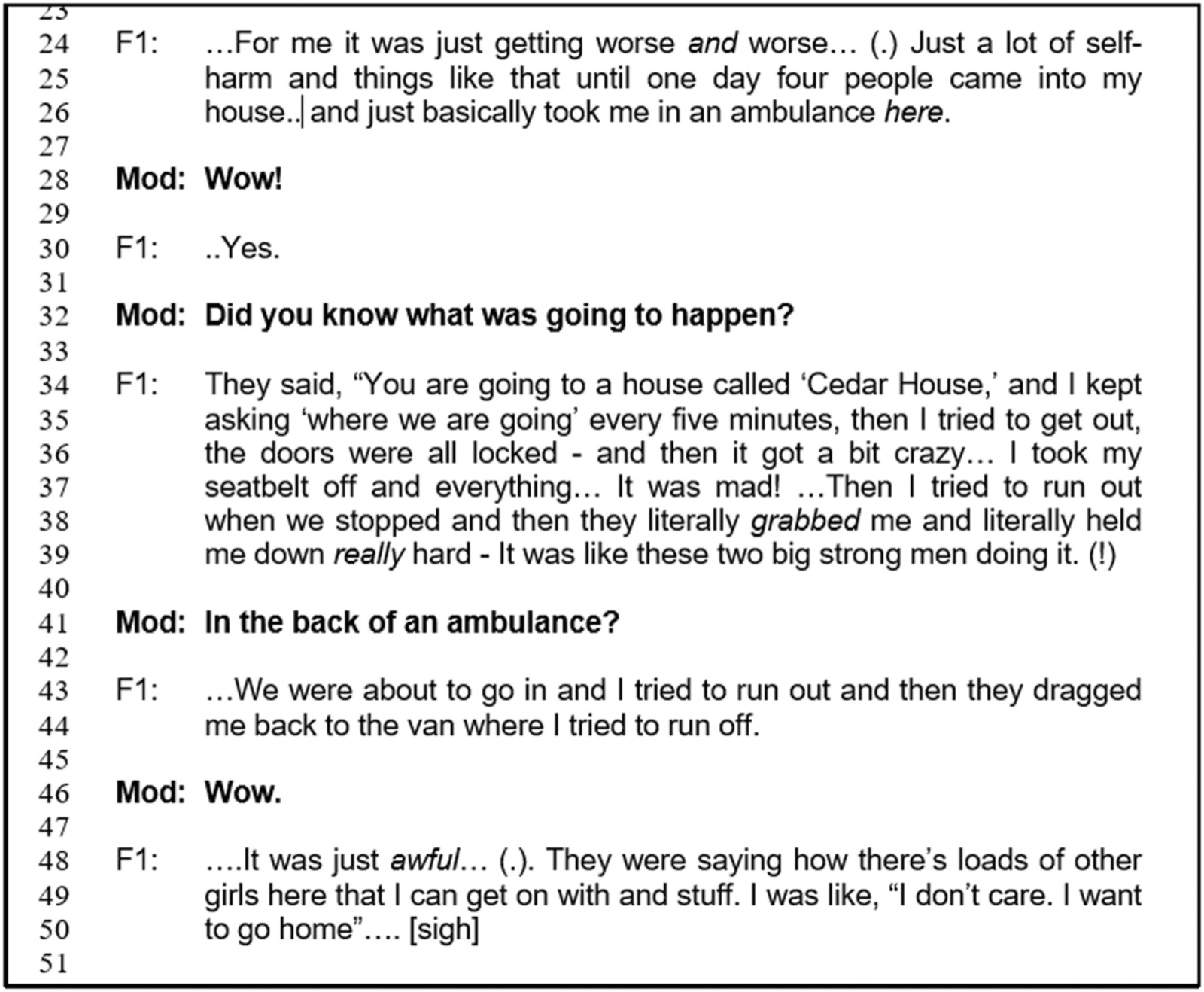
One of the most compelling discourses to emerge was regarding safety, care and the roles of staff and parents. Considering the focus of my research topic, this was unsurprising, but what was noteworthy were the incredible discrepancy, contradictions and ambivalence that all three participant groups explicitly or implicitly identified, as will be demonstrated. Attachment theory also provided the backdrop to many of these discourses: talk about care, food and nurture allude to potential attachment relationships between staff/parents and young people. A series of extracts provided details about how young people experience care, how safe they felt on the unit, and how parents talk about safety. Most of the young people, when asked, described a story of shock, trauma and fear on admission. See Figure 1.1
Was it safe on the unit? ‘Then it got a bit crazy’… ‘I want to go home’
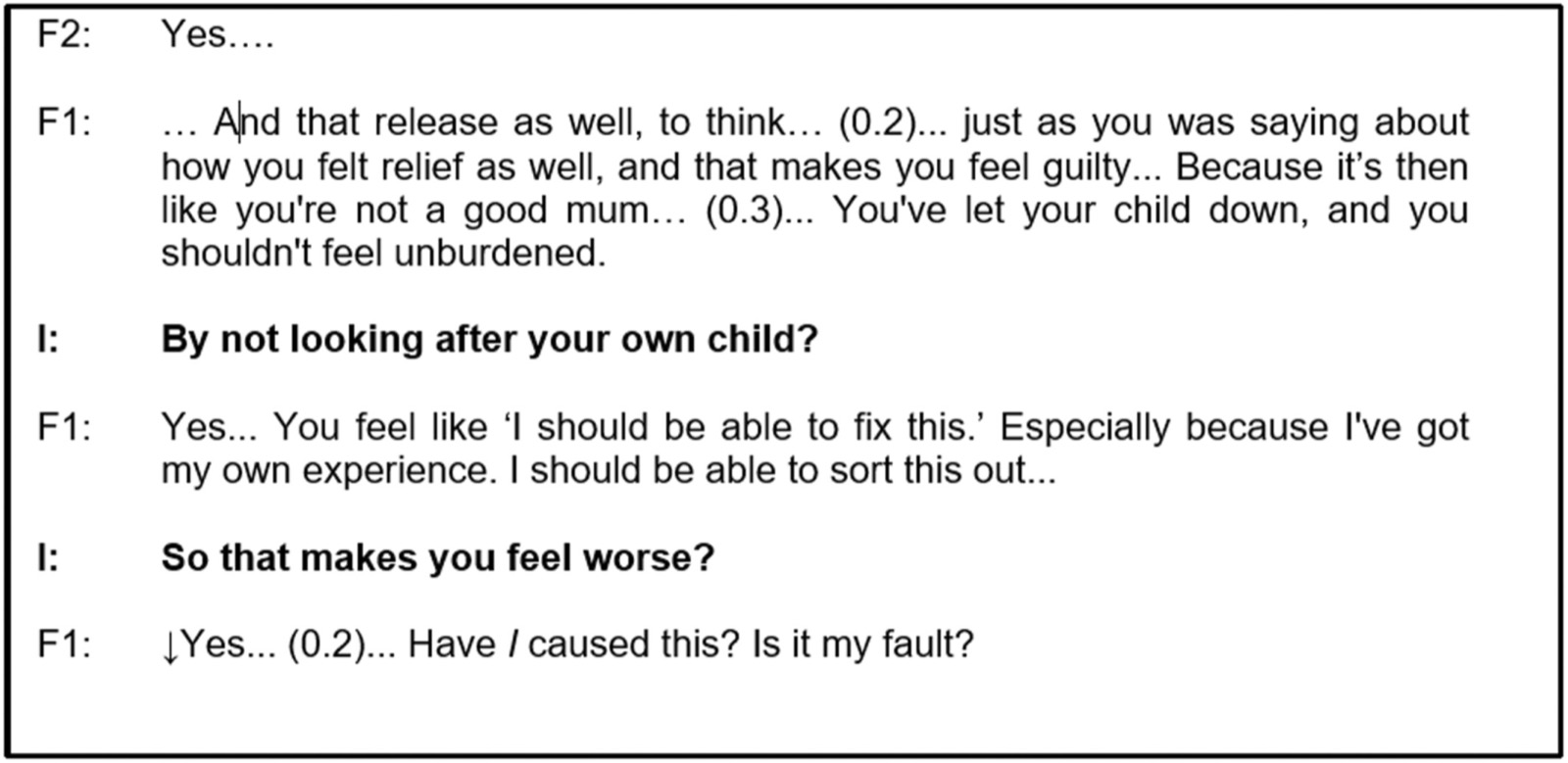
A common theme for many of the parents was sense of relief that their child was safe once admitted, although this relief was tempered by the guilt they experienced. In Figure 2, a mother describes these mixed feelings, also noting her own narrative about how ‘fixing’ her child should be her responsibility and wondering whether her daughter's problems were her fault. Her description suggests the conflicting feelings she experienced about keeping her daughter safe, and as she moves between ‘you’ and ‘I', she seems to be navigating these conflicting feelings.
Discourse 2: Home looks and feels like this – The embodiment of home
Many descriptions of home were somatic and included an ‘embodied’ or bodily experience of home for the focus group participants. This discourse included home ‘in action’ or ‘home activities’: how aspects and evidence of home life were enacted either on or off the unit. Descriptions were provided about how the unit is or is not like home in relation to the physical environment, including various references to corridors.
In Figure 3, repetition of the word ‘here’ seems to be about both emphasis and also clarity. This would seem to suggest that in many ways the staff member is referring not only to the young people but also to the staff – and all the staff. There is no clear suggestion that this is staff ‘seeing’ young people, but more in the sense that everyone must see everyone and stay alert. The staff member then suggests that ‘you can dive straight into the nurse's office if you need something’, but interestingly the only people who can actually access the nurses office and ‘dive in’ are the staff, as the room is kept locked. This would certainly support the notion that when she talks about everyone, she includes herself. In many ways from an attachment perspective, it is further evidence that to feel safe on the unit, ‘everyone’ must be vigilant, and the corridors represent a place of surveillance rather like Foucault's ideas about the panopticon (Luckhurst, 2019).
Discourse 3: Can this be home and hospital?
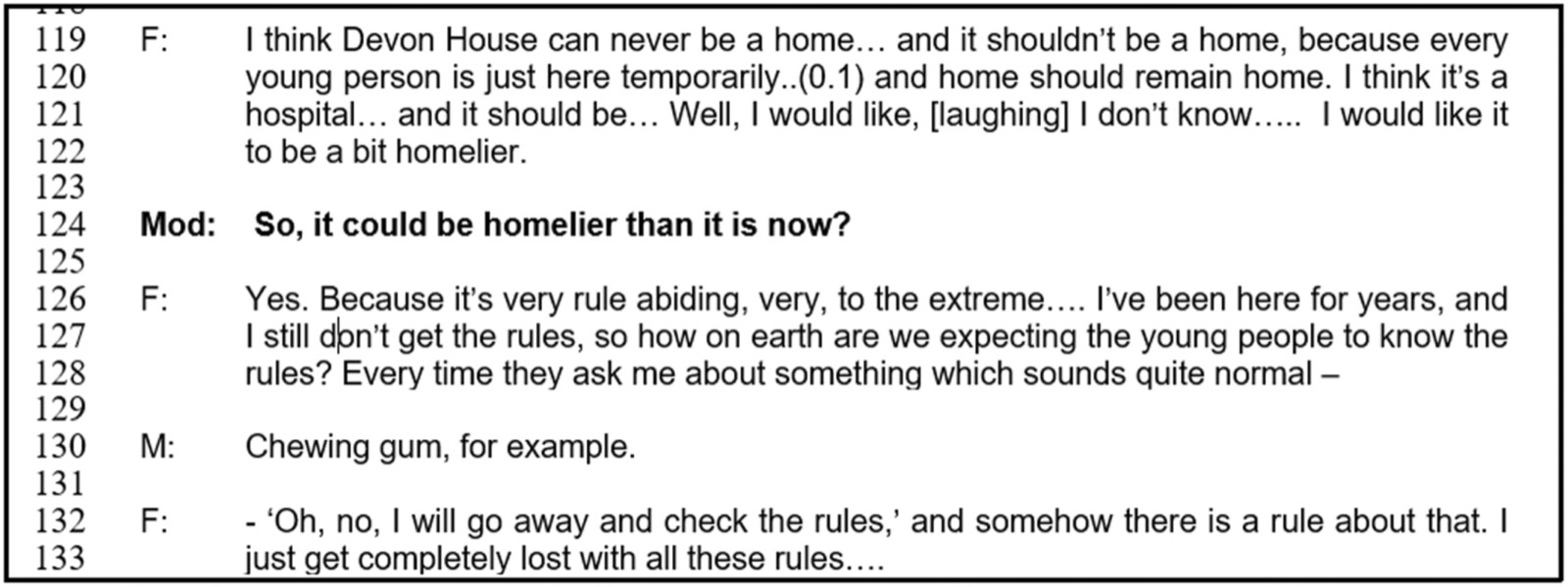
All the focus groups were asked to comment on whether the inpatient unit was ‘home’ or ‘hospital’ with a recognition that it might be neither, both or something different. The discourse about home and hospital, but also home versus house, were complex. When asked, many parent/carers provided a description of what they thought hospital ‘should’ be – and then either talked themselves in or out of their own description. This question evoked repeated contradictory discourses with all the participant groups. In Figure 4, staff are discussing whether the unit is a home, and in the passage on lines 119–122, it is possible to hear the uncertainty as the staff member grapples with the question, leading to a conversation about rules.
DISCUSSION
Within the focus groups, powerful discourses were constructed about care, a secure base, parenting and identity. I hypothesised that the unit evolving as a potential secure base, or the only secure base would have significant clinical implications and a bearing on the admission and experiences of the young people and parents. The data suggest staff sometimes struggle to think reciprocally about their attachment relationships with the young people. It also highlights the inherent differences and contradictions between focus groups; for the young people the unit is where they live, for the staff it is ‘work’ and for the parents it is where their young people go while they can no longer be at home.
How do we care and keep safe? A secure base, attachment and group dynamics
The exploration of the discourse on safety, care and roles starts with the question about what caring staff do and how staff experience care themselves. In the full analysis (Sherbersky, 2020), staff make reference to the concern and sadness that they experience, and a recognition of the difficulties that these young people and their families face. That said, what became evident was that staff also felt a sense of confusion about the ‘parental’ functions of their role, and sitting just under the surface for many staff was ambivalence about how much caring they should be doing. When asking a group of staff whether the unit should be like home, there was evidence of ambivalence and uncertainty. Staff repeatedly referred to wanting the unit to be like home, trying to make it homely, recognising it did resemble home for some young people and simultaneously describing the unit as needing to not be too much or even at all like home.
The central issue of whether staff themselves feel ‘at home’ in their own professional role is brought forth in the discourse that identifies staff role confusion. Scalon and Adlam (2009) suggest that within a clinical setting, staff and patients can come to position one another in an oscillation between inclusion/exclusion and care/control dimensions. On the one hand, staff can find themselves becoming overly controlling, whilst on the other hand, our attention is drawn to them being overly appeasing in an attempt to be ‘housed within the interpersonal world of the patients’ (p. 15). Professional, socially responsible and altruistic motivation of staff then can become corrupted and replaced by a tendency for dogmatism, control and/or by an abdication of professional responsibility for setting appropriate professional boundaries (Scalon & Adlam, 2009, p. 15).
The sense of role confusion for some staff (‘should I be more like a parent or a professional?’), and ambivalence about functioning as transitional attachment figures for the young people and their contradictory positions were all evident in the staff discourse. Insider/outsider positions can identify that a sense of disempowerment and professional exclusion can be aggravated by the fact that many nurses and healthcare assistants have traditionally been migrants (Scalon & Adlam, 2009). Often positioned as ‘outsiders’, this workforce often ‘feel the full force of prejudices of various kinds’ (Scalon & Adlam, 2009, p. 17). Indeed, within this research, there was more cultural and racial diversity within the staff participant group than with the families or young people.
The data on the young people and their families demonstrated numerous examples of ambivalence, confusion and disempowerment regarding parental care on the unit. Significantly, the most powerful accounts from the young people seemed to center on their memories of arrival on the unit, such as the sense of shock, fear and loneliness that they experienced, exemplified powerfully here: ‘they literally grabbed me, and literally held me down really hard’, ‘I was like, I don't care, I just want to go home’ (Young People, Figure 1) – to more oblique references to care in the form of discussions about being generally looked after.
Attachment responses
The poignant descriptions in some of the figures make overt references to the fear and trauma of the initial admission. According to Crittenden (2006), attachment strategies change when they no longer fit the context; thus, the focus of treatment should be ‘the fit of strategy to context to yield maximum safety and comfort’ (p. 9). When families can no longer be the primary means by which young people accomplish the function of protecting the self, this strategic attachment functioning is activated (Crittenden & Dallos, 2009), and knowing how this occurs could help clinicians to respond better to what young people need in those moments.
Drawing on the Karpman triangle (Karpman, 1968), an interactional framework of victim, rescuer and perpetrator, Carr (1989) describes how an intense emotional desire to protect a child is potentially accompanied by an additional desire to persecute the parents. These positions can also switch, and when one team member experiences a countertransference response, another member may be pulled into a complementary one. If this dynamic continues to be outside awareness, polarisation can continue and splits in the team emerge. The staff team discourse around care seemed to exemplify the dilemma and paradox associated with ‘covert coalitions’ and perceived parental failure that existed between parent, young person and the unit staff team (Rivett et al., 1997), as illustrated by staff debates about how homely the unit should be. There was anxiety and ambivalence exhibited within the focus groups about whether staff should care for young people and how the young people felt about their parents, oscillating between anger and protection.
This polarising discourse seems to further illustrate what Main described as the ‘in group’ and the ‘out group’ (1957) when he explored the circumstances that aroused specific responses towards patients who worried the staff by remaining ill despite the team's best efforts. These patients had sentimental appeal and the emergence of these patients becoming ‘special’ split the staff team, and ultimately, if treatment failed, personal blame could be experienced by staff. Young people as patients are even more likely to become ‘special’ than adults (Gairdner, 2002) due to the appropriate heightened emotional involvement of staff. Gairdner asserts that conflictual feelings are highly likely to arise when caring for troubled young people and suggests that ‘the more severe the patient's disorder, the more one should expect dissent and disagreement, much of which may be unspoken’ (Gairdner, 2002, p. 293).
Menzies Lyth proposed in the 1960s that in the absence of productive outlets for work-related anxiety, some rules and working procedures developed within the nursing service as a way to defend against the anxiety inherent in nursing tasks (Lees et al., 2013). She asserted that defensive patterns could get played out if there is insufficient containment of anxiety (Lees et al., 2013), for example, splitting, detachment of feelings and obscuring of responsibility. These concepts accord with the anxious and ambivalent staff discourses around rules and ‘caring’ and ‘keeping safe’(Figure 1).
Some young people described their own sense of guilt about upsetting their family, as well as directly describing concern for their parents, suggesting a high degree of parentification amongst this inpatient population (Byng-Hall, 2008). Given that approximately 68% of women and 57% of men with mental health problems are parents in the UK (Royal College of Psychiatris, 2016), and these rates are likely to be much higher in parents of young people within an inpatient unit, it is anticipated that many young people here are fulfilling some sort of parental role in the family.
Young people, whose roles have already become parentified and have a complex attachment pattern with parents, can potentially experience the parent–child relationship further breaking down at admission as an attachment rupture (Diamond et al., 2013). Given the levels of role confusion for staff and parents, and if we consider that many of these parents will be struggling with their own mental health difficulties, it is unsurprising that parents also reported a lack of agency when they hand over responsibility to health professionals (Figure 2).
Home and parenting seemed to be frequently conflated in the discussions. Even when there was an engaged parent or family of a patient, the unit staff's perception of whether this parenting was adequate hugely influenced their involvement and view of the parent, particularly if there was a lack of staff consensus.
Home looks and feel like this – Hospital aesthetics and iatrogenic injury
The unit was described as a space in which home activities took place. Somatic descriptions were offered about the physical space, and references to house and home were also often conflated. Again, in this contradictory way, there were also repeated stark reminders of how little the unit could ever be home, with the descriptions of corridor life being a prime example (Figure 3). These liminal spaces seemed to represent an anxiety-provoking element of surveillance for staff in this excerpt.
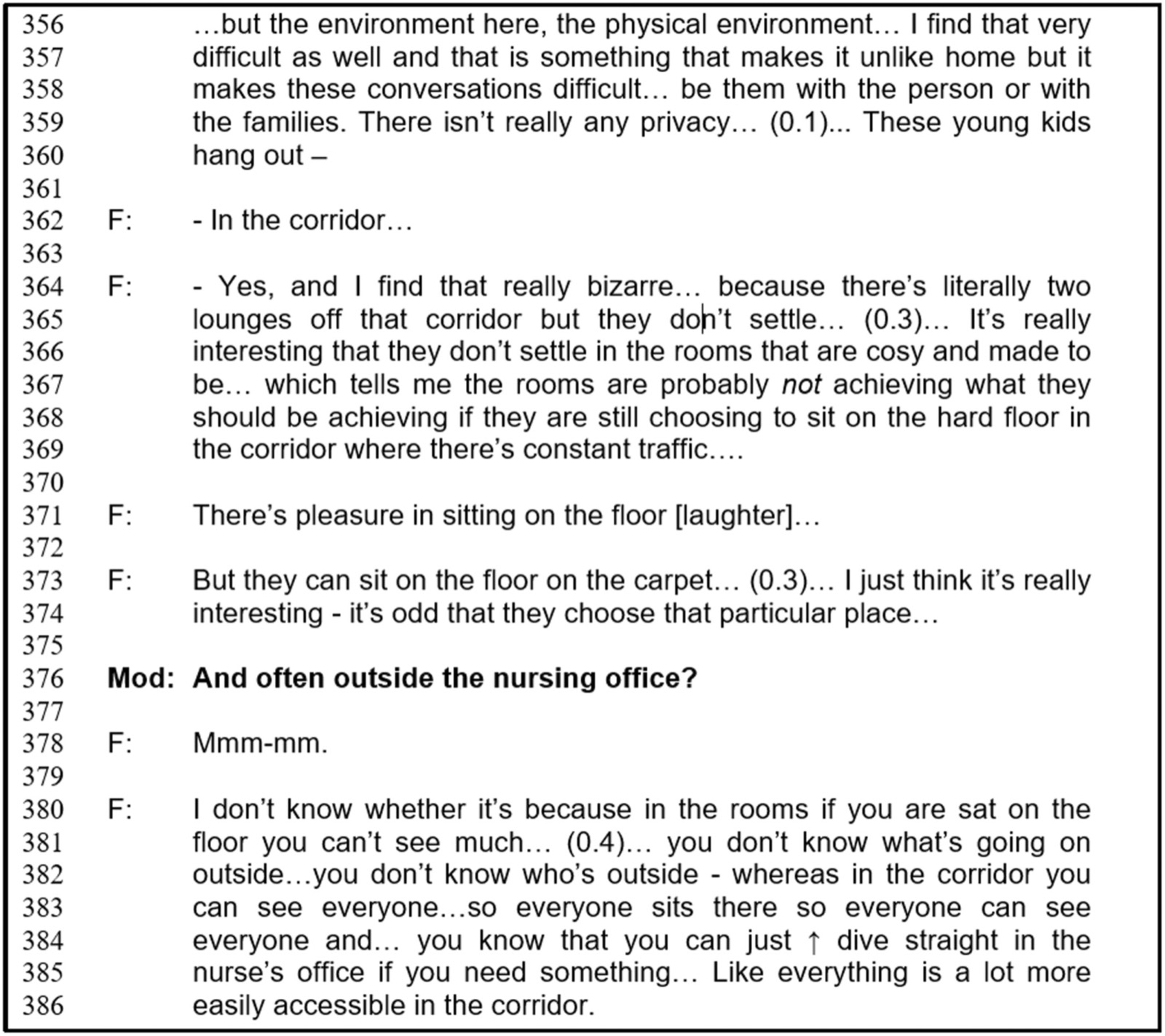
The data were suggestive of the institutional power of the psychiatric ward, in which all were watched and watching, supporting Foucault's description of Bentham's panopticon (Foucault, 1961). The ‘panopticon’ played on notions of control and manipulation in as much as the building design relied on the illusion that everyone was potentially being observed (whether they actually were or not), thus prisoners or patients would be compelled to regulate their own behaviour. The panopticon design often relies on a series of corridors as well as a central observation point, and the significance of corridor behaviour and liminal space was identified by all three participant groups.
In one focus group, an account is given of a young man standing in the corridor, suggesting corridors continue to represent a liminal and transitory space. The staff member describes this person staying out of the way and being in the corridor as it was the only place he felt he could go. The congregation of teenagers in a liminal space is far from unusual, however. Teenagedom is synonymous with transition, and this threshold space is often a struggle between autonomy and attachment (Diamond et al., 2013). We can also describe this space as liminality (Wood, 2012), that is, the threshold to adulthood. Teenagers typically inhabit and congregate in these in-between worlds, be it within a social–political context (Wood, 2012) or a physical reality such as a park in the evening, outside school gates, around bus shelters or in the corridors of an inpatient unit. The fact that these young people do not always sit neatly in the unit lounge and rather choose to sit on the hard floor in the corridor, one could argue, is also a sign of appropriate social activity for this age group, despite it preoccupying the staff. Given the confines of the physical environment, these young people have recreated a whole world within the unit, in which inhabiting the in-between is still possible. This recreated social space becomes an important place for individuation and social experimentation (Blakemore, 2018).
We can understand the corridors to represent surveillance and institutional power, but additionally, much of the teenage activity within the corridor can also be understood as very ordinary ‘groupish’ behaviour (Brown, 1992,) that takes place when young people are in home-like situations. For some young people, this sense of belonging is not only a new and welcome experience, often following periods of social isolation and struggle at home, but the supportive peer group and a sense of connectedness are also central to the young person's recovery (Reavey et al., 2017). This peer group will directly influence how ready to actively engage in and resolve difficulties the young people might be. Equally, where the inpatient peer group are involved in destructive and self-harming strategies, we see the very understandable spread of these behaviours (Hannigan et al., 2015).
Iatrogenic injury and total institution
The analysis suggests that the discourse around the embodiment of home sheds light on the notion of iatrogenic injury (Wright, 2003) and the ‘medicalisation’ of life; for example, discussions by staff of hominess and corridors in Figures 3 and 4. All participation groups made reference to the ‘medicalised’ elements of the unit, and despite there being suggestions in the existing limited research that young people in inpatient units should ‘lead as normal a life as possible’, (Hannigan et al., 2015, p. 67), this appeared not to be their lived experience in many ways.
In relation to Goffman's notion of institutionalisation (1961), the analysis supports the assertion that there are inequalities in social power between young people and staff (Chow & Priebe, 2013) which were repeatedly referenced through descriptions of coercion and physical restraint. These powerful comments were exemplified by a young person, for example, who firstly describes the unit as a ‘second home’, but then qualifies his statement by noting that he is restrained a lot, which would not happen at home.
The notion of straddling different worlds and managing multiple belongings is encapsulated by the terms ‘little home’ and ‘big home’ (Magat, 1999). ‘Big home’ encompasses a sense of belonging and the ‘place of ultimate return’ (p. 120), contrasting with ‘little home’ as a transitory and fluid space established by particular people and punctuated with daily activities (Magat, 1999). Might utilising these descriptions offer a starting point from which staff, parents and young people can explore the unit and their own sense of identity?
Traditionally, some family therapists have been uncomfortable using psychoanalytic terms such as countertransference, but this reluctance can restrict a discussion about therapeutic process (Kraemer, 2008). Often using the alternative term ‘resonance’, systemic theory is ideally placed to make sense of the interactional relationships in this context, and to understand the patterns of communication that in attempt to solve problems, have themselves become problematic (Watzlawick et al., 1974). Family therapy has expertise not just in family processes, but also in exploring the self of the therapist, in addition to the organisational functioning of the team and in training and supervision (Hanks & Stratton, 2007).
Some of the most seminal ideas in the field, often celebrated in academic circles – Main's descriptions of the ailment (1957), the ward atmosphere scale (Moos, 1974), attachment theory (Bowlby, 1988), social defences (Menzies Lyth, 1988) – have held a central position in this research. What is most striking however, is that at the level of clinical practice, these issues are as pertinent and unresolved as ever. There is little evidence that the very staff that many of these papers were written about have an applied working knowledge of these theories, and they remain under-operationalised within the mental health system.
STUDY LIMITATIONS
Using a focus group approach carries ethical considerations. Power differentials and group dynamics also all had a bearing on what was brought forth, particularly within the staff groups. Senior staff spoke more and with more authority, with newer and more junior staff speaking more tentatively about their ideas. Further analysis and exploration are warranted in this area for future publication.
SAMPLE SIZE AND THE PARTICIPANT BALANCE
Eleven focus groups were conducted, however, practical implications meant that arranging focus groups on the unit that more than one family could actually attend was difficult. Subsequently, of the three participant groups, the parent/carer group included significantly fewer participants. This replicates the experience highlighted – that from a participatory perspective, parents/carers have the least input and were underrepresented by their own limited access to the project. Had more parents participated, there may have been more variability across their experience of the admission, and had the focus groups been larger, how they talked together may have invited different discourses between families. Furthermore, this self-selecting group of parents may have been more invested in sharing their story if they had had a negative experience.
FURTHER RESEARCH
Areas for further research include, most notably, additional process research about the curative factors of an admission: research on parent's experience, the impact of the peer group on recovery and/or pre-existing family functioning. Some of the most vulnerable young people are patients in settings with an insufficient evidence base to ensure that their needs are met; the paradox that those who are the most vulnerable are cared for with the most limited evidence base continues. An additional area for further organisational and training research is the barriers to cultural change within an inpatient unit which will be addressed in future publications.
Clinical recommendations
A series of clinical recommendations for the assessment, treatment and discharge of young people and their families within an inpatient unit are presented in Table 1. As described by De Corte et al. (2023), significant family involvement within inpatient settings may require a shift in culture, and change processes need to involve collaboration across all levels. These recommendations acknowledge the complexity associated with engaging with parents/carers where there may be concerns about child protection, an imminent disclosure of abuse or parental mental health issues.
Table 1 — Clinical recommendations
- Pre-admission assessments: Young people (YP), their families and the referral agent need to fully explore the potential risks and goals of an admission. At the point of admission, the possible implications of the admission for the young person, their relationship with their parent/s, family and home need to be more extensively explored to assess and mitigate against dislocation (Hannigan et al., 2015) and the iatrogenic harm caused by being removed from home. Discussion needs to include an exploration of the quality of relationship between young person and parent/carer, explicitly the implications of creating or exacerbating an attachment rupture between young person and parent. Developing this more ‘relational viewpoint’ invites a more relational assessment and diagnosis.
- Changes to the admission process and defining the unit: Staff need to work more closely with parents when YP are first admitted, noting that this population are likely to have already experienced high levels of trauma and may experience the admission itself as traumatic. By explicating how the unit may then resemble home, and the concomitant issues of being away from home and the role of staff as potential transitional attachment figures, permission is given to explore how young people and their parents may talk more deeply about their experience of the admission and the conflicting feelings it may arouse. Care plans, assessment tools and patient information packs all need to reflect a more holistic family approach, with much clearer guidance on the parents' role during the admission from the outset. This needs to include young people who are in care, with closer links to social care and clear guidance about the role of the social worker and/or foster carer during the admission.
- Bringing forth discussions and maintaining links with home during admission: At each point of the young person's journey, thought needs to be given to what bearing being away from home may be having on the admission. This is particularly pertinent for young people who are in out of area placements, and or whose parents and family may struggle to visit and engage with the treatment programme or are absent altogether. Consideration needs to be given to the possibility of developing day programmes in which young people can still return home in the evenings and on weekends, if therapeutically appropriate. Equally, accommodation should be provided for some families to stay close to their young person during an admission, as would be expected on a physical health ward. The Five Year Forward View for Mental Health (2016) recommends achieving parity of esteem between mental and physical health and argues that achieving parity will require action on multiple levels. If having family on or near the adolescent unit is considered to be therapeutically beneficial, funding should be made available, and services organised accordingly. Creating opportunities and space for young people and families to also be together in a more ‘ordinary’ way (family rooms on the unit for example) has been described as improving family engagement and increasing a sense of agency and empowerment during periods of crisis (Hannigan et al., 2015).
- Clarity about the aims and objectives of the admission: All three participant groups identified that there was on-going confusion and disagreement about the central aims and objectives of the admission. The aims and goals of the admission need to be more evident and explicit in both the paperwork on the unit (within the care plans, for example), but more importantly, in the ways in which the admission is conceptualised and described by all. Drawing on these research findings and combined with existing recommendations about the purpose of an inpatient admission has the potential to expedite the admission, improve the therapeutic process and mitigate against therapeutic drift.
- Compassionate leadership and compassion culture within staff teams: Where staff describe their own sense of ambivalence and lack of safety, introducing compassionate leadership models will have positive outcomes; staff are more likely to find innovative and improved ways of functioning, patient safety can be improved and staff are more likely to have a sense of psychological safety (West et al., 2017). The Kings Fund calls for high quality leadership, stating how essential it is to develop cultures that support staff and improve care for patients (2021). Staff support, such as reflective practice groups, generally are ‘soft’ processes (Kraemer, 2015) with little clear guidance on how to run these groups. The senior staff team need to take steps to address the culture and milieu on the unit to maximise a compassionate model of care, and the role of managers here is crucial (Kraemer, 2015). The notion of compassion can augment networks between colleagues and contribute to more effective and productive employees (Tierney, 2018).
Recommendations for training
The following recommendations (Table 2) are linked to the clinical recommendations above, but offer further detailed ideas about training, provided either internally on the unit or externally by a training provider.
Table 2 — Training recommendations
- Attachment training: Staff need to be trained to reflect on and utilise their own attachment experiences to benefit the therapeutic relationships with young people. This training needs to refer explicitly to the importance of the systemic and reciprocal nature of attachment relationships. Staff need to explore attachment relationships for the young people and their families, but this must be accompanied by a recognition of the impact of the young person/staff relationship. Furthermore, explicit training and supervision needs to be given to the impact of the admission and potential attachment rupture between parent and young person. This work needs to sit alongside training to explicate the ward culture and therapeutic milieu, utilising systemic theory to illuminate the morphogenesis–morphostasis continuum (Becvar & Becvar, 2018), and to enable staff to understand how the unit maintains stability whilst allowing for growth and creativity. Well-established models that address systems, attachment and trauma can be drawn on; for example, attachment narrative therapy (Vetere & Dallos, 2008), the dynamic maturational model (Crittenden, 2006) or attachment-based family therapy (Diamond et al., 2013). Utilising a ‘culture of enquiry’ (Gairdner, 2002) will encourage staff to foster curiosity into all the ‘happenings’ in an inpatient unit and see them as possibilities for ‘expanding the understanding of patients’ internal emotional structures” (p. 293). Creating an atmosphere of mutual trust and respect, where staff feel free to talk openly and deeply about their differing emotional reactions to the young people and to each other will enable the team to expose their own feelings, which can begin to clarify the projections of both young people and staff so that any team splits can be identified and worked with (Gairdner, 2002).
- Participation: Staff training needs to address the lived experiences of young people and their families prior to and during their admission in a meaningful and authentic way. NHS England sets out guidance on two types of participation: (1) individual participation: a young person's involvement in their own care and (2) public participation: a young person's involvement in shaping the design and delivery of service. This policy guidance asserts that both types of participation should be promoted and embedded within CAMHS (Young Minds, 2019). All too often, however, the very complex notion of participation is not carefully thought through, and furthermore, the voices of parents and carers are generally underrepresented within participation work on inpatient units. The collaborative experience of the shared decision-making process builds trust and the therapeutic alliance more generally. This shared decision-making, however, must include parents and the wider family. Given that most young people continue to be admitted from and discharged back home, this collaborative work needs to continue. Adaptations and considerations need to be made for families where there are on-going child protection concerns and or social care involvement.
- Specificity of the client group: Training needs to include detail about the specific challenges of working with teenagers. This research suggests that staff and parents felt confused and unclear about their role in caring for the young people, and furthermore, specific aspects of teenagedom appeared to be under theorised within their care, with misattributions about behaviour being made. Training for staff needs to include more information about the developmental requirements of this age group, also noting the vast differences in both the general and attachment needs of young adolescent patients of 12 years compared with those who are almost 18 years old. Teenagers require a particular type of care and understanding, and the notion of ‘contagion’ and the impact of peer relationships will inform treatment. This can become particularly significant for those young people for whom family life is highly complex or underrepresented altogether.
- Staff satisfaction and staff retention: The Kings Fund clearly states that an extended funding squeeze ‘combined with years of poor workforce planning, weak policy and fragmented responsibilities have resulted in a workforce crisis’ (2021). Nursing is commonly considered to form the backbone of mental health services, although recruitment to other specialist posts such as child and adolescent psychiatry is also problematic. Recommendations made by The King's Fund (2021) include the need to address staff turnover, frequently associated with high levels of staff sickness that directly relate to workplace stress, levels of patient acuity and inappropriate skill mix of staff. It is posited that explicating some of the complex dynamics within the staff/young people/family triad, and supporting staff at a deeper, relational and more interpersonal level will improve staff satisfaction and reduce staff burnout.
Synthesis – Coming home
This research study originated with a staff comment: ‘she's treating this place like home’. Through this process, I have attempted to demonstrate the significance of notions of home for young people and their families during admission to an adolescent inpatient unit. Under-theorised aspects of our clinical work, such as our own attachment history as staff, our family of origin and lived experience of home, all have a profound impact on the relationships we develop with young people, their families on the unit and each other. Breaking down the double meaning of this powerful comment into ‘treatment’ and ‘home’ started to explicate how understanding these ideas could lead to improved treatments. In so many ways, admission is all about treating the unit like home. To utilise this phenomenon and introduce a paradigm shift in how we work, however, we need to make this shared meaning making a conscious process: something tangible that we can communicate about, acknowledge and work with together.
Complexe Systémique: key points
The article names something many inpatient teams experience without putting it into words: for some young people, the psychiatric unit becomes a home, and this is precisely what makes discharge so hard. A systemic reading is valuable here because it shifts the question from the ‘case’ to the young person–family–staff triad. Staff become transitional attachment figures without being prepared for it, parents feel dispossessed at admission, and the unit’s rules contain the staff’s anxiety as much as the young people’s. Two lines stand out for practice: thinking of admission as a possible attachment rupture with parents, and training teams to reflect on their own attachment responses rather than leaving them unspoken. The limits are those of a discourse study in a single English unit, with few parents and only four excerpts; the researcher also worked there as a family therapist, which illuminates the field as much as it shapes it. Read alongside the article on family domains in inpatient care, and the article on partnerships between families and institutions.
Notes from the original
1 All names and identifiable details, including the name of the unit within the transcripts, have been changed.
Funding information. The author(s) have declared that there was no external funding for this work.
Conflict of interest statement. Potential conflict of interest: Hannah Sherbersky is the co-editor for the JFT special edition on inpatient care.
References
Adshead, G. (1998) Psychiatric staff as attachment figures. Understanding management problems in psychiatric services in the light of attachment theory. The British Journal of Psychiatry, 172(1), 64–69.
Adshead, G. (2009) Systemic thinking and values-based practice. Advances in Psychiatric Treatment, 15, 470–478.
Alsop-Shields, L. & Mohay, H. (2001) John Bowlby and James Robertson: theorists, scientists and crusaders for improvements in the care of children in hospital. Journal of Advance Nursing, 35(1), 50–58.
Beck, J. (2011) The Psychology of Home: Why Where You Live Means So Much. Available from: https://www.theatlantic.com/health/archive/2011/12/the-psychology-of-home-why-where-you-live-means-so-much/249800/ [Retrieved 1st September 2023].
Becvar, R. & Becvar, D. (2018) Systems therapy and family therapy. London: Hamilton Books.
Blakemore, S.J. (2018) Inventing ourselves: the secret life of the teenage brain. London: Transworld Digital.
Bowlby, J. (1988) A secure base: clinical applications of attachment theory. London: Routledge.
Boym, S. (2002) Future of nostalgia. New York: Basic Books Ltd.
Brown, D. (1992) Bion and Foulkes: basic assumptions and beyond. In: M. Pines (Ed.) Bion and group psychotherapy. London: Jessica Kingsley.
Burck, C. (2005) Comparing qualitative research methodologies for systemic research: the use of grounded theory, discourse analysis and narrative analysis. Journal of Family Therapy, 27, 237–262.
Byng-Hall, J. (1991) The application of attachment theory to understanding and treatment in family therapy. In: C.M. Parkes, J. Stevenson-Hinde & P. Marris (Eds.) Attachment across the life cycle. London: Tavistock and Routledge, pp. 199–215.
Byng-Hall, J. (2008) The significance of children fulfilling parental roles: implications for family therapy. Journal of Family Therapy, 30, 147–162.
Carr, A. (1989) Countertransference to families where child abuse has occurred. Journal of Family Therapy, 11, 87–97.
Chow, W.S. & Priebe, S. (2013) Understanding psychiatric institutionalization: a conceptual review. BMC Psychiatry, 13, 169.
Clark, J. & MacLennan, E. (2023) Measuring experience of inpatient child and adolescent mental health services (CAMHS). International Journal of Environmental Research and Public Health, 20, 5940.
Cotgrove, A. (2018) Editorial: the future of crisis mental health services for children and young people. Child Adolescence Mental Health, 23, 1–3.
Crittenden, P.M. (2006) A dynamic-maturational model of attachment. Australian and New Zealand Journal of Family Therapy, 27, 105–115.
Crittenden, P.M. & Dallos, R. (2009) All in the family: integrating attachment and family systems theories. Clinical Child Psychology and Psychiatry, 14(3), 389–409.
Dallos, R. & Vetere, A. (2005) Researching psychotherapy and counselling: exploring outcome, process and theory. Milton Keynes: McGraw Hill and Open University Press.
Dare, C. & Eisler, E. (2000) A multi-family group day treatment programme for adolescent eating disorder. European Eating Disorders Review, 8, 4–18.
De Corte, K.G.P., Van Parys, H., Pauwels, G., Aendekerk, V., Steeman, K., Van Lierde, E. et al. (2023) Family involvement in psychiatry: beyond implementing family interventions. Journal of Family Therapy, 45, 311–330.
Diamond, G., Diamond, G. & Levy, S. (2013) Attachment-based family therapy for depressed adolescents. Washington: APA.
Diamond, G., Winston-Lindeboom, P., Quigneaux, S., Sherbersky, H., Devacht, I. & Roeske, M. (Forthcoming) Family centered care in psychiatric residential treatment for youth: three program models. Residential Treatment for Children & Youth.
Dubika, B. (2020) ‘In conversation…’ The association for child and adolescent mental health podcast. Available from: https://www.acamh.org/blog/in-conversation-dr-bernadka-dubicka/ [Accessed 1st September 2023].
Duncan, B.L., Miller, S.D., Wampold, B.E. & Hubble, M.A. (2010) The heart and soul of change: delivering what works in therapy (pp. xxix–455). Washington, D.C.: American Psychological Association.
Eisler, I. (2005) The empirical and theoretical base of family therapy and multiple family day therapy for adolescent anorexia nervosa. Journal of Family Therapy, 27, 104–131.
Foucault, M. (1961) Madness and civilization. New York: Vintage Books Ltd.
Frances, D. (2019) Available from: https://debfrances.wordpress.com/2019/03/24/parent-and-carer-involvement-why-it-matters/amp/ [Accessed 1st September 2023].
Gairdner, W. (2002) ‘The ailment’ – 45 years later. Clinical Child Psychology and Psychiatry, 7, 288–294.
Gergen, K.J. (2015) An invitation to social construction. London: Sage.
Goffman, I. (1961) Asylums: essays on the social situation of mental patients and other inmates. New York: Doubleday.
Green, B., Johnson, C. & Adams, A. (2006) Writing narrative literature reviews for peer- reviewed journals: secrets of the trade. Journal of Chiropractic Medicine, 5, 101–117.
Green, J. (1992) Inpatient psychiatry units. Archives of Disease in Childhood, 67, 1120–1123.
Green, J. & Burke, M. (1998) The ward as a therapeutic agent. In: J.M. Green & B. Jacobs (Eds.) In-patient child psychiatry: modern practice, research and the future. London: Routledge.
J. Green & B. Jacobs (Eds.) (1998) In-patient child psychiatry: Modern practice, research and the future. London: Routledge.
Gross, V. & Goldin, J. (2008) Dynamics and dilemmas in working with families in inpatient CAMHS services. Clinical Child Psychology and Psychiatry, 13(3), 449–461.
Hanks, H. & Stratton, P. (2007) On learning from the patience. Child Clinical Psychology and Psychiatry, 12, 341–348.
Hannigan, B., Edwards, D., Evans, N., Gillen, E., Longo, M. & Pryjmachuk, S. (2015) An evidence synthesis of risk identification, assessment and management for young people using tier 4 inpatient child and adolescent mental health services. Health Service Delivery Research, 3(22), 1–228.
Hayes, C., Simmons, M., Simons, C. & Hopwood, M. (2017) Evaluating effectiveness in adolescent mental health inpatient units: a systematic review. International Journal of Mental Health Nursing, 27, 498–513.
Jacobs, B., Green, J., Kroll, L., Tobias, C., Dunn, G. & Briskman, J. (2009) The effects of inpatient care on measured health needs in children and adolescents. Journal of Child Psychology and Psychiatry, 50(10), 1273–1281.
Jaffa, T., Lelliott, P., O-Herlihy, A., Worrall, A., Hill, P. & Banerjee, S. (2004) The staffing of inpatient child and adolescent mental health services. Child Adolescent Mental Health, 9(2), 84–87.
Karpman, S. (1968) Fairy tales and script drama analysis. Transactional Analysis Bulletin, 7(26), 39–44.
Kitzinger, J. (1995) Introducing focus groups. British Medical Journal, 311, 299–302.
Kraemer, S. (2008) Where did that come from? Countertransference and the Oedipal triangle in family therapy. European Psychotherapy, 8(1), 129–146.
Kraemer, S. (2015) Anxiety at the front line. In: D. Armstrong & M. Rustin (Eds.) Social defences against anxiety: explorations in a paradigm. London: Karnac, pp. 144–160.
Kwok, K.H.R., Yuan, S.N.V. & Ougrin, D. (2016) Review: alternatives to inpatient care for children and adolescents with mental health disorders. Child Adolescent Mental Health, 21, 3–10.
Lees, A., Meyer, E. & Rafferty, J. (2013) From Menzies Lyth to Munro: the problem of managerialism. British Journal of Social Work, 43, 542–558.
Luckhurst, R. (2019) Corridors. Thinking Allowed. Available from: https://www.bbc.co.uk/sounds/play/m0002zcx [Accessed 7th November 2019].
Magat, I.N. (1999) Israeli and Japanese immigrants to Canada: home, belonging, and the territorialization of identity. Ethos, 27(2), 119–144.
Main, T. (1957) The ailment. British Journal of Medical Psychology, 30, 129–145. [Republished in The ailment and other psychoanalytic essays. London: Free Association Books, 1989].
Mallet, S. (2004) Understanding home: a critical review of the literature. The Sociological Review, 52, 62–89.
McGoldrick, M. (2016) The genogram casebook: a clinical companion to genograms: assessment and intervention. New York: W.W. Norton & Company.
McGoldrick, M., Garcia Preto, N. & Carter, B. (2016) The expanding family life cycle: individual, family, and social perspectives. New Jersey: Pearson.
Menzies Lyth, I. (1988) The functioning of social systems as a defence against anxiety. In: I. Menzies Lyth (Ed.) Containing anxiety in institutions (selected essays volume 1). London: Free Association Books.
Moos, R. (1974) Evaluating treatment Envrionements: a social ecological Appraoch. New York: Wiley & Sons.
National Collaborating Centre for Mental Health and UCL. (2021) Delivering inpatient children and young people's mental health care; a multidisciplinary competence.
National Institute for Health and Care Research (NIHR) (2021) Available from: https://evidence.nihr.ac.uk/collection/children-young-people-mental-health-learning-disability-autisum-inpatient-settings/ [Accessed 1st September 2023].
Phillips, K., Lawler Whatson, B., Wells, E., Milson, G. & Hartley, S. (2019) Capturing the impact of adolescent inpatient admissions: the social connectedness scale. Clinical Child Psychology and Psychiatry, 24(3), 631–641.
Reavey, P., Poole, J., Corrigall, R., Zundel, T., Byford, D., Sarhane, S. et al. (2017) The ward as emotional ecology: adolescent experiences of managing mental health and distress in psychiatric inpatient settings. Health and Place, 46, 210–218.
Rivett, M., Tomsett, J., Holmes, P. & Lumsdon, P. (1997) ‘Strangers in a familiar place’: the evolution of a family therapy clinic within an in-patient adolescent unit. Journal of Family Therapy, 19, 43–57.
Royal College of Psychiatrist. (2016) Parental mental illness: the impact on children and adolescents. Information for parents, carrers and anyone who works with young people. Available from: https://www.rcpsych.ac.uk/mental-health/parents-and-young-people/information-for-parents-and-carers/parental-mental-illness-the-impact-on-children-and-adolescents-for-parents-and-carers [Accessed 1st September 2023].
Scalon, C. & Adlam, J. (2009) Nursing dangerousness, dangerous nursing and the spaces in between: learning to live with uncertainties. In: A. Aivegbusi & J. Clarke-Moore (Eds.) Therapeutic relationships with offenders: an introduction to the psychodynamics of forensic mental health nursing. London: Jessica Kingsley.
Sherbersky, H. (2020) ‘Treating this place like home’: an exploration of the notions of home within an adolescent inpatient unit and subsequent implications for staff training. University of Exeter Repository. Exeter, UK: University of Exeter.
Somerville, P. (1997) The social construction of home. Journal of Architectural and Planning Research, 14(3), 226–245.
The King's Fund. (2021) NHS workforce: our position. Available from: https://www.kingsfund.org.uk/projects/positions/nhs-workforce [Accessed 7th March 2021].
Tierney, S. (2018) What place does compassion hold in the conduct and production of health services research? Jounral of Compassionate Health Care, 5, 1.
Ussher, J. & Perz, J. (2014) Discourse analysis. In: P. Rohleder & A. Lyons (Eds.) Qualitative research in clinical and health psychology. London: Palgrave MacMillan.
Vetere, A. & Dallos, R. (2008) Systemic therapy and attachment narratives. Journal of Family Therapy, 30, 374–385.
Ward-Ciesielski, E. & Rizvi, S. (2020) The potential iatrogenic effects of psychiatric hospitalization for suicidal behavior: a critical review and recommendations for research. Clinical Psychology: Science and Practice, 28(1), 60–71. Available from: https://doi.org/10.1111/cpsp.12332
Watzlawick, P., Weakland, J.H. & Fisch, R. (1974) Change: principles of problem formation and problem resolution. New York: W. W. Norton.
West, M., Collings, B., Eckert, R. & Chowla, R. (2017) Caring to change: how compassionate leadership can stimulate innovation in health care. London: The Kings Fund.
Wood, B. (2012) Crafted within liminal spaces: young people's everyday politics. Political Geography, 31, 337–346.
World Health Organisation. (2023) Mental health of adolescents.
Wright, P. (2003) Ivan Illich obituary. The Lancet, 361(9352), 361–363.
Reformatted republication of ‘Treating this place like home’: An exploration of the notions of home within an adolescent inpatient unit with subsequent implications for staff training, by Hannah Sherbersky, Arlene Vetere and Janet Smithson, Journal of Family Therapy, vol. 45, no 4 (2023), doi: 10.1111/1467-6427.12443, under a CC BY 4.0 licence. Edition and layout: Complexe Systémique, September 2026 — the work has been modified under the terms of the licence (tables presented as lists). Neither the authors nor the publisher are responsible for this edition; the original version prevails.
This is the original article “‘Treating this place like home’: An exploration of the notions of home within an adolescent inpatient unit with subsequent implications for staff training”, published in Journal of Family Therapy (2023) under a CC BY 4.0 licence. Republished by Complexe Systémique: the author’s text is unchanged; only the presentation has been adapted for reading online, as set out at the head of this page.
Read the original articleHow to cite this article
Sherbersky, H., Vetere, A., et Smithson, J. (2023). ‘Treating this place like home’: An exploration of the notions of home within an adolescent inpatient unit with subsequent implications for staff training. Complexe Systémique. https://app.complexe-systemique.com/en_GB/articles/treating-this-place-like-home-an-exploration-of-the-notions-of-home-within-an-adolescent (Original work published in 2023 in Journal of Family Therapy, 45(4), 392-413 (2023); republished in 2023 by Journal of Family Therapy, https://onlinelibrary.wiley.com/doi/full/10.1111/1467-6427.12443)
To go further
- Family domains: A conceptual framework with practical application for adolescent inpatient servicesFamily domains.
- Families vs institutions: the worst and the best of partnershipsFamilies and institutions.
- Staff experiences of using non-violent resistance in a residential care home for young people with high-risk behavioursNon-violent resistance in residential care.
Related training courses
 Short course
The suicidal crisis in adolescents and young adults
Training: assessing and supporting the suicidal crisis in adolescents and young adults. Clinical landmarks and systemic tools. In French.
 Certifying course
Training in Systemic Therapy and Interventions – Cycle 1
Certifying training cycle in systemic therapy and interventions – year 1. Courses, supervision and practice, aligned with EFTA/SFTF. In French.
 Certifying course
Training in Systemic Therapy and Interventions – Cycle 2
Certifying training cycle in systemic therapy and interventions – year 2. Clinical complexity, supervision and practice. EFTA/SFTF aligned. In French.
 Certifying course
Training in Systemic Therapy and Interventions – Cycle 3
Certifying training cycle in systemic therapy and interventions – year 3. In-depth intervention, supervision and practice. EFTA/SFTF aligned. In French.
Related articles
 Article
 Making Sense of Parental Resistance in Involuntary Child Welfare Relationships: Child Welfare Workers' Perspectives
Eleven Norwegian child welfare workers make sense of parental resistance: learned fear, exclusion and services with no time for the relationship.
 Article
 Disrupting the Child Welfare Participation Paradigm: A Contextual, Relational, Embedded and Pragmatic Approach
Why does participation remain rhetorical in child welfare? A synthesis combines psychoanalysis and Palo Alto pragmatics to rethink it in context.
 Article
 Shaping the Therapist, Shaping the Field: A Narrative Review of the Person‐of‐the‐Therapist Training (POTT) Approach
Thirty sources, three periods: the history of Harry J. Aponte’s training, which turns the therapist’s wounds and “signature theme” into a clinical tool.
 Article
 Systems Thinking in Practice (STiP): A Praxeology for Our Times
Checkland moved systemicity from the world to inquiry. Ison and Collins go further: leave the hard/soft dualism behind and put the practitioner back at the centre of praxis.