Child & Family Social Work · Social work
The Restorative Frame: A Grounded Theory Study of Protective Factors for Foster Care Disruptions
Why do some foster placements hold when others break down? Drawing on 22 cross-checked interviews with foster parents, caseworkers and therapists in the United States, a social work team identifies four protective processes, including a “relational resilience” that keeps carers connected to the child at the height of a crisis, and proposes adapting Belsky’s model to foster care.
This is a reformatted republication of The Restorative Frame: A Grounded Theory Study of Protective Factors for Foster Care Disruptions, by J. Wesley Furlong, Jillian Landers and Gaynor Yancey, published in Child & Family Social Work (Wiley) (2026), doi: 10.1111/cfs.70008, under a CC BY 4.0 licence. Prepared by Complexe Systémique in September 2026: the authors’ text is unchanged; the layout has been adapted for reading online, which constitutes a modification of the work under the terms of the licence. Tables are presented as lists. This edition was made neither by the authors nor by the publisher, who are not responsible for its content or for any errors. The original version prevails.
Support seeking then, is not only a behaviour but also an orientation towards interdependence.
J. Wesley Furlong, Jillian Landers and Gaynor Yancey
Abstract
This study used grounded theory to explore the protective factors for foster care placement disruptions. Twenty-two interviews were conducted with foster parents, caseworkers and therapists involved with 14 older children or sibling sets who had undergone placement disruptions and were at high risk of experiencing future disruptions. A theoretical model of parental dispositional traits was developed with the aim of informing efforts to mitigate place-based causes for disruptions. This theory proposes a framework of four protective processes (active adaptability, relational resilience, deferential advocacy and seeking support) that mitigate common place-based causes of disruption (stress, lack of control, resource constraints and unmet expectations). The theory extends Belsky's Determinants of Parenting Model to foster parenting with three modifications. Practice implications include training and assessment materials on restorative framing in foster care, including licensing classes and caseworker guidance for placement decisions.
1 Introduction
Foster care placement disruption remains one of the most intractable obstacles for the US child welfare system (Connell et al. 2006; Helton 2011). Despite coordinated efforts across the child welfare system, placement disruptions remain stubbornly high, especially after 12 months in care (Children's Bureau 2020). Based on state-level reports in the Adoption and Foster Care Analysis and Reporting System (AFCARS), we estimate that 37.2% of children in foster care (n = 227 526) experienced three or more placement disruptions in 2019. However, the overall percentage obscures the effect of time in care. For children in care for 12 months or less, 16.51% experienced three or more placement disruptions (n = 47 290). As shown in Table 1, the number rose to 35.09% for those in care between 12 and 24 months (n = 64 623) and 60.12% for those in care for more than 2 years (n = 115 613).
Table 1 — Average disruptions by time in care (2019).
- Period: 12 months or less; Disruption level: Two or less; Count: 247 065; Percent: 83.02
- Period: 12 months or less; Disruption level: Three or more; Count: 47 290; Percent: 16.51
- Period: 12–24 months; Disruption level: Two or less; Count: 121 418; Percent: 64.60
- Period: 12–24 months; Disruption level: Three or more; Count: 64 623; Percent: 35.09
- Period: 2 years+; Disruption level: Two or less; Count: 76 677; Percent: 39.51
- Period: 2 years+; Disruption level: Three or more; Count: 115 613; Percent: 60.12
Placement disruptions have been shown to negatively affect nearly every aspect of a child's development, including physical and brain development (Johnson et al. 2018), negative self-esteem (Becker et al. 2006) and distrust of adults (Humphreys et al. 2015; Rock et al. 2015). Research in attachment theory has led to an increased realization of the importance of placement stability within foster care. Placement stability is foundational for secure attachment and the quality of a child's attachment has broad implications for well-being. Studies examining attachment styles in foster children reveal strong associations between insecure attachment dimensions (e.g., attachment avoidance and attachment anxiety) and adverse mental health outcomes (Bederian-Gardner et al. 2017; Hobbs et al. 2021). In contrast, secure attachment is linked to fewer externalizing behaviours (Rubin et al. 2007), lower levels of psychopathology (Humphreys et al. 2015) and higher academic performance (Zima et al. 2000).
Given the importance of placement stability for healthy attachment and child wellbeing outcomes, the successful recruitment and retention of foster parents has been identified as an urgent issue at the national and state level (Government Accountability Office [GAO], 2018 in Hanlon et al. 2021). Despite widespread recognition of its importance, foster parent turnover rates remain stubbornly high. Wulczyn et al. (2018) observed that 25% of new homes close within the first 4 months and between 30% and 50% close within the first year (Gibbs and Wildfire 2007). Haskins et al. (2019) estimated a similar 30%–40% closure rate every year while the National Council for Adoption (2018b) reported a more general ‘double-digit’ decrease in year 2 of foster home licensure (Wulczyn et al. 2018). This high turnover rate is particularly concerning given that 59% of children in foster care remain for at least 1 year, and 33% remain in care for two or more years (AFCARS 29, 2022). With foster parents serving an average of just 8–14 months (Gibbs and Wildfire 2007)—well below the average 21-month stay for children in care (AFCARS 29, 2022)—a critical mismatch emerges between caregiver availability and child needs, increasing the risk of placement disruption.
It is important to acknowledge, however, that assessing placement stability is complicated by the fact that some transitions are in the best interest of the child and necessary for achieving the case plan goal. In fact, the most recent CFSRS (2020) found that 43% of the 922 placement changes reviewed were planned by the agency in an effort ‘to achieve the child's case goals or to meet the child's needs’ (CFSRS Aggregate Report 2020). The primary interest of child welfare research on placement stability has largely focused on the factors contributing to unplanned terminations of foster placements, which we refer to as ‘placement disruptions’. In this study, we will limit our focus of placement disruptions to unplanned transitions initiated by a foster parent.
Despite the well-documented consequences of placement instability, relatively little is known about place-based protective factors for foster care placement disruptions, particularly for children at elevated risk. With the implementation of the Family First Prevention Services Act (FFPSA), which prioritizes family-based placements over congregate care, we must identify the traits of foster households that support stability.
1.1 Present Approaches to Minimizing Placement Disruptions
An analysis of how states seek to minimize placements disruptions (Blakey et al. 2012) identified eight approaches (from most to least common): (1) services to foster children, (2) placement/matching, (3) recruitment/selection of foster parents, (4) ongoing support and services to foster parents, (5) training, (6) consultation and collaboration, (7) collaborative team approaches and (8) involving biological parents. Co-placed siblings are shown to achieve better permanency outcomes (Akin 2011) and to experience fewer placement disruptions (Waid et al. 2016).
Two evidence-based foster parent training and support programs shown to minimize disruptions are the Multidimensional Treatment Foster Care (MTFC) and Keeping Foster parents Supported and Trained (KEEP). Foster parents with the MTFC process the Parent Daily Report (PDR; Chamberlain and Reid 1987) on daily phone calls with program staff and participate in weekly support group meetings. Crisis support is also available 24/7. These proactive measures are likely to contribute to the program's low disruption rates (Bergström and Höjman 2015). The KEEP program provides training on trauma-informed care and behavioural management to foster parents prior to placements and ongoing support but is not as intensive as MTFC. Chamberlain and Lewis (2010) recommended a graduated approach to support based on frequent communication with foster parents that begins with KEEP when support is needed and expands to the more intensive and costly MTFC when challenges persist. Reducing case worker turnover has also been shown to minimize disruptions by reducing the time to positive permanency outcomes (Potter and Klein-Rothschild 2002).
The recognition that siblings placed together, well-trained and supported foster parents and consistency with caseworkers can minimize disruptions underscores the importance of a systemic approach with careful attention to how protective factors operate together. The choice to disrupt a child's placement is often a complex decision that occurs over a time span. Informed by the Determinants of Parenting Model (Belsky 1984), this study examined how place-based protective factors operate collectively and within their social contexts.
1.2 Theoretical Framework: Determinants of Parenting Model
In Belsky's Determinants of Parenting model (1984), parental functioning is shaped by the inter-dependence of three primary determinants: the personal psychological resources of parents', child characteristics and the contextual sources of stress and support. The model emphasizes the direct and indirect effects of these determinants on parental functioning within a structured but flexible system. Stress and support can affect parenting through a direct pathway or through an indirect pathway by first influencing psychological well-being. A parent's personality can influence their experience of contextual support and stress, which can shape their parental functioning. The three determinants are not equal in their effect on parental functioning (p. 84). The personal psychological resources of parents' possess a higher capacity to mitigate stress on the parent–child relationship than contextual sources of support, which have a higher capacity than a child's characteristics. Figure 1 illustrates these interrelated pathways within Belsky's model.
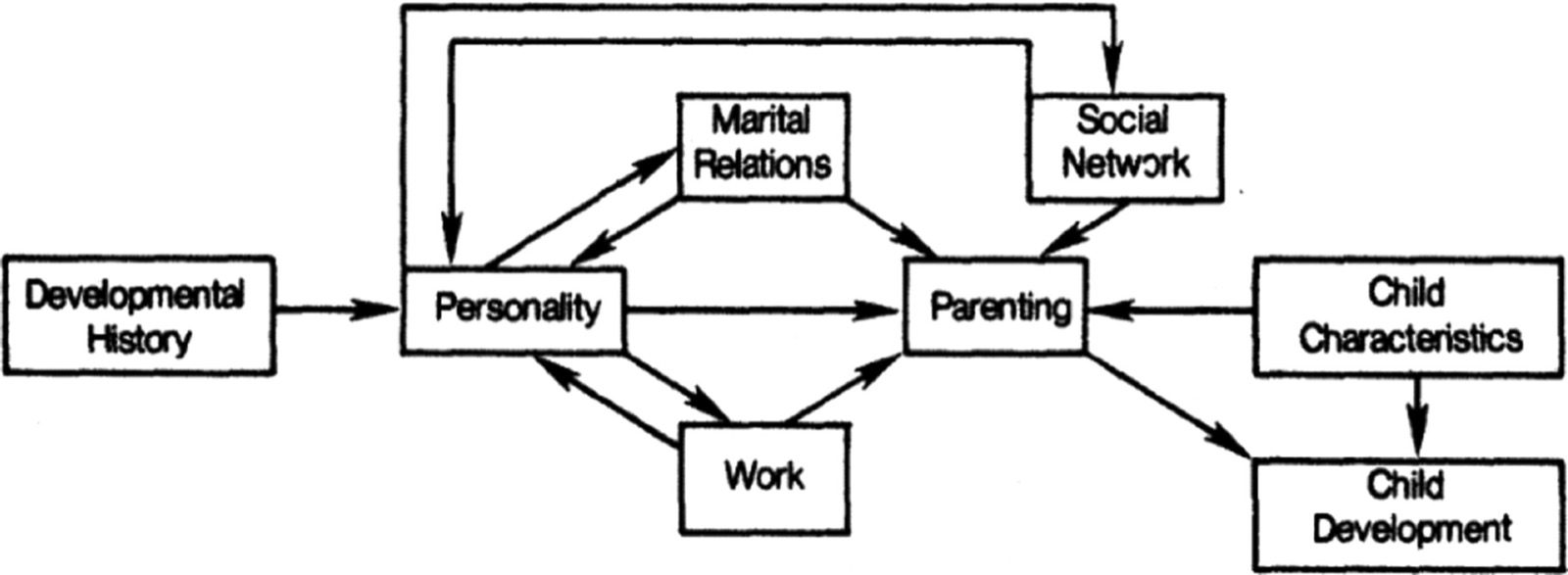
A parent's psychological resources are shaped by their own developmental history and by their social system, particularly marital relations, social networks and work experience. Personality has a direct effect on parental functioning and is itself influenced by social context and developmental history.
Belsky's parenting model continues to serve as a robust theoretical framework for understanding the influences on parenting behaviour and family resiliency (Taraban and Shaw 2018; Bornstein 2015; Roggman et al. 2008). The Developmental Parenting framework (Roggman et al. 2008; Newland 2014) extended Belsky's ecological view of parenting to examine how specific caregiver behaviours (e.g., affection, encouragement and teaching) influence early child development. Newland (2014) further expanded the framework by incorporating additional parenting dimensions, including engagement, appropriate discipline and supportive co-parenting. Her model of family resiliency, which includes family functioning, family leadership and supportive relationships, both reflects and extends Belsky's original domains, highlighting the dynamic interplay between individual, relational and contextual influences on family well-being.
This theoretical foundation provides a valuable basis for examining the protective factors for placement disruption in foster care. Belsky's Determinants of Parenting model, in particular, offers a comprehensive ecological lens through which to conceptualize possible direct and indirect effects of place-based protective factors for placement disruption. Similar to Belsky, we propose a foster parent's dispositional traits are more influential than social contextual factors on placement disruptions; however, these traits are reflexively shaped by one's social context. A parent with strong dispositional traits for fostering will have a higher capacity to buffer stress and externalized behaviours, which will strengthen attachment over time and mitigate placement disruptions. Such a parent is also likely to participate in social contexts that support these traits.
1.3 Present Study
The intent of the present exploratory study was to better understand the place-based protective factors for foster care placement disruptions and develop an ecological systems informed theory of optimal placements for youth with the highest risk of experiencing disruptions. The emphasis on place-based is meant to contrast with child-based and include all possible influences related to the placement location. Based on Belsky's model and insights from agency staff members (e.g., caseworkers and therapists), we hypothesized that a collection of intra- and inter-personal traits, household characteristics, social support and agency support served as protective factors. We sought to identify their relative importance and how they worked together to stabilize placements. The two research questions guiding our study were the following:
What place-based protective factors contribute to placement stability for foster children at highest risk of disruption?
And how might these protective factors function together to minimize disruptions?
2 Method
A grounded theory method (GT) (Charmaz 2003; Corbin and Strauss 2015; Glaser and Strauss 1967) was utilized for our exploratory study because of a lack of previous research on the nature and composition of placed-based protective factors from which to develop a theory. We adopted a constructivist framework (Charmaz 2014; Creswell and Poth 2018) to GT because of epistemological considerations related to our study's design. Charmaz, a student of Corbin and Strauss, departed from the classic approach to GT by emphasizing the need to ‘tolerate ambiguity’ and ‘become receptive to creating emergent categories and strategies’ (Charmaz 2008, 168). Three specific facets of our study led us to prefer Charmaz's more fluid approach to GT: the ecological systems orientation, attempt to triangulate cases between foster parents, caseworkers and therapists and our hypothesis that protective factors operated symbiotically.
2.1 Participants
Upon approval by the affiliated institution's Institutional Review Board, participants were identified and recruited by the regional director and four local directors of a child welfare agency. These leaders supervise a region that covers roughly half of one US state and has offices spread throughout the region. Based on the study's inclusion and exclusion criteria, the five directors identified a list of approximately 30 possible placements for inclusion in the study. The agency reached out to the case managers, therapists and foster parents to assess their interest in participating in the study. The study's Principal Investigator (PI) was presented with 21 cases where a youth (ages 6+) had transitioned from a foster-parent initiated placement disruption to a stable placement. Eligible participants were contacted by the PI to obtain written consent. Study participants (n = 22) included foster parents (n = 14), agency caseworkers (n = 5) and therapists (n = 3). The therapists were employees of the agency and provided direct care to more than half of the sample (n = 15). Caseworkers of all clients were included in the study. By conducting separate interviews with foster parents, caseworkers and therapists, we aimed to triangulate the protective factors for specific placements. Saturation was reached after 22 interviews, at which point no significant new themes or variations in participant responses were emerging (Charmaz 2014).
2.2 Eligibility Criteria
Inclusion criteria included a 9-month minimum foster placement of a child 6 years old or older who had previously experienced a foster parent-initiated disruption and was at risk of experiencing future disruptions. Children's caseworkers subjectively assessed the likelihood of future placement disruption and stability. Exclusion criteria included adoption-only permanency goals.
2.3 Interview Protocol
The semi-structured interviews explored protective traits, caregiver practices, disruption warning signs and sources of agency and community support. All participants were asked the same questions, adapted slightly for their role:
- Describe the most optimal foster home setting for children with higher risks of placement disruption. What traits do good foster homes have in common?
- If you were to join a licensing class for prospective foster parents and were asked what personal and family characteristics were most important for deciding whether to become foster parents, what characteristics would you highlight?
- So now they have become foster parents and you are brought in again for a training event. You've been asked to speak to the most important practices to remain a healthy and effective foster parent for the long-term, what practices would you highlight?
- Support from extended family and friends is often said to be important parts of a successful foster placement. What forms of support do you find to be most important? (e.g., emotional, practical, financial and counsel/guidance)
- How can your licensing agency best support foster parents?
- What would be the most concerning warning signs that a placement is headed towards disruption?
- Describe an ideal early intervention strategy aimed at preventing placement disruption.
What should the foster parents do? Case worker and agency?
- Every circumstance is different, but imagine a scenario where a child experiences a placement disruption because the foster family says they are unable to care for the child and they are transitioned to a new foster family where the children experience an ideal placement. What would you guess would be some possible differences between the two homes?
- New federal legislation is leading foster care agencies to transition child in group homes to foster homes. How can agencies best support and equip foster families to care for children with higher-level needs?
2.4 Analysis
The primary analysis team consisted of two researchers who analysed all data and conducted the initial line-by-line coding of transcripts in NVivo using constant comparison method (Glaser and Strauss 1967). The researchers conducted the initial coding separately without any discussion about the data (Hill 2012). After completing the initial coding, the researchers met to review and compare their initial codes. Axial coding was then conducted together over zoom. A third researcher subsequently reviewed the transcripts independently and audited the codes. Finally, selective coding was used to identify the core categories in the data.
The primary researchers both noted in their memos the importance of foster parents having a growth mindset versus a fixed mindset (Dweck 2006). In the analytic memos of both researchers, humility, adaptability and tempered expectations regarding changes in the child (or child welfare system) were noted as interconnected traits. The PI noted the importance of foster parent's interpretation of externalized behaviours and its effect on their ‘narrative’ about the child's placement. For example, adaptability and empathy were frequently coded together as personal protective factors. Conversely, a rigid family structure and an emphasis on behavioural compliance (e.g., ‘disrespectful’ and ‘disobedient’) were consistently linked as risk factors by agency staff and therapists. A joint focus on mindset (perspective, ideation and narrative) and behaviours (posture, language and actions) seemed essential to understand how protective factors operated.
The need to view support from a systems framework was also noticed early on. When discussing necessary practical and emotional support, all participants identified sources across micro and mezzo systems.
During the first review meeting, the primary researchers identified six emerging themes from the transcripts:
- Four personal protective factors: We highlighted adaptability, empathy, a growth mindset with respect to parenting techniques and the humility to be a team player.
- Seeking help from support: Support networks could take on many forms, but the foster parent needed to be proactive in seeking help.
- Religion as protective and risk factor: Religion seemed to operate as a protective factor for some foster parents and as a risk factor for others. The aspects of religion identified as protective factors included a sense of calling, recognition of need and a supportive community. Conversely, an emphasis on ‘sin and obedience’ (therapist), along with an association with a rigid family structure were coded as risk factors.
- Trauma-informed versus behavioural compliance parenting models: Distinguishing a trauma-informed versus behavioural compliance parenting model could possibly organize specific parental traits into protective and risk factors.
- Self-differentiation: The need to remain self-differentiated, non-reactive and connected when a child is dysregulated was paramount to placement stability.
- Child-focused narrative: A child-focused narrative with tempered expectations of change seemed to operate as a protective factor.
3 Findings
3.1 Foster Parent Psychological Resources
3.1.1 Active Adaptability
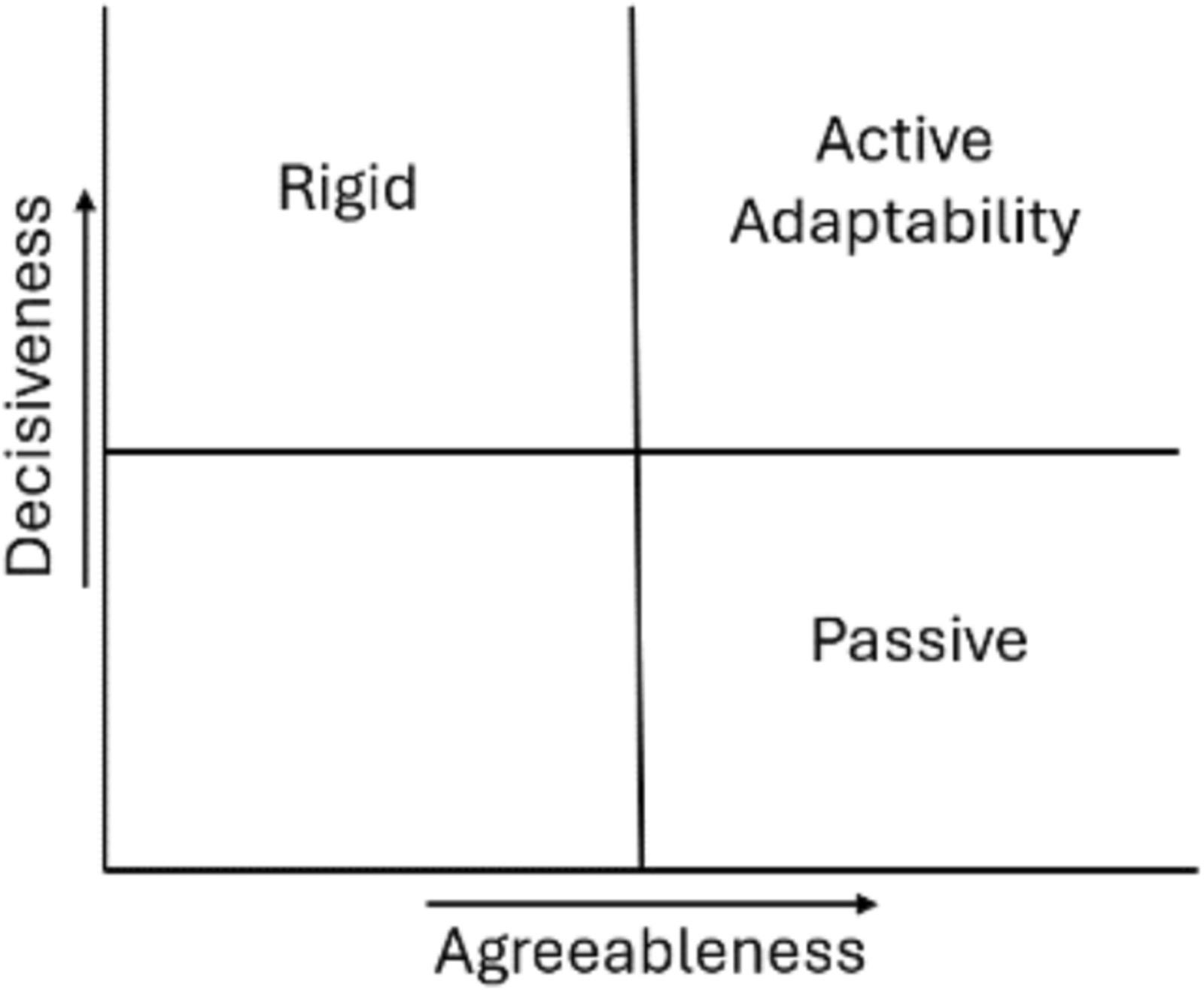
Adaptability emerged as the most frequently referenced protective factor for placement disruptions (n = 54), appearing in every transcript and repeatedly emphasized by foster parents, caseworkers and therapists. Participants described adaptability as essential in managing unmet expectations, child dysregulation, last-minute schedule changes and the inherent uncertainty of fostering. Six codes—flexibility, patience, acceptance, resilience, open-mindedness and positive outlook—were combined under the theme of active adaptability.
This adaptability was not passive acceptance but rather a dynamic balance between decisiveness and agreeableness (see Figure 2). One foster parent described a 14-year-old girl they fostered who had a baby. ‘She kept saying she wanted to go to the park by herself with her baby. “I should be allowed to do this,” she said.’ The parents had offered to go with her but refused to allow her to go alone due to fears of human trafficking. They had recently caught her messaging with strangers online. ‘So, the therapist comes back to us and says, “She wants some time away and we think it's a good thing you need to support. We said OK.’” Against their best judgement, they went along with the therapist's recommendation and allowed her to walk alone to the park. The father watched from a distance as a car pulled up beside her. He immediately yelled her name and the car drove off.
Foster parents described learning to adapt routines and expectations:
She was just lying on the ground at the store entrance. People had to step over her… you eventually learn some triggers, but we had to limit our outings for a while. (Foster parent)
Therapists and agency staff also reinforced the need for flexibility:
The task-oriented folks have challenges. The black and white, achievement-driven… they have a hard time with fostering. (Therapist)
You need to be able to keep adding to the toolbox. ‘Ok, we tried this, and it did not work. Let us try something else.’ (Caseworker)
3.1.2 Growth Mindset
A growth mindset (Dweck 2006) was identified as a key protective factor, particularly among foster parents with biological children. Caseworkers and therapists observed that experienced parents often relied on instinctive or traditional parenting approaches, which were less effective for children in foster care with trauma histories.
You'll need to take parenting off autopilot and learn new ways. (Psychologist)
Can you play with the child when the house is dirty? (Therapist)
Agency staff emphasized the importance of humility and openness:
‘Please teach me’ is the phrase I'm looking for… They're willing to learn and take advice. (Caseworker)
It's not that we do not care that you have already been a parent, but everything you know about traditional parenting you need to throw out the window. You simply cannot parent kids in foster care the same way as your own children … I'm looking for them to reject traditional parenting for these children. (Caseworker)
This willingness to learn and adapt often manifested as persistence in the face of setbacks, openness to feedback and engagement with training and support systems.
3.1.3 Empathy and Child-Centred Orientation
Foster parents consistently demonstrated empathy by shifting the focus from challenging behaviours to the child's trauma history. This child-centred orientation played a key role in de-escalation and building trust.
They probably went through a lot of trauma and you can't expect that their behaviors will be the same as a kid who didn't have to go through that. (Foster parent)
The timing of empathy mattered. When empathy was extended both during and after episodes of dysregulation, it appeared to mitigate escalation and strengthen the caregiving relationship.
3.1.4 Humility and Motivation
Foster parents frequently expressed feelings of powerlessness related to permanency outcomes. Forming attachments and assuming significant responsibility for a child can be especially challenging when foster parents have limited influence over placement outcomes. When foster parents approached their role with humility by accepting their limited control and position on a bigger team, they were more likely to maintain placement stability.
The courts are going to do what they want… they do not ask us what they should do. (Foster parent)
We want to support a child and help provide stability until reunification is possible… that's what we'd like to see. (Caseworker)
When they say, ‘We want to partner with birth families and we want to love the entire family because it's not just about kids who come into care, it's about a family who has’ … we can teach the skills, but there's the heart piece and when it's there, we might have one for the long haul. (Caseworker)
3.1.5 Personal Trauma as Protective and Risk Factor
The role of past trauma emerged as a complex personal resource that could either enhance empathy and resilience or contribute to rigidity and emotional reactivity, depending on how it had been processed. One caseworker said unequivocally, ‘personal trauma is a red flag for me’. She recounted a couple experiences with foster parents who were former foster youth noting how their personal traumas likely contributed to their placement disruptions. A therapist offered some insight into why personal trauma may serve as both a protective and risk factor:
Personal trauma experiences can be risk or protective factors depending on how they've already responded to them. A real dichotomy is that sometimes people who have experienced a lot of trauma do better at parenting with a trauma-informed lens and can understand the importance of empathy rather than just compliance. On the other hand, we see people who get triggered and can't seem to adapt or receive help. ‘I've been there and know what's best.’ It's all in how they've responded and whether they're open to support and new ways of doing things.
3.1.6 Relational Resilience
Differentiation—the ability to remain connected to the child while regulating one's own emotional response—emerged as a core protective factor. We refer to this sustained, non-reactive connection during and after episodes of behavioural dysregulation as ‘relational resilience’.
Your feelings are important, but it's not the same thing as the kids's feelings. Are they able to step outside their own feelings and remain child-centered? (Therapist)
This trait was particularly evident in moments of crisis when foster parents chose connection over control: ‘Recently, she threw a cup at me … after half an hour, she sat down next to me and apologized. That never would have happened a couple months ago’ (Foster parent).
3.2 Child Characteristics and Trauma-Informed Parenting
3.2.1 Understanding Behaviour Through a Trauma Lens
Foster parents who embraced a trauma-informed perspective were better able to interpret externalized behaviours as expressions of underlying needs rather than wilful defiance. Therapists and caseworkers consistently emphasized this distinction, contrasting trauma-informed caregiving with more rigid, behaviour-focused approaches.
You don't have to give up your principles, but you do need to recognize this kid might have an executive function problem … they're not seeing it the same way. (Therapist)
Several early warning signs for placement disruption emerged that reflected a behavioural compliance mindset: an increasingly pessimistic view of the child, emotional withdrawal from support systems, caregiver dysregulation and growing rigidity around obedience and control. These patterns were often accompanied by unrealistic expectations of gratitude, strict food rules and a focus on how the child's behaviour negatively affected others.
A red flag is an emphasis on disobedience … that's an indicator that there's going to be some challenges. (Caseworker)
In addition to these four concerns, we observed a constellation of three risk factors for disruption centred on a desire for control: high expectations of changing ‘the system’ or child, reliance on traditional parenting techniques and a strong expectation of being able to control one's environment. Interestingly, traits such as high income, advanced education and achievement orientation were also described by agency staff as potential risk factors. We interpreted these demographic and psychographic traits vis-à-vis their control over environments.
My child needs a psychologist now, so I'll just get one. You cannot do that. You have to get on the waiting list and then you'll have to do this and then the county you are in has different regulations. (Caseworker)
‘I can make a plan and I can achieve the plan’ … sorry, you are not going to have the same control over outcomes. (Therapist)
We noted that a strong personal achievement orientation may undermine placement stability, given that foster care often lacks the potential for control and predictability that some foster parents may be accustomed to in other areas of their personal or professional lives. In contrast, foster parents who accepted uncertainty and approached the role with humility, adaptability and a willingness to serve (rather than fix) demonstrated a higher capacity to navigate challenges and maintain placement stability.
During axial coding, these seven risk factors for placement disruption were grouped under two overarching themes: behavioural compliance versus trauma-informed parenting and deferential advocacy. These findings raised two key questions: Can foster parents, particularly those with biological children, shift from a behavioural compliance parenting style to a trauma-informed approach? And can they remain collaborative team players, even when they disagree with decisions made by the county or courts? According to therapists and caseworkers, affirmative responses to these questions are critical for maintaining placement stability.
In contrast to behavioural-compliance approaches, trauma-informed caregivers focused more on building trust and interpreting behaviours through the lens of the child's trauma history. This required foster parents to question assumptions and adopt new strategies for children with disrupted attachments.
The personal psychological resources identified in this study consistently reflected a relational orientation marked by humility, adaptability, empathy and a growth mindset. These protective factors were not expressed in isolation, but rather through the foster parents' posture, perspective and language towards themselves, the child, their family system (e.g., partner/spouse, biological children), their support networks and the agency. Table 2 summarizes these findings by offering a systems-level view of the key psychological resources foster parents demonstrated across relational domains. The table illustrates how internal dispositions such as altruism, connection and openness translated into relational patterns that contributed to placement stability.
Table 2 — A systems perspective of foster parent protective factors for placement disruption.
- Self; Posture: Altruistic (not mostly achievement driven); Perspective: Growth mindset (willing to change and learn); Language: ‘It's not about me’ (but I need to be healthy)
- Child; Posture: Connected (no stonewalling); Perspective: Past and future (not present behaviour); Language: ‘Sit with me’
- Spouse/birth child; Posture: In-tune (open communication); Perspective: Adaptive (not rigid); Language: ‘Talk to me’
- Support; Posture: Proactive (not withdrawn); Perspective: Inter-dependent (not self-reliant); Language: ‘Help me’
- Agency; Posture: Team player (not the child's lone advocate); Perspective: Trusted authority (accepts lack of control); Language: ‘Teach me’
3.3 Contextual Supports and Systemic Factors
3.3.1 Support Networks and Religious Communities
Support networks were viewed by all study participants as vital to long-term placement stability. While the size or composition of the support network varied, what mattered most was the foster parent's willingness to seek and accept help from others. Nearly all foster parents in this sample cited religious faith and congregational support as central to both their motivation and ability to endure the challenges of fostering.
Therapists and caseworkers, however, offered a more nuanced perspective on the role of religious faith in placement stability. Like personal trauma, religion was identified as a potential protective or risk factor, depending on how it was emphasized and enacted within the household. For religion, the differences included the beliefs emphasized (e.g., calling and support vs. sin and obedience) and the flexibility of the family system (e.g., adaptable vs. rigid). Conservative religious convictions, when paired with a rigid family structure and a behavioural-compliance parenting style, were associated with a higher risk of placement disruption.
Notably, however, the most conservative religious group the agency worked with—Mennonites—were consistently identified as top placement choices for children at highest risk of disruption. Mennonite farmers, in particular, were repeatedly described by therapists and caseworkers as ideal foster placements for children requiring the highest level of care.
My very most successful place is a dairy farm. Usually it's a married couple and both people are at home, so the work is at home; so there's adults there, but also a dairy farm is very scheduled. (Therapist)
Their community works to help each other out. When someone has a baby, other people from the church come and bring food and offer to watch the other children. There's a collective support system. (Therapist)
Predictable rhythms and familiar people. There's a lot of support but it's the same people in a stable and consistent environment. For our kids, it's good they know the people, they know what's coming, they know that at this time, they do this and at this time they do this … the routine is so helpful for our kids and they attach well to these families. (Caseworker)
The blend of structure, support, consistency and margin of time offered by these families served as powerful protective factors against placement disruption.
Taken together, these findings reinforce the utility of Belsky's Determinants of Parenting model in understanding placement stability within foster care. Protective factors emerged across all three of Belsky's domains (personal psychological resources, child characteristics and contextual supports), but the most consistent theme was the importance of a relational and adaptable caregiving posture. Foster parents who demonstrated humility, active adaptability, relational resilience and a growth mindset were better equipped to respond to the complex needs of children in their care and the uncertainty of the foster care system. Likewise, those embedded in stable and responsive support systems were more likely to maintain placements over time. These insights provide a foundation for identifying and supporting foster families with the greatest potential for long-term success.
4 Discussion
4.1 Restorative Framing Theory
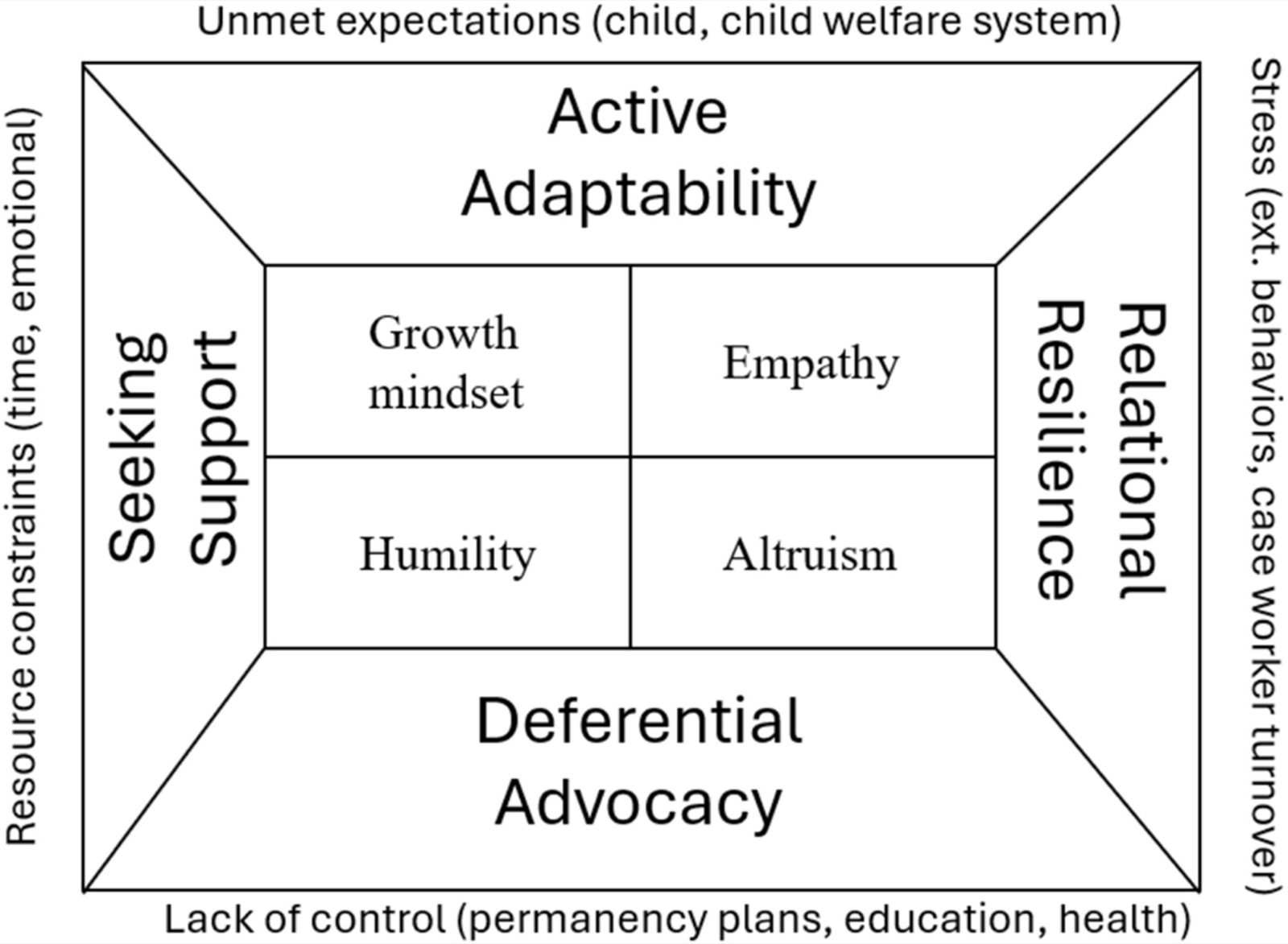
This study explored the questions: What place-based protective factors contribute to placement stability for foster children at highest risk of disruption? And how might they function together to minimize disruptions? Informed by Belsky's Determinants of Parenting model, we sought to identify how specific foster parent traits and support structures interact to prevent unplanned placement disruptions. Through interviews with foster parents, caseworkers and therapists, four interrelated protective processes emerged: active adaptability, relational resilience, deferential advocacy and support seeking. Each of these processes was shaped by core dispositional traits: humility, growth mindset, empathy and altruism. These traits appeared to buffer the effects of externalized behaviours, systemic stressors and role ambiguity, functioning together to form what we call a restorative frame, as illustrated in Figure 3.
Our findings align with previous research emphasizing the importance of foster parent emotional regulation (Mennen and O'Keefe 2005), structured but flexible foster home family systems (Buehler et al. 2003) and the importance of supportive and collaborative relationships between foster parents and licensing agencies (Leve et al. 2012) in reducing the risk of placement disruptions. Our study reinforces the significance of these individual traits while also demonstrating how they function interdependently within an adapted version of Belsky's ecological model to mitigate placement disruptions. In this discussion, we present restorative framing theory as an ecological and relational framework for understanding stability in high-risk foster placements.
During axial coding, we observed that trauma-informed parenting overlapped significantly with a growth mindset and empathy and ultimately organized the findings around the four dispositional traits. Specifically:
A growth mindset and empathy informed active adaptability, a flexible, child-centred posture in the face of uncertainty;
Humility and altruism shaped deferential advocacy, allowing parents to engage the system with grace while accepting limited control;
Empathy and altruism supported relational resilience, sustaining connection in the face of stress and dysregulation;
Humility and growth mindset underpinned support seeking, reinforcing the importance of help-seeking behaviour in emotionally demanding contexts.
In the sections that follow, we examine each of these protective processes in greater depth.
4.2 Relational Resilience
We define relational resilience as the foster parent's ability to maintain emotional connection with the child, especially during and after episodes of behavioural dysregulation, without becoming adversely reactive. This theme emerged from codes including empathy, altruism, trauma-informed perspective, positive regard, affective warmth, differentiation, non-reactivity, self-awareness and self-regulation.
Drawing on Edwin Friedman's (1999) concept of the well-differentiated leader—someone who remains emotionally connected while not absorbed into the emotional reactivity of others—we observed a similar quality among foster parents. Even under stress or direct provocation, these caregivers stayed grounded in the child's needs, rather than reacting from a place of frustration or personal offence.
Foster parents exhibiting relational resilience did not respond with emotional withdrawal or punitive distance. Instead, they engaged in active repair, helping the child make sense of the event and affirming the relationship afterward. These small but intentional acts of reconnection played a significant role in building trust and attachment over time (Mennen and O'Keefe 2005). Notably, this capacity also appeared to buffer stress associated with system-level challenges, such as caseworker turnover or communication lapses, by helping foster parents remain grounded and child-focused in moments of instability.
4.3 Active Adaptability
We define active adaptability as the ability to hold a healthy tension between decisiveness and agreeableness while remaining consistently oriented towards the best interest of the child. This trait emerged as the most frequently referenced protective factor (n = 54), cited in every interview and emphasized by foster parents, caseworkers and therapists alike. It aligns with existing research identifying adaptability as a key contributor to placement stability in foster care (Koh et al. 2014; Chamberlain et al. 2006; Buehler et al. 2003).
The theme incorporated five initial codes: flexibility, patience, acceptance, resilience and positive outlook. Foster parents demonstrated active adaptability in managing last-minute schedule changes, navigating complex relational dynamics and responding to the evolving needs of children, particularly when traditional parenting techniques proved ineffective. They showed persistence in the face of setbacks, openness to feedback and remained deeply committed to meeting the evolving needs of the children in their care.
4.4 Deferential Advocacy
Deferential advocacy refers to a foster parent's ability to engage fully in the caregiving role despite limited control over key decisions, particularly related to permanency outcomes. While closely related to active adaptability, this trait specifically reflects the foster parent's posture towards institutional systems, such as the courts and child welfare agencies (Bell and Romano 2017; Becker et al. 2006).
This theme was most evident in discussions of permanency planning, but it also emerged across decisions involving the child's education, healthcare and social life. Initial codes grouped under deferential advocacy included humility, tempered expectations, team orientation, positive regard for birth parents and child-centred motivation for fostering.
Foster parents who expressed deferential advocacy demonstrated an ability to stay invested in the child's well-being while remaining grounded in the realities of the system. Their motivations often reflected a deep sense of purpose and acceptance, rooted in supporting not just the child but their family of origin. This orientation, simultaneously invested and open-handed, allowed foster parents to navigate systemic constraints without becoming oppositional, reducing the likelihood of placement disruption.
4.5 Seeking Support
Across interviews, the most important factor related to support was not its source but the foster parent's proactive pursuit of it. Participants identified a wide range of support systems, including extended family, friends, church communities, peer support groups and the child welfare agency as essential to their caregiving capacity. Regardless of the source, every foster parent emphasized that they could not sustain fostering without meaningful external support (Bell and Romano 2017).
Therapists and caseworkers echoed this point, stressing that the most resilient foster parents were those who actively sought help rather than waiting for it to be offered or attempting to manage challenges independently. This help-seeking behaviour reflects both a growth mindset, shared with active adaptability and the humility at the heart of deferential advocacy.
Interestingly, time—more than finances—emerged as a critical resource. Foster parents with greater margin in their schedules and with family or friends available to assist with transportation or provide respite care, especially on short notice, were better equipped to manage the unpredictable demands of fostering. Support seeking then, is not only a behaviour but also an orientation towards interdependence, one that reinforces placement stability by extending the foster parent's relational and emotional capacity.
4.6 Adapting Belsky's Determinants of Parenting Model to Foster Care
Like Belsky's (1984) Determinants of Parenting model, we find that parental functioning in foster care is shaped by the interdependence of three primary domains: (1) the personal psychological resources of the parent, (2) child characteristics and (3) contextual sources of stress and support. In Belsky's original model, stress and support may influence parenting directly or indirectly by affecting psychological well-being. Our findings suggest that, in the foster care context, personal psychological resources play a more significant role in buffering stress and preserving the integrity of the parent–child relationship than contextual factors alone.
Restorative Framing Theory builds on this insight by emphasizing the importance of dispositional traits—specifically, humility, empathy, altruism and a growth mindset—as primary protective factors against placement disruption. These traits help foster parents manage emotional strain, tolerate uncertainty and respond constructively to child dysregulation and systemic challenges. At the same time, we recognize that these traits are reflexively shaped by one's social context. For example, humility and a growth mindset often lead to proactive help-seeking, which in turn expands access to supportive networks and resources.
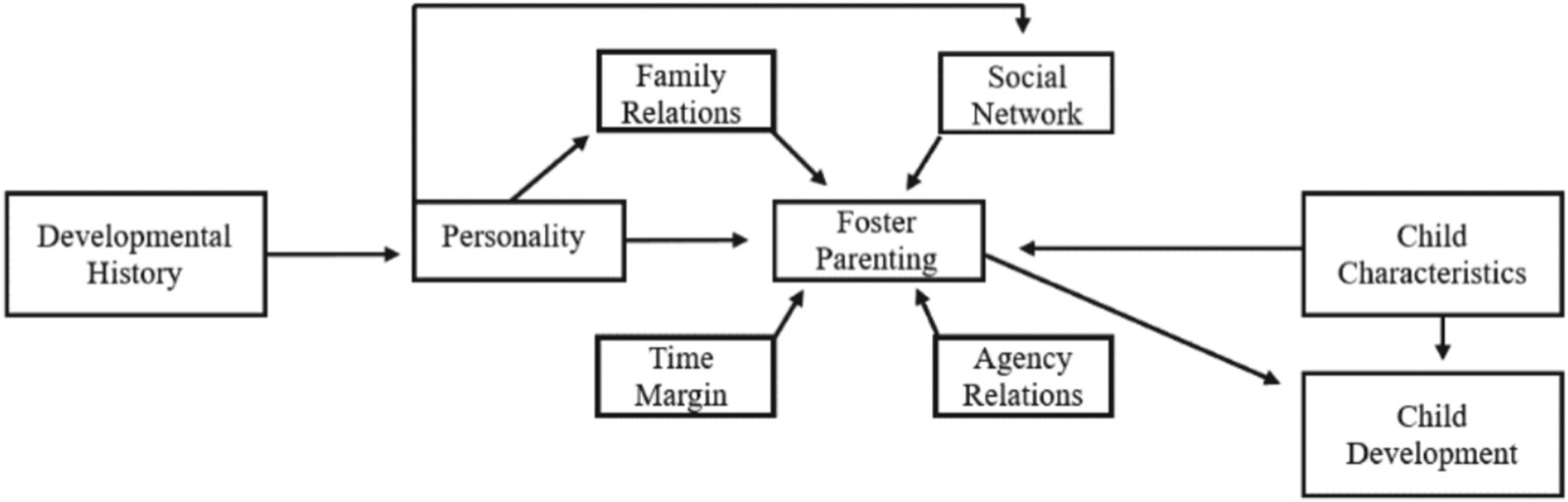
To adapt Belsky's model for greater relevance to foster care, we propose three key modifications (see Figure 4):
- From ‘marital relations’ to ‘family relations’: Foster parents consistently referenced their biological children as a key consideration in decisions about continuing to foster. This shift reflects a broader understanding of how family system dynamics influence parental capacity.
- From ‘employment’ to ‘time availability’: Our findings suggest that time, rather than income, is the more crucial resource for placement stability. Parents with margin in their schedules (or a support network able to provide it) were more able to respond flexibly to children's needs.
- Inclusion of agency relationships: Across interviews, foster parents described positive agency relationships as essential to placement stability. While stress and dysregulation from children were expected, inconsistent communication and limited agency support were frequently cited as a risk factor for placement disruption.
In summary, our findings suggest that a specific cluster of psychological traits—growth mindset, empathy, humility and altruism—combined with supportive relationships can mitigate the most common contributors to placement disruption. These traits operate through four interrelated protective processes: relational resilience, active adaptability, deferential advocacy and support seeking. Together, they form what we call the restorative frame, a framework that captures how internal resources and relational dynamics intersect to support stability in foster care.
4.7 Seismic Isolation as a Metaphor for Restorative Framing
The protective processes described in this study operate much like seismic isolation systems used in earthquake-prone construction. In those systems, buildings are connected to their foundations through flexible bearings or dampers designed to absorb shock rather than transmit it throughout the structure (see Figure 5). Similarly, we observed that foster parents who exhibited relational resilience, active adaptability, deferential advocacy and support seeking were able to absorb stress and tension, whether from the children's behaviour or systemic challenges, without displacing it onto the child or team.
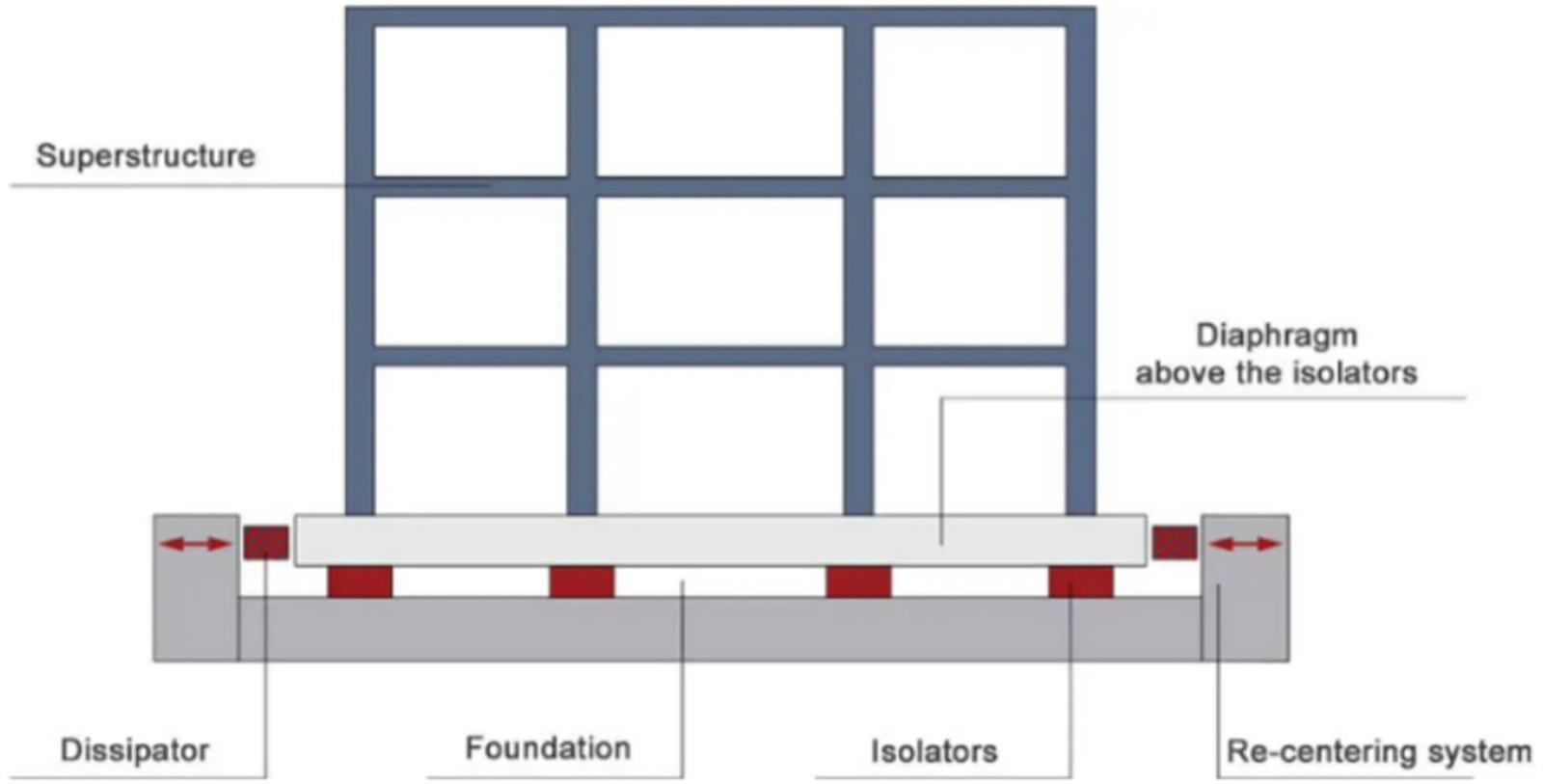
Just as seismic dampers stabilize a structure under pressure, these four dispositional traits (growth mindset, humility, empathy and altruism) function as emotional and relational dampers. When combined with a strong support network, they enable foster parents to remain flexible, responsive and grounded amidst the unpredictable forces of caregiving in foster care. Over time, this capacity to absorb rather than reflect stress may be key to sustaining long-term stability in high-risk placements.
4.8 Limitations and Implications for Future Research
Findings of this research study are limited in two significant ways. First, our sample was limited to participants connected to a faith-based child welfare agency, and findings cannot be generalized to all foster parents. Second, we were unable to triangulate as many cases as originally intended with interviews of foster parents on both sides of a placement disruption. Most of the foster parents who disrupted the placements were no longer serving as foster parents with the agency. While we interviewed the current foster parents as well as the children's caseworkers and therapists, the inclusion of former foster parents would have provided a clearer contrast to distinguish place-based protective factors for placement disruptions.
Further study is also needed to understand how foster parent social support structures mitigate agency conflict. We observed agency conflict as a significant potential risk factor for placement disruptions and believe further analysis of agency conflict from an ecological systems framework (including chronosystem) with attention to support systems as protective factors is needed.
A related area for future research is an examination of how religion and congregational support influence placement outcomes. Religion functioned as a strong protective factor in this study's sample. Foster parents identified a sense of calling, increased awareness of the need and support from their congregations as specific protective factors for placement disruption. The identification of Mennonite farms as a ‘top placement choice’ (Local director) for ‘level 5 children’ was noted by both primary researchers as an area for future research. At the same time, agency staff cautioned that religion may also present a risk when paired with rigid family structures or strong emphasis on obedience, respect and sin. Despite these contextual differences, both protective and risk factors were observed within conservative religious contexts, suggesting a need for a more nuanced investigation into how specific theological emphases and relational dynamics influence placement outcomes.
Finally, future studies should test the validity and utility of restorative framing theory, particularly as a framework for licensing assessments and as a capacity-building tool once children are placed in care.
4.9 Implications for Practice
Child welfare agencies can reduce placement disruptions by gaining deeper insight into how foster parents dispositional traits act as primary protective factors, especially when viewed through the lens of an ecological systems framework. Restorative framing theory offers two immediate practice applications.
4.9.1 Licensing Assessments
Foster parents' capacity for restorative framing may be assessed during the licensing process by evaluating the presence of four key traits: growth mindset, humility, empathy and altruism. Scenario-based tools could be developed to evaluate how these traits manifest in the four associated protective processes: relational resilience, active adaptability, deferential advocacy and support seeking.
4.9.2 Capacity Building
Restorative framing can also be taught. While foster parents frequently request training on managing externalized behaviours and specific diagnoses (Price et al. 2008; Strijker et al. 2008), training programs could be enhanced by incorporating restorative framing principles. These programs would offer a strengths-based approach to identifying, supporting and reinforcing the core traits and protective processes that mitigate disruptions.
5 Conclusion
Restorative framing theory posits that common causes of placement disruption can be countered by a constellation of interconnected dispositional traits. These include a growth mindset, empathy, humility and altruism, all supported by a robust social support network. Together, these traits give rise to four key protective processes: relational resilience, active adaptability, deferential advocacy and seeking support. Collectively, these mechanisms form the foundation of restorative framing—a place-based, ecological framework to stabilize high-risk placements and reduce the likelihood of disruptions.
Complexe Systémique: key points
The value of this study is that it shifts the question: placement disruption is no longer read as the symptom of a child who is “too difficult”, but as a relational event played out between the child, the foster family, its own family, its network and the institution. Systemic practitioners will recognise familiar landmarks: differentiation in Bowen’s sense, taken up by Friedman, as the capacity to stay connected without being swept up in the crisis; repair after the storm; the need for control and an achievement orientation as risk factors; available time, more than money; the relationship with the agency as part of the system. The limits call for caution: the sample comes from a faith-based agency, only families in which the placement held were interviewed, and the notion of “dispositional traits” risks relocating in the individual what the study describes as systemic, or even being used to screen applicants. “Deferential advocacy” may also silence legitimate disagreement with the institution. Read alongside the grounded theory of home-based care, and the article on care-experienced young adults’ relationships with their birth parents.
Notes from the original
Conflicts of interest. The authors declare no conflicts of interest.
References
Akin, B. A. 2011. “Predictors of Foster Care Exits to Permanency: A Competing Risks Analysis of Reunification, Guardianship, and Adoption.” Children and Youth Services Review 33, no. 6: 999–1011. https://doi.org/10.1016/j.childyouth.2011.01.008.
Becker, M., N. Jordan, and R. Larsen. 2006. “Behavioral Health Service Use and Costs Among Children in Foster Care.” Child Welfare 85, no. 3: 633–647.
Bederian-Gardner, D., S. Hobbs, C. Ogle, et al. 2017. “Instability in the Lives of Foster and Nonfoster Youth: Mental Health Impediments and Attachment Insecurities.” Children and Youth Services Review 84: 159–167. https://doi.org/10.1016/j.childyouth.2017.10.019.
Bell, T., and E. Romano. 2017. “Permanency and Safety Among Children in Foster Family and Kinship Care: A Scoping Review.” Trauma, Violence & Abuse 18, no. 3: 268–286. https://doi.org/10.1177/1524838015611673.
Belsky, J. 1984. “The Determinants of Parenting: A Process Model.” Child Development 55: 83–96.
Bergström, M., and L. Höjman. 2015. “Is Multidimensional Treatment Foster Care (MTFC) More Effective Than Treatment as Usual in a Three-Year Follow-Up? Results From MTFC in a Swedish Setting.” European Journal of Social Work 19, no. 2: 219–235. https://doi.org/10.1080/13691457.2015.1030361.
Blakey, J. M., S. J. Leathers, M. Lawler, et al. 2012. “A Review of How States Are Addressing Placement Stability.” Children and Youth Services Review 34, no. 2: 369–378. https://doi.org/10.1016/j.childyouth.2011.11.007.
Bornstein, M. H. 2015. “Children's Parents.” In Handbook of Child Psychology and Developmental Science: Ecological Settings and Processes, edited by M. H. Bornstein, T. Leventhal, and R. M. Lerner, 7th ed., 55–132. John Wiley & Sons, Inc.
Buehler, C., M. E. Cox, and G. Cuddeback. 2003. “Foster Parents' Perceptions of Factors That Promote or Inhibit Successful Fostering.” Qualitative Social Work: Research and Practice 2, no. 1: 61–83. https://doi.org/10.1177/1473325003002001281.
Chamberlain, P., L. D. Leve, and D. K. Smith. 2006. “Preventing Behavior Problems and Health-Risking Behaviors in Girls in Foster Care.” International Journal of Behavioral Consultation and Therapy 2, no. 4: 518–530. https://doi.org/10.1037/h0101004.
Chamberlain, P., and K. Lewis. 2010. “Preventing Placement Disruptions in Foster Care: A Research-Based Approach.” Child Welfare 360: Promoting Placement Stability 19–20.
Chamberlain, P., and J. B. Reid. 1987. “Parent Observation and Report of Child Symptoms.” Behavioral Assessment 9, no. 2: 97–109.
Charmaz, K. 2003. “Grounded Theory.” In Qualitative Psychology: A Practical Guide to Research Methods, edited by J. A. Smith, 81–110. Sage publications.
Charmaz, K. 2014. Constructing Grounded Theory: A Practical Guide Through Qualitative Analysis. 2nd ed. Sage publications.
Charmaz, K. 2008. “Constructionism and The Grounded Theory Method.” In Handbook of Contructionist Research, edited by J. A. Holstein and J. F. Gubrium, 397–412. Guilford Press.
Children's Bureau. 2020. Child and Family Services Reviews Aggregate Report: Round 3. US Department of Health and Human Services, Administration for Children and Families. https://acf.gov/cb/report/cfsr-aggregate-report-addendum-round-3-fiscal-years-2015-2018.
Connell, C. M., K. H. Katz, L. Saunders, and J. K. Tebes. 2006. “Leaving Foster Care—The Influence of Child and Case Characteristics on Foster Care Exit Rates.” Children and Youth Services Review 28, no. 7: 780–798. https://doi.org/10.1016/j.childyouth.2005.08.007.
Corbin, J., and A. Strauss. 2015. Basics of Qualitative Research. Sage Publications.
Creswell, J. W., and C. N. Poth. 2018. Qualitative Inquiry and Research Design: Choosing Among Five Approaches. Fourth ed. Sage Publications.
Dweck, C. S. 2006. Mindset: The New Psychology of Success. Random House.
Friedman, E. H. 1999. A Failure of Nerve: Leadership in the Age of the Quick Fix. Church Publishing.
Gibbs, D., and J. Wildfire. 2007. “Length of Service for Foster Parents: Using Administrative Data to Understand Retention.” Children and Youth Services Review 29, no. 5: 588–599. https://doi.org/10.1016/j.childyouth.2006.11.002.
Glaser, B., and A. Strauss. 1967. The Discovery of Grounded Theory: Strategies for Qualitative Research. Sociology Press.
Hanlon, R., J. Simon, A. Day, L. Vanderwill, J. Kim, and E. Dallimore. 2021. “Systematic Review of Factors Affecting Foster Parent Retention.” Families in Society 102, no. 3: 285–299. https://doi.org/10.1177/1044389420970034.
Haskins, R., J. Kohomban, and J. Rodriguez. 2019. Keeping Up With The Caseload: How to Recruit and Retain Foster Parents. Brookings Institution.
Helton, J. J. 2011. “Children With Behavioral, Non-Behavioral, and Multiple Disabilities, and the Risk of Out-of-Home Placement Disruption.” Child Abuse & Neglect 35, no. 11: 956–964. https://doi.org/10.1016/j.chiabu.2011.06.004.
Hill, C. E. 2012. “Introduction to Consensual Qualitative Research.” In Consensual Qualitative Research: A Practical Resource for Investigating Social Science Phenomena, edited by C. E. Hill, 3–20. American Psychological Association.
Hobbs, S. D., D. Bederian-Gardner, C. M. Ogle, S. Bakanosky, R. Narr, and G. S. Goodman. 2021. “Foster Youth and At-Risk Non-Foster Youth: A Propensity Score and Structural Equation Modeling Analysis.” Children and Youth Services Review 126: 106034.
Humphreys, K. L., M. M. Gleason, S. S. Drury, et al. 2015. “Effects of Institutional Rearing and Foster Care on Psychopathology at Age 12 Years in Romania: Follow-Up of an Open, Randomized Controlled Trial.” Lancet Psychiatry 2, no. 7: 625–634. https://doi.org/10.1016/S2215-0366(15)00095-4.
Johnson, D. E., A. Tang, A. N. Almas, et al. 2018. “Caregiving Disruptions Affect Growth and Pubertal Development in Early Adolescence in Institutionalized and Fostered Romanian Children: A Randomized Clinical Trial.” Journal of Pediatrics 203: 345–353.e3. https://doi.org/10.1016/j.jpeds.2018.07.027.
Koh, E., N. Rolock, T. P. Cross, and J. Eblen-Manning. 2014. “What Explains Instability in Foster Care? Comparison of a Matched Sample of Children With Stable and Unstable Placements.” Children and Youth Services Review 37: 36–45. https://doi.org/10.1016/j.childyouth.2013.12.007.
Leve, L. D., G. T. Harold, P. Chamberlain, J. A. Landsverk, P. A. Fisher, and P. Vostanis. 2012. “Practioner Review: Children in Foster Care—Vulnerabilities and Evidence-Based Interventions That Promote Resilience Processes.” Journal of Child Psychology and Psychiatry, and Allied Disciplines 53, no. 12: 1197–1211. https://doi.org/10.1111/j.1469-7610.2012.02594.x.
Mennen, F. E., and M. O'Keefe. 2005. “Informed Decisions in Child Welfare: The Use of Attachment Theory.” Children and Youth Services Review 27, no. 6: 577–593. https://doi.org/10.1016/j.childyouth.2004.11.011.
Newland, L. A. 2014. “Supportive Family Contexts: Promoting Child Well-Being and Resilience.” Early Child Development and Care 184: 1336–1346. https://doi.org/10.1080/03004430.2013.875543.
Potter, C., and S. Klein-Rothschild. 2002. “Getting Home on Time: Predicting Timely Permanence for Young Children.” Child Welfare 81: 123–150.
Price, J. M., P. Chamberlain, J. Landsverk, J. B. Reid, L. D. Leve, and H. Laurent. 2008. “Effects of a Foster Parent Training Intervention on Placement Changes of Children in Foster Care.” Child Maltreatment 13, no. 1: 64–75. https://doi.org/10.1177/1077559507310612.
Rock, S., D. Michelson, S. Thomson, and C. Day. 2015. “Understanding Foster Placement Instability for Looked After Children: A Systematic Review and Narrative Synthesis of Quantitative and Qualitative Evidence.” British Journal of Social Work 45, no. 1: 177–203. https://doi.org/10.1093/bjsw/bct084.
Roggman, L. A., L. K. Boyce, and M. S. Innocenti. 2008. Developmental Parenting: A Guide for Early Childhood Practioners. Paul H. Brookes Publishing.
Rubin, D. M., A. L. O-Reilly, X. Luan, and A. R. Localio. 2007. “The Impact of Placement Stability on Behavioral Well-Being for Children in Foster Care.” Pediatrics 119, no. 2: 336–344. https://doi.org/10.1542/peds.2006-1995.
Strijker, J., E. J. Knorth, and J. Knot-Dickscheit. 2008. “Placement History of Foster Children: A Study of Placement History and Outcomes in Long-Term Family Foster Care.” Child Welfare 87, no. 5: 107–124.
Taraban, L., and D. S. Shaw. 2018. “Parenting in Context: Revisiting Belsky's Classic Process of Parenting Model in Early Childhood.” Developmental Review 48: 55–81. https://doi.org/10.1016/j.dr.2018.03.006.
U.S. Department of Health and Human Services, Administration for Children and Families, Children's Bureau. 2022. “Adoption and Foster Care Analysis and Reporting System (AFCARS) Report No. 29.” Preliminary Estimates for FY 2021. PDF. https://acf.gov/sites/default/files/documents/cb/afcars-report-29.pdf.
U.S. Department of Health and Human Services, Administration for Children and Families, Children's Bureau. 2020. “Child and Family Services Reviews Aggregate Report: Results From Round 3 (2015-2018).” PDF. https://www.cfsrportal.acf.hhs.gov/resources/round-4-resources/cfsr-round-4-technical-bulletins/2020.
Waid, J., B. H. Kothari, L. Bank, and B. McBeath. 2016. “Foster Care Placement Change: The Role of Family Dynamics and Household Composition.” Children and Youth Services Review 68: 44–50. https://doi.org/10.1016/j.childyouth.2016.06.024.
Wulczyn, F., B. Orlebeke, K. Hislop, F. Schmits, J. McClanahan, and L. Huang. 2018. The Dynamics of Foster Home Recruitment and Retention. Chapin Hall at the University of Chicago, Center for State Child Welfare Data.
Zima, B. T., R. Bussing, S. Freeman, X. Yang, T. R. Belin, and S. R. Forness. 2000. “Behavioral Problems, Academic Skill Delays and School Failure Among School-Aged Children in Foster Care: Their Relationship to Placement Characteristics.” Journal of Child and Family Studies 9: 87–103. https://doi.org/10.1023/A:1009415800475.
Reformatted republication of The Restorative Frame: A Grounded Theory Study of Protective Factors for Foster Care Disruptions, by J. Wesley Furlong, Jillian Landers and Gaynor Yancey, Child & Family Social Work, vol. 31, no 2 (2026), doi: 10.1111/cfs.70008, under a CC BY 4.0 licence. Edition and layout: Complexe Systémique, September 2026 — the work has been modified under the terms of the licence (tables presented as lists). Neither the authors nor the publisher are responsible for this edition; the original version prevails.
This is the original article “The Restorative Frame: A Grounded Theory Study of Protective Factors for Foster Care Disruptions”, published in Child & Family Social Work (2026) under a CC BY 4.0 licence. Republished by Complexe Systémique: the author’s text is unchanged; only the presentation has been adapted for reading online, as set out at the head of this page.
Read the original articleHow to cite this article
Furlong, J. W., Landers, J., et Yancey, G. (2026). The Restorative Frame: A Grounded Theory Study of Protective Factors for Foster Care Disruptions. Complexe Systémique. https://app.complexe-systemique.com/en_GB/articles/the-restorative-frame-a-grounded-theory-study-of-protective-factors-for-foster-care (Original work published in 2025 in Child & Family Social Work, 31(2), 834-846 (2026); republished in 2026 by Child & Family Social Work, https://onlinelibrary.wiley.com/doi/full/10.1111/cfs.70008)
To go further
- Être parent, sans l’être : une théorie ancrée de l’accueil en milieu familialBeing a parent but not.
- Blessure, perte, joie et pardon : les relations de jeunes adultes ayant connu le placement avec leurs parents de naissanceGrowing up in care.
- « Il ne suffit pas de faire ou de dire ce qu’il faut » : travailler de façon systémique avec des parents dont les enfants sont placésParents of children in care.
Related articles
 Article
 Sickle Cell Disease and Young Couples: Understanding the Influence of Shared and Individual Meaning on Couples’ Experience of Illness
Nine young adult couples facing sickle cell disease: how each partner makes sense of the illness, and how the couple moves from caregiving to equality from one crisis to the next.
 Article
 Family group conference provision across the lifespan of child welfare intervention: A mixed-method realist-informed evaluation comparing three stages of welfare concern
Early help, child protection or children in care: among 155 UK families, experiences and outcomes of family group conferences vary very little by stage.
 Article
 “One Can Have All Sorts of Good Intentions but Sometimes in Everyday Life, It Turns Out Differently”: Change Agreements in Couples' Everyday Lives
Six Danish couples followed after an online couple program: their change agreements become guilt-inducing contracts, shared understanding or revealers of inequality.
 Article
 How can we BeST? meet the needs of adoptive families? Relevant findings from a major Randomised Controlled Trial of infants in foster care in the UK
The BeST? trial (488 infants in care in the UK) reread for adoption: holistic, ongoing assessment of children and a move to dual registration.