Red Sistémica · Family therapy
The setting in family psychotherapy
Does conjoint family therapy still exist? Starting from this question, Maurizio Andolfi rereads thirty years of family therapy – the debate between aesthetics and pragmatics, the conductors and the system purists, today’s fragmentation of interventions – in order to defend a setting that convenes the generations and makes the family, not the main problem, but the main resource. He then sets out what grounds the choice of a setting: motivation, the life cycle, the duration of the existential freeze, the order in which therapies follow one another. He goes on to shift the question onto the ground of language: learning the idioms of generations, genders and cultures, moving from language with to language through, learning again to use one’s eyes and building oneself, over time, an internal supervisor.
“Learning from what we do not know is the best method for seeking knowledge within ourselves, far from the limits of what is predictable and certain.”
Maurizio Andolfi
Does conjoint family therapy still exist?
In the 1960s, Virginia Satir wrote a book entitled Conjoint Family Therapy, that is, a family therapy carried out jointly: a therapy in the presence and with the active participation of the whole family group. At that time such an idea seemed revolutionary, and it was based on the observation of verbal and non-verbal interactions between family members. Implicit in the idea of conjoint family therapy was also the possibility of convening the families of origin to the session, so as to use in this way the resources and energies of the whole family group; this idea, taken up by other pioneering authors of family therapy – Framo, Boszormenyi-Nagy, Whitaker, etc. –, was grounded in the aim of studying in session the unfolding of intergenerational relationships, by creating a context in which feelings and affects, very often hidden or blocked by one member or another, could be expressed in the presence of the other members of the family.
Nowadays, is this still a guiding idea within systemic theories? In fact, what we are witnessing is rather a fragmentation of therapeutic interventions, and so we see the flourishing of systemic individual therapies which in a way re-propose a dyadic relationship and a context in which the other significant members are “inside” – as regards the themes dealt with – but “outside”, since they do not take part in the sessions; or again parallel therapies, in which the child or the adolescent is followed on one side and the couple (the parents) on the other, as if the setting defined, in any case, a couple problem separate from that of the child. Not to mention interventions such as what is called family mediation, where the aim seems to be to make the parties involved – that is, the couple – separate in a less hostile way, rather than to bring about the rediscovery, through the experiences of loss, of the historical and developmental value of each individual within their system of values.
The one-way mirror and the video recording of hundreds of hours of therapy were a practical consequence of those older concepts; moreover, alongside the idea of joining forces, there was the implicit curiosity and the necessity of using the family of origin as a resource, so as to protect, during the session, the intergenerational unfolding of emotions, feelings and patterns of behaviour. Bowen, Framo, Boszormenyi-Nagy and Whitaker, among others, were the pioneers of this kind of orientation, which over the past thirty years has guided family therapists in their understanding of families and in their strategies of intervention. They were interested in knowing what lies within each individual, through the observation of the relational world, including the therapist’s vision and emotional resonances.
The debate between the aesthetics and the pragmatics of human communication was there from the start, and it has never been settled.
From the sixties onwards, two souls began to be distinguished in the emerging family therapy movement: the conductors, that is, therapists who use their own personality, including instinct and creativity, as instruments of assessment and intervention (see Ackerman, Satir, Whitaker, etc.), and the system purists, that is, therapists who study the family as a system of relationships, placing themselves at a relative distance from any kind of personal involvement or emotional resonance (think of the Palo Alto group, of Haley, of Hoffman, of the Milan school in its first phase of research, etc.).
The conductors
They use their own personality, including instinct and creativity, as instruments of assessment and intervention. Ackerman, Satir, Whitaker.
The system purists
They study the family as a system of relationships, at a relative distance from any personal involvement and any emotional resonance. The Palo Alto group, Haley, Hoffman, the Milan school of the early period.
At the beginning of the eighties, this debate became even more heated through a series of articles published in the journal Family Process, in which it was asked whether the therapist should practise therapy from a pragmatic or an aesthetic position. The first stance started from the principle that therapy had to resolve symptoms as they were presented, defining objectives clearly, while the second orientation regarded therapy as a creative process of growth, whose aim was to foster the development of the family and of its ecosystem.
Over the years, this debate has encouraged many family clinicians to align themselves with one or the other approach, without managing to integrate harmoniously the person and the role of the therapist on the one hand, and the taking on of responsibility for confronting symptoms on the other, integrating the two stances so as to foster the development of the family and of its relational world.
What prospect, then, opens up for family therapy, in a field so dominated by divisions, dichotomies and epistemological oppositions? A great deal; for example an ever-growing awareness of the use of systemic therapy within the field of medicine, whereas at the outset only the door of psychiatry had opened, as if family therapy specialised mainly in the area of mental disorders. And so many others: interventions with couples, in crises, in marital separations or in stepfamilies, adoptive or single-parent families, today accepted quite naturally as fields of intervention for family therapists. This means that the field of family therapy has been recognised as competent for different forms of family development in a rapidly changing society.
None of this could have come about without a strong debate and, perhaps, heated discussions on the question of gender and on the dialogue between the masculine and the feminine on an equal footing.
The child, who for a long time was a neglected resource within family therapy, is paradoxically flourishing in the field of systemic theories through a highly dramatic reality. The extreme violence of child abuse, of abandonment and of neglect towards children has raised the alarm and made us understand that the time has come to move away from academic temptations in the study of child development, in order to carry out very active interventions in the social context, and thus to look for resources and restore health in many disintegrated and distorted family structures and social organisations.
It also seems that the time has come to include the word culture in our identity as family therapists. If, at the beginning, the word context implied the need to observe social realities around a specific theme, we must now change the whole language of the sector, and move and think culturally about our clinical work and our training programmes.
There no longer exists anything we could describe as an “intact” family: on the contrary, we must confront and work, as already indicated, with many types of family organisation – stepfamilies, adoptive families, homosexual families, single-parent families, etc. Just as, today, there is no longer any “intact culture”, we must learn to integrate into our encounters different languages, origins, traditions, myths and rituals, and to find ideas and solutions through what is different rather than through what is alike. This seems to be the challenge for the beginning of the new millennium: learning from what we do not know is the best method for seeking knowledge within ourselves, far from the limits of what is predictable and certain.
Key takeaway
The debate between aesthetics and pragmatics was never settled, and above all it produced alignments: one chose between the person of the therapist and the responsibility of confronting the symptom. Andolfi refuses the alternative and states the task differently: integrating the two stances so as to foster the development of the family and of its relational world.
The family setting as a search for intergenerational resources
Systemic thinking and developmental theories have certainly guided the evolution of family psychotherapy. The appearance of “pathology” has always been regarded as a critical phase in the evolution of a family that is unable to make adequate use of its own resources at a moment when it finds itself at a particular stage of its development. This inability can create excessive or disordered expectations as to its own means of recovery, or can produce genuine developmental blocks. In clinical practice we have found how important it is to observe the position of the children and their gender in the couple relationship.
If the relationship is harmonious and there is good reciprocity within the couple, the children are shared on the affective level and can freely play out their masculine and feminine parts; if the relationship is not harmonious and there are strong sexual stereotypes, a kind of invisible loyalty (Boszormenyi-Nagy, 1988) will be established between the parent and the child of the same sex, to the detriment of the other member of the couple; a loyalty that will be readable in the play of relational alliances, often explicit but sometimes camouflaged.
Clinical vignette
I remember, for example, a family in which three adolescent daughters showed an attitude of adoration towards their father, whom they had always called Puchi – a kind of affectionate diminutive – and never dad, and in which they seemed to have relegated their mother to the role of a servant. In reality, during the sessions, what became clear was the relational camouflage that covered an old alliance with the mother, with the total exclusion of the famous Puchi from any affective event between the daughters and his wife.
Another important area of inquiry is the observation of emotional dynamics, of the couple’s attitudes towards a male or a female therapist: from the way in which specific and distinct relational modalities are established according to gender, we can form a fairly precise idea of the world of expectations of each individual and of their identification processes, of the emotional cut-offs – to put it in Bowen’s terms –, of the expectation of care in relation to the mother or the father, of each partner’s place among their siblings.
This hypothesis nevertheless requires a revision of the concept of the therapeutic encounter: the encounters will not supply the family with material ex nihilo, neither from the therapist nor, still less, from institutions, any more than a medicine that would solve problems. On the contrary, it is the family itself that becomes the protagonist of its own healing: to the extent that it is not regarded as the main problem, it can turn into the main resource.
Marrying the symptom
The material on which we will have to work nevertheless remains the patient’s symptomatic behaviour; and it is precisely because of the remarkable relational meaning of that behaviour, and of the correlated attitudes of the other significant members of the family, that we believe an individual’s symptoms or disorders acquire extraordinary importance as indicators of generation, of gender or of cultural transmission.
The symptoms or disorders for which psychotherapy is requested are generally presented as negative, mistaken or at least undesirable, and sometimes even denounced as something reprehensible.
If we manage not to set ourselves up as agents of social or mental control, and if the health institution within which we work gives us the freedom to assess a situation of suffering without prejudice, every symptom or disorder must be respected by the therapist, in so far as it represents the first significant link with the family, the first active resource the family offers.
I think I achieved a change in my clinical work from the moment when, instead of controlling or framing the patient’s irrational or pathological behaviours, I ended up “marrying them”: in other words, I understood that they were something positive, intense and symbolic only when I began to accept them. When I speak of marriage, I mean it in its best sense: vitality, harmony, the feeling of solidarity, implicit understanding. I believe this is the first step in turning a family’s handicap into a resource, in discovering its potential for vitality. If the therapist “marries” the patient’s destructive behaviour, then the family feels safer and freer to show its own contradictions and fears, very often transmitted from generation to generation.
The use of a three-generational model has made it possible to move beyond a crisis “frozen” on one person, in order to confront a developmental crisis in a group that has a history. Introducing the grandparents’ generation into the observation of the parent-child relationship has enabled us not only to see the interactions in actu between several people in the session, but above all to understand the individual better; the individual then appears as a richer, fuller entity, certainly full of contradictions and conflicts, but at the same time endowed with more resources, because no longer shut up in the quagmires of the “here and now”. For anyone who manages to observe the interactions between several generations, it is easier to enter the internal world of the individual and to grasp the link between current experiences and unresolved needs from the past.
The therapeutic session will have to penetrate the foundations of the pathological construction of reality elaborated by the family over time, very often with the complicity of the health institutions themselves, which have helped to make more passive all those whom the situation worries. This attitude, which seeks to regard the family’s difficulties as part of its development, arises from roots that are more philosophical than therapeutic: for example our conception of the human being and of their internal resources, our personal motivation for taking up a profession that demands “touching” without prejudice the most destructive parts of others, and finally the capacity to contain the anxieties and fears of others without carrying them on one’s own shoulders.
Key takeaway
The decisive reversal is contained in one image: ceasing to control or frame pathological behaviour in order to “marry” it. The symptom is no longer what has to be reduced, but the first significant link with the family and the first resource the family offers. Only on this condition does the family stop being the main problem and become the main resource.
Motivation, contract and exploratory sessions
We believe that, in order to establish a contract and choose the most appropriate setting, it is necessary to consider the question of the family’s motivation and expectations regarding this type of therapy. A family can be considered motivated if each of its members feels that they can draw something for themselves from the treatment, that is, if they feel that the work they are doing, or are about to do at that moment, is something that can bring them, as a consequence, benefits on a personal level; and this even if, to begin with, the request for therapy is centred on the symptomatic behaviour of one family member, that is, if there is a problem that creates a level of suffering sufficient to bring them into therapy.
Motivation, at the beginning, starts from a situation of powerlessness and difficulty of the group as such in the face of a serious and grave problem in one of its members, from whom healing – or at least the restoration of functional performance – is expected. This seems to us to constitute the only level of motivation and request encountered in an initial phase. It is during the therapy that, from this problem centred on the suffering of one member of the group, one can move on to a search for individual motivations: thus, from a young girl’s anorexia, it may become possible during the therapy to move on to the individual levels of “anorexia” in each of the family members, and hence to the reopening of certain personal conflicts. Problems of control, of self-negation, of self-destruction will then have to shift from the identified patient towards the various members of the group; so that each of them, in the end, may find through the girl’s anorexia an opportunity for personal enrichment.
If this process takes hold in the group, we will witness a significant change in the whole family organisation. During the first encounters, which we define as “exploratory sessions” and which precede a genuine therapeutic proposal, we use expressions such as “the therapist has come through”, “something has happened”, precisely when we manage to grasp the turning point: from a position of waiting or of delegation on the part of the members of the group towards the therapist, we move to the moment when the family seems on the contrary to offer itself as a therapeutic resource and thus to take on in the first person the responsibility for what will happen. At that point, the “therapy” seems to set itself in motion. What makes it begin? The fact that at the start of these encounters the family is put at ease? Or that it is openly asked to collaborate in the therapeutic process? That there is in some way an explicit understanding of the levels of motivation? Or is the work much more implicit and indirect?
For example, a couple in difficulty arrives, in a situation that seems to torment both members of the couple, who do not know what to do with their life, with their reality as a couple, with their children, and who know neither how to re-establish intimacy nor how to separate. The moment the partners are asked to look at their difficulties along a vertical dimension, by requesting the participation of their own families of origin in the therapeutic process, they are undoubtedly being offered a challenge. It is a provocation that obliges each member of the couple to re-examine the possibility of asking for help once more and of reopening, on an emotional level, interrupted or unresolved relationships with their groups of origin.
If the couple agrees to bring their relatives in, it seems to us that they are motivated to do couple therapy, since they are being offered a choice which, without making the problem explicit, in fact asks them to set in motion vital energies, levels of appeal and of help that otherwise seem unthinkable. In fact, the couple arrives in a situation where neither of them feels able to ask for more support from the other, because they fear being rejected.
So being able to address a request for help to significant third parties, for example to the families of origin, in a situation where they think they are not capable of helping one another, is an important element in assessing the couple’s motivation and capacity to undertake a therapy.
The next step is to check whether what is being proposed to the people involved in the problem is close enough to their emotional reality, and whether they are sufficiently willing to accept a therapeutic reality that tends to widen the setting, instead of reducing it to a place where behaviours regarded as inadequate for maintaining a couple relationship are “repaired”.
The indications: life cycle, existential freeze, order of therapies
The indications for family therapy must also be linked not only to the type of idiosyncrasy that is created in the relationship between the therapist and the family, but also to the latter’s life cycle. In other words, there must be far more general parameters: when a psychological problem arises in a family member who is in a particular developmental phase (childhood, adolescence, youth, adulthood, etc.), plasticity is far greater, and so too is the family’s capacity to re-offer itself as a therapeutic resource, compared with situations in which the pathology arises in an intermediate or in an older generation. The more the disturbance is present at the level of the youngest generation, the more the grandparents’ sub-unit can be reconstructed and used as a therapeutic resource; it is very difficult, if the problem starts from the grandparents’ subsystem, to manage to set the following generations – that is, the parents and the children – in motion.
Another element to be assessed is the “duration of the freeze” of the group’s existential development. That is, how long the family’s existential mobility has remained blocked by the specific pathology of one of its members. If a patient has become a “professional” of a mental pathology for twenty-five years, it is far harder to manage to set the family’s existential cycle in motion in its various members than if that pathology had lasted a much shorter time. Moreover, the indication for family therapy is very weak, at least in terms of what we understand as a therapeutic process, in situations involving autistic children, or in any manifestation of childhood disorders so early that they have not allowed a real passage from one phase of the developmental cycle to another. It is as if the couple had remained crystallised in its evolution towards the constitution of a family nucleus that would have made it possible to use the feedback of the new generation.
On the other hand, there may exist in a family a network of absolutely adequate functions up to a certain phase of the developmental cycle: for example that of the adolescent’s disengagement; it is then that a crisis manifests itself, with a psychotic poussée, an anorexia, a drug addiction or some other disturbance. In this case it is possible to recover the sense of the family as a therapeutic cell, that is, to call upon those vital energies that were lived within it over the preceding fourteen years. It is perhaps only in the last three or four years that the family says: “We do not know what to do, we no longer know who we are”; it is as if there were an earlier history that built in the group a solidarity, a feeling of competence.
What indication can there be for family therapy before or after another type of therapeutic intervention? Given that every therapy is by nature limited, that is, sectorial, we have many times found situations in which a family intervention failed because it was used too early: for example, alcoholic people put straight into family therapy obtained no positive result; placed in a therapy group, they showed marked improvements and then returned to family therapy, this time successfully. It is as if, initially, the conditions required for the therapy to work had been missing, conditions that were on the contrary acquired later on in another type of intervention.
Conversely, a family therapy may lead, as a final outcome, to a request for individual therapy from one of the family members. This happens very frequently, to the point that we think family therapy can take shape as the first step, in a conflict situation that is not clearly defined: it is as if the cards of a game had to be redistributed without anyone knowing which of them belong to whom. Family therapy can then serve to have each of those cards dealt out at the moment when each person reappropriates the “personal cards” that are in the game and can begin to consider the possibility of formulating a request for themselves. Many people go looking for individual therapy but are not capable of formulating a request for themselves: for example, by talking for the whole session about the difficulty with their husband or wife and about how that person is inadequate or indispensable to the relationship. In other words, they bring a couple request, but do not physically bring the other person. Accepting this as an individual request is risky, for one might indeed convince oneself that this person has chosen to come alone, when in fact they have come accompanied but have preferred to leave the second person at home, placing them symbolically very close by. Consequently, it is necessary to accept that their “relationality” becomes the most fundamental element of the therapeutic encounter.
As complex as the idea of carrying out various types of therapy simultaneously seems to us, it is very useful to discern which therapy may be useful before and which after. A request for family intervention is always based on the perception of a group “resistance”, of a certain need. That is to say, in order to reach the individual, one has to pass through a triangle; a child, for example, carries symptoms and signals disturbances that concern at least three people. A couple request reflects a lesser demand for mediation by a third party: two people are stuck and do not know what to do with their life, whether on the interpersonal or on the personal level. An individual request should come in when a person is in some way “capable of arriving alone” and of being able to define individual boundaries. In prospect, the highest level of personal choice is individual therapy; but very often beginning it when the person has no means of being able to choose whom and what they want for themselves is a mistake, and it would consequently be useful to carry out first the arrangements outlined above. For example, many couples end up losing all possibility of positioning themselves, structurally, as a therapeutic resource and of thus overcoming their own difficulties, because they are paralysed and driven still further apart by individual therapy relationships, with the creation of far stronger bonds outside, between one member of the couple and their therapist, which may lead to a solution opposite to the one they had set out to reach. The therapeutic relationship between patient and therapist thus becomes so fundamental and so intimate that it entirely removes the possibility of going through new realisations within the couple relationship. Paradoxically, it is precisely the growth of this new therapist-patient couple that ends up making the couple’s own relationship even less significant.
Language is listening: it is not only therapeutic conversation
I would like to take it as the “object” of observation, in its various manifestations, and to speak in particular of the encounter, on the communicative and also empathic level, between the family and social workers, between family organisations in difficulty on one side and health or rehabilitation services on the other.
Above all, I would like to emphasise a few aspects inherent in the family: to observe how one might approach the language of the male and female gender, the language of the generations, the language of culture, the language of health and illness (Andolfi, Angelo, de Nichilo, 1996).
These are the main “ingredients” of my daily work, whether clinical or in teaching.
I shall begin by tackling intergenerational language, with the conviction that we very often run the risk of a diminution of meanings when we observe the language between one generation and another. When we speak of communicating, for example between a parent and a child, of listening to one another, we immediately re-establish a code of listening, a unit of measurement of communication which is the adult’s own, underestimating the voice and the reasons of the other, in this case a child or an adolescent. The world of psychotherapy is also that of systemic theories, those theories which more than others have adopted a communicational perspective, and it has almost neglected this fundamental operation of translating different languages when we are dealing with subjects coming from different generations, and consequently from different cultures, bodies of knowledge and life experiences. For example, if we apply the theories to the most everyday practice and observe how in fact to intervene in situations of difficulty within families, we almost always find ourselves faced with definitions and examples in which the main subject of speaking and listening is the adult.
Whereas, when we speak of listening, we should think that it is above all necessary to be expert in understanding different idioms: the idiom of the child, the idiom of the adolescent, the idiom of the adult and that of the elderly person. And we must not only be able to know these different idioms in order to listen to them: we must carry out a second, still more complex operation, which consists in connecting them. In other words, an operation of translating languages takes shape, and the greatest problem is that we psychotherapists come into contact with this “multigenerational structure” with a role that very often seems to confine us to the position of a “chronic adult”, a hyper-logical adult, a professional: moving as a professional, observing as a professional… and thus losing other important aspects which are our capacity to feel, our emotional resonance, our metaphorical modulations, which consist in the capacity to play with “as if” realities.
For example, one way of enriching our relational potential is the capacity to play as if we were children although we are adults, as if we were women although we are men, as if we were old when we are adults and not old.
I believe psychotherapy is the capacity to play at being what we are, but also the capacity to move about without thinking we shall lose ourselves or lose others; to think, for example, what it would be like if we were what we are not.
I have always been very struck by how attached so many professionals are to the rules of their formal logics, to the need to remain practically glued to their own shoes without ever stepping into other people’s. For example, faced with an adolescent, who is the most emblematic example of a potentially difficult communication, we are more used to listening to and analysing what is said to us, what is acted, than to paying attention to what the adolescent does not do, does not say, and which very often is just as important.
Language, as we know, is not made up only of what is verbally made explicit, but even more of what is not said; think for example of the level of marital idiosyncrasies that appear in situations of crisis or of open hostility, when one of the partners says one thing with the precise intention of wounding the other by what has not been said, what has been deliberately kept silent, but which has had an effect of communication. All of which is to say that language is something far more articulated than the mere words that are uttered, and that there exists a far more complex code among verbal language, analogic language and silence.
We live by asking questions, but very often questions end up no longer eliciting any interest, any empathy, no longer introducing anything that stands as a signal of our curiosity, of our wish to draw closer to the other; what is more, questions are very often quite literally “constructed” to maintain distance from the other.
Communication then takes shape as a complex piece of work in which it is necessary to find the pieces – as in the making of a jigsaw puzzle – or, to put it as Bateson does, the patterns of connection, so as to place the parts together and find in the end a configuration that has a meaning, a value of its own. If we try to analyse questions, we see that most of them contain implicit elements, basic presuppositions that are very often grounded in social stereotypes, prejudices or outright moralising attitudes.
One need only think of a dialogue between an adolescent and an adult: very often it resembles a dialogue of the deaf, in the sense that the adult tells the young person what the young person is expected to do for their own good, and the adolescent tells the adult what they do not want to hear from the adult because they think they already know what is good for him or for her; but both, in the end, find themselves in a situation of impasse, because behind this kind of relational tug-of-war there lies a feeling of grave difficulty: the inability to communicate and to meet. Or think of the still more frequent phenomenon that consists in having to find a communicative bridge in a third party: one need only think how far the mother has traditionally been the bridge between the child and the father, as if it were customary to communicate through a third person. Speaking or listening through a third party can also be useful, for example when adults manage to speak to one another through a young child.
From language with to language through
Using the triangle as a mechanism for knowing the other can therefore turn into an element of knowledge; but very often communication through a third party takes on the opposite meaning, that is, a mode by which two people who long ago broke off dialogue look for a third person in order to achieve it, without achieving it, because that third person then turns into a rigid function, and no longer into a bridge that facilitates the encounter.
I think our most usual questions are descriptive and are not prepared to grasp the relational links between people: for example in telephone conversations, or in ordinary life, or again in the professional setting, where we are led to think that a person must express their feelings, or must talk to us about something they like or dislike and that makes them suffer or not; and very often, for that reason, it is thought that direct questions must be put to that person.
If we want to grasp deeper and more personal aspects of an individual, we can ask something about what another person may think of them or feel towards them; in other words, it is not always useful to ask A something about A – a direct question –, but one begins by asking A something that B might think or imagine about A. In this way we begin to carry out a slightly more interesting construction, one that makes it possible to enter A’s imaginary world, A’s fantasies – indirect questions (Andolfi, 1991). For example, in the case of an adult and an adolescent who seem unwilling to open any dialogue between them, trying by every possible means to force their trust may prove of little use. If, on the other hand, in the father’s presence, an adolescent is asked to talk about the way his father used to resolve his difficulties with his family when he was the son’s age, we place the adolescent in a different position: fundamentally, we help him to come out of the bond of the present, very often blocked, in order to explore his imaginary world and his expectations with regard to a father who is his own age; an operation that may intrigue him and intrigue the father far more than a reality that would move straight ahead to unblock the difficulties of the present. If one manages to reactivate resources in other times and on other generational levels, one can then come back down into current relationships with greater mutual availability. With this methodology, subjects are allowed to travel across the generations, to move differently in time; they are given permission to imagine what their parents were like when they were small, how the family lived when the children came into their life. In the same way, an only child can be asked how he would behave if he had a brother or a sister, what he might say about the family he lives with.
Communication can therefore widen enormously if we come out of the bond of logic, of the bond of the present problem, and manage to get the generations moving, one way or another.
Clinical vignette
I remember a three-generation family therapy meeting in which a grandmother of nearly 85 was present, leaning on a walking stick with elegance and authority, as though it were a sceptre of power within the family. This old lady was at that age when one also thinks that sooner or later one will die. Well, it took me nearly half an hour, or a little more, to allow this lady to make up a fantasy and to look at her “beloved ones from above”.
Madam, let us say that in about twenty years you will probably be “in heaven”; let us imagine for a moment that you are no longer here below on the earth, that you are on a little cloud: what would you see from up there?
I don’t know how to imagine! the old lady replied.
Madam, is it that you don’t know how to imagine the little cloud, or that you don’t know how to imagine that this family could live without you, when you are no longer there?
So one can not only go back in time and try to get children and adolescents to talk about the period when they were not yet born; one can also explore the future, because the future too is part of what one imagines in the present. Will the old lady of the example be able to reflect on who will be able to hold the sceptre when she is no longer there? And will the others be able to ask themselves what has to happen, in their turn, for them to feel like responsible adults; or again, in what way this function, within this group, has reduced the differences between the generations and confused the responsibilities of the children with those of the grandchildren?
I believe that this theme of language between the generations, of grasping the movements between the generations, not only for what they are but also for what we can imagine they might be, is an excellent vehicle on the communicative level.
Key takeaway
Moving from language with to language through: rather than questioning A about A – a direct question that would very often force their trust –, asking A what B might think or imagine of him. The triangle then becomes an instrument of knowledge and not a rigid function, and time opens up in both directions: an adolescent can be made to speak of the father he did not know at his own age, just as a grandmother can be made to imagine the family that will outlive her.
The eyes as a transcultural vehicle
Today, in a society increasingly traversed by differences, by multiculturalism, the problem of communication goes beyond communicating between people who share values, traditions, rites, etc. The problem then shifts to how to manage to listen to other cultures without losing the personal traits that make up our own, and without obliging others to enter the interpretative frameworks of our culture, our traditions, the way we eat, our way of enjoying ourselves, our way of feeling and living the family, of feeling values, etc.
The question of communication cannot leave aside not only the acquisition of the languages of gender and of the generations, but above all the transcultural capacity to learn the use of foreign languages in order to be able to communicate with other countries, without continuing to think that it is only others who must learn our language; where, by language, I mean a whole culture, a vision of the world, customs and habits different from one’s own.
Above all, we would have to learn again – and I am referring above all to psychologists – to use our eyes, and not descriptions or interpretations of things. The eyes are a powerful transcultural vehicle, because they are less structured than our ways of interpreting phenomena or relationships. Very often, when I teach therapists in training, I propose the experience of watching together a video session of a family meeting with the sound completely switched off. Through this deprivation of the acoustic channel, the student is forced to grasp things with their eyes. If they are then asked what they observed, few people describe what they observed: they generally refer to what they interpret from what they saw, and in the end they no longer even know what they saw, because interpreting relationships is like that, automatic. One no longer sees the people, their bodies in movement, their emotional responses; one no longer sees where one stands in relation to the people.
I believe that giving value back to observation in this way is an incredible means of clearing the ground of the contaminations of prejudice and of “psycho-stuff”.
If, in families for example, the different generations could see one another even before speaking, without thinking that they must immediately intervene actively for the other’s good, to protect the other, then, perhaps, through the gaze and through silence, a more effective communication could be obtained.
The internal supervisor
For some years now, I have thought that each of us – I am speaking in particular for those who practise this difficult profession of listening to other people’s problems – would need to build up over time an internal supervisor, that is, a part of us which, taking a safe distance, holds a dialogue with the other part while the latter is exposed out in the field.
It is obvious that, when one is young, one looks for external supervisors: one looks for someone to help us, a trainer, a tutor, an older colleague who, having more experience, will say what should be done, a team with which to share fears and reflections. But once this phase of first-order learning has been left behind, one should perhaps begin to think of a more sophisticated learning, corresponding to the capacity to recognise better the communication between different parts of oneself. It is a matter of listening to a language made up of our emotional resonances, which in turn are transformed into kinaesthetic and psychosomatic signals, into gestural signals, into free associations between us and ourselves. This exercise demands above all a respect for our person that we need to keep in mind within our profession. Very often, respect for our profession, without respect for our person, for its needs and its resonances, turns into a rather empty function.
How can person and function be made to hold a dialogue? I believe this is a very important point to work on.
Who is Maurizio Andolfi
Dr Andolfi is professor at the “La Sapienza” University of Rome, faculty of psychology, and director of the Academy of Family Psychotherapy of Rome (Italy).
Notes from the original
(*) Article published in La cultura dell’ascolto, Unicopli, Milan, 1997. Translated and published in issue no. 73 of Perspectivas Sistémicas, September-October 2002.
(1) Spanish translation by Emilio Ricci, clinical and community psychologist, Italian-Chilean family therapist, trained at the Università degli Studi di Roma “La Sapienza”, visiting professor at the Universidad Católica del Norte and head of the Unidad de Terapia Familiar (UTF) of the School of Psychology of the UCN, Antofagasta, Chile.
References
Andolfi, M. (1991) – Il colloquio relazionale. A.P.F., Roma.
Andolfi, M., Angelo, C., de Nichilo, M. (eds.) (1996) – Sentimenti e sistemi. Raffaello Cortina, Milano.
Bateson, G. (1984) – Mente e natura, It. trans. Adelphi, Milano.
Boszormenyi-Nagy, I. (1988) – Lealtà invisibili. La reciprocità nella terapia familiare intergenerazionale. Astrolabio, Roma.
Di Nicola, V. (1990) – Tipologia familiare ed epistemologia sistemica. In Terapia Familiare, no. 32, March, I.T.F., Roma.
This article is an English translation of “El setting en Psicoterapia Familiar”, published by Red Sistémica (first published in La cultura dell’ascolto, Unicopli, Milan, 1997). Translated and republished with the journal’s permission.
Read the original articleHow to cite this article
Andolfi, M. (2022). The setting in family psychotherapy (Complexe Systémique, Trans.). Complexe Systémique. https://app.complexe-systemique.com/en_GB/articles/the-setting-in-family-psychotherapy (Original work published in 1997 in La cultura dell’ascolto, Unicopli, Milan, 1997; republished in 2022 by Red Sistémica, https://redsistemica.ar/2022/07/06/el-setting-en-psicoterapia-familiar/)
To go further
- Techniques for multi-person interviewsConducting the session when several generations are in the room, the central question of the setting defended here.
- Resonance in systemic therapy: the therapist's emotions as alliesWhat Andolfi calls the internal supervisor: listening to one’s own resonances rather than being confined to the role.
- Family therapy in context. Interview with Charles FishmanAnother heir of the first generation on what the therapeutic context is becoming today.
Related training courses
 Webinar
Extramarital affairs: what does the therapist do when the couple explodes?
Free webinar: how to position yourself as a systemic therapist in the crisis of the extramarital affair. Revelation, secrecy, multipartiality.
 Short course
The suicidal crisis in adolescents and young adults
Training: assessing and supporting the suicidal crisis in adolescents and young adults. Clinical landmarks and systemic tools. In French.
 Certifying course
Training in Systemic Therapy and Interventions – Cycle 1
Certifying training cycle in systemic therapy and interventions – year 1. Courses, supervision and practice, aligned with EFTA/SFTF. In French.
 Certifying course
Training in Systemic Therapy and Interventions – Cycle 2
Certifying training cycle in systemic therapy and interventions – year 2. Clinical complexity, supervision and practice. EFTA/SFTF aligned. In French.
Related articles
 Article
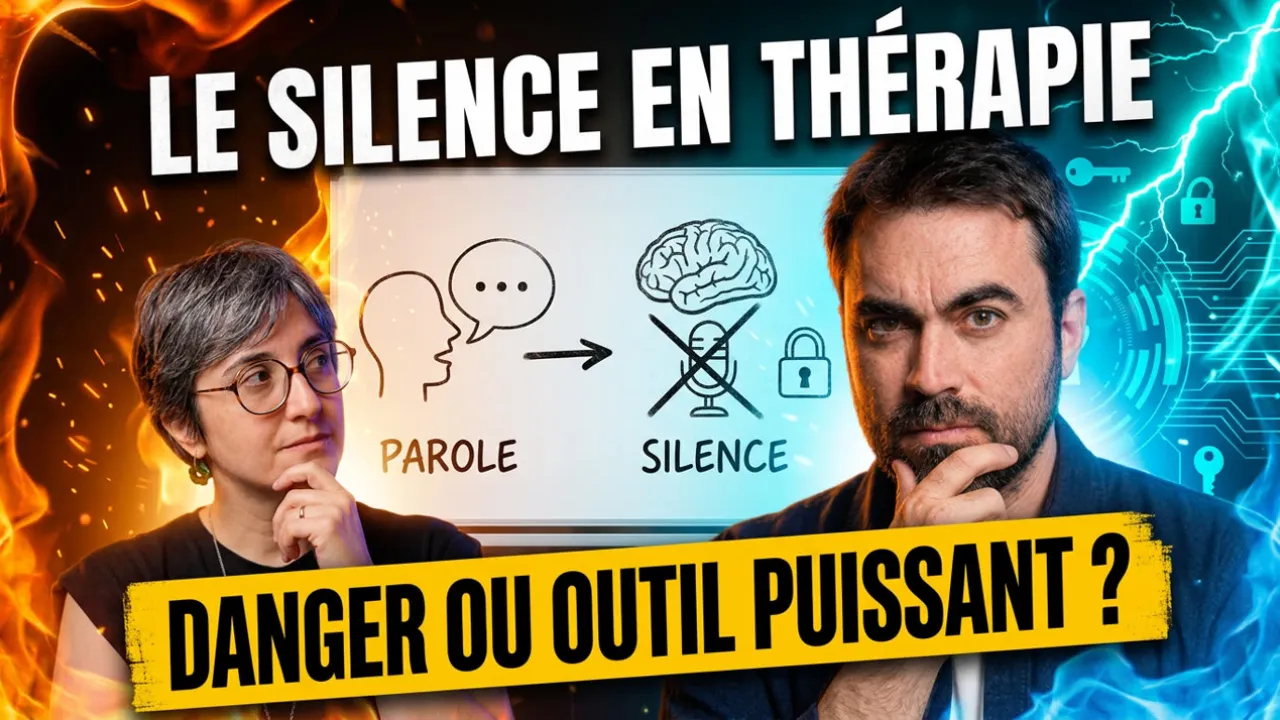
 Silence in therapy: a polysemic presence
From Heidegger to Palo Alto, silence is not an absence but a message. Defensive, strategic, reflective or shared: its forms, its functions and its risks.
 Article
 What if the shortest path to change ran through a joyful detour?
Humour in therapy is not a gimmick but a clinical skill: it loosens the loops, reframes without wounding and reopens the field of possibilities. With its ethical safeguards and a concrete toolbox.
 Article
 When intuition comes before strategy. The first flash of meaning
From Bergson to von Foerster, intuition is not the enemy of rigour but its immediate side. How it works concretely in the clinical interview, and why it calls for a reflexive stance.
 Article
 Crisis: a catalyst of transformation in human systems
A crisis is not a malfunction to correct but an effort by the system not to founder. From the Denver Project to Falicov: a typology and what it asks of the practitioner.
Comments 0
Log in to join the discussion. Log in