Child & Family Social Work · Social work
Family dynamics in kinship care
Grandmothers, aunts, grandfathers: in Scotland, care by the child’s own family is the preferred option when a child cannot live with their parents. Lilian Rose’s team analysed 106 calls made by 63 such relatives to a helpline. They show families who protect the child from the parents while keeping the bond with them, with little say over decisions, and who are constantly changing.
This is a reformatted republication of Family dynamics in kinship care, by Lilian Rose, Emily P. Taylor, Simona Di Folco, Melanie Dupin, Heather Mithen and Zhanhui Wen, published in Child & Family Social Work (Wiley) (2022), doi: 10.1111/cfs.12912, under a CC BY 4.0 licence. Prepared by Complexe Systémique in September 2026: the authors’ text is unchanged; the layout has been adapted for reading online, which constitutes a modification of the work under the terms of the licence. The table is presented as a list; both figures are reproduced with their original text. This edition was made neither by the authors nor by the publisher, who are not responsible for its content or for any errors. The original version prevails.
As such, most kinship families did not function as typical nuclear families. Instead, they drew their strength from a whole range of extended family and friends, depending on who was important to the carer and child.
Lilian Rose, Emily P. Taylor, Simona Di Folco, Melanie Dupin, Heather Mithen and Zhanhui Wen
Abstract
Kinship care is the first choice for out-of-home care in the United Kingdom. Family context is described as both a strength and a weakness of kinship care arrangements with limited research examining how kinship carers understand and experience their family dynamics; the focus of this study. Data were harvested from 106 interaction reports with 63 kinship carers who accessed a Kinship Care Helpline in Scotland over a 2-month period. Three themes and several subthemes were identified: balancing act; agency and control; changing families. Data showed that kinship carers were managing complex family dynamics organized around welfare of the child, in which carers had to facilitate contact with birth parents that were sometimes perceived as posing a risk to the child. Carers described having to manage their own feelings about birth parents' behaviour and its effect on children. The demands of meeting the child's needs on carer wellbeing were described as a balancing act, negatively impacted upon by limited control over decision-making. Kinship carers showed resilience in navigating complex, sometimes distressing family dynamics in their drive to provide a stable and positive environment for the child, compromised by ongoing exposure to threats and lack of control over decision-making.
1 INTRODUCTION
Kinship care, defined as ‘family-based care within the child's extended family or with close friends of the family known to the child, whether formal or informal in nature’ (United Nations, 2010, p. 6), is the preferred option for children who are unable to live with their birth parents across all four nations of the United Kingdom (McCartan et al., 2018) as well as the United States (Wu & Snyder, 2019), Australia (Australian Institute of Health and Welfare, 2021) and represents an average of 94% of alternative care arrangements in 75 other countries (Martin & Zulaika, 2016). In line with policy (e.g., Department of Health, 2011; Scottish Government, 2007), formal kinship care placements in Scotland increased from around 10% of those in alternative care in 1990 to 27% in 2015 (Kidner, 2016). There are estimated to be a further 3000–10 000 children living in informal kinship care in Scotland outside the social services system (Kidner, 2016). However, the evidence base regarding kinship families is heavily weighted towards the USA, with only 13/102 studies in Winokur et al.'s (2018) systematic review conducted outside of the USA. Therefore, the lived experience of all kinship care families, particularly in countries outside of the USA, may not be well represented in existing research.
The collated evidence suggests that kinship care may provide better outcomes for children than foster or residential care in terms of behavioural development, mental health functioning and placement stability (Winokur et al., 2018). This has been attributed to greater continuity of care, minimizing the stigma of being a child in care, maintaining the child's family identity, understanding the child's history and experiences, and continuity of culture and heritage (Scottish Government, 2011). Qualitative studies indicate that children in the United Kingdom feel safe and understood in their kinship arrangements and would choose to remain in kinship care over either foster care or returning to their parents (Aldgate & McIntosh, 2006; Burgess et al., 2010; Kiraly & Humphreys, 2013a; Selwyn et al., 2013).
Kinship care may, however, be detrimental to the health, wellbeing and finances of kinship carers (Broad, 2012; Selwyn et al., 2013). There is evidence that kinship carers experience more poverty and poorer health than both foster carers (Farmer, 2009) and the general population (Nandy & Selwyn, 2013; Selwyn et al., 2013), with 67% of informal kinship carers meeting the criteria for clinical depression in one study (Selwyn et al., 2013). Farmer (2009) found that more kinship carers (45%) experienced parenting strain than foster carers (30%), with negative impact on the quality of placement (Farmer, 2009; Farmer et al., 2005).
As many as 88% of children in kinship care have experienced maltreatment (Nandy & Selwyn, 2013) and may be experiencing symptoms of complex trauma. Caregiver reaction was found to be one of the most critical mediating factors in determining a child's response to complex trauma (Cook et al., 2005), and this may be sensitive to carer wellbeing. Therefore, while kinship carers may be willing to sacrifice their own wellbeing to meet the needs of the child in their care (Thurman, 2013), child and carer wellbeing are closely interrelated. Kinship children often worry about their carers' health and wellbeing (Kiraly & Humphreys, 2013a; Selwyn et al., 2013).
Beyond the carer–child relationship, family dynamics are of significant concern to kinship families, with advice relating to family relationships accounting for 52% of all advice given by a Kinship Care Service between 2008 and 2013 (Citizens Advice Scotland, 2014). Concerns expressed in the literature around family dynamics are supported by a small and disparate body of evidence. A systematic review of kinship care factors and child outcomes found six studies investigating family relationships as a factor in child outcomes (Washington et al., 2018). Family dysfunction was a risk factor for poor outcomes, but could be mitigated by targeted intensive intervention, evidenced by one small study (Haight et al., 2010). Other concerns relate to collusion between kinship carer and parents, risks to the child associated with the wider family network (Brown & Sen, 2014), problematic family dynamics, role confusion and particularly inter-generational conflict (Burgess et al., 2010; Sen & Broadhurst, 2011). While the evidence largely contradicts professional concerns that child safety is compromised by kinship carers (Winokur et al., 2018), concerns over difficult family dynamics appear to be better founded. For example, there is some indication that attitude of and contact with parents is more difficult in kinship care than in foster care (Vanschoonlandt et al., 2012) and successful reunification of children with their birth parents is less common (Thurman, 2013; Winokur et al., 2018).
Managing relationships and contact with birth parents is reported as one of the most stressful elements of being a kinship carer (Kiraly & Humphreys, 2013b; Sen & Broadhurst, 2011). Evidence of the effects of parental contact and how it relates to family wellbeing is mixed. Metzger (2008) found that compared with foster care, kinship care placements provided increased contact with birth parents, which significantly predicted better wellbeing in children. However, Vanschoonlandt et al., (2012) found that although child wellbeing was better in kinship care than in foster care, contact with mothers was significantly poorer quality, indicated by the mother's attitude to the placement, relationship with the kinship carer and ability to endorse the placement to the child. Furthermore, children with severe relational and behavioural difficulties were more likely to have experienced conflict between parents and carers and difficult family contact (Selwyn et al., 2013). Other studies have found that children in kinship care had more contact with their wider family than in foster care, but relationships with the family were more difficult (Farmer, 2009; Sykes et al., 2002). Kiraly and Humphreys' (2013a, 2015, 2016) qualitative studies into contact in kinship families in Australia painted a similarly complex picture, showing that both contact and lack of contact were distressing for children, parents, and carers alike. Importantly, their findings shed light on the pressure that the reunion narrative puts on kinship families to conform to ideals of the nuclear family (Kiraly & Humphreys, 2015), rather than valuing and appreciating the inherent nature of kinship families.
Kinship families are viewed as diverse, complex and potentially stress-prone by definition (Broad, 2012; Kiraly & Humphreys, 2015; O'Brien, 1999; Sykes et al., 2002). The differences between kinship families and other kinds of families have been highlighted (Zinn, 2017), as well as the heterogeneity of kinship families as a category (Sykes et al., 2002). Fluid individual relationships and roles within the extended family that change over time are a key characteristic (O'Brien, 1999; Zinn, 2017). Previous literature has stressed that practice needs to reflect this by having strong family involvement in assessment and decision-making (Aldgate & McIntosh, 2006; Argent, 2009; Broad, 2012; Kiraly & Humphreys, 2015; Portengen & van der Neut, 1999). Winokur et al. (2014) noted there were insufficient data to draw conclusions about family relations in kinship care and called for qualitative research into the underlying dynamics and lived experience of different kinds of kinship families in relation to positive outcomes. Kiraly and Humphreys (2016) note that in their study, ‘there were pleas for understanding of the caregivers' position and their knowledge and experience of the family’ (p. 235).
One way to understand the qualitative nature of kinship families' dynamics and experiences is through established support services. At the time of the research, the Kinship Care Helpline was run by Children 1st, a Scottish charity, as part of their Children 1st ParentLine, which is free and can be accessed by telephone, email or webchat. The service offers practical, emotional and financial support and advice. The Children 1st ParentLine model used in helpline interactions is informed by attachment theory and based on the principles of Egan's (1998) Skilled-Helper intervention model. This model comprises set stages and tasks and prioritizes empathic listening, gentle challenging and service user-led decision-making (Riggall, 2012). Callers can also arrange follow-up calls to further discuss their issues or reflect on progress.
Helpline data provide an opportunity to study the lived reality of kinship carers as it is happening, through unsolicited interactions that represent their day-to-day concerns and coping mechanisms, unmediated by researcher intervention (Backett-Milburn & Jackson, 2012). Therefore, this study aims to better understand help-seeking kinship carers' understanding of family dynamics through analysis of their interactions with the Kinship Care Helpline.
2 METHOD
The present study used service data routinely collected by call handlers for a kinship care helpline, which was analysed following a data-sharing agreement between the helpline service and the University of Edinburgh, and which has been reported in more detail in Taylor et al. (2020).
2.1 Participants
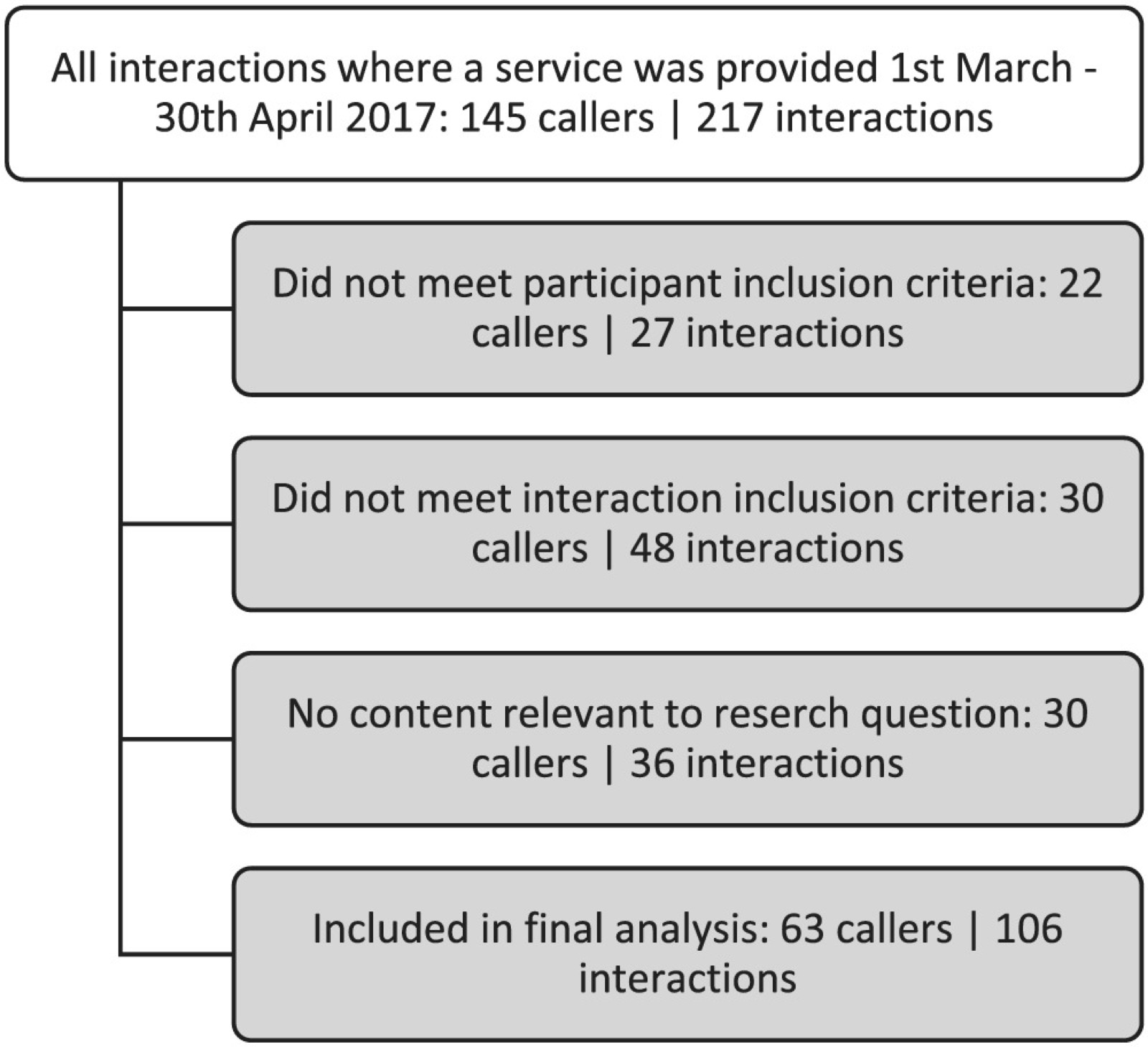
Participants were drawn from all Kinship Care Helpline interactions where a service had been provided between 1 March and 30 April 2017. This period was chosen to provide a large enough sample to be representative of calls to the Helpline, but also small enough to allow detailed analysis. To be included in the final sample and analysis, callers needed to be (1) a kinship carer; (2) due to the focus on family dynamics between the kinship family and the birth family the kinship carer, had to be related to the child in their care; (3) resident in Scotland. Due to the availability of repeated interactions with callers in the service where needed, this resulted in a sample of 217 interactions with 145 individuals. After exclusion of interactions that did not meet inclusion criteria, the final sample consisted of 63 callers with 106 interactions, of which 89% were female and 11% were male. The relationship of caller to child is presented in Table 1. Scottish Index of Multiple Deprivation (SIMD) rankings (Scottish Government, 2016) showed that 28% of callers lived in the most deprived quintile of areas, while 7% lived in the least deprived quintile of areas, with data not available for 11 callers (17%). Of the 63 callers in the sample, 25 were one-off callers and 38 were repeat callers. Callers who had only one interaction in the designated timeframe but who had previously contacted the helpline were counted as repeat callers. Repeat callers ranged from 1 to 8 interactions in the timeframe (M = 2.1, SD 1.37). Call duration ranged from 4 to 75 min (M = 23.3, SD 16.2). Information on the number of children in the household, the age and the gender of kinship care children were only recorded where it was volunteered in the interaction. Therefore, these data are not sufficiently complete to present a reliable picture.
Table 1 — Relationship of carer to child
Relationship to child: N (%).
- Grandmother. 37 (59).
- Aunt. 16 (25).
- Grandfather. 3 (5).
- Uncle. 3 (5).
- Great grandmother. 2 (3).
- Brother. 1 (2).
- Sister. 1 (2).
- Total. 63 (100).
Within the original sample, 27 callers were excluded because they did not meet participant inclusion criteria. Interactions were additionally excluded if they provided information and signposting to another service only (n = 22) or were less than 4 min in duration (n = 26). Finally, interactions that contained no content relating to family dynamics were excluded (n = 36). The sampling process is shown in Figure 1.
2.2 Procedure
Ethical approval was given by the University of Edinburgh. Interaction details were recorded in three free-text boxes: ‘Interaction Content’, which records what was discussed in the interaction; ‘Work Done’, which details what the call handler did to respond to the caller; and ‘Any Other Comments’, which is used to record notes and action points for other call handlers who may contact the service user in future. The content of these three boxes was used in the analysis. Supervisors provide training to call handlers on how to enter data, and quality assurance spot checks are carried out on 10% of interactions each month with additional guidance or training provided where common errors are identified. Interaction records were anonymized at source, and other potentially identifying details were removed. Anonymized data were then added to NVivo (QSR, 2015) for analysis, where they were grouped into cases for each caller. Each caller was given a unique participant number, starting at 10001.
2.3 Data analyses
Thematic analysis (TA; Braun & Clarke, 2006; Joffe, 2012) was used to analyse the qualitative data. We also took into account that individual counselling approaches vary, even when using a standardized counselling model (Backett-Milburn & Jackson, 2012) that was concurrently supervised and the accuracy of outcomes recorded by call handlers may be affected by what is socially desirable (Young et al., 2016). All the data is recorded through the filter of the call handler's perceptions, and the organization within which they work. We therefore took care to be transparent in reporting where we thought call handler protocols and organizational culture was influencing a theme. Thematic analysis has the benefit of being able to reflect the lived experience (Willig, 2013) and social reality of participants (Joffe, 2012), which was the main focus of our analysis. Thematic analysis is a theoretically flexible but empirically rigorous qualitative method with an emphasis on being systematic and transparent (Joffe, 2012). It is also adaptable to analysing secondary data and has been successfully used with survey data (Braun & Clarke, 2013).
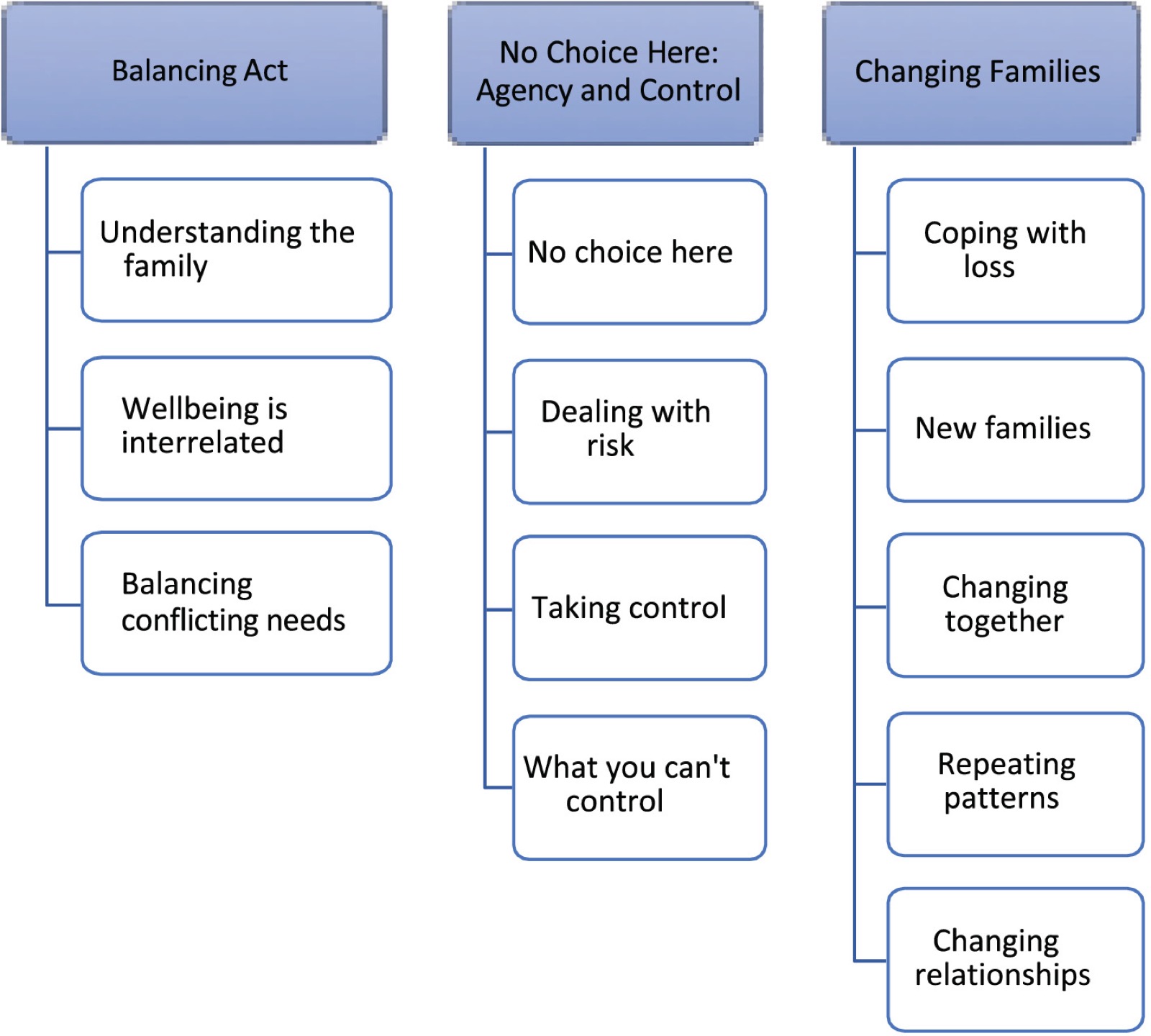
We followed Braun and Clarke's (2006) six-phase process of TA on the qualitative data. First, we familiarized ourselves with the data; a process of reading and ‘noticing’ (Braun & Clarke, 2013) was conducted in NVivo, excluding interactions that did not relate to family dynamics from the dataset. Second, we generated initial codes for the entire data set for anything that related to family dynamics. Third, we searched for themes; codes were then reviewed, merged or discarded in NVivo; and candidate themes were identified. Fourth, we reviewed our candidate themes for internal consistency and to ensure that they were representative of the full dataset, and three final themes were produced. The fifth phase was to define our themes and subthemes, generating a final thematic map (Figure 2). The final phase was to produce the report. Throughout the process of analysis, discussion surrounding decisions, in particular the reliability and validity of the coding, was used to challenge possible biases or misinterpretations. Consequently, the final set of themes and sub-themes were well-supported by several instances of direct data from different participants. In keeping with a qualitative methodology, this was not determined by a number threshold but by the richness of data (Chang et al., 2009).
3 RESULTS
Three main themes characterizing help-seeking kinship carers' understanding of family dynamics in relation to themselves, the child, and the biological family were identified: balancing act; agency and control; changing families (see Figure 2). Throughout all these themes runs the common thread of meeting the needs of the child, while often managing difficult situations regarding relationships with the birth parents and formal decision-makers. Kinship carers urged for more control over their situations in their constantly changing family context.
3.1 Balancing act
The first theme highlighted how kinship carers often had to understand and manage their relationships with the birth parents and the child, balancing the conflicting needs of others and self.
3.1.1 Understanding the child in their family
Kinship carers experienced stressors in both parents' and children's behaviour, which affected how they saw the family dynamic. While many carers had difficult relationships with parents, most felt that tolerating and respecting parents was important to the wellbeing of the children in their care. However, where risk to the child was involved, holding a relationship seemed no longer possible. Where relationships with the parent were still strong, but the recent actions of the parent may have caused the child distress, carers focused on what could be done to support the child instead to avoid undermining the parent–child relationship:
[child]'s father […] didn't turn up for her. [Child] was disappointed but went to do ‘build a bear’ instead (10016).
The kinship carer's understanding of the child was related to their perception of the kinship care dynamic. When a child was having difficulties, the carer's understanding of this was informed by any professional advice they had received:
[Psychologist] described him as two extremes. In physical ways he is in advance of his years, dressing, feeding. In emotional ways he is more like a 2 year old. [Carer] to help him is trying to establish consistency and structure which is what she has been advised is what he needs (10005).
Kinship carers who did not have access to professional support were sometimes aware that the child in their care was struggling but did not necessarily understand why or how to help, which affected their own wellbeing:
[…] child's behavior has got worse. She screams, bangs her head, is scared of everything, wets the bed, has night terrors, swears and says she hates caller […] Caller is at her wits end and says some days she wishes she wasn't here (10020).
This linked into the following subtheme.
3.1.2 Wellbeing is interrelated
There were several ways kinship carers indicated family members' wellbeing was interrelated. The kinship carer and the child's wellbeing were linked through routine events and emotions, but also complex interactions of family members' emotional and behavioural responses to events, which often led to cycles of family stress:
The children have been playing up this week […] because of the anxiety related to the panel meeting. Also, mum had arranged to take the children away for the day on Saturday and let them down. […] they rang social work for help to get [eldest child] to come home. The stress of all of this made the caller ill and she had to go to hospital on Saturday evening with breathing difficulties. This caused even more anxiety with the children as aunt is the stable force in their lives (10131).
The issues facing the kinship child may be only one of many issues the wider family is facing, including other children and their wellbeing, family members' physical and mental health, addiction and imprisonment. Carers were required to navigate difficult relationships and conflicting views and wishes in the child's wider biological family to meet the child's needs:
[grandson] is missing his half-brother [name] (9), who is staying with Mum's half-sister who seems quite reluctant to meet up (10039).
However, this wide family network could be very supportive for some kinship carers and children by providing day-to-day emotional support, practical respite or meeting needs of the child that the kinship carer felt that they could not. They were used as added protection for the child in situations of possible risk, to provide continuity, or to allow carers to meet other commitments. Therefore, although there was evidence of negative impact on child and carer wellbeing, positive reciprocal effects were also described.
3.1.3 Balancing conflicting needs
When family members had conflicting needs, such as the needs of the birth parent and the child, this resulted in split loyalties for carers who felt forced to choose between them, which in some cases changed the carer's relationship with the parents. However, carers recognized that the children in their care faced similar split loyalties between parents and carers. Kinship carers also felt that sometimes they lost sight of their own needs; they identified sacrifices that they had made in becoming kinship carers including giving up jobs, retirement or homes, and the financial cost of taking in a child. They also prioritized kinship caring responsibilities at the cost of their own health, social life and romantic relationships. Carers described the distress that putting themselves first caused
Caller is going away for the weekend next week and feels guilty about leaving her granddaughter, although she has put plenty of care in place from other family members (10020).
In interactions where carers were trying to balance conflicting needs, the helpline had three main functions, which influenced the data content: (1) ensuring the safety of the child was the priority; (2) inviting carers to consider the situation from different family members' perspectives, including a consideration of their own needs and fears; (3) encouraging the carers to test this understanding and communicate with family members by sharing their own feelings and asking the other family member how they perceived the situation overall. Repeat interactions showed kinship carers putting this into practice. The following is the fourth interaction with a kinship caring grandmother where the relationship with her daughter had broken down:
Mum and [Grandmother] discussed situation when they got back—no one has ever asked Mum if she wants [child] back full time […] Mum surprised that [grandmother] wants [child] back with Mum (10066).
3.2 Agency and control
The second theme encompassed the issues with agency and control the kinship carers experienced in relation to decisions about the child in their care. Although this was related to understanding the child in their family, the analysis showed that a lack of agency and control was not driven by lack of understanding. Instead it described a feeling of lack of control over major decisions regarding the child's care placements, and control over the perceived risk to the child. This linked in with the wellbeing subtheme in that lack of control contributed to feelings of stress and frustration, but kinship carers described concealing these feelings from children. Kinship carers also showed adaptive ways of coping with this lack of control.
3.2.1 Lack of control over decisions
Although kinship carers strove to ‘settle down and have some stability’ (10013), a lack of agency to make fundamental decisions about their families caused distress. Specifically, who can care for the children, either as kinship carers or as respite carers; and where, when and with whom children can have contact. Concerns were common that children would be in danger or upset, decisions were being made by social workers or the courts without fully understanding these risks, and fears of losing the child. Several carers also said that they had not been listened to and felt actively excluded from the decision-making process. In one case, a kinship carer felt ‘excluded, hopeless, shocked and very angry’ (10080) when her grandson was made to stay overnight with his mother where there was a history of abuse and neglect, and the child showed signs of distress over going.
3.2.2 Dealing with risk
Many kinship carers perceived parents or their partners as a threat to the child in their care. Abuse, neglect, substance abuse or imprisonment was raised as having affected the family by more than half the carers in the sample. Kinship carers were quick to enforce boundaries to protect children using whatever means were available to them:
Caller will not let her son in the house to visit the kids if there is any suspicion of drug use; caller would like to do the same with Mum, but Mum has instigated legal route (10018).
However, in some cases, this was made difficult by family members living close to the child, causing further concern.
3.2.3 Taking control
The tension between the aim to protect the child and a lack of agency appeared to lead to competition for care of the child and a desire to gain more control over the situation. Parents were felt to flout contact agreements by keeping children overnight without formal permission, not returning children at agreed times and places, or lying about contact with abusive partners. Some parents and carers resolved their issues between them or kept social work informed of issues but, for others, outside intervention was required. This included children being formally identified as vulnerable, or looking to get legal recognition of their rights to make decisions in relation to the children, for example, through permanency orders, adoption or injunctions to prevent parents from contacting children:
[Carer is] thinking of applying for a permanency order as this will make it easier for her to make decisions on behalf of granddaughter without going to her daughter (10020).
While some carers reported contact violations or child protection concerns to social workers, others were wary of interactions with external agencies, through fears it might threaten the family unit: ‘Caller not willing to involve Social Work. She is afraid they would take granddaughter from her’ (10130), or those who needed to build up trust with the helpline over repeat interactions.
3.2.4 What you cannot control
While the desire to create stability and build control resulted in greater stress at times, kinship carers also showed adaptive ways of working flexibly around what they could not control. One example was the way that they helped children to deal with the uncertainty by focusing on what they could guarantee:
[Aunt] lets her know that she is loved by her and her husband and will be staying there as long as she needs to (10013).
Some carers, unable to control the reliability of parental contact, ensured that as far as possible, children continued to see other members of the family or had back-up plans for when parents did not show up. Similarly, carers created opportunities for fun and enjoyment wherever they could, depending on what they could afford. Focusing on what was possible to control was also encouraged by the helpline as a coping mechanism:
Worked with caller to help her realise that there may be no choice here, and that she could help her grandson to accept it by talking to him about it (10080).
3.3 Changing families
Family dynamics were found to change as family members were frequently required to adapt to losses, changing roles and understanding of the people in their families, and to rebuild broken relationships.
3.3.1 Coping with loss
A common feature of interactions was loss, which was experienced in different. Several carers spoke about bereavements for the child; for example, a child who had been a carer for his mother who had died of a drug-related illness was supported by his carer to acknowledge the loss while adapting to his new care arrangements:
Caller focusing on routine. Has prepared memory box for [child] about his mother (10039).
Others recognized the deep impact that bereavement had on a child, with reports of difficulty coping with the child's upset or anger. Some carers reported that the child's loss was being separated from a family member; several identified children as missing their parents badly, increasing the carer's distress in some cases. Carers felt ill-equipped to talk to children about their parents or the reasons they could not look after them, while others, with support, addressed the issue directly with the child:
Caller states 13-year-old niece found having restricted access to mother difficult, but accepted the situation when Caller and Social Worker explained the reasons (10131).
3.3.2 New families
Carers spoke about the impact on children of parents building new families. In two cases, where the relationship with the biological father was good, this was a positive development that provided a wider family for the child. Some new family arrangements provided an indication that the parent may now be more able to provide as a parent. However, in other cases where relationships were more difficult, this was confusing and upsetting to children, or aroused suspicion in the carer:
[mother] made little effort to keep in contact with [child] until this Christmas when the social work department threatened to take her next baby […] unless she could demonstrate being a good mother (10102).
Finally, some children had been neglected and excluded from their new family, which was the reason for them now living with the kinship carer.
3.3.3 Changing together
Developmental transitions for the children provided a chance for personal development in some carers by retraining or going back to work. However, some older carers, although generally positive about their role, found it more difficult or more tiring as they aged. While most of the carers were grandparents, many were still of working age, and in some cases, great-grandparents were present. Some kinship carers at a different life stage bridged the gap for parents or children's developmental needs. For example, a mother who the kinship caring grandmother described as being young and lacking responsibility was supported by the grandmother carer in spending quality time with her child and meeting the child's needs. On the other hand, kinship care was a positive choice for one child. With the agreement of her sister, an aunt supported her niece who was one of seven children living in overcrowded conditions:
Her niece is about to start a year when she will be sitting exams at school and the prime reason she wants to live with her aunt is to ensure she can study and do well (10136).
3.3.4 Repeating patterns
In some cases, carers saw their families as stuck in repetitions or cycles and expressed a wish for the family to change:
When asked what she was fighting for caller said so that things would not repeat themselves in the next generation and for [child] to have a better life (10091).
For some, this was in the form of repeated issues in the family that the carer identified as either having happened or that they feared happening. For example, mental health difficulties, addictions, imprisonment and abusive relationships they had seen repeated in parents, children and the wider family. For some carers, it was difficult to separate their own experiences from the experiences of the parent or kinship child making it difficult to differentiate the child's own wants and needs from their own:
Caller switched between her own past and relating it to [child]. Stating ‘I know exactly how [child] feels like’ (10091).
3.3.5 Changing relationships
Where relationships were difficult, some carers displayed an important function by working to improve difficult family dynamics to provide the child with better stability. For many, this involved a process of accepting that people who they had viewed as a danger to their families were now to be trusted with the children in their care. For some carers, it was possible to acknowledge negative feelings towards parents and to work towards improving the relationship:
Looked at how angry [grandmother] is with all the lies that Mum told and how she is working towards forgiving her, even if she can't forget it (10066).
The helpline encouraged callers to acknowledge their own part in the family dynamic:
Caller aware she may have been critical of her daughter over the years (10053).
Some carers hoped that even where it was not possible to rebuild the relationship now, it might be possible in the future, whereas for others, it still felt an impossible task.
4 DISCUSSION
The aim of this study was to better understand help-seeking kinship carers' understanding of family dynamics through analysis of their interactions with the Kinship Care Helpline. Running through all three themes and subthemes was the thread that family dynamics were shaped around what was best for the child and, importantly, the idea that certain family members posed a risk to the child. This was found to be adaptive in prioritizing the protection of the child, particularly where help-seeking kinship carers faced split loyalties. However, carers also spoke of the damage this did to previously supportive relationships with parents who were struggling. Equally, while viewing parents in terms of risk to the child was adaptive for some kinship families when children were first taken into care, it was less adaptive if children began to have more contact with their parents. Kinship carers struggled to reconcile their knowledge of parents' past actions and behaviour with their present ability to care for a child. This provides further support for O'Brien's (1999) model of kinship caring families as being defined primarily by the quality of the relationship between kinship carer and parents. In some families, however, kinship carers maintained an open relationship with parents while also protecting the child when needed. Many kinship carers believed that having a good relationship with a child's parents would be beneficial to the child. Kinship carers spoke about the need to rebuild relationships with parents that they viewed as having broken down. For several families reunion was not seen as desirable but that parents played an ongoing role in their children's lives. This finding adds to calls from researchers (Kiraly & Humphreys, 2015) for a different understanding of family reunion that takes a wider view than the traditional nuclear family.
Both in literature and policy, kinship care is seen as the option that provides the most stability for the child (Broad, 2012; O'Brien, 2012). However, our findings indicate that kinship carers were struggling to provide stability for the child, in what they described as constantly changing families, with decisions being made by external decision-makers. Many carers reported the distress of not feeling heard by decision-makers when they felt that children were being put in danger. In these instances, this was found to contribute towards a sense of competition for care, and the desire to gain more control over decisions, and to create stability for the child. However, where carers felt that decision-makers had listened to and considered their opinions, external decision-makers were felt to be useful in regulating difficult family situations.
Wider family and understanding the family from the child's viewpoint was of importance to kinship carers. As suggested by the family resilience model (Walsh, 2016), wider family were found to provide emotional and practical support to both kinship carer and the child, as well as links to the other side of the child's family where important to the child. As such, most kinship families did not function as typical nuclear families. Instead, they drew their strength from a whole range of extended family and friends, depending on who was important to the carer and child.
4.1 Limitations and future directions
The findings of this study are subject to some limitations. First, this study has looked at family dynamics from the point of view of the kinship carer; thus, these findings cannot be generalized to other family members. Additionally, these are only representative of help-seeking kinship carers. As such, the sample presumably represents a group of kinship carers who are experiencing elevated problems with family dynamics. Alternatively, the family dynamics in this sample may be representative of those kinship carers who are more open to sharing and reflecting on difficulties. Therefore, the experiences explored in this study do not necessarily represent the wider kinship carer population. This study has faced similar issues to previous research in that sibling carers are underrepresented (Selwyn et al., 2013; Selwyn & Nandy, 2014). This may suggest that family dynamics are not of such great concern to sibling households. There is some indication of this in Zinn's (2017) study, which found that children in sibling households had higher than average levels of perceived social support. However, it is more likely that this indicates that sibling carers are less likely to use the Kinship Care Helpline. Finally, the findings of the study are filtered through the lens of the call handlers who documented the interactions, both in terms of their delivery of the counselling model and in terms of the information they considered most salient to record. As such, the full complexity of issues is likely to be underreported, as carers may not have been asked directly about family dynamics and calls were not transcribed verbatim.
The findings of this study suggest that support needs to be made available to kinship caring families on an ongoing and as-needed basis.
Facilitating open communication seems to be of great use to kinship carers. Key to this is that kinship carers feel listened to and understood, with their real fears for children's safety directly addressed and their understanding of the family respected. Under these conditions, kinship carers were open to challenging their own views and considering the perspectives of other family members, as well as recognizing their own role in the family dynamic. Farmer et al.' (2005) findings indicate that enhanced support and acknowledging foster carers' views can attenuate the experience of strain, further reinforcing this approach.
Our findings also provide some early indications of adaptive qualities in kinship carers dealing with difficult family dynamics: identifying what is and is not possible to control, remaining flexible to change and seeking support from the wider family appeared to be helpful to the kinship carer and the family dynamic. It also shows the degree to which kinship carers' wellbeing is interrelated with the wellbeing of others in the family. Although it is not possible for this study to determine whether the carers' or parents' wellbeing impacts on the child, there is some indication that families benefit from all being included in decisions and that in practice, it may be useful to consider the wellbeing of the family as a whole. Kinship carers may be reluctant to report problems with their own wellbeing for fear of their ability to care for the child being challenged. However, wellbeing concerns emerged repeatedly in the current study, and future research and practice should focus on designing and implementing support systems that meet the needs of kinship carers such that they can provide high-quality care for children without compromising their own health.
Further research is needed into the family dynamics of sibling-headed kinship caring families, as well as into the views of parents in relation to family dynamics in kinship caring families, both in Scotland and internationally. Work on a family resilience model may be one way to pursue longitudinal research into kinship family dynamics as they change over time and specifically into adaptive coping mechanisms for families who face continued risk and adversity. This study has contributed to our understanding of how kinship carers understand and seek help with family dynamics by learning from carers' own experience and knowledge of their families' needs, highlighting the diverse and complex nature of kinship families.
Complexe Systémique: key points
The material is original: not research interviews, but the records of a helpline, where grandparents and other relatives caring for a child call when things are no longer working. What emerges is a three-way family system, the child, the carer and the birth parents, crossed by split loyalties. Protecting the child from a parent while preserving the bond with them, managing one’s own anger at one’s daughter or son, seeing what one went through repeat itself in the next generation: these tensions are familiar to family therapists. The study also shows the effect of listening that invites the caller to take other family members’ point of view: a grandmother discovers, on the next call, that no one had ever asked her daughter what she wanted. The limitations lie in the material itself: notes written by call handlers, with no verbatim record, and only relatives who seek help. Read alongside the article on home-based care, being a parent but not, and the study of adoptive parents’ experiences of birth parent contact.
Notes from the original
Acknowledgements. We would like to thank the families and staff at Children 1st for their collaboration in this study. We would like to acknowledge the generosity of Children 1st in this partnership. This research did not receive any specific grant from funding agencies in the public, commercial or not-for-profit sectors.
References
Aldgate, J., & McIntosh, M. (2006). Looking after the family: A study of children looked after in kinship care in Scotland. Social Work Inspection Agency.
Argent, H. (2009). What's the problem with kinship care? Adoption and Fostering, 33(3), 6–14. https://doi.org/10.1177/030857590903300302
Australian Institute of Health and Welfare. (2021). Child protection Australia 2019–20. Child welfare series no. 74. Cat. no. CWS 78. AIHW.
Backett-Milburn, K., & Jackson, S. (2012). Children's concerns about their parents' health and well- being: Researching with ChildLine Scotland. Children & Society, 26(5), 381–393. https://doi.org/10.1111/j.1099-0860.2010.00349.x
Braun, V., & Clarke, V. (2006). Using thematic analysis in psychology. Qualitative Research in Psychology, 3(2), 77–101. https://doi.org/10.1191/1478088706qp063oa
Braun, V., & Clarke, V. (2013). Successful qualitative research: A practical guide for beginners. SAGE.
Broad, B. (2012). Kinship care. Social Work and Social Sciences Review, 13(1), 59–74. https://doi.org/10.1921/19629
Brown, L., & Sen, R. (2014). Improving outcomes for looked after children: A critical analysis of kinship care. Practice, 26(3), 161–180. https://doi.org/10.1080/09503153.2014.914163
Burgess, C., Rossvoll, F., Wallace, B., & Daniel, B. (2010). ‘It's just like another home, just another family, so it's nae different’ Children's voices in kinship care: A research study about the experience of children in kinship care in Scotland: Children's voices in kinship care. Child & Family Social Work, 15(3), 297–306. https://doi.org/10.1111/j.1365-2206.2009.00671.x
Chang, Y., Voils, C. I., Sandelowski, M., Hasselblad, V., & Crandell, J. L. (2009). Transforming verbal counts in reports of qualitative descriptive studies into numbers. Western Journal of Nursing Research, 31(7), 837–852. https://doi.org/10.1177/0193945909334434
Citizens Advice Scotland. (2014). In the family way: Five years of caring for kinship carers in Scotland. Citizens Advice Scotland.
Cook, A., Spinazzola, J., Ford, J., Lanktree, C., Blaustein, M., Cloitre, M., & Van der Kolk, B. (2005). Complex trauma. Psychiatric Annals, 35(5), 390–398.
Department of Health. (2011). Family and friends care: Statutory guidance for local authorities. Department for Education. https://www.education.gov.uk/publications/standard/publicationDetail/Page1/DFE-00025-2011
Egan, G. (1998). The skilled helper: A problem-management approach to helping. Brooks/Cole Pub. Co.
Farmer, E. (2009). How do placements in kinship care compare with those in non-kin foster care: Placement patterns, progress and outcomes? Child & Family Social Work, 14(3), 331–342. https://doi.org/10.1111/j.1365-2206.2008.00600.x
Farmer, E., Lipscombe, J., & Moyers, S. (2005). Foster Carer strain and its impact on parenting and placement outcomes for adolescents. The British Journal of Social Work, 35(2), 237–253. https://doi.org/10.1093/bjsw/bch181
Haight, W., Black, J., & Sheridan, K. (2010). A mental health intervention for rural, foster children from methamphetamine-involved families: Experimental assessment with qualitative elaboration. Children and Youth Services Review, 32(10), 1446–1457. https://doi.org/10.1016/j.childyouth.2010.06.024
Joffe, H. (2012). Thematic analysis. In D. Harper & A. R. Thompson (Eds.), Thematic analysis. Qualitative research methods in mental health and psychotherapy: A guide for students and practitioners (Vol. 15, pp. 209–223). Wiley. https://doi.org/10.1002/9781119973249.ch15
Kidner, C. (2016). Kinship care (SPICe briefing No. 16–87) (p. 33). Scottish Parliament Information Centre. http://www.parliament.scot/parliamentarybusiness/101960.aspx
Kiraly, M., & Humphreys, C. (2013a). Perspectives from young people about family contact in kinship care: “Don't push us. Listen more”. Australian Social Work, 66(3), 314–327. https://doi.org/10.1080/0312407X.2012.715658
Kiraly, M., & Humphreys, C. (2013b). Family contact for children in kinship care: A literature review. Australian Social Work, 66(3), 358–374. https://doi.org/10.1080/0312407X.2013.812129
Kiraly, M., & Humphreys, C. (2015). A tangled web: Parental contact with children in kinship care. Child & Family Social Work, 20(1), 106–115. https://doi.org/10.1111/cfs.12060
Kiraly, M., & Humphreys, C. (2016). ‘It's about the whole family’: Family contact for children in kinship care. Child & Family Social Work, 21(2), 228–239. https://doi.org/10.1111/cfs.12140
Martin, F. S., & Zulaika, G. (2016). Who cares for children? A descriptive study of care-related data available through global household surveys and how these could be better mined to inform policies and services to strengthen family care. Global Social Welfare, 3(2), 51–74. https://doi.org/10.1007/s40609-016-0060-6
McCartan, C., Bunting, L., Bywaters, P., Davidson, G., Elliott, M., & Hooper, J. (2018). A four-nation comparison of kinship care in the UK: The relationship between formal kinship care and deprivation. Social Policy and Society, 17(4), 619–635. https://doi.org/10.1017/S1474746418000179
Metzger, J. (2008). Resiliency in children and youth in kinship care and family Foster Care. Child Welfare, 87(6), 115–140.
Nandy, S., & Selwyn, J. (2013). Kinship care and poverty: Using census data to examine the extent and nature of kinship care in the UK. The British Journal of Social Work, 43(8), 1649–1666. https://doi.org/10.1093/bjsw/bcs057
O'Brien, V. (1999). Evolving networks of relative care: Alliance and exclusion. In R. Greeff (Ed.), Fostering kinship: An international perspective on kinship care. Ashgate.
O'Brien, V. (2012). The benefits and challenges of kinship care. Child Care in Practice, 18(2), 127–146. https://doi.org/10.1080/13575279.2012.657610
Portengen, R., & van der Neut, B. (1999). Assessing family strengths—A family systems approach. In R. Greeff (Ed.), Fostering kinship: An international perspective on kinship foster care. Ashgate.
QSR International Pty Ltd. (2015). NVivo (Version 11). https://www.qsrinternational.com/nvivo-qualitative-data-analysis-software/home
Riggall, S. (2012). Social work students' experiences of using the Egan skilled helper model. The Journal of Practice Teaching and Learning, 11(1), 37–53. https://doi.org/10.1921/jpts.v11i1.262
Scottish Government. (2007). Getting it right for every child in kinship and foster care. Scottish Government.
Scottish Government. (2011). Guidance on the looked after children (Scotland) Regulations 2009 and the Adoption and Children (Scotland) Act 2007 [Publication]. 24 July 2017, http://www.gov.scot/Publications/2011/03/10110037/9
Scottish Government. (2016). Scottish Index of Multiple Deprivation. http://www.gov.scot/Publications/2016/08/6427
Selwyn, J., Farmer, E., Meakings, S., & Vaisey, P. (2013). The poor relations? Children and informal kinship carers speak out. University of Bristol.
Selwyn, J., & Nandy, S. (2014). Kinship care in the UK: Using census data to estimate the extent of formal and informal care by relatives. Child & Family Social Work, 19(1), 44–54. https://doi.org/10.1111/j.1365-2206.2012.00879.x
Sen, R., & Broadhurst, K. (2011). Contact between children in out-of-home placements and their family and friends networks: A research review. Child & Family Social Work, 16(3), 298–309. https://doi.org/10.1111/j.1365-2206.2010.00741.x
Sykes, J., Sinclair, I., Gibbs, I., & Wilson, K. (2002). Kinship and stranger Foster Carers: How do they compare? Adoption and Fostering, 26(2), 38–48. https://doi.org/10.1177/030857590202600206
Taylor, E. P., Di Folco, S., Dupin, M., Mithen, H., Wen, L., Rose, L., & Nisbet, K. (2020). Socioeconomic deprivation and social capital in kinship carers using a helpline service. Child & Family Social Work, 25, 845–855. https://doi.org/10.1111/cfs.12763
Thurman, B. (2013). Relative support. http://mentoruk.org.uk/media/filer_public/aa/eb/aaeb147d-e4fa-47ff-b023-c338204c102f/relative_support.pdf
United Nations. (2010). Guidelines for the alternative care of children: Resolution/adopted by the general assembly, 24 February 2010. A/RES/64/142. https://digitallibrary.un.org/record/673583?ln=en#record-files-collapse-header
Vanschoonlandt, F., Vanderfaeillie, J., Van Holen, F., De Maeyer, S., & Andries, C. (2012). Kinship and non-kinship foster care: Differences in contact with parents and foster child's mental health problems. Children and Youth Services Review, 34(8), 1533–1539. https://doi.org/10.1016/j.childyouth.2012.04.010
Walsh, F. (2016). Family resilience: A developmental systems framework. European Journal of Developmental Psychology, 13(3), 313–324. https://doi.org/10.1080/17405629.2016.1154035
Washington, T., Wrenn, A., Kaye, H., Priester, M. A., Colombo, G., Carter, K., Shadreck, I., Hargett, B. A., Williams, J. A., & Coakley, T. (2018). Psychosocial factors and behavioral health outcomes among children in Foster and Kinship care: A systematic review. Children and Youth Services Review, 90, 118–133. https://doi.org/10.1016/j.childyouth.2018.04.030
Willig, C. (2013). Introducing qualitative research in psychology ( Third ed.). Open University Press, McGraw-Hill Education.
Winokur, M., Holtan, A., & Batchelder, K. E. (2014). Kinship care for the safety, permanency, and well-being of children removed from the home for maltreatment. In The Cochrane Collaboration. (Ed.), Cochrane database of systematic reviews. John Wiley & Sons, Ltd. https://doi.org/10.1002/14651858.CD006546.pub3
Winokur, M. A., Holtan, A., & Batchelder, K. E. (2018). Systematic review of kinship care effects on safety, permanency, and well-being outcomes. Research on Social Work Practice, 28(1), 19–32. https://doi.org/10.1177/1049731515620843
Wu, Q., & Snyder, S. M. (2019). Factors associated with the decision-making process in kinship diversion. Journal of Family Social Work, 22(2), 161–186. https://doi.org/10.1080/10522158.2018.1542650
Young, T. L., Williams, J., Nelson-Gardell, D., Edwards, S. L., & Thorington, V. A. (2016). Assessing the helpfulness of one parenting assistance helpline. Journal of Child and Family Studies, 25(7), 2236–2245. https://doi.org/10.1007/s10826-016-0387-8
Zinn, A. (2017). Kinship family relatedness, nuclear family contact, and social support among Foster youth. Journal of Public Child Welfare, 11(1), 1–26. https://doi.org/10.1080/15548732.2016.1208134
Reformatted republication of Family dynamics in kinship care, by Lilian Rose, Emily P. Taylor, Simona Di Folco, Melanie Dupin, Heather Mithen and Zhanhui Wen, Child & Family Social Work, vol. 27, no 4 (2022), doi: 10.1111/cfs.12912, under a CC BY 4.0 licence. Edition and layout: Complexe Systémique, September 2026 — the work has been modified under the terms of the licence (table presented as a list). Neither the authors nor the publisher are responsible for this edition; the original version prevails.
This is the original article “Family dynamics in kinship care”, published in Child & Family Social Work (2022) under a CC BY 4.0 licence. Republished by Complexe Systémique: the author’s text is unchanged; only the presentation has been adapted for reading online, as set out at the head of this page.
Read the original articleHow to cite this article
Rose, L., Taylor, E. P., Di Folco, S., Dupin, M., Mithen, H., et Wen, Z. (2022). Family dynamics in kinship care. Complexe Systémique. https://app.complexe-systemique.com/en_GB/articles/family-dynamics-in-kinship-care (Original work published in 2022 in Child & Family Social Work, 27(4), 635-645 (2022); republished in 2022 by Child & Family Social Work, https://onlinelibrary.wiley.com/doi/full/10.1111/cfs.12912)
To go further
- Être parent, sans l’être : une théorie ancrée de l’accueil en milieu familialBeing a parent, but not.
- Le contact avec les parents de naissance vécu par les parents d’adoption dans les années qui suivent le placementContact with birth parents.
- Redéfinir la grand-parentalité face à l’autisme : une étude qualitative du vécu émotionnel et du rôle des grands-parentsRedefining grandparenting.
Related articles
 Article
 Family group conference provision across the lifespan of child welfare intervention: A mixed-method realist-informed evaluation comparing three stages of welfare concern
Early help, child protection or children in care: among 155 UK families, experiences and outcomes of family group conferences vary very little by stage.
 Article
 How can we BeST? meet the needs of adoptive families? Relevant findings from a major Randomised Controlled Trial of infants in foster care in the UK
The BeST? trial (488 infants in care in the UK) reread for adoption: holistic, ongoing assessment of children and a move to dual registration.
 Article
 Implementing Family Group Decision-Making within statutory child protection social work in Scotland: Challenges and opportunities
Family group decision-making offered automatically in Scottish child protection: families find a voice, social workers doubt the plans, and everyone wants it offered earlier.
 Article
 Parenting after critical illness: a biopsychosocial review of post-intensive care syndrome, family systems, and child outcomes
After post-intensive care syndrome, parenting falters, the co-parent is worn down and children help in silence. A biopsychosocial review proposes how to spot them.