AI-assisted translation
This version was translated from Portuguese by Complexe Systémique with the help of artificial intelligence. In case of doubt, the original version prevails.
Revista Brasileira de Terapia Familiar · Research
Particularities and Precautions in Research with Low-Income Families
A home visit to draw up a genogram, in a house where the family fears the return of the group that set fire to a teenager: Liana Fortunato Costa starts from this scene to describe what research with poor families on the outskirts of Brazilian cities demands. Language, schooling, bus fares, family mobility, the place of women, the line between researching and intervening: each impasse calls for a creative answer, and the safety of research teams becomes a question of method.
Unofficial English translation. This article is a translation of Peculiaridades e cuidados da pesquisa com famílias de baixa renda, by Liana Fortunato Costa, published in the Revista Brasileira de Terapia Familiar (ABRATEF), vol. 1, no. 1 (2008), doi: 10.60114/rbtf.v1i1.124, under a CC BY 4.0 licence. Translated by Complexe Systémique in November 2026 with the help of artificial intelligence: the original Brazilian Portuguese text has been translated into English and reformatted, which constitutes a modification of the work under the terms of the licence. Paragraphs and headings are those of the journal; the abstract, keywords and author note, printed in the margin of the first page, are given at the head of the article and in the presentation; the text has been checked against the facsimile, as the automatic extraction was faulty. The abstract is the author’s own English version. This translation was made neither by the authors nor by the journal, who are not responsible for its content or for any errors. The original version prevails.
Today I think that what matters most is not the researcher’s emotional distance but a sensitive eye that seeks to perceive the details and subtleties that only an attentive eye can take in.
Liana Fortunato Costa
Abstract
The text discusses the methodological impasses present in the research with low income families and the creative way outs that can be adopted in choosing the instruments. Emphasis is also given to the ethic matters in the relation between the researcher and the family. Examples of some impasses are referred to: belonging to different social classes; differentiated language; handing over some financial gain to the family to enable the interview; the organization and planning in the application of the instrument; the restrict domain of reading and abstraction that families may present. Finally, the text draws the attention to the need of the researchers to accomplish their works with minimum safety conditions, searching for the perception of aspects that turn them vulnerable.
Keywords: low income family, qualitative research, methodological impass, researcher
The Low-Income Context Brings Difficulties and Creativity to Research
In March 2007 two researchers made a home visit to a family living on the outskirts of a large city, in order to draw up the genogram, a research instrument from the field of family therapy that seeks to provide information on the family’s life history from a transgenerational perspective. Both researchers, family therapists, were in charge of research projects on intrafamily violence. The preliminary contacts for the visit had been made by telephone with Mrs Teresa1, the paternal grandmother of Fernanda (11 years old), a child who had suffered an attempted rape after being lured by an unknown man who lived near the house. The visit was justified by the fact that the family had attended, under court order, a Multifamily Group for families in which sexual abuse had occurred. The purpose of the visit was to assess what had happened, and the grandmother had forgotten to tell the child’s mother.
The home showed extreme poverty and a lack of hygiene; it had three rooms housing seven adults. Fernanda’s mother, Mrs Valdete, has been a widow for two years and has seven children from two unions. Her husband died of cirrhosis of the liver. Dona Valdete also had two other relationships before. Her children are aged: 25 (Marcos, who always gave a lot of trouble and spent more than a year in prison for armed robbery); 20 (Priscila, who lives in another town); 18 (Renata, who has a two-year-old son and lives in the house); 14 (Wellington, who was at home at the time of the visit, lying on a bed recovering from third-degree burns because someone had set fire to him). This son is serving a socio-educational measure, has four police records, uses drugs, has already been held in a juvenile detention centre, and did not go to hospital to have his burns treated.
During the visit everyone was very anxious, because they were waiting for someone to arrive. Only after a good while in the house did the researchers understand that the family was still afraid that the group who had set fire to Wellington would come back to finish the job, so that when the researchers arrived, everyone thought that this was what was about to happen. Although everyone agreed to talk with the researchers, only Dona Valdete actually did so. The others, carefully and little by little, left the house, and Wellington himself was not seen. On leaving the visit, the researchers realized that they had been very anxious and worried about what might happen in the house during the time they stayed there. Besides the fact that the place was highly unsafe, they had come in their own car and were very far from any busier street. They also realized that the family knows it is being watched and is prepared for a new attack to happen.
This narrative reveals a routine familiar to many researchers who seek to build knowledge on issues involving low-income families, and it is an example of the difficulties we encounter when we enter this world. My aim here is to discuss the methodological impasses that arise in research in this context and the creative solutions adopted to gain access to these families and make contact with them. The author of this text is a researcher, psychologist and family therapist since 1989, attached to the graduate programme of the Psychology course at the University of Brasília, where she supervises master’s and doctoral students; her research focuses on low-income communities, and she intends to bring together here some of her reflections on this path. The discussion of the characteristics and particularities of research in this context is organized around the following axes: subjective issues, access to families, and theoretical, methodological and ethical issues.
The Relationship Between the Researcher and the Family Studied
Pakman (1993; 1999), Giuliani y Wiesenfeld (1997) and Quintal de Freitas (1997), among others, point out that professionals who enter the world of the low-income community come up against a difficulty: their identification with their own social class of belonging. This question of belonging to a social class, with its habits, its values and its way of life, creates immense difficulties for the researcher, though not insurmountable ones. The researcher’s task involves a first moment of access to the field, and a later one of interpreting the information obtained from the application of the instrument. Going into the field, whether on a home visit or in contact with the family at an institution located within the community, confronts us with the impact of the conditions of poverty, material deprivation and disorganization of the minimum conditions for survival that the families present, and with the resulting emotional consequences for the researcher as a person, arising from this contact.
How are we to deal with the reactions that arise from this impact? How are we to situate, emotionally and in terms of conduct, the perceptions that make us aware of how far we are from the experience of these families when it comes to responding to these economic adversities? Some years ago, at the beginning of my experience of going around the community, I sought above all to preserve impartiality and to keep my role as a researcher intact, so that discernment would prevail over impressions, in order to preserve the results of the research. Today I think that what matters most is not the researcher’s emotional distance but a sensitive eye that seeks to perceive the details and subtleties that only an attentive eye can take in, so as to enrich the interpretation of the data; and that contact with the family may be imbued with these lived experiences and influence the results, because they have no other way of taking root than through direct contact with the reality of the families. There is a social distance between researchers and families which is a concrete fact and cannot be minimized or denied, but it does not prevent these two parties from coming closer, since occupying this space is in the interest of both, and it allows these families’ living conditions to be known, understood and also denounced.
In my experience there is one incident that I have always told students about, in connection with their visits to families in the community: a student asked a family what they would like to “put” (colocar), using the word in the very common sense that psychologists give it, as an invitation to speak, to give their opinions. After a moment’s wait, the family responded by asking: “Where is it supposed to be put? And what?” Although it has a comic side, this little story reveals quite precisely an impasse to be overcome in contacts between families and researchers, one that concerns language. Pakman (1998) discusses work carried out in a space of cultural borderland, in which contacts between therapist and client are characterized by very different meanings about what is good or not, what is normal or not, what should be done or not, what is a problem or not. For this author, cultural borderland means differences that are culturally constructed and maintained by everyday, repetitive discourses and practices, and professionals need to perceive these configurations and position themselves sensitively so as to respect these cultural differences, which mark different social and family meanings. With regard to language, this cultural borderland makes itself felt by raising challenges in approaching families, in constructing research instruments and in interpreting the data.
These aspects of research with low-income families have seldom been pointed out in the literature in general. One exception is the family therapist and researcher Julia Bucher-Maluschke (2008), who studies families in contexts of poverty in Ceará and who, in a recent lecture, pointed out the difficulties involved in understanding the families’ descriptions of their problems and the meanings given to these problems, and the efforts researchers have to make to come closer to the family’s “truth”. We would also point to the effort required, in research associated with an intervention, to capture these “truths” without a perspective of judgement or evaluation, given the impossibility of accepting a moral or ethical principle very different from the researcher’s own. Examples of this impasse are found in research with families who beat children or abuse them sexually (Martins & Bucher-Maluschke, 2005; Costa, Penso & Almeida, 2006).
The question of language is directly linked to that of schooling. The families living on the outskirts with whom I have been working have very little schooling, with the parents not having completed primary school (up to the 4th grade) and the children having more schooling than their parents. This creates an impasse in joint interviews or in action research, as in the case of the Multifamily Group, a form of psychosocial care that is also becoming a research instrument (Costa, Penso & Almeida, 2005). It is very embarrassing for parents that their children have a better command of reading or writing, or that they have to ask their children for help to answer a question or to write down an answer. Respect for these limitations leads us to use methods that do not add to the difficulty (for example, a questionnaire) or that involve behaviours these families find easier to master, such as verbal expression. Even so, we choose to obtain information in a less informal way, by offering activities (for example, the Multifamily Group) that create circumstances in which family members can express themselves freely, or by creating ways of investigating through games or play (Andolfi, 1981).
Reversing Direction: Researchers Go to the Families
One of the great difficulties of research with low-income families concerns accepting that some financial benefit be passed on to the families in order to gain access to them. This subject was once considered taboo among researchers: paying some financial benefit to the research subjects. In this world we face a hard decision: either we help them financially to come to the institution that is partnering the research (where this applies), or we have no access to them. This help may cover the cost of transport and a snack, since families often live very far from the institution. This distance means that if they go to the institution to take part in the research, they will be away from home for the whole afternoon, for example, all the more so as we invite the whole family to come, including children and adolescents. Concerns about the researcher’s neutrality or impartiality are no longer paramount in view of the social reality that these families present. We seek to see in the research opportunity a prospect of contact that may take on a political dimension, with the opportunity for empowerment work (PNUD, 1996) with these families, and for a possible intervention that leads them to reflect on their assisted and tutelary citizenship (Demo, 1995; 1996).
On the other hand, in other situations we have to reverse direction and establish contact with the families by seeking them out in their homes, because we know that simple summonses have no effect. To deal with the particular nature of doing research in a home, we drew on a master’s dissertation (Brandão, 2001) to produce a Home Visit Manual (Brandão & Costa, 2004) containing observations and guidelines that facilitate this purpose. These guidelines indicate who makes the visit, how to make prior contact with the family, how to plan the visit, how to handle the family in a territory where it is “mistress of the situation”, and which ethical issues must be observed.
Follow-up and/or evaluation studies with these families face an additional difficulty, which is the great mobility of low-income families, who change homes at very short intervals. We observe that this happens because there are great differences in values and in survival strategies, or in the logic of action in the social environment, compared with families of another social class. Ways of living together and choices about settling in a given community vary according to whether they foresee advantages or possible gains from moving from place to place. This is why these families are characterized by being constantly on the move. On many occasions we found ourselves unable to reach them, even a short time after the previous contact. We were surprised to find that families who have cases in a civil or even a criminal court move house and do not inform the court of their new address, even though this harms them as regards the restoration of their rights (Costa, Penso & Almeida, 2005).
Is It Possible to Use Instruments in Research with Families?
Over the time I have been carrying out research with families, I have been able to observe that low-income family systems tend to present chaotic conditions of organization (Ausloos, 1996), owing to the precariousness of their means of survival; the material and social needs that are always experienced as urgent; the difficulty of planning one’s life in the medium and long term; the greater number of people living in the same home; the gathering of family members across three generations (at least); the presence of members of the extended family living there permanently or temporarily; the presence of other people taken in under the same conditions; and children or adolescents from the extended family who are passing through because of some crisis in their own families (see the concept of the circulation of children developed by Fonseca, 1987). Ausloos (1996) defines families with chaotic transactions as those in which conflicts follow one another constantly and family organization is governed by them. This is important because we are studying these families either in the midst of a crisis or between crises, and this requires sharper perception from researchers in order to capture these moments. Minuchin, Colapinto & Minuchin (1999) draw our attention to these families’ permanent close ties with welfare institutions, and this also requires skill on the researcher’s part in dealing with this fact, as well as the flexibility to include other “service providers” in the research plan. More recently, our observation has also turned to these families’ ties with the judicial system.
Is it possible to schedule research interviews with these families? Throughout this text I have steered the discussion towards accessing the family at home. This choice is made because it is very difficult to schedule meetings at institutions, even local ones, because of the financial difficulty of paying for transport, especially if we want access to the whole family. At present, two contexts have become the preferred settings for research with families: the community and the legal context. It is especially striking that families do not respond to summonses for interviews in the legal context, even when it is in their interest, and the main explanation is always money.
Given these observations, researchers face complex conditions for maintaining control over the application of an instrument, or the conduct of an interview, when they choose to work in the subjects’ homes. Researchers face a situation that requires greater skill on their part when, during an interview, a neighbour comes into the house and offers to take part without having been invited. This has a particular meaning for this population, because it is often neighbours who are their confidants or who take an active part in their problems. In the reality of the Federal District, where successive governments have pursued a social policy of giving away plots of land, we find a single plot subdivided into three or four separate dwellings, with relatives or non-relatives living together in conditions of extreme intimacy because of the cramped space.
There is therefore a greater need for organization and planning in the application of the instrument so as to minimize the disorganization already described. Demo (1984) speaks of the advantages of the academic standard of control and systematization of information for dealing with these adverse conditions. Some questions must be considered: Who will conduct the interview? Will this person go alone or accompanied by a social worker? What is their means of transport? Their own, or that of the institution partnering the research? What is the best time? Will the visit be at the weekend, to have a better chance of finding the family at home? Or during the week? In that case the researcher needs information about the working hours of the family members. What are the children’s school hours, if the researcher intends to meet the whole family? It is essential to have all this information in hand before making the home visit.
The choice of which instrument to use should be based on an assessment of the possibilities that the families offer. The impasses involved in using closed instruments, such as questionnaires or rating scales, which involve reading or interpreting abstract concepts or concepts restricted to the psychologist’s domain, make the task enormously difficult. There is also another aspect that requires care: making sure that the application of the instrument does not have the effect of reinforcing low self-esteem. Families tend to apologize when faced with the characteristics of these instruments, saying: “I’m just stupid!” Of course, none of this prevents families from collaborating, because their resources of verbal and non-verbal expression are many. The care lies in creating opportunities to gather information outside the usual ways to which academia is accustomed. I remember a study on maternal care in which the instrument had been translated literally from English (an inter-institutional study with a Canadian university) and could not be applied, because the questions contained terms and a sentence structure that required skill for a more complex interpretation, and also referred to forms of care that made no sense to the mothers.
It is not only a matter of importing models from a different socioeconomic reality, but from a reality with a higher level of schooling. Reality shows us that in low-income families almost all the adults have not gone beyond the 4th grade of primary school and have only a rudimentary command of reading and of signing their names (functional illiteracy). We need to make progress in creating situations that make it easier for family members to express themselves, because what they have to say and their capacity to reflect on the reality around them offer an enormous wealth of meanings and of problem-solving strategies (Pakman, 1999). This perspective is in keeping with the criticisms made by Santos (1996), which concern the need for academic knowledge to come closer to common-sense knowledge, since all knowledge is social knowledge.
Theoretical Orientation and the Influence of Gender in Research
It is impossible to set aside the question of gender in research with low-income families, because even though our gaze and our reflection are directed at the family as a whole, we actually have much more access to women, and our observations lack greater participation by men and their opinions (Diniz & Coelho, 2007). We are aware that, in many published works, the considerations regarding family functioning reflect female perceptions far more (Costa, Penso, Rufini, Mendes & Borba, 2007; Costa, Penso, Almeida & Ribeiro, in press).
We are faced with a paradox: in terms of theoretical framework, I advocate the systemic view of the family, considering it as a whole (Minuchin, 1982), historically and culturally contextualized (Pakman, 1998), situated in its life cycle (Carter & McGoldrick, 1995; Cerveny & Berthoud, 2002), understood in its transgenerational dimension (Boszormenyi-Nagy & Spark, 1983), and seen as an object of investigation into health/illness relationship patterns and the production of change (Selvini Palazzoli, 1998). However, as regards the object of study, even if the focus is the family, the analysis of the results ends up focusing on the female subsystem, and it is this women’s voice that ends up setting the course of the discussions.
On the other hand, we must also take into account that the aspects of women’s submission (the construction of gender) are reflected in submission to the researcher. This happens in two ways: through female submission and through submission to the dominant social class. In all my experience as a researcher, I have very rarely had an invitation to take part in a study turned down. Authors such as Giffin (2002) point to this aspect as crucial for the claims made by the researcher and for the critical considerations that must be developed in the results, in studies involving populations in material poverty.
Ethics: Limits Between Researching and Intervening
In other works, published with other members of the team (Costa, Penso & Almeida, 2005; 2006), I have already set out the fine line between research, especially action research, and intervention. Close contact with the family produces emotional reactions in the researcher that may draw them away from the objectivity research requires, leading them to extend their presence in the family’s daily life, or even to feel responsible for referrals arising from the family’s needs that they have observed.
How should we listen to requests for help? What limit should be observed with regard to the family’s demands for further help beyond the scope of the research? Morin (2007) speaks of an ethics that is realized in commitment to the other human being. A commitment grounded in the awareness that we live together in an environment that belongs to everyone, and that responsibility is mutual, because we are citizens who recognize our common duties and rights. Likewise, Enriquez (2007), in stressing the importance of fighting for more democratic societies, recovers the power of love in building closer relationships that give priority to respect. These positions are an inspiration for making a commitment to families, in favour of their autonomy, that may go beyond the aims of the research, but that does not become paralysing dependence or insensitive exploitation.
Conclusion
To conclude, I would like to return to the narrative at the beginning of the text, which offers the opportunity for further comments: on the safety of researchers, on the need to keep silent about matters involving the police, and on the exposure of the researcher’s financial situation. The account shows us that the researchers entered a world that may pose a real danger to their physical safety, and that there are limits in this respect that must not be overstepped. The presence of the young man with burns pointed to the extreme vulnerability to which the researchers had exposed themselves, and to the implicit need for a pact of secrecy, even if undeclared, which had to be followed to guarantee their entry into and exit from the house. And finally, the decision to make the home visit in their private cars also exposed their material possessions, making them vulnerable to actions by the community over which neither they nor the family had any control. In my work as a researcher with families in low-income contexts, I have stressed the need to consider the question of safety as important as any other aspect present in planning the stages of the research. Care for the researcher’s safety must be seen as an essential aspect in organizing the steps and decisions that involve the research timetable, in order to provide comfortable and proper conditions that minimize the researcher’s anxieties and fears.
Complexe Systémique: key points
This short article, published in the journal’s first issue, reads like a field notebook: it presents no data, but it names what methods handbooks often leave out. Research appears here as a system in its own right, in which the team, the family, the neighbours, the police and the courts influence one another. Several points remain relevant for clinical work: checking that a piece of jargon (to “put” something) does not cut the conversation short; adapting instruments rather than importing questionnaires that humiliate; recognizing that so-called family interviews mostly collect women’s voices, and that an easy “yes” may reflect submission rather than consent. The text also takes an ethical position that is debatable but openly owned: paying for transport and a snack, and giving up neutrality for the sake of empowerment. Finally, the safety of those who go into people’s homes is part of the method, not a matter of luck. Read alongside the interview with Marcelo Pakman on the micropolitics of change, and the study of research ethics seen by clients and therapists.
Notes from the original
1 Fictitious names.
References
Andolfi, M. (1981). A Terapia Familiar. Lisboa: Vega.
Ausloos, G. (1996). As competências das famílias. Tempo, caos, processo. Lisboa: Climepsi.
Boszormenyi-Nagy, I. & Spark, G. (1983). Lealtades Invisibles. Buenos Aires: Amorrortu.
Brandão, S. N. (2001). Visita domiciliar: ampliando intervenções clínicas em comunidade de baixa renda. Dissertação de Mestrado, Instituto de Psicologia, Universidade de Brasília. Brasília.
Brandão, S. N. & Costa, L. F. (2004). Visita Domiciliar como proposta de intervenção comunitária. In M. A. Ribeiro & L. F. Costa (Orgs.), Família e problemas na contemporaneidade: reflexões e intervenções do Grupo Socius (pp. 157-179). Brasília: Universa.
Bucher-Maluschke, J. S. N. F. (2008). Estrutura e dinâmica das famílias brasileiras: desafios para a Terapia Familiar. Palestra promovida pela ACOTEF. Brasília, 25 de abril.
Carter, B. & McGoldrick, M. (Orgs.) (1995). As mudanças no Ciclo de Vida Familiar (M. A. V. Veronese, Trad.) (2a ed.) Porto Alegre: Artes Médicas (Original publicado em 1989).
Cerveny, C. M. O. & Berthoud, C. M. E. (2002). Visitando a Família ao Longo do Ciclo Vital. São Paulo: Casa do Psicólogo.
Costa, L. F., Penso, M. A. & Almeida, T. M. C. (2005). O grupo multifamiliar como um método de intervenção em situações de abuso sexual infantil. Psicologia USP, 16 (4), 121-146.
Costa, L. F., Penso, M. A. & Almeida, T. M. C. (2006). Nos bastidores da pesquisa: Dificuldades no procedimento metodológico em situações-limite. Psico, 37 (2), 175-181.
Costa, L. F., Penso, M. A., Almeida, T. M. C. & Ribeiro, M. A. (no prelo). “A justiça é demorosa, burra e cega”. Percepções de famílias sobre a dimensão jurídica dos crimes de abuso sexual. Boletim de Psicologia.
Costa, L. F., Penso, M. A., Rufini, B., Mendes, J. A. A. & Borba, N. F. (2007). Família e abuso sexual: Silêncio e sofrimento entre a denúncia e a intervenção terapêutica. Arquivos Brasileiros de Psicologia, 59 (2). Acesso em 19/02/2008. Disponível em http://seer.psicologia.ufrj.br/seer/lab19/ojs/viewarticle.php?id=160&layout=html&locale=pt&locale=es&locale=pt
Demo, P. (1984). Avaliação Participante: Algumas Idéias Iniciais Para Discussão. Cadernos de Pesquisa, 48, 67-73.
Demo, P. (1995). Cidadania assistida e cidadania tutelada. Campinas: Autores Associados.
Demo, P. (1996). Participação é Conquista. São Paulo: Cortez.
Diniz, G. & Coelho, V. (2007). Gênero, migração e saúde mental: dimensões da experiência de mulheres nordestinas no Distrito Federal. In T. Féres-Carneiro (Org.), Família e Casal. Saúde, Trabalho e Modos de Vinculação (pp. 35-54). São Paulo: Casa do Psicólogo.
Enriquez, E. (2007). Sociedade Contemporânea: Rupturas e Vínculos Sociais. Conferência de Abertura do XI Colóquio Internacional de Psicossociologia e Sociologia Clínica. Belo Horizonte, 10 de maio.
Fonseca, C. (1987). Aliados e Rivais na Família: o conflito entre consangüíneos e afins em uma vila portalegrense. Revista Brasileira de Ciências Sociais, 4 (2), 88-104.
Giffin, K. (2002). Pobreza, desigualdade e eqüidade em saúde: considerações a partir de uma perspectiva de gênero transversal. Cadernos de Saúde Pública, 18 (suplemento), 103-112.
Giuliani, F. y Wiesenfeld, E. (1997). Identidad del psicólogo/a comunitario/a. In M. Montero (coord.), Psicologia e Comunidade. (pp. 17-24). Caracas: Sociedad Interamericana de Psicologia/ Universidad Central de Venezuela.
Martins, M. A. F. & Bucher-Maluschke, J. S. N. F. (2005). Bater para educar ou maltratar? Contribuições ao estudo da violência intrafamiliar. In L. F. Costa & T. M. C. de Almeida (Orgs.), Violência no cotidiano: do risco à proteção (pp. 59-73). Brasília: Liber/Universa.
Minuchin, S. (1982). Famílias. Funcionamento & Tratamento. (J. A. Cunha, Trad.). Porto Alegre: Artes Médicas. (Trabalho original publicado em 1980).
Minuchin, P., Colapinto, J. & Minuchin, S. (1999). Trabalhando com famílias pobres (M. F. Lopes, Trad.). Porto Alegre: ArtMed (Original publicado em 1998).
Morin, E. (2007). O método 6: ética (J. M. da Silva, Trad.). Porto Alegre: Sulina (Original publicado em 2004).
Pakman, M. (1993). Terapia familiar em contexto de pobreza, violência, dissonância étnica. Nova Perspectiva Sistêmica, Ano II (4), 8-19.
Pakman, M. (1998). Educação e terapia em fronteiras culturais: Por práticas sociais críticas nos serviços humanos. Nova Perspectiva Sistêmica, Ano VII (11), 6-20.
Pakman, M. (1999). Desenhando Terapias em Saúde Mental Comunitária: Poética e Micropolítica Dentro e Além do Consultório. Nova Perspectiva Sistêmica, Ano VIII (13), 6-25.
PNUD (1996). Relatório sobre o desenvolvimento humano no Brasil. Rio de Janeiro: IPEA/ Brasília.
Quintal de Freitas, M. F. (1997). Prácticas de la psicologia en la comunidad: elementos para su preparación en la universidad. In M. Montero (coord.), Psicologia e Comunidade. (pp. 36-41). Caracas: Sociedad Interamericana de Psicologia/ Universidad Central de Venezuela.
Santos, B. S. (1996). Pela mão de Alice. O social e o político na pós-modernidade (2ª ed.). São Paulo: Cortez.
Selvini Palazzoli, M. (1998). Sobrevôo sobre uma pesquisa clínica fiel a seu objeto. In M. Elkaïm (Org.), Panorama das Terapias Familiares (Vol. 1) (pp. 297-321). São Paulo: Summus (Original publicado em 1995).
Unofficial English translation of Peculiaridades e cuidados da pesquisa com famílias de baixa renda, by Liana Fortunato Costa, Revista Brasileira de Terapia Familiar, vol. 1, no. 1 (2008), doi: 10.60114/rbtf.v1i1.124, under a CC BY 4.0 licence. Translation (with the help of artificial intelligence) and layout: Complexe Systémique, November 2026 — the work has been modified under the terms of the licence. Neither the authors nor the journal are responsible for this translation; the original version prevails.
Unofficial English translation of “Peculiaridades e cuidados da pesquisa com famílias de baixa renda”, published in Revista Brasileira de Terapia Familiar (2008) under a CC BY 4.0 licence. Made by Complexe Systémique with the help of artificial intelligence, it does not come from the authors or the journal, who are not responsible for its content; the original version prevails.
Read the original articleHow to cite this article
Costa, L. F. (2008). Particularities and Precautions in Research with Low-Income Families (Complexe Systémique, Trans.). Complexe Systémique. https://app.complexe-systemique.com/en_GB/articles/particularities-and-precautions-in-research-with-low-income-families (Original work published in 2008 in Revista Brasileira de Terapia Familiar, v. 1, n. 1 (2008); republished in 2008 by Revista Brasileira de Terapia Familiar, https://revbrasterapiafamiliar.abratef.org.br/revista/article/view/124)
To go further
- Poetics and micropolitics of change: designing therapeutic conversations. Interview with Marcelo PakmanWorking across cultural borderlands.
- Exploring Research Ethics Through Clients’ and Therapists’ Experiences in a Multiperspective Study on Couple Therapy and ViolenceResearch ethics seen from the inside.
- Resettled Families, Reimagined Futures: Home Visiting at the Nexus of Loss, Growth, and BelongingWhat home visiting brings.
Related training courses
 Certifying course
Training in Systemic Therapy and Interventions – Cycle 1
Certifying training cycle in systemic therapy and interventions – year 1. Courses, supervision and practice, aligned with EFTA/SFTF. In French.
 Certifying course
Training in Systemic Therapy and Interventions – Cycle 2
Certifying training cycle in systemic therapy and interventions – year 2. Clinical complexity, supervision and practice. EFTA/SFTF aligned. In French.
 Certifying course
Training in Systemic Therapy and Interventions – Cycle 3
Certifying training cycle in systemic therapy and interventions – year 3. In-depth intervention, supervision and practice. EFTA/SFTF aligned. In French.
 Certifying course
Training in Systemic Therapy and Interventions – Cycle 4
Certifying training cycle in systemic therapy and interventions – year 4. Clinical integration, supervision and certification. EFTA/SFTF. In French.
Related articles
 Scientific
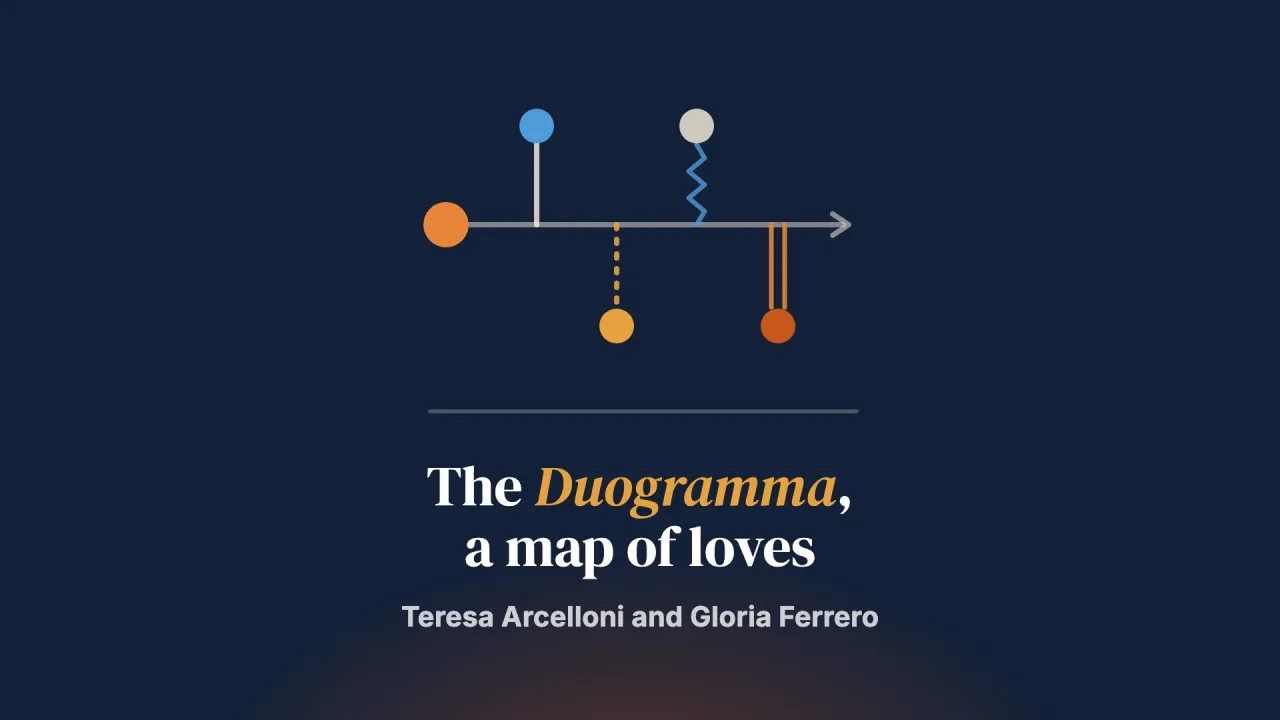
The Duogramma®: An innovative methodology for psychotherapy
A map of the couple relationships lived, desired or rejected since childhood: the Duogramma®, its graphic rules and its use in individual therapy.
 Blog
Challenging in therapy: What a patient taught me
A couples therapy session led me to reflect on confrontation, authenticity and resonance: how to address difficult behaviour without invalidating the person.
 Scientific
Family group conference provision across the lifespan of child welfare intervention: A mixed-method realist-informed evaluation comparing three stages of welfare concern
Early help, child protection or children in care: among 155 UK families, experiences and outcomes of family group conferences vary very little by stage.
 Scientific
Decolonizing Supervision: A Critical Race and Queer Theory Framework for Marriage and Family Therapy
Supervision is not neutral: a framework drawing on Critical Race Theory and Queer Theory to name and share power in supervision, with a vignette.
Comments 0
Log in to join the discussion. Log in